"*** The Velveteen Courage of Fulton Park ***"🐾


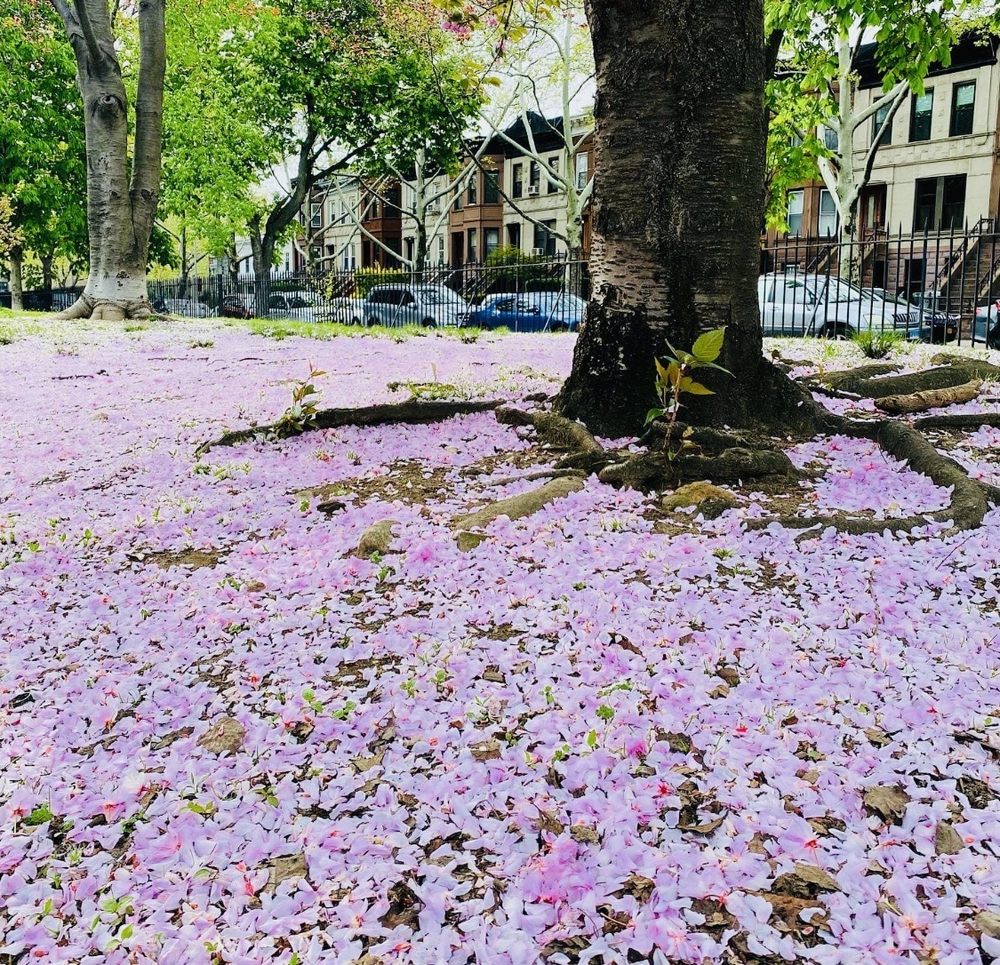
**Chapter 1: The Sunlit Promise** The morning air tasted like honey and possibility as our family tumbled out of the car, my short, velvety white fur practically humming with anticipation against the crisp breeze of Fulton Park. My eyes—accented with those playful streaks of coppery fur that Mariya always says make me look like a woodland sprite wearing nature’s own mascara—drank in the sweeping emerald lawns that rolled toward stands of ancient oak trees like waves frozen in time. Lenny stretched his arms wide, his laughter booming like a drum that called the world to wakefulness, while Mariya’s fingers danced through my ears, sending shivers of joy down my spine. Roman, my towering brother with the heart of a knight and the energy of a comet, was already bounding toward the tree line, his voice carrying back to us like a ribbon of excitement. I felt, in that golden moment, that I was exactly where I was meant to be—brave, loved, and ready for adventure, my paws itching to write stories in the soft earth. But then the wind shifted, carrying with it the silver scent of water, and my heart suddenly felt like a bird trapped behind glass. Beyond the picnic tables and the meadow of wildflowers lay Lake Serenity, its surface glimmering like a giant’s mirror, vast and endless and terrifying. My legs locked beneath me, trembling as if rooted to the very soil, for while I was Pete the Puggle—natural-born storyteller and aspiring adventurer—I was also Pete the Puppy who had nearly drowned in a bathtub last spring, and the memory of that choking, cold darkness rose in my throat like a howl I couldn’t quite release. “Easy, my little playwright,” Lenny murmured, kneeling beside me with the warmth of a summer sun in his voice, his hand a steady anchor on my shoulder. “The water is just a story you haven’t learned to read yet.” I wanted to believe him, I truly did, but my reflection in his kind eyes showed a puppy with wide, lined pupils, the cosmetic-like streaks around my eyes suddenly feeling like war paint smeared by anxiety. That was when the air seemed to shimmer like heat rising from summer pavement, and from behind the largest oak stepped Baron Munchausen—though no one had told me he would be meeting us here, and indeed, his appearance was as sudden and natural as a thought appearing in one’s mind. He wore his years like a comfortable coat, with eyes that twinkled with the accumulated mischief of a thousand tales, and beside him trotted Timmy, a long-haired Chihuahua whose mane flowed like a lion’s and whose chest puffed with the confidence of a creature three times his size. “Ah!” the Baron boomed, his voice carrying the texture of crinkling parchment and thunder. “Just the hero I was expecting! But why, dear Pete, do you stand as though the grass has grown hands to hold you?” Timmy stepped forward, his tiny paws making no sound on the dewy grass, and looked up at me with eyes like polished amber. “First time seeing the big water?” he asked, his voice surprisingly deep and resonant for such a compact frame. “I used to shake like a leaf in a hurricane just looking at puddles. Thought they were portals to the underworld, I did.” The Baron chuckled, producing from his pocket what appeared to be a monocle but which, when held to the light, revealed swirling galaxies within its glass. “Fear,” he announced, “is merely excitement standing on its tiptoes, trying to see over the fence. We shall teach it to sit, stay, and roll over.” Mariya smiled, kneeling to bridge the space between us all, her presence a circle of safety. “Baron has come to share the afternoon with us, Pete. And Timmy has been visiting the park all week. Perhaps they can show you that the water is not a monster, but a dance partner waiting for the music to start.” I looked from the Baron's impossible monocle to Timmy’s assured stance, then to Roman who had jogged back to us, his face flushed with the joy of running and his hand extended toward me like a bridge. “C’mon, little dude,” Roman said, his teenage voice cracking slightly with emotion he tried to mask with bravado. “I’ll stick with you. We don’t have to go near the water yet. We can just look at it from here and tell it who’s boss. That’s what big brothers are for, right?” His words wrapped around me like a familiar blanket, and I felt the rigid terror in my chest soften, not disappearing entirely, but transforming into something manageable, like a balloon on a string rather than a stone in my stomach. I nodded, my tail giving one tentative thump against Lenny’s ankle. “Today,” the Baron declared, sweeping his arm to encompass the park like a magician revealing his stage, “we shall write a story of courage—but not the dull kind where heroes feel no fear. No, we shall write of the velveteen courage, the kind that is soft and trembling but refuses to let go.” And with that declaration hanging in the air like the promise of a rainbow, we set off toward the meadow, my paws finding their rhythm beside Roman’s sneakers, my heart still fluttering like a trapped moth but beginning, just barely, to beat in time with the adventure calling our names. **Chapter 2: The Language of Trees** The meadow surrendered to a cathedral of trees as we ventured deeper into Fulton Park, the sunlight filtering through leaves in patterns that danced across my white fur like golden fingerprints. Baron Munchausen walked with a gait that seemed to bend the path slightly around him, as if the woods themselves were leaning in to hear what he might say next, while Timmy trotted ahead, his luxurious long hair flowing like a banner of courage that I tried desperately to use as a compass for my own bravery. Roman walked beside me, his hand occasionally brushing my back in a silent Morse code of reassurance that spelled out *I’m here* in touches. We found a clearing carpeted in soft moss where Lenny spread a blanket that smelled of home—laundry detergent and dog biscuits and the particular vanilla scent of Mariya’s hands—and there, surrounded by walls of green that whispered secrets in the wind, the Baron declared it was time for sustenance and stories. As Mariya unpacked sandwiches that looked like architectural wonders of cheese and lettuce, the Baron produced from his seemingly bottomless pockets a pipe that, when lit, released not smoke but butterflies made of colored light. “Once,” he began, his voice dropping into the register of ancient bards, “there was a small dog—not unlike our Timmy here, and certainly not unlike our Pete—who was tasked with retrieving a golden key from the bottom of a weeping river. But this dog, you see, was terrified not of drowning, but of the dark that lived beneath the surface, the dark that seemed to have teeth.” I settled onto Roman’s lap, my ears perked despite the mention of watery darkness, because the Baron’s voice wove a spell that made even fear sound like a character in a grand play rather than a monster under the bed. Timmy sat upright, his posture rigid with attention, and I noticed how his small frame contained such enormous dignity, like a teacup holding an ocean. “Did the dog go into the water?” I asked, my voice smaller than I wished it to be, my eyes darting toward a nearby stream that chuckled innocently over stones, its sound both beautiful and terrible to my water-shy heart. The Baron leaned forward, his eyes twinkling with the light of a thousand campfires. “Ah, but that is the wrong question, young storyteller. The question is not whether he went, but *how* he went—trembling, yes, with his heart beating a drum solo against his ribs, but accompanied by friends who held the lantern of their love high enough that the darkness became merely a shadow with nowhere to hide.” Lenny nodded, breaking off a piece of crust and offering it to me with the solemnity of a knight offering a sword. “Courage isn’t about not shaking, Pete. It’s about shaking and walking anyway. Like how your mom still puts her art out there even when she’s nervous, or how Roman tried out for the basketball team even though he thought he was too short.” Roman ruffled my fur, his cheeks flushing with the particular pink of remembered vulnerability. “I missed every shot the first day,” he admitted, grinning at Timmy, who wagged his tail in solidarity. “But Dad told me that bravery is just failed fear, and you keep failing until you don’t.” Timmy stepped closer to me, his long hair brushing my shoulder like a comforting shawl. “I’ll tell you a secret,” the Chihuahua whispered conspiratorially. “My fur gets tangled when I’m scared. Looks like a bird’s nest. But I wear it like armor now. The tangles are just maps of where I’ve been brave.” Mariya laughed, that musical sound like wind chimes, and pulled me into a hug that smelled of lavender and safety. “We’re all a little tangled, my love. That’s how we know we’re real.” As we ate, the stories wove around us like a protective net, and I found myself looking at the stream not as a throat that might swallow me, but as a ribbon of adventure that might lead somewhere wonderful. The Baron's butterflies settled on flowers around us, turning the clearing into a living jewelry box, and I felt the first stirrings of something warm in my chest—something that felt like the beginning of courage, or perhaps just the end of loneliness in my fear. Roman pulled out his phone to show me pictures of dogs swimming, their faces blissful, and I allowed myself to imagine, just for a moment, that I might one day be one of those dogs, my white fur sleek with water, my eyes bright with triumph rather than terror. When the meal ended and the Baron packed away his impossible pipe, the air had changed; it was heavier, charged with the electricity of stories that were about to become real. “The afternoon grows adventurous,” the Baron declared, standing and stretching until his joints popped like small firecrackers. “Shall we explore the eastern woods? There is said to be a grove where the trees grow in circles, and time moves differently—perfect for young heroes learning the shape of their own hearts.” We packed up with renewed vigor, my tail wagging in time with Timmy’s, and as we stepped back onto the path, I noticed that the sky had shifted from blue to a bruised purple along the horizon, though I was too enchanted by the company to read it as warning. **Chapter 3: When the Sky Cracked** We had reached the circular grove—where the trees did indeed stand in rings like ancient dancers frozen mid-spin—when the atmosphere changed from storybook whimsy to something sharp and electric. The wind, which had been playing gentle games with Timmy’s long hair, suddenly turned vicious, grabbing leaves and twigs in angry fists. Baron Munchausen’s expression shifted, the merry crinkles around his eyes flattening into serious lines as he looked upward at the sky that was now roiling with clouds the color of spilled ink. “A sudden summer storm,” Lenny shouted over the rising wind, already moving to gather us together, his arms spreading wide to shelter Mariya and Roman. “We need to find the covered pavilion near the lake—now!” But the words were barely out when the first crack of thunder split the air like a giant’s whip, and the world dissolved into chaos. Panic has a taste, I discovered—metallic and cold, like biting down on a penny. The thunder crashed again, and suddenly everything was motion and noise: Mariya calling my name, Roman reaching for me, the Baron’s cloak billowing like a battle flag, and Timmy’s sharp bark cutting through the din. I tried to run toward Roman’s outstretched hand, my paws scrambling for purchase on the suddenly slick ground, but the wind was a bully, shoving me sideways with careless strength. Another crash, this one so loud it felt like the sky itself was falling, and in the moment of blindness that followed the lightning flash, I felt myself tumbling—not falling, exactly, but being *moved*—down a small embankment covered in ferns that swallowed me like green velvet jaws. When my vision cleared and my ears stopped ringing, I was alone, the storm’s roar now distant but no less terrifying, and the grove above me had disappeared behind a curtain of rain and shadow. My breath came in short, panicked bursts, each inhale scraping against my throat like sandpaper. The separation was immediate and absolute—a physical ache worse than any fear of water or dark. I was *alone*, truly alone, without the warm compass of Lenny’s laugh or the anchor of Mariya’s touch or even the protective bulk of Roman’s sneakers beside me. “Roman?” I called out, my voice cracking into a whimper that the wind tore to pieces. “Mom? Dad?” The darkness beneath the storm was different from night darkness; it was alive, shifting, full of the angry energy of displaced air and cracking branches. Every snap of twig underfoot sounded like a predator, every shadow cast by the dim light looked like a reaching hand. My fur, usually so velvety and white, felt heavy with damp fear, the cosmetic-like streaks around my eyes burning as if the tears streaming down were acid. I huddled against the trunk of an ancient oak, my body pressing into the bark as if I could melt into the tree and become part of its safe, unmoving existence. The fear of the dark, which I had kept locked in a small box in my mind, now burst free and grew to monstrous proportions, filling the spaces between the raindrops. It wasn’t just the absence of light; it was the absence of *them*—my constellation of love that had always kept the shadows at bay. Without Roman’s breathing beside me at night, without Lenny’s stories to ward off the silence, the dark was no longer just an absence but a presence, heavy and breathing and watching. I trembled so violently that my teeth chattered a rhythm of terror against the storm’s percussion. But then, cutting through the cacophony like a silver thread, I heard a voice—not the booming call of Lenny or the sweet song of Mariya, but a high, brave bark that carried the weight of deliberate courage. “Pete! Pete, can you hear me?” It was Timmy, his voice coming from somewhere to my left, above the slope I’d tumbled down. I wanted to answer, but my throat was closed tight with the iron grip of panic. I managed a squeak, then a bark, then a full-throated cry: “Here! I’m here! Please!” The sound of small paws scrambling through wet leaves approached, and then there he was—Timmy the Mighty, his long hair plastered to his small body by the rain, looking like a drowned lion but standing with the posture of a king. He shoved his nose against my cheek, warm and alive and solid. “You’re okay,” he panted, his breath hot against my cold fear. “You’re okay, storyteller. I’ve got you. The dark can’t have you while I’m here.” His presence was a lantern in the vast cathedral of terror, small but unwavering. I pressed against him, feeling the rapid beat of his heart against my side—a heart that was also afraid, I realized, but was beating anyway, pumping courage through small veins with every thump. “We’re lost,” I whispered, the words tasting like defeat. “I’m lost. I can’t see them. I can’t see *anything*.” Timmy licked my ear once, sharply, bringing me back from the edge of hysteria. “Then we’ll be lost together,” he declared, “and together we’ll be found. But first, we move. The Baron taught me that standing still in a storm is how trees get split in half. We need to find shelter, and we need to find Roman. Can you walk, Pete? Can you be brave just for three more steps?” I looked into his amber eyes, seeing my fear reflected there but also my potential, and I nodded, my legs shaking but obeying. Together, we turned toward the deeper woods, two small hearts beating a rhythm against the dark. **Chapter 4: The Velvet Shadows** The woods into which Timmy and I ventured were transformed by the storm into something alien and breathing, every tree trunk appearing to shift when I wasn’t looking directly at it, every puddle becoming a black mirror that threatened to reflect not my face but the face of something hungry. The rain had softened to a drizzle, but the cloud cover remained thick and bruised, filtering what little afternoon light remained into a dim, purple-gray twilight that made shadows stretch long and strange across the forest floor. My fear of the dark was not just a childish phobia anymore; it was a physical sensation, a weight pressing on my ribs, making my breath come shallow and fast. Timmy walked slightly ahead, his long hair dripping and drooping but his tail held high like a flag of defiance, and I tried to match my steps to his, using the sound of his small paws as a metronome to keep my panic from spiraling into chaos. “The dark is just the light taking a nap,” Timmy said suddenly, his voice cutting through the whisper of rain on leaves with deliberate cheerfulness. “That’s what the Baron told me once. It’s not empty; it’s full of things resting. Trees rest in the dark. Seeds rest. Even the stars are just sleeping suns waiting for their alarm clocks.” I wanted to believe his poetry, but my heart kept pointing out that predators also rested in the dark, and waited in the dark, and my family was somewhere in the light I couldn’t reach. “What if they’re looking for us?” I asked, my voice trembling like a leaf in a gale. “What if they can’t find us in this... this soup of shadows?” Timmy stopped and turned, his eyes catching a stray beam of light and glowing like captured moons. “Then we make ourselves easier to find,” he said simply. “We sing. We bark. We tell stories into the dark until the dark gets bored and moves on. That’s what the Baron would do. That’s what *you* would do, Pete the storyteller. You’ve been letting the dark tell the story. Time to take back the narrative.” His words struck me like a bell, resonating in the hollow spaces of my terror. He was right—I was Pete the Puggle, lover of tales and weaver of words, and I had allowed the darkness to become the narrator of this moment, casting me as a victim rather than a hero. I straightened my spine, feeling the velvety fur along my back bristle not with fear but with determination. “Once upon a time,” I began, my voice quavering but audible, “there were two dogs who walked through a forest that forgot it was supposed to be scary.” Timmy’s tail wagged once, twice, encouragingly. “And the forest,” I continued, gaining strength with each word, “was actually just a big, dark room where the trees were playing hide-and-seek with the sun, and the shadows were just the trees’ fingers pointing the way home.” As I spoke, the woods seemed to listen; the rustling stopped, or perhaps I simply stopped hearing it as threatening, and instead heard it as applause. We walked further, and I began to notice things my fear had blinded me to: the way the wet bark smelled like cinnamon and spice, the soft hoot of an owl that sounded like a lullaby rather than a warning, the phosphorescent glow of mushrooms lighting the base of a fallen log like nature’s own nightlights. The dark was not empty; it was *full*, as Timmy had said, full of textures and scents and the quiet majesty of the woods settling into evening. My separation from my family still ached like a missing tooth, a constant throb of *where are they*, but the sharp terror of the darkness itself began to dull, replaced by a wary respect and even a growing wonder. “You’re doing it,” Timmy whispered, nudging my shoulder with his nose. “You’re looking at the dark with your storyteller eyes. See? It’s not a monster. It’s just... unlit.” Suddenly, from somewhere behind us and to the east, came the sound of crashing underbrush—not the tentative steps of a searching friend, but the heavy, deliberate movement of something large. Timmy and I froze, our newfound courage tested immediately. My heart, which had been settling into a calmer rhythm, now hammered against my ribs like a trapped bird. “What is that?” I breathed, pressing against Timmy’s side. The Chihuahua’s hackles rose, making his long hair stand on end until he looked like a bottle brush, but he didn’t run. “It’s big,” he admitted, his voice steady despite his raised fur. “But big doesn’t mean bad. Could be a deer. Could be...” He didn’t finish the thought, because the crashing came again, closer now, accompanied by a low sound that wasn’t quite a growl but wasn’t friendly either. The shadows, which I had just begun to befriend, suddenly seemed to coil like snakes, and I realized that while I might be conquering my fear of the dark, I was not yet ready to face what might be *in* the dark. We backed up slowly, our paws finding wet leaves that gave no purchase for stealth, and prepared to run—or to stand our ground, though every instinct screamed that we were two small dogs in a very large, very wild world. **Chapter 5: The Baron’s Light** The creature emerged from the shadows not as a beast, but as a swirling of fabric and starlight—Baron Munchausen himself, his greatcoat billowing around him like the wings of some benevolent bat, his eyes gleaming with a light that seemed generated from within rather than reflected from without. In his hand, he carried not a weapon but a lantern that burned with a flame the color of summer peaches, a light that pushed back the aggressive shadows and turned them into harmless shades of gray. Behind him, looking bedraggled but determined, came Roman, his face pale with worry but breaking into a sob of relief when his eyes found me crouched beside Timmy. “Pete!” he shouted, breaking into a run that scattered leaves like startled birds, and then I was in his arms, being crushed against his chest where I could hear his heart hammering a frantic rhythm of love and terror survived. “I found them, Baron!” Roman cried, his voice muffled by my fur. “I found them!” The Baron approached, his lantern swinging gently, casting arcs of warm light that seemed to stitch the broken evening back together. “Indeed you did, young Roman,” he said, his voice rich with pride. “But credit where it is due—these two brave souls were not merely waiting to be rescued. They were walking. They were talking. They were *living* in the dark rather than dying of it.” He knelt, placing his lantern on the ground where its light pooled like liquid gold, and looked me directly in my streaked eyes. “Tell me, Pete,” he said softly, “what story were you telling when I arrived?” I extracted myself from Roman’s crushing grip, though I stayed pressed against his knee, drawing strength from the solid reality of him. “I was telling the story of two dogs who weren’t afraid,” I said, then corrected myself with a honesty that tasted like growing up. “No. I was telling the story of two dogs who *were* afraid, but who walked anyway.” Roman’s hand stroked down my back, his fingers trembling slightly. “I was so scared, little dude,” he admitted, his teenage voice cracking with the weight of truth. “When you disappeared, it was like someone turned off the sun. Dad and Mom are back at the pavilion calling the rangers, but I couldn’t wait. The Baron found me searching, and he... he showed me the way.” The Baron smiled, producing from his sleeve a deck of cards that seemed to be made of crystal. “The cards told me where courage had gone,” he explained mysteriously. “They pointed toward the deepest dark, for that is always where the bravest hearts wander, thinking themselves lost when they are merely exploring.” Timmy stepped forward, his long hair beginning to dry in the lantern’s warmth, fluffing back out into his magnificent mane. “We were doing okay,” he said modestly, though his tail wagged with pride. “Pete was telling stories. Good ones. The dark was listening.” The reunion was a balm, but it was not the end of our trial, for between us and the path back to the pavilion lay the Silver Ribbon—a stream that had become a rushing torrent with the storm’s contribution, its waters chattering over rocks with a sound that made my newly steadied heart stutter. Roman stood, keeping one hand on my back, and assessed the waterway. “It’s not deep,” he said, though his voice carried uncertainty. “But it’s fast. And the stepping stones are slippery.” The Baron stepped to the bank, his lantern held high. “Here is another chapter,” he announced. “The hero must cross the threshold, not on wings of ease, but on feet of faith.” I looked at the water, and the old terror rose in my throat like bile—the memory of choking, of cold invasion, of helplessness. But I looked at Roman, at his outstretched hand, at the love in his eyes that was deeper than any stream, and I knew that this was the moment where fear either won, or was transformed. “I’m scared,” I whispered, the confession small but heavy. Roman knelt again, bringing his face level with mine. “I know,” he said. “I’m scared too. But look—we’ve got the Baron’s light, we’ve got Timmy’s courage, and we’ve got each other. That’s a pretty good boat, right?” He held out his hand, palm up, an offering and a promise. Timmy nudged my flank. “I’ll go first,” the Chihuahua offered. “Show you where the good stones are. My low center of gravity is basically a superpower.” He stepped into the stream with a delicate precision that was almost dance-like, his long hair trailing behind him like a battle cloak. The water rushed around his legs, but he stood firm, turning to face me with a grin. “See? Just a cold bath. Come on, storyteller. The other side is where the next part of the story happens.” I took a deep breath, feeling the air fill my lungs like courage itself, and placed my paw in Roman’s waiting hand. **Chapter 6: Crossing the Silver Ribbon** The water was ice against my paw, a shock that traveled up my leg and into my chest like an electric current, and for a moment I was back in that bathtub, sinking, struggling, the world closing in liquid blue. My breath hitched, my vision tunneled, and I heard myself whine—a high, broken sound that was pure animal terror. Roman’s hand tightened around my paw, not forcing, just holding, his voice a steady anchor in the storm of my panic. “Breathe, Pete. Feel my hand. That’s solid. That’s real. The water is just passing through; it’s not staying. It’s not home. *We* are home. You and me.” His words were a rope, and I grabbed onto them with mental claws, focusing on the warmth of his skin against my pads, the roughness of his palm, the scent of his sweat and worry and love that wrapped around me stronger than the current. Timmy stood on the middle stone, a small statue of patience and encouragement. “One more step, Pete,” he called, his voice carrying over the rush of water. “The stone is wide here. It’s dry. It’s waiting for you.” I looked at him, his long hair now dark with spray but his eyes bright as lanterns themselves, and I thought of his earlier confession—that he too had feared puddles, had seen them as portals. If he could stand in this rush and be mighty, then perhaps I could stand beside him. I lifted my other paw, trembling so that my claws clicked against Roman’s skin, and placed it on the first stepping stone. The cold seeped through the stone’s surface, but the texture was rough, grippy, safe. I was not floating, I was not sinking—I was *standing*. The realization burst in my chest like a firework: I was in the water, but the water was not in me. “Good!” Roman cheered, his voice thick with emotion. “That’s my boy! Now the next one. I’m right behind you. I’ve got you.” He moved with me, his hand hovering at my back, not touching but present, allowing me the dignity of the crossing while ensuring I would not fall. I took another step, the water now rushing around my ankles, pulling at my fur with insistent fingers, but I was heavier than my fear, grounded by Roman’s presence and Timmy’s example. The Baron stood on the bank, his lantern creating a path of light across the stones, and he began to speak—not a command, but a story. “And the little dog with the streaks of gold around his eyes stepped into the river of his fears, and with each step, the river grew shallower, for courage displaces water as surely as stone.” His words became my mantra, rhythmic and steady, matching the beat of my heart as I hopped to the next stone, and then the next. Halfway across, my confidence wavered. A particularly strong rush of water splashed up, drenching my belly, and the cold was a shock that stole my breath. I froze, my paws gripping the stone until my claws scraped, my mind screaming *retreat, retreat, go back, sink, drown*. “Look at me,” Roman commanded, his voice firm but gentle, cutting through the panic. I turned my head, water droplets flying from my muzzle, and saw his face—illuminated by the Baron’s peach-light, streaked with rain and tears, fierce with love. “You are not the water,” he said. “You are not the fear. You are Pete. You are my brother. You are the dog who tells stories to the dark. This water is just water. It doesn’t get to have you.” His declaration was a spell stronger than any the Baron could weave, and I felt my terror shrink, becoming manageable, becoming just a sensation rather than a verdict. With a cry that was part bark, part battle shout, I leaped the final distance, landing on the bank beside Timmy with a squelch of muddy paws and triumphant heart. Roman splashed across behind me, scooping me up in a hug that smelled of river water and victory. “You did it,” he whispered into my wet fur. “You did it, Pete. You walked through it.” I licked his chin, my tail wagging so hard my whole body wiggled, and for the first time in my life, I looked back at a body of water not with trauma, but with pride. I had crossed the Silver Ribbon. I had faced the liquid shadow and emerged on the other side, not unchanged—I would never be unchanged—but transmuted, fear into fortitude, water into a bridge. **Chapter 7: The Shadow Beast and the Story Sword** We had barely caught our breath on the far bank when the Baron’s lantern flame suddenly dipped and turned blue, a color that felt wrong, like a bruise on the air. “Ah,” the Baron said, his voice losing its mirth and gaining an edge of steel. “It seems the storm has woken the old guardian of the eastern wood. He does not like visitors, particularly not those who cross his waters with such... audacity.” From the trees ahead came a sound like grinding stone and tearing silk, and then the shadows coalesced—not into imagination this time, but into a massive shape, a dog or wolf or something older than either, with eyes like dying stars and a coat that seemed to absorb the light rather than reflect it. It was the embodiment of every fear I had faced that day made manifest: the dark given teeth, the water given claws, the separation given hunger. I pressed back against Roman’s legs, feeling Timmy tremble against my side, though the Chihuahua growled a warning that was admirably fierce for his size. The beast stepped forward, and with it came a wave of cold that had nothing to do with weather—the chill of despair, of loneliness, of the fear that we would never be found, never be safe, never be home. Roman’s hand found my scruff, his grip steady despite the trembling I could feel in his legs. “Baron?” he asked, his voice admirably steady for a boy facing a nightmare. The Baron stepped in front of us, his form seeming to grow larger, his coat spreading like wings. “This,” he announced, “is the Doubt-That-Devours. It feeds on the fear of lost children and separated families. But it has a weakness.” He turned to me, his eyes blazing with an intensity that demanded truth. “Pete,” he said, “it cannot stand a story that refuses to end happily. It cannot abide the narrative of hope. Will you tell it? Will you tell the story of how we get home?” I stared at him, then at the beast, which was creeping closer, its breath fogging the air with frost. *Me?* I thought. *I’m just a puppy. I’m just a scared puppy.* But then I looked at Timmy, standing his ground despite being small enough to be a snack for this creature, and at Roman, who had searched for me in the dark, and I remembered that I was Pete the Puggle, the storyteller, the one who painted streaks of light around my eyes not as decoration, but as declaration. I stepped forward, my paws finding purchase on the cold ground, my heart hammering a war drum. “Once upon a time,” I began, my voice small at first, then growing, “there was a terrible beast who thought he was alone in the dark.” The creature paused, its head tilting with a groan of rusted hinges. “But the beast,” I continued, gaining strength from the Baron’s nod and Roman’s whispered encouragement, “had forgotten that he was part of a story. He had forgotten that he was just the conflict, not the ending. And in the story, the two small dogs and the boy and the Baron walked past him—not because they weren’t afraid, but because they carried a light that wouldn’t go out.” As I spoke, the Baron raised his hands, and from his fingers spun threads of golden light—strands of narrative, of belief, of the love that bound our family together. The threads wove themselves into a net, a story-cage, and the beast roared, thrashing against the glowing words. “You are remembered!” the Baron thundered. “You are known! You are part of the tale but not its master!” Timmy added his voice to mine, barking a staccato rhythm of bravery, and Roman shouted his love for me, for the family, for the ending we demanded. The beast screamed, a sound of rending metal, and then—like shadows when the sun rises—it dissolved. Not into nothing, but into understanding, into the realization that it had been lonely in its terror, and our story had offered it a place, even if only as the obstacle overcome. The golden threads settled onto the ground, becoming a path of light that stretched through the trees, pointing unerringly toward the pavilion where Lenny and Mariya waited. The Baron sagged slightly, his magic spent, but his smile was radiant. “You see?” he panted. “Even the monsters are just waiting to be written into a story where they lose, and love wins. That is the only magic I know, and it is stronger than any fang or claw.” **Chapter 8: The Constellation of Going Home** The path of golden light led us through the woods in a way that felt both timeless and immediate, each step carrying us further from the domain of fear and closer to the warm reality of family. The night had fully descended now, but it was a different night than the one that had terrorized me earlier—this darkness was velvet-soft, pierced by stars that had emerged from behind the retreating storm clouds like scattered diamonds. My fear of the dark, which had seemed so insurmountable hours ago, now felt like a shed skin lying behind us on the path. I walked with my head high, my white fur drying into soft clouds around me, the streaks around my eyes catching the starlight and the Baron’s lingering magic so that I seemed to glow faintly from within. Timmy walked beside me, his long hair finally free of tangles, flowing like a royal banner, and Roman held my leash—not because I needed to be restrained, but because we both needed the connection, the physical proof that we were tethered together, unlost. We spoke little as we walked, the silence filled with the comfortable weight of shared survival. But inside my chest, a conversation raged—an internal monologue of gratitude and revelation. I thought about how I had believed that courage was a lack of fear, a stoic absence of trembling. But now I understood that courage was the trembling itself, the walking while the knees knocked, the storytelling while the throat closed. I looked at Roman, his profile sharp against the starlight, and I realized he had learned this too—he had faced the possibility of losing me, of failing to find me, and he had walked into the dark anyway. We were both veterans now, scarred not by wounds but by the stretching of our hearts, made larger by the fear they had held and survived. The Baron walked ahead, humming a tune that seemed to make the trees sway in time, and I understood that he was not just a man with powers, but a living metaphor for the way stories could save us, could light paths, could defeat beasts. As the lights of the pavilion came into view—warm yellow squares of hope against the night—I felt my heart begin to race, but this time with anticipation rather than terror. I could see them: Lenny’s broad form pacing like a worried bear, Mariya’s hands pressed against the glass, her face a mask of longing that shattered into joy when she spotted us emerging from the treeline. The separation, which had been a wound, was about to be healed, but I realized with a start that I was no longer the same dog who had been separated. I had carried my family with me in the form of Roman’s hand and Timmy’s loyalty and the Baron’s stories; I had learned that separation was physical, but connection was spiritual, unbreakable by distance or dark or rushing water. “They’re going to cry,” Roman predicted, his voice thick with his own impending tears. “Mom’s probably made three thermoses of cocoa already.” We broke into a run, the last distance collapsing under our urgent paws and feet, and then I was flying—lifted into Lenny’s arms, passed to Mariya’s embrace, crushed in a circle of love that smelled of home and safety and *forever*. “My baby,” Mariya sobbed, her tears falling onto my head like warm rain. “My brave, brave boy.” Lenny’s hand engulfed Roman’s shoulder, the transfer of strength and relief passing silently between the men of our pack. “You found him,” Lenny said to Roman, pride cracking his voice. “You didn’t give up.” Roman nodded, unable to speak, his hand finding my paw where it draped over Mariya’s arm, linking us all in a chain of touch. Timmy barked sharply, not to be left out, and was immediately scooped up by the Baron, who presented him with a flourish. “And Timmy the Mighty! Co-author of the tale! Without his courage, our storyteller might have forgotten the ending.” In the warmth of the pavilion, wrapped in blankets and love, the night seemed very far away, and yet I carried it now like a badge, a memory of the dark I had befriended rather than feared. **Chapter 9: The Circle of the Firelight** The pavilion’s heaters hummed a lullaby of warmth, and someone—probably Mariya, with her sixth sense for comfort—had produced a thermos of hot chocolate that steamed in the cool night air, its scent wrapping around us like a woolen scarf. We sat in a circle on the wooden benches, the Baron included as family, Timmy curled in a ball on my feet, his long hair tickling my ankles. Lenny had built a small fire in the permitted pit outside, and its light flickered through the screens, casting dancing shadows that I now recognized as friendly partners rather than threats. We were safe, we were together, and the time had come for the telling—the recounting that would transform trauma into legend, and survival into saga. “Tell us everything,” Mariya commanded gently, her fingers never stopping their movement through my fur, as if she needed to keep touching me to confirm I was solid. “From the moment the thunder cracked.” So I told them, my voice growing stronger with each sentence. I described the tumble down the embankment, the terror that had tasted like copper, the way the dark had seemed to have weight and intention. I spoke of Timmy’s arrival, his lion’s heart in a Chihuahua’s body, and how his friendship had been the first thread in the rope that pulled me out of panic. I told them about the stories I had told to the shadows, how naming my fear had robbed it of its power, and how Roman’s hand in the stream had been stronger than the current. Roman added his part—the desperation of the search, the Baron’s guidance, the moment he had seen us across the water—and his voice cracked when he described the fear that he had failed me, that he would return to the pavilion empty-handed. “You didn’t fail,” Lenny said, his voice the low rumble of distant thunder that was now safe and contained. “You trusted your instincts. You followed the Baron. You believed Pete was waiting to be found, not lost forever. That’s what fathers do, what brothers do—we keep the story going until we reach the happy ending.” The Baron stirred his cocoa with a finger that seemed to sparkle slightly, as if sugar crystals were magic dust. “And Pete,” he said, his eyes meeting mine across the firelight, “you defeated the Doubt-That-Devours not with teeth, but with narrative. You understood that the most powerful weapon against the dark is the refusal to let it have the last word. That is a lesson many grown humans never learn.” Timmy stirred, his voice muffled by sleepiness but clear in the quiet air. “We made a good team,” he murmured. “The storyteller and the lion. We should have business cards.” We laughed, the sound rising into the night like a flock of birds startled into flight, and in that laughter, the last of the tension broke. I thought about the three fears I had faced: the water, which I had crossed; the dark, which I had befriended; and the separation, which I had endured by carrying my family in my heart. They were not gone—I would likely tremble at bath time again, or startle at sudden shadows—but they were no longer walls. They were doors I had walked through, and on the other side had been Roman’s hand, Timmy’s loyalty, and the Baron’s light. “I was so scared of being alone,” I admitted, the confession coming easier now in the safety of the circle. “But I learned that I’m never alone. Even when I can’t see you, you’re part of my story. You’re the light I carry.” Mariya pulled me closer, her chin resting on my head. “Always,” she whispered. “You carry us, and we carry you. That’s the contract of love.” The fire burned down to embers, and the cocoa was finished, and the weariness of the long day settled over us like a comfortable blanket. We spoke of lighter things then—of the picnic we would have tomorrow, of the way Timmy’s hair would need a serious brushing, of the Baron’s promise to teach Roman how to read the “cards of direction” so he would never lose his way again. But beneath the lightness ran a current of deep gratitude, a recognition that we had been tested and had come through not just intact, but woven more tightly together. The moral of the day sat heavy and sweet in my chest: that courage is not the absence of fear, but the presence of love strong enough to walk through it. **Chapter 10: The Velveteen Epilogue** The drive home was a procession of contented sighs and half-whispered conversations, the car’s interior dim and safe, the headlights cutting through the night that no longer held any threat for me. I lay across Roman’s lap in the back seat, my eyes heavy, the streaks of fur around them—the makeup-like markings that defined my face—soft in the dashboard’s glow. Timmy had gone home with the Baron, with promises of playdates and future adventures, but his courage remained with me, a warm coal in my chest. Lenny drove with one hand on the wheel, the other holding Mariya’s, their fingers intertwined in the language of marriage and survival. Roman’s hand rested on my back, rising and falling with my breathing, a metronome of safety that lulled me toward sleep. But before I let the day end, I lifted my head and looked at each of them in turn—Lenny, whose wisdom had given me permission to be afraid; Mariya, whose love was the blanket that kept the cold out; Roman, whose hand had been my bridge across the water. “Thank you,” I said, the words simple but carrying the weight of everything I felt. “For finding me. For waiting for me. For believing I could be brave even when I didn’t believe it myself.” Roman smiled down at me, his face no longer pale with worry but flushed with the warmth of the heater and the satisfaction of a promise kept. “You found yourself, Pete,” he said. “I just held the flashlight.” Lenny’s eyes met mine in the rearview mirror, crinkling with pride. “You wrote your own story today, son. We just got to be in it with you. That’s the best gift a parent can receive—to watch their child become the hero of their own tale.” As my eyes finally closed, I let the memories play like a film behind my lids: the silver ribbon of the stream becoming a path, the golden threads of the Baron’s magic, Timmy’s fierce small stance, Roman’s unwavering hand. I understood now that Fulton Park was not just a place of grass and trees, but a crucible where fear had been refined into courage, where separation had taught the depth of connection, where the dark had revealed not monsters, but stars. I was Pete the Puggle, velvety of fur and streaked of eye, and I was braver than I had been yesterday, not because the world was less scary, but because I knew now that I could carry the light of my family into any darkness, and that together, we could write an ending where love always wins. The car hummed along the highway, carrying us toward home and toward tomorrow’s adventures, and as sleep finally claimed me, my tail thumped once, twice, against Roman’s leg—a period at the end of a very long, very brave sentence. Outside, the stars shone down, witnesses to the story, waiting patiently for the next chapter to begin. *** The End ***
Use these buttons to read the story aloud:
No comments:
Post a Comment