"*** The Brave Little Puggle of Owl's Head Park ***"🐾
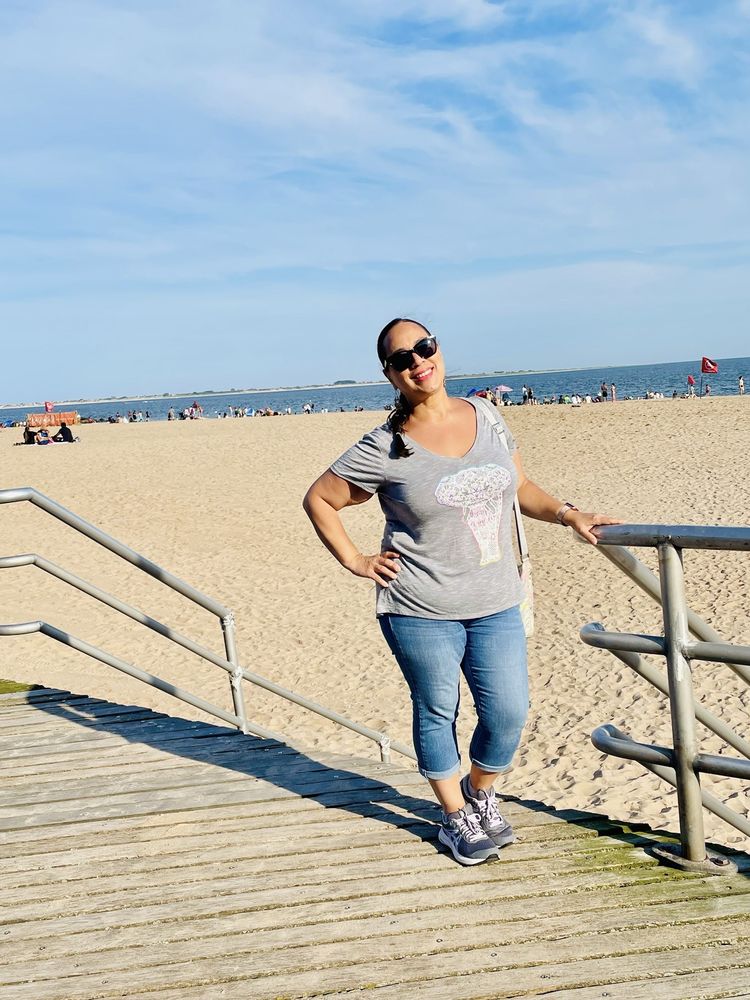
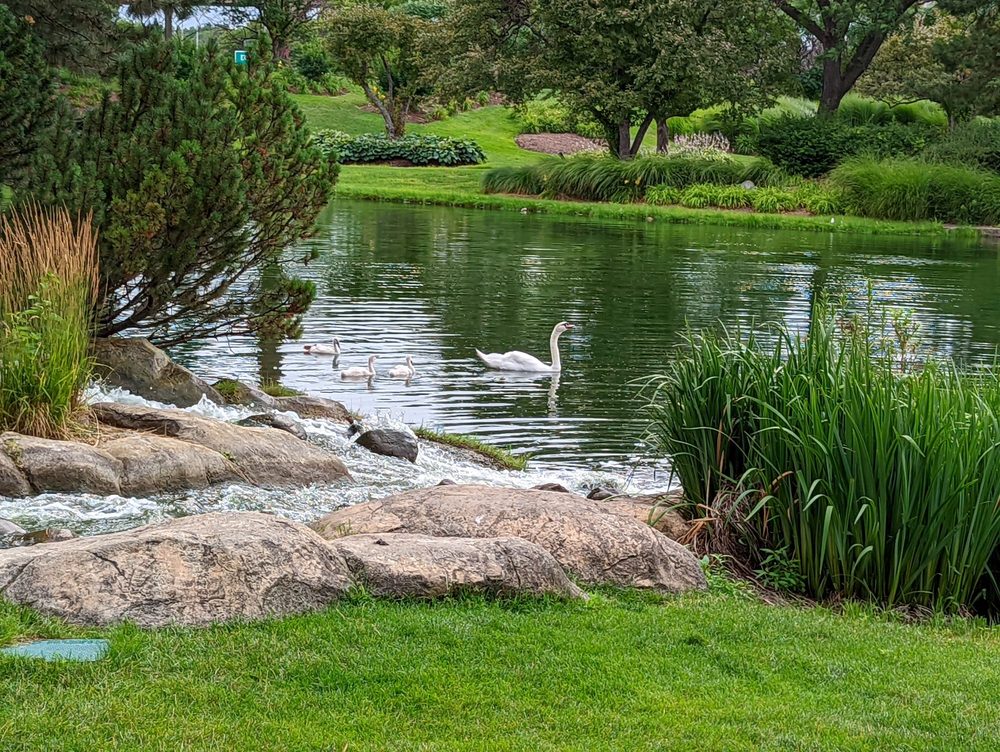
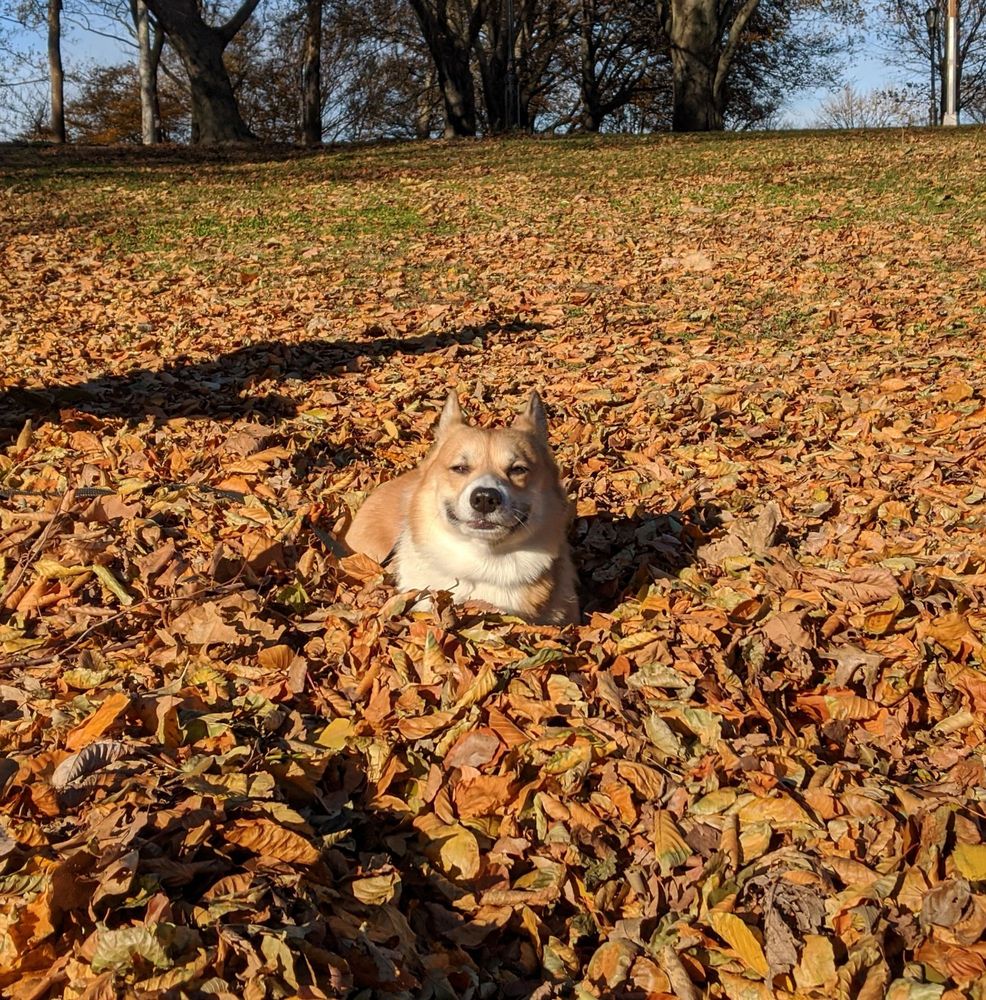
--- # Chapter One: The Morning of Marvels The sun stretched its golden fingers across Brooklyn like a cat awakening from a perfect nap, and I—Pete the Puggle, a compact bundle of white velvet fur with eyes rimmed in what Mariya called my "natural mascara"—bounded from my cozy bed with the energy of a thousand fireworks. Today was the day! Owl's Head Park awaited, and my tail spun like a helicopter blade at the mere thought. "Easy, little whirlwind," Lenny chuckled, his warm voice rumbling like distant thunder on a summer day. He knelt down, his brown eyes crinkling at the corners, and scratched behind my ears until my hind leg thumped uncontrollably against the kitchen floor. "We've got a big adventure ahead. Can't have you wearing yourself out before we even leave the apartment." Mariya breezed through the doorway, her sundress swirling like a paintbrush stroke of sunshine. She carried a wicker basket that smelled of sandwiches and something sweet—maybe those peanut butter cookies she knew I couldn't resist, even though she always pretended they were "just for the humans." I knew better. I knew the secret language of her soft smiles when she snuck me tiny treasures. "Is Roman even awake?" Mariya asked, though her eyes sparkled with the answer she already knew. My older brother—my hero, my rival, my absolute favorite person in the universe when he wasn't teasing me about my floppy ears—could sleep through a marching band. As if summoned by her words, Roman thundered down the hallway, his sneakers squeaking against the hardwood. At fourteen, he moved with the chaotic grace of someone still growing into his own skin, all elbows and enthusiasm and hidden tenderness. He scooped me up, and I found myself eye-level with his grin, smelling the mint of his toothpaste and the faint residue of sleep still clinging to him. "Pete and I are going to conquer that park," Roman announced, pressing his forehead against mine. His voice dropped to a conspiratorial whisper that only I could hear. "I heard there's a lake there. Real water, not just bathtub stuff." My ears—those magnificent, velvety satellites—flattened against my skull. Water. The word sent a cold ripple through my small frame. I'd seen water in my bowl, in the terrifying spray of the shower, in the thundering chaos of rain against windows. But a *lake*? That sounded like water with ambitions. Water that had grown too big for its boundaries. "Now, now," Lenny interjected, reading my body language with the precision of a father who had memorized every language of his son's fears. "Nothing says anyone has to go near the water. This is a day for whatever feels right." His words wrapped around me like a familiar blanket, but Roman's eyes held a different challenge—a playful spark that both terrified and tempted me. I wanted to be brave for him. I wanted to be the puggle who could do anything. The subway ride to Bay Ridge hummed with anticipation. I sat between Roman and Lenny, watching the world blur past the windows in streaks of gray and occasional flashes of green. Mariya had packed drawing supplies, binoculars for bird-watching, and a worn copy of her favorite poetry book—because, as she often said, "every adventure needs its words." As we emerged from the subway station, the air changed. It carried the salt-kiss of the harbor, the green-breath of old trees, and something else—something ancient and waiting. Owl's Head Park rose before us like a dream half-remembered, its rolling hills dressed in summer's finest greens, its paths winding like invitations into mystery. "Welcome to your kingdom, Pete," Mariya whispered, setting me down on the path. My paws touched warm stone, and I lifted my nose to drink in a thousand new stories. This place knew things. I could feel it in the ancient oak trees, in the whisper of harbor breezes, in the distant laughter of children already playing. But beneath the beauty, something else stirred—a premonition, perhaps, or simply the natural tremor of a small dog in a vast world. I shook off the feeling and bounded forward, my family following like the constellation they were, each star connected to the others by invisible threads of love. Little did I know that before this day ended, those threads would be tested, and I would discover what it truly meant to be brave. --- # Chapter Two: Baron of Impossible Tales We had barely crested the first gentle hill when the air itself seemed to shimmer, like heat rising from summer pavement, though the morning remained mild. From behind an ancient oak that twisted toward the sky like a dancer frozen mid-pirouette, a figure emerged with the theatrical flourish of someone who had been waiting precisely for this moment. "Baron Munchausen!" Lenny's voice boomed with genuine delight, and I saw my father's shoulders relax in a way they only did around old friends. The Baron was unlike anyone I had ever encountered. He wore a coat the color of autumn leaves, patched and mended with the care of a thousand stories, and his white beard cascaded like a waterfall of moonlight. But it was his eyes that captured me—eyes that held the twinkle of someone who had seen impossible things and had decided to simply… keep seeing them. "Lenny, my boy!" The Baron's voice rolled like a river over smooth stones. "And Mariya, more radiant than the morning! And Roman—growing like a beanstalk, I see. And who is this magnificent creature?" He knelt with surprising grace for someone of his apparent years, and I found myself nose-to-nose with a man who smelled of cinnamon, old books, and something else—something like lightning before it strikes, like the moment before a wish comes true. "This is Pete," Roman said proudly, though I caught the competitive edge in his voice, the unspoken challenge: *he's MY dog, my adventure partner.* "Pete," the Baron repeated, and when he spoke my name, it felt like a spell being cast, like a door opening somewhere I couldn't see. "A puggle of remarkable spirit, I can tell. The eyes, you see. The windows to everything important." He produced from his pocket—though I hadn't seen him reach for anything—a small crystal that caught the sunlight and fractured it into rainbows across my fur. I barked once, startled, and the rainbows danced with the sound. "Baron," Mariya laughed, though I heard the genuine affection beneath her mock-scolding. "No strange magic before we've even had our picnic." "Magic?" The Baron's eyebrows rose like theatrical curtains. "My dear Mariya, I deal only in *truth*—the truth of what might be, what could be, what whispers at the edges of our ordinary lives. Pete understands, don't you, small friend?" And somehow—impossibly—I did. Or I thought I did. The world felt larger with him in it, as if the park itself had expanded to accommodate all the stories he carried. We walked together, our party now five, the Baron leading with the confidence of someone who knew paths invisible to others. He spoke of his "faithful friends"—creatures of shadow and light who came when called, who could defeat enemies I couldn't yet imagine. I half-believed him, half-doubted, caught in the delicious uncertainty of his presence. "There's the lake," Roman said, and his voice held that challenge again. I followed his pointing finger and felt my heart stutter. The lake spread before us like a piece of fallen sky, blue and endless and utterly wrong. Water shouldn't be so big. Water shouldn't stretch to horizons, shouldn't have the audacity to reflect clouds and trees and make the world seem doubled, unstable. My paws rooted to the earth as if growing there, and a whine escaped my throat before I could stop it. "Pete's not a water dog," Mariya said gently, but I heard the worry beneath, the memory of other fears, other trembling moments. "Fear is a door, young Pete," the Baron said, crouching beside me. His crystal caught the lake-light and threw it dancing across my paws. "Not a wall. A door with a tricky handle, perhaps, but a door nonetheless." "Come on, Pete," Roman coaxed, softer now, kneeling to meet my eyes. "Just to the edge. I'll be right there." I wanted to. I wanted to so badly my chest ached with it. But the lake breathed like something alive, and I was very small, and the world was very big, and sometimes wanting isn't immediately enough. "I'll wait here," I seemed to convey, settling onto the warm grass with what dignity I could muster. "Guard the picnic supplies. Very important job." Roman's face fell briefly—just a shadow passing—and then brightened again with that resilience that made him my hero. "Next time," he said, and it wasn't quite a question. "Next time," I tried to promise with my eyes, hoping he understood. The morning continued in golden fragments. I watched from my safe distance as the others explored the water's edge, Mariya sketching, Lenny skipping stones with the concentration of a man performing sacred ritual, Roman searching for interesting rocks and holding up each discovery for my approval. The Baron sat with me for a while, spinning tales of swimming with mermaids and arguing philosophy with octopi, and I found myself laughing in that way dogs do—small huffs of breath, tail thumping, the whole body involved in the expression of joy. "You'll find your way to the water," he said, mysterious as ever. "And to everything else that frightens you. It's written in your stars, Pete. It's written in your brave little heart." I didn't know then how soon his words would be tested, or how fiercely I would need to believe them. --- # Chapter Three: The Hill of Whispers After our picnic—during which I received more than my fair share of sandwich crusts and encouraging pats—we ventured deeper into Owl's Head Park. The landscape transformed around us, each hill revealing new secrets: a hidden garden where butterflies performed their colorful ballets, a stone wall where lizards sunned themselves like tiny dragons, a grove where wind chimes hung from branches and sang songs without words. "There's a spot," the Baron said, his voice dropping to something between reverence and excitement, "where the city falls away completely. Where you can believe you're somewhere else, somewhere older and wilder and waiting." He led us along a narrow path I hadn't noticed, overgrown with ferns that brushed my belly and tickled my paws. The sounds of the park—children's laughter, distant traffic, the eternal whisper of wind—began to fade, replaced by a silence that wasn't quite silence, a listening quality to the air itself. And then we emerged onto the hilltop, and I understood. Before us, the harbor stretched to the horizon, a vastness of water and sky that made the lake seem like a puddle. The Statue of Liberty stood small but unyielding in the distance, and boats moved across the water like thoughts across a calm mind. But it was the sky that captured me—clouds building in the west, darkening to purple and gray, while sunlight still reigned in the east, creating a drama of light and shadow that made my heart feel too full for my small chest. "It's beautiful," Mariya breathed, and I heard her camera clicking, preserving fragments of this impossible moment. "Used to bring Roman here when he was just a baby," Lenny said, his voice thick with memory. "He'd fall asleep every time. Something about the wind, I think." "Dad, stop," Roman groaned, but he was smiling, leaning into his father's side in that way teenagers do when they think no one is looking, seeking connection while pretending indifference. I explored the hilltop, nose to ground, reading the newspaper of scents left by countless creatures before me. Here, a rabbit's nervous passage. There, the territorial mark of a cat who believed this hill his kingdom. And something else—something older, wilder, that made my hackles rise in a thrill of ancestral recognition. The Baron's crystal caught the changing light, and he frowned at the sky. "Weather's turning, friends. The afternoon brings its own adventures, I think." As if summoned by his words, the first rumble of thunder rolled across the harbor, distant but deliberate. The clouds we had admired from afar were moving faster now, eating the blue sky with hungry purpose. "Storm's coming," Lenny confirmed, already gathering our scattered belongings. "We should head back toward the main path, find some shelter." The word "shelter" activated something primal in me. I understood storms—the terrifying percussion of thunder, the electric warning in the air before lightning's sharp betrayal. I understood finding safe spaces, small spaces, protected spaces. But as we began our descent, a second thunderclap cracked directly overhead, and in my panic, I bolted. I don't remember deciding to run. One moment I was at Roman's heels; the next, I was flying through ferns and past trees, my heart a frantic drum against my ribs, the thunder pursuing like some terrible beast. I heard Roman's voice, distant and desperate: "PETE! PETE, COME!" But the thunder came again, and I ran faster, until my paws found not grass but stone, not earth but the hollow resonance of something man-made. I tumbled through darkness—actual darkness, for the storm had swallowed the sun—and found myself in a space of cold and quiet that felt like being buried alive. I was in the old ice house. I knew this somehow, though I had never been here before. The park's history whispered to me through my own panting breath: this place had held winter in summer, had preserved life through death's season, and now it preserved only silence and the smell of ancient cold. And I was alone. The darkness was complete. Not the darkness of a familiar room at night, where shapes still whispered of their presence, but absolute, pressing darkness that seemed to have weight and intention. My breath came in panicked gusts, each exhale visible only in my imagination, each inhale tasting of stone and time and fear. I was separated from my family. The thought hit me like physical blow. In my panic, I had done the unthinkable—I had run from the very people who would have protected me, had sought safety in isolation and found only its opposite. "Roman," I tried to say, but it emerged as a whimper, small and lost in the vastness of stone. "Mariya. Lenny. Baron." No answer but the distant thunder, now muffled by tons of earth and memory. No answer but my own heartbeat, frantic and fragile in the overwhelming dark. This was my fear made manifest: the dark, the alone, the unprotected. I had faced water and retreated. Now I faced worse, and there was no retreat possible, only the cold embrace of stone and the growing certainty that I was too small, too afraid, too fundamentally lacking in what the world required. I curled into myself, a white ball of velvet and terror, and waited for whatever would come. --- # Chapter Four: The Faithful Friends Time in darkness loses its shape. I cannot say how long I huddled there, only that the storm passed—its thunder fading to grumble, then to memory—and still I remained, too frightened to move, too overwhelmed to even properly weep. My mind circled like a dog chasing its tail: Roman searching, my family worried, my own cowardice the cause of all their pain. And then—light. Not the light of the sun returning, but something stranger, something that shouldn't exist in this buried place. A soft glow that crept around the corner of my stone prison, accompanied by sounds I couldn't immediately identify. Not footsteps. Not voices. Something like… wings? Something like… purring? The Baron's "faithful friends," I would later understand, though understanding came only gradually, filtered through my own astonishment. They emerged from the darkness as if darkness were simply another path, another way of moving through the world. A great owl, silver-white and ancient-eyed, whose wings spanned more than I could comprehend, whose gaze held the patience of centuries. A fox, red as autumn's final flame, with eyes that saw too much and judged too little. And a mouse—small, almost invisible, but present with a completeness that made the others seem almost casual by comparison. The owl spoke, and its voice was the sound of pages turning in a favorite book, of fires crackling on long winter nights. "The little one is lost," it observed, not unkindly. "Terrified," the fox added, and I heard in its voice something of my own nature—clever, cautious, always calculating angles of escape. "The thunder sent him flying. The darkness kept him prisoner." "Not prisoner," the mouse squeaked, and its voice was surprising as a pearl found in an oyster, unexpected and precious. "Never prisoner. Only… waiting. Only gathering." I found my voice, though it trembled like a leaf in wind. "I can't move," I confessed, and in the saying, felt the first crack in my fear's armor. "I'm too scared. I'm too small. I'm—" "Brave enough to admit fear," the owl interrupted, and its compliment landed like a gift I hadn't expected. "That is the beginning of all courage, little puggle. Not the absence of fear, but the willingness to name it." The fox circled me, not threatening, simply… observing. "You ran from water, yes? And from thunder? And now you cower from darkness and from solitude? These are not failures, small one. They are data. Information. The map of where your journey leads." "I don't understand," I whispered. "Of course not," the mouse chirped, and I realized it had climbed onto my back, a tiny warmth against my chilled fur. "Understanding comes later. Now, there is only feeling. And feeling tells you—what?" I closed my eyes, even in the strange light they provided, and listened to my own interior. Beyond the fear, beneath it, something else pulsed. Something stubborn and bright and unwilling to surrender completely. "It tells me," I began, and my voice grew stronger with each word, "that Roman is looking for me. That my family is worried. That I don't want to be here, in the dark, alone. That I want—" I paused, surprised by my own clarity. "That I want to be brave. Not because I'm not scared, but because they're worth being scared for." The owl's eyes gleamed with what might have been pride, or might have been recognition. "The Baron chose well," it murmured. "The door opens from within, Pete. We can guide, we can accompany, but the courage is yours. Will you walk? Will you seek the light that waits beyond this place?" I thought of Roman, how he would face a hundred dark places if it meant finding me. I thought of Mariya's gentle hands, Lenny's steady presence, even the Baron's impossible stories that suddenly seemed less impossible than before. I thought of water, and how I had retreated. I thought of thunder, and how I had fled. Not again. Not this time. I stood. My legs shook, but they held. The mouse tumbled from my back with a squeak of encouragement, and the fox led the way with its flame-colored tail, and the owl brought up the rear with wings that seemed to push back the darkness itself. We moved through passages I hadn't seen in my panic-fueled flight, through spaces where the old ice house whispered its history, until—until there was grayness ahead, and then paler gray, and then the impossible relief of overcast sky, of fresh air, of the world continuing despite my fears. I emerged into a world washed clean by rain, everything sharp-scented and renewed. And in the distance, calling my name with voices hoarse with worry and hope, I heard them. "Pete! PETE!" But the faithful friends were gone, as if they had never been, leaving only the memory of their light and the courage they had helped me find. I gathered that courage like a garment, wrapped it around my trembling frame, and barked—loud and clear and unafraid—as I ran toward my family's voices. --- # Chapter Five: The Finding I found Roman first, or perhaps he found me—the distinction blurred in the chaos of reunion. He had been running toward the old stone structure, I later learned, compelled by some instinct older than reason, and we collided with the force of two orbits finally meeting. "Pete!" His voice broke, and I felt wetness on my fur that wasn't rain—his face pressed against me, his arms around me with a strength that spoke of hours of fear finally released. "Pete, Pete, I thought— we couldn't find you, we looked everywhere, I thought—" His words dissolved into something wordless, and I licked his chin, his tears, any part of him I could reach, my whole body vibrating with the relief of being found, of being held, of being *known*. "Pete!" Mariya's cry, and then her arms too, gathering us both, and Lenny's heavy hand on Roman's shoulder, and the family was complete again, complete and trembling and more whole for having been briefly broken. "Where were you?" Roman demanded, finally pulling back to look at me with eyes still red-rimmed. "The ice house? Pete, that's so dangerous, you could have—" He stopped, swallowing hard. "You were so scared. I know you were scared. How did you—" "The Baron said," Mariya interrupted, her voice strange, "that his friends would help. That we should trust. I didn't understand, but—" "Here he comes now," Lenny observed, and indeed the Baron emerged from between trees with his characteristic theatrical timing, though his eyes held none of their usual merriment, only a profound relief that aged him somehow. "Found his way, then," the Baron said, and it wasn't a question. "Found his way through the dark." "He was in the ice house," Roman said, and his voice carried accusation, fear, wonder in equal measure. "Alone. In the dark. And he came out. He found us." The Baron knelt before me, and I saw in his ancient eyes the reflection of owl and fox and tiny mouse, the memory of impossible things made real. "You found yourself," he corrected gently. "We merely… reminded you that you could." I didn't fully understand then, and perhaps I still don't. But I understood enough to feel something shift in my chest, some balance tipping from fear toward something else, something braver and more durable. The storm had passed, but afternoon was aging toward evening, and with the clouds still lingering, the world grew dimmer than it should. Another fear, I realized—my fear of the dark, now compounded by my experience in the ice house. The darkness had held me once; it could hold me again. But Roman's hand found my scruff, and his warmth flowed into me like a promise. "It's getting late," he said, and I heard in his voice the same fear I felt, the same memory of separation, the same desperate desire to be home, safe, together. "We'll stay together," Lenny announced, and his voice carried the weight of vow and law and loving intention. "No more separations. No more running. We walk out of here as we walked in—together." The Baron smiled, his earlier sparkle returning like stars after cloud-break. "My friends and I will ensure safe passage," he promised, and though I saw no owl, no fox, no mouse, I felt their presence nonetheless, a guard of honor for our journey home. We walked through the park as evening gathered, and I found my courage tested anew with each shadow, each rustle of wind-stirred leaves. But Roman's hand remained constant, and my family's presence surrounded me like armor, and I discovered something precious: courage isn't the absence of fear, but the choice to move forward despite it. The lake lay between us and the park's exit, its surface now dark and mysterious in the failing light. My steps slowed, my body remembering my earlier terror of water, of vastness, of things too big to understand. "Pete," Roman said, and his voice was gentle as summer rain. "We can go around. It's longer, but—" I looked at the lake. I looked at my family, tired and worried and ready to extend our journey to accommodate my fears. I thought of the owl's patience, the fox's observation, the mouse's unexpected wisdom. I thought of the ice house, and how I had emerged from darkness into light. And I took a step toward the water. Then another. Roman followed, his breath held, his hand hovering near but not touching, giving me the space to choose my own courage. The lake's edge was soft mud, then firmer ground, then the wooden slats of a small dock that reached toward the deeper water like a finger extended in invitation. I walked to the end of that dock. The water lapped below me, dark and alive with secrets, and my reflection looked back at me—a small white dog with eyes rimmed in what might have been makeup or might have been magic, but which certainly held more bravery than I had known I possessed. I dipped one paw into the water. It was cold, shockingly so, and I yanked it back with a yelp that became, to my surprise, something like a laugh. The water hadn't changed. It was still vast, still unknowable, still capable of swallowing small dogs whole. But I had changed. I had faced the dark and found my way through. I could face this too, in my own time, in my own way. I barked once, sharply, a declaration of future intention. Not today, perhaps. But someday. The water and I would come to an understanding. Roman's laugh was the best reward, his pride a warmth that outmatched any summer sun. "You did it, Pete. You really did it." I had done something. Not everything, not the impossible swimming and diving I still couldn't imagine. But something. A beginning. A door opening, however slightly, on a braver future. --- # Chapter Six: The Return of Shadows We were nearly to the park's entrance when the final test came—not from nature, not from my own fears, but from something stranger, something the Baron's presence had perhaps invited or foretold. The shadows between the last trees seemed to thicken, to coalesce, to take on intention and malice. I felt it before I saw it: a wrongness in the air, a chill that had nothing to do with evening's cooling. The Baron stepped forward, his crystal blazing with sudden light, and his voice carried notes I had never heard. "Ah," he said, and he sounded almost pleased, almost welcoming. "You felt the courage, did you? Felt it and came to see?" From the darkness emerged a shape I have no proper words for—something between wolf and shadow, between smoke and solid threat. Its eyes burned with a hunger I recognized, a hunger for the fear it sensed in me, the fear I had been working so hard to overcome. "Pete," the creature said, and its voice was all my fears given tongue: the water's drowning pull, the dark's suffocating embrace, the separation's aching wound. "Small, frightened Pete. Run again. Hide again. Be what you truly are." Roman moved to shield me, but the Baron raised his hand. "No," he said, and his voice carried the weight of a thousand stories, each one a victory against such darkness. "This is Pete's battle. We support, we do not supplant." I understood. The faithful friends had helped me find my way from the ice house, but they had not carry me. The Baron could defeat this creature, I sensed—with his crystal, with his stories, with the sheer force of his belief in impossible things. But that would leave me unchanged. That would leave me forever the puggle who needed rescue, who could not face his own shadows. I stepped forward. My legs trembled, but they held. I remembered the ice house, and how I had walked from darkness into light. I remembered the lake, and how I had touched the water despite my terror. I remembered my family, waiting, trusting, believing even when I struggled to believe myself. "I am afraid," I said, and my voice was small but clear. "I am afraid of you. I am afraid of many things. But I am also—" I searched for the words, found them in the memory of owl-patience and fox-cunning and mouse-persistence. "I am also brave. I am also loved. I am also more than my fear." The shadow-creature paused, its smoke-form rippling as if buffeted by winds I couldn't feel. "Words," it hissed. "Only words." "Words are where courage begins," the Baron intoned, and his crystal blazed brighter, and I felt—impossibly—his friends joining mine, the owl and fox and mouse lending their strength to my declaration. "Stories are how we understand ourselves. And Pete's story—" He smiled, that theatrical, genuine, transformative smile. "Pete's story is still being written. Would you deny him his ending?" I didn't wait for the creature's answer. I moved forward, one step, then another, until I stood before its darkness and felt its chill against my fur and did not retreat. "You are part of me," I realized aloud, and the understanding transformed everything. "My fear. My doubt. The part that says I'm too small, too weak, too unworthy. But you don't control me. I don't have to let you." I barked—loud, fierce, more lion than puggle in that moment—and the sound seemed to strike the creature like physical blow. It recoiled, its form unraveling at the edges, and I felt something shift, something settle, something finally come to rest in my courageous heart. "I choose courage," I said. "Not because I'm unafraid. But because I'm more than my fear. I'm Pete. I'm loved. I'm brave." The shadow dissipated like morning mist, and where it had stood, only cool evening air remained, and the first stars emerging between parting clouds, and my family—my wonderful, imperfect, loving family—rushing forward to surround me with their warmth and their pride and their endless, transforming love. --- # Chapter Seven: The Harbor's Edge We emerged from Owl's Head Park changed, all of us, though the change in me was perhaps most visible. The Baron had departed with his characteristic flourish—"Other adventures," he had winked, "other fears to companion toward courage"—leaving us to make our way home through streets softening into evening. But we did not immediately go home. Instead, we found ourselves drawn to the harbor's edge, to a small beach where the day's last light painted everything in watercolor shades of possibility. Mariya spread her worn jacket on the sand, and we sat together, a constellation of family, watching the world transition from day to night. "Pete," Roman said, and his voice held a quality I had rarely heard—something between wonder and question. "What happened, really? In the ice house? With that—that thing?" I couldn't answer in words, of course. My communication remained the language of dogs—gesture, expression, the tilt of ears and the wave of tail. But I tried to convey, through pressed paw and attentive gaze, something of what I had learned. "I was scared," I seemed to say. "I am scared, often, of so many things. But I found that fear doesn't have to stop me. That I can be scared and still move forward. That the people who love me—" and here I licked his hand with all the gratitude in my small heart. "That you help me be braver than I knew I could be." Lenny chuckled, that warm rumble that had comforted me since puppyhood. "He's something else, isn't he? Our brave little puggle." "He always was," Mariya said softly, and her hand found my fur with the unconscious intimacy of long love. "We just helped him see it." We watched the harbor, and I thought about water—how I had feared it, how I had touched it, how I might someday swim in it. Not today, perhaps. But the door was open now. The possibility lived in me, patient and waiting. A boat passed, its lights beginning to glow against the darkening water, and I imagined myself aboard, brave and certain, Roman beside me, adventure ahead. The imagination of dogs is different than human imagining, I suspect—more immediate, more sensory, less bound by narrative convention. But in that moment, my vision felt as real as the sand beneath my paws, as the family surrounding me, as the stars emerging one by one in the deepening sky. "I was so scared when we couldn't find you," Roman confessed, his voice small in a way that made me want to press closer, to absorb his fear as he had so often absorbed mine. "I thought— I thought maybe—" "Don't," Lenny said gently, and his hand found his son's shoulder with the same unconscious intimacy Mariya had shown me. "We found him. He's here. Focus on what is, not what might have been." "But that's the point, isn't it?" Roman turned to face his father fully, his young face serious with the weight of his realization. "What might have been matters. It matters because we love him. Because losing him would—" He stopped, swallowed. "I don't always say it right. But Pete— you're my best friend, dude. Even when you're being a scaredy-cat about water." I barked my indignation, and he laughed, and the moment passed into something easier, something healed by laughter's ancient medicine. The darkness deepened around us, and I found—marvelously—that my fear of it had diminished, transformed by my ice house experience into something more like respect, more like healthy caution rather than paralyzing terror. The dark held no terrors I hadn't faced and survived. The dark was simply the world without light, waiting for morning's return, as patient and inevitable as my family's love. "We should head home," Mariya suggested, though her voice held no urgency, only the contentment of a perfect moment recognized as such. "Soon," Lenny agreed. "But not quite yet." And so we sat, five points of a constellation, watching the harbor breathe and the stars emerge and the world continue its endless, beautiful turning. I thought of the Baron's stories, of owl and fox and mouse, of all the impossible things that had happened and all the impossible things still waiting to happen. Most of all, I thought of courage. How it wasn't a thing you acquired once and kept forever, but something you chose again and again, in moments large and small, with each new fear and each new day. How it was braided from love and fear and the willingness to move forward despite both. I had been terrified of water, and had touched it. Terrified of thunder, and had survived the ice house. Terrified of darkness, and had found light within it. Terrified of separation, and had found my way back to those who mattered most. Each fear faced had made me more myself. Each courage chosen had opened doors I hadn't known existed. And now, sitting with my family in the gathering dark, I felt ready—truly ready—for whatever adventures tomorrow might bring. --- # Chapter Eight: Stars and Stories We walked home through streets that had transformed in our absence, the ordinary made magical by evening's softening touch. Storefronts glowed with warm light, restaurants released aromas that made my nose twitch with interest, and everywhere, people moved in their own orbits of concern and joy and ordinary wonder. But our apartment, when we reached it, felt like a kingdom earned rather than simply returned to. Each familiar object—the worn couch where Roman and I watched movies, the kitchen where Mariya created edible magic, Lenny's armchair with its permanent Lenny-shaped impression—seemed newly precious, newly seen, newly appreciated for what it represented: continuity, safety, love's persistent presence. Roman settled onto his bed with me curled against his side, too old now for such arrangements according to some unwritten rule of adolescence, but tonight nobody mentioned it. We needed this closeness, this physical confirmation of reunion, this warmth against the lingering chill of separation and fear. "Tell me a story," Roman said, and I wasn't sure if he meant me or himself or the universe at large. "About brave Pete. About today." So I tried, in my way, with small sounds and expressive movements, to narrate what I had experienced. The overwhelming thunder, the panicked flight, the ice house's cold embrace. The faithful friends who had appeared when all seemed lost, and the courage they had helped me find. The shadow-creature and its defeat not by force but by self-knowledge, by the refusal to let fear define my boundaries. "You were scared," Roman repeated, understanding something essential. "But you kept going anyway." I yipped my agreement, my tail thumping against his leg. "That's the bravest thing, isn't it?" he continued, and his voice carried the weight of someone learning something that would shape his whole life. "Not being unafraid. Being afraid and doing it anyway." Mariya appeared in the doorway
Use these buttons to read the story aloud:



No comments:
Post a Comment