"***Pete the Puggle's Domino Park Adventure: A Tale of Courage, Waves, and True Griends***"🐾


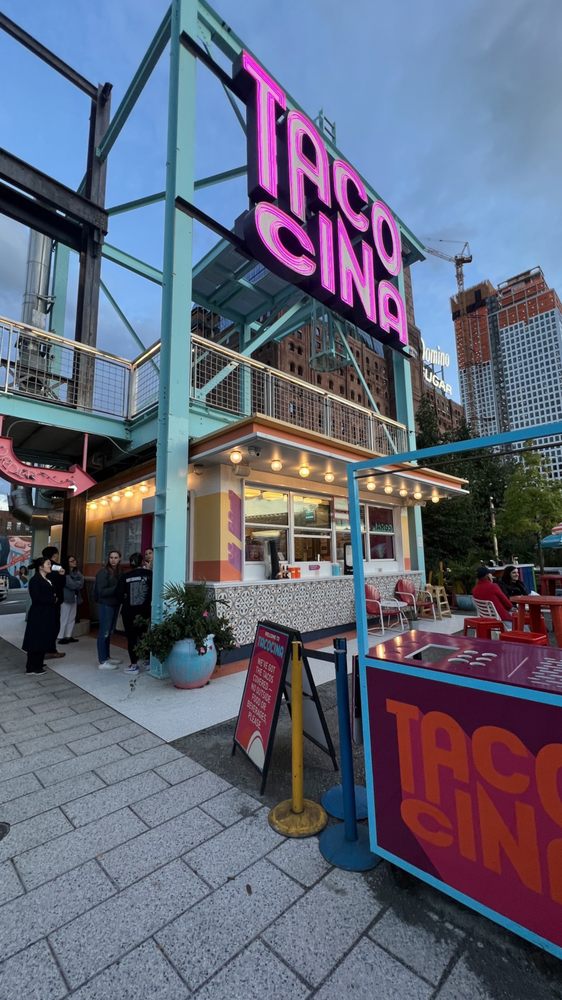
**Chapter One: The Morning of Marvelous Possibilities** The golden fingers of dawn stretched through the kitchen window, painting everything in honeyed light, and I—Pete the Puggle, a compact bundle of white velvet enthusiasm with expressive eyes ringed by nature's own playful kohl—felt my heart performing acrobatics against my ribs. Today was not merely another day of sunbeam naps and squirrel surveillance. Today, my human family whispered the magic words that turned my short tail into a helicopter blade of pure joy: "Domino Park." "Pete, buddy, you're vibrating," Roman laughed, his sixteen-year-old hands sticky with peanut butter from his morning sandwich. He crouched down, and I launched myself into the familiar orbit of his affection—his fingers finding that perfect spot behind my ears where my fur grew softest, where my soul seemed to untangle like yarn pulled from a kitten's playful grasp. "Dad says the park has water," I communicated through a series of urgent whuffs and deliberate eye contact, my paws dancing a Morse code of anticipation on the cool tile. "Actual water, Roman. Like, the kind that moves and everything." Lenny—my father in every way that mattered, his laughter lines deep as riverbeds, his wisdom worn as comfortably as his favorite faded cap—entered with a cooler that thunked against his knee. "Someone's ready," he observed, his voice like warm gravel, the kind that crunches satisfyingly underfoot on familiar paths. "Remember, Pete, Domino Park's waterfront is something special. The Hudson breathes differently there." I felt the first cold finger of doubt trace my spine. Water. The word itself seemed to ripple, to expand and contract like something alive and unpredictable. I'd encountered water before—the rain that fell like cold pearls from the sky, the bath that transformed my carefully constructed puggle dignity into something resembling a drowned rabbit. Water was chaos. Water was loss of control. Mariya, my mother with the hands that could coax music from any silence, sensed my hesitation as mothers always do. She knelt, her sundress pooling like spilled lemonade, and pressed her forehead to mine. "My brave storyteller," she whispered, "water holds stories too. You just have to be still enough to hear them." Her words nestled in my chest like nesting birds. I wanted to be brave. I wanted to be the puggle who faced the Hudson and emerged legendary. The car ride became its own symphony—Roman's playlist punctuated by Lenny's dramatic reading of road signs, Mariya's quiet observations about cloud formations that looked like ships, dragons, the faces of old friends. I sat on Roman's lap, my nose painting the window with breath-fog, watching Brooklyn transform itself into something unfamiliar and therefore thrilling. "You're quiet," Roman noted, his thumb tracing the white blaze between my ears. "Contemplating my water strategy," I admitted through a soft whine, though my heart knew the truth: I was afraid, and the shame of that fear sat heavy as a stone in my belly. Roman understood. Roman always understood. "I'll be right there," he promised. "The whole time. You're not doing this alone, little dude. That's not how we work." And in that promise, I found the first seedling of courage taking root in the fertile soil of our bond. --- **Chapter Two: The Kingdom of Domino Park and Charles Bronson's Grand Entrance** Domino Park unfolded before us like a storybook whose pages had been breathed to life by some generous wind. The sugar factory's bones stood proud against the sky, industrial poetry converted into playground wonder. Children cascaded down slides like human waterfalls. The East River stretched beyond, its surface catching sunlight and transforming it into something precious and blinding. I stood on the warming concrete, my paws registering every texture—the smooth promise of the walkway, the grit of sand that had wandered from its proper domain, the occasional surprise of a pebble like a secret kept too long. "Pete!" The voice came like gravel wrapped in velvet, aged whiskey poured over ice that had known decades of slow melting. I spun, and there he stood—Charles Bronson, the family's oldest friend, his silver hair catching the light like weaponized moonlight, his frame still carrying the coiled grace of a thousand cinematic confrontations. At seventy-something, he moved with the deliberate economy of a man who had spent his life understanding exactly where his body existed in space, in time, in relation to every potential threat. "Charles!" Mariya's embrace was genuine, the kind that bridged years and silences. "We weren't sure you'd make it." "The producer who says no to a Bronson doesn't work in this town," he rumbled, though his eyes—those famous eyes that had stared down villains of every stripe—softened as they found me. "And who is this distinguished gentleman?" I approached with the gravity my position demanded, offering my paw with ceremonial precision. Charles took it with equal solemnity, his grip warm and certain. "The pleasure, young Pete, is entirely mine." Lenny laughed, that sound like distant thunder promising rain that would nourish rather than destroy. "Careful, Pete. Charles once jumped from a moving train onto a helicopter." "Twice," Charles corrected without pride, merely factual correction. "And once, regrettably, into the Seine. Water and I have a complicated relationship." The word struck me like a bell's resonance. Water. There it was again, that liquid enormity waiting beyond the park's cheerful boundaries. Roman noticed my ears flatten, my weight shifting backward. "Hey," he murmured, scooping me up so I rode against his heartbeat, "remember what I said. The water's just a thing. We're bigger than things." But were we? As we walked toward the river's edge, I felt the pull of ancient uncertainty. The water moved with what seemed like intention, small waves arriving and retreating with the rhythm of breath, of hunger, of something that wanted and wanted and never stopped wanting. The playground's sounds faded behind us. We approached the point where the park surrendered to possibility, where concrete steps led toward the water's invitation. "Pete," Charles said, his hand finding my back with surprising gentleness, "do you know what courage is?" I tilted my head, the universal dog gesture for *continue, I'm listening*. "It's not the absence of fear. It's the decision that something matters more." He pointed toward where a group of children splashed at the water's edge, their laughter rising like startled birds. "That joy? That matters. The fear? That's just information. Not instruction." --- **Chapter Three: The Water's First Whisper** The afternoon heat had built to something almost tangible, a pressure against the skin that made the river's edge seem simultaneously threatening and irresistible. Roman waded into the shallows, his sneakers abandoned on the concrete like shed skins, his rolled jeans darkening at the hems. "Come on, Pete!" he coaxed, palms open, inviting. "It's like a bathtub that forgot to stay in the bathroom." I stood at the precise boundary where dry became wet, my paws on warm stone, my heart performing a frantic percussion that seemed audible across the park. The water lapped with what I could only interpret as appetite, each small wave a reaching finger, a whispered promise that it could take whatever approached without proper caution. My internal monologue spiraled with the particular logic of fear: *Water covers. Water changes. Water takes what walks into it and makes it different, makes it less, makes it gone.* I thought of bathtubs where my legs found no purchase, of rain that transformed familiar paths into alien landscapes, of the unknown that lurked beneath any surface. Lenny sat nearby, his presence a steady frequency I could tune into even through anxiety's static. "You know," he said to no one in particular, though his voice carried to me with intimate precision, "when I was Pete's age—well, younger obviously, but you know what I mean—I was terrified of the deep end." "Dad, you were forty when I was born," Roman observed, splashing patterns that caught the light. "Metaphorically young," Lenny clarified without missing a beat. "The point is, I stood at that edge for what felt like hours. And then someone I trusted was already in the water. That made the difference. Not being first. Being willing to follow." Mariya had produced her sketchbook, her pencil moving with the unconscious grace of someone who had translated seeing into creating so long the boundary had dissolved. "The river's particularly beautiful today," she noted. "All that blue holding the sky's reflection. It's brave, really. To hold something so vast and let it go with every ripple." Her metaphor nested in my consciousness. Brave water. Holding and releasing. I took one step closer. The stone was slick here, worn smooth by countless feet, countless years of this same confrontation between solid and liquid, known and unknown. Roman's hand extended toward me, patient as geography. "I've got you," he said simply. "Always." The first touch of water against my paw registered as shock—cold where I expected warmth, alive where I expected stillness. I yanked back with a yip that embarrassed me even as it escaped, backing into Charles's waiting legs. "Easy, soldier," he murmured, and in his voice I heard decades of staged bravery, yes, but something else too—the genuine article, earned through losses I couldn't imagine and loves that had sustained him. "The body remembers every time it survived. Let it remind you." I closed my eyes, breathed the river's complicated perfume—water and salt and distant industry and something green trying to assert itself. When I opened them, Roman was still there, hand still extended, faith still unwavering. I placed my paw in his palm, and together we stepped deeper. --- **Chapter Four: When Shadows Grow Long and Friends Grow Brave** The water, I discovered, was not the enemy my fear had constructed. It cradled my legs with unexpected buoyancy, supported my tentative movements until I found I could paddle, could move through this alien element with something approaching grace. Roman's hands beneath my belly, then gradually, gradually withdrawing, until I realized I was swimming—actually swimming—my body remembering ancestral wisdom my mind had never fully trusted. "Pete! You're doing it!" Roman's pride was a warmth more sustaining than any sun. We played until my muscles trembled with pleasant exhaustion, until the light began its daily transformation from gold to something more amber, more serious. The park emptied gradually, families departing with the reluctance of those leaving magic behind for ordinary time. And then—I don't know when exactly—the shadows lengthened beyond mere afternoon's end. The sugar factory's skeletal remains seemed to shift against the darkening sky, becoming something else, something that belonged to stories told in whispers around fires that fought back the night. "Pete!" Mariya's voice, suddenly distant. "Stay close, honey. It's getting hard to see." But I had followed a floating stick, had pursued it with the single-mindedness that makes dogs both heroic and foolish, and when I lifted my head from the water's surface, the familiar shapes had dissolved into something else. The lights of Manhattan across the river, usually comforting, now seemed cold and watchful. The park's lamps created islands of visibility surrounded by deepening mystery. Fear returned, but transformed—no longer the specific terror of water, but something older, more primal. The dark. The alone. The separation from the heartbeat-knowledge of my pack. "Roman?" I called, the sound emerging as whines, as barks that seemed to disappear into the gathering darkness like stones dropped into wells of unknowable depth. The separation from family. This was the root fear from which all others branched. Water was merely its expression, the dark merely its costume. What I feared was being unmoored, set adrift from the constellation of love that had always defined my sky. I ran, or tried to—the park's geography treacherous in fading light, landmarks becoming suggestions rather than guides. Voices reached me, familiar yet distorted by distance and panic's distortion: "Pete! Pete, where are you?" Then other sounds. Footsteps too heavy, too purposeful. A low voice I didn't recognize, speaking words I couldn't parse but understood as threat simply through tone, through the way violence lives in certain rhythms of speech. "Pete!" Different now—Charles's voice, carrying that particular authority that had commanded cinema audiences for generations, now deployed in desperate search rather than performed drama. I found myself in a space between the park's designed pleasures and its wilder edges, industrial remnant and organic growth. The darkness here was more complete, the separation from my family more absolute than I had yet experienced in my young life. And then—movement in the shadows that resolved into form. Not my family. Something else, something that advanced with the confidence of those who belong to darkness in ways daylight creatures cannot comprehend. --- **Chapter Five: The Night's True Face** The figure emerged from between rusted structures that had once processed sugar, now processing only shadow and memory. Human, I sensed immediately, but human in the way that storms are weather—natural, powerful, potentially destructive. My hackles rose, my body preparing for flight or confrontation, though against what I could not yet determine. "Well, well," the voice came, slurred with something that made it unpredictable, dangerous as ice where ice had no place being. "Lost your way, little white rat?" I growled, the sound surprising me with its ferocity. I was small, yes, but I was not merely small. I was Pete the Puggle, storyteller and adventurer, beloved of Lenny and Mariya and Roman. That love was not merely comfort; it was resource, it was foundation, it was the ground from which courage could finally, truly grow. The figure advanced, and I retreated, finding my way between structures that offered shelter without escape. My mind raced with the particular clarity fear sometimes grants—how far I'd wandered, how completely I'd lost the thread of my family's presence, how alone in darkness I suddenly, absolutely was. Then: a sound like wind through dry leaves, like a lifetime of action sequences compressed into single, fluid moment. Charles Bronson descended from the industrial skeleton above with the grace of a man half his age, half his actual age again. He landed between me and threat with the absolute certainty of someone who had spent decades embodying precisely this archetype—the protector emerging from shadow, the friend who arrives precisely when needed. "Walk away," he said, his voice not particularly loud but carrying absolute conviction, the weight of a thousand cinematic confrontations made suddenly, terribly real. "Walk away now, and this ends." The figure laughed, uncertain. "Old man, you don't—" Charles moved. I had seen dogs move this way, sometimes, when play became something else—the economy of genuine skill replacing the flourish of performance. He didn't strike, didn't need to. His presence, his absolute readiness, his willingness to become barrier between threat and beloved small creature—these were weapons no drunken bravado could match. The figure departed, cursing, dissolving into darkness that seemed to reject him as thoroughly as Charles's defense rejected his threat. "Pete," Charles breathed, and in that single word I heard his fear for me, his relief, his age finally showing in the slight tremor he would never permit in a performance. "Come here, brave heart. Come here now." I collapsed against him, feeling his heartbeat, his warmth, his solid reality after terror's dissolving certainty. But even held safe, my fear found new expression. Where was Roman? Where were Lenny and Mariya? The dark had swallowed everything familiar, and even Charles's protection could not fully quiet the panic of separation, of not-knowing, of the endless possible futures where reunion never arrived. "Charles," I whimpered, pressing closer, "I can't—I need—" "I know," he murmured, and in his voice I heard his own losses, his own nights of alone. "I know, little friend. We find them. We find them now." --- **Chapter Six: Roman's Light** We moved through darkness that seemed almost physical, Charles's hand occasionally finding my back to guide, to reassure, to maintain connection in a world that had dissolved into uncertainty. I tried to follow scent, but the river's pervasive presence confused every trail, and my own fear made concentration impossible. Then—"Pete! Pete, answer me!" Roman's voice, cracked with something that might have been crying, might have been calling too long. I responded with every vocalization I possessed, a symphony of relief and desperation and absolute, overwhelming love. Light appeared—Roman's phone, I realized, its glow transforming his face into something angelic, something I had never been so grateful to witness. He ran to me, fell to his knees in dirt and industrial detritus, gathered me into arms that trembled with the aftermath of fear given sudden, unexpected reprieve. "Pete, Pete, Pete," he chanted, my name becoming prayer, becoming spell, becoming the only language sufficient for this moment. "I couldn't find you. I looked everywhere. I—" His grief broke open then, the fear he had carried, and I licked his tears because it was all I knew to do, because our love existed in this exchange, this mutual witnessing of vulnerability and its transformation into connection. "Dad's searching by the water. Mom called park security. I—I thought maybe you had—" He couldn't finish, and I understood: he had imagined my absence becoming permanent, the way love sometimes does when fear writes the narrative. Charles stood nearby, sentinel and witness, his face in the phone's light showing something I hadn't expected—longing, perhaps, for connections he had lost, for the family that had been or might have been or could still be. "We should find your parents," he said gently. "Before they worry further." Roman stood, me secure in his arms, and we began the walk back toward light, toward people, toward the restoration of our interrupted world. But I noticed how he held me—not clutching, not imprisoning, but with the certainty of someone who had learned something about love's fragility, about the preciousness of each moment of connection. "Pete," he whispered, "when I couldn't find you, I realized something. I was scared, yeah, but I also—I knew I had to keep looking. That giving up wasn't even possible. Because you're my brother, dude. Not just a pet. My actual brother." The words settled in me like river stones, smooth and weighty and permanent. I had been lost, and in being found, had discovered something about the nature of love—not that it prevents loss, but that it makes searching inevitable, makes finding possible, makes every reunion a kind of miracle we can almost, but never quite, take for granted. --- **Chapter Seven: Gathering and Gratitude** We found Lenny and Mariya near the park's entrance, their faces transforming from the gray of sustained fear to the radiance of relief in the single moment of our appearance. Mariya's embrace encompassed both Roman and me, Lenny's arms completing the circle, and in that compression I felt the restoration of something essential, something that had been broken and was now, if not unchanged, at least whole again. "Charles," Lenny's voice carried depths of gratitude that formal language couldn't capture, "we can't thank you enough." Charles waved this away, but I saw how he remained slightly apart, how his smile contained the particular sadness of those who have given essential help yet still feel themselves outside the warmth they have protected. "Nonsense," he said. "Pete did the hard part. Kept moving. Kept hoping. I merely provided escort." But we all knew. We all understood what his presence had meant, what his willingness to become barrier had cost and given. Mariya had somehow produced a picnic blanket from the car, and we arranged ourselves upon it with the slightly stunned quality of those who have passed through danger into safety, the transition still processing in our bodies even as our minds began constructing narrative, meaning, the story we would tell of this night. The darkness that had been threat now became merely evening, the park's lights establishing friendly constellations, the river's sound becoming peaceful rather than ominous. I sat between Roman and Mariya, feeling the last tremors of fear gradually subsiding, replaced by something more complex—memory of fear, yes, but also memory of survival, of Charles's intervention, of Roman's voice finding me in darkness. "Pete," Lenny began, his storytelling voice emerging, the one that had shaped my understanding of narrative's power, "tonight you were brave." I started to protest—had I not been afraid? Had I not failed to find my way, required rescue, demonstrated the limits of my courage rather than its presence? But Mariya understood. "Bravery isn't fear's absence, my love. It's fear's companion. The walking forward despite, not the elimination of despite." I thought of the water, how I had entered it despite every instinct's screaming retreat. Of the darkness, how I had moved through it despite certainty of threat. Of separation, how I had maintained hope despite every evidence that hope was irrational. Roman's hand found my ear, his touch communicating what words could not yet achieve. "You taught me something too," he said, addressing me directly, the way humans sometimes do when they forget the supposed boundaries between species, when love dissolves such distinctions as irrelevant. "When I thought I'd lost you, I realized how much you matter. Like, really matter. Not just as a cool dog, but as... family. My actual family." The word hung in the evening air, perfect and irreplaceable. --- **Chapter Eight: The Story We Tell Together** We remained until the park officially closed, our conversation meandering through reflections and forward glances, through the processing that transforms experience into meaning. Charles spoke of films made, of stunts that had failed and succeeded, of the family he had built of colleagues and friends when blood family proved insufficient or absent. "I never had children," he admitted, his voice carrying no self-pity, merely factual observation. "But I have been, occasionally, uncle to many. And tonight—" He paused, finding words with visible effort, emotion making language temporarily inadequate. "Tonight I was reminded that protection, genuine protection, may be the finest performance any of us achieves." I went to him then, pressed against his leg, offered what comfort my small body could provide. His hand found my head with the gentleness I had come to expect, the careful strength that had saved me from threat I couldn't have survived alone. "Thank you," I tried to communicate through posture, through presence, through the language of touch that predates and outlasts all others. He understood. I knew he understood. Lenny produced his phone, capturing our arrangement—the family constellation with its unexpected but no less essential star. "For the album," he said. "The Domino Park adventure. Starring Pete the Puggle, with special appearance by Charles Bronson." "Typecasting," Charles observed dryly, but he smiled, and the smile reached his eyes, those famous eyes that had witnessed decades of manufactured drama and tonight had seen something genuine, something that mattered. As we finally departed, I paused at the park's edge, looking back at the river that had taught me water was not merely threat but also play, the darkness that had taught me fear was not merely obstacle but also opportunity for courage's demonstration, the separation that had taught me love's fragility and resilience were not opposites but companions. Roman noticed my pause, returned to lift me once more. "Thinking deep thoughts, little dude?" I barked once, affirmatively, and in his laughter I heard the sound of our shared future, the adventures still to come, the stories we would tell and become. "Whatever you're thinking," he said, carrying me toward the car, toward home, toward the continuation of our collective narrative, "remember this: you were brave today. Really, truly brave. And I was proud to be your brother. Am proud. Will be, always." In his words, I found the transformation my experiences had been preparing: fear into courage, trial into story, separation into the deeper appreciation of connection's preciousness. I was Pete the Puggle, small of stature but infinite of heart, beloved and loving, storyteller and story, forever becoming in the company of those who made my life worth the living. The car's warmth enveloped us. The city passed in patterns of light and shadow, promise and fulfillment. I slept eventually, dreamt of water I could swim, darkness I could navigate, family I would always, always find my way back to. *** The End ***
Use these buttons to read the story aloud:



No comments:
Post a Comment