"***Pete the Puggle's Ocean Courage: A Tale of Waves, Wonder, and Finding Your Brave***"🐾


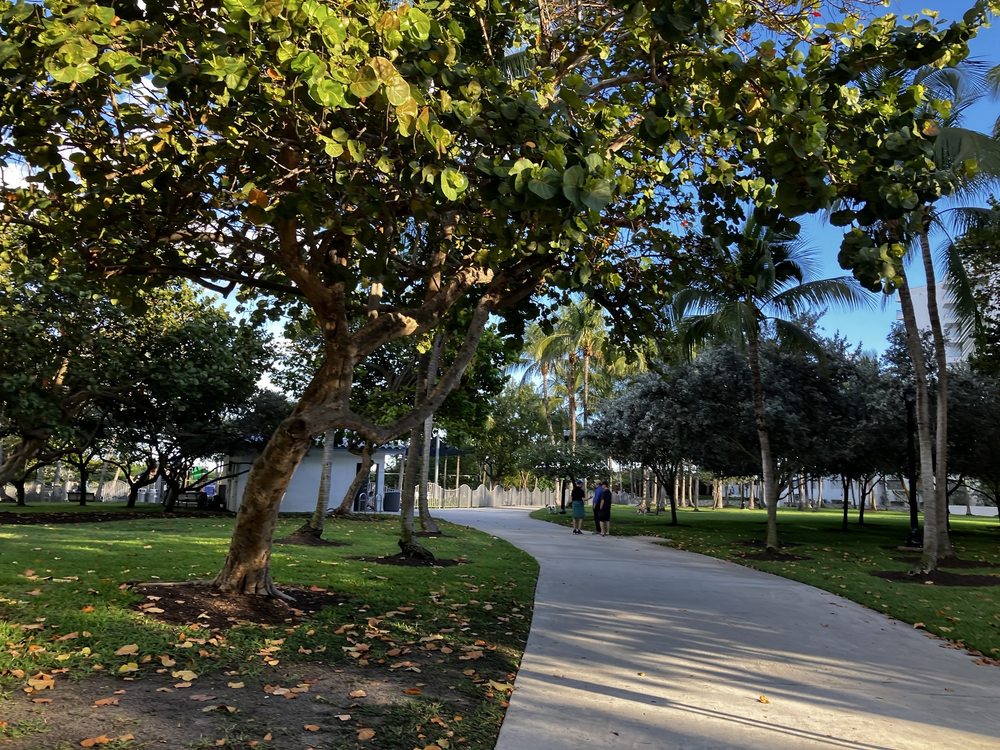
--- ## Chapter 1: The Morning of Trembling Excitement The golden fingers of dawn stretched across our cozy living room, painting everything in honey and rose. I, Pete the Puggle—a compact bundle of white velvet fur with my signature playful streaks of blue and purple makeup framing my wide brown eyes—pressed my nose against the cool window glass and watched the world wake up. Today was the day. The day my family had circled on the calendar with little star stickers and happy faces. We were going to Marjory Stoneman Douglas Ocean Beach Park. "Pete!" Roman's voice thundered down the hallway, accompanied by the rapid percussion of running feet. My older brother burst into view, his sleep-tousled hair sticking up like a dandelion, his grin infectious and immediate. "We're going to the OCEAN, little dude! You ready to swim with the fishes?" I turned from the window, my tail thumping uncertainly against the windowsill. "Swim?" I repeated, the word tasting strange and foreign on my tongue. I'd seen the ocean on television—vast, roaring, endless. The thought of all that water, stretching farther than my puppy eyes could track, sent a shiver racing from the tip of my nose to the end of my curled tail. Lenny emerged from the kitchen, two travel mugs in his large warm hands, his smile crinkling the corners of his eyes. "Roman, don't overwhelm your brother before breakfast. Pete, come here, buddy." He knelt down, setting the mugs aside, and I trotted into the familiar sanctuary of his arms. "The ocean is big, I know. Scary-big, even. But you know what? Big scary things become adventures when you're with people who love you." I nuzzled into his palm, breathing in the comforting scent of his morning coffee and cinnamon toast. "What if the waves are too big, Dad? What if they swallow me whole, like a whale swallowing a tiny fish?" Lenny laughed, that deep warm sound that made the world feel right. "Then you'd be a fish with the best swimming lessons in the world, because your mom already packed three different floaties and enough snacks to feed an actual whale." Mariya appeared in the doorway, sunlight catching in her dark hair, her eyes sparkling with that particular magic she carried—the ability to see wonder in a blade of grass, adventure in a trip to the grocery store. "My boys," she said, and the love in those two words wrapped around all of us like a soft blanket. "Pete, I found your special beach towel. The one with the little crabs wearing sunglasses. And guess what? I packed your favorite blueberry treats for when you need a courage boost." "Courage comes in blueberry flavor now?" I asked, my ears perking up despite the butterflies doing frantic somersaults in my stomach. "Everything good comes in blueberry flavor," she confirmed, kneeling to smooth the fur between my ears. "And Pete? It's completely okay to be scared. The bravest thing we ever do is feel fear and decide to show up anyway." As we loaded into the family van—me wedged securely between Roman and a tower of beach bags—I watched our neighborhood transform from familiar streets to unfamiliar highways. The world outside became a blur of green and gray, of bridges spanning waters I'd never seen, of possibilities expanding with every mile. Roman's friend George sat up front with Lenny, his broad shoulders and easy laughter filling the space. He'd been in the Navy, I knew, had swum in oceans across the world. The way he spoke of water—with affection rather than fear—confused and fascinated me in equal measure. "Pete," George called back, turning in his seat with eyes the color of storm clouds but warm as summer rain. "You're gonna love the ocean once you meet it properly. It's like meeting a new friend—seems overwhelming at first, but then you find the rhythm. The salt helps you float, did you know that? You could lie back and let the world hold you up." The image was beautiful—a world that held you up instead of pulling you down. I tucked it into my heart like a precious stone, something to examine when the fear grew too loud. --- ## Chapter 2: First Contact with the Endless Blue The parking lot of Marjory Stoneman Douglas Ocean Beach Park crunched beneath our feet—sand mixed with seashell fragments, each step a tiny percussion of arrival. I stood frozen at the van's open door, my paws refusing the final descent, as the ocean announced itself with a roar that vibrated in my chest like a second heartbeat. Before us stretched a world I hadn't imagined. The sky, impossibly vast, leaned down to kiss an horizon I couldn't comprehend. And the water—oh, the water moved with a language all its own, speaking in syllables of foam and turquoise, of deep navy mysteries and sudden flashes of silver where fish caught the light. The smell hit me next: salt and seaweed and something ancient, something that whispered of shipwrecks and mermaids, of continents drifting apart and coming together again. "Pete?" Roman's hand appeared before my face, fingers wiggling. "Earth to Pete. You okay, little dude?" "I..." My voice came out smaller than I intended, swallowed by the wind before it could travel far. "It's so big, Roman. Bigger than the TV. Bigger than anything." Mariya knelt beside me, following my gaze to where children shrieked with delight at the water's edge, where seabirds carved circles in the sky. "The first time I saw the ocean," she said quietly, "I was eight years old. I stood right where you're standing, convinced the waves would sweep me away to somewhere without my parents, without my bed, without anything familiar." She paused, and I heard in her silence the memory of that childhood fear, recognized it as twin to my own. "But then my father took my hand, and we walked to where the water could only tickle our toes. And I learned something powerful—that the ocean has a gentle voice too, if you meet it in the right place." Lenny was already spreading our enormous striped umbrella, planting it deep in the sand with practiced efficiency. "George and I are going to set up base camp," he announced. "Roman, why don't you show Pete the tide pools? Low tide was an hour ago—perfect timing." Roman's hand closed around mine—paw and fingers intertwined—and we began the long walk across sand that shifted and sank beneath each step, a path that fought back, that made arrival feel earned. The wind grew stronger, carrying the ocean's voice directly to my trembling heart: *I am here. I have always been here. I will be here when you are brave enough.* The tide pools revealed themselves like scattered jewels, each one a miniature world cupped in stone. Roman's excitement was contagious as he pointed out tiny crabs with their sideways scuttle, anemones waving tentacles like slow-motion fireworks, small fish the color of polished pennies darting through submerged forests of seaweed. "Look at this little guy," Roman breathed, pointing to a hermit crab making its painstaking way across a rock. "He's carrying his whole house on his back. Never goes anywhere without home. Kinda like someone I know." He nudged me gently, and I understood he meant my habit of dragging my threadbare stuffed elephant, Mr. Trunks, everywhere I went. "Mr. Trunks would love this," I said, trying to match Roman's enthusiasm, but my eyes kept drifting to where the waves broke in rhythmic crashes, white foam spreading like lace across brown sand. Each retreat left patterns, stories written and erased in continuous creation. Beautiful. Terrifying. Irresistible. A sharp bark cut through my reverie—high, confident, carrying the weight of authority disproportionate to its source. We turned to find a magnificent long-haired Chihuahua trotting toward us, his caramel and white fur flowing like a royal cloak, his dark eyes commanding as any king surveying his domain. He moved with the swagger of someone who had never doubted his place in the world. "Timmy!" Roman laughed, crouching to receive the small dog's enthusiastic greeting. "I forgot your family comes here every summer!" Timmy. The Brave and Mighty. Even his name sat on him like a crown. He turned those assessing eyes on me, and I felt suddenly aware of my white velvet fur, my decorative makeup streaks, my trembling paws. I was a puggle who feared the water, facing a Chihuahua who clearly feared nothing. "New blood," Timmy observed, his voice surprisingly deep, resonant with the kind of casual confidence I envied like oxygen. "Roman's little brother, unless I've completely lost my touch. The ocean's first time?" I nodded, unable to find words worthy of his presence. "Fair warning," Timmy continued, circling me with the precision of a general inspecting troops, "the water looks hungry from here. But it's more like..." He paused, considering. "More like a dog that wants to play but doesn't know its own strength. You set boundaries. You learn the signals. And you never, ever turn your back on it until you understand each other." He settled onto his haunches, surprisingly regal for his size. "I could teach you. If you want to learn." The offer hung in the salt air between us, as tangible as the sand beneath my paws. I thought of Mariya's words about showing up afraid, of Lenny's laugh that made fear smaller, of George's description of floating, held up by the world itself. I thought of the hermit crab, carrying home wherever he went. "Yes," I whispered, then stronger: "Yes, I want to learn." --- ## Chapter 3: The Swimming Lesson and the Terror Beneath George met us at the water's edge, his Navy swim trunks still bearing faded insignia, his bare feet finding purchase where the sand grew firm and wet. The ocean had transformed with the afternoon tide—higher now, more insistent, each wave reaching farther up the beach before surrendering to gravity's pull. "Basic rule of ocean swimming," George began, his voice carrying that particular authority of someone who had survived far worse than playful surf, "respect the water, but don't worship your fear. The first makes you smart. The second makes you miss everything worth experiencing." He demonstrated the proper way to enter—walking until the water reached his knees, then falling forward to glide with the current's rhythm. "See? I'm not fighting. I'm dancing. The ocean loves a good dance partner." Timmy trotted into the shallows without hesitation, his long fur floating around him like a mermaid's halo, his small body surprisingly agile against the gentle tug of retreating water. "Come on, Pete!" he called. "The sandbar drops off here—it's perfect for beginners. You can stand, but the water cradles you too." Roman stood waist-deep, his hands extended toward me like an invitation and a promise combined. "I've got you, Pete. I promise. I won't let anything happen." I stood at the water's edge, the foam dancing around my paws, and felt the terror rise like a wall before me. It wasn't just the water's size now—it was its *nature*. Unpredictable. Uncontrollable. Each wave different from the last, each retreat pulling at the sand beneath my feet, threatening to steal my foundation, to carry me somewhere dark and deep and alone. My breath came short and fast. The world narrowed to the gray-green wall approaching, the hiss of its approach, the cold shock as it broke around my legs, stronger than expected, pulling... "Pete!" Roman's voice, distant through my panic. "I've got you!" But I couldn't hear him past the roaring in my ears, past the ancient instinct screaming *run, run, survive*. I bolted, scrambling up the beach, not stopping until I collapsed beneath our umbrella's colored shade, trembling so hard my teeth chattered against each other, my fur plastered with salt and shame. Mariya's arms found me first, lifting me onto her lap, her heartbeat steady against my ear. "Oh, my brave boy," she murmured, though I knew—I *knew*—I had been anything but brave. "I couldn't," I gasped, the words broken by sobs I couldn't control. "It pulled at me, Mom. It wanted to take me. I felt it." Lenny appeared with a soft towel, wrapping it around me like a cocoon. "The ocean is powerful," he agreed, no judgment in his voice. "That's not imagination, Pete. That's truth. The question isn't whether to respect that power. The question is whether you'll let respect become prison." Through my tears, I watched George and Timmy emerge from the water, their shapes blurred by my grief. Timmy shook himself with magnificent indifference to dignity, spraying water in a halo. George's face held nothing but understanding—no disappointment, no surprise at my failure. "First time I swam in open ocean," he said, settling onto the sand near us, "I was nineteen. Navy training. I threw up before I even touched the water. Cried after, where nobody could see." He smiled at my startled look. "Courage isn't absence of fear, Pete. It's fear, walking forward anyway. And sometimes—" he stretched, leaning back on his elbows, "—sometimes it takes more than one try. More than one day. The ocean will still be here when you're ready." Roman sat heavily beside me, his wet hair dripping onto his shoulders, his expression carefully arranged into neutrality. But I saw the hurt he tried to hide—the rejection of my flight, the fear that he hadn't been enough to keep me safe. "Roman," I whispered, reaching for his hand. "I'm sorry. I wanted to—" "You don't apologize for being scared," he interrupted, rough with emotion he wouldn't name. "You apologize for making fun of someone else's fear. For giving up on them. Not for feeling it yourself." He squeezed my paw. "Tomorrow, if you want, we try again. Different spot. Shallower. Whatever you need. I'm not going anywhere." The afternoon passed in the gentle rhythm of beach life—sandwich wrappers and sunscreen applications, the distant laughter of strangers, the eternal conversation of waves. I dozed in Mariya's lap, exhausted by my own fear, and dreamed of dark water closing over my head, of sinking, of silence. When I woke, the sun had begun its descent, painting everything in gold and amber, and Timmy sat watch beside me, his small form silhouetted against the glory. "The ocean at sunset," he said without turning, "is a completely different creature. Calmer. More honest, somehow. Like it's done performing for the day and just wants to be itself." I followed his gaze to where the water blazed with reflected fire, each wave carrying light instead of threat. "Does the fear every truly go away?" I asked. Timmy was quiet for a long moment. "No," he finally admitted. "But it changes shape. Becomes familiar. Becomes... I don't know. A companion instead of an enemy? Something you navigate around rather than something that blocks the path entirely." He stood, stretching. "Come walk with me? Just the edge. No deeper than your courage tonight." We walked together, Roman's shadow keeping pace behind us, close enough for safety, distant enough for dignity. The water lapped at my toes, cool and insistent, and I breathed through the spike of panic, breathed until it softened into manageable vigilance. "Brave," Timmy murmured, and I couldn't tell if he meant me or the moment or something larger. "The bravest thing, Pete the Puggle. The very bravest thing." --- ## Chapter 4: The Separation Night fell like a curtain drawn by gentle hands, and with it came a transformation of the beach I hadn't anticipated. The ocean, tamed briefly by sunset's gold, emerged again in silver and black, each wave catching moonlight like scattered coins, the horizon dissolved into mystery. Our family had moved closer to the water for a nighttime picnic—Lenny's idea, he called it "dinner and a show, starring the universe." The bonfire George built crackled and spat, sending sparks climbing toward stars I hadn't seen in the city's light pollution. They spread across the sky like someone had spilled diamonds across black velvet, and I lay on my back, belly warmed by fire, back cooled by sand, trying to comprehend infinity. "Mom," I whispered, "are there more stars than grains of sand?" Mariya smiled, following my gaze upward. "Some say yes, some say no. Either way, we're small and precious and exactly right, sitting here wondering." George produced marshmallows, and Roman demonstrated the perfect roasting technique—patient rotation, golden brown, never blackened. The sweetness exploded across my tongue, and for a moment, the world was perfect, complete, without want or fear. "George and I are going to check out the pier," Lenny announced, standing and brushing sand from his shorts. "They say the lights attract fish at night. Roman, you're in charge of the fort. Back in thirty minutes." They disappeared into darkness, their flashlights bobbing like fireflies, and I settled closer to Roman, feeling the evening's chill begin to assert itself. Timmy had curled into a small cinnamon roll beside the cooler, his breathing even and peaceful. "Want to explore the tide line?" Roman asked, his eyes reflecting firelight. "The moon makes everything different. Shells that were hidden, creatures that only come out at night..." The word "night" sat differently in my chest than it had before. Darkness beyond our fire's circle seemed absolute, hungry, capable of hiding anything. But Roman's hand was warm in mine, and Timmy stirred, rising with a yawn that showed tiny perfect teeth. "Stay where the lights are," Mariya called, already arranging herself on the blanket with a book. "And hold onto each other." We walked, the three of us, along the boundary where wet sand met dry, where the ocean's reach retreated for a moment before claiming again. The moon made sculptures of driftwood, turned foam into ghostly lace. Each shell was a potential treasure, each dark shape a mystery to investigate. "Pete, look!" Roman crouched, revealing a tiny octopus in a tide pool, its body pulsing with color changes—pale to dark, patterned to plain, a living mood ring. "I've never seen one this small. It must be a baby." I leaned close, mesmerized by its alien grace, the way it moved without seeming to move, intelligence evident in every gesture. "Hello, little one," I whispered, and it flashed bright red, as if responding. Timmy suddenly stiffened, his nose lifting to catch something on the wind. "Do you smell that?" he asked, but before anyone could answer, a sound split the night—a crack like thunder from the pier's direction, followed by shouting, followed by the unmistakable rumble of something large and wrong. Roman stood so fast he knocked over the tide pool, the tiny octopus vanishing into deeper water. "Dad?" he breathed, then louder: "DAD?" The flashlights that had been steady at the pier's end were now moving erratically, and more shouting carried on the wind—not panicked, but urgent, the sound of adults dealing with something unexpected. A small boat had apparently broken loose from its mooring, crashing against the pier supports, and in the confusion of its retrieval, no one noticed the three small figures on the beach watching their world tilt. "Roman!" Mariya's voice, distant, calling from the direction we'd come. But which direction was that? The fire had been obscured by a dune, and in our fascination with the octopus, we'd wandered farther than we'd realized. "We need to go back," Roman said, but his voice had changed, carrying an edge I recognized from my own fear. "Pete, Timmy, stay close. Hold my hands if you need to." We turned, but the beach had transformed in our brief absence. What had been familiar landmarks in daylight—this particular piece of driftwood, that particular slope—became indistinguishable shadows in moonlight. Each dune looked like every other dune. Each stretch of sand promised the path home, delivered only more sand. "Roman?" I whispered, and my voice trembled like a leaf in wind. "Roman, I can't—where's Mom? Where's the fire?" "We'll find it," he said, but his grip on my paw had tightened, and his eyes searched darkness that offered no answers. "We just need to—" A wave, larger than the others, crashed with unusual force, reaching nearly to where we stood. The cold water surprised a yelp from me, and in my startlement, I jerked my paw from Roman's grip. "Pete!" But I was running, running from the water, from the dark, from the overwhelming everything of being small and lost and alone. My paws found sand that sucked and grabbed, found rocks that bruised, found eventually a small cave in the dune face where I collapsed, trembling, barely breathing, the world reduced to my own frantic heartbeat. Darkness pressed against my eyes like physical weight. The ocean's voice, previously rhythmic and almost soothing, became monstrous—each crash a searching footstep, each retreat a held breath before attack. I was separated from everything I loved, from Roman's strong hand, from Mariya's certain arms, from Lenny's steady heartbeat. The makeup streaks beneath my eyes, usually so playful, now felt like war paint that had failed to protect me. "Mr. Trunks," I whispered to empty air, naming my beloved elephant, left behind in the van's safe familiarity. "I need you. I need Mom. I need—" My need expanded to fill the small cave, to press against the darkness, to demand what the universe wouldn't give. I had never been so alone. I had never been so afraid. Somewhere, distantly, I thought I heard Timmy's bark, Roman's voice calling my name. But the ocean's roar swallowed the sounds, made them possible hallucinations, taunts of hope where none existed. Hours might have passed. Minutes. Time dissolved in fear's acid. *You set boundaries*, Timmy had said about the ocean. *You learn the signals.* But what boundary could I set against the dark? What signal could I learn when I couldn't see my own paws before my face? *The bravest thing we ever do is feel fear and decide to show up anyway.* Mariya's voice in my memory, steady as tide. I clung to it, made it a lifeline in the darkness. Show up. Show up. But how, when I couldn't move, when every instinct screamed *hide, survive, don't exist where monsters can find you*? A new sound penetrated my paralysis—rhythmic, deliberate, coming closer. Footsteps in sand. Many footsteps. And then, miracle beyond hoping, Roman's voice broken with something between relief and tears: "PETE! PETE, WHERE ARE YOU?" "Roman?" The word barely audible, my throat raw from unshed tears. "Roman, I can't—I'm here—" The footsteps converged, flashlight beams slicing through my cave's darkness like swords against the dragon. And then arms, Roman's arms, lifting me, crushing me to his chest, his heartbeat thundering against my ear, his face wet against my fur. "I found you," he gasped, again and again, "I found you, I found you, I found you." Lenny's hand on my back, steady and warm. Mariya's tears falling onto my head. George's voice making practical arrangements—blankets, warm water, the walk back to base camp. But I couldn't release the fear, couldn't unclaw from Roman's neck. "The dark," I whispered. "The water. It came for me. I ran. I'm sorry, I'm sorry, I'm—" "Shh," Roman murmured, rocking me like the child I still was. "You were brave. You stayed safe. You called out. That was brave, Pete. That was so brave." Was it? In the cave, alone, I had felt only terror, only failure. But here, held, found, I began to feel something else—the first ember of something that might become pride, might become strength. I had survived. I had called out. I had, in my own small way, shown up. Timmy's nose pressed against my paw, his tiny body warm where he leaned against Roman's knee. "Told you," he said softly, for my ears alone. "Bravest thing." --- ## Chapter 5: The Night's Truth and Tomorrow's Promise Back beneath our umbrella's protection, wrapped in three towels and Mariya's constant attention, I finally stopped shivering. Lenny had built the fire high, and its warmth reached me in waves that almost, *almost*, felt friendly. George sat nearby, carving something from driftwood with his pocketknife, his presence as steady as the tide he understood so well. "Pete," Lenny said, his voice carrying that particular tone of serious conversation, "can you tell us what happened? From the beginning?" The story spilled out—our exploration, the octopus, the sound from the pier, my flight from the unexpected wave, the cave, the darkness that had weight and texture, the separation that felt like death. Mariya's eyes grew bright with tears she wouldn't let fall, and when I described hearing Roman's voice, the impossible hope, her hand found hers and held on. "I should have held tighter," Roman said, staring into the fire. "I shouldn't have let go." "Roman." Lenny's voice carried father's authority and friend's gentleness. "You cannot hold someone against their will, cannot protect them from their own fear. What you did—searching, not giving up, finding him—that's what matters. That's what love looks like in action." George held up his driftwood carving: a small figure, unmistakably me, with exaggerated ears and a brave stance. "First time I was lost at sea," he said, casual as commenting on weather, "I was convinced I'd die. Navy training exercise, went wrong in about twelve different ways. I floated for six hours before they found me." He turned the carving, examining his work. "The fear doesn't go away because someone finds you. But it changes. Becomes part of a story instead of your whole identity. Becomes something that happened to you, not something that *is* you." I accepted the carving, ran my paw over its smoothed surface. "George? Why aren't you afraid anymore? Of the water, I mean?" He smiled, and in that expression I saw the weight of experience, the value of scars. "Oh, I'm afraid. Every time I wade in, some part of me remembers those six hours. But I've learned to coexist with that fear, to let it inform my respect without controlling my choices." He nodded toward where Timmy dozed, nose on paws. "Your friend there, he's not fearless. Watch him enter the water—there's always a moment of assessment, of respect. The difference between courage and recklessness isn't fear's absence. It's fear's management." Mariya pressed warm milk into my paws, its sweetness cutting through the salt still dried on my lips. "Pete, do you want to go home tomorrow? We can pack up, be back in our own beds by nightfall. No one would blame you." The offer tempted, a warm safe blanket to wrap around my shaken spirit. Home. Familiar walls, Mr. Trunks waiting on my pillow, the ocean reduced to television images and distant memory. But something in me had shifted in that cave, some small stone rolling to reveal ground more fertile than expected. I thought of the hermit crab, carrying home. I thought of George's six hours, of Timmy's daily negotiation with respect and fear. I thought of Roman's arms, finding me in darkness, and knew—I *knew*—that love like that deserved more than retreat. "I want to try again," I heard myself say, and the words strengthened as they left me, became architecture I could build upon. "The water. I want to try again. With help. With—" I looked at Roman, at his startled, hopeful expression, "with people who won't let go. Even if I want to run." Mariya's tears finally fell, but she was smiling. Lenny's hand found George's shoulder, a gesture of male solidarity I barely understood but appreciated. And Roman—Roman lifted me, held me at eye level, his gaze searching mine with an intensity that felt like seeing and being seen simultaneously. "I won't let go," he promised. "But Pete? Even if you run, even if you need space, I'll keep looking. I'll always keep looking. That's what big brothers do." The fire burned lower, stars wheeled overhead, and somewhere the ocean continued its eternal conversation with the moon. I slept finally, George's carving clutched in my paw, Roman's heartbeat the last thing I consciously heard. --- ## Chapter 6: The Second Chance Dawn arrived painted in watercolor—soft pinks and hesitant blues, the sun rising from the ocean's edge as if the water itself gave birth to light. I woke to find Timmy already alert, watching seabirds trace patterns in the new sky. "Today's the day," he said, not asking. "Today's the day," I confirmed, and was surprised to find the words sat true in my mouth, not brave posturing but actual, felt conviction. George had scouted a location—a small cove protected by natural rock formations, where the waves broke far offshore and the inner water moved with gentle, predictable rhythm. "Like a swimming pool made by nature," he described it. "Perfect for beginners. Perfect for second chances." We approached as a procession—Lenny carrying supplies, Mariya her camera ready for documentation, Roman and George flanking me like honor guard, Timmy leading with the confidence of one who had never known this particular fear. The cove revealed itself as promised: sheltered, calm, the water inside its protective arms almost lake-like in its tranquility. Small fish darted in schools near rocks that emerged like stepping stones. The sand, visible through clear water, rippled with patterns of light and shadow. "First," George instructed, "we learn the feel. Just standing. Just letting the water hold you up, like I described. No swimming yet. No commitment beyond this moment." Roman held both my paws, walking backward into the cove, his eyes never leaving mine. "Tell me when," he said. "When you're ready. When you're not. I'll match whatever you need." The water reached my paws—cool, but not shocking. Then my ankles, the gentle pressure of small waves lifting, releasing. Each sensation reported to my nervous system, but something new happened: the fear arrived, I acknowledged it, and it... waited. Didn't disappear. Didn't dominate. Simply waited, like a polite guest, while I decided its place. "Deeper," I whispered, and Roman's eyes lit with pride that warmed me more than any sun. At chest height, the water held me as George promised. I could stand, feet finding sandy purchase, but the gentle buoyancy suggested other possibilities, other ways of being. The salt, indeed, helped me float—my body lighter than in fresh water, more responsive to small movements. "Now," George called from where he watched, deeper in the cove, "lean back. Let the water support your head. Trust it." The instruction triggered every alarm—lean back, vulnerable, exposed, the water waiting to claim what panic had once offered. But Roman's hands supported my back, his strength present even as he encouraged my own. "I've got you," he murmured, and I remembered being found in darkness, the relief of arms that wouldn't stop searching. "I've always got you. But Pete? Feel this. You don't even need me." I leaned back. The water cradled my skull, filled my ears with its muffled music, held my body in suspension between earth and sky. For a moment, panic surged—*this is where I drown, this is where it ends*—but I breathed through it, felt it pass like weather, and remained. Floating. I was floating. Held up by the world itself, by salt and science and something that felt almost like grace. Roman's hands gradually withdrew, hovering nearby but not touching, and I remained. Eyes closed against the sun's gentle warmth, I heard my own heartbeat slowed, matched it to the water's rhythm, became something new and yet entirely myself. "You're doing it," Timmy's voice, water-muffled but unmistakably approving. "Look at you. Floating like a proper sea dog." I opened my eyes to find Mariya filming, Lenny wiping suspicious moisture from his cheeks, George nodding with the satisfaction of a teacher whose student has surpassed instruction. And Roman—Roman looked at me as if seeing something he had always believed in but hadn't quite expected to witness. "Pete," he breathed, and I heard in my name everything he wasn't saying: *you found your brave, you found your brave, you found your brave.* We spent the morning in that cove, graduating from floating to gentle kicking, from Roman's constant support to brief moments of independent movement. By noon, I could dog-paddle the short distance between rocks, could feel the water's resistance as friend rather than foe, could fall forward into its embrace and emerge, sputtering but laughing, to try again. The fear didn't disappear. It sat beside me, transformed from adversary to companion, reminding me of respect even as I pushed boundaries. When a larger wave occasionally breached the cove's protection, I felt its familiar clutch—but now I breathed through it, remembered floating, remembered arms that always found me. "Tomorrow," Timmy suggested as we finally emerged, wrinkled and exhausted and exultant, "we try the open beach. Small waves. Together." I looked at the ocean where it broke beyond the cove's protection, white and green and endless. Looked back at my family, my friends, the web of connection that made courage possible. "Tomorrow," I agreed. --- ## Chapter 7: The Open Ocean and the Final Test The morning of our departure dawned gray and uncertain, clouds scudding low and fast, the ocean responding with increased energy—still gentle by open-ocean standards, but dramatic compared to our sheltered cove. The kind of day that tested resolutions, that asked *do you mean it?* of every promise made in easier moments. We gathered at the water's edge, our little party of adventurers, and I felt the old fear stir, recognized its familiar weight. But now it sat alongside something newer, harder, forged in caves and found in floating: resolve. "Conditions aren't ideal," George acknowledged, his Navy-trained eyes assessing the surf. "But not dangerous, for experienced swimmers. Pete, what do you think?" What did I think? I thought of darkness and separation and the particular terror of being small against something vast. I thought of floating, of Roman's arms, of Timmy's respect and George's six hours and Mariya's courage at eight years old. I thought of the hermit crab, carrying home wherever he went, and realized I had been carrying mine all along—in Lenny's laughter, in Mariya's wonder, in Roman's searching, in the friendships that had formed on this beach, in my own willingness to return after running away. "I think," I said slowly, feeling the words take shape, become true as I spoke them, "that I want to feel the real ocean. Not the protected version. The real one, with all its power. But—" I looked at Roman, at his ready stance, his attention unconditional, "—not alone. Never alone." We entered together, all of us, a human and canine chain of connection. The waves here had substance, personality, each one arriving as individual greeting rather than uniform rhythm. They broke against my chest, lifted me, set me down with gentle force, and I learned to read their approach, to time my breathing, to become partner rather than victim. Timmy swam small circles around us, his long fur streaming, his bark occasional encouragement. George and Lenny ventured deeper, their strong strokes parallel to the shore, while Mariya held position where she could stand, her eyes tracking her children with mother's vigilance. And Roman—Roman stayed with me, matching my pace, present without imposing, supporting without demanding dependence. Together we rode waves, dove through others, emerged laughing and gasping and alive in ways I hadn't known possible. "You're swimming!" he shouted over the surf's music. "Pete, you're really swimming!" I was. In the open ocean, with real waves and genuine fear transformed to genuine courage, I was swimming. Not well, not gracefully, but truly—my body finding the ancient rhythm that connected me to every creature that had ever navigated between air and water. A larger wave approached, its size obvious from the distance it began to build. I saw it, felt the familiar spike of panic, but this time I had tools: the breathing George taught, the floating I'd discovered, the knowledge of Roman's presence and my own capability. "Through it or over it?" Roman asked, treating me as equal, as decision-maker. "Through," I decided, and dove as he dove, feeling the wave's power pass
Use these buttons to read the story aloud:
No comments:
Post a Comment