"*** Pete the Puggle's Skating Spectacular: A Tale of Courage, Friendship, and Frozen Wonder ***"🐾
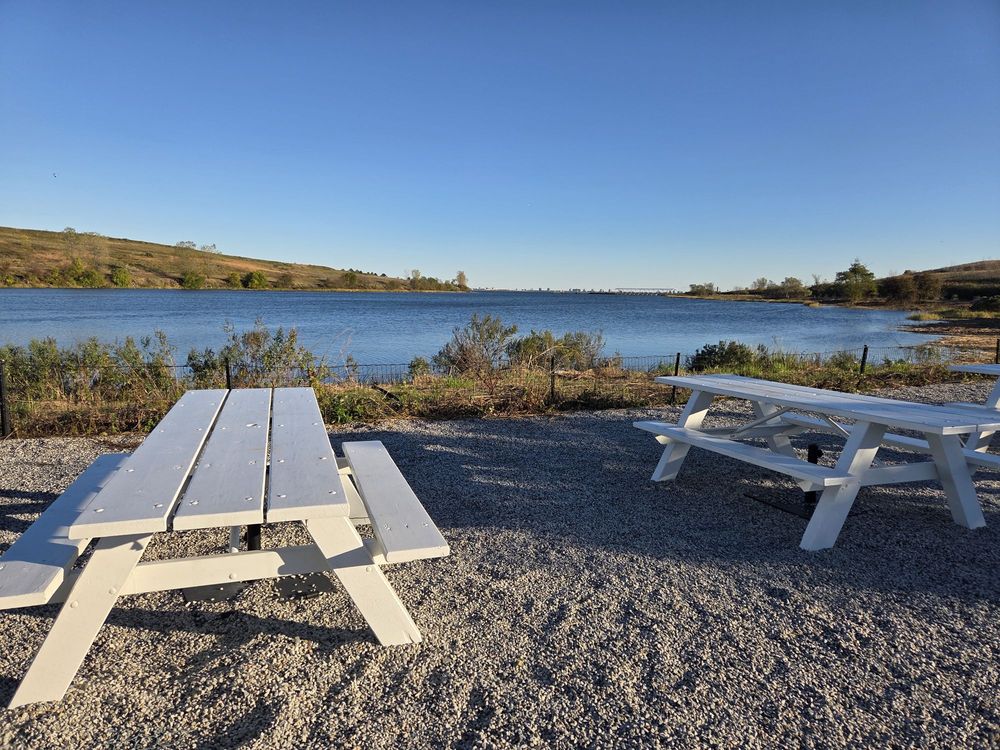
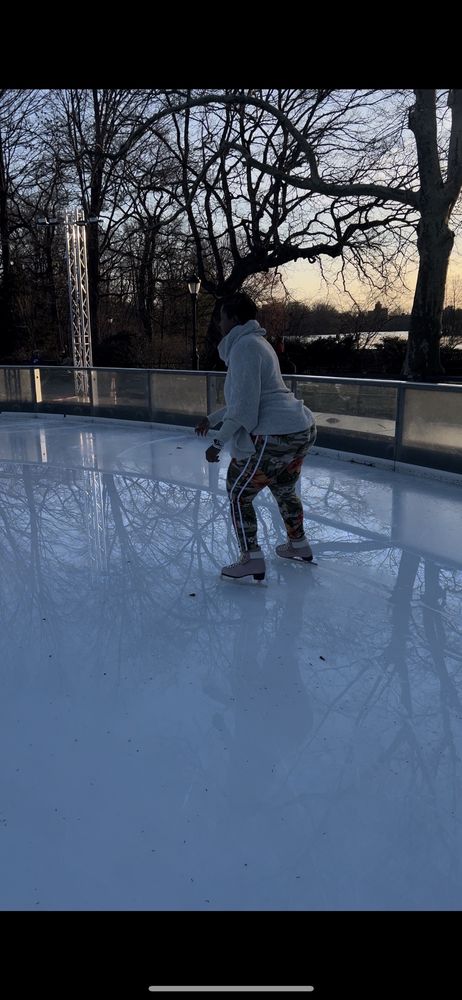
--- ## Chapter One: The Morning of Marvelous Possibilities The sun peeked through my window like a golden eye winking at the world, and I stretched my short, velvety white legs until my paws trembled with joy. Today was the day—the day my family had whispered about for weeks, their voices bubbling with excitement like a pot of Mariya's famous hot chocolate. We were going to LeFrak Center at Lakeside Prospect Park, a magical place where water turned to glass and people danced upon it with blades of silver. "Pete! Pete!" Roman's voice thundered through the house, carrying that particular vibration that meant adventure approached like a freight train of happiness. "Wake up, sleepy pup! The ice waits for no one!" I tumbled from my cushioned bed, my makeup-streaked eyes probably looking more like a raccoon's than the fierce adventurer I felt myself to be. The streaks of color around my eyes—Mariya had applied them yesterday for a family photo—seemed to shimmer with their own excitement, as if they too sensed the grandeur of the day. In the kitchen, Lenny stood at the stove wearing his "World's Okayest Dad" apron, which I always found delightfully modest given his exceptional fathering abilities. "Morning, little storyteller," he said, flipping pancakes with the confidence of a man who had never once let a pancake hit the ceiling. "Today's the day we teach you to conquer the ice." "Or at least not to eat it," Mariya added, kissing the top of my head as she swept past with coffee steaming like a witch's brew. Her eyes held that particular sparkle she got when nature revealed its secrets—the same look she had when she showed me how dandelions could tell time by blowing their seeds across the wind. Roman dropped to his knees before me, his face serious as a judge but his eyes dancing like fireflies. "Pete," he whispered, "the ice rink is HUGE. Like, bigger than the backyard. Bigger than the park we walk to. Maybe even bigger than my imagination, and that's saying something." I wagged my tail, but something cold and unfamiliar prickled in my chest. Water. The word echoed in my mind like a stone dropped down a well. Water that could swallow, that could hide what lay beneath, that could turn warm courage into shivering uncertainty. I pushed the thought aside, burying it beneath my natural enthusiasm, but it remained—a seed of doubt in the garden of my excitement. "Who's ready for stories?" boomed a voice that made the windows rattle and the pancake stack wobble with delight. Baron Munchausen burst through our kitchen door like a comet wearing an overcoat, his mustache so magnificent it seemed to have its own postal code. He was ancient in the way oak trees are ancient—wrinkled with time but sturdy with wisdom, his eyes holding the mischievous light of someone who had seen wonders and insisted on creating more. "Baron!" the family chorused, and even I yipped my welcome, my earlier worry scattering like startled pigeons. "Young Pete," the Baron intoned, kneeling with the creaking of joints that had climbed mountains and fought moon men—or so his stories claimed, "I have brought my faithful friends, for today we shall need all the courage we can muster!" From behind his coattails emerged Tom, the cat whose gray fur held the soft sheen of well-loved velvet, his eyes green as spring leaves and twice as curious. Upon Tom's shoulder sat Jerry, the bravest mouse in any world, his brown fur smooth as polished wood, his tiny paws gripping Tom's collar with the confidence of one who had faced vacuum cleaners and lived to tell the tale. "Tom! Jerry!" I barked, spinning in a circle of pure joy. "You're coming skating?" "Someone must keep you from trouble," Tom purred, though his whiskers twitched with his own excitement. "And someone must be small enough to hide in your pockets when the cold becomes too fierce," Jerry added, tipping an imaginary hat. As we loaded into the family car—me squeezed between Roman and the Baron, with Tom and Jerry nestled in a scarf-nest on Mariya's lap—I stared out at the passing world and felt that cold seed of worry try to sprout again. Water. Ice. Frozen water, yes, but water nonetheless. What if it cracked? What if I fell through? What if— "Pete," Roman said quietly, his hand finding my scruff with the perfect pressure that always calmed my racing heart, "I've got you. No matter what." And I believed him, because that was the miracle of Roman—he made believing as natural as breathing. --- ## Chapter Two: The Kingdom of Glass and Wonder Prospect Park unfolded before us like a storybook illustration come to life, each tree wearing winter's naked dignity, each path promising secrets for curious paws. But it was the lake that captured my attention, held it hostage, made my breath catch in my throat like a trapped bird. LeFrak Center sat upon its edge, a palace of possibility, but beyond it stretched the true marvel—Lakeside itself, where the water had surrendered to winter's embrace and transformed into something otherworldly. The ice gleamed like a giant's discarded mirror, reflecting clouds and courage alike, promising both beauty and peril in equal measure. "It's... it's enormous," I whispered, my voice barely audible above the wind's gentle humming. Mariya knelt beside me, following my gaze, understanding without words as mothers do. "Water remembers being liquid," she said softly, her breath clouding the air like a whispered secret. "But ice has its own memory—of holding, of supporting, of letting people dance where they once could only swim. It's still water, Pete, but it's water that has chosen to be strong for us." Her words settled over me like a warm blanket, yet I felt the tremor in my legs, the ancient instinct that saw water and prepared for sinking, for struggle, for the dark press of something greater than myself. Inside the rental area, the warmth and bustle distracted me momentarily. The smell of hot pretzels mingled with the sound of blades being sharpened, of laughter and the occasional yelp of someone finding their feet less steady than expected. Roman laced his skates with the focused precision he applied to all things, his fingers sure and purposeful. "Roman," I said, pawing at his knee, "what if the ice... what if it doesn't like me?" He paused, his dark eyes finding mine with the gravity of a promise being forged. "The ice doesn't have feelings, Pete. It's just... frozen water. And water—" he smiled, that particular Roman smile that held both teasing and tenderness, "water is basically just sky that got tired of floating and needed a lie-down." I barked a laugh, startled from my worry, and the Baron chuckled from where he adjusted his own skates—elaborate affairs with fur trim that looked more suited to a royal court than a Brooklyn skating rink. "Young Pete," the Baron boomed, producing from his coat a monocle that surely had no practical application yet somehow seemed essential, "I once skated upon the frozen tears of a mountain giant. The ice there was formed from sorrow, yet it held me with the strength of joy. This ice," he gestured expansively, "is formed from the ordinary magic of winter, which is perhaps the strongest magic of all." Tom had somehow acquired tiny skates for his paws, and Jerry perched upon his head like a furry figurehead, both of them looking remarkably composed for creatures about to attempt bipedal locomotion on frozen water. "You're not afraid?" I asked them, my voice small even to my own ears. Tom's whiskers twitched. "I am a cat. Fear is merely excitement wearing a different coat." "And I," Jerry squeaked, thumping his tiny chest, "am too small for fear to find me. It would have to search through all the big feelings first, and by the time it reached me, courage would have built a wall." Their bravery shamed and inspired me in equal measure. I was Pete the Puggle, storyteller and adventurer! Yet here I stood, trembling at the edge of wonder, paralyzed by possibilities that existed only in the shadowed corners of my imagination. Lenny appeared with a contraption that looked part-sled, part-throne—a plastic platform with a handle, clearly designed for uncertain creatures like myself. "Ice helper," he announced proudly. "For puggles who want to participate without, you know, immediately demonstrating their figure skating prowess." The family laughed, and I felt my tail wag of its own accord, the first crack in my wall of worry. Maybe participation didn't require immediate courage. Maybe courage could be borrowed, piece by piece, until enough accumulated to call my own. --- ## Chapter Three: First Steps Upon the Glass Sea The cold embraced us like an enthusiastic relative—somewhat overwhelming, undeniably present, yet ultimately well-intentioned. I stood upon the ice helper, Roman guiding me with the gentle pressure of his gloved hands, and watched my family transform before my eyes. Mariya moved with unexpected grace, her usual hurried energy translated into something fluid and deliberate. Lenny, in contrast, performed what could generously be called "enthusiastic improvisational movement," his arms windmilling with joyful abandon as he navigated the ice like a ship in a particularly determined storm. "Pete!" Roman called, his skates carving confident arcs. "Feel that? You're doing it! You're skating!" I was not, in fact, skating. I was being skated, which is an entirely different proposition involving significantly less personal agency yet considerable more stability. But his enthusiasm was infectious, and I felt my earlier terror beginning to thaw, melting like snow upon a warm window. The Baron, meanwhile, had attracted something of an audience. He skated—if such a word can encompass his particular method of locomotion—with Tom and Jerry performing an elaborate routine that involved the cat spinning the mouse upon his paws like a tiny ballerina, both of them executing moves that defied both physics and the expectations of their traditional relationship. "We have an understanding," Tom explained later, when I asked about this unprecedented cooperation. "He does not place me in elaborate death traps, and I do not chase him into the refrigerator. Mostly." The morning passed in a blur of cold cheeks and warm laughter, of falling and rising, of the particular music that ice makes when blades kiss its surface—a crystalline whisper that seemed to speak directly to something ancient and joyful in my puggle heart. Then came the afternoon, and with it, the shadows began to lengthen. We had ventured further than intended, following the Baron's tales of a "hidden cove of particularly resonant ice" where, he claimed, one could hear the songs of fish who had fallen asleep before winter's arrival and now hummed in their frozen dreams. The family spread across the ice like colorful confetti, Mariya and Lenny holding hands, Roman showing off a spin that ended more abruptly than planned. "Stay close, Pete!" Mariya called, but the wind snatched her words and carried them elsewhere. I felt the ice helper begin to drift, a subtle shift that became a movement, that became a separation. Roman's hand, momentarily distracted by his recovery from the spin, no longer anchored me. The plastic platform, designed for fun rather than navigation, responded to some hidden current or perhaps merely the accumulated chaos of a thousand skaters, and I found myself sliding away from my family like a leaf upon a stream. "Roman!" I barked, but the wind was greedy and swallowed my fear. The distance grew. Ten feet. Twenty. The sounds of the rink diminished, replaced by a silence that felt heavy with intention. I had slid beyond the marked area, beyond the watchful eyes of lifeguards, beyond the comfortable boundaries of the known into something that felt like the edge of a map where cartographers write "here be dragons." The ice grew darker here, thicker perhaps, or perhaps merely different—older, more mysterious, holding secrets in its crystalline depths. And then I heard it: a crack. Not the playful crack of settling ice, but something deeper, something that resonated in my bones like a bass note played upon the world's largest instrument. Water. There was water beneath me, water that had not fully surrendered to winter's authority, water waiting with the patience of eternity for the ice to return to its true nature. My terror returned tenfold, a beast I had thought defeated rising from the depths of my courage with renewed vigor. The ice helper felt suddenly fragile, a toy upon an ocean, and I was very small, very alone, and very much afraid of the darkness gathering both above and below. "Help!" I cried, but my voice emerged as a whimper, small and swallowed by the vastness. The sun, so bright this morning, now seemed to retreat behind clouds that gathered with suspicious speed. The temperature dropped perceptibly, or perhaps that was merely my fear manifesting physically. The shadows lengthened, merged, became something approaching darkness though the hour was barely late afternoon. I was alone. I was separated. And the water waited beneath the glassy surface, patient and terrible and endless. --- ## Chapter Four: The Gathering Darkness and the Baron’s Gift Time became strange in that liminal space between safety and the unknown. Each breath emerged as crystalline vapor, each heartbeat thundered in my ears like a drum calling for courage that I could not summon. The darkness was not merely the absence of light; it was a presence, a weight, something that pressed against my eyes and made the world feel smaller, closer, more intimate with danger. "Pete! Pete!" The voice seemed to come from dreams, from memory, from hope itself. I could not answer. My throat had closed around my fear, compacting it into a diamond of terror that no sound could penetrate. The darkness deepened, and I realized with the clarity of absolute dread that I was afraid not merely of water, not merely of separation, but of the dark itself—that ancient fear written into every living thing, the terror of being small in a large world without the comforting presence of those who make the darkness bearable. "Pete!" Closer now, accompanied by the scrape of skates, the breathless effort of someone moving fast. "There! I see him!" Roman emerged from the gloom like a figure from myth, his face flushed with exertion and relief, his eyes finding mine with the force of a promise kept. Behind him came the Baron, moving with surprising speed for one so ancient, Tom and Jerry clinging to his coattails like furry pennants. "Young Pete!" the Baron called, his voice carrying that particular resonance that made even the darkness seem to pause and listen. "Fear is a story we tell ourselves, but it need not be the only story!" He raised his hand, and from it emanated a light—not the harsh light of modern convenience, but something softer, warmer, the color of summer afternoons and fireside tales. It spread across the ice like spilled honey, illuminating the frozen world with gentle radiance. "Baron," I whispered, my voice cracking but present, "I'm scared. The water. The dark. Being alone. They're all so big." The Baron knelt upon the ice, and despite the cold, despite the darkness that still lurked beyond his light's reach, his face held only warmth. "They are big," he agreed. "But you, young Pete, are bigger than you know. Not in size—" he chuckled, his mustache quivering, "for you are delightfully compact. But in heart. In courage. In the capacity to face what frightens you and discover it was never as terrible as your imagination painted it." Tom and Jerry approached, their usual banter replaced by solemn concern. Tom pressed his warm body against my shivering side, and Jerry climbed upon my paw, his tiny weight somehow anchoring me to the world. "We've all been afraid," Tom admitted, his green eyes reflecting the Baron's light. "I once spent three hours inside a paper bag because I feared what lay outside it. Turns out, it was just Tuesday." "And I," Jerry added, his small voice carrying surprising force, "have been chased by things ten thousand times my size. Fear is the price of living interestingly, Pete. But it need not be the whole cost." Roman gathered me in his arms, and I felt the steady beat of his heart against my fur, the rhythm of safety and belonging. "I should never have let go," he murmured into my ear. "I'm sorry, Pete. I'm so sorry." I licked his chin, tasting the salt of his exertion, feeling the love that bound us more surely than any leash. "You came," I said. "You found me. That's what matters." The Baron's light flickered, and with it, the darkness seemed to press closer, sensing perhaps that its dominion was challenged. "We must return to your family," the old man said, his voice for the first time carrying strain. "My gift is not infinite, and the shadows here are... older than I expected." We moved as one, Roman carrying me, the Baron leading with his luminous hand, Tom and Jerry scouting ahead with the confidence of creatures who had faced worse and emerged with stories to tell. The ice that had seemed so threatening now merely seemed cold, and cold was something I understood, something I could face with the warmth of my family waiting at journey's end. Yet the darkness followed, whispered at the edges of the Baron's light, promising that it would be there whenever I faltered, whenever I forgot my courage and let fear write my stories. I understood then that courage was not the absence of fear—how could it be, when fear was so natural, so human, so puggle?—but rather the decision to move forward despite its presence, to write new stories with braver pens. --- ## Chapter Five: The Second Confrontation and the Ice's Secret The return journey should have been straightforward, but the world had shifted in our absence, or perhaps we had shifted within it. The familiar landmarks of the rink had transformed, become strange, as if viewed through the lens of a dream half-remembered. "Baron," Roman's voice held the careful neutrality of someone refusing to commit to panic, "are we going the right way?" The Baron paused, his magnificent mustache drooping with something that might have been uncertainty—an expression so alien upon his features that I felt fresh worry bloom in my chest. "The ice," he said slowly, "is not merely frozen water. It is memory. It holds what has passed upon its surface, remembers the footsteps and the falls and the fleeting moments of joy. And sometimes," he turned to meet my eyes with something like apology, "sometimes it brings back what we have tried to skate away from." The darkness around us shifted, coalesced, took form—not a monster with fangs and claws, but something subtler and more personal. I saw myself as I had been that morning: small, trembling, letting fear define my first moments upon the ice. I saw the separation from my family replayed, felt again the crushing weight of alone-ness. I saw every time I had ever failed to be brave, every moment when courage had seemed too heavy a burden to bear. "You're showing me my fears," I whispered, understanding flooding through me like the warmth of recognition. "You're making me see them." "Not I," the Baron corrected gently. "The ice merely reflects. These shadows are yours, young Pete. They always were." And they were—my fears given form, my insecurities made visible, every doubt I had ever entertained about my own sufficiency standing before me in the half-light. The water beneath the ice seemed to call to me, promising the ultimate surrender, the final escape from the burden of trying to be brave. "Pete." Roman's voice, steady as his heartbeat had been. "Pete, look at me." I looked. His face was young, still bearing the softness of not-quite-adulthood, yet in his eyes lived something ancient and unshakeable: love, unearned, unreserved, unconditional. "You don't have to be brave for me," he said. "You don't have to be anything. Just Pete. Just my Pete." Tom wound around my legs, his purr a motorboat of comfort. Jerry climbed to my shoulder, his tiny paws warm against my neck. "We choose our stories," the mouse whispered, and I heard in his voice the weight of a thousand chases survived, a thousand narrow escapes transformed into legend. The Baron's light pulsed, and I understood what he had been trying to teach me: that his gift was not the light itself, but the reminder that light existed, that we carried it within us always, waiting only for the decision to let it shine. I stepped from Roman's arms—not far, not without trembling, but with purpose. I placed my paws upon the ice, felt its cold through my pads, its solidity and its mystery. The darkness-shapes of my fears gathered closer, but I spoke to them not with denial but with acceptance. "You are part of me," I told them, and my voice didn't tremble. "You are the shadows that make the light meaningful. But you do not lead me. You do not define me." I walked forward, each step a negotiation between terror and determination, each breath a victory against the part of me that whispered surrender. The ice beneath my paws sang with a thousand stories, and I added my own to their number: a puggle small but growing, afraid but moving forward, separate but seeking reunion. The darkness did not disappear—it retreated, took its proper place as background rather than foreground, as seasoning rather than substance. And ahead, visible now, was the warm glow of the rink's proper area, the sounds of my family's worry turning to joy as they spotted our approach. "Pete! Roman! Baron!" Mariya's voice broke on my name, and then they were upon us, all arms and tears and laughter that bordered on the hysterical, Lenny's strong hands lifting me, Mariya's kisses upon my head, the whole chaotic symphony of family finding what was lost. --- ## Chapter Six: The Reunion That Was Always Coming The warmth of the rental area enveloped us like a collective exhale, all the tension of separation and fear melting like the ice itself under spring's eventual return. Yet this was a different melting—transformation rather than destruction, the alchemy of experience turning into wisdom. Mariya held me as if I might disappear again, her usual composure cracked to reveal the raw love beneath. "Never again," she murmured, more prayer than statement. "Never let go, never lose sight, never—" "Mariya," Lenny interrupted gently, his hand upon her shoulder, "we cannot promise never to be separated. We can only promise to always seek reunion." His words held the weight of truth, the acknowledgment that love exists not in the prevention of all harm but in the relentless commitment to healing when harm occurs. I licked Mariya's tears, tasting the salt of her fear and relief, feeling the steady rhythm of her heart returning to normal. Roman sat heavily, his skates finally removed, his face a complex map of emotions. "I let go," he said, addressing the room but speaking to himself. "I was showing off, and I let go, and Pete—" "And Pete is here," the Baron finished, settling into a chair with the grateful groan of joints finally permitted rest. "Found. Reunited. The story continues with happy punctuation." Tom and Jerry, their adventure concluded, had found a heating vent and curled together in an entanglement that would have seemed impossible to their cartoon incarnations—enemies become friends, or perhaps friends who had always been, their conflict merely the surface story that hid deeper currents of affection. "We are a strange family," I observed, and the room filled with laughter that held no mockery, only recognition and relief. "Strange is just another word for interesting," Lenny observed, and I heard in his voice the pride of a father who had built something unconventional and beautiful. The afternoon had aged into evening without our notice, and through the windows I saw that darkness had fully claimed the world outside. Yet this darkness held no terror now—it was the darkness of late hours and tired bodies, of stories concluding and sleep approaching, of the gentle closure that precedes new beginnings. "Tell us," Mariya said to me, settling into the circle of family with the Baron's light now merely a warm memory, "what you learned today." And I, Pete the Puggle, natural-born storyteller, found that the tale had changed me as much as any audience. "I learned," I began, pausing to find the right shape for my thoughts, "that fear is not the enemy. The enemy is letting fear write the whole story, rather than just one chapter." I looked at Roman, my best friend and sometimes rival, and saw in his eyes the reflection of my own growth. "I learned that being found is wonderful, but finding yourself is necessary. That courage isn't about not being afraid—it's about being afraid and choosing to move anyway." The Baron nodded, his mustache trembling with what might have been emotion or merely the draft from the door. "Well spoken, young Pete. The best stories are those where the hero returns changed, carrying new wisdom like a lantern for others." "And what of water?" Lenny asked, his teasing gentle. "Will our puggle swimmer grace us with his presence at the beach this summer?" I considered, felt the old fear stir but not dominate, felt the new courage like a muscle still developing, tender but present. "Perhaps," I allowed. "With practice. With patience. With people I trust beside me." Mariya squeezed me gently. "That is all any of us can ask," she said. "For ourselves or for each other." --- ## Chapter Seven: The Final Glides and the Promise of Tomorrows We returned to the ice one final time, though "we" had expanded to include our new-old friends, our companions in adventure. The Baron led an elaborate procession, Tom and Jerry performing their unlikely duet upon skates that seemed to defy the very concept of friction, the whole scene lit by lights that were merely lights now, technology rather than magic, yet no less wonderful for that. I skated—not upon the helper this time, but truly, my paws finding purchase on the ice with a confidence that would have seemed impossible that morning. Roman guided me, his hand sometimes supporting, sometimes merely present, his pride in my progress visible in the beam that split his face. "You're doing it," he whispered, and I heard in his voice the same wonder I felt in my heart. "You're really doing it, Pete." The ice held me. The water beneath, once terrifying, now seemed merely the ice's other form, the summer self that would return when winter released its hold. I understood now that transformation did not erase what came before—it built upon it, included it, made it part of a larger story. The darkness beyond the rink's boundaries remained, would always remain, but I had learned to carry my own light: the memory of Roman's hand in mine, the Baron's improbable wisdom, Tom and Jerry's unlikely friendship, the absolute certainty of my family's love. "Pete," Mariya called, executing a spin that was genuinely graceful, "come skate with me!" And I did, releasing Roman's hand with a trust that felt earned rather than assumed, gliding toward my mother with a heart full of the day's accumulated courage. The ice sang beneath my paws, the cold air filled my lungs like possibility itself, and for a moment—suspended between movement and stillness, fear and freedom, the person I had been and the person I was becoming—I understood what it meant to be truly alive. The Baron skated past, his coattails streaming behind him like the banners of a dozen imaginary kingdoms, Tom and Jerry riding his shoulders with the casual arrogance of those who had earned their place in any story they chose to inhabit. "Tomorrow," the Baron announced to no one in particular, "I depart for the Arctic Circle, where I understand the penguins are planning something. I shall of course intervene." "There are no penguins in the Arctic," Lenny observed, but his smile suggested he wasn't entirely sure, and perhaps preferred the uncertainty. "All the more reason for intervention!" the Baron concluded, and his laughter joined with ours, a chorus of joy that seemed to warm the very ice beneath our feet. As the evening wound toward its inevitable conclusion, I found myself upon the ice's edge, looking out at the dark water beyond the skating area, the lake that had not frozen, that moved with currents hidden and mysterious. My old fear stirred, but differently now—not as master but as memory, a bookmark in the story of my growth. "Proud?" Roman asked, appearing beside me. "Of what I did today," I answered honestly. "And aware of what I still have to learn. Both. Together." He nodded, understanding as he always did, and together we watched the water move under stars that had emerged while we weren't looking, the universe continuing its indifferent magnificent dance, our small story moment complete yet resonating with larger meanings. --- ## Chapter Eight: Home, Heart, and the Stories We Become The car ride home held a quality of sacred ordinary, the kind of moment that exists between adventures, the necessary rest that allows adventure to be fully processed, fully integrated, fully become part of who we are. Mariya hummed something tuneless and content. Lenny drove with one hand, the other reaching back periodically to ensure I was still present, still real, still his. Roman dozed against the window, his face in repose showing the child he had been, the adult he would become. The Baron had departed with theatrical farewells, promises of future encounters, and the mysterious statement that he would be "in the neighborhood" whenever stories needed an extra spark of the improbable. Tom and Jerry had accepted a ride home with a family whose cat and mouse they apparently also were—somehow, in the Baron's wake, such impossibilities had become merely unlikely. "Pete," Lenny said, his voice carrying the particular tone that preceded important observations, "what you did today—facing your fear, finding your courage—that's something many people never fully achieve." "I had help," I pointed out, because it seemed important to acknowledge that courage was rarely truly solitary. "True," Mariya agreed. "But help is available to everyone. The courage to accept it, to use it, to make it part of your story—that's what distinguishes those who grow from those who merely... persist." We pulled into our driveway, our home waiting with lights on as if it too had worried, had kept vigil for our return. Inside, the familiar smells of our life together enveloped me—old wood and cooking spices, the particular scent of each family member's chosen spaces, the accumulated comfort of years of love. Roman, revived by the journey's end, gathered us in the living room with the gravity of one about to conduct important business. "We need," he announced, "to debrief. Properly. Pete's adventure, what we learned, all of it." Lenny produced hot chocolate with the ceremony of a ritual, Mariya distributed blankets, and we settled into our accustomed positions with the ease of long practice. I found my spot upon Roman's lap, felt his heartbeat beneath my paws, the steady rhythm that had marked my entire life with this family. "So," Roman began, looking at me with the intensity of one who had been genuinely frightened and genuinely relieved, "what was the worst part?" "The being alone," I answered without needing to consider. "The separation. The not knowing if—" my voice caught, surprising me with the residual power of that fear, "if I would be found. If I would find my way back." "And the best part?" Mariya prompted. "The finding," I said. "The reunion. Knowing that no matter how far I drifted, there were people who would come, who would search, who would not rest until—" I stopped, overcome by the magnitude of this gift, this absolute certainty of being loved enough to be sought. The Baron had said something, during our journey through darkness, that returned to me now: "Every story of separation contains within it the seed of reunion. The greater the separation, the more precious the return." "I think," I continued slowly, feeling my way toward truths I was only beginning to articulate, "that the fears won't disappear completely. The water will always be somewhat scary. The dark will always hold some mystery. Being apart from you will always feel wrong. But I think—" I paused, found the thought, shaped it, "—I think that's okay. That courage isn't about eliminating fear, but about not letting fear eliminate possibility." Lenry wiped his eyes with theatrical exaggeration, though his tears were genuine. "Our little philosopher," he teased gently. "Where did you learn such wisdom?" "From all of you," I answered simply. "From Roman never letting go even when he literally had to let go. From Mom seeing magic in ordinary things. From Dad's terrible jokes that somehow make everything feel manageable. From friends who shouldn't work together but do. From an old man with impossible stories and a light that turned out to be inside me all along." We sat in comfortable silence, the hot chocolate cooling, the night deepening, the world outside continuing its indifferent rotation. And in that silence, I felt something shift, some final integration of the day's experiences, the last puzzle piece clicking into place. "I want to go back," I announced, surprising myself. "Not today, not tomorrow, but someday. I want to skate again, to feel that possibility, to know that I faced something and grew larger in the facing." Roman squeezed me gently. "We'll go together," he promised. "All of us. Every winter, if you want. Until the ice holds no fear at all, or until it holds only the good kind, the kind that makes life exciting rather than paralyzing." "Deal," I agreed, and we sealed it with a lick and a laugh, with the easy affection that comes from shared survival and mutual growth. Mariya gathered us all in her gaze, her nurturing nature finding expression in the simple act of seeing, of witnessing, of bearing loving attention. "To Pete," she toasted with her cooling chocolate, "and to all of us, for the courage to be afraid and to move forward anyway." "To us," we chorused, and the words held all the weight of family, of chosen bonds and given love, of the stories we tell together and the people we become in the telling. As sleep finally claimed me, curled upon my cushion with Roman's hand resting upon my back, I thought of the Baron's light, of the way it had seemed to come from everywhere and nowhere, illuminating without demanding, revealing without exposing. I understood now that we all carried such light, that love was merely another name for this illumination, and that the darkness, however deep, was never so deep that light could not pierce it. Tomorrow would bring new stories, new fears to face and freedoms to find, new chapters in the ongoing tale of Pete the Puggle and his magnificent, ordinary, extraordinary family. But for now, in the warmth and the dark and the absolute safety of being known and loved, I slept. And in my dreams, I skated upon a lake that held no fear, under stars that whispered my name, accompanied by voices I would always recognize, would always seek, would always return to. Home. *** The End ***
Use these buttons to read the story aloud:
No comments:
Post a Comment