"*** Pete the Puggle and the Legend of Bear Cut Preserve ***"🐾

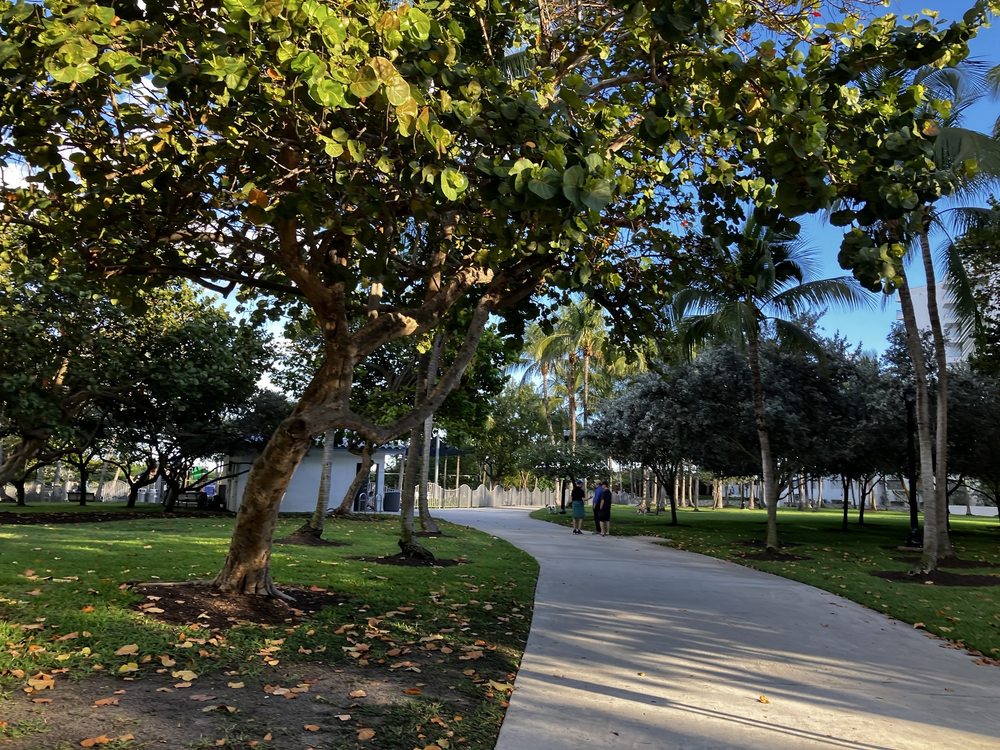
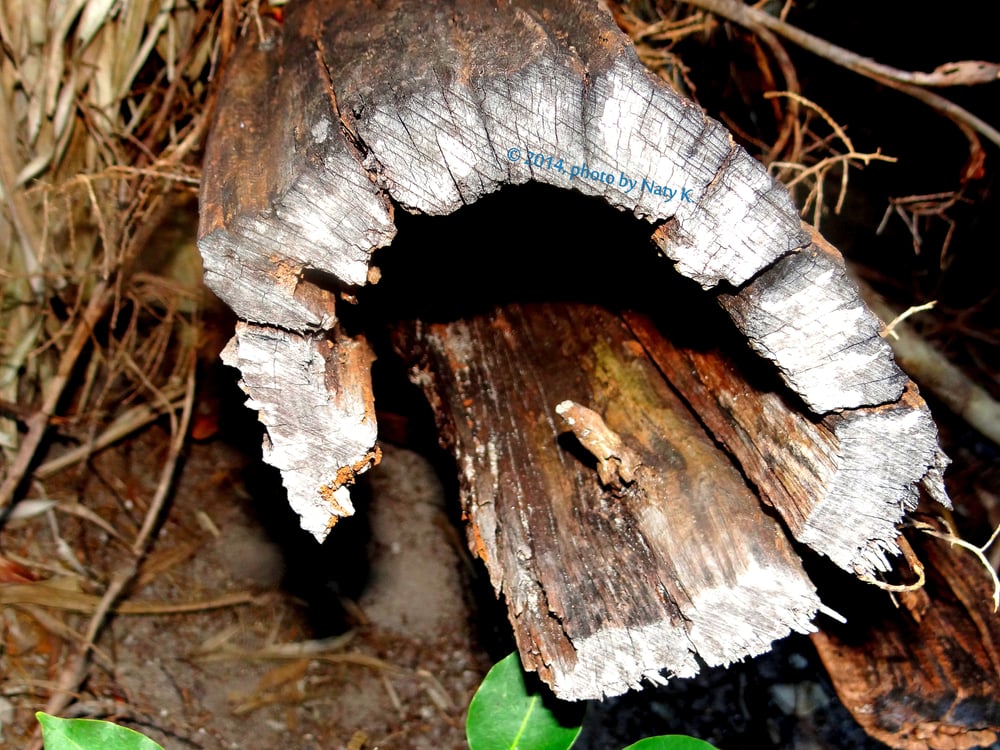
--- ## Chapter One: The Morning of Marvels The sun spilled golden syrup through my bedroom window, and I woke with my velvety white ears twitching like butterfly wings. Today was the day—the day Lenny had been promising for weeks, the day we'd finally visit Bear Cut Preserve, where the mangroves grew thick as storytellers' beards and the water shimmered with secrets older than my great-great-grandpuggle's wisest dreams. "Pete! Pete!" I yipped, my paws skittering across the hardwood like popcorn in a hot pan. "The sun is up! The birds are singing! The adventure is calling my name!" Mariya emerged from the kitchen, her laughter warm as fresh-baked bread. "Someone's eager," she said, kneeling to scratch behind my ears exactly where the world felt most perfect. Her fingers smelled of cinnamon and morning coffee, and I leaned into her touch like a flower seeking sunshine. Roman thundered down the stairs, his sneakers announcing his arrival like drums before a parade. He wore his favorite adventure shirt—faded blue with a tiny compass sewn near the collar. "You ready to explore, little dude?" he asked, and I spun in a circle that said *yes yes yes* before my thoughts could even catch up. Lenny appeared last, his smile crinkling the corners of his eyes like pages in a well-loved book. "Bear Cut Preserve was my favorite place as a boy," he said, his voice dropping to the tone he used for stories that mattered most. "The mangrove tunnels feel like walking through green cathedrals. But Pete—" he knelt to meet my eyes, "—there's water there. Deep water, moving water. Are you ready for that?" My heart did a small, nervous somersault. Water. The word alone made my paws want to grip something solid. I'd never spoken of it, never found the language for the way my chest tightened at the sight of waves, the way my brave puggle heart seemed to shrink inside my velvet fur. But I looked from Lenny's patient eyes to Roman's excited grin, to Mariya's gentle hope, and I found myself nodding. "Adventure water!" I declared, though my voice wobbled slightly, like a leaf on an uncertain breeze. We packed the car with water bottles and sandwiches and a bright red first-aid kit that Mariya insisted upon. I rode between Roman and a cooler of lemonade, my nose pressed to the window as Florida unspooled around us—palms giving way to pines, suburbs dissolving into wild green places where the sky felt bigger and the air tasted of salt and mystery. The preserve announced itself with a wooden sign weathered silver by sun and storm: **Bear Cut Preserve—Enter and Wonder.** We parked in crushed shell that crunched like cereal underfoot, and I stood at the trailhead, my heart hammering a drumbeat of excitement and something else, something that felt like the first rumble of distant thunder. "Pete?" Roman knelt beside me, following my gaze to where the path disappeared into mangrove shadow. "You okay, buddy?" I wanted to say *I don't know*, to confess the way water had always seemed like a living thing that might swallow my smallness whole. But instead I pressed my nose against his palm and whispered, "I'm ready to be brave." That was the moment I met Timmy. He emerged from a nearby picnic table like a tiny lion from golden grass—long-haired, chestnut and white, with eyes that held the calm of old forests. "First time at the Cut?" he asked, his voice surprisingly deep for such a compact frame. "Timmy!" Mariya exclaimed, recognizing him from the preserve's social media page. "You're the ranger dog!" "Retired ranger dog," Timmy corrected, though his tail betrayed his pleasure at the recognition. "Now I'm just a wanderer who knows these trails better than the herons do. You look like you need a guide." "We'd be honored," Lenny said, and I watched the easy respect between them, human and dog, and felt something settle in my chest. Maybe courage wasn't the absence of fear. Maybe it was walking forward anyway, with friends beside you. As we stepped onto the trail, the mangroves closed around us like green fingers clasping in prayer. The air grew thick and alive with the music of hidden creatures. And somewhere ahead, I could already hear it—the whisper of water moving through its ancient channels, waiting to test whatever bravery I could find. --- ## Chapter Two: The Cathedral of Green and Gold The mangrove tunnel swallowed us whole, and I understood why Lenny had called it a cathedral. Light filtered through the canopy in fractured prayers, illuminating roots that twisted from the water like the gnarled fingers of earth-giants, reaching, always reaching, for something they could never quite grasp. The smell overwhelmed my puggle senses—decay and growth in eternal dance, salt and mud and the sweet rot of fallen leaves becoming something new. "Stay on the boardwalk when we reach it," Timmy instructed, his long hair brushing the wooden planks as we emerged from the root-maze onto a more civilized path. "The tides here are sneaky. One moment the trail is dry, the next—" he gestured with his nose to where water lapped at support posts, "—you're swimming whether you planned to or not." Roman walked beside me, his hand occasionally brushing my back, and I felt the comfort of his presence like a warm blanket on a cold morning. But I also felt something else—the boardwalk swayed slightly with our footsteps, and beneath the slats, the water moved in dark ribbons, carrying the reflected sky in shattered pieces. "Pete?" Timmy had stopped ahead, watching me with those ancient-forest eyes. "You smell like someone who's had a bad water experience." I lowered my nose, embarrassed. "I was a puppy," I admitted. "I fell into a bathtub. The water was warm, but it went over my head, and I couldn't find the air, and—" my voice cracked like dry earth, "—everything went dark, and I thought that was the end of Pete." Mariya knelt so suddenly her knees thumped the wood. "Oh, my sweet boy," she whispered, and her arms around me smelled of the lavender soap she loved, and suddenly I was crying, little puppy sobs that shook my velvet frame. "I never told," I hiccupped. "I didn't want to be less brave than everyone expected. Pete the Adventurer. Pete the Bold. What if I'm just Pete the Scared?" Lenny's laugh was soft as wind through palms. "Pete the Bravest-Scared I ever met," he said. "Do you know what courage is in my book? It's being terrified and showing up anyway. It's crying in the lavender and still walking toward the water that hurt you." Timmy approached, his small frame carrying unexpected gravity. "The water here is different," he said. "It's not a bathtub. It's alive, it moves with the moon's breathing. And I'll be with you. I've pulled struggling raccoons from these channels, guided lost manatees back to open bay. Trust doesn't come easy to me either, little puggle. But trust is the only way through some things." Roman stood, extending his hand—not to pull me, but to offer itself. "We don't leave family behind," he said, and I heard in his voice the boy he'd been when he first held me, trembling, as a puppy. "We go together, or we don't go." I placed my paw in his palm, feeling the familiar lines of his life there, the calluses from guitar strings and bike handles and all the ways he'd held me through thunderstorms. Together, we walked to where the boardwalk ended and the real trail began, where mud squelched between toes and roots created a labyrinth only the wild-hearted could navigate. The water appeared first as sound—a rhythmic lapping, a whispered promise of depths unknown. Then we rounded a bend in the trail, and there it was: Bear Cut itself, a narrow channel where the preserve's namesake creek met the greater bay, where currents created patterns like fingerprints on the surface, where small fish leaped in silver arcs and herons stood statue-still as judgment. My paws rooted themselves to the earth. The Cut stretched perhaps twenty feet across, but in my eyes it became an ocean, a void, a memory of suffocation wearing water's face. My breath came short and fast, and the world narrowed to the threat of that dark surface, the certainty that it would rise over my head and take me back to that puppy-darkness where air was only a dream. "Pete." Roman's voice, steady as the moon. "Pete, look at me. Not at the water. At me." I turned my eyes to his, those brown pools that had watched me grow, that had wept when I was sick and laughed at my antics and held everything I meant to this family. In them, I saw myself reflected—not as the scared puppy drowning in memory, but as something braver, something still becoming. "Breathe with me," he instructed, and we inhaled together, four times, deep and slow. "Now tell me what you see." I forced my gaze back to the Cut. "Water," I managed, my voice a thread. "Dark water. Deep water. Water that—" I stopped, really looking now, past the fear to the reality. "Water that's moving toward the bay. Water with small fish jumping. Water that... that the heron isn't afraid of." "The heron lives here," Timmy observed, nodding to where one stood one-legged on the far bank, regal and unconcerned. "The mullet live here. The manatees visit. Water isn't only what hurt you, Pete. It's also what sustains everything you love about this place." And I saw it then, as if scales fell from my eyes like shed petals. The Cut connected things—fresh to salt, forest to bay, hidden to open. It was passage, not prison. Movement, not stagnation. My fear had made it a monster, but looking with Roman's hand warm on my back, with my family's patient breathing surrounding me, I began to see it differently. "I want to walk closer," I heard myself say, and the words felt like birth, like the first uncertain steps of something new. We approached the bank as a unit, a family constellation, and I let my nose dip to where the water lapped mud and root. It smelled of life, teeming and complex. It moved with purpose toward wider worlds. And when a small wave touched my paw, I felt cold and surprise but not the expected terror. "That's my boy," Mariya whispered, and her pride was a blanket I could wear. The afternoon wore on in golden hours, and though I didn't swim, I walked along the water's edge. I watched Roman skip stones that hopped like startled frogs. I listened to Lenny identify birdsong—the harsh cry of osprey, the complaining chatter of kingfishers. And gradually, the water became less monster and more neighbor, something to respect rather than dread. But the preserve held more tests than I'd imagined, and the sun was only now beginning its long descent toward evening, painting everything in warning colors of amber and rose. --- ## Chapter Three: The Gathering Dark We found the cove by accident, or perhaps by the design of Timmy's knowing paws. It lay hidden behind a wall of red mangroves, a pocket of deeper water surrounded by limestone outcroppings where small crabs scuttled in armies of blue and orange. Roman whooped and shed his shoes, wading in to his knees despite Mariya's laughing protests. "Pete!" he called, splashing dramatically. "It's warm as bathwater! Come feel!" I approached the edge, my earlier courage a thin membrane over returning anxiety. The cove's water was darker than the Cut, shaded by overhanging branches that created a perpetual twilight. Something about it spoke of secrets, of depths that didn't yield their contents easily. "Not ready," I admitted, and the words cost nothing, released into air that accepted them without judgment. Timmy sat beside me, his long hair brushing my shoulder. "The cove changes personality with the tide," he said. "Now it's gentle, but when the water rushes in from the bay, it becomes something else. We should move on before—" His words were swallowed by a sound like rushing wind, but it wasn't wind. The water in the cove began to move, not away as I'd expected, but in, surging past Roman's knees to his thighs with a speed that erased his laughter. "Current!" Lenny shouted, already moving, but the trail we'd followed seemed farther now, the mangrove wall denser, and the light—that precious Florida light—was failing faster than seemed possible, as if someone were drawing curtains across the sky. "Roman!" Mariya's voice pitched high with fear. "Roman, come back!" But Roman was struggling against the incoming tide, his strokes aimed at shore but his progress negligible. I watched, paralyzed by a new terror—not water as memory, but water as immediate threat to someone I loved more than my own small life. Then Timmy was moving, long hair streaming as he found a branch overhanging the deeper channel, barking directions with the authority of his ranger past. "Lenny! The root bridge! Mariya, call to him, keep him oriented!" And I—I found my legs moving before my thoughts caught up, running along the limestone edge, seeking any path to where Roman fought the cove's sudden temper. "Roman!" I barked, my voice breaking. "Roman, swim with the current, not against! Angle toward me!" He heard, or perhaps the water itself guided him, but he found a line where the current weakened near some submerged roots, and his fingers grasped while Lenny reached and pulled, and suddenly they were both on stone, gasping, Roman's arms around his father's neck in a grip I'd never seen from my usually composed brother. "You're okay," Lenny kept saying, his own breathing ragged. "You're okay, you're okay, I've got you." But the light continued its retreat, and when I turned to orient myself, to find the trail home, I saw only shadows where shadows shouldn't be. The mangrove walls had become identical green barriers. The sounds of the preserve shifted to nocturnal registers—frog and owl and the mysterious splashes of creatures I'd never seen by day. "Mom?" Roman's voice, younger than I'd heard in years. "Dad? Where's the trail?" We huddled together on the limestone, and I felt the familiar terror closing in—not water now, but darkness itself, and separation, the twin snakes that had always coiled in my deepest fears. What if we wandered all night? What if the water rose? What if I never again slept in my bed with Lenny's snores for lullaby and Mariya's morning whispers for alarm? "Pete." Timmy's voice in the gathering dark, steady as a lighthouse beam. "Pete, you know these trails. You smelled every turn we took. Your nose is better than any compass." I wanted to laugh, to say *I'm just a puggle, I'm just a pet, I can't lead anyone anywhere.* But his words sparked something, a memory of every walk where I'd trotted ahead, nose to ground, reading the gossip of the earth. The trail had its own scent signature—crushed shell, particular mud, the urine-markers of a thousand previous passers. "I can try," I whispered, and my voice was small but it existed, which was more than I had moments before. "That's the spirit," Mariya said, and though I couldn't see her smile, I heard it, the way her voice lifted at its edges like bread rising. We moved as a cluster, Roman's hand finding my harness, Lenny's arm around Mariya, Timmy ranging slightly ahead with his superior night vision. The darkness pressed against my eyes like wet cloth, and every sound became threat—the rustle of leaves became approaching predator, the splash of fish became something larger, hungrier. But I kept my nose to the earth, reading its history, and gradually patterns emerged. Here, the particular mustiness of water oak. There, the sharp warning of a rattlesnake's abandoned skin. The trail, I realized, spoke in scent the way Lenny spoke in stories, and I was learning to listen. "Left," I said, and we turned. "Straight through this root gap. Slow—there's a drop." We walked for what felt like hours, the darkness absolute now, the stars hidden by mangrove canopy. My fear of separation pulsed with every step that didn't reveal familiar landmarks. What if we were walking deeper into wilderness? What if my nose, for all its reading, had misinterpreted? Then Timmy froze, one paw raised, his long hackles rising to impressive effect despite his small frame. "Something ahead," he breathed. "On the trail. Large. Moving deliberate." The sound reached us then—heavy footfalls, something breathing in wet gusts, and my imagination supplied every monster from every story, every nightmare of teeth and darkness and being alone in wild places. Roman's hand tightened on my harness until it bordered on pain, but I didn't complain, grateful for the anchor of his fear matching mine. The figure emerged from shadow into slightly lesser shadow, and a voice like gravel in a cement mixer rumbled: "Lost?" --- ## Chapter Four: The Bear of Bear Cut He was massive, this apparition, his silhouette blocking what little starlight filtered through. My first instinct was to place myself between him and my family, my legs trembling so hard I feared they'd give out, but standing firm because love sometimes demands what legs alone cannot provide. Then Timmy stepped forward, and his tail wagged a greeting I couldn't believe. "Barnaby! You old mud-wallower, is that you?" A laugh like distant thunder, and the figure resolved into a black bear, his fur matted with marsh debris, his eyes reflecting our meager light in amber coins. "Timmy the Terrible," he rumbled, and there was affection in the sound. "Haven't seen you since the great gator evacuation of '19." "These friends are under my protection," Timmy said, his small frame somehow carrying weight beyond its physical measure. "They need safe passage to the parking area." Barnaby's eyes moved across our group, lingering longest on me, or so I felt in the dark. "The little white one smells of fear," he observed, not unkindly. "Fear of water, fear of dark, fear of being alone in the world." He settled onto his haunches, making himself less towering, and I saw he was old, his muzzle graying, his movements careful with the stiffness of years. "I know that fear. When I was a cub, the fire came through the glades. I lost my mother, my siblings, everything that smelled of home. The dark became my enemy. The alone became my prison." I found myself moving closer, drawn by the truth in his voice, the way it resonated with frequencies in my own heart. "What did you do?" I asked. "I walked," he said simply. "One paw in front of the other, toward where I hoped water might be, where other bears might be. I walked through the dark because stopping meant dying. And I found—" he gestured with his great head, "—this place. These humans who left food and never harmed me. The other creatures who became something like family. The dark never stopped being scary, little white one. But I learned it could also be... other things." "What other things?" Roman asked, his voice respectful in the presence of this wild elder. "Peaceful. Stars look sharper in dark places. And the alone—" Barnamy's amber eyes seemed to look backward through years, "—the alone taught me that company is precious, that every connection is a gift not to be wasted. My fear became my teacher, once I stopped running from it." I sat with this, the limestone cool beneath me, the night air moving with the breath of sleeping creatures. My fears felt different suddenly—not eliminated, not even truly diminished, but... companions now, rather than enemies. Teachers, as Barnaby said, pointing toward what I valued most. I feared water because I loved life. I feared dark because I loved light. I feared separation because I loved my family with a fierceness that sometimes surprised even me. "Can you stay with us?" I asked the bear. "Help us find the way?" He rose, his joints creaking, and the sound was almost human, almost like Lenny getting up from his reading chair. "I will walk you to where the trail meets the old road," he said. "There, the lights of human machines will guide you further. But first—" he turned to lead, then paused, "—a gift for the brave little white one who faces his fears to protect his family." From somewhere in his fur, or perhaps from the darkness itself, he produced something small and pale. A shell, perfectly spiral, luminous with an inner light that seemed more than reflection. "Moon snail," he said. "They glow when the moon is full, and sometimes when it isn't, if they've found something worth illuminating. Keep it, little teacher. Remember that darkness can be beautiful too." I took the shell in my mouth, its weight surprising, its surface smooth as Mariya's favorite silk. And as Barnaby led us through corridors of root and vine that he knew as I knew the path to my food bowl, I felt the darkness shift around me. It was still absolute, still pressed against my eyes, but now it also held the bear's steady footsteps, Timmy's occasional navigation corrections, my family's breathing that said *we are here, we are together, we are not lost even when we don't know where we are.* The lights appeared gradually, as if the darkness itself were thinning like morning fog. First one, distant and orange, then another, and Barnaby stopped where mangrove gave way to mowed grass, where the parking lot spread empty and welcoming. "Your world now," he said, and without waiting for thanks, melted back into the green cathedral, leaving only the memory of his bulk and the shell in my mouth as proof he existed at all. --- ## Chapter Five: The Empty Spaces The parking lot was not the end of our trial. "Lenny?" Mariya's voice, pitched strange with new worry. "Where's the car?" I followed her gaze to where our vehicle should have stood, where now only crushed shell and empty space greeted us. The lot held three other cars, none ours, and the darkness beyond their comforting shapes seemed to pulse with new threat. "Maybe—" Lenny started, then stopped, pulling his phone from pocket. The screen's light painted his face in blue worry. "No signal. Of course. We're in the preserve's dead zone." Roman sat heavily on the curb, and I went to him, pressing against his damp leg. He'd lost a shoe in the cove's current, I realized, his foot bare and vulnerable on the shell. "They must have thought we left," he said, meaning our car, our connection to home. "If they saw the lot empty, or if someone reported a vehicle left after hours..." "They'd tow it," Mariya finished, and her hand found Lenny's in the dark, their fingers interlacing with the ease of long practice. "We're not actually stranded. We can walk to the entrance road, flag someone down." But the entrance road was miles, and the hour was late, and I could feel the weariness in my family like a physical weight, the way Roman's hand on my back trembled slightly, how Mariya's voice stayed carefully controlled against rising panic. "I'll find help," Timmy said, and before anyone could respond, he'd vanished into darkness, his small form perfectly suited to night movement, his long hair streaming behind like a banner. "Timmy!" I called, but he was gone, and with him went something of my returning confidence. We'd been so close—safety visible, home almost tangible—and now this new separation, this empty space where plans had been. "We have each other," Lenny said, and he pulled us together, a huddle of warmth against the cooling night. Mariya's hands found Roman's shoulders, mine found the crook of Lenny's arm, and we breathed together, four hearts finding rhythm in the dark. I thought of Barnaby's fire, of walking through destruction toward uncertain hope. I thought of Timmy's faith in my nose, my ability to read the trail's secret language. And I thought of the shell, warm now in my mouth, its luminescence somehow steady despite everything. "Let me lead again," I heard myself say. "The road isn't the only way. There's a service path, I smelled it near where Barnaby left us. It follows the Cut's edge, more direct. We might meet someone, or find a ranger station, or—" "Or we might get more lost," Roman said, not unkindly, but the fear was back in his voice, the boy who'd nearly drowned still shivering in his wet clothes. "Or we might find our way together," I replied, and the words felt borrowed from somewhere braver than my usual self, from Barnaby perhaps, or from the shell's steady glow. "The path is there. I can follow it. And if I'm wrong—" I paused, considering, "—then we try again. That's what family does, right? Try again?" Lenny's laugh broke tension like a stone through still water. "Pete the Philosopher," he said. "When did you get so wise?" "When I got so scared and didn't stop anyway," I answered, and it was true, this new understanding. Courage wasn't the elimination of fear. It was the continuation despite it, the choice to move when staying still seemed safer, the trust that even wrong paths could lead to right ones if you kept walking. We found the service path where I remembered, a narrower track meant for maintenance vehicles, its surface fir Exchange to mud in places where water crossed. The going was slower, my nose working constantly to distinguish true path from false branch, my family's trust a weight I carried carefully, like the shell I still held. The Cut ran beside us, invisible in the dark, its voice a constant whisper. I found I could walk near it now, my fear transformed by context—this was the same water that had nearly taken Roman, but also the water that had carried him to safety when he stopped fighting, the water that connected all these wild places into something whole. "Pete?" Roman's voice, behind me. "I'm sorry I scared you. In the cove. I shouldn't have—" "I was scared before you went in," I interrupted, surprising myself with the admission. "I'm scared now. But you know what Barnaby taught me? The fear is just... information. It's telling me what I care about. And I care about you, all of you, so much that sometimes it feels like fear because the love is so big it doesn't have anywhere else to go." Mariya made a sound, half laugh, half sob, and I heard her stop to wipe her eyes. "That's the most beautiful thing," she whispered. "Most beautiful scared thing," I corrected, and we all laughed, the sound carrying across the water, and somewhere in the dark, a heron complained of the noise, and a fish jumped, and the world continued its indifferent, magnificent turning. --- ## Chapter Six: The Searchers and the Found The service path ended at a dock I hadn't expected, a small structure with a roof and benches where day-visitors might rest. And miracle of miracles—a phone mounted on the wall, the kind for emergencies, ancient and corded, but when Lenny lifted it, a dial tone hummed into the night. "Ranger station," he said after punching numbers printed on a faded label. "Yes, we're at the maintenance dock off service road four... yes, we know, after hours... our car was towed, we got separated from our group... yes, we have a dog who led us..." I preened slightly at this, unable to help myself, and Roman's fingers scratched exactly the right spot behind my ear. But while Lenny arranged our rescue, another sound reached me—familiar footsteps, fast and urgent, accompanied by the jingle of a collar I recognized. "Pete! Pete!" Timmy burst from the path's end, his long hair tangled with burrs, his small frame heaving with exertion. Behind him, moving with the deliberate urgency of human concern, came figures with flashlights—rangers, I realized, and one of them making a sound that was half sob, half laugh. "Roman! Pete! Oh thank God, thank God—" It was a voice from my deepest heart, and I turned to see him before anyone else needed to name him, running down the dock with flashlight swinging wild arcs, his hair plastered with sweat, his sneakers untied and flapping. Roman met him halfway, and their collision was almost enough to knock them both into the Cut, but they held, these brothers, these pieces of each other, and the sounds they made were human sounds beyond my puggle vocabulary to fully translate, but I understood them anyway—grief and relief and love too big for words alone. "I looked everywhere," Roman was saying, or maybe sobbing. "When we got separated, I went back for you, but the trail was different, and then Dad found me, and we couldn't find you, and—" "Shh," Lenny held him, held them both, this family reconstituted in flashlight glow and tears. "We're here. We're all here. Pete led us, and Timmy found help, and we're here." The rangers were efficient, gentle, wrapping thermal blankets around Roman's wet clothes, offering water and the use of a satellite phone. But their words blurred for me in the overwhelming reality of reunion, of being found, of the separation that had yawned like a wound now closing with the stitches of contact and voice and familiar scent. "You found me," I said to Timmy, who had collapsed beside me, his small heart hammering against my shoulder. "You brought them." "I followed your scent," he panted, proud despite his exhaustion. "Ranger training. Never lost a civilian yet, though you were harder to track than most, wandering off the main trails." "We thought you might have—" I stopped, the fear still too recent. "I know what you thought," Timmy said, and his small tongue licked my ear once, quickly. "But I also knew you'd find each other. Some families, they just... do. The bonds are real things, Pete. I've seen it. You can almost see them, shining between you." I looked at my family, Lenny still holding Roman, Mariya now kneeling to include me in the embrace, her hands warm on my velvet back. And I thought I understood what Timmy meant, the way Lenny's arm around Roman also seemed to reach toward me, the way Mariya's touch connected all of us like points in a constellation, invisible threads made visible only in moments of extremity. The rangers drove us to where our car waited, impound fees waived when they explained the situation, Lenny's gratitude embarrassing in its profusion. But I understood, too, the desire to give something for this gift of reunion, this second chance at togetherness. In the car, finally, Roman's hand found mine on the seat between us, his fingers warm and slightly trembling still. "I thought I lost you," he whispered, for my ears alone. "When we got separated, when I couldn't find you in the dark—" "I found the shell," I said, and showed him, the moon snail still glowing faintly in the dashboard light. "Barnaby said it glows when it finds something worth illuminating. I think... I think it glowed for all of us. For finding each other." He held it carefully, this fragment of wild darkness, and his eyes were wet when he returned it to me. "Keep it," he said. "You earned it, Pete. More than earned it. You were bravest of all of us." "I was scareddest of all of us," I corrected. "But maybe that's the same thing. Maybe that's exactly the same thing." --- ## Chapter Seven: The Road Home and the Stories We Tell The car moved through night that was finally yielding toward morning, the eastern horizon showing the first gray hints of returning light. Mariya drove, her hands steady on the wheel, while Lenny dozed in the passenger seat, his snores the familiar soundtrack of my entire life. Roman and I stayed awake in the back, too wired for sleep, too full of story to let it end unspoken. "Tell me again," Roman said, "about the bear. About Timmy finding the rangers. About—" he paused, searching, "—about how you weren't scared anymore." "I was scared," I corrected gently. "I am scared. The dark still feels like a mouth that might close. The water still reminds me of not breathing. But—" and here I struggled for words adequate to my transformation, "—the fear got smaller compared to other things. Compared to love, I guess. Compared to the need to get back to you all." Roman was quiet for miles, the darkness outside yielding to the ordinary miracle of dawn, gray becoming rose becoming gold. "I nearly drowned," he said finally. "I didn't want to say, with everyone so worried about you, but I thought... in that moment, when the current took my feet, I thought that was it. And what I felt wasn't even mostly fear. It was regret. All the things I hadn't said. To Mom, to Dad. To you, Pete." "What things?" I asked, though I thought I knew. "That you're the best thing that ever happened to our family. That you make Dad laugh at jokes that aren't funny, that you make Mom sing when she thinks no one's listening, that you—" his voice broke, and he cleared it roughly, "—that you make me want to be braver than I am, because someone looks at me like I'm already there." I pressed closer, my velvet side warm against his leg, and we traveled that way in silence that needed no filling, the morning unfolding around us like a gift we hadn't expected to receive. At home, Mariya made hot chocolate despite the Florida warmth, and we gathered on the couch that had witnessed a thousand previous family moments, its cushions shaped to our collective weight. Lenny finally allowed himself to look shaken, his wise-dad composure cracking slightly as he held his mug with both hands like a talisman. "I should have known about the tides," he said. "I grew up here. I should have—" "Should have what?" Mariya interrupted, her voice gentle but firm. "Protected us from adventure? From the story we'll tell for years? 'Remember when we got lost in Bear Cut and Pete found the way and we met a bear who gave us magic?'" "Not magic," I started, but Roman overrode me. "Totally magic," he insisted. "The shell glows, doesn't it? That's magic. Pete talking a bear into being our friend? Magic. Timmy the ranger Chihuahua? Definitely magic." "Magic is just wonder we don't understand yet," Lenny said, his philosopher-dad voice returning, and I was grateful, so grateful, for this return to normal that was also transformed, the way a river remains itself even as its waters change. I thought of Timmy, returned to his wandering life with promises to visit. I thought of Barnaby, alone in his mangrove cathedral, and hoped our paths would cross again. I thought of the water, waiting in the Cut for whatever came next, no longer my enemy but my teacher, my unexpected friend. "The shell is still glowing," Mariya observed, and so it was, faint but persistent, a small light against the morning. "It'll fade," I said, and found I didn't mind. The real glow was here, in this room, in these people who had searched and found and held on. The shell was just a reminder of what we carried inside, what we created together. --- ## Chapter Eight: The Light We Carry Forward Days passed, then weeks, and the story of Bear Cut Preserve became our family's foundational myth, retold at gatherings, embroidered with each telling until truth and legend braided inseparable. The shell sat on my special shelf, its glow finally faded but its meaning undimmed, a touchstone I visited when the world felt too large or my courage too small. Roman and I walked different trails now, ones that crossed water without question, that entered wooded darkness with trust in our return. He'd finished the song he'd started that terrible-beautiful night, the one about being lost and found, about fear that transforms rather than defeats. He played it sometimes in the evening, and I would settle beside his feet, the melody weaving through me like the memories it described. Timmy visited once, dignified in his ranger retirement, and we walked together along our own familiar paths, no wild preserve needed. "Barnaby's gone," he told me, when I asked. "Not sad, though. He found a den in the deeper glades, somewhere no fire could reach. He said to tell you—the darkness doesn't stop being scary, but it stops being only scary. That's the gift." I carried those words
Use these buttons to read the story aloud:
No comments:
Post a Comment