"***Pete the Puggle's Grand Adventure at Maurice Gibb Memorial Park***"🐾
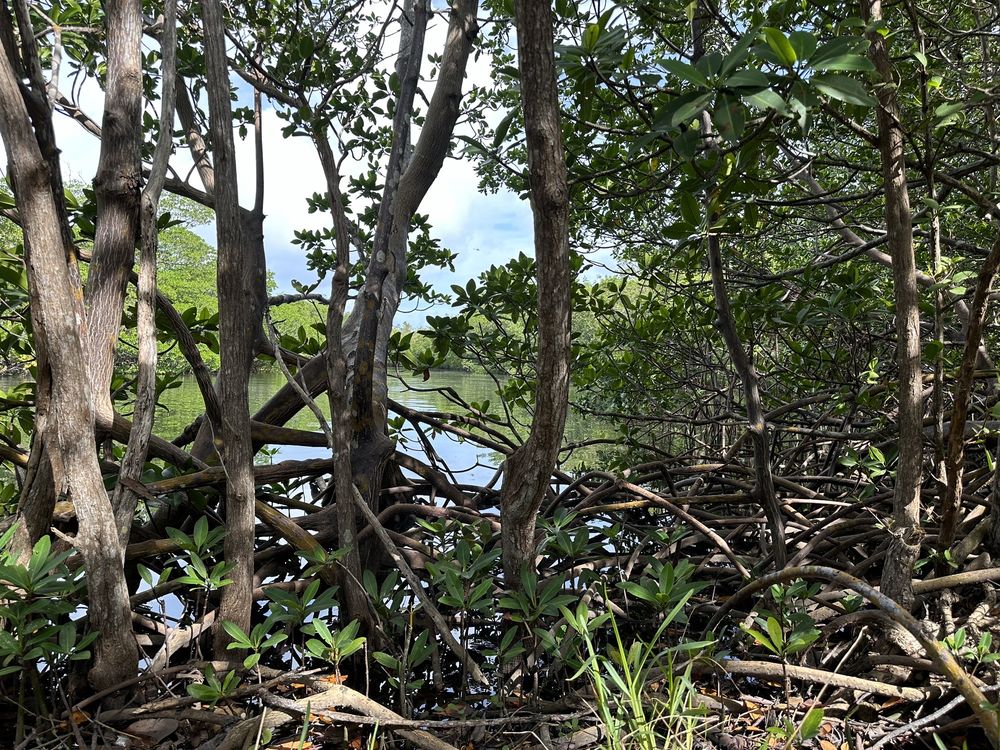


--- ## Chapter One: The Morning of Marvels The sun spilled golden syrup across our kitchen floor, and I stretched my velvety white paws until they trembled with delight. Today was the day! I could feel it in my twitching nose, in the way my tail spun like a helicopter blade against the refrigerator. Lenny—my wonderful, joke-telling dad—was packing sandwiches into a wicker basket while humming a tune that sounded suspiciously like "Stayin' Alive." "Pete, my little storyteller," Lenny called, his warm brown eyes crinkling at the corners, "are you ready for the grandest adventure this side of Biscayne Bay?" I barked my affirmation, which in Puggle language meant *absolutely, positively, without a shadow of a doubt*. My short, velvety fur practically hummed with anticipation. Mariya—my nurturing, curiosity-filled mom—swept into the room wearing a wide-brimmed hat decorated with silk flowers. She looked like a garden had decided to take a walk. "Roman!" she called up the stairs. "Your brother's about to burst! We need to leave before he floats away on excitement!" Roman thundered down the stairs, all gangly limbs and mischievous grin. He was fifteen, that magical age between child and adult, and he could still transform into a complete goofball at a moment's notice. "Pete!" he exclaimed, scooping me up until we were nose to nose. I licked his chin without permission. "We're going to see the lake, buddy. Real water. Not your bathtub." My ears flattened slightly. Water. The word sat in my belly like a cold stone. I'd seen it on television—vast, churning, endless. But I pushed the thought aside. I was Pete the Puggle, natural-born storyteller and adventurer! What was a little water to a brave soul like me? The car ride was a symphony of joyful chaos. Lenny told three jokes so terrible that Mariya groaned and Roman threw a pillow at him. I sat perched on Roman's lap, watching Miami unfold like a colorful map—palm trees doing their hula dance, buildings catching sunlight and throwing it back like glitter. "Tell me about Maurice Gibb Memorial Park," I asked Roman, though it came out as a series of eager whines and yips. Roman understood me perfectly. "It's named after a musician from the Bee Gees, Pete. There's a beautiful lake, walking trails, and this amazing old banyan tree that looks like something from a fantasy book." His voice dropped to a whisper, conspiratorial. "And legend says there's a hidden clearing where you can hear music if you listen closely enough." My heart galloped. Hidden clearings! Secret music! This was the stuff of legends, the very material my adventurous soul craved. When we arrived, the park unfolded before us like a painting come alive. The lake stretched silver-blue toward the horizon, cupped by mangrove trees whose roots twisted like ancient fingers into the water. The banyan tree Roman had mentioned towered nearby, its aerial roots creating natural cathedral arches. The air smelled of brine and jasmine, of sun-warmed earth and possibility. "Pete, come see!" Mariya called, already wandering toward a butterfly garden, her hat bobbing like a flower on a stream. We explored for hours. Lenny pointed out a great blue heron standing statue-still at the water's edge. Roman and I raced along a boardwalk, his laughter mixing with my happy panting. I was so caught up in the magic that I barely noticed when the afternoon began its slow slip toward evening, when shadows stretched longer and the air grew soft with approaching dusk. It was then I saw them—first the cat, then the mouse. And my adventure truly began. --- ## Chapter Two: Unexpected Friends The cat sat beneath the banyan tree like a furry monarch surveying his kingdom. His fur was a patchwork of orange and cream, and his green eyes held the knowing glint of someone who'd seen things, been places. When he spoke, his voice rumbled like distant thunder wrapped in velvet. "Well, well," he said, tail tip twitching. "A puppy with makeup. How très Miami." I glanced at my reflection in a nearby puddle—my eyes did have that playful streak, the one Mariya always said made me look like I'd been to a carnival. "It's not makeup," I corrected, though my indignation wobbled. "It's just... how I look." "Tom," the cat introduced himself, rising to extend a paw with ceremonial precision. "Tom Cat, at your service. And this—" he gestured with his tail to a small figure emerging from behind a tree root, "—is my associate, Jerry." Jerry the mouse was barely larger than my front paw, but he carried himself with the dignity of someone ten times his size. His brown fur was smooth, his ears like pink satellite dishes tuned to every frequency of the world. "Pleasure," he squeaked, tipping an imaginary hat. Roman had wandered ahead with Lenny and Mariya, chasing after a rare bird Mariya had spotted. I found myself alone with these strange new creatures, my heart doing a nervous tap-dance beneath my velvety fur. "First time at the park?" Tom asked, circling me with appraising eyes. "First time anywhere, really," I admitted. "At least, anywhere this big. This... watery." Jerry's whiskers twitched. "The lake frightens you." "It doesn't—" I began, but the lie died on my tongue. "Maybe. A little. It's so... endless. Like the sky turned upside down and made hungry." Tom settled onto his haunches, suddenly less monarch and more mentor. "The lake is many things, young Puggle. It gives life to herons and fish, it mirrors the clouds like a promise, and yes—it can be dangerous to those who don't respect it." His green eyes softened. "But everything worth loving has its depths. Its shadows alongside its light." Jerry scampered up Tom's back, perching between his shoulder blades like a jockey on a horse. "We could show you," the mouse offered. "The hidden places. The safe places. If you trust us." Trust. The word hung in the air like the scent of rain before a storm. I'd known these creatures for minutes, yet something in their bearing—their easy partnership despite being natural enemies, their obvious care for this place—spoke to my adventurous heart. "Alright," I said, my voice braver than my quivering paws. "Show me." We set off along a narrower path, away from the main trails where my family wandered. The banyan tree's roots became our highway, twisting and turning through ferns and resurrection plants. Tom moved with liquid grace, pausing to point out medicinal plants Jerry identified with scholarly precision. I learned that Tom had once been a house cat, pampered and protected, until he'd chosen freedom and this park's wild edges. Jerry had always been wild, but had nearly drowned as a youngster—his fear of water made him the mouse he was today, cautious yet courageous. "Fear teaches us what matters," Jerry observed, as we paused at a stream crossing. "If I weren't afraid of drowning, I wouldn't appreciate dry land so much. If I weren't afraid of cats—" he glanced at Tom with something like fondness, "—I wouldn't have developed such excellent running skills." "Which failed spectacularly," Tom added, "since I caught you." "You *tried* to catch me," Jerry corrected. "There's a difference. I allowed myself to be befriended." Their banter made me laugh, a series of snuffling barks that startled a nearby ibis. We continued deeper into the park, the sounds of other visitors fading like a dream upon waking. The path grew narrower, darker, as we entered a section where mangroves crowded close and their knobby roots created a maze that twisted upon itself like thoughts in a worried mind. I should have noticed the sun's lower angle. Should have heard the distant calls of my family growing fainter. But I was entranced—by Tom's stories of park ghosts, by Jerry's identification of every plant and creature, by the growing sense that I was becoming someone braver with each step. Then the path ended. Or rather, it split into three identical directions, each shadowed and mysterious. And from behind us came a sound that made my fur stand on end: the unmistakable splash of something large entering water. "Maybe," Tom said slowly, his usual confidence slipping, "we should have stayed closer to the main trails." Jerry's ears flattened. "Too late for that now, you magnificent orange oaf." And I, Pete the Puggle, suddenly very aware that the sky was darkening and my family was somewhere I couldn't find, felt fear bloom in my chest like a black flower. --- ## Chapter Three: The Lake Rises The sound came again—*splash, splash*—rhythmic and deliberate, somewhere in the maze of mangrove roots. My heart hammered against my ribs like a trapped bird. The water, which had seemed merely intimidating from a distance, now pressed against my awareness like a living thing, dark and hungry and waiting. "It's just a fish," I whispered, though my voice cracked like dry twigs. "Or a small alligator," Tom offered helpfully. "Or a very large fish with *aspirations*," Jerry added. We stood frozen at the path's fork, three unlikely companions bound by circumstance and growing concern. The sun had slipped lower while we wandered, painting the sky in bruised purples and anxious oranges. Shadows stretched like fingers across the water, and where before the lake had sparkled invitingly, now it gaped like a dark mirror reflecting nothing good. "We need to retrace our steps," I said, surprised by my own firmness. "My family— they'll be worried. I need to find them." Tom's tail lashed once, a nervous metronome. "The path we came on has... shifted. The tide, perhaps. Or the roots move when no one's watching." He tried to make it sound like a joke, but his ears betrayed him, flattened against his skull. We chose the middle path, reasoning that straight was safest. But the mangroves seemed to lean closer here, their roots creating walls that rose on either side like the sides of a wooden throat, swallowing us down. The water smell grew stronger, brackish and ancient, and I could hear it now—the lake itself, lapping against roots, whispering secrets in a language older than words. Then the path simply ended. One moment we were walking on packed earth, the next we stood at the edge of a small clearing where water pooled black and still, surrounded entirely by mangrove roots that formed a cage of living wood. The only escape was through the water—twenty feet of dark liquid that stretched to another root formation, beyond which we could glimpse open sky. "No," I breathed, backing away. My legs trembled like reeds in wind. "No, no, no." Tom understood immediately. "There must be another way. Jerry, can you climb? See if there's a path above?" The mouse scrambled up a root, his small claws finding purchase in the bark's ridges. He reached a high point, balanced precariously, and his silhouette against the darkening sky looked like a brave little statue. "Nothing! The roots are too thick, too tangled. The only way through is—" he didn't finish, but we all heard it. *The water.* I sat down hard, my velvety fur no protection against the chill that swept through me. The water. I'd imagined this moment a thousand times in my private fears—the moment when the ground fell away and only liquid emptiness remained. Now it stared back at me, black and patient, waiting for my courage to fail. "Pete." Tom's voice was gentle, so gentle. "Pete, look at me." I dragged my eyes from the water's hypnotic surface. The cat's green eyes caught the last light, shone like lanterns in the gathering dark. "Do you know why Jerry and I are friends?" he asked. "Because... because you're both here?" "Because I was terrified," Tom corrected. "When I first came to this park, I was a soft house cat who'd never caught his own dinner. Everything frightened me—the sounds, the spaces, the not-knowing. And Jerry—" he glanced up at the mouse still perched above, "—Jerry was the first creature who didn't laugh. Who just... stayed. Until the fear became boring. Until it became something else." "Fear is a storyteller," Jerry called down, his small voice carrying surprising weight. "It tells you the worst version of every tale. But you're a storyteller too, Pete. Tell yourself a different one." I thought of Roman, how he'd held me nose to nose that very morning, full of faith. I thought of Lenny's terrible jokes, how they always came when someone needed to laugh instead of cry. I thought of Mariya's hat bobbing through flowers, finding magic in every ordinary thing. And I thought: *I am Pete the Puggle. I am braver than my fear. My fear is just a small story, and I am writing a bigger one.* I took one step toward the water. Then another. The edge met my paw, cold and shocking, and I yelped before I could stop myself. But I didn't retreat. I stood there, trembling, and let the cold become familiar. Let it become just another sensation, neither good nor bad, just *there*. "That's it," Tom encouraged. "Small steps. The water's shallow here—you can walk, Pete. It's only chest-high for you at the deepest point." Chest-high. The words should have terrified me. Instead, I found myself measuring: *I am taller than my fear. My legs are longer than the depth. I can do this.* I stepped in. The cold seized my breath, made my muscles seize and scream. For a moment, panic won—pure, animal panic that shrieked *drown, drown, you will drown*—and I thrashed, splashing wildly, my head dipping below the surface. Water filled my nose, burned my throat, confirmed every nightmare I'd ever had. Then something steadied me. Tom, swimming beside me, his orange fur darkened and slick. And above, Jerry's voice: "Kick, Pete! Kick like you're running! Running in place!" And I did. I kicked. I paddled. The movements I'd seen other dogs make, the instinct buried deep in my blood, rose to answer my desperate need. My head stayed up. My paws found rhythm. And I moved—slowly, tremblingly, but *moved*—across the dark water, toward the promise of sky. We reached the other side, Tom and I hauling ourselves onto roots that scraped and supported. Jerry scampered down to meet us, his small form radiating pride so fierce it was almost visible. "You did it," he squeaked. "You did it, Pete!" I lay there, panting, my velvety fur plastered flat and heavy. But I was across. I had faced the water and it had not swallowed me. The fear still lived in me—I knew it would rise again at every lake, every bath, every unexpected puddle—but it had lost its absolute power. I had done something despite it. Perhaps even *because* of it. The sky above was fully dark now, stars pricking through like hopeful messages. And somewhere in that darkness, I heard my name. --- ## Chapter Four: Voices in the Dark "Pete! PETE!" Roman's voice, cracked with something I'd never heard before. Fear, yes, but also a desperate hope that hurt my heart to recognize. I scrambled to standing, barked with all my small might: "Here! I'm here!" But the mangroves swallowed sound as easily as they swallowed light. The roots twisted and reflected, sending voices in impossible directions. I could hear Lenny now too, and Mariya, their calls weaving through the dark like threads of a fraying blanket. "They're looking," Jerry whispered, though whether for comfort or warning, I couldn't say. The darkness pressed close now, another fear I'd carried without naming. Not just the absence of light, but the *feeling* of it—how it seemed to expand spaces, populate them with imagined threats, erase the familiar and replace it with possibility's sinister twin. Every sound became menacing: the rustle of leaves became approaching footsteps; the splash of water, something rising; the wind's whisper, voices muttering just below hearing. "I can't—" I started, then stopped. *I can't what?* I had crossed the water. Could I not face this too? But the dark was different. The water had been a single obstacle, finite and crossable. The dark was infinite, everywhere, containing everything I couldn't see and therefore couldn't trust. My family was somewhere in it, calling for me, and I couldn't reach them. The separation felt physical, a tearing in my chest worse than any fear of water or night. Tom pressed against my side, his body warm and real and present. "Listen," he murmured. "Truly listen. Not with your panic, with your heart." I closed my eyes—which changed nothing in the dark, yet changed everything in my attention—and *listened*. Beyond my own ragged breathing, beyond Jerry's small anxious chitters, beyond the wind's restless movement. I listened for the thing beneath these sounds, the pattern that would guide me home. And there: Roman's voice again, clearer now, coming from somewhere to my left. And there: the sound of water lapping against a shore, different from our crossing, suggesting an edge, a boundary, a place where land met lake in the way it always had. "Their voices carry over water," I realized aloud. "If we follow the sound, we'll find where they are. Where the park opens up." "And the dark?" Jerry asked, his small form trembling against my leg. I looked up. The stars, those patient witnesses, still pricked through where the canopy allowed. And between them, moving steadily across the sky, the moon—my moon, everyone's moon, the same one that watched over my family's windows at home, that shone on Roman's sleeping face, that Mariya had pointed to on so many walks saying *look, Pete, look how it follows us home*. "The dark is just the world without its daytime clothes," I said, surprising myself. "It's not empty. It's just... differently dressed." We moved toward Roman's voice, Tom leading with his superior night vision, Jerry riding on my back where he could whisper directions in my ear. The going was slow, roots tripping and catching, the dark still pressing its uncertain weight. But I found I could bear it. Found that each step into darkness that didn't end in disaster built a kind of trust—not that the dark was safe, but that *I could survive it*. That I could navigate it, use my other senses, depend on my companions. The mangroves began to thin. The sky opened, star-bright and huge, and suddenly I could see—the lake spread silver before us, not the hungry monster of my fear but just water, beautiful and indifferent and ours to use or not. And along its shore, figures moving, calling, *searching*. "ROMAN!" I howled, all my Puggle lungs invested in that single call. "LENNY! MARIYA!" The figures stopped. Turned. And then Roman was running, running like I ran, like we all run when love propels us faster than fear can catch. He swept me up, my wet fur soaking his shirt, his arms tight enough to remind me what safety felt like from the outside. "Pete, Pete, Pete," he chanted, and I felt wetness on his cheek that wasn't lake water. "I thought—I thought the alligators, or the water, or—" "Shh," Lenny's voice, thick with emotion, his hand finding Roman's shoulder, Mariya's already there, the three of them making a shelter around my shivering form. "He's here. He's here." Mariya's face, tear-streaked but smiling, appeared above me. "My brave boy," she whispered. "My brave, makeup-eyed adventurer. What have you been up to?" And I, Pete the Puggle, told them. Or tried to, in my barks and whines and licks, with Tom adding dignified commentary and Jerry emerging to take a small bow that made Mariya gasp with delight. --- ## Chapter Five: The Search Party Grows We didn't return to the car immediately. Instead, Lenny—after the relieved laughter and the scolding that wasn't really scolding, the kind that masks I was so worried about you with I love you so much—insisted that we sit, that we breathe, that we let our hearts settle from their wild racing. He spread a small blanket he'd carried from the car, and we gathered: my family, these humans who had chosen me and whom I had chosen; Tom, grooming his water-darkened fur with forced nonchalance; Jerry, perched on Mariya's offered palm, eating a crumb of cheese with the satisfaction of someone who'd earned it. "So," Lenny said, his warm voice wrapping around us like the blanket around me, "you made friends, had an adventure, conquered—" he glanced at me, "—the water, I'm guessing? From the smell?" I barked confirmation, and Roman laughed, the sound looser now, the fear draining from it. "I was so scared," Roman admitted, his voice dropping to where only we close could hear. "When we couldn't find you. I thought—" he stopped, swallowed. "I've never thought about how fast something could happen. How permanent it could be." Mariya's hand found his, their fingers intertwining with the ease of long practice. "That's the terrible gift of love," she said softly. "It makes us vulnerable. But it's the only way to be fully alive." Tom paused his grooming, green eyes thoughtful. "In my previous life," he said, and I translated as best I could through gestures and significant looks, "I was protected from all danger. Fed, sheltered, safe. And I was dying by slow degrees. The fear I felt when I first came here—that was the price of my freedom. Of any real connection." Jerry nodded, his small nose twitching. "I nearly died to become brave enough to live. It's strange, isn't it? How the things we fear most are often bridges to what we want most." I thought about this, my velvety head resting on Roman's knee. The water had terrified me, yet crossing it had brought me to my family. The dark had threatened to swallow me, yet moving through it had shown me stars I wouldn't have seen. Fear, I was learning, was not the opposite of courage. It was its prerequisite. Lenny stood, stretched, and in one of his characteristic pivots from profound to playful, announced: "I propose we find this hidden clearing Tom mentioned. The one with music. If Pete can face the lake and the dark, we can certainly face a little more walking!" The park at night was transformed. Where daylight had revealed beauty, darkness revealed mystery—the same place become different, neither version less true. We walked along the shore, Tom ranging ahead with cat confidence, Jerry riding Roman's shoulder like a furry parrot. The banyan tree appeared suddenly, its massive form more felt than seen, a concentration of shadow against the star-scattered sky. And beyond it, where Tom led with increasing certainty, a small clearing opened like a secret the park had kept until we were ready. We entered. We sat. And at first, there was only the ordinary night: wind, water-sound, distant traffic's hum. Then Mariya began to hum—that Bee Gees song Lenny had mangled earlier, "How Deep Is Your Love," her voice pure and unselfconscious. Lenny joined, harmony finding harmony. Roman added a hesitant baritone, deepening with the surprise of his own participation. And I—Pete the Puggle, natural-born storyteller—I added my voice too, a howl-tinged melody that was more intention than music, more heart than art. And there, in that convergence, I heard it. Or felt it. The music Tom had promised, not coming from any instrument but from the space between us, the resonance of connection, the harmony of gratitude and relief and still-present fear transformed by sharing. The banyan tree's roots seemed to pulse with it, ancient and patient, witness to so many human moments of fear and courage, separation and reunion. We stayed until the moon crossed the sky's center, marking midnight's passage. Then, reluctantly, we gathered ourselves for the journey home. --- ## Chapter Six: The Return and the Remembering The car ride back was quieter, fuller. We carried the night with us, transformed it into something we could keep. Roman held me, his chin resting on my head, and I felt his heartbeat steady and strong, the terror of my loss already becoming memory, becoming story. "You're going to be a legend," he whispered. "Pete the Puggle, conqueror of lakes, befriender of cats and mice, singer under the banyan tree." I wagged my tail weakly, exhausted beyond measure, yet something in me wanted to hold onto this wakefulness. This feeling of having been tested and found sufficient. Of having discovered that my fears, while real, did not define the limits of my world. At home, the familiar hit with the force of revelation: our couch with its worn corner where I liked to sleep, the kitchen where Lenny's terrible jokes were born, the stairs Roman had thundered down that morning that now seemed days ago. Mariya filled my water bowl, and I approached it without the usual hesitation, drank deeply of what I had crossed, what had nearly been my undoing and became instead my triumph. Tom and Jerry—after much discussion, much translating, much laughter at the absurdity of it—were invited to stay. "The park can spare us for one night," Tom declared, though he'd been stray long enough that I suspected any invitation would have been accepted. Jerry simply curled into a napkin nest on the coffee table and fell immediately asleep, his small form rising and falling with breath that seemed to whisper *safe, safe, safe*. We gathered in the living room, my human family and my new friends and I, and Lenny—wonderful, wise, silly Lenny—produced a notebook and pen. "For the story," he said, as if this were obvious. "Pete's adventure. It needs to be recorded. The great tales always are." And so we told it, piece by piece, voice adding to voice. Roman described his panic, his running, the moment he saw me emerge from the mangroves "like a very small, very wet superhero." Mariya captured the butterfly garden, her worry, her relief. Lenny turned his terror into jokes that somehow, in the telling, became tender instead of terrible. I contributed what I could—barks of emphasis, whines of remembered fear, finally a settled sigh as Tom curled against my side and Jerry's sleeping form twitched with dream-chases. "The moral," Lenny said, when the story had been told to everyone's satisfaction, "the moral is obvious, of course." "Is it?" Mariya challenged, her eyes bright with the curiosity that made her see magic everywhere. "Because I think there are many morals here. Many truths." "Fear is not the enemy," Roman said slowly, working it through. "Isolation is. Pete was brave because he had friends. He found us because he had reason to velvet." He laughed at his own pun, but his eyes were serious. "Courage isn't solo. It's... choral." "And the things we fear," I added in my own language, trusting them to understand the spirit if not the syllables, "they change us when we face them. The water is still frightening. The dark still uncertain. But I am different in relation to them now. Bigger, somehow, for having been through them." Tom purred his agreement, a sound like a well-tuned engine of contentment. "Partnership," he rumbled. "That's the secret humans keep rediscovering. Tom and Jerry. Pete and Roman. The individual brave enough to need others." Jerry woke briefly, murmured "Cheese is also important," and slept again. We laughed, the sound filling our living room like light fills a dark space, like courage fills a frightened heart. And I, Pete the Puggle, settled finally into dreams where I swam strange waters under stranger stars, always accompanied, always returning home. --- ## Chapter Seven: The New Day Dawns Morning came golden and forgiving, the sun indifferent to our adventures, offering itself anew. I woke to find Tom and Jerry already exploring the backyard, their unlikely friendship a daily miracle, a testament to choosing connection over instinct. Mariya found me first, her hands gentle as she checked my velvety fur, my eyes, my paws that had carried me through so much. "You gave us quite a scare, little storyteller," she murmured, but her smile held no reprimand, only the infinite patience of love. Lenny made pancakes—terrible, lumpy, delicious pancakes that he claimed were "abstract expressionist cuisine." Roman attempted to teach Tom to fetch, failed spectacularly, and declared the cat "a natural-born nonconformist, which is the highest compliment." We talked, that long morning, about what came next. Tom and Jerry would return to the park, their true home, but with an open invitation to visit, to adventure again. I would carry their memory, their lessons, into whatever came next for me. "You'll face more fears," Roman said, catching me in a rare moment of seriousness. "More water, more dark, more separations. That's life, Pete." "But I'll remember," I replied, in my barks and my eyes and my pressed-close body. "I'll remember that fear is a storyteller, and I can tell better ones. That courage is choral. That the things we love are worth the risks we take to keep them." He hugged me, this growing boy who was still, in essential ways, a child, and I felt his hope and his fear and his love all mixed together, the way all deep feelings exist, not pure but powerful. We walked to the park that afternoon, all of us, and I approached the lake's edge without the terror of before. Still respect, always respect, but also recognition. This water had not swallowed me. It had taught me to swim, to trust my body, to trust my friends. The dark of the coming night would not hold the same power either, I knew. I had traveled through it and found stars. At the banyan tree, we said goodbye. Tom pressed his face to mine, a cat kiss, all dignity and genuine feeling. Jerry scampered up my leg, my side, to whisper in my ear: "The next adventure, Pete. Save me a place." And they were gone, orange and brown, into the green world that was theirs, that they had chosen and that had chosen them. --- ## Chapter Eight: Home Is Where the Heart Tells Stories We returned to our house, our ordinary extraordinary house, and I felt the full weight of my exhaustion settle. But also—also the fullness, the *completion*, of a story told to its end and found good. Roman carried me to my favorite spot, the worn couch corner, and sat with me as the afternoon declined toward evening. "I was thinking," he said, his voice casual in the way that meant he'd been thinking deeply, "about what scared me most. Not the alligators I imagined, or the water, or even losing you. It was—" he stopped, gathered courage of his own, "—it was thinking I hadn't told you enough. That you'd gone not knowing." He hugged me tighter, and I licked his chin, his cheek, anywhere I could reach. *I know*, I tried to tell him. *I know now. I knew before, but I know better now.* Lenny and Mariya joined, the four of us making a pile of warmth and love and survived fear. "Your story," Lenny said, "will be told and retold. The Puggle who crossed the lake. The puppy who faced the dark. The friend who found friends in the most unlikely places." "And the moral?" Mariya asked, her eyes on mine, seeing me truly as she always had. "The moral," I replied, in the only language I had, "is that we are braver than we believe, stronger than we appear, and loved more than we know. That fear is the beginning of courage, not its absence. That family is who finds us, who stays with us, who searches for us in the dark and celebrates our return in the light." We sat together as evening came, not fearful of the dark but welcoming it as another face of the world we loved, another chapter in the endless story we were writing together. And I, Pete the Puggle, natural-born storyteller and adventurer, settled into dreams already forming into new tales, new possibilities, new reasons to be brave. For tomorrow, and all the tomorrows after, I would remember: the water, the dark, the separation, and how I survived them all—not alone, never alone, but carried by love and friendship and the stubborn, beautiful refusal to let fear have the final word. *** The End ***
Use these buttons to read the story aloud:


No comments:
Post a Comment