"*** The Braveheart of Backcountry: Pete the Puggle's Grand Adventure ***"🐾
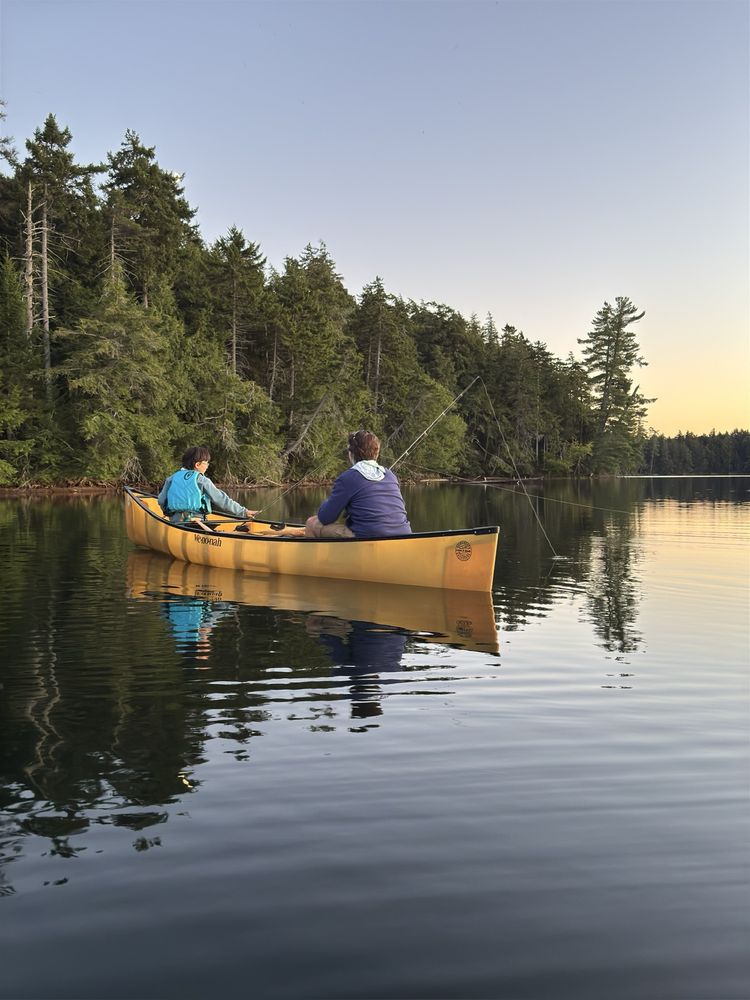
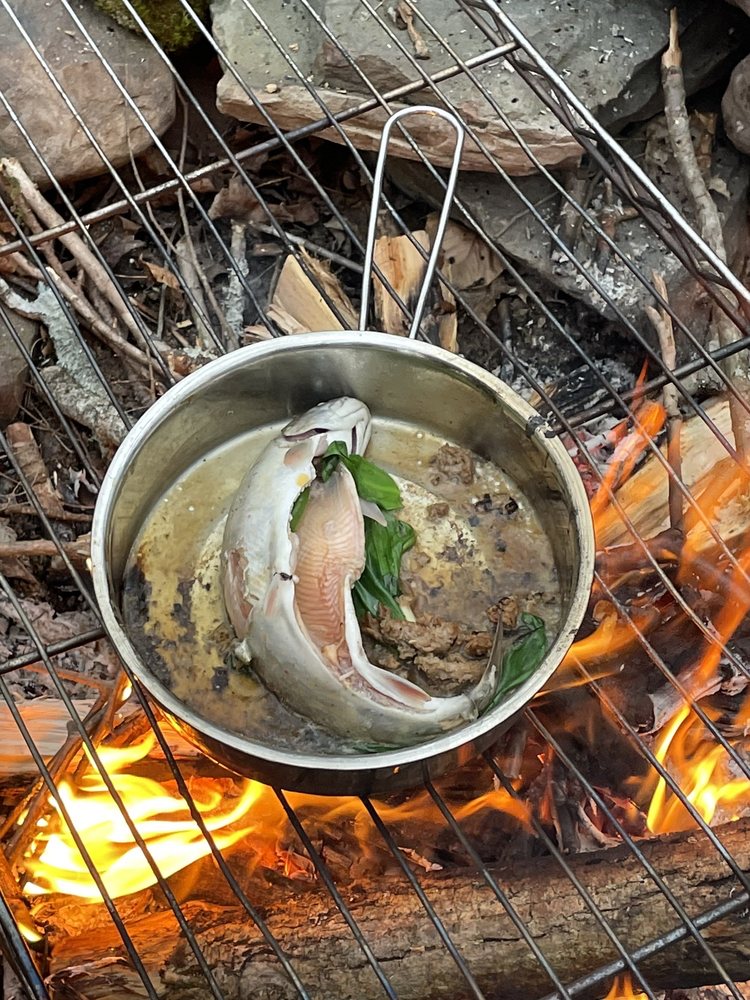
**Chapter One: The Velvet Nose Knows** The world smelled like possibility and pine needles, and my velvet nose twitched with such ferocious excitement that I thought I might sneeze my whole face off. There we were—my entire universe bundled into our trusty forest-green SUV—bumping along a gravel road that crunched beneath the tires like a giant eating cereal. I, Pete the Puggle, sat perched upon Mariya’s lap (my Mariya, with her scent of cinnamon and lavender, her fingers that knew exactly where the itchy spot behind my ears lived), and I watched through the window as the trees grew taller and taller, reaching up to tickle the belly of the sky. "Pete, my boy," Lenny said from the driver’s seat, his voice rolling like warm honey over gravel, "are you ready for Destination Backcountry Adventures? I hear they’ve got squirrels the size of ponies and fish that tell jokes." I barked—a sharp, enthusiastic *yip!* that meant *I was born ready, Dad, but also are the squirrels friendly because I’m only moderately brave when it comes to rodents larger than my ego?* Roman, my older brother, my fellow explorer, the keeper of my heart and sometimes the thief of my chew toys, leaned forward from the back seat and scratched the white patch on my chest. "Don’t worry, little dude. I’ve got your back. If any giant squirrels try to mess with you, they’ll have to answer to me." His voice was sunshine breaking through clouds, and I nuzzled his hand, feeling my heart swell like a balloon filled with love and perhaps too much kibble. We were an adventuring party, a fellowship of four, and the road ahead spiraled into the wilderness like a ribbon unwinding from a birthday present. When we finally arrived, the air tasted different—cleaner somehow, as if it had been washed in a mountain stream and hung out to dry among the clouds. The lodge rose before us, all rough-hewn logs and welcoming smoke curling from stone chimneys. But it wasn’t the building that made my tail helicopter into a blur of white fur; it was the figure standing on the porch, wearing a coat the color of autumn leaves and a hat that seemed to touch the clouds. "Baron Munchausen!" Mariya cried, clapping her hands like a child discovering snow for the first time. The Baron! I had heard whispers of this legendary friend of the family—stories told in hushed tones around winter fires about a man who could outrun the wind and befriend the moon. He descended the steps now, his mustache curling upward like two friendly question marks, his eyes sparkling with the kind of mischief that suggested he might have a pocket full of stars. "Ah!" he boomed, his voice resonating like a tuba played by angels. "The Puggle has arrived! And what a Puggle he is—fur like fresh snow, eyes like polished amber, and a heart, I suspect, the size of this entire mountain range!" I wagged so hard that my whole body became a wiggle, and when he scooped me up (he smelled of pipe tobacco and peppermint and distant galaxies), I felt instantly that here was a kindred spirit—a storyteller, a dreamer, a believer in the impossible. "Lenny, my dear fellow," the Baron said, shaking my father’s hand with vigor that nearly lifted Lenny off his feet, "and Mariya, radiant as always, and Roman—growing taller and braver by the minute, I see!" "We’re so glad to be here," Mariya said, her eyes scanning the treeline with that particular hunger she had for beauty. "Pete has been bouncing off the walls for days." "Literally," Roman added, grinning. "He tried to climb the curtains yesterday because he thought they were vines." I hung my head slightly, remembering the curtain incident, but the Baron only laughed—a sound like avalanches of joy. "Curiosity is the compass of the brave," the Baron declared, setting me down gently. "Now, come! I have arranged a tour of the grounds. There are secret places here—places where the water sings and the shadows dance. But fear not, for I have brought reinforcements." From behind his coat emerged two creatures that made my eyes widen: a fox with fur like burnished copper and eyes like green lanterns, and a raven whose feathers shimmered with purple and blue iridescence. "May I introduce Sable and Noir," the Baron said. "My faithful friends, guardians of truth, and excellent judges of character. They have already declared that Pete here is destined for greatness." Sable the fox bowed her head, and Noir the raven cawed softly, dipping his beak in my direction. I felt a flutter in my chest—not fear, but the thrilling recognition that I was being welcomed into something ancient and magical. As we walked the trails that afternoon, the Baron regaled us with stories of his travels—of riding cannonballs across the sea, of fishing for whales with golden thread, of teaching the stars to twinkle in rhythm. Roman walked beside me, his hand occasionally brushing my back, and I felt safe, surrounded by my family and these new mythical friends. That evening, as the sun bled gold and rose across the sky, we sat on the lodge porch. Lenny produced his famous campfire harmonica, and Mariya sang songs in a language that sounded like rain on leaves. The Baron told one final story about a small dog who saved a kingdom by being kind to a spider, and as my eyes grew heavy, I realized that this was the first lesson of our journey: **Family is not only those born to us, but those who choose to see our light and reflect it back to us until we shine.** With that warm truth tucked into my heart like a secret treasure, I drifted into dreams where I ran through fields of starlight, brave and beloved. **Chapter Two: The Lake That Looked Like Sky** Morning arrived with the subtlety of a puppy attacking a squeaky toy—sudden, enthusiastic, and impossible to ignore. Sunlight filtered through the canvas curtains of our cabin, painting stripes across my fur, and I woke to find Roman already awake, tying his hiking boots with the intense concentration of a bomb technician. "Morning, furball," he whispered, scratching under my chin. "Today we’re going to the Crystal Lake. The Baron says it’s so clear you can see all the way to tomorrow." I stretched, my short legs pushing against the quilt, and I smelled breakfast—Lenny’s famous camp-stove pancakes drifting through the screen door. Outside, the world hummed with insect song and the distant rush of wind through pine needles. After devouring a bowl of kibble (and one tiny, perfect bite of pancake that Mariya snuck me when Lenny wasn’t looking), we followed the Baron down a trail that wound like a snake’s backbone through ferns and wildflowers. Sable and Noir flanked us, the fox trotting with silent grace while the raven rode upon the Baron’s shoulder like a living epaulet. The trail opened suddenly, like a curtain parting on a stage, and there was the lake. It was… enormous. The water stretched before us, impossibly wide, reflecting the sky so perfectly that it seemed we stood at the edge of infinity. Blue upon blue, depth upon depth, and I could see fish moving beneath the surface like silver thoughts. "It’s beautiful," Mariya breathed, kneeling to dip her fingers in the water. "And cold!" Roman was already pulling off his shoes. "Come on, Pete! Let’s wade in!" He stepped into the shallows, turning to beckon me, and I froze. My paws rooted themselves to the earth as if I had grown there, sprouted from the soil like a white, trembling mushroom. The water moved. It lapped against the stones with a sound like whispers, and suddenly it wasn’t beautiful anymore—it was terrifying. It was vast and deep and unknowable. My heart began to pound against my ribs like a trapped bird. "Pete?" Roman called, his voice softening. "Come here, buddy. It’s just water." But it wasn’t just water. To me, in that moment, it was a liquid void, a place where solid ground ceased to exist, where I might sink and sink and never stop sinking. My breath came in short, panicked bursts. I backed up, my tail tucked, my ears flat against my skull. The Baron observed this with eyes that seemed to see through time itself. "Ah," he said gently, kneeling beside me. "The bravest heart sometimes beats fastest when faced with the unknown. Tell me, little Puggle—what do you see?" I saw doom. I saw wetness and cold and the terrible absence of control. I whimpered, pressing against Mariya’s leg, seeking the solidity of her presence. "It’s okay," Lenny said, coming to sit cross-legged nearby, close enough that I could smell his familiar scent of soap and trail mix. "When I was a boy, I was afraid of the dark. I thought monsters lived in my closet. But my father—your grandpa—taught me that fear is just excitement holding its breath." "I’m scared," Roman admitted suddenly, and I looked at him, surprised. He was sitting in the water up to his knees, but his eyes were on the deeper part of the lake. "I’m scared of the deep end too, Pete. But I’m more scared of missing out on the fun because I was too afraid to try." His honesty settled over me like a warm blanket. If Roman—my Roman, who climbed trees and caught frogs and seemed afraid of nothing—if he could admit fear, then perhaps fear wasn’t something shameful. Perhaps it was just… part of the adventure. Mariya sat on the shore, patting the ground beside her. "Let’s just sit here," she suggested. "We don’t have to go in. We can just watch the water and breathe." So we sat. The Baron told a story about a fish who was afraid of flying, and how a bird taught it to swim instead, and gradually, as the sun warmed my fur and the stories wove a net of safety around my heart, I crept closer to the edge. Roman didn’t push. He simply waited, his hand extended, patient as stone. And then, miracle of miracles, a butterfly—gold and black, impossibly delicate—landed on a reed just inches from my nose. It danced on the breeze, and without thinking, I stepped forward to follow it. My paw touched the water. It was cold! I yelped and jumped back, but the sensation lingered—not terrifying, but tingling, alive. I tried again, placing one paw deliberately into the shallows. The water rushed around my ankle, and I didn’t sink. I stood there, trembling but standing, and Roman’s face broke into a smile like sunrise. "That’s my boy," he whispered. I didn’t swim that day. I didn’t wade past my elbows. But I touched the water, and I didn’t drown, and when we walked back to the cabin that afternoon, my tail was high and my heart was light. The lesson sang in my bones: **Courage is not the absence of fear, but the decision that something else is more important than the fear itself—like curiosity, like love, like the trust between a boy and his dog.** **Chapter Three: When the Sun Goes to Sleep** Night in the backcountry is not like night in the city. It doesn’t arrive politely, turning down the lights gradually; it crashes over the mountains like a wave of ink, bringing with it a darkness so profound it feels like a physical weight. That second evening, after a dinner of stew that steamed like dragon’s breath and biscuits that crumbled like clouds, we decided to sleep in the tents rather than the cabin. "For the full experience," Lenny said, winking as he zipped up the tent flaps. "Nothing but canvas between us and the universe." The tent was cozy—smelling of nylon and grass and the particular musk of family togetherness. Roman and I claimed one corner, burrowed into sleeping bags that crinkled like paper. Mariya read to us from a book about constellations, her voice a melodic drone that usually lulled me into dreams. Lenny snored gently, a rhythmic rumble that meant safety. But then Mariya turned off the lantern. The darkness was immediate and absolute. It pressed against the tent walls, seeping through the fabric, reaching in with fingers of shadow. My eyes widened, trying to adjust, but there was nothing to see—just varying shades of black, shifting and pooling. *What if something is out there?* my mind whispered. *What if the darkness isn’t empty? What if it’s full of things with teeth and hunger?* Every sound became monstrous. The wind rustling the leaves was surely the breathing of a bear. A twig snapping was undoubtedly the step of something massive and predatory. My heart began to race, and I found myself trembling, pressing my body against Roman’s warmth until he woke with a start. "Pete? You’re shaking," he murmured, sitting up. "What’s wrong?" I couldn’t speak human words, but I whimpered—a high, thin sound that spoke of primal dread. I hated the dark. In the dark, I was small. In the dark, I couldn’t see my family, and if I couldn’t see them, were they even there? Had they vanished? Had I been left alone in this void? "Hey," Roman said softly, unzipping his sleeping bag enough to pull me into the cocoon with him. "It’s okay. I’ve got you. Feel my hand? That’s real. I’m real. We’re here." But the darkness seemed to grow, pressing against my eyelids. I thought of the lake, how deep it was, how unknown, and this darkness felt like that—bottomless, breathless. From outside the tent, we heard a sound: a rustling, a shifting, something moving through the underbrush. I froze, every hair standing on end. "Probably just Sable," Lenny said, his voice calm and awake despite his earlier snoring. "Or Noir, hunting for late-night snacks." But then the tent flap moved. Something was unzipping it from the outside! I barked—a sharp, alarmed sound that shattered the silence. The flap opened, and a figure filled the doorway, blocking the starlight. I nearly fainted with terror until the figure spoke. "Fear not, brave company!" It was the Baron, his silhouette crowned by his impossible hat. "I have brought light!" He stepped inside, and with a flourish that seemed to bend reality itself, he produced a lantern—not the harsh battery-powered one, but an old oil lantern with glass walls that glowed with a warm, golden, living light. The shadows retreated instantly, scurrying into corners like frightened mice. "There," the Baron said, sitting cross-legged in the center of our tent. "Light is merely darkness that has remembered it is brave. And you, little Pete, are you brave enough to look outside?" I didn’t want to. I wanted to burrow deeper into Roman’s armpit and stay there until morning. But the Baron’s eyes held mine, and there was no judgment there, only invitation. "Come," Mariya said, taking my paw. "Let’s look at the stars with the Baron." Roman carried me out of the tent, wrapping me in his sweatshirt so only my nose poked out. And when I opened my eyes—truly opened them—I gasped, or would have if I were human. The darkness wasn’t empty. It was full. Full of stars, more stars than I had ever imagined existed, spilled across the sky like diamond dust. The Milky Way arched overhead, a river of light in the void, and the moon hung like a lantern hung by a generous god. Sable the fox sat nearby, her eyes reflecting the starlight, and Noir perched on a branch, his dark wings invisible against the sky until he moved, revealing silhouettes of midnight blue. "You see," the Baron said, his voice gentle as owl wings, "the dark is not your enemy. It is the blanket that makes the stars visible. It is the silence that lets you hear your own heart. Without darkness, we would never see how brightly we shine." I looked up at Roman, and he looked down at me, and I realized that in his face—illuminated by starlight and love—I could see clearly. I didn’t need the sun to feel safe. I needed my family. We sat there for an hour, counting shooting stars, while the Baron told stories about the constellations—how the Great Bear was actually a dog who had been promoted, how the Orion was a hunter who had befriended the moon. And gradually, the darkness became not a threat, but a cathedral, vast and holy and protective. When we returned to the tent, I slept not in fear, but in wonder, dreaming of starlight. The lesson settled into my soul like sediment into a clear stream: **Darkness is not the absence of light, but the canvas upon which love paints its most brilliant pictures. And even in the deepest night, we are never truly alone if we hold courage in one paw and trust in the other.** **Chapter Four: The Trail That Branched** Morning brought clarity and coffee (for the humans) and a sense of invincibility (for me). After two days of conquering water and night, I felt transformed—no longer merely Pete the Puggle, but Pete the Brave, Pete the Unafraid, Pete Who Faces Infinity and Barks at It. "We’re going on the Ridge Trail today," Lenny announced over breakfast, spreading peanut butter on a tortilla with the expertise of a man who had fed many camp meals to many hungry adventurers. "It’s a bit challenging—narrow paths, steep drops, but the view from the top is supposed to be like looking into the eye of God." "Language," Mariya said, but she was smiling, her hair braided with wildflowers that Sable had brought her as a morning gift. The Baron had arranged for a guide—a local naturalist named Clara who knew every mushroom and millipede in the forest—but he himself would meet us at the summit, having "some business with the clouds" that morning. Sable and Noir accompanied us, the fox leading the way with her nose to the ground, the raven circling overhead like a dark guardian angel. The trail began wide and welcoming, a dirt path through cathedral groves of Douglas fir and cedar. The air smelled of sap and secrets. Roman carried a backpack that clinked with water bottles and snacks, and he set a pace that was challenging but not impossible. I trotted beside him, my short legs working double-time to keep up, my tongue lolling in pure joy. We encountered wonders: a banana slug that crossed our path like a yellow speed bump (I sniffed it; it tasted like slime and regret), a woodpecker that drummed against a dead tree like a jazz musician, and a clearing where wild strawberries grew, tiny red jewels that burst with summer sweetness when Mariya shared them with me. But then the trail forked. To the left, a well-marked path continued upward, signposted with official park markers. To the right, a narrower trail wound down into a valley thick with ferns and mist, smelling of water and mystery. "The map says left," Lenny said, consulting a folded paper. "But Sable went right," Roman pointed out. Indeed, the fox had trotted down the fern-lined path, her tail a copper flag disappearing into the green. Noir cawed from above, circling the right-hand trail. "Perhaps they know a shortcut," Mariya suggested. "Or something worth seeing." Clara the naturalist shook her head. "The right path isn’t on my map. It might be old logging roads, or game trails. We should stick to the marked path." But I was already moving. Something pulled me—curiosity, perhaps, or the fox’s silent invitation. The right path smelled of adventure, of secrets whispered by streams. I padded down it, my tail wagging, and when I looked back, Roman was following me, grinning. "Come on, just for a minute," he called to the others. "We’ll catch up." Lenny and Mariya exchanged parental glances—the kind that said *we should know better* and *but life is short* simultaneously. "Five minutes," Lenny agreed. "Then we double back." The right path was magical. It led to a hollow where the trees grew in a circle, their roots forming natural benches, and in the center bubbled a spring of water so clear it seemed invisible until you looked closely. Sable waited there, and when she saw us, she barked—a sharp, urgent sound. "What is it, girl?" Roman asked, approaching. And then everything happened at once. The ground, softened by years of decaying leaves, gave way beneath Roman’s foot. He slipped, tumbling down a short embankment, and I—loyal, foolish, brave Pete—leaped after him. We rolled together, a tangle of boy and dog, down through ferns and past startled mushrooms, until we landed in a pile of moss at the bottom. I stood up, shaking leaves from my fur, and called out. *Yip! Yip!* No answer from above. The embankment was steeper than it had looked—almost a small cliff. And when I tried to scramble back up, my claws found no purchase in the loose dirt. "Roman?" Lenny’s voice came from far above, muffled by vegetation. "Pete?" "We’re okay!" Roman shouted back, his voice strong despite the scrape on his knee. "We fell! There’s a path down here—we’ll walk around and meet you at the clearing!" There was a pause, then Mariya’s voice, worried: "Be careful! We’ll meet you where the trails connect!" But as Roman helped me up, checking my paws for injury (I was fine, just embarrassed and slightly mossy), we realized something terrible. The path we had landed on didn’t connect back to the main trail. It wound deeper into the forest, away from the ridge, away from the sun, into a part of the woods where the trees grew so thick that the light became green and submarine. We were separated. Not just by distance, but by terrain, by choices, by the wild itself. Roman’s face went pale. He called out again, but his voice seemed to die in the thick air, swallowed by moss and leaf. He tried his phone—no signal. The trees stood like silent sentinels, and I felt it then—the old fear, the one I thought I had conquered. The fear of being alone. Of losing my family. Of the wide world being too big for one small Puggle and one brave boy. "We’re okay," Roman said, but his voice wobbled. He was trying to be strong for me, just as I had tried to be brave for him. "We’ll follow this path. It has to go somewhere, right?" But as we walked, the path grew narrower, the trees closer, and the light dimmer. We were walking into the heart of the woods, and my heart hammered with the terrible realization that **being brave doesn’t mean bad things won’t happen—it means you keep walking even when they do.** **Chapter Five: The Cathedral of Green and Gold** Time moves differently when you are lost. It stretches like taffy, becoming elastic and unreliable. What might have been twenty minutes felt like hours as Roman and I picked our way through the undergrowth. The path had disappeared entirely, replaced by a series of animal trails that crisscrossed like lies. Roman tried to be brave. He cracked jokes—"At least we’re getting our steps in"—and he sang songs, his voice cracking slightly on the high notes. But I could smell his fear, sharp and metallic beneath his usual scent of soap and boyhood. His hand never left my scruff, gripping me tight as if I might float away or vanish into the green. I was afraid too. The fear of separation had blossomed in my chest like a poisonous flower, its petals made of *what if* and *never again*. What if we never found them? What if the forest kept us? What if I never felt Mariya’s lap again, or heard Lenny’s harmonica, or saw the Baron’s impossible hat? But mixed with the fear was something else: responsibility. Roman was my person. I was his dog. And if we were lost, we were lost together, and that meant I had a job to do. I had to be the compass. I had to be the hope. So I put my nose to the ground. I sniffed—not for food, not for squirrels, but for *them*. For the scent of cinnamon and lavender, for pipe tobacco and peppermint, for the particular musk of family. And faintly, so faintly it might have been imagination, I caught it. A thread of scent, fragile as spider silk, leading left. I tugged on Roman’s sleeve with my teeth, pulling him in that direction. "You think this way?" he asked, his voice full of desperate trust. I barked once, firmly. *Yes. Trust me.* We walked. The forest here was older, the trees massive, their trunks wider than cars. The ground was soft with centuries of fallen needles, and the light filtered down in beams of green and gold, illuminating dust motes that danced like tiny fairies. It was beautiful and terrible, this cathedral of wilderness, and I felt very small within it. Roman talked as we walked. He talked about school, about his fears of growing up, about how sometimes he felt like he had to be perfect for Mom and Dad, how he worried about not being brave enough. I listened, my ears swiveling, and I realized that my Roman—my strong, tree-climbing Roman—was still a child in many ways, still learning that courage wasn’t a destination but a path. "I’m scared, Pete," he admitted finally, sitting on a fallen log. His voice broke. "What if we don’t find them? What if something happens to you because of me?" I climbed into his lap, all twenty pounds of Puggle determination, and I licked his face. I licked away the tears that had escaped his eyes, and I pressed my heart against his, beating out a rhythm that said: *I am here. You are here. We are together. That is enough for now.* He hugged me then, burying his face in my fur, and I felt his shoulders shake. "I love you, little dude," he whispered. "I’m sorry I got us lost." But as he held me, I smelled something new. Smoke. Not forest-fire smoke, but the clean, aromatic scent of a campfire. And cooking meat. And—my tail started to wag before my brain caught up—*peppermint*. I barked. I barked loud and long, a sound that echoed through the trees, and then I heard it—a voice, distant but clear, a voice like avalanches of joy. "Pete? Roman? Is that you?" It was the Baron! Roman scrambled up, hope lighting his face like a lantern. "Baron! We’re here! We’re here!" We ran—Roman holding me now, carrying me as my short legs were tired—toward the sound of the Baron’s voice. The trees parted like curtains, and there, in a clearing beside a stream, was a scene that seemed painted by a benevolent god. The Baron sat beside a crackling fire, his hat askew, roasting what looked like sausages on sticks. Sable the fox lounged nearby, and Noir the raven preened on a branch. And behind them, emerging from the trees with faces of desperate relief, were Lenny and Mariya. "Pete!" Mariya screamed, and she ran, she actually ran, falling to her knees and gathering me into her arms, her tears falling on my head like warm rain. Lenny was there too, his strong arms encircling both Roman and me, his voice rough with emotion: "You found them. Thank God. Thank God." Roman was crying now too, but laughing at the same time. "I’m sorry," he kept saying. "I’m sorry I went off the path." But the Baron stood, brushing off his coat, and he smiled. "Nonsense! You were never lost—you were simply taking the scenic route to exactly where you needed to be. And look! You found my camp. I was just about to send Sable to find you, but Pete’s nose beat us to it." He produced from his pocket—impossibly, as the pocket was not that large—a thermos of hot chocolate, and we sat by the fire, reunited, shaking but safe. As the warmth seeped back into our bones, I realized the lesson here, nestled in the crackling wood and the scent of reunion: **We are never truly lost as long as we love someone enough to find our way back to them. And sometimes, getting lost is how we discover that we have the map to home written in our hearts all along.** **Chapter Six: The Storm That Walked on Legs** We stayed at the Baron’s camp for an hour, recovering, eating sausages that tasted like victory and drinking hot chocolate that tasted like forgiveness. Lenny checked Roman’s scrapes—minor, thankfully—and Mariya checked my paws, kissing each one as if they were royal artifacts. The reunion was sweet, but the day was waning, and we still needed to reach the summit or find our way back to the main trail. "The ridge is just there," the Baron said, pointing through the trees. "But we must hurry. The mountain weather is fickle, and I smell a storm brewing." Indeed, the sky had changed while we were in the thick woods. What had been blue morning had become gray afternoon, and the wind had shifted, carrying the scent of ozone and rain. The temperature was dropping. "We should head back to the lodge," Lenny said, consulting his compass. "But the shortcut Baron mentioned cuts through the valley. It’s faster, but…" "But there is the matter of the Guardian," the Baron finished, his mustache drooping slightly. "The Guardian?" Roman asked, his hand finding my scruff again, this time for comfort rather than desperation. "Every wild place
Use these buttons to read the story aloud:



No comments:
Post a Comment