Followers Woof Woof :)

Sunday, May 31, 2026

*** Pete the Puggle's Fairchild Adventure: A Tale of Courage, Friendship, and Blooming Hearts *** 2026-06-01T01:29:01.315746

"*** Pete the Puggle's Fairchild Adventure: A Tale of Courage, Friendship, and Blooming Hearts ***"๐Ÿพ

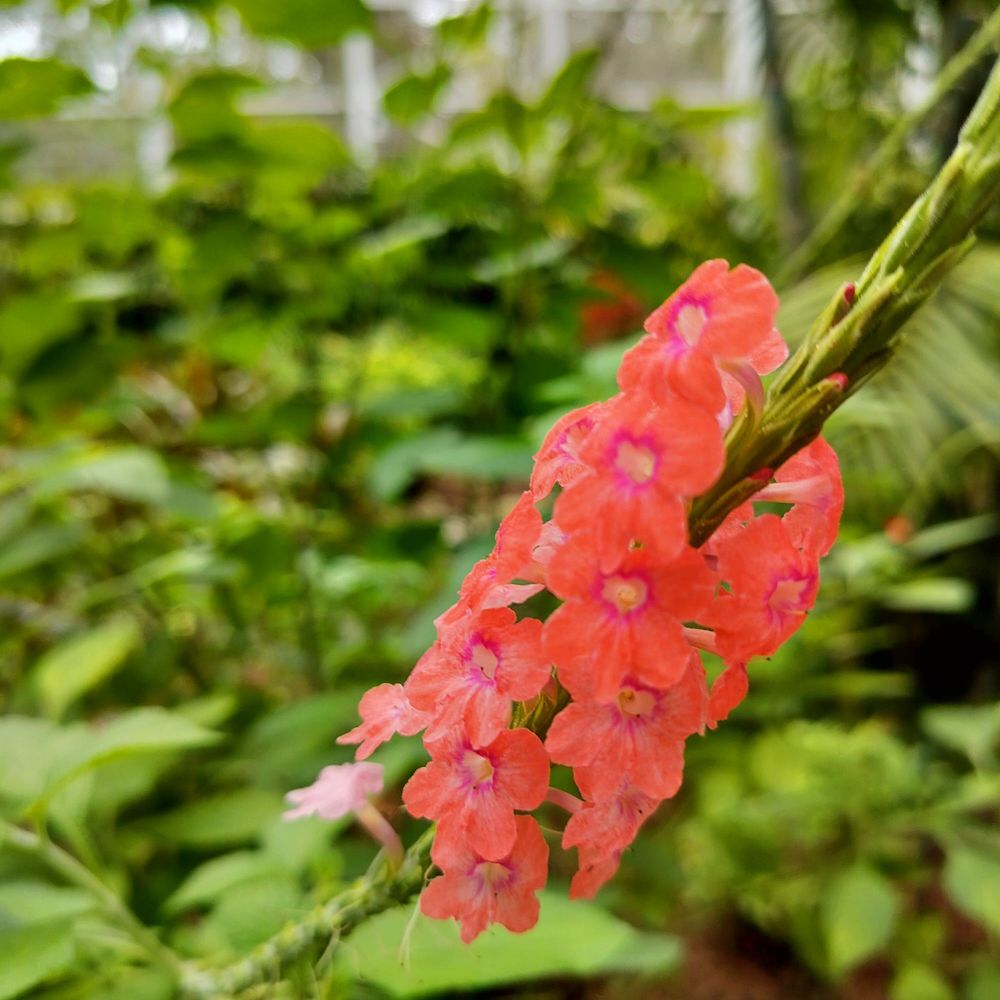
--- # Chapter One: The Morning of Marvels The sun peeked through my bedroom curtains like a golden puppy wagging its tail, and I, Pete the Puggle, bounded from my cozy dog bed with the energy of a thousand bouncing tennis balls. Today was the day! Fairchild Tropical Botanic Garden awaited, and my heart thumped like a drum solo at a rock concert. "Slow down, Speedy Gonzales!" Lenny laughed, his warm brown eyes crinkling at the corners as he tied his favorite worn sneakers. "The garden's been there for eighty-five years. It'll wait for us." I skidded across the hardwood floor, my white velvety fur practically glowing with excitement. "But Dad, Dad, DAD! The butterflies are waiting! The flowers are calling my name! Pete! Pete! Come smell us!" Mariya swept into the kitchen, her long hair still damp from her shower, smelling of coconut and something magical—like possibility itself. "Who's talking to flowers now?" she teased, scooping me up until I was nose-to-nose with her sparkling eyes. "My little poet puggle." "Not a poet," I grumbled, though my wagging tail betrayed me. "An adventurer. A discoverer. A—" "A very clean adventurer if you ever want breakfast," Roman interrupted, his fourteen-year-old voice cracking slightly as he reached past me for the cereal box. His dark hair stuck up in that permanent bedhead that I secretly admired. "We're leaving in twenty, Petey. Get your stuff." My stuff! I had stuff! I had my lucky bandana (red with tiny palm trees), my water bowl, and my courage... well, most of it anyway. The kitchen filled with the symphony of our morning: Mariya's humming as she packed snacks, Lenny's terrible dad-jokes ("Why did the scarecrow win an award? He was outstanding in his field!"), and Roman's occasional groans that somehow sounded fond rather than annoyed. "Charles Bronson is meeting us there," Mariya announced, and my ears perked straight up. Charles Bronson! The name alone sent shivers of excitement down my spine. Our family's oldest friend, a legend of the silver screen, a man who could leap through windows and rescue hostages with the same casual grace that I applied to stealing socks from the laundry basket. He'd been friends with Lenny's father, back in the golden Hollywood days, and somehow—miraculously—he'd become part of our extended family, showing up at birthdays and holidays with that iconic mustache and stories that made your fur stand on end. "Is he bringing... the equipment?" Roman asked, his voice dropping to a conspiratorial whisper that made me prick my ears even higher. "Roman," Lenny said, that gentle warning in his voice that usually preceded a lecture about responsibility. But his eyes were soft, remembering perhaps, all the times Charles had been there when we needed him. "He's visiting as a friend. Not a... whatever you imagine." I didn't fully understand, but I understood enough. Charles Bronson meant adventure with a capital A. And today, at Fairchild, adventure bloomed like the rarest orchid. --- # Chapter Two: The Garden of First Impressions Fairchild Tropical Botanic Garden rose before us like a dream painted in every shade of green imaginable, with splashes of crimson and gold and violet that made my puggle eyes water with wonder. We entered through vine-draped arches, and suddenly the world transformed from Miami's bustle to something ancient and breathing. "Wow," Roman breathed, and I loved him for it—that moment when even teenage coolness cracked open to let wonder shine through. The air here was different. Thick, sweet, alive with the perfume of ten thousand flowers and the distant chatter of birds who'd never learned to be afraid. Water shimmered somewhere beyond towering ferns, and every step forward revealed some new marvel: a bromeliad's spiraling architecture, an orchid's impossible delicacy, a palm tree reaching toward clouds like a green prayer. "Pete, stay close," Mariya reminded as I strained toward a fluttering flash of wings—monarch? No, something even more spectacular, painted in metallic blues that no crayon could capture. "Mom, look!" Roman pointed, and we all turned to witness a cloud of butterflies erupting from a flowering bush, their wings catching sunlight and scattering it like living stained glass. I spun in circles, trying to watch them all, my short legs carrying me in delighted zigzags until—suddenly—she was there. Luna. An Italian Mastiff of such elegant proportions that my heart literally skipped several beats and then tried to make up for lost time by hammering against my ribs like a trapped hummingbird. Her coat was fawn-colored perfection, her eyes the deep amber of ancient honey, and when she tilted her noble head to regard me, I forgot every word I'd ever known. "Well," she said, her voice like distant thunder wrapped in velvet, "you're spinning enough to power a small windmill. Are you quite alright?" I opened my mouth. Closed it. My tongue felt three sizes too big, and I became acutely aware of my smushed puggle face, my too-short legs, my probably-flecked-with-sleep-crust eyes. "I—uh—butterflies?" I managed. Her laugh was gentle thunder, warm rain on summer leaves. "I'm Luna. My human tends the orchid collection here. We've met many excitable dogs, but none quite so... centrifugal." "Centri-what?" "Spinny," she clarified, and her eyes crinkled with amusement that didn't feel cruel. "Pete!" Roman's call reached us. "Come on, we're going to the water gardens!" Water. The word sent an involuntary shiver through my compact frame. I'd seen water before—bathtubs, rain puddles, that traumatic incident with the garden hose—but something in the way Luna's ears perked forward made me stand straighter. "I'll see you again?" I asked, hoping my voice didn't squeak. "Perhaps," she said, already turning with the grace of ships departing harbor. "If you survive the water gardens, little spinner." Little. She'd called me little. But somehow, strangely, it hadn't sounded like an insult. More like a nickname waiting to happen. --- # Chapter Three: The Terror of the Shimmering Deep The water gardens announced themselves with the gentle music of falling water, dozens of small cascades threading through lush vegetation like nature's own necklace. Bridges arched over pools of impossible clarity, and koi fish the size of my entire body drifted beneath lily pads big enough to serve as actual beds. "It's beautiful," Mariya whispered, and it was. It absolutely was. And I was absolutely terrified. My paws felt rooted to the stone path as we approached the first bridge. Below, water moved with a sound that suddenly seemed menacing rather than musical—a whispered promise of cold depths, of losing my footing, of sinking down where sunlight couldn't reach. My chest tightened. My breath came short and fast, little panting huffs that Lenny noticed immediately. "Hey there, buddy." He knelt, his large hands gentle as they cupped my trembling form. "What's going on in that brave little heart of yours?" "I—" My voice cracked. Shame burned hot beneath my fur. "The water. Dad, what if I fall? What if it pulls me under? What if—" "Hey hey hey." His thumbs stroked behind my ears in that magic spot that usually melted me into pure contentment. "Look at me. See me?" I looked. His eyes held entire constellations of patience and love. "The water's scary because you can't control it, right? I get that. I really do. But Pete—look around." He gestured with his chin, and I followed his gaze to where Mariya stood at the bridge's edge, not rushing us, just present. Where Roman crouched by the pool's edge, trailing his fingers through the current with complete trust. "You're surrounded by people who'd dive in after you. Every single one of us." "But what if—" "What if you discover you're braver than your fear?" Lenny finished, and something in his tone—the way he made it not a command but a possibility, a door left ajar—made my trembling ease slightly. Roman appeared, his young face serious in a way that reminded me so much of his father. "Petey, remember when I was scared of the dark? Like, really scared? You stayed with me every night until I fell asleep. You didn't judge me. You just... stayed." "You were eight," I murmured, remembering small fingers clutched in my fur. "Yeah, and now I'm helping you. That's family, dude. We take turns being scared and being strong." Mariya joined our huddle, her presence like sunshine given physical form. "Pete, courage isn't about not being afraid. It's being afraid and choosing to move forward anyway. Tiny steps. Your pace." Charles Bronson's voice cut through our intimate circle, gravelly and warm as old leather: "In the movies, I jumped through windows, faced down villains, drove cars off cliffs. But you know what took real courage? Showing up. Every day. Being there for people you love when you're exhausted, when you're scared, when you'd rather be anywhere else." He knelt with the grace of a much younger man, his weathered face close to mine. "The water's just water, Pete. It doesn't want anything from you. And you've got an army here." That famous mustache twitched. "Plus, I happen to know where the shallowest wading spot is. Secret intel. Classified." Something cracked open in my chest—not fully healed, but beginning to. "Show me?" I whispered. "With pleasure, little soldier." --- # Chapter Four: Lessons in Liquid Courage The "classified" spot turned out to be a gentle slope where water lapped at stone with the tenderness of a mother cleaning her pup. Charles walked ahead, his boots somehow finding purchase where I would have slipped, and turned with arms open in invitation. "Thirty seconds," he promised. "Just thirty seconds of brave, and then you decide: stay or go back." Roman waded in first, the water reaching his knees, turning to face me with his hand extended. "I've got you, Petey. Literally. I've got your paw if you want." The first step was hardest. Stone, wet but not slippery, beneath my pad. Then another. The water touched my ankle and I yipped, frozen, every instinct screaming retreat. "Breathe," Mariya coached from the bank where she sat with her feet dipped casually, normalizing this, making it ordinary. "Breathe with me," Roman said, and exaggerated his own inhalation until I found myself matching it. In. Out. The water wasn't cold. Wasn't pulling. Was simply... there. Existing alongside me rather than against me. Another step. The water reached my chest now, and I discovered something miraculous: I could stand. The bottom held firm, and my legs, while short, were strong. I could feel the current, gentle as Luna's voice, moving around me rather than through me. "Thirty seconds," Charles called, and I realized with shock that I'd passed them. "Want more?" I looked at Roman's proud grin, at Mariya's camera capturing this moment, at Lenny's thumbs-up that held more praise than any trophy. And I thought of Luna, her elegant confidence, her centrifugal comment that somehow didn't sting. "More," I heard myself say, and took another step. We stayed until my fear transformed—not into comfort exactly, but into manageable awareness. Like recognizing a thunderstorm might still frighten me, but I now knew where the windowsill was, where dry safety waited. Later, drying in dappled sunlight while butterflies performed aerial ballets above us, Luna appeared with two tennis balls clutched in her magnificent jaws. She dropped one near my paws with surprising gentleness. "I heard there was a water conqueror in need of celebration," she said, and if dogs could blush, I would have rivaled the hibiscus. "Not conquered exactly," I admitted. "More like... negotiated a peace treaty?" "Ah." She settled beside me, our shoulders almost touching. "The best victories are treaties. Sustainable. Brave without being foolish." "Is that what you think? That I'm brave?" Her amber eyes met mine, and I saw something there—recognition, perhaps, of similar fears overcome. "I think you're learning to be brave, which is braver still than those who never had to learn. The unexamined courage isn't worth having, as someone almost certainly said." We played until the light shifted golden, and when she nudged the tennis ball toward me for the final time, her muzzle brushed my ear in what might have been accident. My heart performed its own butterfly dance. "Tomorrow," she promised. "The garden has secrets yet to share." --- # Chapter Five: Shadows and Separation Evening approached with colors that made the garden gasp—or perhaps that was me, seeing the sky painted in impossible gradients of rose and amber and deepening blue. We gathered near the jungle-like periphery where ancient trees formed cathedral-like spaces, their canopies so dense that twilight arrived early here. "The night garden," Charles announced, producing a flashlight with the casual flair of a magician. "Completely different character. Completely different... challenges." I noticed Roman's sudden tension, the way his hand found Lenny's automatically. "Dad, the map says we should head back. The main gate closes—" "In an hour," Mariya finished, but her voice held uncertainty now, the first crack in our collective confidence. "Charles, are you sure this path is—" "Shortcut," he assured, but something in his posture—slightly too casual, hand resting near his belt in a gesture I'd seen in his films—made my fur prickle. We entered the shadowed path single file, and within moments, the world transformed. Day-blooming flowers closed their faces like sleeping children. Nocturnal creatures stirred with sounds that seemed magnified, mysterious. Every shadow contained possibilities that daylight would have laughed away. "Pete, stay close," Mariya repeated, but her voice came from wrong directions, multiplied by tree trunks and unexpected turns. Then—a wrong step, a loose stone, and suddenly I was falling, tumbling down a slope I hadn't seen, leaves and branches scraping past until I landed hard in something soft and damp and utterly dark. "Pete!" Roman's voice, distant, terrified. "Stay there! We're coming!" Lenny's bellow. But I heard their footsteps running, heard Mariya's cry of "Wrong way! That's not—" and then silence swallowed everything. I was alone. Alone in darkness so complete it had weight and texture. Alone with the sound of water somewhere nearby, which my panic transformed into rushing rivers, into drowning depths, into every water fear I'd ever known multiplied by darkness terror and separation anguish. "Pete!" My own voice sounded small, consumed. "Pete, Pete, Pete!" No answer. Nothing but the garden's night song, which now seemed mocking rather than beautiful. Time lost meaning. I huddled against something tree-like, every shadow becoming a predator, every sound a threat. My family—where were they? Had they abandoned me? Would I wander these paths forever, a ghost puggle haunting tropical plants? Then, cutting through my spiraling fear: a scent. Familiar, impossible, wonderful. Luna's distinctive aroma, approaching through the dark with purposeful speed. "Pete? Pete, answer me—there!" Her bulk appeared beside me, warm and solid and real. "Luna! How—" "My human's cottage. I heard the commotion, caught your scent when the wind shifted." She pressed against me, her body heat anchoring me to reality. "Your family's searching, but they went the wrong direction. I can lead you back, but we must be careful. There are deeper drops here, steeper slopes." "But the dark—" "I know," she said simply. "I was afraid once too. Of thunderstorms. Of being small in a large world. But fear taught me to listen better, to smell more carefully, to use what I have rather than mourning what I lack." Her courage wasn't denial of danger but navigation despite it. I understood suddenly that this was what my family had been offering all day—Not fearlessness, but fear-with-movement, fear-with-trust. We set out, Luna guiding with confidence, me following her lead literally step by step. When shadows loomed, she named them: "Just a fern. Just a stone. Just a sleeping bird, don't disturb." Her voice became my flashlight, her presence my courage externalized. Then—crashing through undergrowth, flashlight beams swinging wildly, voices hoarse with relief: "There! There he is!" Roman reached me first, scooping me up with something between laughter and weeping. "You stupid, brave, wonderful dog. You found a friend, you found your way—" "Pete!" Mariya's embrace, Lenny's strong hands surrounding us both, the circle complete. "I wasn't brave," I admitted into Roman's neck, smelling his boy-sweat and something like dried tears. "Luna was. I was just... following." "That's what courage looks like sometimes," Mariya said, and her voice held that tone of someone understanding something personally. "Following the right leader through the dark." --- # Chapter Six: The Return of the Action Hero Our reunion was interrupted by Charles's arrival, appearing from shadow with the startling competence of his cinematic counterparts. But where his characters always seemed invincible, I saw now the lines of worry etched deeper, the way his hands shook slightly as they checked his belt—some device there, something I wasn't meant to notice. "Wrong turn," he said simply. "My fault. Shouldn't have suggested that path without proper reconnaissance." "Charles," Lenny began, but the older man held up a hand. "Let me make it right. There's a service road, half a klick that direction." He pointed with unerring accuracy. "But there's also a locked gate, and the main path's flooded from today's irrigation. We'll need to go through." "Through where?" Roman asked, and something in Charles's smile—that famous, dangerous smile—made my tail wag despite everything. "The butterfly conservatory. After hours. Unlocked for early morning staff, which means..." He checked an old watch, its face glowing faintly. "Approximately three hours from now." Three hours in darkness, in a glass building surrounded by sleeping butterflies and who-knew-what-else. I felt Luna tense beside me, but when I looked up, her eyes held excitement rather than fear. "Adventure," she murmured, and I heard in that single word her own transformation—somehow, helping me had woken something in her too. The conservatory rose like a dream of glass and moonlight, its geodesic dome catching starlight and scattering it into patterns that danced across our approach. Charles worked at the lock with tools that glinted briefly—lockpicking, apparently, among his many skills—and the door sighed open. Inside: tropical warmth, humidity that wrapped around us like a blanket, and the soft whisper of thousands of wings. Not sleeping, I realized as we entered, but resting. Aware. Watching with compound eyes that saw differently, that perhaps saw more truly. "The Morpho room," Charles directed, his flashlight dimmed to preserve the magic. "Through there, past the emergence chambers. Quietly." We moved as one organism now—family plus Luna plus Charles, our fear transformed into something almost like exhilaration. Roman's hand found my scruff; Mariya's fingers brushed Luna's shoulder. Lenny and Charles walked point and rear, two generations of protectors back to back. A sound: rustling, then a small crash. We froze. "Rats," Charles breathed, and his hand moved to that belt device again. "Conservatory's full of them. Usually harmless, but in numbers—" They emerged from shadows, not truly rats but large enough to seem so in the moonlight, their eyes reflecting our flashlights in eerie green. Five, six, more behind. Cornered, surrounded, the ancient fear of small things in darkness given physical form. "Stay together," Charles commanded, and his voice was his action-hero voice now, the one that had filled theaters and inspired generations. But his next move wasn't cinematic violence—it was grace itself. From his belt, he produced not a weapon but a device, small and humming, that emitted frequencies our ears couldn't process but the rodents clearly could. They scattered, confused but unharmed, disappearing into the conservatory's verdant depths. "Ultrasonic deterrent," he explained, holstering it with practiced ease. "Non-lethal. Humane. Learned it from a sound engineer on *The Mechanic*. He used it to clear sets of pests without disturbing filming." The path cleared, we reached the far exit, and beyond it, the service road stretched toward distant lights—safety, civilization, the end of this particular journey. --- # Chapter Seven: Morning's Truth We emerged into pre-dawn grays, the sky lightening in the east with the promise of another day of marvels. The service road led us true, and soon we reached the main entrance where worried security staff met us with relieved exclamations, where hot drinks materialized from somewhere, where we collapsed together in a heap of exhaustion and wonder. Luna's human arrived, a kind-faced woman in gardening clothes who embraced her mastiff with the same abandon my family showed me. "You incredible creature," she murmured. "Leading the rescue. Who knew you had such heroism in you?" Luna caught my eye, and her expression—proud, fond, slightly embarrassed—made my heart swell with feelings I barely had names for. "Shared heroism," she corrected gently. "I followed his courage as much as he followed mine." As the sky pinked toward true dawn, we found ourselves in a quiet corner of the garden, just family now, plus Luna pressed close to my side. The events of night still shimmered in our collective memory, not yet settled into story, still raw with feeling. "I was scared," Roman admitted suddenly, the words bursting from him like he'd been holding them in. "When Pete fell, when we couldn't find him—I was more scared than I've ever been." "Me too," Lenny said, and his usually steady voice wavered. "More than any movie, any pretend danger. Because this was real. This mattered." Mariya gathered us all—human arms, canine forms, everything between—into an embrace that smelled of sweat and relief and love so profound it transcended words. "That's why it was brave," she whispered. "All of it. The fear made it brave." I thought of water lapping at my chest, of darkness pressing close, of being alone and finding my way back. I thought of Luna's voice naming shadows into harmlessness, of Charles's device clearing our path without destruction, of Roman's hand extended in trust. "Courage isn't not being scared," I said, understanding finally, completely. "It's being scared and choosing to step forward anyway. Tiny steps. Your pace." "Quoting me back at me," Mariya laughed, tears shining. "Quoting all of you," I corrected. "Because that's what family is. We teach each other. We take turns being scared and being strong." Luna nudged me, her great head heavy on my shoulder. "And friends," she added. "Don't forget friends who appear when you need them." "Never," I promised, and meant it with every fiber of my being. --- # Chapter Eight: The Garden of Open Hearts We returned to Fairchild proper as the gates opened for a new day, transformed travelers in the same landscape that had transformed us. The water gardens welcomed me now, and I approached the bridge with only a slight flutter in my chest—a fear acknowledged but no longer governing. "Pete!" Roman called, already splashing in the shallows where I'd first conquered my water terror. "Come show Luna your moves!" I looked at her, this elegant mastiff who'd navigated darkness with me, who'd seen me at my most frightened and hadn't fled. "Shall we?" I asked, formal as a prince. "We shall," she agreed, and together we entered the water—not me following her, not her guiding me, but true companionship, side by side, our splashes harmonizing. Later, as morning fully bloomed, we found Charles near the orchid collection, speaking with Luna's human about something that made them both laugh with the ease of old friends. He'd removed his belt of tricks, appeared merely human now, but I saw my family differently for knowing what he carried, what he'd been prepared to use if gentle means failed. "Thank you," I told him when we were alone, just for a moment. "For everything. For showing up." His weathered face softened into something rarely captured on film—vulnerability, perhaps, or the recognition of being seen completely. "That's the job, Pete. Showing up. Everything else is just details." The butterfly conservatory in daylight proved as magical as in moonlight, but differently—colors blazing rather than ghosting, the air alive with flight rather than whispered rest. We found the spot where we'd huddled, where Luna had found me, where fear had transformed into something else. "I'll visit," I told her, knowing our humans would arrange it, knowing some connections transcend convenience. "You'll teach me more about listening better, smelling more carefully." "And you'll teach me," she countered, "about centrifugal courage. About spinning enough to power windmills. About being small and magnificent simultaneously." We touched noses, butterfly-delicate, and I felt something shift and settle in my chest—a door opening rather than closing, a beginning rather than ending. The final walk through Fairchild took hours, each familiar path now layered with memory. We stopped at the water gardens where I'd learned to float in courage, the dark path where I'd learned to navigate fear, the conservatory where I'd learned that protection need not destroy. "Ready to go home?" Lenny asked, and I heard in his voice that home meant something larger now too—not just a house, but this circle of love, this willingness to face darkness together. I looked back once, at gardens that had witnessed my transformation, at a mastiff's elegant form growing smaller with dignified patience. "Ready," I said, and meant: ready for whatever comes next, whatever water or darkness or separation awaits. Ready because I'm not alone. Ready because I've learned that courage is shared, that fear is survivable, that love is the truest compass through any night. In the car, Roman's hand found my fur, Mariya's voice hummed something wordless and content, Lenny drove with the steady calm of someone who'd found his way home. And I, Pete the Puggle, once afraid of water and darkness and being alone, closed my eyes in perfect trust. We had been lost. We had been found. We had been brave, each in our ways, each supporting the others. And somewhere in the passing landscape, I knew Luna traveled too, carrying her piece of this story, this courage, this love. The garden would remain, would bloom and rest and bloom again. And we would return, transformed ever more, learning and relearning the oldest truth: that we are strongest not despite our fears, but because we face them together. *** The End ***


Use these buttons to read the story aloud:


***Pete the Puggle's Stiltsville Adventure: A Tale of Courage, Friendship, and Finding Your Brave*** 2026-06-01T01:25:11.285743900

"***Pete the Puggle's Stiltsville Adventure: A Tale of Courage, Friendship, and Finding Your Brave***"๐Ÿพ

--- **Chapter One: The Morning of Whispered Dreams** The Florida sun crept through my bedroom window like a golden-fingered friend, tickling my velvety white ears until I stirred from the most magnificent dream. I had been flying—not with wings, but with confidence, soaring above turquoise waters that sparkled like scattered jewels. I stretched my compact puggle body, my tail thumping against my stuffed elephant, Mr. Trunks, and let out a puppy yawn that could have swallowed a butterfly. "Pete! Pete! Wake up, sleepy pup!" Roman's voice bounced down the hallway like a tennis ball down concrete stairs. My older brother burst through the door, his dark hair still messy from sleep, his grin wide enough to host a parade. "We're going to Stiltsville today! Remember? Dad's been planning this for weeks!" Stiltsville. The name alone sent a shiver through my little body—not entirely unpleasant, like the first lick of an ice cream cone, but layered with something else. Something that made my paws feel unsteady. I had seen pictures: colorful houses perched on stilts above the shimmering ocean, accessible only by boat, surrounded by water that stretched to forever. Water. So much water. My small heart galloped like a herd of wild ponies. "Roman," I said, my voice carrying the gravitas I reserved for matters of great importance, "I must confess something to you, my dear brother and occasional rival." I padded across the room and placed my front paws on his knee, my brown eyes meeting his with earnest vulnerability. "The water... it frightens me. It is vast and unknowable, like a story with no ending, like a shadow that moves when you are not looking." Roman's expression softened in that particular way he had—half smile, half serious consideration, the look of someone who understood that fears were not silly but were instead signposts pointing toward the courage we hadn't found yet. He scooped me up, his arms warm and certain as sunrise, and pressed his forehead to mine. "Pete," he whispered, "do you remember when you were afraid of the vacuum cleaner? And now you chase it like it's your personal nemesis who must be defeated for the honor of the household." I huffed modestly. "That is true. Sir Whirls-a-Lot was no match for my strategic brilliance." "And the dark? Remember how you used to whimper at night?" I did remember. The darkness had felt like a blanket woven from all the unknown things, pressing down upon my small form. But Roman had begun leaving his door cracked, a sliver of light like a promise, and slowly, like a flower learning to turn toward the sun, I had discovered that darkness was simply the world holding its breath, waiting for morning. "The water is different," I insisted, though my voice wavered with less conviction than I intended. "Everything scary is different until it's not," Roman said simply. "And besides, you're not going alone. You've got me. You've got Mom and Dad. And we've got a surprise for you today—a friend who might just teach you a thing or two about being brave." A friend? My ears perked forward, curiosity waging its familiar war against apprehension. Before I could inquire further, the aroma of Dad's legendary cinnamon pancakes drifted upstairs like a delicious fog, and my stomach issued a decree that could not be ignored. "Come on, adventure pup," Roman laughed, setting me down. "Fuel up. We've got a whole ocean to conquer." I followed him downstairs, my paws pattering a rhythm of nervous anticipation on the wooden steps, each one a note in the symphony of a day about to unfold in ways I could never imagine. --- **Chapter Two: The Arrival of Kirusha and the Open Sea** The marina hummed with activity like a beehive in spring—boats bobbing gently in their slips, seagulls conducting noisy arguments overhead, and the salt-tinged breeze carrying whispers of adventures past. I clung to Roman's chest, my claws making small indentations in his "Stiltsville or Bust" t-shirt, my eyes darting between the cerulean sky and the cerulean water, which seemed to me like two enormous eyes watching, waiting. "Pete!" Dad's voice boomed with the warmth of a fireplace on Christmas Eve. Lenny, my father in all the ways that mattered, knelt down to my level, his beard neatly trimmed, his eyes the color of warm honey. "I see that look. That's your 'I'm contemplating the mysteries of the universe' face. Or possibly your 'I need to use the facilities' face. With you, it's often hard to tell." Despite my anxiety, my tail betrayed me with a single wag. "Dad, I am preparing my soul for the aquatic unknown. This requires tremendous concentration and, if I'm being honest, a certain amount of bladder control." Dad's laugh was like gravel wrapped in velvet, rough and comforting all at once. "That's my boy. Preparation is key. But you know what else is key? Trust. Trusting that we've got you, no matter what. That the people who love you are like... like a life jacket for your heart." Mariya appeared then, my mother of infinite gentleness, her camera swinging from her neck as it always did, capturing beauty in the wild and in the ordinary moments we might otherwise forget. She knelt beside Dad, and I was enveloped in the sanctuary of their combined presence. "Pete, my little storyteller," she said, her fingers finding that perfect spot behind my left ear that turned my legs to jelly, "do you know what I love most about water? It reflects. Not just the sky and the boats, but us. We see ourselves in it, and sometimes that reflection shows us who we're becoming, not just who we are." Her words settled into me like seeds in fertile soil, even as a sharp bark shattered my contemplation. "Well, well, well. If it isn't Pete the Puggle, trembling like a palm frond in a hurricane." The voice was gruff, accented with what I would later learn was Russian determination, and attached to a Jack Russell Terrier whose wiry coat was the color of autumn leaves and winter snow mixed together. He was compact, muscular, and carried himself with the swagger of someone who had never once doubted his place in the world. His eyes, dark and challenging, fixed on mine with what I initially interpreted as pure antagonism. "Kirusha," Roman said, clearly delighted, "meet Pete. Pete, this is Kirusha. He's coming with us to Stiltsville." I set my paws on the dock's wooden planks, forcing my legs not to tremble. "I am pleased to make your acquaintance," I said with the dignity I could muster. Kirusha barked a laugh—actually barked it, a series of staccato sounds that felt like punctuation marks in a language I didn't fully understand. "You look like a marshmallow. A fluffy, scared marshmallow. You ever even seen the ocean before, or do you just drink from tiny bowls?" My hackles rose—not entirely, for I am not a creature of genuine violence, but enough to signal that I had boundaries. "I have seen the ocean in documentaries," I countered. "And in dreams. And I am learning to expand my relationship with it." "Relationship!" Kirusha yipped, circling me with the energy of a tornado in a teacup. "The ocean is not your friend, marshmallow. It is challenge. It is test. You must fight the water, conquer the water, show the water who is boss!" He demonstrated by charging to the edge of the dock and barking ferociously at a passing wave, as if his volume and ferocity could intimidate the entire Atlantic Ocean. I watched, somewhat awestruck despite myself, as the wave continued its indifferent course, unimpressed. "The water," I observed carefully, "does not seem to be submitting to your authority." Kirusha turned, and I caught something in his eyes—not quite embarrassment, but perhaps a grudging respect that I had noticed what he perhaps had not fully admitted. "The water is... patient adversary," he conceded. "But today, maybe, we fight together. You and me. We show the water." Before I could respond, Dad whistled—the particular melody that meant "all aboard, adventure awaits." Roman gathered me in his arms once more, and I felt the familiar comfort of his heartbeat as we stepped onto the boat, Kirusha leaping aboard with the grace of someone who had done this a thousand times. The engine roared to life, and we pulled away from the marina, the land receding like a memory, the water opening before us like a story with no final page. I buried my face in Roman's neck, breathing in the familiar scent of his sunscreen and his courage, and whispered a prayer to whatever powers watched over small dogs with big fears. --- **Chapter Three: The Houses on Stilts and the First Test** Stiltsville emerged from the horizon like a dream half-remembered—wooden structures painted in colors that seemed impossible, perched on pilings that disappeared into the green-blue depths. Peach, turquoise, butter-yellow, and coral, they stood defiant against the vastness, stubborn declarations that humans (and by extension, their animal companions) could build beauty even in the most unlikely places. "Welcome to the Stiltsville Historic District," Dad announced, his voice carrying that particular pride of someone sharing something he loved. "Houses built in the 1930s and 40s, surviving hurricanes, time, and changing tides. They're like... like bookmarks in the story of Florida itself." The boat eased up to a weathered dock, and Roman helped me onto the wooden planks, which felt reassuringly solid beneath my paws. Kirusha bounded past me, already exploring, his barks echoing across the water like challenges thrown down to invisible foes. "Careful, Kirusha!" A new voice called—deep, measured, carrying the weight of years but with an underlying vitality that suggested those years had been well-lived. From the peach-colored house emerged a man who seemed to embody the word "legend"—Charles Bronson, our family's dear friend, his silver hair catching the sun, his weathered face creasing into a smile that spoke of a thousand stories, a thousand rescues, a thousand quiet acts of courage. "Charles!" Mom's voice lifted with genuine joy, and she moved to embrace him, her camera clicking almost of its own accord, capturing the moment. "Little Mariya," he rumbled, though "little" hardly described my mother, "and Lenny, and young Roman. And who is this?" His gaze found me, and I felt seen—not as a small, frightened dog, but as someone with potential yet unrealized. "This must be Pete. The storyteller. The one with the brave heart he's still learning to trust." I approached him, my tail giving its cautious half-wag, and he knelt with the grace of someone who had spent a lifetime in motion, in action, in doing what needed to be done regardless of personal cost. "Mr. Bronson," I said, "I am honored. Roman speaks of you often. He says you have faced... many challenges." Charles's eyes held mine with an intensity that felt like being witnessed, truly witnessed, for perhaps the first time. "Challenges, young Pete, are simply invitations. The question is never whether we're afraid. The question is whether we accept the invitation anyway." He gestured to the water surrounding us, the channels between houses where the current moved with purpose. "This water—it's not your enemy. It's your teacher. The only question is whether you're willing to be its student." Kirusha chose this moment to barrel past, chasing a pelican that had the audacity to land near "his" territory, his bark aggressive, his small body a bundle of kinetic energy. "I teach the water!" he was shouting, though the pelican seemed unimpressed. "I teach everyone! I am Kirusha!" Charles watched him with amusement. "That one. He fights everything because he's afraid that if he stops fighting, he'll discover he's small. Like you, Pete. Like all of us, once." His words lingered as we explored the main house—a structure filled with nautical history, with windows that framed the ocean like paintings, with porches where the breeze carried stories from Cuba, from the Bahamas, from ships that had passed this way for centuries. I found myself on the lower deck, peering through the slats at the water moving beneath, hypnotic and terrible and beautiful. "Pete." Roman's voice, soft behind me. "Come upstairs. Mom's making lunch, and Dad's about to tell one of his stories. The one about the manatee who thought he was a mermaid." I turned, grateful, but as I moved, my paw caught on a loose board, and I tumbled—not far, not painfully, but enough that I skidded toward the edge, toward the gap where the deck ended and the water began. For one eternal second, I hung suspended, seeing my reflection in the green surface below—a white blur of terror, eyes too wide, ears flat against my head. Then Roman's hands, always there, gathering me up, pressing me to his chest where his heart hammered as fast as mine. "I've got you," he breathed. "I've always got you, Pete. Always." But as he carried me inside, I caught Kirusha's eyes across the deck—no longer mocking, but something else. Something that might have been recognition. The look of someone who had also fallen, who had also needed hands to catch him, and who had forgotten until just now. --- **Chapter Four: The Storm and the Separation** The afternoon brought clouds that gathered like worried relatives, gray and whispering among themselves. The wind shifted, carrying the metallic scent of approaching weather, and Charles's expression became serious in that particular way that made his legendary jaw seem carved from granite. "Weather's turning," he announced. "Everyone inside. Pete, Roman—help me secure the boats. Kirusha, quit harassing that pelican and get in here." But Kirusha, in his enthusiasm, had wandered to the far dock, chasing what he insisted was a "fish with attitude"—a stubborn tarpon that circled the pilings with what I can only describe as fishy insolence. And I, in a moment I would later recognize as the beginning of my transformation, found myself moving toward him, not away, my fear for his safety momentarily eclipsing my fear of the water. "Kirusha!" I called, my paws tentative on the wetting planks. "The storm! We must retreat to shelter! This is not time for conquest!" He turned, surprised, and in that moment of distraction, a wave—larger now, energized by the shifting wind—slapped against the pilings, sending spray across the dock. The surface became slick as glass, and Kirusha slipped, sliding toward the edge with a yelp that contained none of his earlier bravado. I lunged. I don't fully remember the decision; only the action, my body moving faster than thought, my jaws closing on his collar as he teetered over the edge. The fabric held, and I braced my back legs against a piling, pulling with all the strength my small frame possessed, which was not enough, which was barely enough, which was somehow, impossibly, enough. We tumbled backward together, a tangle of fur and limbs, onto the relative safety of the dock. Kirusha stared at me, his dark eyes wide, his breathing rapid. "You... you saved me," he panted. "The marshmallow saved me." "Do not," I gasped, my own heart thundering, "call me marshmallow." Then the storm hit in earnest, and the world became water and wind and noise. A particularly vicious gust tore through the channel, and the boat that had been secured to the dock strained against its ropes, one of which snapped with a sound like a gunshot. The vessel swung outward, and in the chaos, in the driving rain and the shouts from the house above, I felt myself moving, sliding, falling— Into the boat. Alone. Untethered. "Pete!" Roman's voice, distant, desperate. The current caught the boat like a toy, spinning it away from the dock, from the house, from everything I knew. I pressed myself against the bottom, the world a blur of gray water and gray sky, the boat's small motor knocking against the hull with each wave. I was alone. I was separated. The two fears that had haunted my dreams—the water, vast and uncaring; the darkness of separation, absolute and consuming—wrapped around me like a shroud. "Roman!" I howled, but the wind stole my voice. "Mom! Dad! Anyone!" The boat bumped against something solid—a piling, perhaps, or another structure. I gathered my courage like gathering scattered leaves in a gale, and peered over the edge. We had come to rest against the underside of another stilt house, one of the abandoned ones, its windows dark, its paint peeling. Above me, the structure creaked and groaned like a giant waking from uneasy sleep. And then, from the water beside me: "You are very dramatic, even for marshmallow." Kirusha. Swimming. His small head barely above the water, his paws working furiously against the current, but his eyes—his eyes held that familiar defiance, that refusal to accept defeat. "Kirusha! How—" "I swim. Is what I do. Is what we all do, if we stop being afraid long enough to try." He grasped the boat's edge with his jaws, his teeth finding purchase on the rubber trim. "You saved me. Now I save you. This is... what is word? Friendship?" The word hung between us, fragile as a bubble, strong as steel. Together, somehow, we managed to wedge the boat against a lower crossbeam, creating enough stability that I dared to stand, to look around, to think. The storm raged, but within me, something had shifted. The fear was still there—it would always be there, I understood now—but it was no longer in control. I was Pete the Puggle, storyteller and adventurer, and this was simply another chapter, another challenge, another invitation to discover who I was becoming. "We need to get higher," I said, my voice steadier than I felt. "The house above us. We need to find shelter, signal for help. Can you... can you do this with me?" Kirusha barked his laugh, but it was softer now, almost gentle. "Together, marshmallow. We fight the storm together." --- **Chapter Five: The Dark House and Deeper Fears** The interior of the abandoned house was a cathedral of shadows. Water dripped somewhere in the darkness, each drop an echo of my own heartbeat. Kirusha pressed against my side, his earlier bravado muted by the oppressive atmosphere, and I realized with something like wonder that he was taking courage from my presence as I was from his. "Pete," he whispered, and in the darkness, his voice was small, "I do not like this place. It smells of... endings." "It smells of stories that haven't been finished," I corrected, though my own voice trembled. "Of adventures that waited too long for their heroes." We moved through the main room, our paws finding purchase on warped floorboards, our eyes slowly adjusting to the dim light filtering through storm-clouded windows. The darkness here was different from the comfortable darkness of my bedroom at home, the one with Roman's cracked door and the promise of morning. This was the darkness of uncertainty, of not knowing if the hands that held you would ever find you again. My mind betrayed me with images: Roman searching the storm, his face pale with worry; Mom's camera forgotten, her hands empty and reaching; Dad's booming voice silenced by wind and distance. The separation was physical, yes, but more than that—it was the separation from the web of love and connection that had always held me, that I had never fully appreciated until it was stretched thin, almost to breaking. "I am afraid," I admitted to the darkness, to Kirusha, to myself. "I am afraid of being forgotten. Of being too small to find, too insignificant to save. Of the water below and the dark around and the storm that seems to have no ending." Kirusha was silent for a long moment. Then: "In my first home, before your family, before this, I was one of many. Too many. We fought for food, for warmth, for any attention at all. I learned to bark loudest, to fight hardest, to never show the wanting." His body shook against mine, a tremor of old memory. "But I wanted. I want. The family you have—the big man with jokes, the woman with the kind hands, the boy who carries you like treasure—I want that. I was... I am jealous of you, Pete. And that made me mean." The confession hung in the darkness like a gift unexpectedly given. I turned to him, my eyes finding his, two small beacons in the gloom. "You are not mean," I said. "You are afraid, as I am afraid. And we are telling the truth now, in this dark place, which makes it a little less dark." A sound from above—movement, heavy and purposeful. My heart leaped with hope that transformed to caution. Not Roman's step, not Dad's familiar tread. Something else. "Rats," Kirusha growled, his old aggression finding new direction, protective rather than performative. "Many. They think we are easy prey, trapped in their territory." They emerged from the shadows—dozens of eyes reflecting what little light existed, bodies sleek with the confidence of those who ruled this forgotten place. Their leader, larger than the others, advanced with the lazy menace of someone who had never been denied. Kirusha placed himself before me, his small frame ridiculous against their numbers, his bark fierce but ultimately futile. And I felt it then—the choice. To retreat into fear, to be overwhelmed, to become the victim of my own story. Or to step forward, to stand beside my friend, to become something more than I had believed possible. "Enough," I said, and my voice carried a resonance that surprised us all. I moved to Kirusha's side, our shoulders touching, our presence combined. "We are passing through. We mean no harm to your territory, but we will not be harmed. We have people waiting for us. People we love. And we will find our way back to them." The leader paused. Something in my voice—perhaps the absolute certainty beneath the fear, the love that spoke louder than any threat—made him hesitate. Then, from somewhere in the storm, a sound that made my soul sing: "Pete! Kirusha! Where are you!" Roman. Roman's voice, desperate and searching and wonderfully, impossibly real. The rats scattered, not from my words but from the approaching human sounds, the boats drawing near, the rescue unfolding. Kirusha and I stumbled to the window, barking together now, our voices joined in the most beautiful chorus I had ever known. --- **Chapter Six: Charles Bronson's Rescue and the Return of Light** The door burst open with a precision that spoke of training, of years of knowing exactly how much force to apply, where to stand, how to move. Charles Bronson filled the frame, his silver hair plastered by rain, his eyes scanning, assessing, finding. In his hand, a rope coiled with the familiarity of an extension of his own body; at his belt, tools I didn't recognize but implicitly trusted. "There's my soldiers," he said, and the gruffness couldn't hide the relief. "Holding the fort. Holding the line. Good work, both of you." He moved through the room with the economy of someone who had never wasted a motion in his life, securing the rope to a structural beam, testing its strength with a pull that would have lifted a much larger creature. "Your family's outside, Pete. Roman's about ready to swim in after you himself. Had to promise I'd be the one to come get you, or he'd have beat me to it." "Charles," I managed, my voice thick with emotion, "I was so afraid. Of the water. Of the dark. Of being lost forever." He knelt then, this legend of action and strength, and his weathered hands were gentle as they lifted me, Kirusha leaping to follow, always following now, a team unchosen but undeniable. "Fear's not the enemy, Pete. Never was. It's the compass that points us toward what matters. You faced yours today. Both of you. That makes you family in my book." He secured us against his chest—one arm holding me, the other ready for Kirusha, the rope looped expertly around his waist. The descent to the boat was a blur of motion and trust, the water below no longer terrifying but simply the path between where we had been and where we were going. Roman's face, when we reached the boat, was a landscape of relief and lingering terror and overwhelming love. "Pete," he breathed, taking me from Charles, pressing his face into my fur, "Pete, Pete, Pete. Don't ever do that again. I can't—I can't lose you. You're my heart, you little idiot. You're my heart." And I wept then, in the way dogs weep, which is to say with my whole body, my whole soul, pressing closer to him, to his heartbeat, to the home I had never truly left because home is not a place but the people who hold you when you return. Mom's hands, Dad's voice, the boat moving through stilling waters toward the main house where warmth and light and safety waited. Kirusha found himself passed from hand to hand, finally settling in Mom's lap, his fierce exterior melting under her gentle attention, his eyes closing in trust he had never before permitted himself. The storm was passing. The light was returning. And I understood, truly understood, that courage was not the absence of fear but the decision to move through it, again and again, for love. --- **Chapter Seven: The Story Circle and What We Learned** Evening found us on the main house's upper deck, the storm having scrubbed the sky clean, stars emerging like diamonds scattered by a generous hand. The water below was calm now, reflective, and I found I could look at it without terror, could even appreciate its beauty, its mystery, its invitation to stories yet untold. We were gathered in a circle—Mom and Dad on the weathered bench, Roman cross-legged on a cushion with me in his lap, Charles in a chair that seemed to have been waiting for him, and Kirusha, finally, beside me, our bodies touching, our peace shared. "So," Dad said, his voice carrying the particular tone that preceded his best stories, "I believe we have a new adventure to add to the chronicles. The Tale of Pete and Kirusha and the Storm of Stiltsville. Has a nice ring to it, doesn't it?" "I would like," I said, settling into my role with the comfort of familiar ritual, "to tell this story properly. If I may." "Please," Mom encouraged, her camera set aside for once, her attention fully present. I stood, my legs steady on the wooden planks, and looked at each face in turn—the people and the dog who had become my world, my courage, my reason to face the fears that would surely come again. "Once upon a time," I began, my voice carrying across the water, "there was a puggle named Pete who was afraid. He was afraid of the water that stretched too far, of the dark that pressed too close, of being lost where no one could find him. He thought these fears made him small, made him weak, made him unworthy of the adventures he dreamed of telling." Kirusha barked softly, and I acknowledged him with a nod. "He met a dog named Kirusha who seemed to have no fears at all, who barked at waves and challenged storms. But Pete learned that Kirusha's loudness came from the same quiet place—that we are all afraid, and we all find different ways to carry that fear. And he learned that when we share our fears, when we stand together, the fear becomes... not less, exactly, but different. Bearable. Transformable." I paused, gathering my thoughts, feeling the weight and the gift of the words. "Today, the storm took me from my family. The water surrounded me. The dark enclosed me. And I discovered that the fear was still there—it will always be there—but it was not bigger than my love for them. It was not bigger than my friendship with Kirusha. It was not bigger than the part of me that keeps going, that keeps hoping, that keeps believing in the story's happy ending even when the pages are dark." Roman's hand found my back, stroking with infinite gentleness. "Charles Bronson came for us," I continued, "because that's what family does—blood family, chosen family, the family we find in our most frightened moments. And he reminded us that being rescued doesn't make us weak. It makes us loved. It makes us connected. It makes us part of a story bigger than our own small, scared selves." Charles cleared his throat, and I saw him blink more rapidly than usual. "Just doing what needed doing," he muttered, but his smile was soft, pleased. "And Kirusha," I said, turning to my friend, my rival, my unexpected companion, "taught me that the dogs we think are our enemies may become our greatest friends. That fighting comes from fear, but friendship comes from trust. That barking at each other is less important than listening to each other. And that together, we are more than we could ever be alone." Kirusha stood, moved to me, and did something I would never have expected—he rested his head against my shoulder, a gesture of vulnerability and trust and love. "You taught me too, marshmallow," he said softly. "You taught me it is okay to want. To need. To be saved. To be... soft, sometimes. This is also brave." "So," I concluded, looking at my circle of beloved faces, the stars above, the water that no longer terrified me, "the moral of this story, if stories must have morals, is that courage is not the absence of fear but the presence of love. That family is who holds you when you fall and finds you when you're lost and believes in you even when you forget to believe in yourself. And that the greatest adventure is not the one that takes us farthest from home, but the one that brings us back to it, changed and changing, always becoming, always enough." The silence that followed was full, complete, a shared breath between beings who had traveled through fear and emerged together on the other side. "Well," Dad said finally, his voice thick, "that's going in the album. The verbal one and the photographic one. Mariya, please tell me you got that." "I got that," Mom confirmed, her own voice tender. "I got all of it. Every precious, brave, wonderful moment." "And Pete," Roman said, lifting me to meet his eyes, "just so you know? You're never getting rid of me. Where you go, I go. Through water, through dark, through everything. That's the deal. That's forever." "Forever," I agreed, and Kirusha barked his assent, and Charles nodded his solemn confirmation, and the circle held, complete and completing, a story without an ending because love, I had learned, goes on and on, turning page after page, forever inviting us to become more than we ever dreamed we could be. --- **Chapter Eight: The Journey Home and the Story Yet to Come** The return to the marina came with dawn's gentle blessing, the sky painted in watercolors of pink and gold, the water below reflecting a world made new. I stood at the boat's bow, Kirusha beside me, the wind in our fur no longer threatening but exhilarating, a caress rather than a challenge. Charles piloted with the quiet competence of someone who had navigated far more treacherous waters, his hands steady on the wheel, his eyes occasionally finding me with what I can only describe as grandfatherly pride. "You're going to be a hell of a dog, Pete," he said, not turning. "Already are, if we're being honest. Which we are. Bronsons are always honest." "I aspire to deserve such praise," I replied with appropriate modesty, though my tail betrayed me with its enthusiastic wagging. Mom and Dad dozed together on the bench, her head on his shoulder, his arm around her waist, a picture of peace earned through weathered storms. Roman sat cross-legged near us, his sketchbook open, capturing the morning in charcoal and determination—my profile, I could see, and Kirusha's, and the merging of them that suggested friendship, unity, becoming. "Pete," Roman said without looking up, "I'm drawing our next adventure. The one where we go back. Where we don't have to be afraid, because we've already shown ourselves what we're capable of." I moved to him, pressed my paw to his sketch, leaving an ink-blot signature that made him laugh. "Every adventure is our next adventure," I said. "Every moment is the story we're choosing to live. And I choose this one. I choose you. All of you." Kirusha barked in emphatic agreement, then launched into an impromptu chase of a seagull that had insulted his dignity by flying too close, his body a comet of joy and energy and absolute, unreserved presence in the moment. As the marina grew closer, as land became real and solid and waiting, I felt the familiar flutter of my old fears—not gone, never entirely gone, but changed. The water was still vast, still unknowable in its depths, but I had floated upon it and survived. The dark still waited in abandoned houses and closed eyes, but I had walked through it and found light on the other side. And separation—oh, separation still whispered its terrible possibility, but I knew now, bone-deep and soul-certain, that love would find me. That I would be searched for, called for, rescued and rescuing, forever caught in the net of connection that held us all. "Home soon," Mom murmured, waking, stretching, smiling at us all with the particular radiance of someone who had witnessed her family survive and thrive. "Hot showers, warm beds, and I think—" she checked her watch, "—pancakes for dinner. Because we've earned pancakes for dinner." "With extra cinnamon," Dad stipulated. "And stories. I want to hear Pete's version again. And Kirusha's. Every perspective matters. Every voice deserves to be heard." Kirusha, returning from his fruitless chase, collapsed in a dramatic heap at my feet. "I will tell my version," he announced, "with proper emphasis on my swimming and my fighting and my general excellence." "And your vulnerability," I added gently. "And your friendship. And the part where you rested your head on my shoulder and admitted that softness is also brave." He looked at me with something like exasperation, something like gratitude, something like the deepest affection. "Fine," he conceded. "Also that. But mostly the swimming and fighting." The boat bumped against the dock, and hands reached to secure us, and we disembarked onto solid ground that felt strange and wonderful after our waterborne odyssey. But I paused, one paw still on the deck, and turned to look back at Stiltsville, now distant, its colors muted by morning mist, its stilts invisible but present, holding it above the water, holding it through storms, holding it as a promise that we can build beautiful things in unlikely places, that we can survive what seeks to overwhelm us, that we can become more than our fears ever believed possible. "Thank you," I whispered to the water, to the wind, to whatever forces had shaped our adventure and brought us through. "Thank you for the fear that taught me courage. Thank you for the dark that made me seek light. Thank you for the separation that reminded me of love." Roman's hand found my scruff, lifted me to his heart. "Talking to the ocean, storyteller?" "To everything," I corrected. "To the story itself. Which continues." And so it does. So it will. With every sunrise and every challenge, with every fear faced and every friendship forged, with every moment we choose love over isolation, courage over surrender, hope over despair. The story of Pete the Puggle and his remarkable family, his unexpected friend, his legendary rescuer—it goes on, page after page, chapter after chapter, an endless book written in fur and laughter and the absolute, unshakeable certainty that we are, all of us, braver than we know, more loved than we imagine, and forever part of something beautiful. Kirusha trotted beside us as we walked toward the car, toward home, toward the next adventure waiting in wings yet unseen. And as the sun climbed higher, as the day bloomed with possibility, I began to compose in my mind—the story we would tell, the lessons we would share, the love that would echo through


Use these buttons to read the story aloud:


*** The Brave Little Puggle and the Lighthouse of Shining Courage *** 2026-06-01T01:22:02.608722100

"*** The Brave Little Puggle and the Lighthouse of Shining Courage ***"๐Ÿพ

--- ## Chapter One: The Morning of Whispers and Waves The sun crept over our little yellow house like a golden cat stretching after a long nap, and I, Pete the Puggle—short, velvety white fur practically glowing in the dawn light, eyes ringed with playful streaks of makeup that Mariya had applied during last night's "glamour night"—sat at the kitchen window watching the world wake up. My heart thumped like a drum solo at a rock concert, because today was the day. Cape Florida Lighthouse. The ocean. *The water.* "Mornin', my sparkly-eyed superhero!" Lenny's voice boomed from behind me, warm as fresh pancakes. He scooped me up, and I buried my nose in his flannel shirt—coffee and cinnamon, the smell of safety itself. "You ready to meet the Atlantic?" I wiggled down, my paws clicking on the tile. "I'm ready to meet the *sand*, Dad. The *sand* is my friend. The water and I are still... in negotiations." Mariya laughed from the stove, her hair already escaping its bun, paint splatters on her apron from yesterday's canvas. "Negotiations! Pete, you're the only dog I know who uses that word before breakfast." She set down her wooden spoon and knelt before me, her brown eyes soft as melted chocolate. "Sweetheart, remember when you were scared of the vacuum? Now you chase it like it's your nemesis." "That's different," I muttered, though my tail betrayed me with a tentative wag. "The vacuum is *predictable*. It moves in patterns. The ocean is... *chaos*." Roman thundered down the stairs, his backpack half-zipped, sneakers untied. "Pete! I packed the special ball—the one that floats! We're gonna play fetch in the waves, man. It's gonna be epic!" He dropped to his knees, all gangly sixteen-year-old enthusiasm, and ruffled my ears. "You and me against the sea, little dude. Team Awesome." I licked his hand because I loved him, but inside, my stomach performed gymnastics without permission. *Team Awesome*. I wanted to be that brave. I *ached* to be that brave. Then the kitchen window rattled, and a voice like rolling thunder wrapped in velvet announced, "Did someone mention the sea? I happen to have wrestled a whale once—barely broke a sweat!" Baron Munchausen stepped through our back door as if he owned the threshold, which, in his magnificent mind, he probably did. Tall as a storybook, mustache curled like a question mark, cape swirling though there was no wind indoors, he swept off his feathered hat and bowed low. "My dear family! My dear Pete!" He fixed me with eyes that sparkled like distant lighthouses themselves. "I hear we have water to conquer, darkness to illuminate, and adventures to... *slightly embellish* for future retellings." "Baron!" Mariya hugged him, laughing. "We wondered if you'd come." "Come? I arrived three days ago and have been waiting in your garden shed for the dramatic entrance!" He winked at me. "Every hero needs a proper herald, young Pete. Even the reluctant ones." I sat straighter, puffing my chest. "I'm not reluctant. I'm... *strategically cautious*." "Ah!" The Baron clapped his hands, producing a small puff of silver smoke that smelled like starlight and old libraries. "The best kind of courage! The kind that knows the cost before it pays the price. Come, my small friend. Today we begin your transformation from caterpillar to—" "Butterfly?" I interrupted, hopeful. "To *sea serpent*!" he corrected, sweeping me into his arms despite my protests. "Much more dramatic!" Lenny loaded the car while Mariya packed sandwiches that smelled of adventure and mustard. Roman blasted music from his phone, and I perched on my special seat, watching our neighborhood shrink behind us. The makeup around my eyes—Mariya's artistic touch making me feel fierce and fancy—seemed to tingle with anticipation. "Nervous?" Roman asked, catching my eye in the rearview mirror. I thought of lying. I thought of brave faces and stiff upper lips. But Roman had seen me tremble during thunderstorms, had held me through fireworks, had never once made me feel small for my fears. "Terrified," I admitted. "But... I want to try. With you. With everyone." He reached back, and I placed my paw in his palm. "That's the bravest thing, Pete. Wanting to try when you're scared. That's the *real* stuff." The highway stretched before us like a ribbon of possibility, and somewhere at its end waited the sea. My heart hammered, but my paw stayed in Roman's hand. *Wanting to try*. I held those words like a tiny lighthouse inside my chest, flickering but determined not to go dark. --- ## Chapter Two: The Lighthouse Rises Cape Florida unveiled itself like a painting Mariya might weep over—turquoise water giving way to deeper sapphire, sand so white it hurt to look at directly, and there, rising from the green embrace of palm trees and sea grape, the lighthouse. Red and white stripes spiraling toward heaven, it stood like a candle someone had left burning for centuries, guiding the lost home. I pressed my nose to the window, forgetting my fear momentarily in wonder. "It's... tall." "It's *magnificent*," the Baron corrected, somehow already wearing a different hat—straw, with a shell pinned to it. "I once climbed a lighthouse quite like this to escape a jealous mermaid. She had terrible timing and excellent taste in men." "Pete." Mariya's voice was gentle as she opened my door. "We don't have to go near the water right away. We can explore the lighthouse first. Take it slow." But Lenny was already stretching, pointing. "Look at that tide, buddy. See how gentle it is? Like a big blue blanket." I followed his finger. The ocean lapped at the shore with soft *shh-shh* sounds, deceptively peaceful. My paws felt heavy, rooted to the parking gravel. *What if the blanket pulls you under?* something whispered. *What if it doesn't let go?* Roman appeared beside me, not rushing, just... present. "When I was little," he said quietly, "I was scared of the deep end of pools. Like, *screaming* scared. Dad would hold me, and I'd still panic." He knelt, grass tickling his knees. "Then one day, I realized I could touch bottom. I just had to stand up." He grinned, that crooked smile that made him look like a younger, sillier Lenny. "The ocean has a bottom too, Pete. And we'll be with you. You're not floating in nothing. You're standing with us." I swallowed the lump in my throat. "What if I forget how to stand?" "Then I'll remind you," he promised. "Every time. Forever." The walk to the lighthouse base took us through a tunnel of ancient oaks, Spanish moss draping like gray-green lace. The Baron entertained us with tales—some possibly true, all definitely extraordinary—of his friend *Jerome the Intrepid Seagull* who could spot a sandwich from three miles away and had once defeated a pirate ship through strategic droppings. "You're making that up," I accused, though I was smiling despite myself. "Making up? I am *improving upon*! There's a difference!" He swept his cape over a fallen log, and somehow, impossibly, it became a comfortable bench. "Sit, young Pete. Feel the earth. It is your ally. The ground remembers your courage even when you forget it yourself." I sat. The bark was rough and real beneath my paws. Mariya sketched the lighthouse in her worn notebook, Lenny photographed a butterfly, and Roman threw sticks for invisible fetch. The afternoon wore on like a favorite sweater, comfortable and safe. But as the sun began its slow descent toward the waterline, painting everything gold and rose, a park ranger approached with worried eyes. "Folks, we're closing the lighthouse early today. Weather's turning. Storm coming in fast from the east." "Storm?" Mariya looked up, and indeed, dark clouds had materialized on the horizon like ink dropped in water. "We should head back," Lenny said, already gathering our things. But in the sudden scramble, in the wind that rose like a shout, I felt myself nudged—by what, I couldn't say—and suddenly I was running, not toward the parking lot but away, toward the lighthouse, toward something that pulled like a magnet in my chest. "Pete!" Roman's voice, distant, terrified. "PETe!" The lighthouse door, somehow, stood open. I slipped through. Darkness swallowed me whole, and the door slammed shut with finality. I was alone, and the dark was *absolute*. --- ## Chapter Three: The Dark Between Worlds Blackness pressed against my eyes like wet velvet. I couldn't tell if they were open or closed. My breath came in desperate little gasps, each one tasting of old stone and something else—something like electricity before a storm. "Roman?" My voice cracked, pathetic and small. "Mom? Dad? Baron?" Silence answered, thick and suffocating. *This is what fear tastes like*, I thought. *This is the flavor I've been dreading.* Not the water, not really. This. The dark. The alone. The *separated*. My paws found cold stone floor. I crept forward, whiskers brushing invisible walls, every sense straining until they ached. The lighthouse seemed to breathe around me, ancient and waiting. How had I gotten here? The nudge, the run—had I been *frightened* into bravery, or *brave* into fear? A sound. Faint, like wind through keyholes. Then: "Peeeeete..." I froze, fur bristling. "Who—who's there?" "Lost little lightkeeper..." The voice was like seaweed dragged over sand, like memory of a nightmare. "All alone in the dark... just like the others before you..." Something brushed my tail, and I yelped, spinning, finding only more darkness. *This is not real*, I told myself, but my heart hammered *real real real* against my ribs. The separation from my family—acute, agonizing—worse than any physical pain. Roman's hand, gone. Mariya's voice, silent. Lenny's laugh, vanished. "I want my family!" I cried out, and my voice broke, and I didn't care. "I want them NOW!" "Then find them..." the voice whispered, fading. "If you can find your way down... the water waits... the water always waits..." And suddenly, impossibly, I was descending. Spiral stairs materialized beneath my paws, narrow and treacherous, winding down and down into deeper dark. The air grew damp, salty, and I heard it—*the ocean*. The thing I feared most, waiting below. *Courage*, I told myself, placing one paw before the other. *Courage is wanting to try when you're scared. Roman said. The Baron said the ground remembers your courage. So remember, Pete. Remember.* But each step brought new terrors. The stairs seemed to shift, to tilt toward the center. Water dripped from invisible heights, each drop a small explosion in the silence. I thought of Mariya's stories—how she saw magic in ordinary things. Was this magic? Or was it nightmare? Did the distinction matter when you were trembling alone in the dark? My paw slipped. I skidded, yelping, sliding down several steps before catching myself, claws scrabbling. Pain flared in my shoulder, sharp and real. *Real*. This was real. The fear was real, the dark was real, the aloneness like a hole in my chest was *real*. "Please," I whispered, not to anyone, to everyone. "Please help me. I want to be brave. I'm *trying* to be brave." And in that whispered prayer, I felt something shift. Not in the lighthouse, but in me. A remembering. Lenny holding me through thunder. Mariya's paint-stained fingers gentle on my fur. Roman's hand in mine, *every time. Forever.* The Baron's impossible stories that made the world larger, more wondrous, less frightening. I stood straighter on the stair. "I am Pete the Puggle," I said aloud, and my voice didn't shake. Not much. "I am afraid of water. I am afraid of the dark. I am afraid of being alone. But I am *also* loved. I am *also* brave. And I am *going* to find my family." The darkness didn't disappear. But it became... background. Something I moved through rather than something that consumed me. Step by step, aching, frightened, *determined*, I descended. The sound of waves grew louder. The air grew thick with salt and something else—freedom? fear? both? The stairs ended, and my paws touched sand. Cool, damp sand. And before me, visible now in faint moonlight filtering from somewhere, the ocean stretched like a living thing, breathing in and out, in and out. I was at the base of the lighthouse. The storm had arrived, but it was... strange. The waves rose and fell in patterns too regular, too purposeful. The sky churned with clouds that seemed to *watch*. "Ah," said a voice—not the whispering horror from before, but rich and familiar. "There you are, my brave little lighthouse keeper." Baron Munchausen stepped from behind a dune, but he was different now. Taller, somehow. His cape moved with wind that wasn't there, and in his hand he held a staff of driftwood that glowed with faint blue light. Behind him, emerging from shadow and spray, came his companions—Jerome the Intrepid Seagull, feathers silver in the strange light; and stranger still, a great sea turtle whose shell seemed carved from mother-of-pearl, ancient eyes kind and knowing. "Baron? I—I got lost. I'm sorry, I ran, I was scared and I—" "Scared?" He knelt, and his eyes held galaxies. "Pete. You walked through your greatest fears to reach this shore. That is not the action of fear. That is the action of *love*." The sea turtle spoke, voice like tides through shells: "The storm is not natural, little one. It is drawn by something that feeds on fear. Your fear, specifically. It sensed you—your potent, beautiful, complicated fear—and it came to feast." I shivered, but not from cold. "My fear?" "All fears attract predators," Jerome squawked, landing on the Baron's shoulder. "But courage? Courage attracts *allies*." And from the storm itself, breaking through like a stone through glass, came a voice I knew better than my own heartbeat: "PETE! PETE, WHERE ARE YOU?" Roman. *Roman*. I surged forward, toward the water, toward my brother's voice. "I'm here! I'm HERE!" --- ## Chapter Four: The Water's Test The ocean rose before me, massive and black, and I faltered. *The water. The thing I've feared forever, given form and voice and teeth of storm.* But Roman's voice came again, desperate: "PETE!" And I thought: *he's afraid too. For me. Because of me.* That thought did something to my fear. Transmuted it, somehow. I looked at the waves not as monster, but as *obstacle*. Something between me and what mattered most. "Pete, wait!" The Baron's voice. "You need—" But I was running. Into the surf. The first wave hit me like a cold fist, knocking me sideways, salt burning my nose, my eyes. I flailed, panicked, the old terror screaming *I TOLD YOU I TOLD YOU*. But my paws found sand, firm and real beneath the churn. I could touch bottom. I could *stand*. The second wave rose, and I dove *through* it rather than waiting to be hit. Came up sputtering, shocked by my own action. *I chose*, I realized. *I chose to meet it rather than be overcome.* "Roman!" I shouted, and my voice was rough with swallowed seawater, but it was *loud*. "PETE!" Closer now. I could see him, beyond the breakers, somehow in a small boat that shouldn't exist, shouldn't be there. And others too—Lenny rowing, Mariya calling my name, the family together, searching, *hoping*. But between us, rising from the deep, came the source of the storm. A shape of darkness and cold, of all the loneliness and fear I'd ever felt given terrible form. It had no name, or too many names. The thing that fed on separation, on the dark, on the terror of being alone in deep water. It reached for me with tendrils of shadow. I wanted to flee. Every instinct screamed *swim away swim away*. But behind me, the shore. Before me, my family. And within me, something new—hard-won, trembling, but *real*. "Courage," I whispered to myself. Then louder: "COURAGE!" The Baron appeared beside me, walking on water as if it were solid ground, Jerome wheeling above, the great sea turtle surfacing to flank me. "My friends!" the Baron announced, his voice carrying over wind and wave. "We have a fear to defeat! And how do we defeat fears?" "Together!" Jerome shrieked. "With truth!" the turtle rumbled. "And with *slightly embellished but fundamentally true stories of heroism!*" the Baron finished. He raised his driftwood staff, and it blazed with light—warm, golden, the color of Lenny's laugh, of Mariya's paintings, of Roman's hand in mine. The shadow-creature recoiled. I understood then. It wasn't my fear alone that could defeat this thing. It was my *connection*. Every love, every held hand, every *you can do it* whispered in dark moments. Those were my weapons. My *courage*. I swam forward. The water that had terrified me all my life surrounded me, held me, moved with me. I was not drowning. I was *dancing*. Awkward, terrified, determined dancing. "Roman!" I called. "I'm coming! I'm—I'm scared but I'm COMING!" His face, illuminated by the Baron's golden light, broke into something between tears and laughter. "Pete! You little idiot! I love you!" The shadow struck at me, and I felt its cold, felt the pull of old fears. But I thought of the vacuum, conquered. Of the dark lighthouse, survived. Of every step down those spiral stairs, choosing to continue. "I am *not* alone!" I shouted at it, and the words became somehow solid, burning with their own light. "I have family! I have friends! I have—" "US!" The Baron, Jerome, the turtle, their combined power joining my declaration, our light merging, expanding. The shadow screamed, though soundlessly, and tore apart like mist in morning sun. The storm began to break, clouds shredding, moonlight pouring through in silver waterfalls. I was swimming, then. Really swimming, not perfectly but persistently, toward the boat. Roman leaned over, arms extended, and I leaped—*leaped* from water to waiting embrace—and he caught me, and we were both shaking, both crying, both laughing. "I found you," he whispered into my wet fur. "I found you, I found you, I found you." "You did," I agreed, because he had. Because I'd found him too. Because finding each other is what family means. Lenny's strong arms wrapped around both of us, and Mariya's tears fell warm on my head, and the boat rocked gentle as a cradle in the now-calming sea. --- ## Chapter Five: The Lighthouse Keeper's Gift We made landfall as the storm finished its retreat, leaving behind a world washed clean and somehow more vivid—the sand glittering with shell fragments, the air sharp with ozone and renewal. The lighthouse above us pulsed with genuine light now, steady and true, no longer strange or threatening. The Baron stood at the water's edge, somehow dry, his companions beside him. Jerome preened; the great turtle watched with ancient patience. "You'll stay?" I asked, though I knew the answer. The Baron had that look, the one that meant stories called him elsewhere, that his particular magic was needed in places I couldn't follow. "For the moment," he said, which was more than I'd hoped. "But first, young Pete, a gift." He gestured, and the lighthouse door—which had been closed, locked, *finished*—swung open. But now it glowed with warm invitation, and inside, I knew, would be no darkness but only the spiral of light, of ascent, of possibility. "Every lighthouse needs a keeper," the Baron said softly. "And every keeper needs to remember: the light you shine is not your own. It is borrowed from every love you've ever known, every courage you've ever shown, every fear you've ever faced and found... survivable." Mariya picked me up, and I didn't even mind being carried like a puppy, not tonight. Together, we climbed. The spiral stairs that had seemed endless in darkness now passed quickly, easily, each step a small triumph. We emerged onto the lantern room—higher than I'd imagined, the whole world spread below like a quilt of moonlit water and sleeping land. Lenny pointed. "Look, buddy. Look what you did." The storm's aftermath painted the eastern sky with colors I'd only seen in Mariya's most magical paintings—violets and roses, deep indigos and sudden golds. The sunrise coming. The new day. "I didn't do this," I said, overwhelmed. "You did," Roman insisted. "You faced the thing. You swam through the fear. You—" "I had help," I interrupted. "I had all of you. The Baron. Jerome." I looked at the great turtle, who had somehow appeared on the lantern deck despite the impossibility. "I don't even know your name," I told her. She blinked, slow and kind. "Names change, little one. Today, I am Hope-That-Floats. Tomorrow, perhaps, something else. But I have watched lights like yours for centuries, and I tell you true: the bravest are not those without fear. They are those who carry fear with them, like a small warm stone in the pocket, until it smoothes into something like wisdom." We stayed until the sun cleared the horizon, until the lighthouse became ordinary again—beautiful, historical, but no longer mystical. The Baron's companions faded like morning stars, present but distant. He himself remained, but changed, less spectacular, more... uncle at a family reunion. Telling slightly exaggerated stories that made Lenny laugh until he hiccuped, that had Mariya wiping her eyes, that even made Roman grin despite his teenager cool. "Pete." The Baron knelt before me as we prepared to leave. "You will fear again. The water, the dark, the separation—these don't vanish because you conquered them once. But now you know something you didn't." "What?" "That you can conquer them. That you *have*. The memory of courage is itself a kind of courage." He pressed something into my paw—a tiny lighthouse, carved from shell, warm as living light. "For when you forget." --- ## Chapter Six: The Sand Between Toes The day that followed existed in that golden space between adventure and memory, where everything feels slightly heightened, slightly *more*. We spread blankets on the beach, and I discovered something wonderful: dry sand did not threaten, did not demand courage. It simply *was*, warm and granular and perfect for digging small, pointless holes. Lenny attempted to build a sandcastle that kept collapsing, each failure funnier than the last. "It's avant-garde!" he insisted, as the third tower melted. "It's deconstructing castle norms!" "It's a pile," Roman said, and got a faceful of sand for his honesty. Mariya sketched us all—Lenny mid-collapse, Roman laughing, me with my little lighthouse clutched in my paws, the real lighthouse behind us like a proud parent. She worked quickly, capturing something she called "the afterglow of bravery," though she admitted she might paint it differently later, in the quiet of her studio, with more time to consider what the light had truly shown us. I watched the ocean. It was different now, or I was. The same waves, the same vastness, but I had *been* in it. Had moved through it. Had not drowned. "Want to try?" Roman appeared with the floating ball, his question casual but his eyes careful, ready to accept refusal. I looked at the water. The small waves lapped, inviting rather than threatening. I remembered: the sand under my paws, the standing up, the choosing to move forward rather than away. "Close," I said. "Not deep. But... close." It was enough. We played at the edge, me darting after the ball where waves could barely reach my paws, retreating when they came too high, advancing again. Each time easier. Each time more *play*, less *ordeal*. Roman whooped when I actually swam a few strokes after a deeper throw, and I came up sputtering and proud, salt on my tongue tasting of victory. Lenny joined us, splashing like a large puppy himself, and then Mariya too, her sundress hiked up, screaming at the cold. We were ridiculous, joyful, *together* in the water that had once seemed only threat. Baron Munchausen watched from shore, Jerome on his shoulder, occasionally narrating our exploits to no one in particular with increasingly wild embellishments. "And then the young puggle summoned a wave of pure force, riding it like Poseidon's own steed—" "I doggy-paddled!" I called back, laughing. "A technicality!" he countered, unperturbed. That afternoon, as the light turned honey-gold and long, we gathered around a small fire Lenny built from driftwood. The smell of roasting marshmallows mixed with ocean brine, and I lay between Roman and Mariya, exhausted and content. "Pete?" Lenny's voice, unusually soft. "What was it like? In the lighthouse? In the... dark?" I thought before answering. How to explain the spiral stairs, the whispering fear, the moment I chose to continue? "It was like..." I searched for words worthy of the experience. "Like being a story someone forgot to finish. And then remembering I could write the ending myself." "And the water?" Mariya asked, her hand warm on my back. "Like learning that something can scare you and still not be your enemy." I turned the shell lighthouse in my paws, its surface smooth as hope. "I'm still afraid. I think I'll always be a little afraid. But now I know that fear doesn't have to be the only thing I feel. There's room for other things. Bravery. Love. The wanting to try." Roman ruffled my fur. "That's deep, little dude." "I contain multitudes," I said, which I'd heard Lenny say, and everyone laughed, which was the point. The Baron stood, his silhouette strange and wonderful against the sunset. "My friends, my family of the heart, I must take my leave. Adventures call, and I, being a gentleman, must answer." "Will we see you again?" I asked, and hated how small my voice became. "Oh, Pete." He swept his cape, and for a moment the fire seemed to flicker with colors not quite natural. "I am always where stories need me. And you, my brave one, are only beginning to tell yours." He bowed to each of us in turn, lower than necessary, full of theatrical grace. "Remember: the lighthouse shines not to show that there are no rocks, but to show that the rocks can be navigated. You are all someone's lighthouse. You are all someone's courage." And he was gone, between heartbeats, between breaths, leaving only a feather that drifted slow as a promise into my paw. --- ## Chapter Seven: The Return and the Remembering We drove home through twilight, the car full of sandy sneakers, half-eaten snacks, and comfortable silence. I sat in my special spot, the shell lighthouse safe between my paws, watching the world blur past in lines of gold and gray. "Pete?" Roman's voice, from the back seat where he'd insisted on sitting with me. "Can I ask you something?" "Always." "Were you really scared? Like, the whole time? Even when you were being brave?" I considered. The honest answer, or the heroic one? "The whole time," I admitted. "Every single second. But... it got different. The fear didn't go away, but it stopped being the *main* thing. There was also the wanting to find you. The wanting to not let the dark win. The wanting to be the kind of dog who tries." He was quiet for a while. The highway hummed beneath us. "I was scared too," he finally said. "When you were gone. When I couldn't find you. I've never been that scared." "But you kept looking." "I had to. You're my brother, Pete. You'd do the same for me." I thought of the lighthouse stairs, the choice to descend into deeper dark. "I would," I said. "I will. Always." Mariya turned from the front seat, her smile soft as watercolor. "We're stopping for dinner. Pete's choice, for being the bravest puppy in Florida." "I'm not a puppy," I protested automatically, though I kind of was, and kind of didn't mind. "Pete's Pupperoni Pizza!" Lenny announced, veering slightly. "That's not a real place!" "It is now! I'm franchising in my mind!" The laughter filled the car like the Baron's impossible light, warming everything it touched. And I thought: *this is what we fought for. This ordinary miracle. This family, ridiculous and perfect.* At the restaurant—a normal one, despite Lenny's protests—I sat in a high chair they provided for "special guests," which meant dogs whose families asked nicely. The shell lighthouse sat on the table, and occasionally I touched it with my nose, reassurance and reminder. "Pete." Mariya's serious voice, the one she used for important things. "I want you to know something. What you did today—facing your fears, finding your courage—that's not a one-time thing. That's a *skill*. You practiced it today, and you can practice it again. The fear might come back, but so will the courage. Every time you choose to try." "I know," I said, and found I did. "It's like... like the lighthouse. It's always there, even when you can't see it. Even when it's dark." "Exactly like that," Lenny said, and his voice was rough with something he wouldn't quite name. We ate, we laughed, Lenny told terrible jokes that became funny through sheer persistence. And eventually, home. Our little yellow house, unchanged but somehow more precious for having been left and returned to. That night, as thunderstorms rolled distant and harmless on the horizon, I did not tremble. I watched them from Roman's window, his hand on my back, and thought: *you are beautiful and terrible, and I am no longer certain you can defeat me.* The shell lighthouse sat on his desk, faintly luminous, a small forever in a small shell. "Want to sleep here tonight?" Roman asked. "Always," I said, and meant it in every possible way. --- ## Chapter Eight: The Circle of Light Morning came gentle, the storms passed, the world washed new. I woke to Roman's breathing, steady as tides, and for a moment simply existed in the blessing of *here*, of *now*, of *with*. The house stirred around us. Lenny's whistle, off-key and cheerful. Mariya's humming, some song half-remembered. The smell of coffee, of pancakes, of *home*. We gathered in the kitchen, all of us, and there was aไปชๅผๆ„Ÿ to it, a deliberate *togetherness* that acknowledged what we'd shared. Lenny made pancakes in shapes—lighthouses, naturally, slightly lopsided. Mariya poured juice that caught the morning light like liquid amber. "Pete," she said, as we settled, "we thought we might talk. About yesterday. If you wanted." I sat straighter, the shell lighthouse I'd carried downstairs warm in my paw. "I want to," I said. "I think... I think I need to." So we talked. Of the fear that had sent me running, the darkness that had swallowed me, the water that had tested and taught me. Of Roman's voice calling my name, and how that sound had been homing beacon and courage both. Of the Baron's magic, strange and sustaining. Of the shadow-thing, and how love had been light enough to defeat it. "I was most afraid," I found myself saying, "when I thought I'd never see you again. Not the dark, not the water, not even the... the monster. The being *separated*. That was the worst thing. The thing I couldn't bear." Mariya's eyes glistened, but she smiled. "And now?" "Now I know that separation isn't forever. That even when I'm alone, I'm not *alone*. You were looking for me. You were calling. That matters more than the being apart." Lenny cleared his throat, twice, before managing: "Buddy, we will always look. Always call. That's the deal. That's the *forever* deal." "And the water?" Roman asked, though he knew, I think, from our play. "Still scary," I admitted. "Probably always a little scary. But also... possible. I swam, Roman. I really swam. And I can again. The fear doesn't have to stop me." "That's the biggest thing," Mariya said softly. "Not that fear disappears. That it becomes... manageable. Part of the story rather than the whole of it." We sat with that, letting it settle like snow, like blessing. "Can I tell you something?" Roman said, suddenly younger than sixteen, suddenly the boy who'd held me through my first thunderstorm. "When you were gone, in the lighthouse, in the dark—I felt like *I* was in darkness too. And I realized... you're not the only one who gets scared, Pete. I was terrified of losing you. I'm still terrified of losing any of you." The kitchen seemed to breathe with us, holding our confessions gentle as eggshell. "Then we light each other," I said, and touched the shell lighthouse, and for just a moment, just there, it glowed. Softly, impossibly, truly. "That's what lighthouses do. That's what families do. We find each other in the dark, and we light the way home." Lenny cried then, unashamed, and Mariya joined him, and Roman scooped me up, and we were a pile of love and wet eyes and slightly crushed pancakes, and it was *perfect*. "We should do this again," Lenny finally said, muffled against Mariya's shoulder. "The adventure, not the scary part. The... the being together part. The finding courage part." "The Cape Florida part," I supplied. "But maybe... with less storm next time?" "Agreed," everyone chorused, and we laughed, and the shell lighthouse glowed once more, faint but persistent, a small yes in a world of maybes. I thought of the Baron's words, his dramatic farewell, his promise that stories would need him again. I thought of Jerome's wild eyes, the turtle's ancient kindness. I thought of spiral stairs and dark water and the moment I chose to continue, to try, to *be* brave rather than *feel* brave. And I thought: *I am Pete the Puggle. I am afraid and brave and loved and ordinary and extraordinary. I am a lighthouse, however small. We all are.* The day unfolded before us, full of ordinary magic—walks and games and the particular joy of being together without urgency. And somewhere in my heart, where the shell lighthouse's glow had kindled something permanent, I knew that the next adventure would come, and the next fear, and the next choice to try despite trembling. But that was tomorrow's story. Today's was simple, complete, enough: *we found each other. We found our way home. The light remains.* *** The End ***


Use these buttons to read the story aloud:


*** The Bravest Bark: Pete the Puggle's Cold Spring Harbor Adventure *** 2026-06-25T07:56:20.057471400

"*** The Bravest Bark: Pete the Puggle's Cold Spring Harbor Adventure ***"๐Ÿพ ...