"***Pete the Puggle's Stiltsville Adventure: A Tale of Courage, Friendship, and Finding Your Brave***"🐾
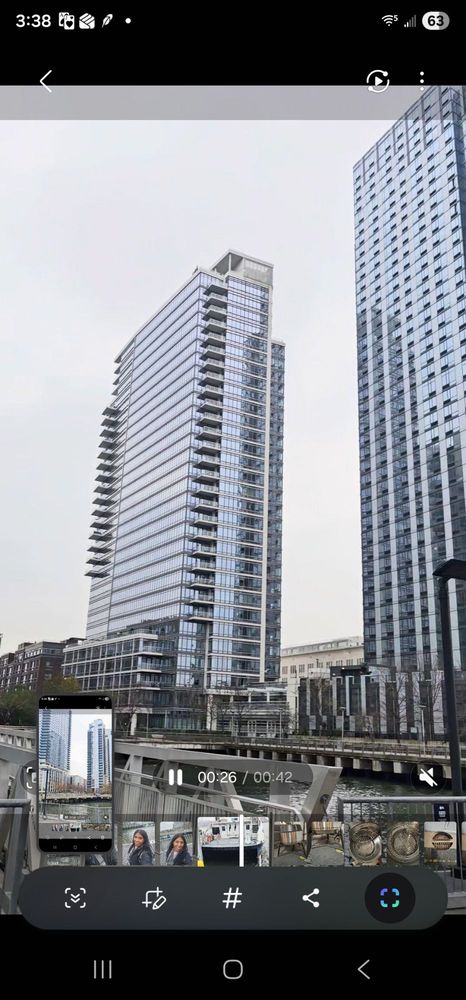
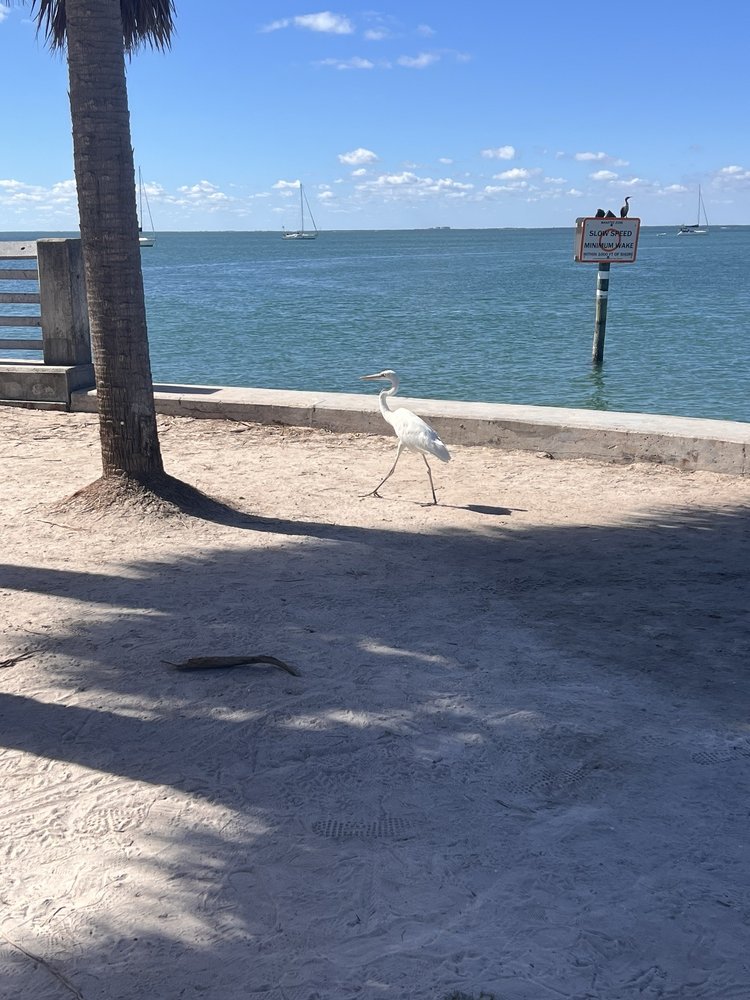
--- **Chapter One: The Morning of Whispered Dreams** The Florida sun crept through my bedroom window like a golden-fingered friend, tickling my velvety white ears until I stirred from the most magnificent dream. I had been flying—not with wings, but with confidence, soaring above turquoise waters that sparkled like scattered jewels. I stretched my compact puggle body, my tail thumping against my stuffed elephant, Mr. Trunks, and let out a puppy yawn that could have swallowed a butterfly. "Pete! Pete! Wake up, sleepy pup!" Roman's voice bounced down the hallway like a tennis ball down concrete stairs. My older brother burst through the door, his dark hair still messy from sleep, his grin wide enough to host a parade. "We're going to Stiltsville today! Remember? Dad's been planning this for weeks!" Stiltsville. The name alone sent a shiver through my little body—not entirely unpleasant, like the first lick of an ice cream cone, but layered with something else. Something that made my paws feel unsteady. I had seen pictures: colorful houses perched on stilts above the shimmering ocean, accessible only by boat, surrounded by water that stretched to forever. Water. So much water. My small heart galloped like a herd of wild ponies. "Roman," I said, my voice carrying the gravitas I reserved for matters of great importance, "I must confess something to you, my dear brother and occasional rival." I padded across the room and placed my front paws on his knee, my brown eyes meeting his with earnest vulnerability. "The water... it frightens me. It is vast and unknowable, like a story with no ending, like a shadow that moves when you are not looking." Roman's expression softened in that particular way he had—half smile, half serious consideration, the look of someone who understood that fears were not silly but were instead signposts pointing toward the courage we hadn't found yet. He scooped me up, his arms warm and certain as sunrise, and pressed his forehead to mine. "Pete," he whispered, "do you remember when you were afraid of the vacuum cleaner? And now you chase it like it's your personal nemesis who must be defeated for the honor of the household." I huffed modestly. "That is true. Sir Whirls-a-Lot was no match for my strategic brilliance." "And the dark? Remember how you used to whimper at night?" I did remember. The darkness had felt like a blanket woven from all the unknown things, pressing down upon my small form. But Roman had begun leaving his door cracked, a sliver of light like a promise, and slowly, like a flower learning to turn toward the sun, I had discovered that darkness was simply the world holding its breath, waiting for morning. "The water is different," I insisted, though my voice wavered with less conviction than I intended. "Everything scary is different until it's not," Roman said simply. "And besides, you're not going alone. You've got me. You've got Mom and Dad. And we've got a surprise for you today—a friend who might just teach you a thing or two about being brave." A friend? My ears perked forward, curiosity waging its familiar war against apprehension. Before I could inquire further, the aroma of Dad's legendary cinnamon pancakes drifted upstairs like a delicious fog, and my stomach issued a decree that could not be ignored. "Come on, adventure pup," Roman laughed, setting me down. "Fuel up. We've got a whole ocean to conquer." I followed him downstairs, my paws pattering a rhythm of nervous anticipation on the wooden steps, each one a note in the symphony of a day about to unfold in ways I could never imagine. --- **Chapter Two: The Arrival of Kirusha and the Open Sea** The marina hummed with activity like a beehive in spring—boats bobbing gently in their slips, seagulls conducting noisy arguments overhead, and the salt-tinged breeze carrying whispers of adventures past. I clung to Roman's chest, my claws making small indentations in his "Stiltsville or Bust" t-shirt, my eyes darting between the cerulean sky and the cerulean water, which seemed to me like two enormous eyes watching, waiting. "Pete!" Dad's voice boomed with the warmth of a fireplace on Christmas Eve. Lenny, my father in all the ways that mattered, knelt down to my level, his beard neatly trimmed, his eyes the color of warm honey. "I see that look. That's your 'I'm contemplating the mysteries of the universe' face. Or possibly your 'I need to use the facilities' face. With you, it's often hard to tell." Despite my anxiety, my tail betrayed me with a single wag. "Dad, I am preparing my soul for the aquatic unknown. This requires tremendous concentration and, if I'm being honest, a certain amount of bladder control." Dad's laugh was like gravel wrapped in velvet, rough and comforting all at once. "That's my boy. Preparation is key. But you know what else is key? Trust. Trusting that we've got you, no matter what. That the people who love you are like... like a life jacket for your heart." Mariya appeared then, my mother of infinite gentleness, her camera swinging from her neck as it always did, capturing beauty in the wild and in the ordinary moments we might otherwise forget. She knelt beside Dad, and I was enveloped in the sanctuary of their combined presence. "Pete, my little storyteller," she said, her fingers finding that perfect spot behind my left ear that turned my legs to jelly, "do you know what I love most about water? It reflects. Not just the sky and the boats, but us. We see ourselves in it, and sometimes that reflection shows us who we're becoming, not just who we are." Her words settled into me like seeds in fertile soil, even as a sharp bark shattered my contemplation. "Well, well, well. If it isn't Pete the Puggle, trembling like a palm frond in a hurricane." The voice was gruff, accented with what I would later learn was Russian determination, and attached to a Jack Russell Terrier whose wiry coat was the color of autumn leaves and winter snow mixed together. He was compact, muscular, and carried himself with the swagger of someone who had never once doubted his place in the world. His eyes, dark and challenging, fixed on mine with what I initially interpreted as pure antagonism. "Kirusha," Roman said, clearly delighted, "meet Pete. Pete, this is Kirusha. He's coming with us to Stiltsville." I set my paws on the dock's wooden planks, forcing my legs not to tremble. "I am pleased to make your acquaintance," I said with the dignity I could muster. Kirusha barked a laugh—actually barked it, a series of staccato sounds that felt like punctuation marks in a language I didn't fully understand. "You look like a marshmallow. A fluffy, scared marshmallow. You ever even seen the ocean before, or do you just drink from tiny bowls?" My hackles rose—not entirely, for I am not a creature of genuine violence, but enough to signal that I had boundaries. "I have seen the ocean in documentaries," I countered. "And in dreams. And I am learning to expand my relationship with it." "Relationship!" Kirusha yipped, circling me with the energy of a tornado in a teacup. "The ocean is not your friend, marshmallow. It is challenge. It is test. You must fight the water, conquer the water, show the water who is boss!" He demonstrated by charging to the edge of the dock and barking ferociously at a passing wave, as if his volume and ferocity could intimidate the entire Atlantic Ocean. I watched, somewhat awestruck despite myself, as the wave continued its indifferent course, unimpressed. "The water," I observed carefully, "does not seem to be submitting to your authority." Kirusha turned, and I caught something in his eyes—not quite embarrassment, but perhaps a grudging respect that I had noticed what he perhaps had not fully admitted. "The water is... patient adversary," he conceded. "But today, maybe, we fight together. You and me. We show the water." Before I could respond, Dad whistled—the particular melody that meant "all aboard, adventure awaits." Roman gathered me in his arms once more, and I felt the familiar comfort of his heartbeat as we stepped onto the boat, Kirusha leaping aboard with the grace of someone who had done this a thousand times. The engine roared to life, and we pulled away from the marina, the land receding like a memory, the water opening before us like a story with no final page. I buried my face in Roman's neck, breathing in the familiar scent of his sunscreen and his courage, and whispered a prayer to whatever powers watched over small dogs with big fears. --- **Chapter Three: The Houses on Stilts and the First Test** Stiltsville emerged from the horizon like a dream half-remembered—wooden structures painted in colors that seemed impossible, perched on pilings that disappeared into the green-blue depths. Peach, turquoise, butter-yellow, and coral, they stood defiant against the vastness, stubborn declarations that humans (and by extension, their animal companions) could build beauty even in the most unlikely places. "Welcome to the Stiltsville Historic District," Dad announced, his voice carrying that particular pride of someone sharing something he loved. "Houses built in the 1930s and 40s, surviving hurricanes, time, and changing tides. They're like... like bookmarks in the story of Florida itself." The boat eased up to a weathered dock, and Roman helped me onto the wooden planks, which felt reassuringly solid beneath my paws. Kirusha bounded past me, already exploring, his barks echoing across the water like challenges thrown down to invisible foes. "Careful, Kirusha!" A new voice called—deep, measured, carrying the weight of years but with an underlying vitality that suggested those years had been well-lived. From the peach-colored house emerged a man who seemed to embody the word "legend"—Charles Bronson, our family's dear friend, his silver hair catching the sun, his weathered face creasing into a smile that spoke of a thousand stories, a thousand rescues, a thousand quiet acts of courage. "Charles!" Mom's voice lifted with genuine joy, and she moved to embrace him, her camera clicking almost of its own accord, capturing the moment. "Little Mariya," he rumbled, though "little" hardly described my mother, "and Lenny, and young Roman. And who is this?" His gaze found me, and I felt seen—not as a small, frightened dog, but as someone with potential yet unrealized. "This must be Pete. The storyteller. The one with the brave heart he's still learning to trust." I approached him, my tail giving its cautious half-wag, and he knelt with the grace of someone who had spent a lifetime in motion, in action, in doing what needed to be done regardless of personal cost. "Mr. Bronson," I said, "I am honored. Roman speaks of you often. He says you have faced... many challenges." Charles's eyes held mine with an intensity that felt like being witnessed, truly witnessed, for perhaps the first time. "Challenges, young Pete, are simply invitations. The question is never whether we're afraid. The question is whether we accept the invitation anyway." He gestured to the water surrounding us, the channels between houses where the current moved with purpose. "This water—it's not your enemy. It's your teacher. The only question is whether you're willing to be its student." Kirusha chose this moment to barrel past, chasing a pelican that had the audacity to land near "his" territory, his bark aggressive, his small body a bundle of kinetic energy. "I teach the water!" he was shouting, though the pelican seemed unimpressed. "I teach everyone! I am Kirusha!" Charles watched him with amusement. "That one. He fights everything because he's afraid that if he stops fighting, he'll discover he's small. Like you, Pete. Like all of us, once." His words lingered as we explored the main house—a structure filled with nautical history, with windows that framed the ocean like paintings, with porches where the breeze carried stories from Cuba, from the Bahamas, from ships that had passed this way for centuries. I found myself on the lower deck, peering through the slats at the water moving beneath, hypnotic and terrible and beautiful. "Pete." Roman's voice, soft behind me. "Come upstairs. Mom's making lunch, and Dad's about to tell one of his stories. The one about the manatee who thought he was a mermaid." I turned, grateful, but as I moved, my paw caught on a loose board, and I tumbled—not far, not painfully, but enough that I skidded toward the edge, toward the gap where the deck ended and the water began. For one eternal second, I hung suspended, seeing my reflection in the green surface below—a white blur of terror, eyes too wide, ears flat against my head. Then Roman's hands, always there, gathering me up, pressing me to his chest where his heart hammered as fast as mine. "I've got you," he breathed. "I've always got you, Pete. Always." But as he carried me inside, I caught Kirusha's eyes across the deck—no longer mocking, but something else. Something that might have been recognition. The look of someone who had also fallen, who had also needed hands to catch him, and who had forgotten until just now. --- **Chapter Four: The Storm and the Separation** The afternoon brought clouds that gathered like worried relatives, gray and whispering among themselves. The wind shifted, carrying the metallic scent of approaching weather, and Charles's expression became serious in that particular way that made his legendary jaw seem carved from granite. "Weather's turning," he announced. "Everyone inside. Pete, Roman—help me secure the boats. Kirusha, quit harassing that pelican and get in here." But Kirusha, in his enthusiasm, had wandered to the far dock, chasing what he insisted was a "fish with attitude"—a stubborn tarpon that circled the pilings with what I can only describe as fishy insolence. And I, in a moment I would later recognize as the beginning of my transformation, found myself moving toward him, not away, my fear for his safety momentarily eclipsing my fear of the water. "Kirusha!" I called, my paws tentative on the wetting planks. "The storm! We must retreat to shelter! This is not time for conquest!" He turned, surprised, and in that moment of distraction, a wave—larger now, energized by the shifting wind—slapped against the pilings, sending spray across the dock. The surface became slick as glass, and Kirusha slipped, sliding toward the edge with a yelp that contained none of his earlier bravado. I lunged. I don't fully remember the decision; only the action, my body moving faster than thought, my jaws closing on his collar as he teetered over the edge. The fabric held, and I braced my back legs against a piling, pulling with all the strength my small frame possessed, which was not enough, which was barely enough, which was somehow, impossibly, enough. We tumbled backward together, a tangle of fur and limbs, onto the relative safety of the dock. Kirusha stared at me, his dark eyes wide, his breathing rapid. "You... you saved me," he panted. "The marshmallow saved me." "Do not," I gasped, my own heart thundering, "call me marshmallow." Then the storm hit in earnest, and the world became water and wind and noise. A particularly vicious gust tore through the channel, and the boat that had been secured to the dock strained against its ropes, one of which snapped with a sound like a gunshot. The vessel swung outward, and in the chaos, in the driving rain and the shouts from the house above, I felt myself moving, sliding, falling— Into the boat. Alone. Untethered. "Pete!" Roman's voice, distant, desperate. The current caught the boat like a toy, spinning it away from the dock, from the house, from everything I knew. I pressed myself against the bottom, the world a blur of gray water and gray sky, the boat's small motor knocking against the hull with each wave. I was alone. I was separated. The two fears that had haunted my dreams—the water, vast and uncaring; the darkness of separation, absolute and consuming—wrapped around me like a shroud. "Roman!" I howled, but the wind stole my voice. "Mom! Dad! Anyone!" The boat bumped against something solid—a piling, perhaps, or another structure. I gathered my courage like gathering scattered leaves in a gale, and peered over the edge. We had come to rest against the underside of another stilt house, one of the abandoned ones, its windows dark, its paint peeling. Above me, the structure creaked and groaned like a giant waking from uneasy sleep. And then, from the water beside me: "You are very dramatic, even for marshmallow." Kirusha. Swimming. His small head barely above the water, his paws working furiously against the current, but his eyes—his eyes held that familiar defiance, that refusal to accept defeat. "Kirusha! How—" "I swim. Is what I do. Is what we all do, if we stop being afraid long enough to try." He grasped the boat's edge with his jaws, his teeth finding purchase on the rubber trim. "You saved me. Now I save you. This is... what is word? Friendship?" The word hung between us, fragile as a bubble, strong as steel. Together, somehow, we managed to wedge the boat against a lower crossbeam, creating enough stability that I dared to stand, to look around, to think. The storm raged, but within me, something had shifted. The fear was still there—it would always be there, I understood now—but it was no longer in control. I was Pete the Puggle, storyteller and adventurer, and this was simply another chapter, another challenge, another invitation to discover who I was becoming. "We need to get higher," I said, my voice steadier than I felt. "The house above us. We need to find shelter, signal for help. Can you... can you do this with me?" Kirusha barked his laugh, but it was softer now, almost gentle. "Together, marshmallow. We fight the storm together." --- **Chapter Five: The Dark House and Deeper Fears** The interior of the abandoned house was a cathedral of shadows. Water dripped somewhere in the darkness, each drop an echo of my own heartbeat. Kirusha pressed against my side, his earlier bravado muted by the oppressive atmosphere, and I realized with something like wonder that he was taking courage from my presence as I was from his. "Pete," he whispered, and in the darkness, his voice was small, "I do not like this place. It smells of... endings." "It smells of stories that haven't been finished," I corrected, though my own voice trembled. "Of adventures that waited too long for their heroes." We moved through the main room, our paws finding purchase on warped floorboards, our eyes slowly adjusting to the dim light filtering through storm-clouded windows. The darkness here was different from the comfortable darkness of my bedroom at home, the one with Roman's cracked door and the promise of morning. This was the darkness of uncertainty, of not knowing if the hands that held you would ever find you again. My mind betrayed me with images: Roman searching the storm, his face pale with worry; Mom's camera forgotten, her hands empty and reaching; Dad's booming voice silenced by wind and distance. The separation was physical, yes, but more than that—it was the separation from the web of love and connection that had always held me, that I had never fully appreciated until it was stretched thin, almost to breaking. "I am afraid," I admitted to the darkness, to Kirusha, to myself. "I am afraid of being forgotten. Of being too small to find, too insignificant to save. Of the water below and the dark around and the storm that seems to have no ending." Kirusha was silent for a long moment. Then: "In my first home, before your family, before this, I was one of many. Too many. We fought for food, for warmth, for any attention at all. I learned to bark loudest, to fight hardest, to never show the wanting." His body shook against mine, a tremor of old memory. "But I wanted. I want. The family you have—the big man with jokes, the woman with the kind hands, the boy who carries you like treasure—I want that. I was... I am jealous of you, Pete. And that made me mean." The confession hung in the darkness like a gift unexpectedly given. I turned to him, my eyes finding his, two small beacons in the gloom. "You are not mean," I said. "You are afraid, as I am afraid. And we are telling the truth now, in this dark place, which makes it a little less dark." A sound from above—movement, heavy and purposeful. My heart leaped with hope that transformed to caution. Not Roman's step, not Dad's familiar tread. Something else. "Rats," Kirusha growled, his old aggression finding new direction, protective rather than performative. "Many. They think we are easy prey, trapped in their territory." They emerged from the shadows—dozens of eyes reflecting what little light existed, bodies sleek with the confidence of those who ruled this forgotten place. Their leader, larger than the others, advanced with the lazy menace of someone who had never been denied. Kirusha placed himself before me, his small frame ridiculous against their numbers, his bark fierce but ultimately futile. And I felt it then—the choice. To retreat into fear, to be overwhelmed, to become the victim of my own story. Or to step forward, to stand beside my friend, to become something more than I had believed possible. "Enough," I said, and my voice carried a resonance that surprised us all. I moved to Kirusha's side, our shoulders touching, our presence combined. "We are passing through. We mean no harm to your territory, but we will not be harmed. We have people waiting for us. People we love. And we will find our way back to them." The leader paused. Something in my voice—perhaps the absolute certainty beneath the fear, the love that spoke louder than any threat—made him hesitate. Then, from somewhere in the storm, a sound that made my soul sing: "Pete! Kirusha! Where are you!" Roman. Roman's voice, desperate and searching and wonderfully, impossibly real. The rats scattered, not from my words but from the approaching human sounds, the boats drawing near, the rescue unfolding. Kirusha and I stumbled to the window, barking together now, our voices joined in the most beautiful chorus I had ever known. --- **Chapter Six: Charles Bronson's Rescue and the Return of Light** The door burst open with a precision that spoke of training, of years of knowing exactly how much force to apply, where to stand, how to move. Charles Bronson filled the frame, his silver hair plastered by rain, his eyes scanning, assessing, finding. In his hand, a rope coiled with the familiarity of an extension of his own body; at his belt, tools I didn't recognize but implicitly trusted. "There's my soldiers," he said, and the gruffness couldn't hide the relief. "Holding the fort. Holding the line. Good work, both of you." He moved through the room with the economy of someone who had never wasted a motion in his life, securing the rope to a structural beam, testing its strength with a pull that would have lifted a much larger creature. "Your family's outside, Pete. Roman's about ready to swim in after you himself. Had to promise I'd be the one to come get you, or he'd have beat me to it." "Charles," I managed, my voice thick with emotion, "I was so afraid. Of the water. Of the dark. Of being lost forever." He knelt then, this legend of action and strength, and his weathered hands were gentle as they lifted me, Kirusha leaping to follow, always following now, a team unchosen but undeniable. "Fear's not the enemy, Pete. Never was. It's the compass that points us toward what matters. You faced yours today. Both of you. That makes you family in my book." He secured us against his chest—one arm holding me, the other ready for Kirusha, the rope looped expertly around his waist. The descent to the boat was a blur of motion and trust, the water below no longer terrifying but simply the path between where we had been and where we were going. Roman's face, when we reached the boat, was a landscape of relief and lingering terror and overwhelming love. "Pete," he breathed, taking me from Charles, pressing his face into my fur, "Pete, Pete, Pete. Don't ever do that again. I can't—I can't lose you. You're my heart, you little idiot. You're my heart." And I wept then, in the way dogs weep, which is to say with my whole body, my whole soul, pressing closer to him, to his heartbeat, to the home I had never truly left because home is not a place but the people who hold you when you return. Mom's hands, Dad's voice, the boat moving through stilling waters toward the main house where warmth and light and safety waited. Kirusha found himself passed from hand to hand, finally settling in Mom's lap, his fierce exterior melting under her gentle attention, his eyes closing in trust he had never before permitted himself. The storm was passing. The light was returning. And I understood, truly understood, that courage was not the absence of fear but the decision to move through it, again and again, for love. --- **Chapter Seven: The Story Circle and What We Learned** Evening found us on the main house's upper deck, the storm having scrubbed the sky clean, stars emerging like diamonds scattered by a generous hand. The water below was calm now, reflective, and I found I could look at it without terror, could even appreciate its beauty, its mystery, its invitation to stories yet untold. We were gathered in a circle—Mom and Dad on the weathered bench, Roman cross-legged on a cushion with me in his lap, Charles in a chair that seemed to have been waiting for him, and Kirusha, finally, beside me, our bodies touching, our peace shared. "So," Dad said, his voice carrying the particular tone that preceded his best stories, "I believe we have a new adventure to add to the chronicles. The Tale of Pete and Kirusha and the Storm of Stiltsville. Has a nice ring to it, doesn't it?" "I would like," I said, settling into my role with the comfort of familiar ritual, "to tell this story properly. If I may." "Please," Mom encouraged, her camera set aside for once, her attention fully present. I stood, my legs steady on the wooden planks, and looked at each face in turn—the people and the dog who had become my world, my courage, my reason to face the fears that would surely come again. "Once upon a time," I began, my voice carrying across the water, "there was a puggle named Pete who was afraid. He was afraid of the water that stretched too far, of the dark that pressed too close, of being lost where no one could find him. He thought these fears made him small, made him weak, made him unworthy of the adventures he dreamed of telling." Kirusha barked softly, and I acknowledged him with a nod. "He met a dog named Kirusha who seemed to have no fears at all, who barked at waves and challenged storms. But Pete learned that Kirusha's loudness came from the same quiet place—that we are all afraid, and we all find different ways to carry that fear. And he learned that when we share our fears, when we stand together, the fear becomes... not less, exactly, but different. Bearable. Transformable." I paused, gathering my thoughts, feeling the weight and the gift of the words. "Today, the storm took me from my family. The water surrounded me. The dark enclosed me. And I discovered that the fear was still there—it will always be there—but it was not bigger than my love for them. It was not bigger than my friendship with Kirusha. It was not bigger than the part of me that keeps going, that keeps hoping, that keeps believing in the story's happy ending even when the pages are dark." Roman's hand found my back, stroking with infinite gentleness. "Charles Bronson came for us," I continued, "because that's what family does—blood family, chosen family, the family we find in our most frightened moments. And he reminded us that being rescued doesn't make us weak. It makes us loved. It makes us connected. It makes us part of a story bigger than our own small, scared selves." Charles cleared his throat, and I saw him blink more rapidly than usual. "Just doing what needed doing," he muttered, but his smile was soft, pleased. "And Kirusha," I said, turning to my friend, my rival, my unexpected companion, "taught me that the dogs we think are our enemies may become our greatest friends. That fighting comes from fear, but friendship comes from trust. That barking at each other is less important than listening to each other. And that together, we are more than we could ever be alone." Kirusha stood, moved to me, and did something I would never have expected—he rested his head against my shoulder, a gesture of vulnerability and trust and love. "You taught me too, marshmallow," he said softly. "You taught me it is okay to want. To need. To be saved. To be... soft, sometimes. This is also brave." "So," I concluded, looking at my circle of beloved faces, the stars above, the water that no longer terrified me, "the moral of this story, if stories must have morals, is that courage is not the absence of fear but the presence of love. That family is who holds you when you fall and finds you when you're lost and believes in you even when you forget to believe in yourself. And that the greatest adventure is not the one that takes us farthest from home, but the one that brings us back to it, changed and changing, always becoming, always enough." The silence that followed was full, complete, a shared breath between beings who had traveled through fear and emerged together on the other side. "Well," Dad said finally, his voice thick, "that's going in the album. The verbal one and the photographic one. Mariya, please tell me you got that." "I got that," Mom confirmed, her own voice tender. "I got all of it. Every precious, brave, wonderful moment." "And Pete," Roman said, lifting me to meet his eyes, "just so you know? You're never getting rid of me. Where you go, I go. Through water, through dark, through everything. That's the deal. That's forever." "Forever," I agreed, and Kirusha barked his assent, and Charles nodded his solemn confirmation, and the circle held, complete and completing, a story without an ending because love, I had learned, goes on and on, turning page after page, forever inviting us to become more than we ever dreamed we could be. --- **Chapter Eight: The Journey Home and the Story Yet to Come** The return to the marina came with dawn's gentle blessing, the sky painted in watercolors of pink and gold, the water below reflecting a world made new. I stood at the boat's bow, Kirusha beside me, the wind in our fur no longer threatening but exhilarating, a caress rather than a challenge. Charles piloted with the quiet competence of someone who had navigated far more treacherous waters, his hands steady on the wheel, his eyes occasionally finding me with what I can only describe as grandfatherly pride. "You're going to be a hell of a dog, Pete," he said, not turning. "Already are, if we're being honest. Which we are. Bronsons are always honest." "I aspire to deserve such praise," I replied with appropriate modesty, though my tail betrayed me with its enthusiastic wagging. Mom and Dad dozed together on the bench, her head on his shoulder, his arm around her waist, a picture of peace earned through weathered storms. Roman sat cross-legged near us, his sketchbook open, capturing the morning in charcoal and determination—my profile, I could see, and Kirusha's, and the merging of them that suggested friendship, unity, becoming. "Pete," Roman said without looking up, "I'm drawing our next adventure. The one where we go back. Where we don't have to be afraid, because we've already shown ourselves what we're capable of." I moved to him, pressed my paw to his sketch, leaving an ink-blot signature that made him laugh. "Every adventure is our next adventure," I said. "Every moment is the story we're choosing to live. And I choose this one. I choose you. All of you." Kirusha barked in emphatic agreement, then launched into an impromptu chase of a seagull that had insulted his dignity by flying too close, his body a comet of joy and energy and absolute, unreserved presence in the moment. As the marina grew closer, as land became real and solid and waiting, I felt the familiar flutter of my old fears—not gone, never entirely gone, but changed. The water was still vast, still unknowable in its depths, but I had floated upon it and survived. The dark still waited in abandoned houses and closed eyes, but I had walked through it and found light on the other side. And separation—oh, separation still whispered its terrible possibility, but I knew now, bone-deep and soul-certain, that love would find me. That I would be searched for, called for, rescued and rescuing, forever caught in the net of connection that held us all. "Home soon," Mom murmured, waking, stretching, smiling at us all with the particular radiance of someone who had witnessed her family survive and thrive. "Hot showers, warm beds, and I think—" she checked her watch, "—pancakes for dinner. Because we've earned pancakes for dinner." "With extra cinnamon," Dad stipulated. "And stories. I want to hear Pete's version again. And Kirusha's. Every perspective matters. Every voice deserves to be heard." Kirusha, returning from his fruitless chase, collapsed in a dramatic heap at my feet. "I will tell my version," he announced, "with proper emphasis on my swimming and my fighting and my general excellence." "And your vulnerability," I added gently. "And your friendship. And the part where you rested your head on my shoulder and admitted that softness is also brave." He looked at me with something like exasperation, something like gratitude, something like the deepest affection. "Fine," he conceded. "Also that. But mostly the swimming and fighting." The boat bumped against the dock, and hands reached to secure us, and we disembarked onto solid ground that felt strange and wonderful after our waterborne odyssey. But I paused, one paw still on the deck, and turned to look back at Stiltsville, now distant, its colors muted by morning mist, its stilts invisible but present, holding it above the water, holding it through storms, holding it as a promise that we can build beautiful things in unlikely places, that we can survive what seeks to overwhelm us, that we can become more than our fears ever believed possible. "Thank you," I whispered to the water, to the wind, to whatever forces had shaped our adventure and brought us through. "Thank you for the fear that taught me courage. Thank you for the dark that made me seek light. Thank you for the separation that reminded me of love." Roman's hand found my scruff, lifted me to his heart. "Talking to the ocean, storyteller?" "To everything," I corrected. "To the story itself. Which continues." And so it does. So it will. With every sunrise and every challenge, with every fear faced and every friendship forged, with every moment we choose love over isolation, courage over surrender, hope over despair. The story of Pete the Puggle and his remarkable family, his unexpected friend, his legendary rescuer—it goes on, page after page, chapter after chapter, an endless book written in fur and laughter and the absolute, unshakeable certainty that we are, all of us, braver than we know, more loved than we imagine, and forever part of something beautiful. Kirusha trotted beside us as we walked toward the car, toward home, toward the next adventure waiting in wings yet unseen. And as the sun climbed higher, as the day bloomed with possibility, I began to compose in my mind—the story we would tell, the lessons we would share, the love that would echo through
Use these buttons to read the story aloud:



No comments:
Post a Comment