"***Pete the Puggle's Great Maurice A. Ferré Park Adventure: A Tale of Courage, Family, and Finding Your Brave***"🐾
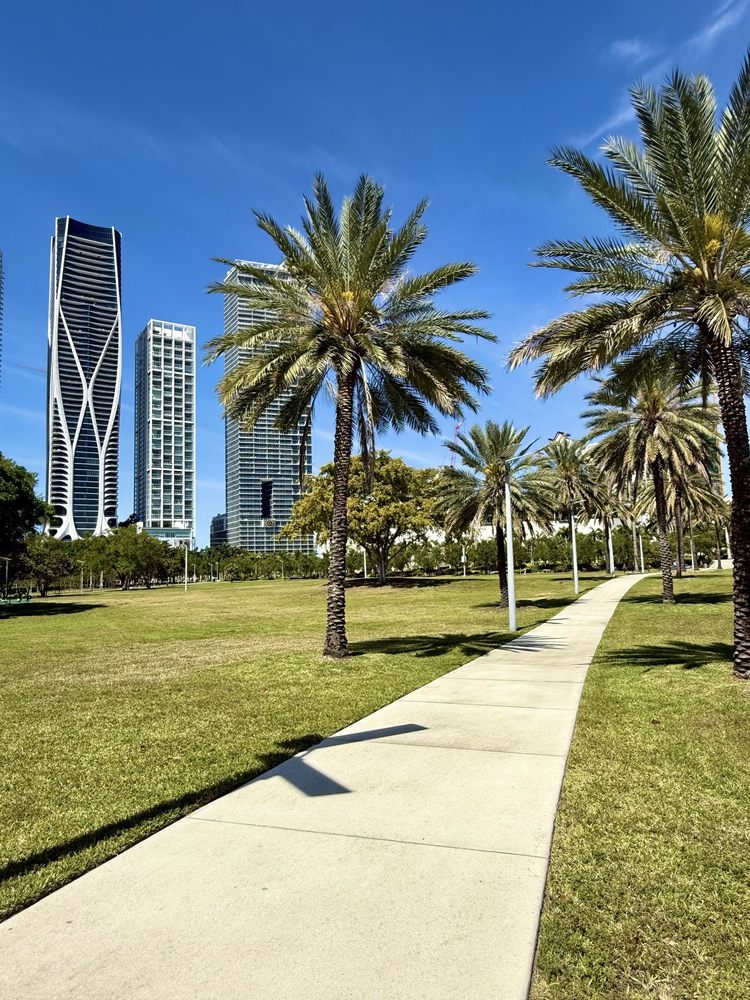
--- **Chapter One: The Morning of Wonders** The sun crept through my bedroom window like a golden paw reaching across the floor, and I swear I could smell adventure in the air—like someone had cracked open the world's biggest can of possibility. I stretched my velvety white legs until they trembled, my makeup-streaked eyes blinking wide. "Today's the day!" I barked to my stuffed hedgehog, Mr. Prickles, who remained appropriately supportive in his silent, plush way. Downstairs, the kitchen hummed with the Ferré symphony I knew by heart: Lenny Dad humming off-key while he packed sandwiches, Mariya Mom's laugh like wind chimes as she filled water bottles, and Roman Older Brother—the keeper of my heart and sometimes the thief of my favorite rope toy—pawing through the pantry for trail mix. "Pete!" he called, spotting me at the bottom of the stair. "You ready to conquer the world?" I bounded to him, my heart a drum solo against my ribs. "Roman, Roman, Roman! Are we really going? To THE park? The one with the water and the trees and the—" I spun in a circle, my words tumbling like puppies down a hill. Mariya Mom knelt beside me, her hands warm as fresh-baked bread on my cheeks. "Maurice A. Ferré Park, my brave little storyteller. Eight hundred acres of Miami magic. Lakes, gardens, trails that wind like whispered secrets." She drew me close, and I breathed in her scent—lavender and morning coffee and something uniquely *Mom*. "But remember, sweet Pete, every adventure has its surprises. We hold hands"—she squeezed my paw—"metaphorically speaking, when our paws are full." Lenny Dad appeared with a picnic basket that smelled of turkey and adventure. He winked, his eyes crinkling like paper fans. "And literally, when crossing streets. Rule number one: Ferré Park waits for no one, but we wait for each other." He tapped his nose, that special signal that meant *wise dad stuff incoming*. "Rule number two: if you see a squirrel, you do NOT chase it into oncoming traffic. Or into mysterious bushes. Or—" "Into the water?" I whispered, and something cold touched my heart, like an raindrop down my spine. The word hung there. *Water*. I'd seen it on our walks, that shivering blue surface that seemed to breathe, to reach with liquid fingers. I'd heard its voice—slap-slap-slap against concrete, a sound both beautiful and terrible. Roman had splashed in oceans before, returned with stories of floating, of weightlessness, of a world beneath the surface. But me? I was Pete the Puggle, lover of warm blankets and solid ground, collector of stories told from safety. Roman knelt before me, his fourteen-year-old hands steady as ancient trees. "Hey," he said softly, and his voice was a rope bridge across a canyon. "The water's not the boss, Pete. You are. And anyway, today's about the park, not the water. The trees, the grass, the—" "The possibilities," Mariya Mom finished, and she opened the door to golden morning. We piled into the car—me between Roman and Dad, Mom navigating with her phone and her intuition. The city unspooled around us, buildings giving way to glimpses of green, then suddenly: there it was. Maurice A. Ferré Park rose before us like a dream someone had forgotten to wake from. Banyan trees stretched cathedral roots across lawns. The bay shimmered in the distance, a blue promise held between sky and city. I pressed my nose to the window, and the world smelled of salt and hibiscus, of grilled corn from distant food carts, of a thousand stories waiting to be lived. --- **Chapter Two: The Meeting of Timmy** The parking lot crunched beneath our feet—gravel and shell and the sound of beginning. I leaped from the car, my leash a connection to Roman that felt both restricting and comforting, like a hug you can't escape. "Easy, speed racer," he laughed, but I heard the joy beneath. We'd barely reached the first path when I saw him: a long-haired Chihuahua with fur like spun copper and eyes that held the certainty of someone who'd seen things, who'd *been* places. He stood on a bench, not begging or barking, simply *observing*, as if the park were his kingdom and we honored guests. "Well," he said, and his voice carried the slight rasp of someone who'd barked at many moons, "the Puggle has arrived." I stopped so fast Roman stumbled. "You know me?" "I know your kind," Timmy said, leaping down with surprising grace. He stood barely to my shoulder, but presence isn't measured in inches. "Puggles. Part pug, part beagle, all heart. Too much heart, sometimes. Heart that leads you places your courage hasn't caught up to yet." Mariya Mom knelt, delighted. "Oh, what a magnificent creature! Are you with someone, little one?" Timmy's tail wagged once, a precise punctuation. "I am with the park, madam. I am with the wind and the sun and the particular shadow of that banyan tree at 10 AM. But today, it seems, I may be with you." He turned to me, and his eyes softened like caramel in summer. "I am Timmy. And you, Pete, look like someone who needs a guide." "A guide to what?" I asked, though my heart knew. The water. The fear. The thing I couldn't name. "To finding your brave," Timmy said simply. Lenny Dad cleared his throat, that sound he made when emotions grew too large for words. "Well, Timmy, we're honored. The Ferré Park expedition gains a member. Rule three: guides eat first at picnic time." We walked the winding paths, and Timmy proved a storyteller to match my own aspirations. He spoke of the park's history—how it rose from bay shallows, how it had been industrial and empty and then, through vision and patience, became this green breathing thing. "Everything here was once something else," he mused as we passed a stand of sea grape trees. "The question is whether you can see what it *will* become." Roman squeezed my paw. "What do you want to become, Pete?" I considered. "A puggle who... who isn't afraid. Of water. Of the dark. Of—" I stopped, the admission too large for my small body. "Of being left behind?" Timmy finished, and his voice held no judgment, only recognition. "The fear of separation is the oldest fear, little brother. Even the bravest feel it. But courage isn't the absence of fear. It's—" "The presence of love," Mariya Mom said, and her hand found Dad's, and Roman's found mine, and even Timmy leaned against my side. We reached the park's central lake, and there it was: water. Real and breathing and endless. My legs locked. My heart became a trapped bird. The lake stretched before me like a mirror to another world, and I saw myself in it—small, trembling, *afraid*. "Maybe," I whispered, "I don't need to go near it. Maybe we can—" "Pete," Roman said, and his voice was the shore I needed. "Look at me. Not at the water. At me." I looked. And in his eyes, I saw not disappointment, not impatience, but faith. Pure, unshakeable faith. "One step," he said. "Just one." And I took it. Then another. The ground grew damp beneath my paws, then wet, then—water, lapping at my toes, cold and strange and *not* the monster I'd imagined. I yelped, jumped back, laughed at myself, tried again. Timmy watched from higher ground, his copper fur gleaming. "The first step is the longest," he called. "The rest is just... continuation." --- **Chapter Three: The Storm of Separation** The afternoon wore on like a favorite song, each moment a verse leading to the next. We explored the park's sculptures—giant flamingos frozen in flight, abstract shapes that Mariya Mom interpreted while Lenny Dad made up increasingly ridiculous alternative meanings. We picnicked beneath a banyan tree so ancient it had become its own forest, roots descending like gentle waterfalls. "Timmy," I asked, licking the last of turkey from my whiskers, "have you always been brave?" He was silent long enough that I feared I'd offended him. Then: "I was once smaller than I am now, if you can imagine. A pup in a world of thundering feet and towering legs. I hid beneath porches. Beneath beds. Beneath the weight of my own shaking." He laughed, a dry rustle. "But one day, a storm came—a real one, not metaphorical—and I was separated from my people. Lost in floods of rain, in darkness that swallowed sound." "What did you do?" I breathed. "I walked," Timmy said. "One paw in front of the other, through water that reached my chin, through darkness so complete I couldn't see my own nose. I walked because stopping meant... stopping. And I wasn't ready to stop." Roman pulled me closer. "And he found his way home?" Timmy's eyes grew distant, seeing something we couldn't. "I found something better. I found that I could survive the walking. That the fear didn't have to own me." He turned to me, sharp and sudden. "But Pete, the park has another face. The sun is sliding. Can you feel it?" I could. The light had shifted from gold to amber, the shadows stretching like waking cats. Mariya Mom stood, brushing crumbs from her skirt. "We should head back, family. The park closes at dusk, and I don't want to rush." But the park had other plans. It started simply: Roman's phone slipped from his pocket near the lake's edge, and he lunged to catch it, and his grip on my leash loosened. Just for a moment. Just enough. I saw the phone arc toward water, saw Roman's hand close on empty air, saw—then felt—the leash slip free. "Pete!" Roman's voice, already distant. I could have stayed. Should have stayed. But something moved at the lake's edge—a bird? A leaf? A story waiting to be chased?—and my beagle heritage, that ancient GPS of nose and instinct, fired like a starter pistol. I was moving before I chose to move, paws carrying me along the water's edge, around a bend, through a stand of trees that swallowed the world like a green throat. "Pete! PETE!" Roman's voice, fractured by distance and trees. Then: silence. Not the silence of peace, but the silence of *wrong*, of missing pieces, of a puzzle with its center torn out. I stopped. The bird—if it was every truly a bird—was gone. The lake gleamed through trees behind me, but the path... the path had forked, then forked again, and I didn't know which led home. "Roman?" I whispered. "Mom? Dad?" Nothing. Only the park's evening sounds: insects waking, something splashing in distant water, the wind moving through palms with a sound like whispered warnings. And then, impossibly: "Pete!" Timmy. His copper form emerged from between ferns, somehow both dignified and breathless. "I saw you bolt, you fool of a puggle. I followed, because..." He stopped, panting. "Because that's what friends do, apparently. Even when it interferes with my carefully maintained reputation as a solitary philosopher." I pressed against him, finding more comfort in his wiry warmth than I could express. "Timmy, I can't find them. The sun's going. And the water—" I couldn't finish. He understood. "The dark is coming," he said, and there was no denying it. The amber was becoming rose, becoming grey, becoming *absence*. "But Pete, listen. The dark is not your enemy. It is only... the other side of light. The question is what we do in it." From somewhere—distant, then closer—a voice: "PETE! ROMAN! WHERE ARE YOU?" Mariya Mom. Her voice carried the particular tremor of held-back panic, the kind mothers use when they're being brave for everyone else. I started toward it, but Timmy blocked me. "Careful. Sound plays tricks here. The water reflects, the trees muffle. We must be smart, not just fast." "But the dark—" "Will come regardless," Timmy finished. "The question is: will we meet it running, or hiding, or walking forward with our chins up?" I thought of his story, the flood, the walking. I thought of Roman's faith in me, of Mariya Mom's lavender hands, of Lenny Dad's rules that were really just love with instructions. And I found, in the center of my trembling, a small still point. Not courage, exactly. Something quieter. Choice. "I'll walk," I said. "I'll walk, and I'll find them, and—" A rustling. Then: "There! Near the rose garden!" Roman. His voice broke like waves, relief and fear and fury all mixed. He crashed through the undergrowth, and suddenly I was in his arms, his face wet with something that wasn't lake water, his heart hammering against my ribs like it wanted to escape and live in me instead. "You," he gasped, "you absolute—you beautiful—you *terrifying* little—" He couldn't finish. He just held me, and I breathed him in—sweat and soap and the particular Roman-smell of my brother, my protector, my sometimes-rival, always-friend. Behind him, Mariya Mom and Lenny Dad appeared, disheveled and miraculous. Mom's mascara had run, I noticed with puggle precision. Dad's joke-ready face was cracked open, showing the tender thing beneath. "Pete," Mom whispered, and she didn't need more words. She swept me up, and I was passed from hand to hand to heart to heart, each touch a promise, a reassurance, a *finding*. Timmy watched from his dignified distance, but I saw his tail move, just once, just exactly. --- **Chapter Four: The Lake at Twilight** The reunion held us all for long minutes, but the park's closing time didn't care about our emotions. "We need to move," Lenny Dad said, checking his phone with the expression of someone who'd already tried and failed to find the right path back. "The main gate is... that way, I think? But the lake—" The lake. It lay between us and our car, a liquid barrier grown mysterious in the fading light. What had been playful afternoon sparkles had become dark ripples, each one catching the last light like a swallowed star. The path along its edge was narrow here, the ground soft and uncertain. "I can do it," I heard myself say, and the words surprised us all. "I walked in it before. I can walk beside it now." Timmy appeared at my shoulder. "The bravest thing," he murmured, for my ears alone, "is doing afraid what you know you must do." Roman knelt. "I'm not letting go this time." He produced a spare leash from his backpack—"Always prepared," he managed, a ghost of his usual grin—and clipped it to my collar. "Pete leads. We follow. One step, right?" One step. Then another. The water lapped at stone edges, a sound like breathing, like waiting. My paws found purchase on paths that seemed to shift in the dimming light. Each shadow became a possible threat, each splash a possible—what? I didn't know. That was the terror and the truth: the water held unknowns, and unknowns were where fear lived. But I walked. Because Roman's hand was warm in mine. Because Timmy's steady presence murmured encouragement. Because ahead, somewhere, was our family complete, our car, our life that continued beyond this moment of darkness. Halfway along, the path narrowed to a point where water kissed stone on both sides. A wrong step, a slip, and—my mind supplied images: swimming, struggling, the dark below darker than the dark above. "Pete," Roman whispered, "I've got you. Whatever happens, I've got you." And I believed him. Not because fear vanished—it clung like wet fur, like the memory of cold—but because love was stronger, because connection was a rope across any canyon, because Timmy's wisdom and my family's faith and something nameless in my own small heart said *forward*. We reached the far shore as the last light died, the park's lamps flickering on like hesitant stars. Behind us, the lake settled into night-quiet. Before us, the parking lot gleamed with the sacramental ordinary: our car, our escape, our vessel home. --- **Chapter Five: The Darkness Complete** But Maurice A. Ferré Park was not finished with us. We'd navigated the lake, found the main path, could see the parking lot's distant lights—when the lights died. All of them. Not gradually, not flickering, but a sudden swallowing, as if the park had drawn a dark breath and held it. Power outage. Somewhere, a transformer failed, a switch tripped, the city's complicated veins momentarily blocked. And we were in it: darkness complete, darkness absolute, darkness like being inside a sealed box, like being buried in velvet, like— "Pete." Mariya Mom's voice, steadying herself as she steadied us. "Everyone hold hands. Or paws. Or whatever you've got." I felt Roman's grip tighten, felt Timmy press against my other side, felt the chain of us: Dad's large hand, Mom's smaller one, Roman's teenager fingers that were somehow still the hand that had learned to walk holding mine, mine holding—connections, connections, the web that held us when sight failed. But the dark. The *dark*. It pressed against my eyes like something physical, something with weight and intention. Every sound amplified: our breathing, distant traffic, something moving in bushes that could be squirrel or could be—my mind, traitorous storyteller, supplied possibilities. Predators. Dangers. The water's edge, closer than comfort, waiting to claim the unwary foot. "Pete," Timmy whispered, "remember my story. The flood. The walking. What did I tell you?" "That... that you walked because stopping meant stopping." "And?" "And you weren't ready to stop." "And are you?" I considered. The dark was fear made manifest, the water's threat magnified, the separation from family made sensory reality. In this blackness, I couldn't see Roman's face, couldn't confirm Mom's presence except by touch, couldn't know—truly *know*—that I wasn't alone, abandoned, lost in the infinite dark that had swallowed my courage. But. But. The hand in mine was warm. The heartbeat I heard was Roman's, fast but steady. The world hadn't ended; it had merely changed its costume, put on night-clothes, invited us to navigate differently. "I'm not ready to stop," I said, and my voice surprised me with its strength. "I'm scared, and I'm walking, and I'm not ready to stop." Lenny Dad's voice came, rough with pride: "That's my boy. That's our Pete." We moved as one creature, twelve legs and multiple hearts, finding the path by feel, by memory, by the trust that comes from love repeated until it becomes bone-deep, reflexive, *true*. The parking lot's outline emerged, starlight giving form to what artificial light had abandoned. Our car waited, patient as a promise kept. But before we reached it, I turned. Looked back at the park that had tested me, that was testing me still. The lake was invisible now, a darkness within darkness, but I knew it was there. Knew I'd faced it, walked beside it, would face it again. Knew too that the greater lake, the greater dark, the greater fear was inside me—and I'd walked through that too, was walking through it, would keep walking. --- **Chapter Six: The Philosophy of Timmy** Safe in the car, heater running against the evening's chill, we found our breath. Roman's hands still shook slightly as he buckled my harness. Mariya Mom kept touching my head, my ears, my paws, as if confirming I was solid, real, *found*. Timmy had followed us to the parking lot, then hesitated at the car's edge. "This is where I leave you," he said, but his voice held something new, a crack in his philosopher's certainty. "Leave?" I scrambled to the window, paws on the door. "But you're—this is—we're family now!" "Family," Timmy repeated, and the word seemed to expand in his mouth, take on dimensions he hadn't expected. "I have not had... I have not allowed myself..." Lenny Dad cleared his throat. "Timmy. I believe rule number four of Ferré Park expeditions is: no one gets left behind. Not after what we've been through." He reached across Roman to open the passenger door. "There's room. There's always room." Timmy stood very still, his copper fur silvered by parking lot light. "You would take me? A stray philosopher with no collar, no pedigree, no—" "All the pedigree that matters," Mariya Mom said, and her voice was final as gravity, "is love. And you, Timmy, have earned your place in this story." He leaped in with desperate grace, landing in my lap, lighter than expected, warmer than possible. I felt his heart racing against mine, two drums in the night, and understood: he was as afraid of being kept as I was of being lost. The symmetry moved me beyond words, into the territory of pure feeling. "Timmy," I whispered, "what happens now?" He settled against me, his long fur tickling my chin. "Now, little brother, we go home. We sleep. We wake to new adventures. And slowly—" his voice grew soft, approaching sleep, "slowly, we become brave enough to tell our stories to others who need them." Roman drove, or Dad did, or perhaps the car moved by collective will. The city lights blurred past, each one a small sun, each one a story of someone finding their way in the dark. I thought of the water, how it had felt—cold, strange, *possible*. Thought of the darkness, how it had pressed and how we'd pressed back. Thought of separation, and reunion, and the precious fragile thing that was *together*. "Roman," I said, and my brother turned from the window, his face street-lit and beautiful and tired and young and old all at once. "Thank you. For not letting go. Even when you did." He smiled, that particular Roman smile that held all our history. "Pete. I'll always let go enough for you to run. And I'll always hold on enough to find you. That's... that's what we do. What I do." --- **Chapter Seven: Homecoming and Heart** Our house waited, patient as all homes that have held love long enough to become wise. The familiar smells—last night's dinner, Mom's candles, Dad's leather chair, Roman's soccer gear—wrapped around us like the blankets we sought, like the sleep we needed, like the peace we'd earned. But first: the debrief. The Ferré tradition, Lenny Dad called it, though Mom insisted on "reflection circle" and Roman suggested "adventure autopsy" until Dad's look made him reconsider. We gathered in the living room, Timmy between me and Roman on the couch, Mom and Dad on the floor with pillows, a fire crackling though Miami barely needed it. The ritual required snacks, required comfort, required the time to become story what had been mere experience. "So," Dad began, his sandwich hovering, "favorite moment. Mariya?" Mom closed her eyes, searching. "When I heard Roman find Pete. That sound in his voice—the relief, the love. Mothers store those sounds, you know. Like emergency supplies. For the hard days." "Roman?" My brother's hand found my ear, rubbed it in the way that made my eyes half-close. "When Pete walked the lake path. In the dark. When he was more scared than he's ever been, and he did it anyway." He looked at me, fourteen and ancient. "That's when I knew. He's braver than me. He just needed to find it." "Timmy?" The Chihuahua sat straighter, his philosopher's mask slipping to reveal... not quite vulnerability, but its neighbor. "When you opened the door," he said quietly. "When you said there was room. I have been alone a long time. I had forgotten... the weight of welcome. The gravity of being chosen." The fire popped, sent sparks up the chimney like released wishes. "Pete?" Dad asked. "Your favorite moment?" I considered. So many: the morning's promise, the lake's first touch, the reunion's relief, the walking in darkness, the finding of Timmy, the finding of myself. But one rose above, shimmering like the lake at noon. "When I realized," I said slowly, feeling my way to truth, "that the water wasn't the enemy. The dark wasn't the enemy. Even being lost wasn't the enemy." I paused, gathered my words like scattered toys. "The enemy was believing I had to face them alone. And my favorite moment was... every moment I remembered I didn't." Silence, the good kind, the kind that holds space for feeling too large for words. "And the lesson?" Mom prompted gently. I looked at each of them: Dad's ready smile, Mom's infinite patience, Roman's fierce love, Timmy's surprised belonging. Looked at myself, small and white and streaked with makeup and adventure and the particular courage that comes from being loved enough to risk. "That fear is a visitor," I said, and the words came from somewhere deeper than thinking, "not a resident. That courage is a muscle we build in community. That family—" I pressed against Timmy, against Roman, reached my paw toward Mom, "family is the shape love takes when it decides to stay." --- **Chapter Eight: The Story We Tell** Weeks passed. Months. The seasons turned in their Miami way, subtle as a whisper, present as a promise. Timmy became Timmy-the-Permanent, his copper presence as natural now as my own white velvet, as Roman's growing pains, as Dad's bad jokes and Mom's early mornings. We returned to Maurice A. Ferré Park, of course. Many times. Each visit layered upon the last, building a palace of memory: the bench where Timmy first sat, the lake path I now walked with only normal nervousness, the banyan tree that had witnessed our darkness and our light. And I swam. Truly swam, that second summer, Roman supporting my belly until the water held me, until I understood floating, until the lake became friend rather than fear. The transformation wasn't complete—some fear lingered, respectful, acknowledged but not surrendered to. I would never be a water-puggle, but I was no longer a prisoner of water-fear. The distinction mattered. The dark, too, had loosened its grip. Not gone—I still startled at sudden shadows, still preferred company for midnight bathroom trips. But I walked now. Through dark rooms, through evening streets, through the internal darkness that sometimes came with bad dreams or worse days. I walked because I'd walked before, because Timmy's flood-story had become my own, because the path through fear was always there, waiting for the first step. The separation fear was hardest, as these things often are. But even there, progress. Roman's school days, once unbearable absences, became simply... days. With beginnings and middles and ends, with reunions that sparkled all the more for the waiting. I learned that love doesn't dissipate with distance, that connection stretches farther than sight, that *home* was a frequency I could tune to regardless of physical location. And I told stories. To neighborhood pups, to park acquaintances, to any who would listen. Stories of Maurice A. Ferré Park, of water and darkness and walking through. Stories of family found and chosen, of fears faced and partially tamed, of the particular magic that happens when someone believes in you enough for you to start believing in yourself. "Tell me again," the young pug next door would beg, "about the darkness complete." "Tell me," the anxious terrier at the vet would whimper, "about finding your brave." And I would tell them. Sitting in sunbeams, walking through parks, waiting in offices—the setting didn't matter. The story did. The *telling* did. The way a story became a bridge, a rope, a light in someone else's darkness. "You're becoming quite the philosopher yourself," Timmy observed one evening, we two watching sunset from the porch. "Next you'll be dispensing wisdom to Chihuahuas half your age." "Half my age would make them," I calculated, "about three months old. I don't think they're ready for my wisdom. Or my metaphors." Timmy's laugh, that dry rustle I'd grown to love. "And what would you tell them, young sage? If they were ready?" I thought. The sun touched the horizon, bleeding color into the world. Somewhere inside, I heard Roman's footsteps, Mom's cooking sounds, Dad's off-key humming. The symphony of home, of love, of life continuing its beautiful, terrifying, magnificent forward motion. "I'd tell them," I said slowly, "that the water isn't going anywhere. The dark isn't going anywhere. The possibility of separation isn't going anywhere. But neither," and I turned to meet Timmy's knowing eyes, "neither is the love. Neither is the family, found or chosen. Neither is the courage that waits inside them, patient as a seed, ready to grow if they'll just—" "Just?" "Just take the first step. And then another. And trust that the path appears as you walk it, that the story writes itself as you live it, that—" I stopped, laughed at my own grandiosity. "That I sound like a certain long-haired philosopher I once met in a park." Timmy pressed against me, warm and present and *here*. "And I'd tell them," he added, "that even the bravest were once afraid. Even the wise were once lost. Even the love-drenched were once solitary. The question isn't where you start. It's whether you keep walking." We sat in sunset silence, two small philosophers with fur and hearts and the particular wisdom that comes from surviving what we thought would break us. Inside, dinner preparations reached their crescendo. Soon, Roman would call us. Soon, the evening's small adventures would unfold—games, cuddles, the thousand tiny rituals that made a life. But for this moment, we were simply present. Simply grateful. Simply *here*. And when Roman's voice came—"Pete! Timmy! Dinner's ready, come tell us about your day!"—we rose together, two shadows become substance, two fears become courage, two stories become one family. "Coming!" I barked, and the word held everything: the journey and the destination, the fear and the freedom, the water and the walking through. We went to them. We always would. The story continues, as stories do, as love does, as the brave walking-forward that is life itself does. And somewhere, in the heart of Maurice A. Ferré Park, the lake gleamed in moonlight, remembering, waiting, inviting the next puggle, the next child, the next anyone to find their own path through. *** The End ***
Use these buttons to read the story aloud:


No comments:
Post a Comment