"# **Pete's Great Dumbo Adventure: A Tale of Courage, Constellations, and Coming Home**"🐾

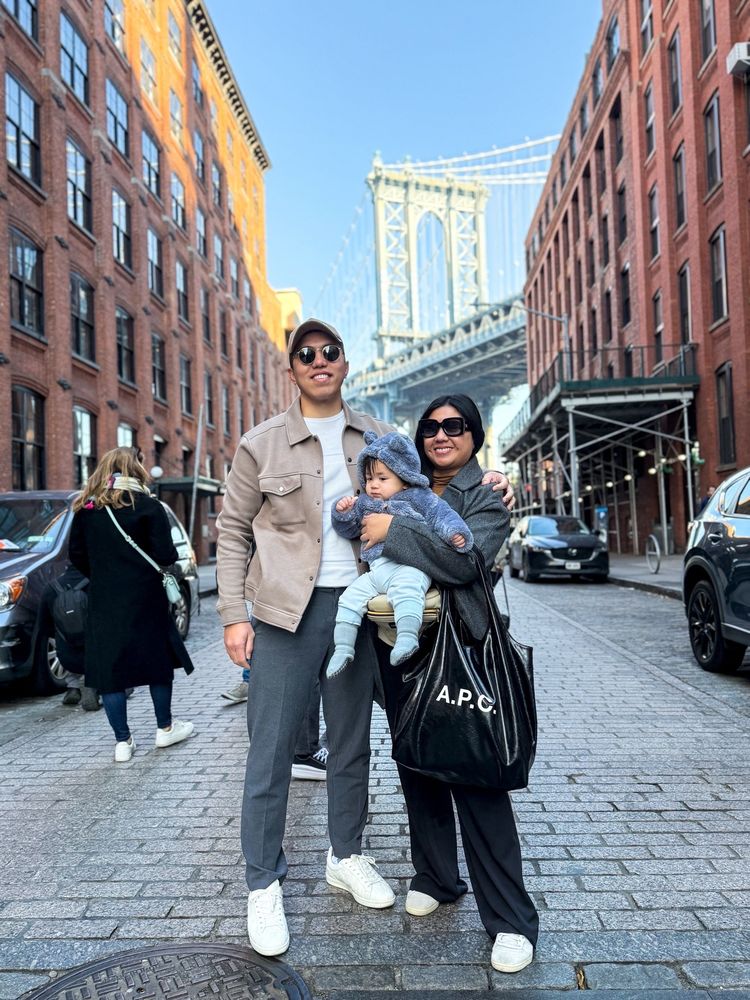
--- ## Chapter One: The Morning Everything Changed The Brooklyn sunlight filtered through linen curtains like honey through a sieve, and Pete stretched his velvety white paws toward the ceiling, his playful streaks of makeup-like fur catching amber rays. He was no ordinary puppy—he was Pete the Puggle, natural-born storyteller, adventurer, and beloved heart of his human family. His bright eyes sparkled with perpetual wonder, the kind that made children lean forward in their seats and teenagers forget their cynicism for just one more story. "Roman, Roman!" Pete yipped, bouncing on his older brother's chest with the precision of a furry meteor. "Wake up, wake up, WAKE UP!" Roman groaned, pulling his Brooklyn Nets hoodie over his face. "Pete, it's Saturday. The only day I get to sleep past six." "But today's the DAY!" Pete's tail created miniature hurricanes against the comforter. "Dumbo! The adventure! THE GREAT UNKNOWN!" From down the hall, Pete heard it—the warm, wise chuckle that meant Lenny was stirring his morning coffee, the sound of a spoon against ceramic like a gentle gong calling monks to prayer. "Sounds like someone's excitement could power the Q train," Lenny called out, his voice carrying that particular blend of encouragement and mischief that made every ordinary moment feel like the opening scene of something extraordinary. Mariya appeared in the doorway, her hair still wild from sleep, her eyes already searching for magic in the mundane—a coffee stain shaped like Florida, a sunbeam holding dust motes like suspended galaxies. "My brave little adventurer," she whispered, scooping Pete into her arms. His velvety fur pressed against her cheek, and she inhaled the puppy scent of him—grass and dreams and something uniquely *Pete*. "Are you ready for your first ferry ride?" Pete's ears flattened against his skull. The ferry. The water. That endless, unknowable *depth*. He'd seen it from the promenade—how the East River shifted from murky brown to something dark and fathomless, how it swallowed the horizon whole. His heart, usually so buoyant, became an anchor in his chest. But he was Pete the Puggle. Storyteller. Adventurer. He would not—could not—let fear define the narrative. "I was born ready," he announced, though his voice squeaked on the final syllable. Roman, now upright, ruffled the fur between Pete's ears with the familiarity of seventeen shared years. "Heard that squeak, little dude. You sure about this? We can do Coney Island instead. Land. Solid ground. No water required." Pete looked from his brother's protective brown eyes to his mother's endlessly curious gaze, to Lenny's encouraging nod. They were his constellation, these three, fixed points in his universe. And constellations, he remembered from his stories, were merely stories people told to navigate darkness. "I need to face the water," Pete said, and the words tasted like courage—bitter at first, then sweet. "Every hero's journey begins with crossing a threshold. Joseph Campbell said that." "You're four months old," Roman laughed. "You've read Joseph Campbell?" "I've *lived* Joseph Campbell," Pete replied with dignity. The apartment filled with the symphony of preparation—Mariya's humming as she packed organic treats and a small first-aid kit ("Just in case the world needs more magic, and also band-aids"), Lenny's methodical double-checking of ferry schedules, Roman's practiced indifference masking his own excitement. Pete watched them, these beautiful humans, and felt his story-heart swelling with love so fierce it bordered on ache. "Hey." Roman's voice dropped to seriousness, the way it did when they discussed matters of consequence. "If you get scared out there, on the water... you tell me. Okay? Not because you're not brave. But because that's what we do. We tell each other." Pete pressed his cold nose against Roman's warm neck. "I promise." But promises, he would learn, were complicated things—especially when fate intervened, when adventure twisted into something more unpredictable than any story he'd ever told. --- ## Chapter Two: The Ferry and the First Tremor The East River flowed like liquid obsidian, and Pete stood at the ferry's railing with his paws gripping metal cold enough to sting. The Manhattan Bridge soared overhead, a steel cathedral of human ambition, and somewhere in the distance, a seagull cried what sounded like a warning. "Deep breath," Lenny coached, crouching beside him. His hands—capable, warm, the hands that built bookshelves and repaired bicycles and somehow always found the exact right spot behind Pete's ears—steadied the trembling puppy. "You're not on the water. You're *above* it. There's a difference." Pete's bright eyes reflected the churning dark beneath them. "In stories, the hero always falls in. Into the sea, into the underworld, into the thing they fear most." "And then?" Mariya prompted, joining them. Her camera hung ready, but her attention remained wholly, completely *his*—as it always had been, as it always would be. "And then they swim," Pete whispered. "Or they learn to breathe underwater. Or they discover they could fly all along." The ferry groaned, a leviathan awakening, and Pete startled—backward into Roman's waiting arms. "I got you," Roman murmured, and it became a mantra, a heartbeat, a story's recurring motif. "I got you, I got you, I got you." Pete's fear didn't evaporate. It *transformed*—from something paralyzing into something he could name, describe, eventually dance with. He told himself this, even as his paws refused to unclench from Roman's sleeve. Dumbo emerged like a dream half-remembered: cobblestone streets where trolley cars once rattled, warehouses reborn as galleries, the Manhattan Bridge's Gothic arches framing the scene like a portal to another dimension. Pete's fear receded slightly, curiosity asserting its ancient dominance. "Look!" Mariya breathed, and they did—at a street musician coaxing jazz from a saxophone weathered as driftwood, at murals breathing color into brick, at the Empire Stores building rising like a castle of reclaimed dreams. They wandered, Pete's paws finding rhythm on Belgian block streets, his story-mind absorbing every detail: the vanilla-amber scent of roasted coffee, the particular echo of footsteps in Empire Stores' vast atrium, the way afternoon light fractured through industrial windows into something almost sacred. "Tell us a story," Lenny requested, settling on a bench in Brooklyn Bridge Park. The East River stretched before them, but from here—surrounded by family, grounded by their warmth—it seemed almost manageable. Almost. Pete cleared his throat, assuming his narrator's posture: spine straight, eyes distant, voice dropping into registers of ancient wisdom and mischief. "Once, in a kingdom beneath the last subway station, there lived a puggle who feared the dark..." He wove the tale—his tale, really, disguised in metaphor—and watched his family lean in, committing every word to memory. This was his magic, he realized: not the ability to defeat dragons or survive impossible journeys, but to make others *feel* less alone in their fears. The sky shifted toward evening, bruised purple and rose, and Pete noticed it first: a disturbance in the air, a shimmer like heat rising from summer asphalt, but wrong—*wrong* in a way that made his hackles rise and his story-instincts scream. "Pete?" Roman followed his gaze. "What is it, little dude?" But Pete couldn't answer. Because from that impossible shimmer stepped *her*—Laika, the Soviet space dog who'd disappeared among the stars in 1957, now materializing with stardust still clinging to her sleek form and eyes that held the depth of galaxies she'd traversed. "Pete the Puggle," she said, and her voice carried cosmic harmonics, the music of spheres. "I've penetrated the fabric of time itself to find you. The darkness comes—and only courage, true courage, will suffice." And then the world *fractured*. The park, the bridge, his family—everything dissolved into fragments like a dropped mirror, and Pete felt himself falling, falling, into a space between spaces where the very concept of "home" became theoretical, distant, desperately precious. The last thing he heard before the darkness claimed him was Roman's voice, distant as a star's final light: "I got you—" But Roman didn't have him. Not anymore. --- ## Chapter Three: The Labyrinth of Shadows Pete landed on something that felt like cobblestone but looked like frozen starlight. Around him rose structures that defied geometry—staircases ascending into clouds of ink, archways opening onto impossible vistas, the skeletal remains of stories half-told. The air tasted of ozone and forgotten lullabies. "Laika?" His voice emerged smaller than intended, a puppy's yip in a cathedral of infinite space. She materialized beside him, her cosmic form flickering between dog and constellation and something beyond either. "The space between worlds," she explained, her tone gentle despite its otherworldly resonance. "Where fears take form and courage is the only cartography." Pete's paws trembled against the alien ground. "My family—" "Safe. For now." Laika's eyes—those impossible, beautiful, terrible eyes—held galaxies of compassion. "But you must navigate this labyrinth, Pete. Face what awaits. Only then can you return to them." "And if I fail?" "Then the darkness claims not just you, but the stories you might have told. The courage you might have inspired." She pressed her nose to his—cold, so cold, yet somehow warm with transferred starlight. "I have seen your heart, little storyteller. It is sufficient. But you must believe it yourself." She faded, leaving only the faintest trace of stardust, and Pete stood alone in the labyrinth of shadows. His first steps echoed impossibly—each footfall spawning reflections, variations, a thousand Petes choosing a thousand paths. The darkness pressed against him physically, a weight on his shoulders, his chest, his brave little heart. And then he heard it: the water. Not the East River, manageable from shore, but *water* in its primal form—oceanic, abyssal, the water between stars that swallowed ships and dreams alike. It rushed through corridors ahead, and Pete's body locked in terror. His breathing fragmented. His vision narrowed to a tunnel. *I cannot*, he thought, and the thought felt true, undeniable, as fundamental as gravity. *I cannot face this. I am small. I am scared. I am—* "Pete!" The voice cut through his panic like Lenny's spoon against morning coffee—familiar, grounding, impossibly present. "Roman?" he gasped, though his brother couldn't be here, shouldn't be here, was safe on the other side of whatever this was. But the voice came again, and with it, images: Roman's face when Pete had first arrived home, tiny and trembling; Roman's patience teaching him to climb stairs; Roman's tears when Pete had eaten something questionable and spent the night at the emergency vet, Roman sleeping on the floor beside his crate. "I got you," the voice insisted, and Pete realized—it wasn't Roman here, now, but Roman *inside* him, part of his story-heart, part of what made him Pete. His family's love wasn't a location but a condition, a state of being he carried like stardust on his fur. He moved forward. One trembling paw, then another. The water roared, and he walked toward it—not away, *toward*—because every story he'd ever told about heroes had been preparation for this moment, this choice, this courage. The corridor opened onto a vast chamber where water fell upward, defying physics, and in its center stood *it*: his fear given form. A shape of darkness and depth, of the unknown that dwelt below surfaces, in shadows, in the spaces between heartbeats. "Pete the Puggle," it intoned, and its voice was the sound of sinking, of being unable to surface, of breath failing and light fading. "You fear me. You have always feared me. What makes you think you can face me now?" Pete's voice shook, but he spoke: "Because I am loved. Because I am brave not despite my fear but *with* it. Because every story worth telling includes a moment where the hero almost doesn't make it—and then does." He lunged—not to fight, but to *embrace*. To integrate. To make the fear part of his story rather than its ending. The darkness screamed, dissolved, *transformed*—and Pete found himself in a garden of bioluminescent flowers, gasping, alive, changed. --- ## Chapter Four: Baron Munchausen and the Art of Impossible Friendship "Well, well, well!" The voice boomed like cannon fire wrapped in velvet, and Pete spun to find its source: a figure emerging from behind a mushroom large as a Volkswagen, all impossible mustache and military jacket adorned with medals that hummed with their own stories. Baron Munchausen—his appearance unmistakable, his reputation legendary even among legendary beings. "Saved yourself, did you?" The Baron examined Pete with eyes that had witnessed the most extraordinary adventures across centuries and perhaps beyond. "Disappointing. I do so enjoy a good rescue. Preferably my own." Pete, still gasping from his confrontation, found indignation rising through his exhaustion. "I wasn't *looking* to be rescued. I was—" He paused, considering. "I was becoming." Munchausen's mustache twitched—approvingly, Pete thought. "Becoming. Yes. The best stories, that. Not the arrival but the becoming." He settled onto a toadstool with the grace of a man who'd made impossible comfort an art form. "Your Laika friend fetched me. 'Pete needs company,' she said. 'Pete needs stories to sustain him until he finds his way home.' Well. I never refuse a lady of the stars." They talked—really talked, the way Pete talked with his family, with depths and digressions and sudden revelations. Munchausen spoke of his own fears, cleverly disguised as arrogance; of his loneliness, hidden beneath bravado; of how even the most fabulous adventurer sometimes needed simply to sit quietly with another soul. "Your darkness," Munchausen said eventually, his usually booming voice softened to near-whisper. "The water, the depth, the unknown. It is not conquered, young Puggle. It is understood. Carried differently. Do you understand?" Pete thought of the East River, how it shifted from murky brown to fathomless dark. How he'd always seen only the second part, the frightening part, missing how the same water held light, held life, held the ferry that carried his family to adventures. "I understand," he said, and felt the truth of it settle in his story-heart like a stone making ripples. Munchausen rose, suddenly businesslike. "Then we must find your people. Your Laika penetrates time, yes, but I—" He struck a pose, medals clanking. "I penetrate *obstacles*. I make the impossible merely unlikely, the unlikely inevitable!" He produced from his jacket—a jacket that shouldn't fit anything, yet somehow did—a device of brass and crystal, whirring with purposes Pete couldn't comprehend. "This," Munchausen announced, "will locate your family's essence-trails through the between-spaces. Your Roman's protectiveness, your Lenny's wisdom, your Mariya's wonder—they leave traces. Cosmic breadcrumbs. We follow, we find, we reunite! The story demands it!" Pete felt tears—actual tears, warm on his velvety cheeks—at the thought of them. "They'll be worried. Searching. Roman especially—he'll blame himself. He always does, when I'm scared or hurt. He thinks he should be able to fix everything for me." "And you," Munchausen observed, adjusting his device with surprising gentleness, "think you should be brave enough to never need fixing. Both errors, my young friend. Both beautiful, human, *story-worthy* errors." The device chimed, a sound like bells at a wedding, like the first note of a favorite song, like home. "East-northeast," Munchausen declared. "Through the Valley of Echoes, past the Lake of Almost-Remembered Dreams. We walk, we talk, we do not hurry—the journey matters as much as the destination." He offered Pete his hand—surprisingly soft, for such a rugged adventurer. "Shall we write this chapter together?" Pete placed his paw in that waiting palm. "Let's make it a good one." --- ## Chapter Five: The Valley of Echoes The Valley of Echoes earned its name immediately. Every sound they made returned transformed—Pete's bark became a chorus, Munchausen's booming laugh a symphony, even their footsteps created harmonic resonances that lingered like visible ripples in the air. "Careful what you speak here," Munchausen warned, though his eyes sparkled with the delight of a born performer in perfect acoustic conditions. "The valley gives voice to truth and shadow alike. Your deepest fears, your secret hopes—" "I hope Roman's okay," Pete blurted, unable to stop himself. The valley caught his words, amplified them, sent them spiraling into canyons of rose-quartz and amethyst. "I hope he doesn't think he failed me. I hope he knows—knows that his 'I got you' is why I'm brave enough to keep going." The echo returned, and with it, a vision: Roman, pacing the Dumbo waterfront, phone pressed to his ear with desperate urgency. "I can't just sit here," he was saying, voice cracking. "He's out there, Dad. He's scared and he's alone and I told him—I promised—" "I got you," Pete whispered, and the valley caught even this, sent it rippling outward, a message in a bottle cast into cosmic seas. They walked further, and the echoes grew more intimate. Pete heard his own first night home, the tiny whimpers he hadn't meant to make, Roman's mattress dragged beside his crate, Roman's steady breathing becoming his lullaby. He heard Lenny's stories, Mariya's songs, the thousand small rituals that composed their family's love-language. "These echoes," he realized, "they're not just sounds. They're—" "Memory," Munchausen finished, his own voice uncharacteristically soft. "The valley remembers what the world forgets. Every kindness, every courage, every time someone chose love despite fear." He paused, adjusting a medal that seemed to hold particular significance. "I have walked many valleys, young Puggle. This one reminds me why I continue walking." Pete pressed against the Baron's leg—a gesture of gratitude, of solidarity, of puppy-love that transcended species and century. "You're not just stories," he said, understanding blooming. "You're someone who needed stories to survive. Like me." Munchausen's mustache quivered. "And now we survive together. The best kind of adventure, that." The valley's far end opened onto the Lake of Almost-Remembered Dreams, its surface reflecting not the sky above but skies from elsewhere, elsewhen. Pete saw his family's apartment in morning light, Lenny's coffee ritual, Mariya's photography spread across their kitchen table. He saw Roman's room, the poster of constellations he'd helped choose, the way Roman sometimes looked at that poster with longing for something he couldn't name. "Almost there," Munchausen murmured, consulting his device. "But the lake must be crossed, and it demands—" "A price?" Pete guessed. "A choice." The Baron's eyes held ancient wisdom, ancient sorrow. "The lake shows paths home, but you must choose which version of yourself arrives there. The Pete who never feared, never fell, never needed rescue? Or the Pete who faced darkness, who carries its memory, who grew *through* rather than around?" Pete stared at his reflection in those impossible waters—saw himself small and velvety-white, his playful streaks of fur, his bright eyes that had witnessed stars and shadows both. He thought of his fear of water, how it had transformed from prison to passage. Thought of his fear of darkness, of separation, of being insufficiently brave. "I choose the Pete I became," he said, and the lake blazed with light, and he felt himself— *falling* —no, *flying* —no, *becoming* —and Munchausen's voice, distant now but still present: "Good choice, young storyteller. The only choice, really. Now—*GO!*" --- ## Chapter Six: The Reunion That Almost Wasn't Pete materialized in Dumbo, but wrong-Dumbo, shadow-Dumbo, the version where the Empire Stores stood empty and the carousel turned without music, without children, without joy. And there—there in the plaza's center—his family huddled together, Lenny's arms around Roman's shoulders, Mariya's camera abandoned, all three faces streaked with tears that wouldn't stop. "—should have watched him closer," Roman was saying, voice hollowed by repetition, by hours of self-recrimination. "Should have—he was scared of the water, he told me, and I still—I let him—" "Roman." Lenny's voice, that warm wise sound, cracked with its own grief. "We all let him be brave. That's not—it's not on you, son. It's not on any of us except whatever took him." "Then where?" Roman demanded of the empty sky, the empty world. "Where is he? Where's my—my—" He couldn't finish. Mariya finished for him, a mother's incantation: "He's coming home. He is. Pete always finds his way into stories, and stories always—" "—end with the hero returning," Pete completed, and three heads turned, three faces transformed, three voices made one word: *"PETE!"* The reunion was chaos and grace. Roman's arms, shaking, lifting him; Lenny's hands, somehow also there, also holding; Mariya's face pressed to his fur, her tears warm and salt and *real*. Pete lost himself in their touch, their smell, their *presence*, and found himself simultaneously—found and lost and found again, the way all great homecomings feel. "I was so scared," Roman whispered into his fur, over and over, a mantra, a heartbeat, a story's recurring motif. "I was so scared, I was so scared, I was so—" "I know," Pete managed, though he was crying too, puppy-tears and human-tears mingling. "I know. But you taught me, Roman. 'I got you.' Even when you didn't have me, you *had* me. In here." He pressed his paw to Roman's chest, where a heart hammered against ribs. "Always in here." They talked—really talked, finally—for what felt like hours in that shadow-Dumbo that couldn't sustain itself against their reunion-light. Pete told them everything: Laika and the stars, the labyrinth and his fear made manifest, Munchausen's friendship and the valley's echoes. Lenny wept openly, unashamed, at the beauty of it. Mariya captured nothing on camera, too present for documentation. Roman held Pete like something precious and temporary and eternal all at once. "I need to tell you," Pete said finally, when the first wave of emotion had crested, "about the water. About why I was so scared, and why—" he took a shaky breath, feeling the story's weight, its necessity "—why I'm still a little scared, but differently now." They listened, his family, as he explained how the darkness had been not enemy but mirror, showing him what he feared rather than what was truly there. How Munchausen's friendship had taught him that even legendary adventurers need companionship. How Laika's journey through time suggested that no separation is truly permanent, that love persists across impossible distances. "And the water," he finished, "I still see the depth, the unknown. But I also see—" he thought of the ferry, the way Mariya had framed the bridge against sky, the way light played even on murky surfaces "—I see that it holds things up, too. Ferries and families and stories. That it's not just about falling in, but about what floats, what carries, what connects." Lenny cleared his throat, that particular sound that meant wisdom incoming, wrapped in a joke to make it palatable. "You know what the best thing about water is, Pete?" "What?" "It takes the shape of what holds it." Lenny's smile was sunrise over the East River, was coffee perfectly brewed, was every morning promise ever made. "You're not the same puppy who trembled at this morning's ferry. And you're not the person you'll be tomorrow. The water doesn't care. It holds you anyway." Mariya added, her photographer's eye finding metaphor in the mundane: "And it reflects back what you shine into it. Your courage, your love, your—" her voice caught, steadied "—your beautiful, brave, storytelling heart." Roman was quieter, longer, his protective instincts warring with something new, something growing. "I was supposed to protect you," he finally said. "And I couldn't. I can't always. That's—" he laughed, a broken sound becoming whole "—that's terrifying, actually. But maybe that's also the story. That we protect each other. That 'I got you' goes both ways." Pete pressed his nose to Roman's, the puppy equivalent of a solemn vow. "Always both ways. Always." The shadow-Dumbo couldn't withstand this—so much light, so much love, so much *story* being made in real-time. It dissolved like sugar in rain, like fear in the face of genuine connection, and they found themselves— --- ## Chapter Seven: Home Is the Story We Keep Telling —on the actual Dumbo waterfront, sunset bleeding gold and rose across the actual East River, the actual Manhattan Bridge arching overhead like a promise kept. Pete's paws found actual cobblestones, Roman's arms actual warmth, and somewhere in the between-now-gone, he heard Munchausen's booming farewell and Laika's cosmic blessing. "Did that—" Mariya began. "—actually happen?" Lenny finished. "Does it matter?" Pete asked, and smiled—his bright-eyed, story-ready, utterly Pete smile. "It's true either way. The fear, the courage, the becoming. The love that finds us even when we're lost." They walked to the ferry terminal together, slower now, more deliberately. Pete found himself at the railing as the boat pushed off, the water spreading beneath them like a story yet untold. His paws gripped metal. His heart hammered. And then—he looked. Really looked. The water held the sunset, held the bridge's reflection, held the promise of shore and return and infinite possible adventures. It was deep, yes. Unknown, yes. But so was he, now. So were they all, his beautiful family, their love a depth he was still learning to fathom. "Pete." Roman's voice, gentle with understanding. "You don't have to—" "I want to," he said, and meant it. "I'm scared. I'm brave. Both. Always both." The ferry cut through water that shifted from murky brown to something catching light, and Pete the Puggle, natural-born storyteller, stood at the rail with his family around him and made a story of this moment—the fear, the courage, the love that held them all like water holds the light. Lenny broke the silence with characteristic warmth: "So, Pete. What's the moral of this particular adventure?" Pete considered. The wind ruffled his velvety fur, played with his makeup-like streaks, made him feel simultaneously very small and infinitely significant. "That home isn't where you start," he finally said. "It's what you carry. That fear doesn't disappear—it transforms into the story you tell about yourself. And that—" he looked at each of them, his constellation, his fixed points, his heart "—that the best adventures aren't the ones where you're never scared. They're the ones where you're scared, and you go anyway, because someone is waiting to say 'I got you' at the other end." Mariya raised her camera—finally, the photographer's instinct returning—and captured him there: small, white, streaked with sunset and stardust, surrounded by love. "And Laika? Munchausen?" Roman asked. "Will we see them again?" "Stories never end," Pete replied, with the certainty of one who trafficked in them. "They only pause. They'll return when needed. When the darkness comes again, when courage requires reminding, when someone needs to hear that even space dogs and impossible barons believe in them." The Manhattan skyline rose before them, Brooklyn welcoming them home, and Pete felt his story-heart full to bursting—not with fear's absence, but with courage's presence. With love's persistence. With the knowledge that he was, eternally and perfectly, *enough*. As they disembarked, as they climbed the hill to their apartment, as the familiar smells of home enveloped him—coffee and books and Roman's cologne and Mariya's vanilla soap and the particular *Pete-ness* of his own bed waiting—he turned once more to look at the water. It shimmered in moonrise now, and for just a moment, he thought he saw her—Laika, among stars reflected, wagging her cosmic tail. And beside her, a flash of impossible mustache, a medal's gleam. *Thank you*, he thought, sending it outward like the valley's echo, like a message in a bottle cast into cosmic seas. *Thank you for finding me. For helping me find myself.* And faint, fainter than starlight, fainter than memory, came the reply—not words but feeling, not sound but certainty: *The story continues, brave one. It always continues.* In the apartment, Lenny put on water for tea. Mariya downloaded photos, already composing the story they'd tell. Roman settled onto the floor, inviting Pete into the circle of his arms, and Pete went—gratefully, lovingly, *home*. "Tell us another story," Roman murmured, and Pete could hear the smile in his voice, the peace, the growing understanding that protection meant presence more than perfection. Pete settled into warmth, into love, into the endless adventure of being exactly who he was meant to be. "Once," he began, and his voice carried that particular magic that made children lean forward and teenagers forget their cynicism, "there was a puggle who feared the water, the dark, and being lost..." And as he spoke, the night deepened around them, and the stars turned overhead, and somewhere—everywhere—stories continued, because that is what stories do: they continue, they transform, they carry us across impossible distances back to ourselves, back to each other, back to the infinite, ongoing, ever-becoming adventure of love. *** The End ***
Use these buttons to read the story aloud:


No comments:
Post a Comment