"*** Pete's Great Millennium Skate Park Adventure: A Tail of Courage, Friendship, and Finding Your Paws ***"🐾
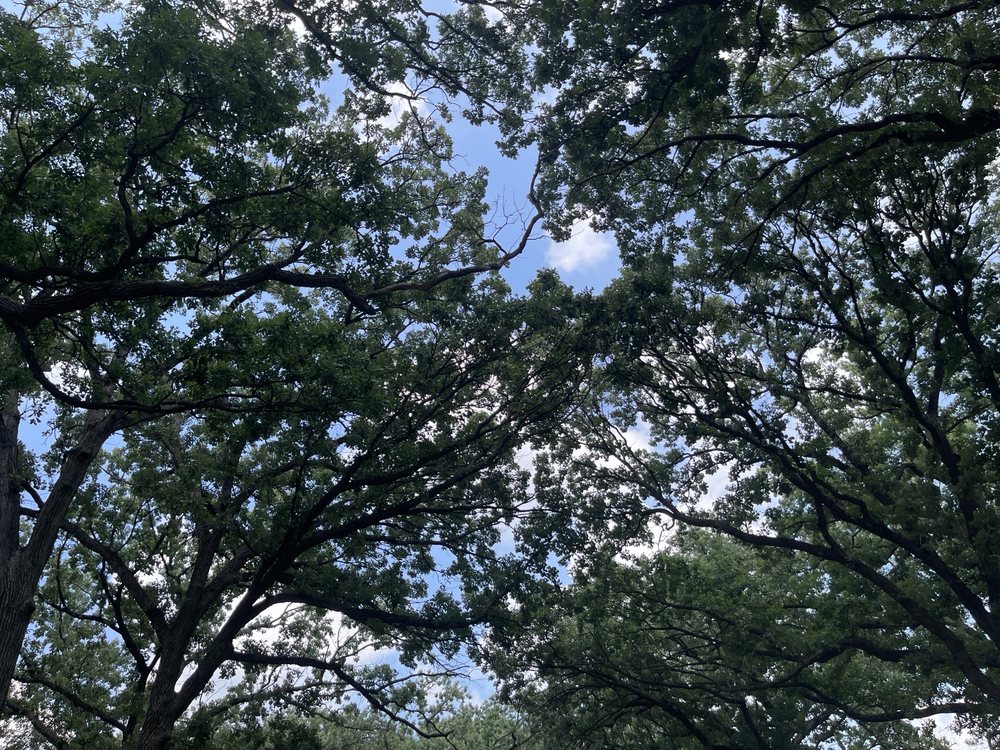

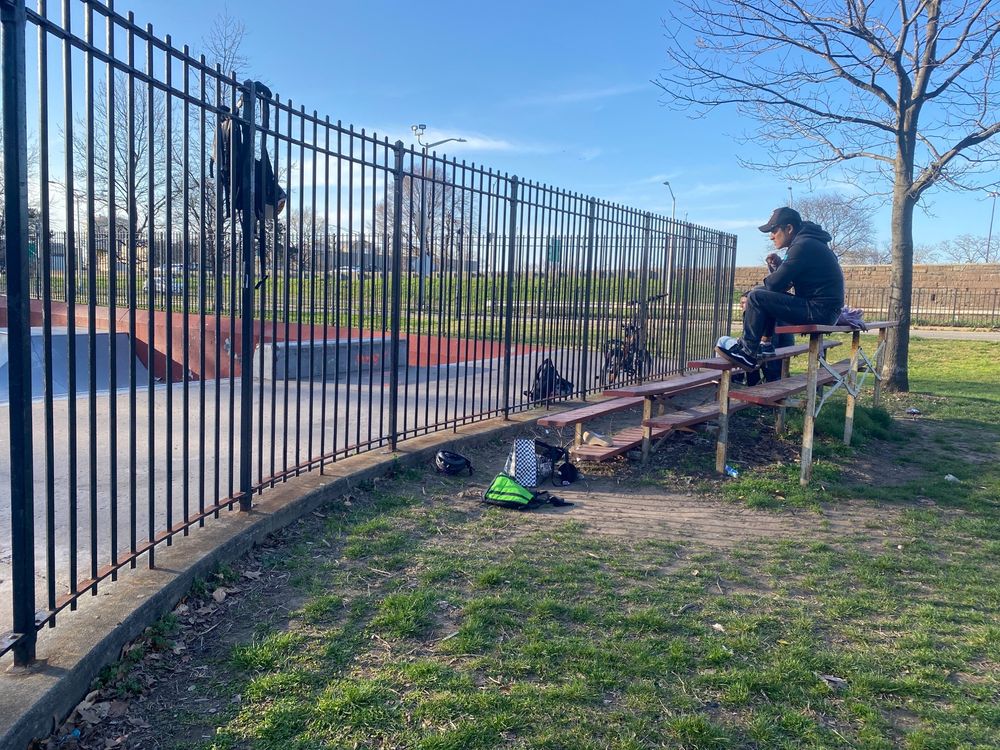
--- ## Chapter One: The Morning of Marvelous Possibilities The sun poured through my human sister's window like golden syrup over a stack of pancakes, and I stretched my velvety white paws until they trembled with delicious anticipation. My name is Pete, and on this particular morning, my tail was performing a drum solo against the quilted comforter that my family calls theirs but I generously allow them to share. "ROMAN!" I barked, which in human language probably sounded like a series of enthusiastic yips that sent my floppy ears dancing like two pink butterflies wrestling in a breeze. "ROMAN, WAKE UP! TODAY IS THE DAY!" My older brother—though technically we don't share the same species, I consider him my brother in every way that matters—groaned and pulled his pillow over his head. But I knew his secret. His toes were already wiggling beneath the dinosaur-patterned blanket. Roman was awake, just pretending, which was one of our favorite games. "Pete," he mumbled, voice muffled by synthetic feathers, "it's six in the morning. The skate park doesn't even open until nine." I responded by performing what my family calls my "morning dance," which involves spinning in tight circles while maintaining unbroken eye contact. It's both a physical feat and a spiritual experience, if I do say so myself. The bedroom door creaked open, and there stood Mom—Mariya, the woman whose smile could warm the frostiest winter morning. She wore her faded blue robe with the coffee stains that told stories of a thousand early mornings, and her hair framed her face like a halo of curious questions. "Well, well," she said, kneeling to scratch that perfect spot behind my left ear that makes my hind leg thump like a rabbit's warning signal. "Someone's ready for an adventure." "More than ready," I tried to convey, licking her wrist with the enthusiasm of a thousand greetings. Downstairs, the kitchen glowed with Dad's presence before we even descended. Lenny was at the stove, his shoulders moving with the rhythm of pancake flipping, his whistle threading through the air like a bright ribbon. The smell of batter and blueberries wrapped around me like a familiar blanket. "There's the birthday boy!" Dad announced, though it wasn't my birthday, a fact he knew perfectly well. In our family, every exciting day was treated like a birthday, which is one of the many reasons I adore them. "I'm not a boy, I'm a gentleman of sophisticated tastes," I communicated by sitting with deliberate dignity, though my tail betrayed me entirely, sweeping the floor like an overeager maid. Roman clattered down the stairs, still in his pajama pants with the rocket ships, his hair standing in fourteen different directions like a crown of rebellious wheat. "Dad, you said that yesterday. And the day before. And—" "And I'll say it tomorrow," Dad interrupted, flipping a pancake so high it nearly kissed the ceiling fan. "Because every day with this dog is a celebration." We gathered around the worn wooden table, the one with the scratch marks from my puppyhood when everything was a chewable mystery. Mom spread the map across the surface—yes, we used an actual paper map because Dad insisted that "GPS steals the romance of the journey"—and we all leaned in to examine our destination. "Millennium Skate Park," Mom read aloud, her finger tracing the winding path through our town. "Home of the famous concrete bowls, the gravity-defying half-pipes, and—" she paused for dramatic effect, something she'd learned from me, "the legendary Splash Zone." I felt my ears fold back involuntarily. The Splash Zone. I'd heard tales of this place whispered among the neighborhood dogs. Water. Deep, unpredictable, endless water. My paws felt suddenly damp despite being firmly planted on the kitchen floor. "Splash Zone?" I whimpered, pressing closer to Roman's leg under the table. He felt my anxiety, as he always did, and his hand found my scruff with the certainty of a compass finding north. "Pete's not the biggest fan of water," he explained to the table, though everyone already knew. "Last summer at the lake, he—" "I walked in bravely," I interrupted with a huff, "and the ground betrayed me! It dropped away like a traitor, and suddenly I was floating, and floating is NOT natural for a gentleman of my—" "—he clung to my shoulder like a little white koala," Roman finished, laughing but not unkindly. "For forty-five minutes." "Forty-five minutes of dignified assessment of the situation," I corrected, though my tail had tucked itself into a position of maximum humility. Dad set a plate of perfectly golden pancakes before me—yes, I have my own plate, engraved with "SIR PETE THE PUGGLE" in letters that make me feel quite official—and knelt so our eyes met. His were the color of strong tea, warm and seeing everything. "Here's the thing about fear, buddy," he said, and his voice carried that quality it got when he was being simultaneously silly and profound, like a clown reading philosophy. "It's just excitement wearing a scary mask. Same physiological response, different story we tell ourselves." "Profound," I communicated by licking his nose. "But also," Mom added, spreading her hands like she was releasing birds into flight, "there's no shame in being cautious. The world needs both the divers and the thoughtful observers on the shore." "And sometimes," Roman said, his voice dropping to that conspiratorial register we shared during our midnight living room conversations, "the person on the shore decides to put a toe in. And then another. And then—bam—they're swimming." I considered this as I attacked my pancake with the concentration of a scholar approaching ancient texts. The butter melted into the crevices like liquid gold, and the blueberries burst with a sweetness that made my eyes half-close in ecstasy. Even in my moments of greatest culinary rapture, however, a small cold spot remained in my chest, pulsing with the memory of water surrounding me, supporting me, yes, but also taking away my control, my certainty, my precious contact with solid ground. We finished breakfast with the easy conversation of a family who genuinely enjoys one another's company—a rare and precious thing, I've gathered from my limited but attentive eavesdropping on human television programs. Dad told a joke about a skateboarding grandma that made Roman snort milk through his nose. Mom read us three fascinating facts about concrete composition that somehow became captivating through her enthusiasm. And I, between bites of pancake and snippets of attention, practiced my brave face in the reflection of my water bowl. It was going to be a day of transformation. I could feel it in my whiskers, in the particular quality of light through the kitchen window, in the way Roman's hand found my back without him needing to look down. Whatever waited at Millennium Skate Park, whatever fears lurked in the Splash Zone or beyond, we would face together. That, at least, was not in question. --- ## Chapter Two: The Journey and the Unexpected Passenger The family van—an aging but dignified purple monstrosity that Dad called "The Eggplant Express" with more affection than the name deserved—rumbled to life with a cough that suggested it shared my feelings about early mornings. I claimed my position in the middle seat, wedged between Roman and a cooler that smelled of sandwiches and possibility. "Shotgun!" Roman called, but he was already sitting in the back with me, so the declaration was more tradition than serious claim. "Shot blast," Dad countered, a family joke so old it had grown whiskers of its own. Mom navigated from the front, the map spread across her lap like a treasure chart, her finger tracing our route with the seriousness of a general planning a campaign. "We'll take the highway to the old mill road," she instructed, "then cut through the park district. Should take about forty minutes." "Unless we get lost," Dad added cheerfully, because getting lost was another family tradition, treated not as frustration but as opportunity. "Lost" had yielded some of our greatest adventures: the time we discovered the hidden bakery with the bacon croissants, the afternoon we stumbled upon the jazz quartet practicing in the gazebo, the evening we watched a meteor shower from an unplanned hilltop. The van rolled through streets still waking up, sprinklers making rainbows in morning light, coffee shops releasing their aromatic sighs into the air. I pressed my nose to the window gap Roman had cracked for me, sampling the world's scent-map like a sommelier with an infinite cellar. Here, the sharp green of cut grass. There, the yeasty promise of a bakery's back door. Underneath it all, the constant thread of my family's combined presence, that particular chemistry that meant home whether we were in our actual house or crossing unknown territory. We'd been traveling perhaps fifteen minutes when I first noticed the sound. A rhythmic clicking, like small hooves on pavement, keeping pace with our vehicle. I barked a warning, but it came out more curious than concerned, because the rhythm suggested intention rather than threat. "Did you hear—" Roman started. "Look!" Mom interrupted, pointing to her side mirror. There, running with the focused determination of an athlete in their prime, was a Jack Russell Terrier. His coat was the classic white-with-tan-patches pattern, but his expression was anything but classic. It was fierce, almost defiant, his jaws set in a line that suggested he had opinions about our vehicle and wasn't afraid to share them. "Pull over," Mom said, already reaching for the water bottle she kept for emergencies. Dad coasted to the shoulder, and the terrier slowed his pace, approaching with a swagger that suggested he owned not just this road but the very concept of travel itself. He was compact but muscular, his eyes the color of strong amber ale, and they fixed on me with an intensity that made my fur want to stand up and salute. "Who's this little tough guy?" Dad asked, stepping out and crouching to non-threatening height. The terrier's response was to bark directly at me—a staccato burst that translated roughly to: "You. Van dog. I challenge your right to passage. Also, do you have snacks?" "I beg your pardon," I replied from my window, maintaining the composure of a gentleman despite my racing heart. "This is a family vehicle, and I am its security detail." The terrier laughed, an actual bark-laugh that showed teeth like tiny perfect pearls. "Security! You couldn't secure a sandwich from a sleeping toddler. I am Kirusha, and I have chased cars twice your size back to their garages." "Kirusha?" Mom repeated, checking his collar, which bore a tag with a phone number and the simple statement: "I GO WHERE I PLEASE." The phone went to voicemail—a cheerful message about being "out adventuring, leave a message for the return"—and Mom frowned at the irresponsible owner even as she smiled at the dog before her. "He's coming with us," Roman declared, and I whipped my head to stare at him with what I hoped was eloquent betrayal. "ROMAN," I attempted to convey through intense eye contact, "this creature threatened me. He laughed at me. He has the face of a charming villain in a heist film!" But Roman was already opening the door, and Kirusha leaped in with the athletic grace of someone who had practiced this moment, landing precisely in the third row where our picnic blanket waited. He settled onto it with the air of a king claiming a throne, and fixed me with a gaze that clearly communicated: "This is my kingdom now, white fur." "Don't worry, Pete," Roman whispered, his hand finding my trembling shoulder. "He's just scared. Look at his tail." I looked. Beneath the confident posture, Kirusha's tail gave a single uncertain wag, quickly suppressed, like a child trying not to hope. And in that small betrayal of his tough facade, I saw something I recognized: the bravado that covers fear, the aggression that masks need. "Fine," I communicated by turning to face forward with deliberate dignity. "He may ride with us. But I am not obligated to engage in friendship." Kirusha's responding bark sounded suspiciously like laughter. The remainder of our journey became a lesson in coexistence. Kirusha narrated every passing landmark with barks of apparent expertise—"That oak, I once chased a squirrel to its topmost branch"; "That fire hydrant, I have opinions about its paint job"—and I responded with pointed silence that I hoped conveyed my superior breeding. But when we turned onto the final approach to Millennium Skate Park, something changed in the van's atmosphere. Roman's leg tensed beneath my paw. Mom's hands white-knuckled on the map. Even Dad's perpetual cheerfulness developed a note of something else, something that tasted in the air like copper and anticipation. There, rising above the tree line, was the park. And there, glinting in the morning sun like a promise of both joy and terror, was the water. The Splash Zone. My personal dragon to be faced, my fear given physical form, glistening and waiting. "Okay, Pete?" Roman asked, and I realized I had pressed myself flat against the seat, my brave morning resolve leaking from me like air from a punctured balloon. "Okay," I lied, because sometimes courage begins with pretending you have it, and hoping reality catches up. Kirusha, to my eternal surprise, did not mock me. He simply moved to the window beside me, close enough that our shoulders touched, and together we watched our destination grow larger, larger, until it filled the entire world. --- ## Chapter Three: First Impressions and Fierce Introductions Millennium Skate Park sprawled before us like a concrete moon crater designed by someone who dreamed in curves and angles. The main bowl yawned in the center, its surface worn smooth by a thousand thousand wheels, its color that particular shade of gray that holds within it every color of the sky it has ever reflected. Around it, ramps rose like frozen waves, half-pipes grinned their wooden smiles, and rails stretched in geometric invitation to anyone brave enough to slide. But my eyes kept finding the water. The Splash Zone occupied the park's eastern edge, a pool of blue that seemed deeper than physics allowed, its surface rippling with wind and the memory of bodies entering its embrace. It was separated from the main park by a fence of painted slats, as if to say "here be dragons," as if the ordinary rules of recreation needed boundary markers. "Pete." Roman's voice pulled me back from the water's hypnotic pull. "Look at me." I did. His eyes were the brown of good earth, steady and growing things, and they held mine with the gravity of a promise. "We don't have to go near it. We can stay in the dry area all day. Dad brought his skateboard, Mom packed three kinds of sandwiches, and I have—" he patted his pocket, producing the red rubber ball that was our shared treasure, "—entertainment for hours." The love in his offer was a blanket I wanted to wrap myself in completely. But beneath it, I heard something else: the faint disappointment of limitation, the shrinking of possibility that fear demands as its tribute. "Perhaps," I started, then stopped. What was I offering? What was I asking? Kirusha solved my dilemma by bolting from the van the moment Dad opened his door, tearing across the parking lot with the speed of a creature who had never learned to doubt his own velocity. He reached the Splash Zone fence in seconds, pressed his nose through its slats, and barked with a joy so pure it transcended species. "WATER!" his bark proclaimed. "GLORIOUS, MURDEROUS, BEAUTIFUL WATER! COME, VAN DOG, LET US DANCE WITH DROWNING!" "I'll pass," I muttered, but I followed, because following was what I did, because Roman followed, because we were all following something larger than any single fear. The morning passed in the bright chaos of skate park culture. Dad attempted his old kickflip and achieved instead a spectacular fall that he celebrated with raised arms, as if the failure were the point. Mom struck up conversation with a group of teenage skaters and somehow extracted their life stories, their hopes, their fears about college applications. Roman practiced ollies with increasing confidence, his body learning to trust the board beneath his feet, the air around him, the physics of flight and landing. I found a spot near the fence—close enough to watch Roman, far enough from the water that its sound became background rather than threat—and settled into what I hoped appeared to be dignified observation. Kirusha, of course, could not allow this. He returned from the Splash Zone dripping and ecstatic, shaking his entire body with such violence that water painted a circle of damp around him. "Why do you sit in the desert when the oasis calls?" he demanded, shaking again for emphasis. "The water is LIFE, van dog. It holds you up, it carries you, it transforms you from creature of land to creature of—" "Creature of panic," I interrupted. "Creature of 'where is the ground, why has the ground betrayed me, I am going to die surrounded by impossible blue.' That transformation?" Kirusha cocked his head, and for a moment his tough facade cracked to reveal something almost tender. "The ground is always betrayal," he said, quieter than his usual bombast. "We stand on it until we don't. The water taught me: there is always something holding you up, if you let it." Before I could process this unexpected philosophy, a shadow fell across us. A large skateboarder, maybe seventeen, with headphones around his neck and a patch on his backpack that read "STAFF." "Hey," he said, kneeling to our level with the ease of someone comfortable with animals. "You guys with the family in the purple van?" Roman appeared behind him, breathless from his run across the park. "That's us. Is something wrong?" "Nah, just—" the staffer pulled a flyer from his back pocket, "—we're doing a dog paddle race in the Splash Zone at two. Small dogs, life vests provided, owners in the shallow end. Winner gets a year's supply of treats and, like, massive local fame." He grinned at Roman. "Your little white guy looks like he'd float like a champ." The world narrowed to a single point: Roman's face, hopeful and careful, asking without asking. "Pete," he said, and I heard everything he wasn't saying: the memory of last summer's lake, the forty-five minutes of koala-clinging, the way I'd trembled for hours afterward. "You don't have to. You never have to." But Kirusha was watching too, his amber eyes uncharacteristically soft, and I thought of his words: *there is always something holding you up, if you let it.* I thought of Dad's "excitement wearing a scary mask." I thought of Mom's "thoughtful observers on the shore," and how sometimes, just sometimes, the shore's observer grows restless for the water's embrace. "I'll... think about it," I communicated through a complex series of ear movements and tail positions that Roman, after years of study, could probably translate with reasonable accuracy. He smiled, the full one that showed his slightly crooked front tooth, the one that meant he was genuinely pleased rather than being polite. "That's my brave boy," he said, and I basked in the warmth of his pride even as the cold spot in my chest pulsed its familiar warning. The morning became afternoon. We ate sandwiches—turkey for the humans, a special concoction Mom called "Pete's Paradise" for me, though Kirusha insisted on sampling it as well, "to ensure quality"—and watched the skate park's population swell with the day's peak crowd. The energy shifted, became electric, a festival atmosphere of wheels and laughter and the occasional dramatic fall. At 1:45, I found myself at the Splash Zone fence again, alone for a moment while Roman visited the restroom. The water had changed with the day's progression, the morning's gentle ripples giving way to more active chop, small waves that broke against the pool's edges with sounds like breathing, like whispering, like promises I couldn't quite understand. "Pete." I turned. Kirusha stood behind me, uncharacteristically serious, his small body tense with something I couldn't read. "The race," he said. "I'll do it with you. If you do it. We can be... teammates." The word seemed to cost him something, this creature of solitary swagger and independent proclamation. "Why?" I asked directly. "You don't even like me. You laughed at me." He was silent for a long moment, the sounds of the skate park flowing around us like water around stones. "I laughed," he finally said, "because you remind me of... before. When I was small. When everything was bigger than me, and I thought barking louder would make me bigger too." He sat, suddenly looking very young, very small, very brave in a different way than his usual performance. "The water was my fear too, once. My first owner threw me in, to 'teach me to swim.' I sank. Someone had to rescue me. For a long time, I barked at water, attacked it, pretended I was too fierce for it. Then one day, I was so tired of being fierce, I just... let go. And I floated. The holding up, it was there all along, but I had to stop fighting to feel it." His story landed in my chest like a stone in still water, sending ripples through everything I thought I understood about fear, about bravery, about the difference between not being afraid and being afraid but doing something anyway. "Teammates," I repeated, and it was a question and an answer both. "Teammates," Kirusha confirmed, and he pressed his small body against my side, and I felt the rapid beating of his heart, so like my own, so different from the image he projected to the world. We stood together, two small creatures with big fears and bigger hopes, and watched the water wait for whatever we would become. --- ## Chapter Four: The Great Separation The afternoon had ripened into golden perfection when disaster struck. I'd been preparing for the race with a focus that would have impressed Olympic athletes—deep breathing exercises (smelling the air, smelling the grass, smelling anything but water), positive visualization (running on solid ground, the glorious solid ground), and repeated consultations with my support team (Roman's hand on my back, Mom's encouraging murmurs, Dad's deliberately terrible jokes to keep things light). We'd just finished a final strategy session near the Splash Zone registration table—my participation confirmed, Kirusha's as well, our names written on a clipboard with more ceremony than I felt entirely warranted—when the commotion began. It started with shouting from the main bowl, something about a runaway skateboard, a beginner losing control, a chain reaction of falls and near-misses. Dad went to help, because Dad was someone who always went to help. Mom followed, because she was someone who couldn't not follow when someone might need her. Roman stayed with me, but then a child's cry cut through the noise, and Roman was running before he even finished saying "stay here, I'll be right back." I stayed. Kirusha stayed. The registration area emptied as staff and spectators alike moved toward the drama. And then—a sound like thunder, like the sky breaking, like the world ending. The main power transformer for the park's sound system, ancient and overdue for maintenance, exploded with a violence that sent sparks raining like malignant stars. The lights died. The music died. In the sudden silence, someone screamed, and then everyone was moving, running, the crowd becoming a river of panic that swept through the space between me and the direction Roman had gone. "ROMAN!" I barked, but the sound was lost in a thousand other sounds. "PETE!" I thought I heard, distant, swallowed by distance and chaos. And then the real terror began. Not the water, not the darkness, but the separation. Roman's hand was not on my back. Roman's voice was not in my ears. The crowd surged and I surged with it, trying to find him, to find any of them, but every face was wrong, every hand that reached down was unfamiliar, and I was small, so small, a white speck in a sea of running legs and falling sparks. The crowd carried me like a current carries a leaf, and when it finally deposited me, I was somewhere I didn't recognize. The park's far edge, perhaps, where maintenance equipment rusted behind a chain-link fence, where the afternoon's golden light struggled through overgrown trees, where the sounds of the main park reached me muffled and distant as memories of a dream. Darkness was coming. Not the darkness of the power outage, which had been sudden and shocking, but the slow gathering darkness of evening, of shadows lengthening and deepening, of the world's familiar features becoming strange and threatening. "Pete." Kirusha's voice. I turned, and there he was, also deposited by the crowd's indifferent current, also lost, but somehow still fierce, still present, still *here*. "You're alive," he observed, with something like relief beneath his usual bravado. "Unfortunately," I managed, and my voice shook more than I wanted, more than I had ever wanted anything. He came closer, pressed against me as he had by the water. "Your human?" "Gone. Lost. I don't—" the words broke, and I hated them for breaking, hated myself for breaking, but Kirusha only pressed closer. "Mine too. The explosion. The running. I tried to follow but—" he didn't finish, and I heard in his silence everything he wasn't saying: the fear, the frantic search, the growing certainty of separation. We were in a small clearing, surrounded by trees that rustled with sounds I couldn't identify, under a sky that was sliding from blue to purple to something approaching the color of uncertainty. The first stars were appearing, and they seemed cold, indifferent, nothing like the comforting presence I usually found in night skies viewed from my family's backyard. "Darkness," I whispered, and the word contained worlds. "I hate the darkness. In our house, Roman leaves the hall light on. Always. Since I was small. He says—he said—'Pete needs his nightlight,' and they'd all laugh, but he always left it on." Kirusha was silent for a moment. Then: "My first owner. The one who threw me in the water. He also... there were times, in the dark, when he wasn't always... kind." The words emerged stilted, careful, each one seeming to cost more than the last. "I learned to bark. To seem bigger, scarier, than I was. In the dark, no one can see you're small. They only hear." We stood together, two small creatures with our different fears, our shared present, and slowly, impossibly, something shifted. The darkness didn't change—it deepened, in fact, the last light fleeing the western sky—but my relationship to it began to. "Your barking," I said slowly, "it's not because you want to fight." "No," Kirusha admitted. "It's because I'm terrified. Always have been. Probably always will be, a little." "And the water?" "The same. Opposite side of the same coin. If I can conquer the water, if I can make it my friend, then maybe... maybe the dark is next. Maybe one day I'll be brave enough to sleep through the night without a sound." His honesty was a gift, I realized. More precious than any prize, any championship, any year's supply of treats. In this lost place, in this darkening moment, we had found something real between us, something that didn't need performance or pretense. "I don't know how to be brave," I confessed. "I thought I did. This morning, I thought—maybe today. Maybe the race. But now, without Roman, without any of them, I'm just... small. Just scared. Just a dog in the dark." Kirusha pulled back enough to meet my eyes. In the dimness, they seemed to glow, amber lanterns of surprising warmth. "Then be scared together. That's what teammates do, right? They don't stop being scared. They just don't have to be scared alone." It was the most profound thing I'd ever heard, and I opened my mouth to respond, to thank him, to somehow acknowledge the transformation happening in my chest— When the sound came. From the trees, from the deepening dark, a rustling that was not wind, that was too large for squirrel or rabbit or any of the small creatures of daylight. Something was moving toward us, something that didn't know we were small, that didn't care about our fears or our new friendship or our hopes of being found. Kirusha's hackles rose, but when he spoke, his voice was steady. "Together?" "Together," I confirmed, and we turned as one to face whatever came. --- ## Chapter Five: Confronting the Darkness Within The rustling grew louder, closer, accompanied now by a low sound that might have been growling or might have been something else entirely, something from the deeper registers of wilderness that civilization forgets but never quite eliminates. My heart hammered against my ribs like a creature trying to escape its cage, and every instinct screamed *run, hide, be small and still and hope to be overlooked*. But Kirusha's shoulder pressed against mine, and his warmth was an anchor, and I thought of Roman finding me gone, of Mom's face when she realized, of Dad's voice trying to make jokes that wouldn't come. I thought of the morning's promise, the day's beginning filled with such hope, and how fear had nearly consumed all of it. "Whatever it is," Kirusha whispered, his voice carrying none of his usual bombast, "we face it. Right?" "Right," I said, and the word was a stone I threw into the darkness, hoping to hear it land. The trees parted, and the creature emerged. My first thought was *massive*—it seemed larger than physics allowed, all shadow and suggestion. My second thought was *familiar*—there was something in its shape, its movement, that triggered recognition despite terror. My third thought, arriving with the relief of a dam breaking, was *dog*. It was a dog. An enormous, shaggy, probably-part-wolf-somewhere-in-his-ancestry dog, with matted fur and eyes that reflected what little light remained in eerie green glow. He moved with the deliberate slowness of something that had never needed to hurry, that had never encountered anything that wouldn't eventually move aside for him. "Lost ones," he rumbled, his voice like gravel in a cement mixer. "Haven't seen lost ones in... " he seemed to search for the concept of time, "a while. Many whiles." "We're not—" Kirusha started, his barker's instinct rising to the surface. "We are lost," I interrupted, surprising both of us. "We are very lost. And scared. And... hoping to be found." The massive dog tilted his head, a gesture so doggishly universal it almost made me laugh despite everything. "Found," he repeated, as if tasting the word. "Found is different from not-lost. Found means someone is looking. Someone wants." "Yes," I said, and my voice broke beautifully, because it was true, because Roman was looking, because Mom and Dad were looking, because even now they were probably doing that thing humans do where they pretend not to panic while panic fills every room inside them. "Someone wants. Very much." The wolf-dog sat, suddenly, heavily, like a mountain deciding to rest. "I was found once," he said, and his voice changed, became something almost young, almost hopeful. "Long ago. Before the whiles. A girl. She called me Bear, though I was never sure why. I was not bear. I was dog. Her dog." He paused, and in the silence I heard the weight of his loneliness, the crushing accumulation of however long he had been without her. "Then she was gone. Found by others, I hope. But I was... not found. Only lost." The story hit me like physical force. Here was my fear made manifest—not just separation, but permanent separation. Not just darkness, but endless darkness. The thing I ran from, given shape and voice and sad green eyes. "I'm sorry," I said, and I moved toward him, slowly, giving him every chance to reject my approach. Kirusha followed, pressed against my other side now, our small triangle of warmth and fear and reaching-out. "I'm so sorry, Bear." The wolf-dog—Bear—flinched at his name, as if it hurt to hear it, as if it had been so long since anyone spoke it that the sound itself was foreign, painful, precious. "She would pet me," he said, so quietly I almost missed it. "Like this." And he demonstrated, nudging his own head against his massive paw, a gesture so vulnerable it broke something in my chest wide open. I reached up, standing on my hind legs to reach his great head, and I touched him. My small paw against his matted fur, feeling the bones beneath, the trembling that suggested he was holding himself together with effort, with will, with the last fragments of the dog he had been. "She would say," he continued, leaning into my touch despite himself, "that the dark is not empty. That the dark is full. Full of everything that light is too bright to show. Rest. Possibility. Dreams." His eyes closed, and for a moment he was somewhere else, somewhen else, with his girl who called him Bear and petted him just so. "Dreams," Kirusha repeated, and his voice was different too, softened by this unexpected encounter. "I dream of water. Of floating. Of finally not needing to bark." "I dream of being found," Bear said. "Every sleep, the same. Her voice, calling. And I wake, and I am still here, still... " "Still here," I finished, and I understood something then about fear, about darkness, about the stories we tell ourselves to survive. Bear had told himself a story of permanent loss, and it had become true through repetition, through the weight of lonely days and lonelier nights. I had told myself a story of water-as-death, of darkness-as-void, of separation-as-annihilation. And these stories, too, had threatened to become true. But they weren't. They weren't the only stories. They weren't even, perhaps, the truest stories. "Roman will find me," I said, and the words were belief and hope and determination all braided together. "My family will find me. And when they do, Bear, you can come with us. You can be found too." Bear's eyes opened, and in their green depths I saw something I hadn't expected: the beginning of belief. Fragile, tentative, like a seedling in late frost, but present. Real. Growing. "Come with us," I repeated, pressing my advantage, pressing my hope. "When they come, when they call my name—Pete! Pete the Puggle!—come with us. Be found." For a long moment, nothing. Then, slowly, impossibly, Bear rose to his great height and nodded once, a gesture of such gravity it felt like watching a mountain bow. "Together," he rumbled, and the word contained multitudes. And then, distant but clear, cutting through the night with the precision of love itself: "PETE! PETE, WHERE ARE YOU?" Roman's voice. My heart leaped, soared, performed aerial acrobatics of pure joy. "HERE!" I barked, "I'M HERE! I'M HERE!" Lights approached through the trees, flashlights swinging, voices calling—Mom's, Dad's, Roman's, others I didn't recognize, the park staff, probably everyone who had ever loved anyone. And leading them, somehow, impossibly, was the small figure of a boy with a crown of rebellious wheat-hair, running faster than I had ever seen him run, flashlight beam swinging wildly, searching, searching— It found me. It found us. And Roman's face, when it emerged from the dark into the flashlight's circle, was everything I had ever needed to see: tears and laughter and relief so profound it looked like pain, the beautiful pain of holding something precious that you thought you'd lost. "Pete," he gasped, and then I was in his arms, being crushed against his chest, and he was warm and solid and *found*, we were found, all of us, even Bear who stood uncertain at the clearing's edge, even Kirusha who was suddenly surrounded by Mom's reaching hands. "There's a dog," Roman was saying to Dad, who had arrived with Mom, who were both crying and laughing and reaching for me, for each other, for everything. "There's a huge dog, and Pete's friend, and—" "Found," I tried to tell them, to tell Bear, to tell the night itself. "We're found." And in the flashlight's glow, in the circle of returning love, I felt something shift in my chest. The cold spot,
Use these buttons to read the story aloud:



No comments:
Post a Comment