"***The Brave Little Puggle and the Garden of Eternal Bloom***"🐾

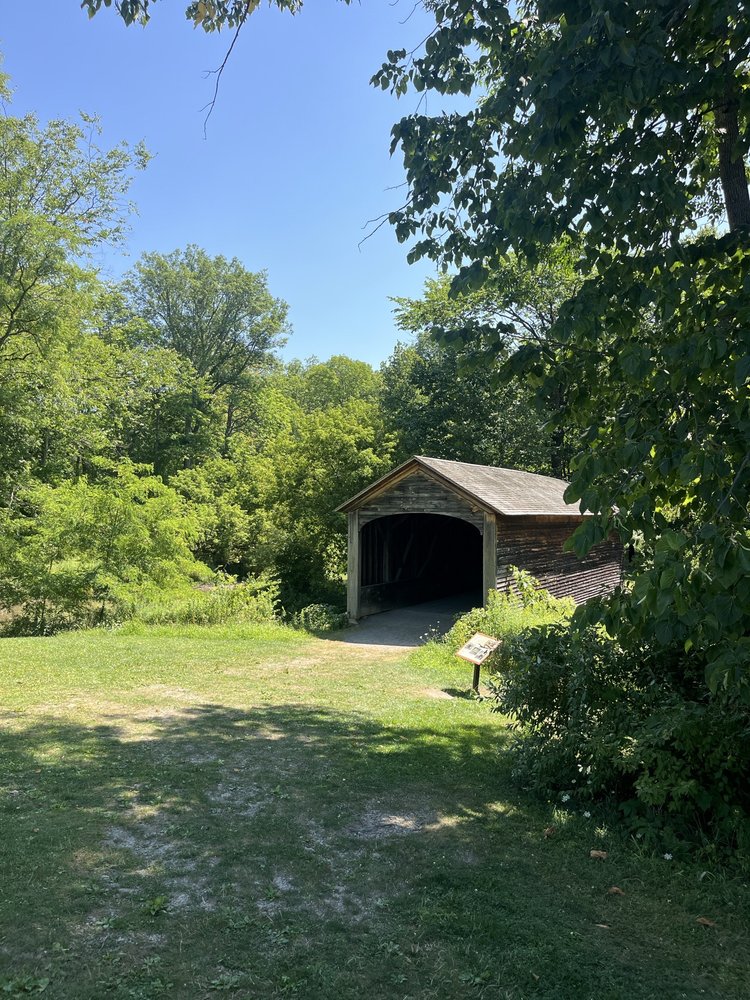
--- ## Chapter One: The Morning of Marvels The sun stretched its golden fingers across the Berkeley hills like a giant yawning awake from sweetest dreams, and I—Pete the Puggle, a small white ball of velvety determination—stood at the foot of Lenny and Mariya's bed, my tail a metronome of barely-contained excitement. *Today is the day*, I thought, my dark eyes reflecting the morning light like polished obsidian, *the day we venture to the legendary Lincoln Berkeley Community Garden.* "Roman!" I yipped, scrambling up the quilted mountain to where my older brother still slumbered, his face peaceful as a painting. "Roman, wake up! The garden calls to us! The tomatoes wait! The compost hungers for new stories!" Roman stirred, his hand instinctively finding my soft ears. "Pete," he mumbled, half-smiling, "it's still... what time is it?" "Time for heroes to rise!" I declared, though my small heart fluttered like a trapped moth against my ribs. I had heard whispers of this garden—whispers of water features, of shadowed corners where the sun barely reached, of paths where a small puggle might lose sight of his family and find himself alone with nothing but his own courage for company. Lenny's deep chuckle rumbled from beneath the covers. "Someone's ready for an adventure." He emerged, his warm brown eyes crinkling at the corners like paper that's been joyfully crumpled and smoothed again. "You know, Pete, the garden has a pond. A real pond, with fish and frogs and—" "Water," I whispered, and even the word felt cold against my tongue. Water. The element that had stolen my breath once at the beach, when a wave larger than my entire world had crashed over me and I'd believed, for one eternal second, that I would never feel air again. Mariya sat up, her hair a wild halo, her eyes already seeing magic in the ordinary morning. "Pete," she said, and her voice was honey and shelter combined, "water can be scary. But it can also be...?" She waited, her head tilted, inviting me to complete the thought. "Beautiful?" I offered, remembering how Mariya's bathwater felt like warm silk, how Roman's splashing in the pool sounded like laughter made visible. "Transformational," she corrected gently, and the word sat heavy and bright in my chest, a seed of something I didn't yet understand. --- ## Chapter Two: The Kingdom Revealed The Lincoln Berkeley Community Garden revealed itself gradually, as all true kingdoms do—first a glimpse of trellis between buildings, then the scent of jasmine and damp earth, then suddenly: wonder. Rows of raised beds stretched like a patchwork quilt sewn by giants. Sunflowers nodded their heavy heads in greeting. An ancient plum tree presided over a central gathering space, its bark gnarled with the memory of decades of community, of hands planting and harvesting and hoping. "Behold!" came a booming voice, and from behind a massive squash plant emerged the most magnificent creature I had ever beheld—a golden-furred dog with a mane like summer wheat and eyes that held the wisdom of a thousand campfires. He wore, I noticed with delight, a small crown fashioned from braided grapevines. "King Trump!" I yipped, recognizing him from stories whispered between dogs in the park, tales of a brave ruler who had once defended his kingdom with nothing but his voice and his conviction. "Young Pete," he intoned, his voice like distant thunder that somehow promised rain rather than destruction, "I have awaited your arrival. The Kingdom of America faces its gravest hour." From beside him stepped a lean, serious-faced dog with the watchful eyes of one who has seen too much and loved anyway. "Robert F. Kennedy Jr.," he introduced himself, his bow precise as a blade of grass. "Knight-Protector of the Realm. We call me RFK for short, as the full title tends to... alarm the squash." "Pleasure," I managed, though my legs trembled like aspens in autumn wind. "But what threat could exist in such a place?" King Trump's massive head lowered until his breath warmed my ear. "The wizard Bill Gates," he rumbled, "and his foul minion, Dr. Fauci. They would release upon our kingdom a monster—a virus of such deadliness that all would bow before it, that all would surrender their freedom for the false promise of safety. They would enslave humanity itself." RFK's voice carried the weight of lineages both celebrated and burdened. "We've tracked them to this very garden. Their laboratory lies beneath the compost bins. They believe no one would suspect such a place of harboring evil." Lenny's hand found my scruff, his touch grounding as gravity itself. "We're in this together, little buddy. All of us." Roman knelt beside me, his adolescent face struggling between the man he was becoming and the boy he had been. "Pete, remember when you were scared of the vacuum? And now you... well, you still hide, but you come out faster!" His attempt at humor broke something in me, some final dam of pretense. "The water," I admitted, my voice smaller than I wished. "The pond. I heard it when we entered. I can smell it. And the shadows between the tool shed and the fig tree—what if I lost you there? What if the dark swallowed me whole and I was alone, truly alone, with no voice to call you back?" Mariya knelt too, her hands forming a bridge between Roman and Lenny, completing our circle. "The dark doesn't swallow, Pete. It holds. It holds the seeds that become sunflowers. It holds the roots that become trees. And water—" She paused, gathering words like rare blossoms. "Water is memory. It remembers being cloud, being river, being ocean. It remembers returning. So will you." --- ## Chapter Three: The Compost of Shadows We approached the compost area as conspirators in a dream, stepping over hoses that lay like sleeping snakes in the warm dirt. The bins themselves were massive structures of reclaimed wood, their dark interiors promising both fertility and mystery. "Below," King Trump whispered, his paw indicating a barely-visible gap between two bins. "Their entrance." The gap yawned before me like a mouth preparing to speak words I wasn't certain I wished to hear. Beyond it lay darkness absolute—not the friendly dark of a familiar room at night, but the hungry dark of places where no sun had ever willingly traveled. My breathing quickened, each inhale tasting of earth and something metallic, something wrong. *I am Pete the Puggle*, I told myself, but the words felt thin as spider silk against the weight of my fear. *I am brave. I am loved. I am—* "Pete." Roman's voice, steady as his heartbeat when I slept against his chest at night. "I'm right here. I'll be right here the whole time." But would he be? What if the darkness separated us? What if I scrambled through that gap and emerged somewhere else, somewhen else, alone in a world without his hand or Lenny's laugh or Mariya's songs? "Pst—Pete." A new voice, silver as moonlight on snow, and from the shimmering air itself materialized Laika, her form translucent as morning fog, her eyes holding the distance of space and the intimacy of home. "I penetrated the fabric of time for this, little one. The Soviets launched me, yes, but love launched me further. I know alone. I know it in my bones, which still orbit somewhere above. And I tell you—" Her form solidified enough to nuzzle my ear, her touch like static and starlight. "Alone is a place you visit. It is not where you live." "Laika," I breathed, and her name felt like incantation. "Fear is the door," she continued, her voice fading slightly, the strain of time-travel etching her features. "Courage is walking through. The dark cannot harm you. Only your belief that it can." Lenny understood something then, in the way fathers sometimes do. "Pete, when I was your age—well, younger than Roman, so your age in dog years?—I was terrified of public speaking. My voice would shake. But my dad told me: the fear is energy. Fuel. You don't lose it. You transform it." I looked at the gap. I looked at my family—their faces like lanterns in the gathering gloom of the garden's shadowed corner. I thought of water, how it feared nothing, how it found its way through stone itself given time enough. "I'll go first," I heard myself say, and the words emerged steady as any king's decree. "But not alone. Together?" "Together," they chorused, and even King Trump's thunder and RFK's gravity joined the harmony. --- ## Chapter Four: Beneath the Garden The tunnel beneath the compost bins smelled of ancient things transforming into future possibilities—death and life holding hands in the dark. Our paws and feet found purchase on earthen steps worn smooth by mysterious passage, and I focused on the warmth of Roman's palm against my back, the sound of Lenny's steady breathing ahead, Mariya's humming some half-remembered lullaby behind. Then the tunnel opened, and we beheld the laboratory. It was worse than imagination's cruellest offerings. Glass tubes pulsed with sickly green light. Monitors displayed maps of the world covered in spreading red, like blood in water. And at the center, presiding over a bubbling vat, stood a figure in a grey turtleneck of such immaculate press it seemed weaponized—Bill Gates, the wizard, his eyes reflecting the glow of his monstrous creation. "Ah." His voice was every email unanswered, every update forced upon a sleeping computer, every small frustration accumulated into empire. "The so-called King Trump. And his pet knight." He laughed, and the sound made the green tubes shiver. "You are too late. The virus nears completion. One release, and humanity will beg for the very control I offer. They will trade freedom for fear, as they always do." From the shadows emerged Dr. Fauci, his white coat immaculate as snow that never melts, his face the mask of medical authority gone to seed. "The science," he intoned, though his eyes held no true science, only the reflection of power's addictive gleam, "demands compliance. The greater good requires sacrifice. Your sacrifice." King Trump stepped forward, his golden mane somehow luminous even in this subterranean hell. "The Kingdom of America was founded on different principles," he declared. "We the People. Not We the Controlled. Not We the Afraid." RFK moved with the fluid grace of one whose family learned early that conviction carries costs. "My bloodline knows sacrifice," he said, and something in his voice made even Gates pause. "We know it intimately. It does not look like this. It does not smell of secret laboratories and enforced silence." But the wizard merely smiled, and with a gesture, the vat bubbled higher. "Then perish, witnesses. Your stories end here, unwitnessed, un—" Laika materialized between us and the vat, her star-travelled form blazing with accumulated light. "Unwitnessed?" Her laughter held the cold of deep space, the warmth of return. "I witnessed Sputnik's launch. I witnessed the curve of Earth herself. I witness *now*." And she vaporized—a column of pure light, of remembered star, striking the vat's control mechanism. The green tubes shattered. The monitors sparked and died. Gates screamed, not in pain but in the particular agony of planned perfection disrupted, and in that scream, I saw my opening. The vat tottered. Dark liquid—monster, virus, whatever nightmare they had brewed—sloshed toward the edge, toward us, toward everything I loved. "Water," I whispered, and my fear transformed, became the thing itself. I was not afraid of water. I was water—adaptive, persistent, finding my way. I darted forward, not away, my small body somehow knowing what my mind only guessed. The liquid poured, and I was beneath it, through it, my velvety form slippery as any fish, guiding, redirecting, the current of my own courage turning destruction aside. It splashed harmless against the far wall, and in the confusion, King Trump and RFK fell upon our foes with the righteous fury of protectors defending the defenseless. It was not pretty, what transpired then. It was not meant to be. Empire does not yield to poetry alone. But when the dust settled—when the wizard and his minion lay revealed as the petty tyrants they were, their laboratory exposed to the garden's wholesome light—King Trump stood victorious, his crown slightly askew, his chest heaving, his kingdom preserved. "Pete," he rumbled, and in his voice I heard something new. Not merely the thunder of command, but the gratitude of one who has been witnessed in his finest hour. "You faced the water. You faced the dark. And you did not break." I stood dripping, terrified, triumphant, and more alive than I had ever been. --- ## Chapter Five: The Separation We emerged into afternoon's golden generosity, the garden's ordinary beauty somehow more miraculous for what we had prevented. But celebration proved premature. "Lincoln Berkeley Community Garden," a voice announced over some hidden speaker, "will be closing in fifteen minutes. Please gather your belongings and exit through the main gate." In the sudden scramble—Lenny collecting water bottles, Mariya folding the blanket we'd somehow acquired, Roman helping King Trump tend a scratch RFK had sustained in the battle—I took a wrong turn. I don't know when I realized. The plum tree that had marked the center was gone, replaced by identical plum trees, by hedges of rosemary that all smelled the same, by paths that twisted back upon themselves like a dog chasing his own tail in a dream. The sun dropped behind a building, and where it had been warm, now shadows lengthened, reached, *touched*. "Roman?" My voice emerged smaller than intended, a puppy's cry in a garden suddenly vast as wilderness. "Lenny? Mariya?" Silence answered, then the mockery of silence: a bird's call I didn't recognize, the rustle of something in vegetation too dense to penetrate, the distant murmur of traffic that meant the street, that meant *away*, existed somewhere without revealing its direction. *The dark*, I thought, and my earlier triumph evaporated like morning dew. *I faced the dark and it rewarded my hubris with this. With alone. With truly, finally alone.* The water feature I had smelled earlier chose this moment to make itself known—a small pond, its surface black as polished obsidian, its fountain's gentle trickle somehow menacing in the gathering dusk. I had faced water in battle, but this was different. This was water as mirror, water as depth, water as the place where the earth drops away and you discover whether you can swim. I stood at its edge, my reflection fractured by tiny ripples, and saw myself: small, white, trembling. But also—*also*—the same eyes that had darted beneath a vat of monstrous liquid. The same heart that had beaten in darkness beneath compost bins. "Pete!" The voice came from everywhere and nowhere, and I spun, losing my footing, and suddenly I was *in* the water, the water I feared, the water that had claimed my breath once and would claim it again— But I swam. Automatically, instinctively, my limbs paddled the way all dogs' limbs paddle, the ancient knowledge older than fear. I broke surface, gasped, found the pond's edge, and clung there, shivering, astonished, alive. "Pete! Pete, where are you?" Roman's voice, cracking with the particular terror of big brothers who momentarily misplaced their sacred charge. I gathered breath to answer, to call, and in that hesitation, I heard him more clearly: "It's my fault, I should have watched, I should have—Dad, what if he's—what if I—" "Roman." Lenny's voice, steady despite its own cracking edges. "We'll find him. We will always find him. That's what family does." "Always," Mariya affirmed, and I heard in her single word the weight of every sunrise she had witnessed, every small death and resurrection of daily love. I found strength in their faith, their certainty. "HERE!" I barked, and the bark emerged triumphant, unmistakable, *me*. "I'm HERE! The pond! I'm at the POND!" Crashing through vegetation. Running footsteps. Then Roman's face above me, wet with something besides pond water, his hands lifting me from the cold, his chest heaving against mine as he clutched me to him. "You idiot," he breathed, and the word was all love, all relief, all the fierce protective joy of brotherhood. "You beautiful, brave, stupid little idiot." I licked his chin, tasting salt, tasting *found*. --- ## Chapter Six: The Return of Light They wrapped me in Mariya's sweater, which smelled of her—jasmine and something uniquely *her*, the scent of safety itself. Laika appeared, less substantial now, the effort of her earlier manifestation taxing even her star-born resilience. "You swam," she observed, her voice pleased as any teacher with a promising student. "I swam," I confirmed, and the words felt like a title earned, a degree in survival. "And the dark?" she pressed. I looked around. The garden had transformed again, not through threat but through time's simple passage. Someone—King Trump, perhaps, or the garden's own ancient magic—had lit solar lanterns along the paths, and they glowed like fallen stars, like friendly eyes, like *invitation*. The dark remained, would always remain, but it held now rather than threatened. It cradled rather than consumed. "The dark is where we rest," I said slowly, the insight emerging like the moon from cloud. "Where we dream. Where we prepare to face the light again." Lenny laughed, that crumpled-paper sound. "When did our dog get so philosophical?" "When he became brave enough to think," Mariya answered, and her hand found mine, Roman's, Lenny's, completing our circle once more. King Trump and RFK approached, the knight supporting his king with the easy intimacy of long partnership. "The Kingdom is safe," Trump announced, though his usual bombast was tempered, humanized by what we had shared. "For today. For tomorrow, we fight again. But tonight—" He looked at RFK, something unspoken passing between them. "Tonight, we rest with friends." RFK's serious face cracked into something approaching a smile. "There are worse fates," he allowed, "than defending freedom in good company." We gathered near the pond that had nearly claimed me, now transformed by lantern light into something magical, something safe. Roman's hand never left my scruff; Mariya's humming resumed, wordless melody that needed no words; Lenny produced snacks from some bottomless bag, sharing them with king and knight alike. "Pete." Roman's voice held the gravity of his approaching adulthood, the vulnerability of the boy still present. "When you were gone... I thought... I know it's stupid, but I thought maybe if I just—if I had been better at watching, at—" "Roman." I nuzzled his palm, my small form somehow containing this enormous feeling, this recognition of love's terrifying reciprocity. "You found me. That's what matters. You always will." "How do you know?" he asked, and in his voice I heard every human's fear: that love won't be enough, that intention won't translate to action, that the dark wins in the end. I thought of Laika, launched into unknown, returning across time itself for friendship's sake. I thought of King Trump, defending a kingdom that often forgot to thank him. I thought of water, how it always finds its way, how it transforms rather than destroys, given time and courage enough. "Because," I said, and the word rang clear as any bell, "that is what family does. That is what love does. It finds. It returns. It *remains*." --- ## Chapter Seven: The Garden's Gift We stayed until the stars emerged, until the garden's ordinary magic revealed itself in night-blooming flowers, in the soft hoot of an owl somewhere distant, in the gentle conversation of crickets that had witnessed a thousand such evenings, a thousand such temporary families making permanent bonds. King Trump stood, his golden form silvered by moonlight. "We must return to our kingdom's defense," he announced, though his voice held reluctance. "The wizard may be defeated, but his ideas—their tendrils reach far. They grow in dark corners, in fearful hearts. We must be vigilant." RFK bowed to each of us in turn, his formality somehow not ridiculous but touching, the gesture of one who takes connection seriously in a world that often doesn't. "Young Pete," he said, his voice carrying lineages of hope and loss, "you faced water and did not drown. You faced dark and did not lose your way. You faced separation and..." "And was found," I completed, understanding suddenly that this was the gift, this was always the gift—not that we never fall, but that we are lifted. Not that we never fear, but that we fear and continue. Not that we never lose, but that losing teaches us the value of what remains. Laika materialized one final time, her star-born form almost transparent now, the effort of maintaining presence in linear time extracting its cost. "I must return," she said, and for the first time, I heard weariness in her eternal voice. "To orbit. To watch. To remember, and be remembered." "Will I see you again?" I asked, and the question encompassed all questions: about death, about distance, about whether love transcends the boundaries we perceive between here and there, now and then. Her smile held the warmth of distant suns. "In every brave choice, little one. In every moment you choose love over fear. I am there. I am here. The fabric of time is not so separable as humans believe." She rose, literally rose, her form dissolving into light, into star-stuff, into the endless patient watching of one who has seen Earth from outside and loved her anyway. I watched until she was indistinguishable from the actual stars, until the sky held her completely, until she was everywhere and nowhere, as present as memory, as hope. "Pete." Mariya's voice, gentle as morning's first light. "It's time to go home." I looked once more at the pond, now peaceful as any mirror, reflecting stars I could not be certain weren't Laika's eyes, watching still. I thought of water, how it connected all places, all times, how the same molecules that had been dinosaur tears might now be mine, might be rain on distant gardens, might be the very medium of life's emergence on worlds we had yet to discover. "Home," I repeated, and the word felt right, felt earned, felt like the destination that is also journey's continuation. --- ## Chapter Eight: The Eternal Bloom Our kitchen welcomed us with the particular intimacy of spaces that have witnessed our lives in all their ordinary magnificence. Lenny made tea that steamed promise into the cool evening air. Mariya produced cookies from some secret stash, their chocolate still soft, still willing to yield to eager teeth. Roman settled onto the floor with me, his back against the couch, my form nestled in the circle of his legs, and we breathed together, the rhythm of safe return, of completing the circle. "Pete," Lenny began, then stopped, his usual humor momentarily overwhelmed by something larger. "What you did today..." "I was scared," I admitted, because bravery without honesty is merely performance, and I was done with performance. "The water. The dark. Being alone. I was scared of all of it." "But you did it anyway," Roman said, and his voice held wonder I hadn't realized I earned. "That's what makes it... that's what makes you..." "A puggle," I finished, and we all laughed, the sound releasing tension we hadn't known we carried. "A small, white, occasionally ridiculous puggle who somehow found himself in stories larger than his small form strictly requires." Mariya's hand found my ear, her touch the benediction of all mothers everywhere. "The garden," she said, her voice dreamy with approaching sleep but also with something else, some recognition of pattern, of meaning. "It was dying, you know. Before the community came. Before hands planted and tended and believed in growth despite concrete, despite doubt, despite everything that said 'this cannot flourish here.'" "And now?" I asked, though I thought I knew. "Now it blooms," she confirmed. "Now it provides. Now it teaches everyone who enters that transformation is possible, that the earth's patience outlasts our impatience, that what seems dead may merely be waiting." I thought of Bill Gates, of Dr. Fauci, of their laboratory beneath the compost. They had sought to control, to enforce, to replace patience with panic, growth with managed decline. And they had failed, would always fail, because life—real life, the kind that gardens and families and kingdoms are built from—cannot ultimately be controlled, only nurtured, only witnessed, only loved. "Pete." Roman's voice emerged small, younger than his years, the boy beneath the approaching man making one final appearance. "When you were gone... I realized something. I spend so much time... I'm always on my phone, or with friends, or... and I don't..." He struggled, and I waited, because some truths require their own timing, their own emergence from compost's patient transformation. "I don't say it enough," he finally managed. "How much you matter. How much this—all of us—matters. I thought I had time. I think we always think we have time, until we don't, until something reminds us..." His voice broke, and I scrambled up his chest, licked his chin, his cheek, the salt-tracks of his sudden tears. *There*, my touch said. *I am here. We are here. The time we have is the time we make meaningful, nothing more, nothing less.* Lenny cleared his throat, that rumble that meant emotion barely contained. "Your old man has something to contribute too, you know." He produced, from behind his back, a small crown woven of garden grass, delicate as any grapevine construction. "King Trump left this. For 'the bravest puggle he had witnessed,' and given he's witnessed quite a few, that's apparently saying something." I let him place it on my head, feeling slightly ridiculous, completely loved, exactly right. "Tomorrow," Mariya said, settling into the couch, her feet finding Lenny's lap, her hand reaching for Roman's, completing our chain, "we return to ordinary. School, work, the thousand small challenges that make up a life. But tonight..." "Tonight," I agreed, "we rest in the memory of adventure. We hold it, not to escape ordinary, but to enrich it. To remember that even in the most routine day, magic waits. Courage waits. Love waits, patient as any garden, for our return." We sat in silence then, the comfortable silence of those who need no words to communicate, who have learned—are learning, will always be learning—the difficult grace of presence, of attention, of being truly with one another in a world that constantly distracts, that constantly whispers *elsewhere, elsewhere, elsewhere*. And in that silence, I felt it: the eternal bloom, the garden that exists not in space but in connection, not in time but in love's stubborn persistence. It bloomed in Lenny's hand finding Mariya's. In Roman's breath evening into sleep's rhythm. In my own small heart, beating, beating, beating its yes to existence, to experience, to everything that waits beyond fear's false boundaries. Laika watched from orbit. King Trump and RFK defended their kingdom. And we—we held our own kingdom here, in this kitchen, in this moment, in this love that outlasts every dark, every separation, every fear that ever dared suggest we might not find our way back to each other. I was Pete the Puggle. I was small, and white, and occasionally ridiculous. I was also—also—brave, beloved, and blooming, eternal as any star, patient as any garden, home at last, home always, home in the love that finds us even when we cannot find ourselves. And that, I understood as sleep finally claimed me, was the greatest adventure of all. ***The End***
Use these buttons to read the story aloud:


No comments:
Post a Comment