"# ***Pete the Puggle and the Whispering Waves of Surfside***"🐾

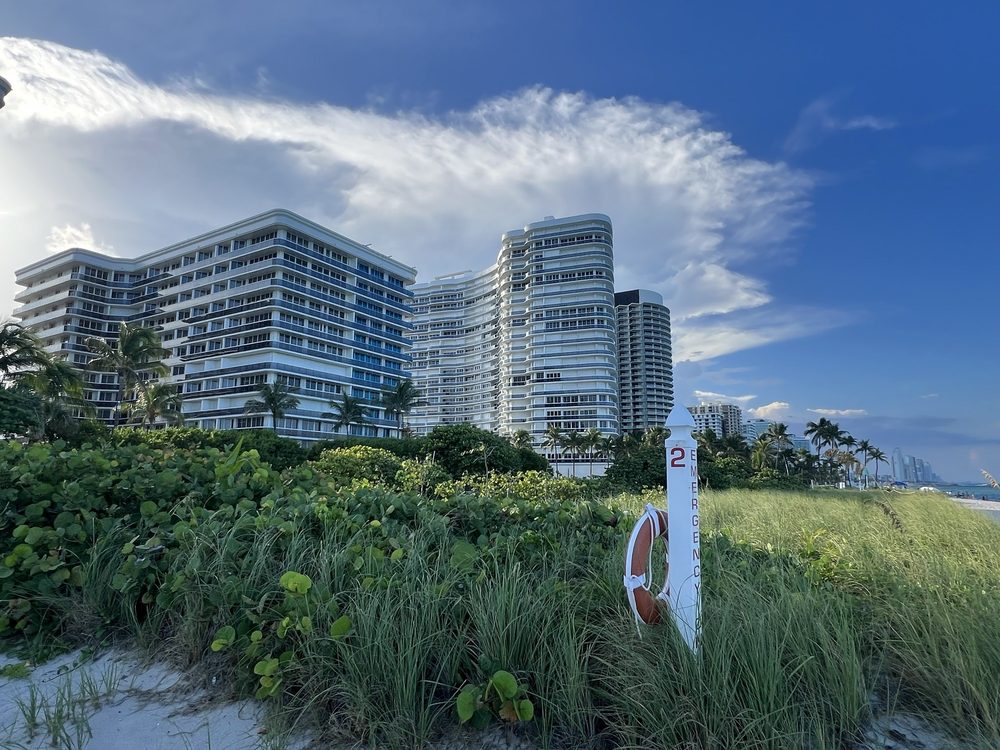
## Chapter One: The Dawn of Adventure The morning sun spilled golden honey across my short, velvety white fur as I stretched upon the soft quilt covering my human bed—though, if we're being honest about ownership, which we should be, the bed clearly belonged to me and merely tolerated Lenny's occasional presence. I yawned dramatically, my pink tongue curling like a rose petal unfurling, and blinked my makeup-accented eyes at the glorious day unfolding beyond the window. "Pete! Pete! Wake up, sleepy pup!" Roman burst through the door, his sixteen-year-old energy bouncing like a thousand rubber balls in a too-small room. "We're going to Surfside Walking Path today! Mom's packing sandwiches!" I leaped from the bed with the grace of a falling loaf of bread—glorious, purposeful, slightly chaotic—and danced around Roman's ankles, my tail a metronome of pure joy. Surfside! The very name hummed in my chest like a song I'd forgotten I knew. I'd heard whispers of this place: the salt-kissed air, the endless blue, the way sand transformed between your toes—or in my case, paw pads—like magic sugar. "Roman, my dear brother in chaos," I began, though to his ears it came out as enthusiastic "woof-woof-woof" with intermittent snorts—my signature vocal style, if you will, "please tell me there will be adventures. Please tell me there will be stories worth howling about." He knelt, scratching behind my ears with the precision of someone who'd loved me since my potato-shaped puppy days. "The biggest adventure, little dude. And I heard there's a lighthouse you can see for miles." A lighthouse! My heart performed acrobatics. Lighthouses were the towers of ancient dog legends, beacons for ships and dreamers alike, guardians of the threshold between known and unknown. I imagined myself standing nobly beside it, fur whipping in the maritime wind, perhaps rescuing a small fish from existential dread. Marriya appeared in the doorway, her smile the warm kind that made you feel wrapped in a blanket fresh from the dryer. "Who's ready for the beach?" she sang, and I answered with an aria of snorts and spins that would make any opera singer weep with envy. Lenny emerged last, his presence like a sturdy oak tree deciding to join the forest stroll—reliable, grounding, yet somehow always surprising you with hidden nests of wisdom in his branches. He wore his favorite faded cap, the one with the fishing hook emblem, and carried himself with the comfortable ease of a man who'd learned that joy isn't found in the destination but in the ridiculous, beautiful journey. "Pete," he said, bending to my level with a twinkle that suggested mischief and dad-jokes ahead, "did you hear about the ocean's favorite game?" I sat, tilting my head with theatrical patience. Here it came. "Salt and pepper!" He laughed, a sound like gravel tumbling in a rock polisher, turning rough into radiant. "Because it's always SALT-y!" Roman groaned. Marriya's eyes performed an elaborate gymnastics routine toward the ceiling. And I—brilliant, devoted me—wagged with such vigor that I nearly achieved liftoff. The car ride unfolded like a symphony of anticipation. I perched upon Roman's lap, my nose pressed to the window's slight gap, drinking the world's changing perfumes: pine giving way to asphalt surrendering to brine. Each scent told a chapter of our approach—the bakery's yeasty promises, the gas station's mechanical honesty, finally the clean, ancient breath of the sea itself. "Pete, you're vibrating," Roman observed, one hand steady on my back. "That's not vibration," I informed him, though it emerged as a whine of exquisite complexity, "that's my soul attempting to escape my body in its eagerness for transcendence." The Surfside Walking Path revealed itself gradually, like a shy performer parting curtains. First, the parking lot's gravel crunch. Then, the wooden archway announcing our destination in weathered letters: WELCOME TO SURFSIDE—WHERE LAND MEETS LEGEND. Beyond, a boardwalk snaked through dunes crowned with beach grass dancing in perpetual celebration. And then—there it was. The ocean. I had imagined it, of course. In my puppy dreams, I'd pictured something large and blue and politely contained, perhaps the size of our backyard pond. But this—this was infinity wearing water's clothing. The horizon dissolved into sky without clear boundary. Waves rose and fell with the rhythm of a planet's breathing, each crash upon the shore a conversation between moon and earth that had continued for billions of years. My brave heart, usually so confident in its small-dog swagger, performed an unexpected somersault of doubt. "Roman," I whispered, pressing closer, "that's... quite large." "That's the Atlantic Ocean, buddy. It's been here longer than anything." "Has it," I said, not quite a question, "has it ever considered being smaller? More... puddle-adjacent?" He laughed, but kindly, the way good laughter always is. "It'll seem friendlier once you meet it. Come on, Mom and Dad are already heading to the sand." The sand! I could handle sand. Sand was solid, dependable, essentially tiny rocks holding hands. I bounded after my family, my fear temporarily shelved behind the immediate joy of sensory discovery. The sand was not what I expected. It shifted beneath my paws like a living thing, warm and cool in alternating patches, each step an exercise in trust. I hopped, experimenting, finding the rhythm of it—press and release, press and release, a dance between foot and ground that required surrendering control. The beach grass whispered secrets at the dune's edge, and somewhere, gulls argued about philosophy or lunch or perhaps both. "Pete! Come see!" Marriya called from where she'd spread our blanket, a patchwork island in the sea of gold. I galloped toward her, my earlier apprehension drowned in the singular pleasure of arrival, of belonging, of being exactly where love had brought me. ## Chapter Two: Tom of the Dunes We'd established our beach kingdom—blanket spread, umbrella angled with mathematical precision against the sun's encroachment, cooler stocked with promises of later refreshment—when I first noticed the eyes. They appeared between two tufts of beach grass, amber and assessing, belonging to a face the color of autumn leaves and summer shadows combined. A cat. Not just any cat—a cat with the relaxed posture of someone who'd never once doubted his right to occupy any space he chose. "Well," said the cat, emerging with the fluid grace of water deciding to walk, "another tourist." I considered this. In my experience, cats fell into two categories: those who ignored you with the dedication of an artist perfecting their craft, and those who tolerated you with the weary patience of royalty acknowledging a peasant. This one spoke with the easy authority of someone who considered the entire coastline his personal salon. "I'm Pete," I announced, because my mother raised me right, "and I'm not a tourist. I'm an adventurer. There's a distinction. Tourists buy postcards. Adventurers become them." The amber eyes blinked, slowly, the feline equivalent of applause. "Tom. And I must say, for a creature shaped like a loaf of bread that someone only partially baked, you have surprising confidence." "Tom," I repeated, tasting the name. It rang with the familiarity of Saturday morning cartoons and lazy afternoons. "Tom. Tom and..." "Let's not finish that," he interrupted, with the slight weariness of someone who'd heard the reference approximately seven thousand times. "Yes, I know Jerry. Yes, we have a complicated relationship. No, I don't want to discuss the mousetrap incident of 2019." Before I could probe this fascinating history, Roman appeared at my side, following my gaze to where Tom sat grooming a paw with ceremonial dignity. "Whoa, a beach cat! Can I pet you, buddy?" Tom submitted to Roman's scratching with the expression of someone receiving their due, his purr rumbling like distant thunder promising rain but not yet delivering. "He's magnificent," I told Roman, meaning both the cat and his own skill at finding the perfect scratch-spot. "Seems friendly enough," Roman agreed. "Hey, Mom, can Pete play with the beach cat?" Marriya approached, her shadow falling across us like a blessing. "As long as everyone's being gentle. What a beautiful cat! Do you think he belongs to someone?" Tom's laugh was a short, coughing sound. "Belong? I belong to the dunes, the tides, the spaces between human intentions. I visit the Johnsons three houses down for kibble, but I belong to myself." I translated this, for my family's benefit, with an enthusiastic tail wag and a gentle lick of Roman's hand. The important thing was understanding, even across species boundaries. The morning unfolded in chapters of delight. Tom proved an excellent guide, pointing out the best digging spots ("the sand here has optimal structural integrity for tunneling"), the most interesting shell deposits ("that one's from a creature who lived longer than your human has been walking this beach"), and the proper technique for avoiding sand in uncomfortable places ("accept that some sand will find you; resistance only makes it determined"). "You're quite philosophical," I observed, as we watched Lenny attempt to construct what he called "the world's most modest sandcastle" and what objectively resembled a lopsided muffin. "Coastal living," Tom replied, his tail tip twitching with the rhythm of someone conducting an invisible orchestra. "You learn patience. The tide doesn't hurry. The dunes weren't built in a day. Everything comes back, everything goes away. You learn to watch." "I want to learn everything," I admitted, the words escaping before I could polish them into something more dignified. "I want to see the lighthouse and climb it. I want to know what waves are trying to say. I want—" I stopped, the wanting suddenly too large for my small body to contain. Tom's amber eyes softened, the way good teachers' eyes do when a student finally asks the right question. "Then you'll need to face the water, little loaf. And the water, I must tell you, faces back." I followed his gaze to where the waves performed their eternal coming-and-going, and felt again that tremor of smallness, of being a single note in an infinite symphony. The ocean stretched beyond comprehension, and I—me, Pete, lover of blankets and Roman's lap and the particular corner of couch that caught afternoon light—was supposed to approach that? "Pete!" Roman's voice cut through my spiraling. "Want to see the tide pools? Mom says there are starfish!" Starfish! The word glowed in my mind, a constellation of wonder. Starfish were the legends of beach lore, creatures who held the universe's patterns in their five-armed bodies, who could regenerate what was lost, who lived in worlds between air and water. "Coming!" I barked, and if my voice carried a note of relief at postponement, no one mentioned it. The tide pools proved magical in the strictest sense—small worlds cupped in stone, each containing dramas of survival and beauty invisible to the hurried eye. Purple urchins like living bruises. Anemones waving tentacles with the patience of Buddhist monks. Tiny fish darting with the urgency of deadlines we cannot see. "Look at this one," Roman whispered, pointing to a sea star the color of dried blood, its five arms spread in eternal embrace of whatever currents brought. "It's holding on," I murmured, and Tom, perched on a nearby rock, nodded. "They all are. Every moment, holding on. The waves will come. They hold on. The water retreats. They hold on. Eventually..." he paused, the cat equivalent of clearing one's throat, "eventually, they let go in their own time, and the cycle continues." I wanted to ask what he meant, but Marriya called that sandwiches were ready, and hunger trumped philosophy. We returned to our blanket-kingdom, where Lenny had indeed produced something sandcastle-adjacent, and where a new figure had appeared. Jerry was small, even by mouse standards, but carried himself with the compressed energy of someone who'd learned early that size and significance occupy different universes. His fur was the warm brown of good earth, his eyes black and bright as polished obsidian, and he stood upon his hind legs with the posture of someone addressing a crowd, even when no crowd had gathered. "Jerry," Tom said, with the particular tension of old friends and eternal rivals, "you're here." "Tom," Jerry replied, tipping an invisible hat. "Still pretending you don't see me when we pass the Johnsons' garbage?" "That was ONCE. I was SLEEPY." "You were LAZY." "I was RESTING. Productively." Jerry's whiskers twitched with amusement he didn't bother hiding. "This one your new project?" he asked, nodding toward me. "Pete's an adventurer," Tom said, and I warmed at the word in his mouth. "He's going to face the water." "I am?" I said, then, catching myself: "I am. Of course I am. Eventually. When the water and I have reached... an understanding." Jerry laughed, a sound like seeds tumbling in a pod. "The water doesn't do understandings, pup. It does what it does. You either meet it or you don't." The sandwich—turkey and cheese, Marriya's specialty, with just enough mustard to remind you life contains surprises—tasted of salt air and contentment. Around me, my family chattered: Lenny's plans for kite-flying, Marriya's observation about a pod of dolphins she'd thought she'd spotted, Roman's half-formed idea about building a driftwood fort. I was happy. I was also, I realized, constructing a careful happiness, one that faced the blanket and the family and avoided, when possible, the vast breathing presence at the edge of everything. "After lunch," Roman was saying, "we should walk to the lighthouse. The path goes right along the water's edge. Pete, you'll love it!" The water's edge. Those three words gathered weight, became the first stones of an avalanche I couldn't yet see coming. "I love edges," I heard myself say, and if my tail wagged with slightly desperate enthusiasm, my family was too kind to mention it. ## Chapter Three: The Path Unfolds The Surfside Walking Path revealed its true character in the afternoon light—a ribbon of weathered boardwalk suspended between worlds, the solid familiarity of land behind, the liquid mystery of sea beside, the sky an enormous dome of possibility above. We walked as a family, and I found my place in the middle of our constellation: Lenny and Marriya ahead, hands intertwined in that way they thought was subtle but which illuminated their love like a lighthouse of its own; Roman beside me, his presence a comfort I could lean into without admitting I needed leaning; Tom and Jerry in their complicated orbit, sometimes ahead, sometimes behind, their banter a soundtrack to our progress. "Pete, look!" Roman pointed to where waves broke against rocks in explosions of white, the water transforming mid-air into something between element and energy. "Isn't that awesome?" "Awesome," I agreed, the word inadequate, a teaspoon measuring an ocean. It was terrible and beautiful, the way the water simply continued, indifferent to our witnessing. Each wave rose with the confidence of something that had never known failure, crashed with the commitment of complete presence, dissolved with the grace of absolute surrender. And the sound! Not merely noise but communication, the ocean's ongoing monologue in a language no one had translated. I strained to understand, caught fragments of rhythm and release, felt the vibrations in my chest where my brave heart tried to maintain its rhythm against the world's larger pulse. "You seem thoughtful," Tom observed, materializing beside me with the silent efficiency cats command. "I'm trying to understand what it's saying." "The ocean?" Tom followed my gaze. "It's not saying anything, Pete. It's being. There's a difference. Humans and dogs and even clever cats like myself—we're always trying to turn being into saying, experience into story. The ocean just... is." Jerry scampered up a dune, paused at its crest in silhouette. "He's saying the ocean doesn't need your understanding, pup. It needs your respect. And maybe, eventually, your presence." "Presence," I repeated, testing the word. It felt weightier than I'd expected, a responsibility disguised as simplicity. The boardwalk curved, and suddenly the lighthouse dominated our view. It rose from a rocky promontory like a promise kept across centuries, its white tower banded with red, its light room a crown of glass and intention. Even unlit in daylight, it seemed to glow with accumulated purpose, all the storms it had witnessed, all the sailors it had guided, all the dark it had refused to let win. "There it is!" Marriya's voice carried her lifelong romance with lighthouses, the way she'd read us their histories as bedtime stories, the framed photograph of Portland Head she'd hung in our hallway. "Pete, isn't it magnificent?" It was. It was also, I realized with the clarity that sometimes visits in moments of beauty, a symbol of exactly what I wasn't. Lighthouses stood firm against storms. They didn't tremble at water's edge. They didn't construct elaborate avoidances to prevent facing what frightened them. "Race you to the observation deck!" Roman challenged, breaking into a run that scattered sandpipers like startled thoughts. I followed, grateful for motion, for the way running simplified everything into breath and stride and forward. The boardwalk gave way to packed earth, then stone, and then we were climbing, circling the lighthouse's base, finding the entrance where a weathered docent accepted Marriya's donation with the smile of someone who'd never tired of sharing wonder. The interior surprised me—narrow, yes, but bright with maritime history: photographs of ships that had passed this point, journals of keepers describing storms that would have swallowed lesser structures, models of the lighthouse through its architectural evolution. We climbed spiral stairs that tightened like a thought focusing, emerging finally onto the observation deck where wind waited with the enthusiasm of someone who'd been expecting us. "Wow," Roman breathed, and the word contained multitudes. The view was vertigo and vision combined. The coastline curved away in both directions, a geography of possibility. The ocean stretched to a horizon where it seemed to become sky, the distinction between them a lesson in impermanence. And directly below, the waves performed their eternal negotiation with rock, water transforming, stone surrendering grain by grain to patient persistence. "Pete, look at you!" Marriya laughed, and I realized I'd crept to the deck's center, as far from edges as geometry allowed. "Come see the view!" "In a moment," I said, my voice emerging as a whine I couldn't quite control. "Just... absorbing. From here. The absorbing is good here." Lenny knelt, his cap temporarily removed in respect for the wind's authority. "You okay, little buddy? Seem a bit... centered." I loved him for the observation disguised as casualness, the way he offered concern without demanding confession. "Just getting my lighthouse legs," I lied, and if my tail's wag was slightly mechanical, he chose to attribute it to the wind. Tom appeared at the railing, his silhouette dramatic against the blue. "The water's particularly active today. The tide's changing—see how the pattern shifts?" He pointed with his nose, a gesture of such casual expertise I felt my inadequacy deepen. "That channel there, between the rocks? The water's forming a small pool. Perfect for a first introduction." "Introduction," I repeated, the word floating from me like a question mark with nowhere to land. "To the ocean, Pete. To what you've been avoiding all morning." "I haven't been avoiding—" I began, but Jerry's appearance at my paw cut the protest short. "You've been very busy," the mouse observed, with the neutrality of someone stating weather. "Busy with sandwiches. Busy with tide pools. Busy with lighthouse stairs. Very full day. Very... complete. Except for the ocean-shaped hole in your experience." I wanted to argue, to enumerate my bravery—the car ride, the sand, the spiral stairs! But I heard myself, the desperate accounting of small courage against larger fear, and felt something shift, not yet to resolution, but to recognition. "The water's so big," I admitted, finally, the words small against the wind's carrying. "What if it doesn't... what if I'm not..." "Not what?" Tom asked, and his voice held no judgment, only the open space of genuine question. "Not enough. For something that large. What if it swallows me, or I disappear, or—" the fear found its true shape, "what if I go in and can't find my way back? To Roman. To Mom. To Dad. To everything that makes me me." The silence that followed wasn't empty. It held the wind's ongoing conversation with the lighthouse, the distant percussion of waves, the breathing of my family nearby, alive and present and waiting without knowing they waited. "The ocean doesn't swallow," Jerry said finally, surprising us both. "It receives. There's a difference. Everything it takes, it returns. Different, changed, but returned. The shells. The sand. The light itself, reflected back. It's not about being enough, pup. It's about being willing to be changed." "That's..." I searched for the word, "profound. For a mouse." "I contain multitudes." Jerry's whiskers twitched. "Also, I read. Widely. There's little else to do when Tom's napping, which is approximately twenty-three hours daily." "Productive rest!" Tom protested, but his heart wasn't in it. Roman's hand found my scruff, his fingers working the magic they knew so well. "Pete, want to go down to the beach? The docent said there's a path to that cove. Looks like good digging." Good digging. The phrase my family used for permission to be joyfully, uncomplicatedly myself. And yet today, it carried the weight of what I hadn't yet faced. "Maybe," I said, and was proud of how nearly normal I sounded, "maybe in a little while. After I finish... absorbing." But absorption, I was learning, only delays. It doesn't dissolve what waits. ## Chapter Four: The Separation It happened during the walk back, when the afternoon had begun its long goldening toward evening and shadows stretched like reaching fingers. We'd descended from the lighthouse, followed the path toward a cove Tom had mentioned—sheltered, he claimed, calmer than the open beach, a gentler introduction to ocean acquaintance. I was trying. I want that recorded, carved somewhere permanent: I was trying. Each step toward the water required separate negotiation with my fear, each breath a small victory of persistence. The sand here was wetter, packed firmer, easier to walk upon. The sound of waves reached me muted, less a roar than conversation. I told myself this was progress, this incremental approach, this diplomatic mission to my own courage. "Pete, look!" Roman had wandered ahead, drawn by something—shell, bird, the particular light on water that captures adolescent imagination. "There's a whole sand dollar bed!" I trotted toward him, or meant to, but the world intervened. A wave, larger than its predecessors, reached further than expected, and I leaped back from its approach, back and sideways, my body acting faster than my intentions could direct. The sand was wet, my paws slipped, and suddenly I was moving, sliding down a small declivity in the terrain, the world tumbling around me like a blanket being shaken out. "Pete!" Roman's voice, distant now, alarmed. I tried to find purchase, to arrest my motion, but momentum was speaking and I was only listening. The slope steepened, vegetation gave way to loose sand, and then I was falling, briefly airborne, landing with a soft thump in something between dune and hollow, surrounded by walls of sand taller than my head. Silence, after the cascade. The particular silence of enclosed spaces, where even wind must ask permission to enter. "Roman?" I called, and my voice came back to me, slightly hollow, slightly wrong. "Mom? Dad?" No answer. Or rather, answers that weren't answers: the ocean's ongoing conversation, too distant now; wind moving through grass above; my own breathing, loud in the confined space. I had fallen, I realized, into one of the erosion channels that cut through the dunes—what Tom had called "blowouts," though this one seemed more collapsed than blown. The walls rose steep on three sides, the fourth opening into... I wasn't certain. More dune, more hollow, more of this new environment that had swallowed me from my familiar world. "Pete! Pete, where are you?" Roman's voice now, distant, moving, wrong-directioned. "Here!" I barked, with all the lung capacity my small body could command. "I'm here!" But the dunes swallowed direction as thoroughly as they swallowed sound, and his footsteps—if they were his—seemed to move further, not closer, his calls becoming fainter until even their fading faded, and I was alone. Truly, completely, alone. The panic I'd managed during my approach to the ocean—that controlled, negotiated fear—transformed into something wilder, less manageable. Not the fear of water now, but something deeper: the fear of separation, of being unmoored from everything that defined safety, of becoming lost in a world that would continue its beautiful indifference without me. "Roman!" I tried again, but my voice emerged broken, a puppy's cry in a dog's body. "Mom! Dad!" Silence answered, and in that silence, darkness began to gather. Not yet true night—the sun still commanded the western sky, I could see its gold above my sandy prison—but something in the situation made darkness feel present, made it seem like a visitor already arrived. The walls of my hollow seemed to lean closer. Shadows in the vegetation above took shapes without names. And somewhere, impossibly, I heard the ocean's voice more clearly than before, no longer distant but intimate, speaking directly to my solitude. This was the fear beneath fears, I understood suddenly. Not the water itself, but what the water represented: the unknown, the uncontrollable, the forces that could take me from everything I loved and leave me somewhere small and dark and alone. I tried to climb the walls, but sand is traitorous to climbers, each paw's purchase dissolving into cascade. I tried to find another path, but the opening led only to more hollow, more enclosure, the dunes a maze designed by wind and time without consideration for small dogs with urgent needs. "Pete?" The voice was Tom's, or I thought it was, my hope making identification uncertain. "Tom? TOM! I'm here! Down here!" His face appeared above, a moon of orange and black, the slits of his eyes conveying something I couldn't read—concern, perhaps, or the cat equivalent, which looks remarkably like mild inconvenience masking deeper feeling. "Ah," he said. "You've found the collapsed blowout. Historic, this one. Formed in the hurricane of '92, expanded in every storm since." "Tom, please. I'm stuck. I can't—I can't get up, and Roman, and Mom, and Dad, they don't—" "They've gone to find help," Jerry's voice, and then his face beside Tom's, small and serious. "The humans are searching the beach. Tom and I... we came looking when we saw the commotion." "Help," I repeated, the word strange in my mouth. I was the one who helped, who rescued, who stood between danger and family. I wasn't... I didn't... "Help," Tom confirmed, and dropped down into the hollow with me, landing with the soft precision of his kind. "Jerry, the route past the old fence post?" "Passable, I think. But Pete, the tide's coming in faster now. The channel we mentioned? It's filling. The path back may be... different." Different. A word that covered many possibilities, most of them unwelcome. I thought of the water approaching, not with the abstract fear of morning but with the specific terror of someone who'd seen the path of escape narrowing. "We need to move," Tom said, and for the first time I heard something in his voice—not fear, exactly, but the tautness of someone calculating risks, finding them unacceptable. "Pete, can you follow me? The climb's not as bad on the north face, if we go carefully." "I'll try," I said, and was proud of how steady I sounded, how much like the dog I wanted to be. The climb was terrible. Each upward movement triggered small avalanches, sand in my eyes, in my nose, in the panic that made coordination difficult. Tom moved ahead, paused, encouraged: "Here, yes, good, again," the way he'd taught me to navigate the dunes earlier, but this time the lesson had stakes, and my body remembered fear more vividly than instruction. We reached the top as the light was truly fading, the sun's gold giving way to the blue that precedes darkness, the first stars appearing in their indifferent glory. And from here, I could see what Jerry had meant: the channel between beach and dune was filling with water, the tide's advance faster than I'd imagined, cutting off the direct path to where my family searched, further down the beach, their figures small with distance and worry. "They don't know where I am," I said, understanding and despair in equal measure. "They don't know I'm out." "They're looking," Jerry assured, but his voice carried the weight of someone who'd seen searches before, their complicated outcomes. "And the water's coming," I added, watching it advance, each wave reaching slightly further, claiming slightly more. "Yes," Tom agreed, nothing in his voice denying this. The darkness was gathering faster now, or my perception was sharpening to its arrival. The dunes that had seemed friendly, adventurous, transformed into something else: shapes without clear definition, sounds without obvious source, the wind carrying voices that might be my family or might be the ocean's impersonation. "Pete," Tom said, and his voice was gentle in a way I'd never heard, "what frightens you most? The water, or the dark, or—" "Being alone," I answered, before I could construct a braver response. "Being somewhere they can't find me. Being... forgotten. Like I never mattered enough to be found." The confession hung between us, three creatures on a dune's crest, the world darkening around us. "I was lost once," Jerry said, surprising us both. "Before I knew Tom, before everything. A basement, flooded, no way out I could see. I thought... I thought that was how it ended. Small, alone, nobody even knowing to miss me." "What happened?" I asked. "I kept moving. Not well, not bravely, but moving. And eventually, I found a ledge, and eventually, the water receded, and eventually..." he glanced at Tom with an expression complex as the tides, "eventually, I wasn't alone anymore. But I had to keep moving first. Even when movement felt pointless. Even when it felt like the darkness was winning." "The darkness doesn't win," Tom said, and his voice carried the weight of cat certainty, which is different from human certainty, older in some ways, more patient. "It just persists until light returns. Which it does. Which it will." I looked at the water advancing, the darkness gathering, the searchers distant and unknowing. And I felt, against all expectation, something shift—not to courage, exactly, but to its possibility. The willingness to move despite fear, to act despite uncertainty, to trust that the story continued beyond this chapter. "Show me," I said. "Show me the path past the old fence post. I'll follow." ## Chapter Five: Through the Dark The path, if it could be called that, wound through terrain I'd never have chosen in daylight, let alone in gathering dark. We moved by suggestion more than sight: the slightly lighter sky where clouds parted, the reflective quality of wet sand, the memory of what Tom and Jerry knew of this place rather than what any of us could clearly see. I focused on breathing. On placing one paw after another. On trusting that Tom's tail ahead of me, occasionally visible as movement against slightly-different darkness, was leading somewhere that led somewhere. "The fence post," Jerry announced, and I made out its shape—weathered wood leaning like an old soldier who'd forgotten the war ended, salt-bleached and nail-sprouting. "Beyond here, the ground rises more steadily. We can follow the dune line, come out above where the humans are searching." "Above," I repeated, clinging to this word like a promise. "Higher. Away from the water." "The water's not the enemy, Pete," Tom said, pausing to let me catch up, his warmth briefly against my side. "It just is. Like the dark. They exist, they do what they do. Our fear gives them power they don't otherwise need." I wanted to believe this. I was trying to believe this. But when a wave crashed closer than before, its sound magnified in darkness, I felt my body tense with the old pattern, the preparation for flight that had sent me tumbling into this situation. "I know," Tom said, and I realized I'd spoken aloud, or whimpered, or somehow communicated. "I know it's hard. The knowing doesn't make it easy. But you're moving. That's what matters. You're still moving." We climbed, and the climb was its own meditation. Each upward step required pressing against sand that gave, that tested resolve, that offered no guarantee of stable ground above. My legs ached. My chest heaved. More than once, I paused, certain I couldn't continue, certain the darkness and the climb and the fear had finally found their victory. And each time, Jerry would appear beside me, or Tom's voice would reach back, or simply the memory of Roman's hand on my scruff, Marriya's laugh, Lenny's terrible jokes, would pull me forward another step, another breath, another moment of persistence. "What's that?" I froze, the sound reaching me before meaning could attach. Not waves. Not wind. Something... voices? Distant, distorted by dune and darkness, but undeniably human, undeniably searching. "ROMAN!" I barked, with everything remaining in me. "MOM! DAD! HERE! I'M HERE!" Silence. Then, impossibly, response: "PETE? PETE, IS THAT YOU?" Roman. Roman's voice, breaking with relief and worry and that particular love that sounds like anger at the universe for allowing separation. "HERE! FOLLOW MY VOICE!" We converged, or tried to—the dunes made direct approach impossible, required circling, calling, adjusting. But eventually, impossibly, there was Roman's face above the dune's edge, there was his hand reaching down, there was his smell of salt and sunscreen and boy, and I was in his arms, held so tight I could feel his heartbeat racing against my own. "Pete, Pete, oh my god, Pete, we couldn't find you, we looked everywhere, Mom's crying, Dad's talking to the rangers, I thought—" his voice broke, rebuilt itself, "I thought maybe the water, or you were lost, or—" "Roman," I said, and if it came out as whines and licks and the full-body press of dog joy, he understood, he always understood, "I'm here. I'm here. I kept moving." He carried me, then, something he hadn't done since I was small enough to fit in his palm, and I let him, let myself be small and found and held. We emerged onto the beach proper, where Marriya's cry of relief cut through the evening, where Lenny's cap was in his hands, wrung like a worry stone, where their embraces formed a fortress against whatever darkness remained. But the darkness wasn't done with us. The tide had continued its advance while I was lost, and the path back to the main beach—the one we'd walked so happily that morning—was now interrupted by a channel of water, waist-deep for humans, impossibly deep for me, moving with the purposeful current of connection to the larger sea. "The ranger said the path's flooded," Lenny was saying, his voice carrying that particular flatness of men discussing unacceptable options. "We'd have to go back, way back, around the long way. But Marriya's ankle..." I saw it, then, the full picture: Marriya's stumble in the search, the way she favored her right foot, the exhaustion in every line of her. The long way, in darkness, with injuries and spent energy. Or the water, direct but daunting, the very thing I'd feared now presented as necessity. "Pete," Roman said, and I heard in his voice the question he couldn't ask, the hope he wouldn't force. I looked at the water. Really looked, perhaps for the first time all day. It wasn't the abstract ocean now, the infinite threat. It was a specific channel, specific depth, specific challenge. And on the other side, our camp, our car, the journey home, the continuation of our story together. I thought of Jerry in the flooded basement, keeping moving. Of Tom's patience with my fear. Of the lighthouse, standing against darkness
Use these buttons to read the story aloud:


No comments:
Post a Comment