"*** Pete the Puggle's Brave Day at Bruce Park ***"🐾
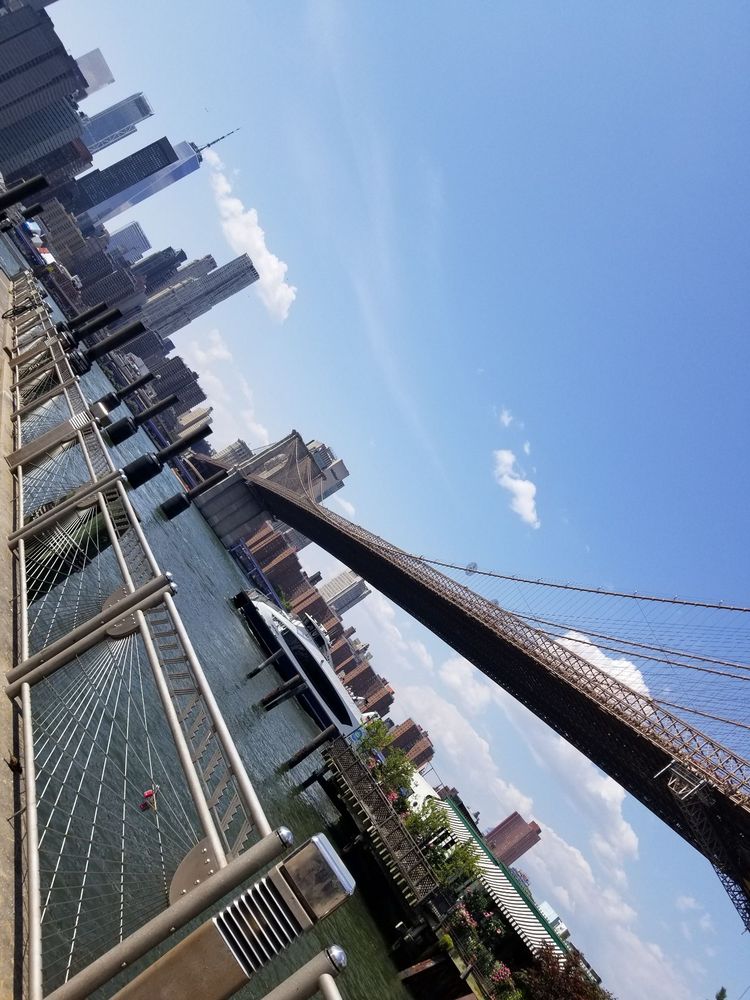
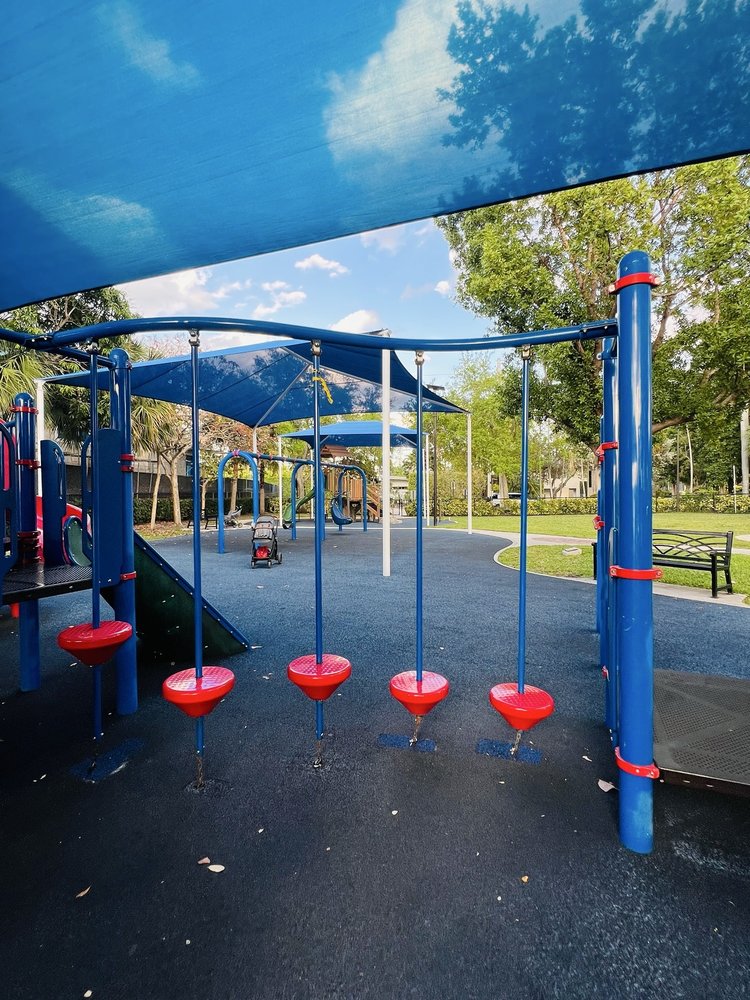

--- ## Chapter One: The Morning of Marvels The sun stretched its golden fingers across our cozy kitchen, tickling my velvety white ears until I tumbled awake in my soft bed by the radiator. I am Pete, a puggle of considerable imagination and modest stature, and today—oh, today—something extraordinary shimmered in the morning air like sugar on a donut. "Lenny! Mariya! Roman!" I yipped, my tail a frantic metronome against the floorboards. "Wake up, wake up, WAKE UP!" Dad shuffled in first, his warm eyes crinkling like origami swans at a festival. He wore his favorite faded blue bathrobe with coffee stains that told stories of a thousand mornings. "Easy there, Speed Racer," he chuckled, scooping me up so I could lick the sleep from his stubbled chin. "The park'll still be there after breakfast." But I knew better. Bruce Park wasn't merely grass and benches. In my dreams, it had grown into a kingdom of endless possibility—a place where squirrels conducted orchestras and every tree concealed a portal to somewhere wonderful. Mariya drifted in like a summer breeze, her curly hair still pinned with clips that sparkled like captured starlight. She smelled of lavender and possibility. "Someone's excited," she sang, setting three bowls on the counter with rhythmic precision. "Roman, honey, your cereal's getting soggy!" My brother thundered downstairs, all gangly limbs and bedhead, his phone already glowing with some game or another. At thirteen, he existed in that magical limbo between child and something else, but when his eyes found mine, they softened into something ancient and true. "Pete-y!" he grinned, and I leaped from Dad's arms into his waiting hug. "Roman, Roman, Roman," I panted against his neck, drinking in his familiar scent of mint toothpaste and last night's campfire dreams from the backyard. "Today we find the Heart of Bruce Park!" He laughed, that sound like wind chimes in a hurricane. "What heart?" "The one that beats underground," I insisted, though I wasn't sure where the idea came from. Sometimes stories simply arrived, whole and shimmering, like gifts from invisible friends. After breakfast—during which I received exactly the right amount of scrambled egg from Mariya's gentle fingers—we loaded into the car. The world outside bloomed with late spring exuberance. Dogwood trees wore their white blossoms like ball gowns, and the air hummed with bees conducting important business. "Seat belt, Pete," Dad reminded, and Roman clipped my special harness into place. As we drove, I pressed my nose against the window, watching our familiar neighborhood transform into something approaching myth. The bakery where Mariya bought croissants. The library where Roman checked out books about deep sea creatures. The corner where Kirusha the Jack Russell Terrier usually strutted with his owner, Mrs. Peabody. "Kirusha," I whispered, and something in my chest tightened. That dog and I existed like thunder and lightning—always appearing together, never quite at peace. He'd nipped my tail at the Fourth of July parade. I'd accidentally stolen his squeaky chicken (only for a moment!). Our history read like a treaty constantly under negotiation. "Thinking about your boyfriend?" Roman teased, ruffling my ears. "Is NOT!" I barked, indignant, though my ears burned warm beneath my fur. The car turned onto Bruce Park Drive, and there it spread before us—acres of green possibility, a lake glinting like spilled mercury, forests dense enough to hide all the world's secrets. "Wow," Roman breathed, and even he seemed younger suddenly, more the boy who'd once built pillow forts and believed in the monsters beneath them. Mariya turned from the front seat, her eyes catching sunlight and transforming it into something holy. "Ready for the best day ever?" she asked, and we answered with our whole bodies—Roman with a whoop, me with a howl, Dad with a honk of the horn that scattered nearby pigeons like startled thoughts. Little did I know that before sunset, I would face three fears that had shadowed my heart like persistent clouds: the water that seemed to want to swallow me whole, the darkness that breathed in hidden places, and the terror of being truly, unbearably alone. But that morning, I simply tumbled from the car into glory, my white fur catching sunlight like a promise no one yet knew would be kept. --- ## Chapter Two: George of the Lake The picnic blanket spread beneath the ancient oak like a Technicolor promise—Mariya's patchwork quilt with its squares of faded florals and bold geometries, each scrap whispering of birthdays and beach trips and ordinary days made sacred by presence. I circled it three times before settling, my ritual as necessary as breathing. "George is meeting us at the dock," Roman announced, his thumbs dancing across his phone. "He says the water's perfect." My ears pricked forward. George. Roman's friend from the Navy, home on leave, legendary in our household for his ability to hold his breath longer than seemed strictly human and his tendency to arrive with stories that made Mariya clutch her pearls and Dad snort coffee through his nose. "I like George," I mused aloud, though my tail betrayed a slight uncertainty. George represented the vast watery world I'd only glimpsed in bathtub adventures and rain puddle conquests. He moved through lakes and oceans as easily as I navigated carpeted stairs. "Who's a good swimmer?" a voice boomed, and there he was—George, all broad shoulders and sun-browned skin, his dark hair still wet and curling at the ends. He wore Navy swim trunks with an anchor pattern, and his grin could have powered small aircraft. They hugged, these two, Roman's face briefly buried against George's shoulder, and I saw something pass between them—that particular language of shared history, of deployments weathered and homecomings celebrated. "And Pete!" George knelt, and I was in his arms, surrounded by the smell of lake water and sunscreen and something clean and brave. "Growing into those ears, aren't you?" I preened, then caught myself. "They've always been magnificent," I corrected, though my tail betrayed my pleasure at the compliment. We ambled toward the dock, and with each step, the lake grew larger, more demanding of attention. It wasn't merely water—it was a living thing, shifting between turquoise and deep brown, small waves lapping at the pilings with sounds that might have been whispered secrets or warnings. At the dock's edge, George shed his shirt with practiced ease. "Coming in, little man?" he asked me, and I backed up so fast I collided with Roman's legs. The fear arrived like a thief, silent and absolute. The water wasn't merely wet; liberals of unknown depth. What lived down there? What reached up with invisible fingers to pull the unsuspecting into green-dark forever? My heart became a trapped bird, battering against the cage of my ribs. "Pete?" Roman knelt, his face level with mine, his eyes the color of the lake on calmer days. "What's wrong, buddy?" I couldn't answer. How to explain that the water seemed to breathe, to wait, to *want*? That every story of fish and weeds and things that brushed against legs in the murk coiled in my imagination like snakes? "Scared," I finally admitted, the word small and shameful. George and Roman exchanged glances—that silent communication of humans who've learned to read each other across distances. "Let me tell you something," George said, sitting on the dock so his calves dangled just above the surface. "First time I swam in open ocean, I thought I was going to die. Not dramatically. Just... quietly, in my heart, I knew the water would win." He laughed, but his eyes held ancient memory. "The Navy doesn't care about your fears. They throw you in. Literally. And I learned something." He dipped his fingers into the lake, letting the water run through them like liquid silk. "The water doesn't want to swallow you. It wants to hold you. But you have to meet it halfway. You have to trust." "Trust," I repeated, the word foreign and heavy. Roman stood, removing his shoes with deliberate care. "I'll be right here," he said. "And George is basically a fish in human form. Nothing's going to happen to you, Pete. I promise." The promise of a thirteen-year-old boy, made with all the gravity of ancient oaths. I wanted to believe. I wanted to be brave. But when Roman stepped onto the dock's edge and the wood shifted beneath his weight, I whimpered—actual, audible, puppyish. Then, from the shore: "Afraid of a little water? Typical puggle." Kirusha. That Jack Russell terror, all muscle and attitude, his brown and white coat immaculate despite his morning's adventures. Mrs. Peabody waved from their picnic spot, oblivious to the drama unfolding at our dock. Kirusha trotted to the water's edge, dipped one paw with theatrical nonchalance, then looked directly at me. "Some adventurer you are," he barked, though something in his posture suggested he wasn't entirely comfortable either. "Big talk about the Heart of Bruce Park, but you won't even get wet?" "That doesn't even make sense," I snapped, grateful for anger's clarifying fire. "The Heart of Bruce Park could be anywhere. It doesn't require swimming." "Everything worth finding requires swimming," Kirusha countered, and for a moment, he seemed almost wise, his usual aggression transmuted into something like challenge. "Or hadn't you noticed? The best sticks are in the water. The coolest rocks. The—" "Fish," George interrupted, and we all turned to see him floating on his back, barely moving, supported by nothing visible. "The fish are amazing, Pete. There's one down here that looks like it's wearing lipstick. I think it's flirting with me." Despite everything, I laughed—a snorty puggle laugh that made Roman grin. "One step," Roman coaxed, extending his hand toward the dock. "Just one. You don't have to go in. Just... be near the water. See if it really wants to eat you." I looked at Kirusha, expecting mockery, but found something unexpected—attention, held with uncharacteristic patience. Waiting. My paw touched dock wood, smooth and warm from sun. Another step. The lake smell surrounded me now, not the threatening depth-smell but something else—life, movement, the green growing world. "Good," George murmured, still floating. "Now tell me what you see." I looked. Really looked. The water held sky-fragments, cloud-shapes, the darting shadows of small fish. A dragonfly hovered, its wings iridescent machinery, then touched the surface without fear. "Everything," I whispered. "I see everything." "And does it look like it wants to eat you?" "No," I admitted, surprised by truth. "It looks like... it looks like it's already holding me." That night, I would dream of water as embrace rather than threat. But in that moment, I simply stood at the edge of my fear and found it less absolute than imagined—a beginning, not an ending, and the first true lesson of the day. --- ## Chapter Three: The Gathering of Friends By afternoon, our party had grown like a story accumulating subplots. Mariya had connected with friends from her book club; Dad had engaged a stranger in elaborate debate about the best way to grill corn (charcoal, always charcoal, with a soak in salt water first); and somehow, impossibly, Kirusha had become attached to our adventures with the tenacity of burrs in fur. "Mrs. Peabody says I can explore," he announced, though his eyes darted back to her picnic spot with something like longing. "She's reading some enormous book and needs quiet." "Quiet," I repeated, knowing Kirusha's volume settings ranged only from 'enthusiastic' to 'tectonic.' We'd established a kind of truce, Kirusha and I—less treaty than temporary ceasefire, but progress nonetheless. When a Frisbee went astray, we both chased it; when treats appeared, we sat with equal composure, though our eyes tracked each other's movements with competitive precision. "Race you to that tree," Kirusha challenged, pointing with his nose to an ancient willow whose branches trailed the ground like a green curtain. "You're on." We exploded across the grass—me with my puggle determination, him with Jack Russell velocity. He won, naturally, but I arrived with enough dignity to preen when Mariya called from afar: "Good running, Pete!" Kirusha's ears flattened slightly. "She's nice," he admitted, grudging. "Your people." "They're the best," I agreed, and something in my chest swelled with protective love. Lenny with his terrible jokes and infinite patience. Mariya who saw magic in supermarket flowers. Roman, my Roman, who understood without language the language of my heart. We pushed through the willow's curtain into a hidden world—a natural room formed by falling branches, dappled light, and the hush of leaves speaking their ancient tongue. "Wow," Kirusha breathed, all aggression momentarily suspended in wonder. Here the sounds of the park muted to dream-level. Light filtered green and gold, painting our fur with alien colors. A fallen log hosted miniature ecosystem: moss like emerald velvet, mushrooms in fairy-rings, beetles conducting their inscrutable business. "This is the Heart," I whispered, though I hadn't known it until speaking. "The real one." Kirusha circled, nose working. "Smells like... time," he decided. "Old time. Before the leash and the bowl and the scheduled walks." "I didn't know you resented those things," I said, genuinely surprised. "Not resent," he corrected, but slowly, as if tasting each word. "Just... wonder what came before. What comes after. You know?" I didn't, not entirely, but his question resonated in some deep place, some ancestral memory of wildness and belonging, of running not from but toward, of a moon so bright it hurt to howl. We explored our cathedral in silence, finding: a robin's nest, abandoned but perfect; a stone worn smooth by countless rains, cool as a promise kept; and finally, a hole in the earth, dark and breathing cool air, that seemed to lead downward into mystery. "What's that?" Kirusha demanded, his brave front reasserting itself. I approached, nostrils flaring. Earth-smell, yes, and something else—mineral and ancient and slightly frightening. The darkness didn't merely lack light; it seemed to consume it, to hold it, to transform visibility into something else entirely. "I don't know," I admitted, and my voice came smaller than intended. "Afraid?" The old Kirusha, challenging. "Careful," I corrected, though fear's familiar chill traced my spine. "There's a difference." But even as I spoke, shadows shifted within that hole. Something moved, or seemed to—imagined or real, the distinction suddenly mattered less than the overwhelming desire to be elsewhere, to be with my family, to be in sunlight and safety and the known world. "Let's go back," I suggested, casual as possible. "Scared," Kirusha started, but his voice lacked conviction. Something in that darkness had touched him too, some recognition of the vast unknown that waits beyond every comfortable boundary. We emerged into afternoon brilliance like divers surfacing, gasping slightly, shaking off darkness as dogs shake off water. And there, approaching with concern etching his young face, was Roman. "There you are! I've been looking everywhere. Mom's getting worried—it's almost time for the nature walk, and you know she hates to be late." I leaped into his arms, burying my face in his neck, breathing in the essential safety of him. Behind me, Kirusha cleared his throat—actually cleared his throat, a remarkably human gesture. "Your... friend can come," Roman offered, understanding without words what had passed, what continued to pass between unlikely companions. Kirusha's tail wagged once, twice, then steadied with effort. "If I must," he agreed, but his step fell beside mine as we emerged from the willow's shelter, and the afternoon continued its golden narrative, darkness temporarily held at bay by company and light and the courage to admit when fear visits, and to keep moving regardless. --- ## Chapter Four: The Path Diverges The nature walk began as these things do—with enthusiasm, laminated brochures, and Mariya's infectious delight at each identified species. Dad marched at the rear, periodically identifying birds with questionable accuracy ("That's definitely a purple-breasted something-or-other"), while Roman navigated between boredom and genuine interest with the agility of his generation. George had rejoined us, his wet hair now dry and curling, smelling of lake and achievement. He fell into step beside Roman, and their conversation drifted to topics I couldn't follow—Navy life, shared friends, futures planned and feared. I trotted near the front with Kirusha, our truce holding through mutual exploration. The trail wound deeper into Bruce Park's wooded sections, where light came filtered and green, where every twist suggested possibility. "See that?" Kirusha would bark, pointing with his entire body at a squirrel or interesting leaf. And I would see, and we would share that moment of pure attention that binds hunters and poets alike. But trails, like stories, demand choices. And when we reached the fork—one path marked, one not, the latter descending into thicker growth where light seemed reluctant—I felt the pull of narrative, the sense that something waited down the unchosen way. "Pete!" Roman's voice, distant suddenly. "Come on, buddy, this way!" But Kirusha had already plunged ahead, his Jack Russell courage (or recklessness, the distinction remains debated) carrying him beyond the marked path's safety. And I, torn between known love and the call of adventure, hesitated at the divide. "Kirusha, come back!" No response except the crash of underbrush, a flash of white and brown disappearing into green. I looked back. Roman's face, worried, beginning to move toward me. Mariya's hand raised in caution. Dad's voice, "Wait, let me—" But waiting felt impossible. Kirusha, for all our conflicts, had become... not enemy, not quite friend, but something requiring action. Something like responsibility. Something like care. I plunged after him. The world transformed. Where the marked trail had been wide and welcoming, this path narrowed to suggestion, branches catching at my fur like grasping fingers. Light diminished to mere memory, and the familiar sounds of family receded, replaced by forest's older music: creaking wood, distant water, the skittering of unseen lives. "Kirusha!" I called, and my voice came back strange, absorbed by moss and bark and the indifferent patience of growing things. I ran, and running became something else—not pursuit but panic, not choice but compulsion. The trees grew denser, the light more absent, and suddenly I realized I didn't know which direction led back, which forward, which anywhere at all. The fear arrived complete, a dark flower blooming in my chest. Not the specific fear of water, with its visible threat, but something vaster: the fear of being alone, truly alone, separated from everything that made me me. Lenny's jokes. Mariya's gentle hands. Roman's heartbeat against my fur. Gone. Possibly forever. I stopped, panting, and the forest stopped with me, waiting. "Kirusha?" I whispered, and the name fell into silence like a stone into deep water. Then, from somewhere ahead, a bark—not triumphant but frightened, Kirusha's courage finally encountering its limit. I found him at the stream's edge, a thin silver ribbon cutting through forest with no concern for canine convenience. He stood frozen, one paw raised, staring at something I couldn't see, something that existed in Jack Russell perception beyond my puggle understanding. "Pete," he said, not turning. "I can't... the water's too fast. And I don't... I don't know where—" He didn't finish. Didn't need to. In his voice I heard my own terror reflected, transformed by his particular pride into something almost unrecognizable. We were both lost. Both afraid. Both suddenly, terribly small in a world that continued its indifferent beauty without us. The stream rushed on, indifferent. Above, light diminished toward evening, and with its fading came another fear I'd buried deep—the fear of darkness, of night in an unknown place, of all the things that move when light retreats and safety sleeps. "We need to find them," I said, forcing steadiness. "We need to—" A sound. Distant, human, calling my name and his. Roman's voice, strained with something I'd never before heard, something that might have been the adult fear he was still learning to carry. "Here!" I barked, with all the volume my small body could produce. "We're HERE!" Kirusha joined, our voices harmonizing in desperate announcement. The forest held us in its green uncertain grasp, but we were not alone. Not entirely. And in that not-aloneness, courage began its slow return, like water finding its level, like story finding its necessary end. --- ## Chapter Five: The Dark Hour They found us by the stream, Roman arriving first, his face a map of relief and anger and something too large for either category. He swept me up, Kirusha too, holding us both with arms that trembled slightly. "Don't ever," he said, and stopped. Breathed. "Don't ever do that again. I thought—I didn't know—" He didn't finish. Dad arrived, then Mariya, their faces pale as moonlight, and the reunion was all embraces and scoldings and tears held barely in check, and through it all I understood, maybe for the first time, the profound responsibility of being loved. "We need to get back," Dad said, his voice carrying weight I didn't fully understand. "It's getting dark." And so it was. The forest that had seemed merely green now loomed black and silver, edges softening into uncertainty. What had been adventure now felt precarious, the path home no longer clear, the familiar become strange. George had found us too, somehow, his Navy training showing in his calm assessment of our situation. "Trail's washed out here," he noted, pointing to where the stream had overflowed its banks. "We'll need to go around. Through the deeper woods." The deeper woods. The words tolled like a bell, and my fur rose along my spine. "I'll lead," George offered, and his voice carried the absolute certainty of someone who had navigated worse, who had found his way through literal oceans. "Roman, you stay with Pete. Hold him close. The dark... it plays tricks, but it can't hurt you if you don't let it." We moved as a group, closer than before, the humans' flashlights cutting small circles in vast darkness. I stayed pressed against Roman's chest, his heartbeat steady against my fear, his warmth a small fortress against the night. But darkness, I discovered, was more than absence of light. It was presence—of sounds magnified and misinterpreted, of shapes suggested rather than seen, of the mind's capacity to populate emptiness with terrors both imagined and, perhaps, not entirely so. "What's that?" Kirusha whispered, his usual aggression muted to something almost vulnerable. A sound. Not our footsteps. Not wind in leaves. Something rhythmic, deliberate, approaching through the darkened undergrowth. Roman's arms tightened. George stopped, flashlight sweeping. And from the darkness, eyes reflected—two pairs, low to the ground, accompanied by low sounds that were not quite growls, not quite whines. "Raccoons," George breathed, and I heard his relief, though it was mixed with caution. "Probably more scared of us." But I wasn't scared of raccoons, not really. What terrified me was the darkness itself, its power to transform the known into mystery, to make every shadow potential threat, every sound a promise of something worse than imagination could compass. "Pete," Roman whispered against my ear. "Remember the water?" I did. The dock, the fear, the gradual understanding that threat and embrace might share the same surface, differentiated only by perspective. "Darkness is like that," he continued, his voice the only steady thing in a swaying world. "It's just... not-light. It can't actually do anything. The things in it... they're just living their lives. Not even thinking about us." "Easy to say," I managed, my voice small even to myself. "I know." And he did, somehow. Roman, who'd once been afraid of thunderstorms, of the dark himself, of growing up and all it meant. "But I'm here. And I'm not going anywhere. Even if I can't see everything, I can see you. Feel you. That's enough." The raccoons passed, uninterested in our drama. The flashlight found trail markers we'd missed, and gradually, the forest thinned, the darkness became merely evening, and then—miracle of miracles—we emerged onto familiar grass, the parking lot lights welcoming as hearth-fires. But the night had taught me something about fear's persistence, how it returns in new forms just when you believe it conquered. The water, the dark, the separation—these were not single battles but ongoing campaigns, courage not a destination but a practice, chosen again and again. --- ## Chapter Six: The Return of Light The picnic area, when we reached it, seemed impossibly distant from our forest ordeal, as if we'd traveled not merely through space but through some fold in reality. Mariya's friends had packed most of our belongings, concerned by our absence, and their faces mirrored the relief I saw in my family's. "George found you," Mariya kept saying, hugging the man in question, who accepted it with embarrassed grace. "He has the best sense of direction. Navy training." "Petty Officer Second Class in underwater navigation," George confirmed, with mock formality that didn't quite hide his genuine pleasure at the praise. "Though tonight it was mostly luck and flashlight batteries." We settled around the remaining fire pit, someone having thought to light it against the evening's chill. The flames danced their ancient dance, and I felt my fear slowly unclenching, muscle by muscle, breath by breath. Kirusha appeared at my side, his usual swagger diminished but not extinguished. "Not bad," he allowed, "for a puggle." "Not bad yourself," I returned, "for a dog who got lost chasing a squirrel he never found." He had the grace to look abashed, if only momentarily. "I didn't actually see a squirrel. I just... wanted to see what would happen. If I went first. If I was brave enough to go where the path didn't." The fire crackled, sending sparks spiraling toward stars I'd never really noticed before, so bright away from city lights, so indifferent and so beautiful. "And were you?" I asked. "Brave enough?" He considered, head tilted in a gesture almost like his human. "I was scared," he admitted. "The whole time. But I kept moving. Does that count?" I thought of the dock, the darkness, the stream where we'd stood frozen before rescue. "I think," I said slowly, "that's the only kind of courage there is. The moving forward kind. The rest is just... waiting for fear to disappear. And it doesn't. It just changes clothes." From across the fire, Roman caught my eye and smiled—that particular smile that meant he was proud, that I'd somehow become more than expected, more even than I believed possible. And in that smile, I found something better than courage: belonging, the absolute knowledge that whatever I faced, I would not face it truly alone. --- ## Chapter Seven: Hearts Found The fire burned low, and with its fading, something else emerged—conversation, the deep kind that only comes after shared trial. Dad produced marshmallows with the solemnity of ritual objects. Mariya found chocolate, graham crackers, the architecture of s'mores. And we talked, all of us, humans and dogs alike, the boundaries between species somehow thinner in firelight. "I was terrified," Mariya admitted, her voice carrying that particular lightness that means the opposite. "When we couldn't find you. I thought—" She stopped, shook her head. "I thought so many things. None of them good." "Me too," Roman said simply. "I kept thinking, what if this is it? What if I never—" He broke off, and George's hand found his shoulder, and something passed between them beyond my comprehension but not beyond my recognition. "I remembered my first deployment," George said, into the silence. "The waiting. The not knowing. How fear lives in the body, makes a home there. You think you're handling it, and then something cracks, and it's all there, everything you haven't felt." He looked at me, direct and unguarded. "Pete was brave today. More than he knows." "I was scared," I admitted, because the fire demanded truth, because these people, this night, deserved nothing less. "The water, the dark, being alone. Every time I thought I'd faced one fear, another appeared." "And yet," Dad prompted, his eyes gentle as his hands. "And yet I kept going. Because of Roman. Because of Kirusha, even, though he'll let that go to his head. Because somewhere I knew, even when I couldn't feel it, that love was looking for me. That it would find me. That it always does." Kirusha snorted, but his tail betrayed him, wagging once against the blanket. "Sentimental," he muttered, but without conviction. "True," I corrected. "There's a difference." The stars wheeled overhead, indifferent and intimate. The fire settled to embers, pulsing heat and light in slow rhythm. And in that space between day and night, between fear and its overcoming, I understood something about the Heart of Bruce Park—not a place at all, but a moment, a choice, a gathering of souls willing to be vulnerable together. --- ## Chapter Eight: Homecoming Morning found us different, as mornings after transformation always do. Mariya packed the blanket with extra care, as if it had become sacred artifact. Dad hummed something tuneless and content. Roman walked with George in close conversation, their shadows stretching twin before them. I trotted beside Kirusha, our usual antagonism transmuted to something sustainable, something that might, with patience and repeated choice, become friendship. "Same time next week?" he asked, casual as possible. "Same time," I agreed. "But maybe... the marked trail?" "Definitely the marked trail," he confirmed, and we shared a laugh, two dogs who had faced darkness and water and the terror of being alone, who had found in each other something like recognition. At the car, Roman lifted me to my usual spot, but paused before closing the door. His face, in morning light, showed new lines, new maturity, but also something preserved—wonder, perhaps, or the deliberate choice to maintain it. "Pete," he said, serious as he'd ever been. "Yesterday, when I couldn't find you... I realized something. How much you matter. How much all of this—" he gestured broadly, encompassing park and family and the life we'd built together, "—depends on showing up. For each other. With each other. Even when it's scary. Especially then." I licked his hand, my small tongue rough against his smooth skin, and in that touch communicated everything words couldn't compass: gratitude, love, the absolute commitment to continue this story, whatever chapters it might hold. The car started. Bruce Park receded in the rear window, not disappearing but waiting, patient as all green growing things, for our necessary return. And I, Pete the Puggle, small of stature but large of heart, settled against Roman's leg and dreamed of water embraced, darkness navigated, friendship found in unlikely form. The fears would return. They always do, transformed but persistent, the shadows that define the light. But I had learned their secret: not to eliminate fear but to move with it, through it, beyond it, carrying love like a lantern that reveals the path not by eliminating darkness but by making it navigable, making it ours. The road home unfolded before us, and we traveled it together, as family, as story, as the ongoing adventure of being alive and choosing, again and again, to be brave. *** The End ***
Use these buttons to read the story aloud:


No comments:
Post a Comment