"*** Pete the Puggle's Great Lummus Park Adventure ***"🐾
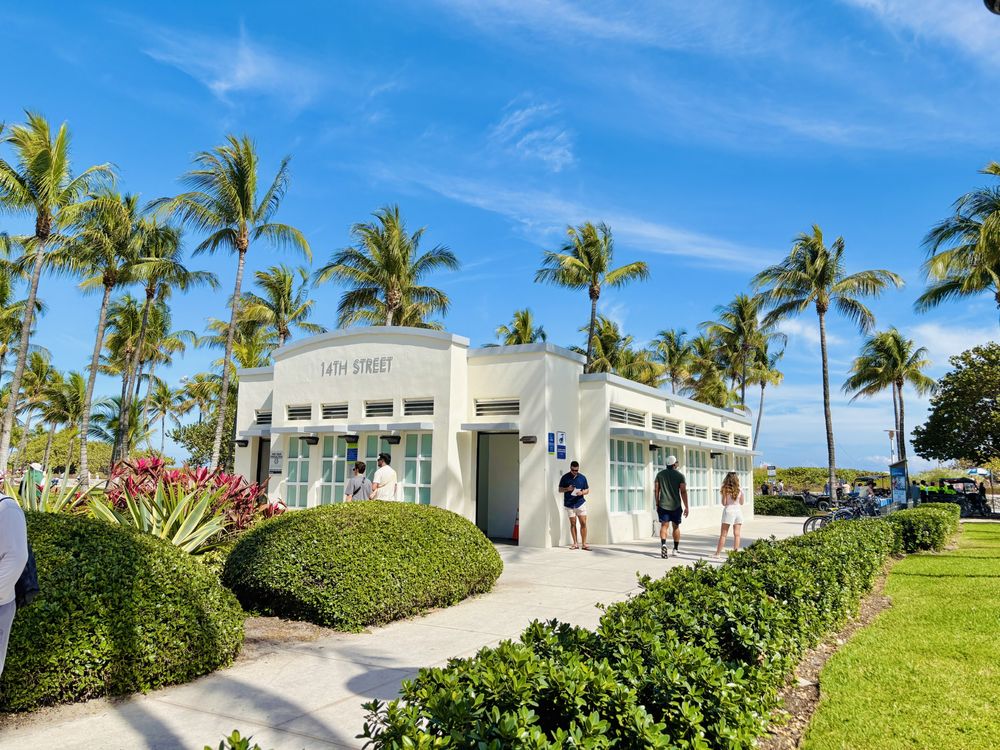
--- ## Chapter One: The Morning of Marvels The sun crept through my bedroom window like a golden puppy stretching after a long nap, and I, Pete the Puggle, woke with my velvety white fur practically humming with excitement. Today was the day! Lummus Park on South Beach—a place I'd heard whispered about like some legendary kingdom where the ocean kissed the sand and palm trees danced eternal hulas. I leaped from my cozy dog bed, my short legs carrying me in wobbly pirouettes across the hardwood floor. "Easy there, turbo," laughed Lenny Dad, his voice warm as fresh-baked bread. He stood in the kitchen doorway, his eyes crinkling with that particular mischief that meant adventure was brewing. "We've got a forty-minute drive ahead, and someone's gotta eat breakfast before we hit the road." I barked—once, twice, three times—the sound bouncing off the walls like a joyful rubber ball. Mariya Mom appeared then, her hair still wild from sleep, a paint smudge on her cheek from last night's creative project. She saw me and her face transformed, becoming a sunrise all its own. "Someone's ready for the beach," she sang, kneeling to ruffle my velvety ears. Her fingers found that perfect spot behind my left ear, and I swear my hind leg started thumping like a rabbit's. "Pete, my little storyteller, do you know what the ocean sounds like?" I tilted my head, my makeup-accented eyes wide as dinner plates. I'd heard the ocean in videos, that rhythmic breathing of the world, but never in person. Never with sand between my paws and salt tangling my whiskers. Roman thundered down the stairs then, nearly missing the last step in his enthusiasm. At fourteen, my older brother moved like a young giraffe still negotiating the physics of his own body— all elbows and knees and magnificent, chaotic energy. "Pete! I packed the frisbee and the floaty vest and—" he stopped, dropping to one knee before me, his dark eyes meeting mine with serious intensity. "And I'm going to help you with the water, buddy. I promise." Something in my chest tightened, warm and strange. I'd never admit it to anyone—not even under threat of no treats for a week—but water terrified me. The bathtub was manageable, barely, with its slippery porcelain walls and that terrible gurgling drain. But the ocean? That endless, breathing, living thing? The thought made my tail tuck between my legs, made my brave puggle heart stutter like a broken fan belt. But Roman's hand was warm on my back, and I could feel his own nervousness, his own desire to be brave for me. We were mirrors, my brother and I, each reflecting courage back to the other until we couldn't tell where one ended and the other began. The car ride was a symphony of anticipation. Mariya Mom played her "Ocean Day" playlist—jangly ukulele songs and something she called "surf rock" that made my ears perk and my head tilt at impossible angles. Lenny Dad navigated the streets of Miami with the confidence of a captain steering toward treasure, pointing out window-windmilling palm trees and buildings that scraped the sky. "Pete, look!" Roman would exclaim, and I'd scramble across his lap to press my nose against the glass, the world a blur of turquoise and coral and Emeralds, of strangers carrying umbrellas like colorful mushrooms. "Roman," Mariya Mom said softly, catching my brother's attention in the rearview mirror. "Remember when Pete was afraid of the vacuum?" Roman laughed, that rich sound I loved. "He barked at it for twenty minutes straight." "And now?" "He sleeps through it. Mostly." "Fear is like a shadow, Roman," she continued, her voice carrying that quality she had—like she was reading from some invisible book of wisdom. "It looks biggest when you're standing still. The only way to shrink it is to move toward the light." I wagged my tail, not fully understanding but feeling the truth of it in my bones. The car turned a final corner, and suddenly—there it was. The ocean. A ribbon of impossible blue stitched to the edge of the world. And in that moment, I understood that courage wasn't the absence of fear. It was choosing to step forward anyway, one trembling paw at a time. --- ## Chapter Two: First Contact Lummus Park unfolded before us like a painting come alive, all swaying coconut palms and grass so green it seemed to glow from within. The air tasted different here—salty and alive, carrying whispers of faraway places. I bounded from the car the moment Mariya Mom opened the door, my leash trailing like a comet's tail, and stopped dead in my tracks. Sand. Everywhere. Soft as powdered sugar, warm as a sun-baked blanket, shifting beneath my paws in a way that made me feel like I was walking on clouds made of gold. I dug in, delighting in the strange resistance, watching grains cascade between my toes like tiny hourglasses measuring joy itself. "Pete!" Roman's voice carried across the parking lot. He'd kicked off his sneakers and was already ankle-deep in the stuff, laughing as it sprayed behind him. "Come see!" But I'd caught sight of something else. Beyond the sand, beyond the clusters of colorful umbrellas like blooming flowers, lay the ocean. And it was *moving*. Not like a river or a pond—those were stories I'd heard from city-dwelling friends. This was *breathing*, rising and falling with a rhythm older than memory, white lace appearing and disappearing at its edges. My brave tail, which had been flag-high, drooped like a wilting flower. Lenny Dad appeared beside me, his shadow falling across my small form. He didn't pick me up, didn't force me forward. He simply sat, cross-legged in the warm sand, and waited. This was his way—the way of the wise Dad who knew that some journeys couldn't be rushed. "The ocean used to scare me too, Pete," he said, and I turned my head in surprise. Lenny Dad? Afraid? He was the one who killed spiders and fixed leaky faucets and told jokes so bad they looped back around to being good again. "When I was a little boy, younger than Roman even, my family came to this very beach." He smiled at some distant memory, his eyes soft. "I stood exactly where you're standing, and I cried. Refused to go near the water. My father—your great-grandpa, who you've never met—he didn't push me. He said, 'The ocean doesn't trust strangers, Lenny. You have to introduce yourself.'" I whined, scooting closer until my side pressed against his denim-clad leg. "So we walked to where the waves could just barely reach our toes. And do you know what?" He leaned down, his voice dropping to a whisper. "The ocean tickled. It was cold and surprising and absolutely, wonderfully silly. And I laughed, and the ocean laughed back in its way, and we've been friends ever since." I looked at the water, then at my family spreading their blanket on the sand, at Mariya Mom applying sunscreen with the seriousness of a warrior preparing for battle, at Roman already wading in to his knees, his silhouette small against the vast blue. The fear was still there—a cold knot in my stomach, making my paws want to dig into the sand and never move. But there was something else now too. Curiosity. The tiniest spark of it, like a match struck in a dark room. "Ready to introduce yourself?" Lenny Dad asked. I stood. Took one step, then another. The sand grew firmer as we approached the tide line, packed hard by the retreating waves. And then—there it was. The edge of the world, lapping at my paws. Cold! So much colder than expected! I yipped, dancing backward, and Lenny Dad's laughter rang out like wind chimes. But then I looked back at the water, and it didn't seem quite so monstrous. Just... playful. Like a puppy who didn't know its own strength. I stepped forward again. The wave retreated, pulling sand from beneath my paws in a gentle tug. And I understood, in that moment, that the ocean was asking me to dance. --- ## Chapter Three: Unexpected Friends By mid-morning, I'd made peace with the tide line—that magical boundary where the ocean's toes met the land's. I'd chase the retreating waves, barking my bravest barks, then scramble backward when they returned, my heart hammering like a drum solo. Each time, I ventured a centimeter further, a millimeter deeper. Each time, the world didn't end. Roman had been my constant companion in this, never wading too far, his eyes always finding mine, his hand always ready to scoop me up if needed. "You're doing great, Pete," he'd say, and I'd puff out my chest and try to look dignified, which is difficult when you're soaking wet and sand is sticking to your velvety fur in unfortunate places. It was during one of our rest periods—Mariya Mom had produced watermelon slices that tasted like concentrated summer—that I first noticed the cat. He was perched on a low wall near the park's edge, orange and white with a face that suggested he'd seen things, done things, and found most of them amusing. A scar crossed his nose, giving him a rakish appearance, and his green eyes tracked a bird overhead with the lazy concentration of someone who'd caught that bird a thousand times in his mind. "Well," he said, and I startled so violently I nearly swallowed my watermelon rind, "you're making quite the production of it, aren't you?" I looked around. Was he talking to me? Roman was dozing beside me, watermelon juice drying on his chin. Lenny Dad had wandered off to photograph a particularly dramatic cloud formation. Mariya Mom was people-watching, that curious smile on her face that meant she was writing stories in her head. "Down here, puggle," the cat said, and I finally met his gaze. He didn't look threatening. Actually, he looked like he might be smiling, though with cats you can never quite tell. "I'm Pete," I said, because Mom had raised me with manners even if she hadn't raised me to expect conversational cats. "Tom," he replied, leaping down from his wall with a grace I envied. He landed without a sound, whereas I would have made a considerable thump. "Tom the Cat. I live in that building over there with the humans who think they own me." He flicked his tail toward a pastel-colored art deco structure. "And I've been watching you all morning. Entertaining stuff. The way you yelp at the water? Classic." I felt my ears grow warm. "I'm not afraid," I said, which was mostly true in the way that all brave things are true—true enough to build a life on. "Didn't say you were," Tom replied, settling into a comfortable loaf. "Fear and I are old friends. I've been afraid of things that would make your puggle heart stop. Vacuum cleaners, for one. The garbage truck. That terrible machine they call 'hair dryer.'" He shuddered, a ripple from whiskers to tail. "But the thing about fear? It's just excitement wearing a scary mask. Same physiological response, different interpretation." This was the kind of thing Mariya Mom would say, and I found myself warming to this strange cat despite myself. "You're a philosopher," I observed. "I'm a survivor," Tom corrected. "And part of surviving is knowing when to leap, even if you're not sure where you'll land." He stood, stretched in that boneless way cats have, and began padding toward the water. "Coming?" I looked at my sleeping family, at Roman's peaceful face, at the trust implicit in his closed eyes. He'd wake if I went too far, I knew. He always did. "I'm coming," I said, and followed. We'd reached the wet sand, that firm ribbon where the waves had just departed, when a small voice piped up from somewhere near my left paw. "Excuse me! Excuse me, please! You're about to step on my house!" I froze, one paw raised in a ridiculous pose. Tom simply sat, looking amused. And from a small hole in the sand emerged the tiniest mouse I'd ever seen—gray fur, enormous ears, and eyes that shone with a bravery that seemed impossible for something so small. "Jerry," Tom said, with the weariness of long acquaintance. "Still dramatic, I see." "Someone has to be," the mouse—Jerry—replied. He stood on his hind legs, barely taller than a blade of grass, but somehow he filled the space he occupied completely. "My burrow is right here, and I won't have it destroyed by some water-fearing puggle's clumsy paws." "I am not clumsy!" I protested, setting my paw down with exaggerated care. "You're talking to a cat and a mouse," Jerry pointed out. "Your definitions may need adjusting." Tom laughed, a rusty sound like a door that hadn't been opened in a while but still led somewhere wonderful. "Jerry's my... what would you call it? Nemesis? Best friend? The lines blur after fifteen years of chasing each other through these streets." "Fifteen years!" I exclaimed. "Seventeen, if we're counting," Jerry corrected. "And we are. I was here before the fancy hotels, before the tourist buses, before the 'no pets without leashes' signs." He puffed out his tiny chest. "This was all wild once. Well, wilder." I sat, overwhelmed by this sudden expansion of my world. Cats and mice as friends. Territories marked in languages I didn't speak. Histories written in sand and sun and the secret places of the city. "Why are you telling me this?" I asked. Tom and Jerry exchanged glances—that particular communication of old friends who've run out of need for words. "Because," Tom said finally, "you're about to need friends who know things. And because—" he looked past me, toward the water, his green eyes narrowing. "The tide's changing. It does that, this time of day. Comes in faster. Stronger." I followed his gaze and felt my newfound confidence waver. The ocean did look different now, the waves crashing with more urgency, the blue darkening toward something deeper, more purposeful. "I should get back," I said, turning toward my family. rewind their blanket. But the beach had changed while we talked. The tide had crept higher, cutting a channel between where I stood and where my family slept. It wasn't deep—maybe to my chest if I'd dared to wade it. But it was water, moving water, and the panic that lived in my puggle heart woke and stretched its claws. "Roman!" I barked, but the wind snatched the sound and carried it away. "Easy," Tom said, appearing at my side. "Channels like this, they look worse than they are. Tide'll shift again in an hour, fill it in." "An hour?" My voice came out higher than I liked. "I can't—my family—they'll worry—" "They'll sleep for twenty minutes more, minimum," Jerry observed, with the certainty of someone who'd watched many human naps. "That one especially." He pointed at Roman with his tiny paw. "He sleeps like the dead." "But—" I started toward the water, then retreated. The fear was a wall now, high and featureless, and I couldn't see how to climb it. "Pete." Tom's voice was different now, stripped of its lazy amusement. "What do you think courage is?" I remembered Lenny Dad's words. "Moving toward the light?" "Close enough. Courage is feeling that wall and choosing to press your paws against it anyway. It's not about not being afraid. It's about being more afraid of staying where you are than of moving forward." I looked at the channel. Looked at my family, so close and suddenly so far. And I thought of all the stories I'd ever told myself, about who I was, about what I could and couldn't do. The wall was still there. But maybe—just maybe—I could dig under it. --- ## Chapter Four: The Separation I don't remember making the decision. One moment I was paralyzed on the sand, and the next I was moving, my short legs carrying me into the channel with a splash that soaked my belly fur. The bottom dropped away suddenly—there was no sand here, just the memory of it, and I was swimming, paddling, my nose pointed toward the sky like a periscope. "Crazy puggle!" Jerry's voice followed me, admiring. "Go with him!" Tom commanded, and then somehow—impossibly—there was an orange and white shape swimming beside me, a cat who apparently swam with the efficient grace of someone who'd done this before and found it wanting. The current was stronger than it looked, tugging at me like persistent hands, pulling me sideways when I wanted to go straight. I swallowed saltwater and coughed, my rhythm breaking, panic flaring like a struck match. "Don't fight it!" Tom gasped, and I could hear the effort in his voice now. "Angle across! Not against!" I tried to remember swimming lessons I'd never had, tried to trust that my body knew things my mind didn't. Angle across. The words became a mantra, a prayer, a story I told myself with each stroke. Angle across. Angle across. My paws found purchase. Sand, firm and real, and I scrambled forward with the last of my strength, collapsing on the beach I'd been aiming for. Tom arrived beside me, shaking water from his fur with a violence that suggested personal offense at the entire situation. We'd made it. But when I turned to look for my family, they were gone. Not gone, precisely—the blanket was still there, watermelon rinds and abandoned sunscreen. But the figures on it were strangers, a family I'd never seen, and beyond them, beyond the wall of people and umbrellas and the afternoon's growing crowd, there was no sign of my own. "Roman!" I barked, loud as I could. "MOM! DAD!" Nothing. The crowd absorbed my voice like the ocean absorbed rain—completely, without echo. "They moved," Jerry said, appearing from somewhere with his fur somehow dry. "While you were chatting with Tom. They packed up, walked that way." His tiny paw pointed toward the denser part of the park, where palm trees grew thick as a forest and paths twisted like thoughts. "They're looking for me," I realized, and the cold that spread through my chest had nothing to do with the water. "They woke up and I was gone and they're looking for me—" "Then let's be found," Tom said simply, but his tail gave a betraying twitch. The three of us set off, an unlikely parade—a wet puggle, a damp cat, and a mouse who rode on Tom's back like a furry figurehead. The crowd thickened as we moved, a river of legs and voices and the smells of a hundred different sunscreens, a thousand different stories. I barked until my throat ached, searched faces until my eyes burned, and found nothing familiar in the sea of strangers. "Maybe we should stay put," Jerry suggested, as the light began to shift toward afternoon gold. "They'll come back to the beach eventually. They always do." But the thought of stopping, of waiting, of the helplessness of it—my paws moved faster, almost running now, and my companions kept pace with effort I didn't fully appreciate until later. The path I chose led away from the beach, into the deeper green of the park. Here the palm trunks rose like the columns of some natural cathedral, their fronds creating a canopy that filtered the sun into shifting patterns of light and shadow. It was beautiful. It was terrifying. Every shadow seemed to move, every sound suggested pursuit, and the fear of the dark—that old, primal fear that lived in the bones of every small creature—woke and roared. "Pete," Tom called, but I was running now, lost in the labyrinth of my own panic. The trees blurred past, the light grew dimmer, and somewhere in the green heart of the park, I found a hollow beneath a fallen log and crawled inside, shaking. The dark was absolute. Not the comfortable dark of my crate at night, with its familiar smells and the sound of my family's breathing. This was wild dark, hungry dark, the dark that existed before stories had happy endings. I pressed against the earth, feeling small as a seed, as a thought before it's spoken. "Pete!" Tom's voice, closer now. "There you are, you ridiculous creature." Light flooded my hiding place as Tom's face appeared at the entrance, Jerry peeking over his shoulder. They'd found me. They'd followed me into this darkness. "You came," I whispered. "Someone has to keep you from doing stupid things," Jerry said gruffly, but his whiskers were trembling. "Fear of the dark," Tom observed, squeezing into the hollow beside me, his warmth welcome against my chilled fur. "It's the oldest fear, Pete. Older than cats and dogs. Older than the division between land and sea. Do you know why we fear it?" I shook my head, though he probably couldn't see. "Because in the dark, we can't see what's coming. And the not-knowing is always worse than the thing itself." He settled beside me, a rumbling purr beginning in his chest. "But darkness is also where rest happens. Where seeds grow. Where the moon lives when the sun has had its turn." I thought of my crate at night, how safe I felt there, how the darkness was a blanket not a cage. The hollow wasn't so different, I realized. Just unfamiliar. Just waiting to become known. "How do you not fear everything?" I asked. "Being so small?" This to Jerry. The mouse laughed, a surprisingly robust sound. "I'm afraid all the time, puggle. Afraid of hawks and feet and sudden movements. But I'm more afraid of not living. Of letting the fear have the last word." He settled against my other side, and we were three warm bodies in the cooling dark, and somehow it was almost peaceful. "We should stay here until the light changes," Tom said. "Then we can find your family. They'll be looking. They love you, that much is obvious even to a cat." I closed my eyes and, despite everything, felt sleep tugging at me like a gentle tide. --- ## Chapter Five: Night Falls I woke to Jerry's whiskers tickling my nose and the realization that the hollow had grown darker, deeper, the last fingers of afternoon light retreating beyond the fallen log's entrance. Panic surged in my chest, familiar now but no more pleasant for that familiarity. "Easy," Tom murmured, his form a shadow among shadows. "The dark hasn't changed. Only your relationship to it." "That's very philosophical for a cat who's about to be dinner for an owl," Jerry observed, but his voice was steady. We emerged into a world transformed. The park at evening was not the park of afternoon. Where sunlight had reigned, now soft solar lamps cast pools of amber, creating a constellation of warm islands in a sea of blue-gray dusk. The palm trees stood as silent sentinels, their fronds rustling secrets to each other. Distantly, the ocean continued its eternal conversation with the shore, but here, in the green heart, the sounds were smaller, closer—a frog's interrogative, the whisper of something moving through undergrowth, the faraway laughter of humans still enjoying the cooled air. "It's beautiful," I breathed, and meant it. The fear was still there, a thread in the tapestry, but no longer the whole pattern. "Night has its own language," Tom agreed. "You just have to learn to listen instead of looking." We moved through the park like spirits, our small forms unnoticed by the few humans still abroad—joggers with their lights, couples walking hand in hand, a musician packing his guitar after a day of serenading sunbathers. I searched each face, each voice, and found no one I knew. "Roman!" I tried again, though my voice was hoarse from earlier calling. "MOM! DAD!" "Pete!" The voice came from everywhere and nowhere, and for a moment I thought I'd imagined it. Then it came again, cracking with the particular music of a teenage boy trying not to cry. "PETE!" "ROMAN!" We found each other at the edge of the great lawn, where the park opened toward the beach once more. He was running, my brother, his face streaked with the tracks of tears he'd deny later, his phone's flashlight cutting wild arcs through the dimness. He saw me and dropped to his knees, and I leaped into his arms with a force that knocked us both backward. "You're okay, you're okay, you're okay," he chanted, and I realized he was crying in earnest now, the relief too big to contain. "I looked everywhere, Pete. I thought—" he couldn't finish, just held me tighter, and I licked his chin, his tears, anything I could reach. Tom and Jerry watched from a respectful distance, but Roman noticed them. "Who—?" "Friends," I said, which was true even if it didn't explain everything. "Your collar," Roman was saying, checking me over with the thoroughness of a mother, "your fur's all wet, and sand everywhere, and—" he laughed, a wet sound. "You smell like ocean and adventure and—" he hugged me again, and I felt his heart hammering against my ribs, felt the love like a physical thing, warm and anchoring. "We need to find Mom and Dad," he said finally, standing with me cradled in his arms. "They'll want to know. Everyone's been looking. The lifeguards, the park rangers—" he shook his head. "I thought I'd lost you, Pete. I thought—" his voice broke again. "I'm sorry," I said, though he couldn't understand. "I was brave and scared and brave again, and I'm sorry for the worrying." He seemed to hear something in my barks, some translation of emotion if not of words. "It's okay. You're found. That's what matters." We walked toward the lights of Ocean Drive, Tom and Jerry following at a distance that suggested they weren't quite part of this reunion but weren't willing to be excluded either. Roman saw them and slowed. "They came with you?" "Tom and Jerry," I confirmed, and if Roman found the names amusing, he didn't show it. He was too tired, too wrung out with worry. "Thank you," he said to them, simply and seriously. "For staying with him." Tom inclined his head, the gesture of a king acknowledging a peasant's unexpected courtesy. Jerry merely twitched his whiskers, but I saw his tiny chest puff with pleasure. The lights of the search party were visible now, a cluster of flashlight beams near the park's main entrance. Mariya Mom's voice rose above the murmur, high and broken with fear. Lenny Dad's deeper tones, trying to soothe. And then—then they saw us. The reunion that followed was operatic in its joy. Mariya Mom snatched me from Roman's arms with a strength that surprised us both, pressing her face into my fur, her tears hot against my cooling skin. Lenny Dad's hand found Roman's shoulder, and I saw in their shared grip the weight of hours of worry, the lightness of relief. "Pete, Pete, Pete," Mariya Mom whispered, and my name was a prayer, a promise, a story with a happy ending. But the night wasn't over, and as the initial storm of emotion passed, I saw the questions rising in their faces, saw Roman preparing to explain, and knew that some stories couldn't be fully told in human words. --- ## Chapter Six: The Dark Night of the Puggle Soul The hotel room felt safe in a way the park hadn't, all soft carpets and familiar smells and the hum of air conditioning that meant civilization, that meant human things. They'd bathed me—another water experience, but brief and warm and full of reassuring hands—and now I lay on a towel, cleaner than I'd been, watching my family process the day. "Roman," Lenny Dad said, and his voice carried that particular weight of parental concern, "start from the beginning. How did Pete get separated?" Roman's story spilled out—waking to find me gone, the panic of searching, the growing dread as hours passed. "I thought he went in the water," he admitted, his voice small. "I thought he drowned, and I couldn't—" he stopped, breathing carefully. "I should have watched him better. I'm sorry." "Roman," Mariya Mom began, but Lenny Dad raised a hand. "The fault is shared," he said. "We all fell asleep. We all assumed. That's not trust, that's negligence dressed up as relaxation." He rubbed his face, suddenly looking older. "The world is full bucket of dangers for something so small. We know this. We forget this." I whined, pressing against Roman's leg. Not your fault, I tried to say. I chose. I walked into the water, into the park, into the dark. I was brave and foolish and lucky, and I learned things I needed to learn. "You were so scared of the water," Roman said to me, his fingers finding my ears. "When we first got here. Remember? You wouldn't go near it." I remembered. That version of me felt distant now, a character in a story I'd outgrown. "And then you just... went in? By yourself?" "Tom and Jerry," I said, and though the words came out as barks, Roman seemed to understand something. "Those animals. They helped you." Not a question. A statement of fact, building itself from observation. The night deepened. My family slept eventually, Roman with me curled against his chest, our breathing synchronizing. But I found myself awake, restless, padding to the window to look out at the city that had seemed so welcoming and so threatening in equal measure. Tom's words came back to me: Fear is excitement wearing a scary mask. The dark was just the absence of light, not an enemy. The water was just water, not a monster. And being separated—being lost—that was just geography, temporary and surmountable. But there was something else, something that had shifted in me today that went beyond these specific fears. I'd discovered that courage wasn't a thing you had or didn't have. It was a practice, a muscle, something that grew stronger with use and atrophied with neglect. I'd practiced today. I'd failed and succeeded and failed again, and each time I'd chosen to keep moving. The moon rose over the ocean, silvering the waves I'd once feared. I pressed my nose to the glass and whispered, to no one, to everyone: "I'm not the same puggle who arrived this morning." No, something answered, and I couldn't tell if it was my own thought or the world's. You're the puggle who will return tomorrow, and the day after, and each day a little braver, a little wiser, a little more yourself. I carried that thought to sleep, and my dreams were of swimming, of running through green places, of friends who were cats and mice and all the impossible wonderful things the world held. --- ## Chapter Seven: The Return to Lummus Park Morning arrived like a gift we'd forgotten we ordered, all pink sky and gentle breeze and the promise of a day unspoiled by yesterday's mistakes. My family woke slowly, processing the exhaustion of worry and relief, but there was a decision in their movements, a purpose. "We're going back," Lenny Dad announced over breakfast, and nobody needed to ask where. "Pete didn't get his proper beach day. And Roman—" he looked at my brother with serious eyes, "you need to see that place in daylight, without the shadow of fear. We all do." So we returned. Tom and Jerry found us within minutes of our arrival, as if they'd been waiting, as if our story wasn't complete without them. Mariya Mom laughed to see a cat and mouse apparently escorting her puggle, and Lenny Dad took a photograph that Zephyr would never quite believe. The ocean greeted us with moderate waves, friendly and blue, nothing like the hungry thing I'd imagined yesterday. And I—Pete the Puggle, once-terrified of water, once-lost in darkness—walked straight to the edge and let the foam kiss my paws. "Look at you," Roman said, his voice thick with pride and something else—recognition, maybe, of parallel journeys. "My brave boy." "Show me," he asked, and I understood. The floaty vest was produced, the one that had seemed so silly, so undignified. I let him fit it around me, let him carry me past the breakers until the water was calm as a sleeping dog, and then— I swam. Not well, not gracefully, but truly. My legs paddled, my nose stayed blessedly above the surface, and the ocean cradled me like it had always promised to, like Lenny Dad had always said it would. Roman was beside me, his own strokes keeping pace, his hand never far in case I needed it. But I didn't need it. Not for the swimming. The fear was there, a whisper at the edges, but I'd grown bigger than it. I'd practiced courage until courage became habit. Tom appeared on a surfboard nearby—borrowed, stolen, who could say with cats—and Jerry rode the nose like a figure from legend. "Not bad, puggle!" the mouse called. "Not bad at all," Tom agreed, and I couldn't tell if he was talking about my swimming or my transformation. Probably both. We stayed in the water until my legs shook with exhaustion, until Roman's lips were blue with cold, until the sun climbed high and the world was nothing but brightness and salt and the joy of being alive, being here, being *found*. On the sand, wrapped in towels, my family assembled around me like planets around a small, furry sun. Mariya Mom's hand traced patterns in my drying fur. Lenny Dad's eyes were closed, his face turned toward the warmth. Roman sat close enough that our sides touched, his presence a constant I no longer feared losing. "I want to hear the whole story," Mariya Mom said. "From someone who was there." And so, in barks and gestures and the language of shared experience, I told them. Of the channel that had seemed so wide. Of the dark that had pressed so close. Of friends who appeared when I needed them, who stayed when I would have run, who found me when I was lost. "Tom and Jerry," Roman supplied, when my narrative reached its limits. "That's what I'm calling them. A cat and a mouse who are friends, who helped Pete when we couldn't." "Friends come in all forms," Lenny Dad observed. "The world's more various than we remember." The afternoon stretched golden before us, full of possibility and the particular peace of hard things survived. I thought of all the fears still waiting in my puggle heart—there would always be fears—but I thought too of the courage I'd built, the practice I'd begun, the knowledge that fear was a door and not a wall, if only you chose to push. --- ## Chapter Eight: The Story We Tell The sunset found us walking the long curve of South Beach, the sky performing its daily miracle of color—coral and amber and a violet so deep it seemed to sing rather than shine. My paws left prints in the packed sand, each one a small story, and the tide came up to erase them, as tides do, as time does, making room for new stories to be written. Tom and Jerry walked with us, their presence now accepted, expected, as natural as the breeze. Mariya Mom had produced treats from her bag—organic, locally sourced, the kind of thing that made Lenny Dad roll his eyes even as he smiled—and shared them with all of us, species notwithstanding. "Pete," Roman said, and his voice held the particular gravity of important conversations. "I was thinking. About yesterday. About how scared I was when I couldn't find you." I listened, my velvety ears swiveling forward. "I thought—I kept thinking—what if he's scared? What if he's alone? What if he thinks we don't want him?" He laughed, a broken sound. "Stupid, right? Of course you'd know. Of course you'd trust us to find you." Not stupid, I wanted to say. Love makes us imagine the worst because the worst is unthinkable. That's not stupid. That's the price of caring. "But you weren't scared," he continued. "Not the whole time. You were brave. You found friends, you survived, you—" he stopped, overcome, and I pressed against his leg, that old language of comfort. "I was scared," I would have told him, if I could. "I was terrified. The water was cold and the dark was deep and the aloneness was the worst thing I've ever felt. But I kept moving. I kept choosing. And the fear—" I thought of Tom's words, "—it became something else. Excitement. Experience. The raw material of story." Lenny Dad had wandered ahead with Mariya Mom, their heads close together, and I knew they were having their own parallel
Use these buttons to read the story aloud:



No comments:
Post a Comment