"*** Pete the Puggle's Great South Beach Adventure ***"🐾
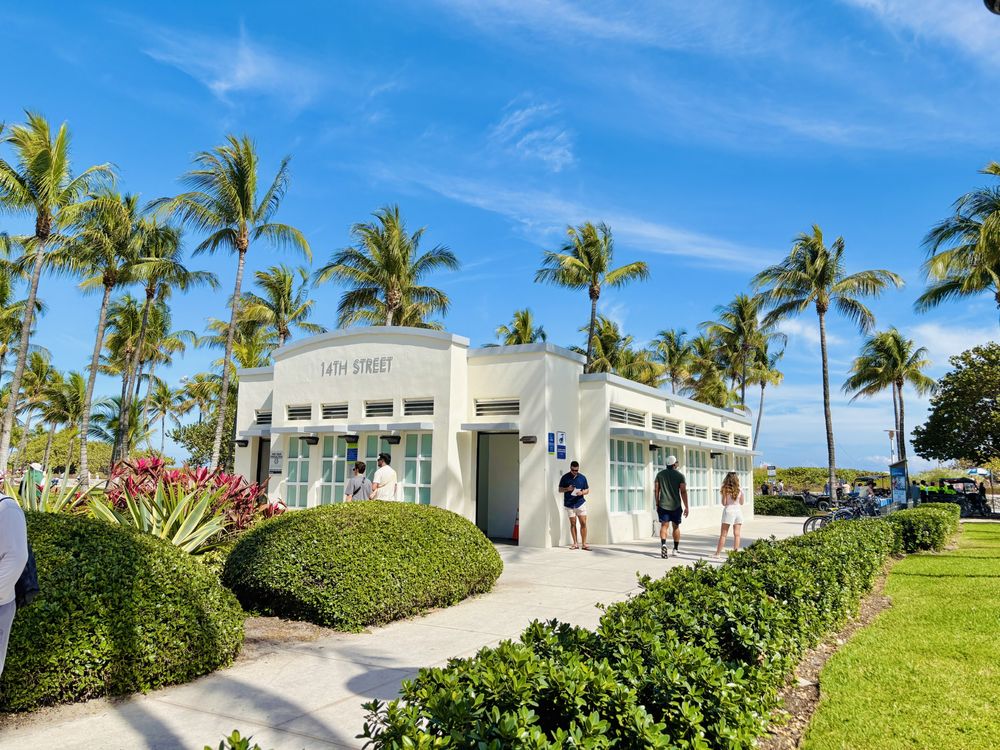
--- ## Chapter One: The Morning of Marvels The sun crept through my bedroom window like a golden paw reaching across my soft blue blanket, and I swear it tapped me right between my velvety white ears. I stretched—front legs first, then a luxurious arch of my back—and let out a puppy yawn so enormous that Roman's poster of outer space probably felt the breeze. "Pete! Pete! Are you awake, little dude?" Roman's voice tumbled up the stairs like a cascade of excitement, each word bouncing and tumbling over the next. I scrambled to my paws, my little puggle nails clicking against the hardwood floor like a tiny drumroll. "Am I awake? Is the sky blue? Is my nose spectacular?" I barked, though to Roman it probably sounded like enthusiastic yipping. But he always understood me, my Roman. He was twelve, all gangly limbs and perpetually untied sneakers, with a grin that could split clouds open to let sunshine through. He appeared in my doorway, his brown hair sticking up in seventeen different directions, wearing his favorite faded green t-shirt with the dinosaur on it. "Today's the day, Pete. Lummus Park. South Beach. Sand between your toes—well, paw pads. You ready to conquer the world?" I leaped into his arms, and he caught me with that practiced ease of a boy who'd done this a thousand times before. I licked his chin, his nose, his eyebrow—anywhere my tongue could reach, really. "Conquer the world? With you, Roman? I'd conquer the moon if you asked me to." Downstairs, the kitchen hummed with morning energy. Mariya stood at the stove, her curly hair escaping from a colorful scarf she'd tied back with, stirring something that smelled of cinnamon and happiness. She hummed a song that didn't quite exist, making it up as she went along, and the melody wrapped around the kitchen like a familiar blanket. "There's my beach boy," she sang out, spotting me in Roman's arms. She set down her wooden spoon and came to scoop me up, pressing her nose to mine. "You smell like sleepy puppy dreams. Are you ready for the ocean?" The ocean. The word shimmered in my chest like sunlight on water—beautiful but vast, intriguing yet... something tightened in my belly. I'd seen the ocean on television, heard its roar in Roman's nature documentaries. That endless blue, those curling waves that rose and crashed like the world itself was breathing. "Pete?" Mariya's voice softened, her perceptive eyes—so like pools of warm honey—searching my face. "Are you okay, sweet boy?" I wagged my tail with deliberate enthusiasm. "Perfect! Never better! Absolutely, completely, one-hundred-percent—" But my internal voice trembled slightly, a single off-key note in an otherwise cheerful song. Lenny emerged from behind his newspaper, his reading glasses perched on his nose like a friendly bird. "Our pup looks like he's contemplating the mysteries of the universe," he observed, his voice a rumbling bass of warmth. "Deep thoughts for a beach day, Pete. Save the philosophy for the car ride, yeah?" He reached over to ruffle my ears, and I leaned into his touch. Lenny had hands like weathered maps, strong and sure, and when he touched you, you felt anchored to something solid and true. "Maybe Pete's just excited," Roman offered, though his eyes held a question he'd save for later, just us two. I nuzzled Mariya's neck, breathing in her scent—vanilla and something floral, mixed with the indefinable warmth that meant *mother* in every language. "Excited," I confirmed, and willed it to be entirely true. The car ride bloomed with anticipation like a flower opening to the sun. Roman sat in the back with me, my booster seat pressed against his thigh, and I watched Miami unspool outside the window—palm trees dancing their lazy dance, buildings giving way to broader skies, and finally, impossibly, the first flash of blue that made my heart stutter. "That's it, Pete," Roman whispered, following my gaze. "That's the Atlantic Ocean. Pretty cool, right?" "Cool," I managed, though my mouth felt dry as sand. Mariya turned from the front seat, her smile luminous. "Remember when we first brought Pete home? He was so tiny, he fit in my purse." "And now look at him," Lenny chuckled, navigating toward the parking area. "A regular beach bum in training." The car stopped. The engine died. And suddenly, impossibly, we were there—Lummus Park, South Beach, the world spread before us like a gift waiting to be unwrapped. --- ## Chapter Two: The Kingdom of Sand and Sky The moment my paws touched the parking lot asphalt, still warm from the morning sun, I understood that this place was different from anywhere I'd ever been. The air here had texture—you could almost chew it, thick with salt and something wild and ancient. It carried sounds on its back: laughter and music and the eternal conversation between ocean and shore. "Pete, wait until you see," Roman breathed, unclipping my leash from my harness with fingers that trembled slightly with shared excitement. "The sand goes on forever." And it did. We crossed from pavement to grass to that first unbelievable step onto sand, and I froze—paw suspended, nose working overtime. The sand was warm, granular, shifting beneath my weight like a living thing. It tickled between my paw pads, insinuated itself under my nails, became suddenly, overwhelmingly *everywhere*. "Roman, it's eating me!" I yipped, though my tail betrayed my theatrical panic with its vigorous wagging. Roman laughed, that full-bodied sound that started in his belly and burst out like summer fireworks. "It's sand, Pete! It's not gonna hurt you. Look!" He kicked off his sneakers and let the sand cascade between his toes, wiggling them with deliberate exaggeration. "It's like a million tiny masseuses!" "That sounds medically unsound," I observed, but I took another step, and another, and with each one the strangeness became familiarity, became *fun*. I began to understand what made this place magical—every step was an adventure, every grain of sand a tiny world unto itself. Mariya spread our blanket with the practiced efficiency of a woman who'd done this before, weighting the corners with our cooler, her enormous straw bag, and two pairs of sandals. Lenny was already marching toward the water's edge, khaki shorts rolled to his knees, phone raised to capture the horizon. "Come on, Pete!" Roman called, running ahead, then back, then ahead again—a boy unable to contain his kinetic joy. I bounded after him, my short puggle legs pumping, my velvety white fur becoming speckled with sand that clung like tiny golden stars. We passed other families, other dogs, other worlds entirely—a golden retriever burying a tennis ball, a toddler building a kingdom of dripped sand, an elderly couple holding hands as the water kissed their ankles. And then I saw her. She stood beneath a striped umbrella, regal as a queen surveying her domain—an Italian Mastiff, her coat the color of burnished mahogany, her eyes deep and knowing and somehow amused. She watched my clumsy approach with the patience of someone who'd seen many puppies lose their composure at her beauty. "Well," she said, her voice like warm honey poured over velvet, "you appear to be having an argument with the very concept of sand." I stumbled, caught myself, tried to look casual and failed spectacularly. "I'm Pete," I announced, then immediately wanted to swallow my own tongue. "I mean, the sand and I are old friends. Very old. Ancient, even." "Indeed." Her tail gave a single, elegant thump. "I'm Luna. And you, Pete-who-argues-with-sand, are turning the color of a boiled lobster." I followed her gaze and realized Roman had indeed missed a spot with my dog-safe sunscreen. The tip of my nose glowed pink. "Sunscreen," I said, as if this explained everything. "It's... fashionable." Luna's laugh was like wind chimes in a gentle breeze. "Come, fashionable Pete. The shade is kinder than the sun, and I have water in my bowl that hasn't been introduced to the Gulf Stream yet." We settled beneath her umbrella, and I learned that Luna belonged to a retired couple who read on the beach every Tuesday, that she was three years old and had "seen things" in her youth, and that she found my nervous energy "moderately entertaining, which is the highest compliment I give." "You're different from the usual beach puppies," she observed, her massive head resting on her paws. "Most come barreling at the water like it owes them money. You... hesitate." The ocean. I'd almost forgotten, in the delight of her company, the looming presence of that great blue beast. But now, following her gaze, I saw it properly for the first time—endless horizon, waves building and breaking with a sound like the world itself inhaling and exhaling. "It's big," I whispered, and the words contained multitudes. Luna followed my gaze, her own eyes reflecting something ancient and understanding. "It is that," she agreed. "But Pete? Everything worth having is bigger than we are at first. That's what makes the having worthwhile." Before I could process this wisdom, Roman's voice cut through my reverie. "Pete! There you are! Mom says we can go in the water now!" My heart became a trapped bird in my chest. --- ## Chapter Three: The Blue Beyond Roman's hand closed around my harness, gentle but insistent, and I found myself being carried toward the water's edge like a prisoner being marched toward... well, not exactly a dungeon. More like a very wet, very loud, very unpredictable dungeon with excellent views. "Pete, you're shaking," Roman observed, kneeling in the wet sand so we were eye to eye. The water licked at his knees, retreating and advancing in a game I wanted no part of. "Hey. Hey, look at me." I forced my eyes from the approaching wave—so innocent, so deceptively small, so clearly the advance scout for a watery army—and met his gaze. Roman's eyes were brown like his father's but softer, still forming their final shape, holding all the earnestness of a boy who genuinely wanted to understand. "You don't have to go in," he said, and I heard the sacrifice in his voice, the way he pushed down his own excitement to make room for my fear. "We can build sandcastles. Or chase birds. Or I can carry you and we just... look at it. From a safe distance." The wave retreated, and my heart retreated with it, leaving space for something else to rush in. Gratitude, sharp and sweet. Love, vast and familiar. And something new—that stubborn spark that had made me leap into Roman's arms this morning, that had carried me across the alien sand, that made me want to be brave not despite my fear but because of it. "I want to try," I heard myself say, and the words surprised us both. Roman's smile could have powered the city. "Really? Pete, really?" "Really," I confirmed, though my voice wobbled like jelly on a washing machine. "But... slowly? Very, very, extremely, monumentally slowly?" "Glacial," he promised. "Tectonic plate slow. Evolution-of-species slow." He held me as the first tiny wave reached us, just a whisper of foam around his ankles. I felt the water's cold through his hands, felt its pull as it retreated, taking sand from beneath my paws in a sensation I can only describe as deeply, personally offensive. "That's the worst thing that's ever happened," I announced, though I didn't struggle to escape. Roman laughed, but gently, without mockery. "It gets better. Or so I'm told. Want to go deeper?" Each step was a negotiation with my own heartbeat. The water reached my belly—"Unacceptable, Roman, absolutely unacceptable." Then my chest—"I am dying, this is how I die, tell Luna I died bravely." Then, with a sudden drop-off that made me yelp, my paws found no purchase and I was swimming, truly swimming, my paws paddling furiously against water that cradled and supported and surrounded. And then, impossibly, I was floating. Roman's hands supported my belly, but the water did the real work, holding me up like a promise kept. The fear didn't disappear—I'm not sure fear every truly disappears, not entirely—but it transformed, became something I could hold alongside my joy rather than something that excluded it. "I'm swimming!" I barked, and water entered my mouth, and I sputtered, and Roman laughed, and it was all so gloriously, messily alive. "Pete, you're doing it! You're really doing it!" His voice cracked slightly, that pre-teen break that showed up at emotional moments, and I loved him for it, loved him for every cracked note and steady hand. We stayed until my paws grew tired, until Mariya's voice called us back for sandwiches, until the sun climbed higher and the beach filled with more adventurers. And as Roman carried me out, water streaming from my fur, I caught sight of Luna watching from beneath her umbrella, and I would swear—would absolutely swear on a stack of dog biscuits—that she smiled. --- ## Chapter Four: The Afternoon of Endless Light Sandwiches with Lenny were an event unto themselves. He unpacked them with ceremonial gravity, each layer revealed like the unveiling of a minor masterpiece. "Turkey and cheese for my lady," he intoned, presenting one to Mariya with a bow that made her giggle like a girl. "And for the adventurer..." He produced a container of specially prepared chicken, cooled and cut into appropriate sizes, "the finest cuisine this side of Ocean Drive." I was still damp from my aquatic adventure, wrapped in a beach towel that smelled of our laundry detergent and home, and the chicken tasted of triumph. Each bite was a celebration: I had faced the water and survived. More than survived—I had swum, floated, existed in a medium that was not my own and found it held me up. "You were magnificent," Luna had said when we passed her again, and the words replayed in my mind like a favorite song. Magnificent. Me. Pete the Puggle, who'd trembled at the water's edge. "Pete's got that look," Roman observed, sprawled on his stomach beside me, propped on his elbows. "The 'I'm thinking deep puggle thoughts' look." "Very deep," I confirmed, licking chicken from my whiskers. "Profoundly deep. Oceans would be shallower." Mariya lay back on the blanket, hat shading her face, book forgotten on her chest. "I saw you out there, baby boy. You were so brave." "Scared but brave," Lenny added, and the distinction felt important, felt seen. "That's the real thing, Pete. Not absence of fear. Moving through it." The afternoon stretched golden and generous. Roman and I walked the water's edge, letting waves chase our feet, and I found myself running toward them rather than away, barking challenges at their retreat. Each victory built my confidence like bricks in a fortress—not against the water, but against the part of myself that had been certain I couldn't. We met other dogs, a whole society of beach citizens: a frantic Jack Russell named Sprinkles who dug holes with religious fervor; a dignified Basset Hound called Winston who opined that the beach was "tolerable, which is high praise indeed"; a pack of golden retrievers who invited me to join their game of aquatic fetch and accepted my refusal with good-natured grace. "You'll get there," their leader, a veteran named Sunny, assured me. "First year, most of us just stand at the edge and look noble. It's a process." Luna found us as the light began to shift, that magical hour when the sun tilts toward the horizon and everything becomes briefly golden. She moved with unhurried grace, each step considered, each moment fully inhabited. "You're still here," she observed, settling near us with the ease of someone who'd decided to belong. "I had you pegged for an early departure. The fearful ones usually are." "I was fearfully brave," I corrected, and she laughed, that wind-chime sound. "There's a difference," she acknowledged. "And what brave thing will you attempt next, Pete the Fearfully Brave?" The shadows were lengthening. I noticed it suddenly, the way the light changed from gold to something deeper, the way the beach began to empty of daytime inhabitants. And with that noticing came another realization: the sun was going down. Night was coming. My paw found Roman's ankle, pressed against it without conscious decision. "Pete?" He felt my tension, always did. "You okay?" "Fine," I lied, or tried to, but my voice came out small. Luna followed my gaze to the horizon, where the sun hovered like a coin about to drop. "Ah," she said, with that ancient understanding. "The dark." "How did you—" "I know many things," she said, not unkindly. "And I know that the dark is just the light taking a rest. It will return. It always does." But the words couldn't reach the place where my fear lived, the cold center that remembered being small, being alone, being lost in blackness without Roman's breathing nearby, without Mariya's voice calling me home. The sun dipped lower. The first brave star appeared. And I felt it building, the old terror, the certainty that when dark came fully, I would be alone, forgotten, unfindable in the vastness. "Pete." Roman's hand, warm and certain, covered my paw. "I'm right here. I'm always right here." I wanted to believe. I truly did. --- ## Chapter Five: When the Light Goes Away The sunset was beautiful. I hated it. Mariya called it "breathtaking," and Lenny photographed it, and Roman sat cross-legged in the cooling sand with me in his lap, and all I could think was: it's leaving. The light is leaving, and then comes the dark, and in the dark, anything can happen. "You're trembling again," Roman whispered, his chin resting on my head. "Pete, what's wrong? You were so happy this afternoon." I couldn't explain. How to translate the wordless panic, the ancestral memory of predators in darkness, the small-puppy fear that had never fully departed? I could face the ocean now, yes, but this was older, deeper, inscribed in my very biology. "I don't like the dark," I managed, and the understatement made me want to laugh, if laughing were possible. Lenny and Mariya were packing up, the efficient choreography of a family preparing to depart. Their voices carried on the evening air, planning, organizing, present in a way that felt suddenly fragile. "Then we stay in the light," Roman decided. "We watch the sunset, and then we use our phone flashlights, and then we get in the car where it's bright. Step by step, Pete. Like the ocean." But the ocean had been warm, had held me up. The dark promised nothing, offered no such guarantees. The last sliver of sun vanished. The sky purpled, then deepened toward black. And with the darkness came a new sound, or rather the absence of familiar ones—the beach emptying, families departing, the daytime world withdrawing like a tide going out, out, impossibly far. "Ready!" Mariya called, shouldering her bag. We moved toward the parking area, Roman carrying me now, and I buried my face in his neck, breathing his familiar scent. But even this comfort couldn't fully dispel the crawling sensation, the certainty that the dark was vast and we were small within it. And then—chaos. A firework, premature, exploded somewhere near the shore. Not part of any official display, just kids with more daring than sense, but the effect was instantaneous. I bolted. Pure instinct, the ancient wiring that says *loud = danger = run*, and I was out of Roman's arms, out of his reach, running into the darkness with no direction but away. "Pete! PETE!" His voice followed me, but fear was faster. I ran through sand that dragged at my paws, past umbrellas now folded and ghostly, past the water's edge where the waves whispered their eternal secrets. I ran until my lungs burned and my legs shook and then I ran more, because the dark was behind me, around me, in me, and stopping meant letting it win. Finally, finally, I collapsed beneath a lifeguard stand, its wooden bulk offering meager shelter. The beach stretched empty in all directions. The sound of Roman's voice had faded, replaced by the ordinary noises of night: waves, wind, distant traffic, the creaking of something metal somewhere. I was alone. The thought expanded to fill the entire universe. Alone in the dark. Alone on the beach. Alone with the ocean that had seemed friendly by daylight and now breathed like something huge and watching. "Roman," I whispered, and my voice was swallowed by the darkness like a pebble dropped in endless water. "Roman, I'm sorry, I'm sorry, I'm sorry..." Time became strange. I couldn't say how long I huddled there, each sound magnified into potential threat. The wind in the sea grass became whispering voices. The retreating waves became footsteps, approaching, always approaching. My imagination, that gift that made me a storyteller, turned against me, painting horrors in the darkness. And then, worse: the footsteps were real. Something moved in the dark, something large, coming toward my hiding place with deliberate purpose. I pressed myself against the lifeguard stand's support beam, willing myself invisible, knowing it was futile. "Pete?" The voice was deep, familiar, impossibly present. I emerged, trembling, and there she was—Luna, her mahogany coat nearly invisible in the darkness, her eyes catching what little light remained like polished stones. "Luna? How—" "My humans were leaving. I heard the commotion." She settled beside me, her bulk warm and solid and real. "You've had quite the adventure, little puggle." "I got scared," I admitted, the words shameful and necessary. "The firework, and the dark, and I ran, and now Roman can't find me, and I can't find him, and—" "Breathe," Luna commanded, and something in her tone cut through my panic. "Breathe, Pete. Fear makes us stupid, and you cannot afford stupidity right now." I breathed. The air tasted of salt and night, but also of her—something earthy and reassuring. "Now," Luna continued, "your Roman is looking for you. I heard him calling. But Pete, the dark is not your enemy. It is merely the absence of light, and light returns. Always. The trick is to survive the waiting." "How?" The question tore from me, raw and young. "By remembering what you know. You know your family loves you. You know they search. You know this beach ends somewhere, and beyond it, streets and lights and the world you know. The dark does not erase these truths. It merely asks you to hold them without seeing." Her words wove around me like a blanket. I thought of Roman, how he'd held me through the ocean's challenge. Of Mariya's honey eyes, Lenny's steady hands. Of morning light and afternoon adventures and all the brightness I'd known and would know again. "I want to be brave," I whispered. "Then be brave," Luna said simply. "Bravery is not the absence of fear. It is the decision to act despite it. You ran from the water, then returned. You can do the same now." And so, with Luna beside me, I gathered my courage like scattered sand. I stood. I listened past my heartbeat's thunder. And there—faint, distant, but undeniable—I heard it: "Pete! Pete, where are you?" "Roman!" My bark cracked with emotion, but it carried. "Roman, I'm here! I'm here!" The footsteps came running, and then there he was, my Roman, my boy, his face wet with something that wasn't seawater, scooping me up with hands that shook and held too tight and were perfect. "Pete, Pete, I thought—I couldn't find you—I thought—" "I'm sorry," I babbled, licking every part of his face I could reach. "I'm sorry, I ran, I was scared, the dark—" "The dark," he repeated, and laughed, that cracked, emotional sound. "Pete, you silly, brave, ridiculous dog. I don't care about the dark. I just care that you're okay. That you're here." And in his arms, pressed against his thundering heart, I understood something about darkness: it could take everything from sight, but it could not touch what we carried inside. Love was light that needed no sun to shine. --- ## Chapter Six: The Search and the Finding But our adventure, it seemed, was not yet complete. Roman carried me toward where we'd left our blanket, our belongings, our anchored spot in the world—and found only empty sand, footprints already fading, the marks of our presence washed away by tide and time. "Mom?" Roman's voice pitched higher. "Dad?" The beach stretched empty in both directions. The parking lot, visible from our position, held unfamiliar cars, none of them ours. The lifeguard stand where I'd hidden was not, I now realized, near our original spot at all—I had run farther than I'd known, turned around by panic, and Roman had followed, and now we were somewhere else entirely. "They're gone," Roman whispered, and I heard the child in his voice, the little boy who still lived beneath the growing young man. "Pete, they left us." "No," I said, though he couldn't understand. "No, they wouldn't. They couldn't." But the dark whispered doubts. Had they even noticed our absence in the chaos of departure? Had they assumed we followed, would follow, were following? How long before they realized? How long before they returned? Roman sat in the sand, still holding me, and I felt his fear now, the tremor he'd hidden for my sake finally breaking through. "What do I do, Pete? I don't know where we are. I don't have my phone—it was in Mom's bag. I don't..." His voice trailed into silence, into the dark's vast indifference. And I felt it then, the temptation to surrender to fear, to become small and waiting rather than brave and seeking. But I had faced the water. I had faced the dark. And I would not, I resolved, let my Roman face this alone. I squirmed from his arms, stood on shaking legs, and barked—once, twice, three times, the sound carrying into the night with all the authority I could muster. "Pete?" Roman wiped his face with his sleeve. "What are you doing?" I barked again, and again, and then I listened, truly listened, past the waves and wind to the spaces between sounds where hope might live. And there—there it was. Distant, answering, a human voice calling: "Roman? Is that Roman?" "Pete, you genius—MOM! DAD! We're here! We're over here!" We ran toward the voice, Roman stumbling in the soft sand, me leading with my better night vision, both of us following the sound of Mariya's desperate calling, Lenny's deeper shouts, the chaos of a family searching and finding and being found. They met us halfway, Mariya scooping Roman up as if he were still small enough to lift, Lenny's hands finding us both and holding on as if he'd never release, and me passed between them like the precious thing I was, the connection point, the love that bound us. "We thought you were with us," Mariya wept, laughed, wept again. "We got to the car and you weren't—Roman, you weren't—" "I chased Pete," he explained, and his arm tightened around me. "He got scared. A firework. He ran." "And you ran after him," Lenny said, and his voice was roughwith something complex—pride and fear and love so vast it had no proper name. "You brave, foolish, wonderful boy." "Like father, like son," Mariya managed, and somehow they laughed, all of them, the sound breaking through tension like sunlight through clouds. But I noticed, even in the relief, that Lenny's eyes stayed on the darkness beyond our reunion, vigilant, protective. I noticed how his hand found Mariya's, how they clung. I noticed that love, even found, left its mark of almost-lost. --- ## Chapter Seven: The Return of Light The car ride home was quiet in a different way from our arrival. We were tired, yes, sand in every crevice, salt in our fur and hair and the corners of our smiles. But the silence was full, not empty—full of processing, of gratitude, of the particular peace that follows survived adventure. Mariya drove, which meant something had shifted, some unspoken agreement that she needed control of something, anything, after feeling so helplessly out of it. "Pete?" Roman's voice came from the backseat, where he sat with me curled in his lap, still wrapped in the beach towel that had become my security blanket. "You were really brave tonight. Finding Mom and Dad. Barking like that." I wagged my tail weakly, too exhausted for full enthusiasm. "We were brave," I corrected, or tried to, in my limited way. "Together." He understood, or chose to understand. With Roman, the distinction rarely mattered. "Can I tell you something?" he continued, voice low enough that front-seat Lenny's soft snores and Mariya's focused driving created privacy. "When I couldn't find you? I was more scared than I've ever been. More than spiders. More than that time I got lost at the mall. More than... anything." I licked his hand, salt and sand and the essence of boy. "But then you barked. And I thought—he's okay. Pete's okay, and if Pete's okay, we can figure this out. And we did." He paused, considering. "Is that weird? That my dog makes me brave?" "Not weird," I would have said. "Essential. The way love works." At a red light, Mariya turned, her face still pale but settling into its normal warmth, like a photograph developing slowly. "You know what I kept thinking?" she asked the car, the night, us. "That we'd had such a perfect day. And then—not perfect. And I realized I'd been wrong. It wasn't perfect before. It was just... unchallenged. The challenges were what made it real." Lenny stirred, his hand finding her shoulder, squeezing. "Deep thoughts for a beach day," he rumbled, echoing his earlier joke, and the repetition felt like charm, like ritual, like family. "Save the philosophy for the car ride," Roman piped up, completing the pattern, and the laughter that followed was healing, was home, was everything. We arrived to our house, our yard, our world that had continued its quiet existence without us. But we returned different—scratched by sand, salted by sea, marked by darkness and its defeat. Roman carried me to my bed, tucked me in with the care of someone who'd almost lost something precious. "Tomorrow," he promised, "we'll check for sand in weird places. And I'll tell you about the time I got lost at the mall. Trade stories of survival." I would have wagged, if I'd had energy. Instead, I pressed my nose to his offered hand and breathed him in. Safe. Found. Home. --- ## Chapter Eight: The Stories We Tell Morning came with its eternal optimism, light streaming through the same window where the sun had first found me. I stretched—more carefully now, aware of muscles aching from yesterday's exertions—and padded to Roman's door. He was already awake, sitting cross-legged on his bed, something in his hands. A photograph, I realized as I scrambled up to see. From yesterday, printed somehow, already captured and preserved. "There you are," he smiled, making room for me. "Look. Look what Dad found this morning." The image: me, in the water, paws paddling, face certainly ridiculous, Roman's hands supporting my belly. Behind us, the infinite ocean, and in the foreground, just visible at the edge, a mahogany shape watching with what could only be called approval. "Luna," I breathed, touching the image with my nose. "Luna," Roman agreed, though he misread my focus. "Her owners gave Dad their number. Said she doesn't usually take to other dogs. Must have seen something special in you, Pete." I studied the image, this frozen moment of my bravest self. The water that had terrified me, the boy who'd never let me fall, the distant shore of what I'd overcome. And her, witnessing, her presence a promise that I hadn't been alone even when I'd felt most so. "Roman." Mariya's voice from downstairs, carrying that particular tone of someone preparing something wonderful. "Breakfast! And Pete has a visitor!" We descended to find Lenny at the stove—an unusual sight, his weekend "dad cooking" that generally meant eggs slightly burned and coffee slightly strong, but made with such earnest effort that taste became secondary. And at the kitchen table, elegant as a queen in a borrowed chair, Luna. Her humans, the retired couple, smiled over coffee cups. "She seemed to know you were thinking of her," the woman—Helen, I would learn—explained to Mariya. "Sat by the door this morning and wouldn't move until we brought her here." Luna caught my eye, and her tail gave that single, elegant thump I'd come to recognize. "I told you," her look seemed to say. "Everything worth having is bigger than we are at first." We gathered, eventually, all of us—humans around the table with their eggs and toast, Luna and I on the floor with bowls of appropriately celebratory treats. The conversation wove between yesterday's adventure and today's recovery, between what happened and what it meant. "I was thinking," Lenny said, during a lull, his voice carrying that particular weight of someone about to say something that mattered, "about how we almost didn't find each other. And how Pete—Pete of all our brave warriors—was the one who brought us back together." "Roman too," Mariya added, reaching to ruffle her son's hair. "Running after his brother. Not thinking, just... loving." "I was scared," Roman admitted, to the table, to us, to himself. "The whole time. But Pete was more scared, and someone had to... I don't know. Be the brave one." "That's the secret, buddy," Lenny said, and his eyes were suspiciously bright. "The brave one is always scared. That's what makes it bravery." I thought of the water, cold and vast. Of the darkness, deeper still. Of running and being found and finding in return. And I thought of Luna's wisdom, how she'd known without being told, how she'd come when needed, how love took forms we didn't always expect. "Pete," Roman whispered, bending to my level as the adults' conversation moved on, as Luna's gentle snoring suggested she'd found this family gathering satisfactory enough to nap through. "Are you scared now? Of anything?" I considered. The future held uncertainties—more dark nights, more unfamiliar waters, more moments when the world seemed too large and I too small. But I had learned something in our adventure, something I hoped to carry like a shell found on the beach: that fear was not the opposite of courage but its necessary companion, that love was light that needed no sun, that family was not the absence of being lost but the certainty of being found. "A little," I admitted, because truth mattered, even in barks and tail wags and the language of eyes. "But mostly... mostly I'm grateful. And tired. And hungry. And hoping Luna will visit again." Roman laughed, that full sound I loved, and pressed his forehead to mine. "Weirdo dog," he said fondly. "Crush on a mastiff. Thinks he's people." "I am people," I would have told him. "We're all people, in the ways that matter." Later, after Luna departed with promises of future visits, after the dishes were done and the sand finally washed from between my paw pads, after the house settled into its evening rhythms, I found myself on the back porch with Roman. The sky purpled toward night, and I felt the old whisper of fear—but quieter now, companioned by experience. "You're not shaking," Roman observed. "Noticing," I corrected, or tried to. "Noticing the dark. Not surrendering to it." He reached down, and I leaped to his lap, and together we watched the first stars appear. Each one, I realized, was a story—of light traveling across impossible distance, of being seen despite having left its source long ago. We were made of such light, all
Use these buttons to read the story aloud:



No comments:
Post a Comment