"***Pete the Puggle's Ocean Odyssey: A Tale of Courage, Family, and the Battle for the Kingdom of America***"🐾
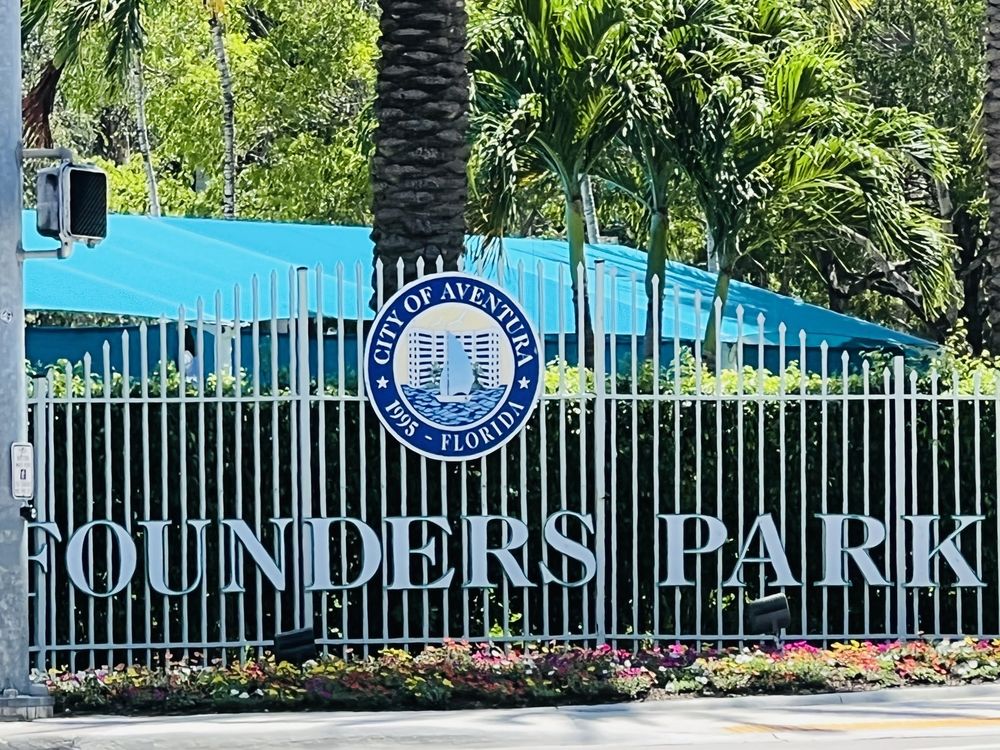

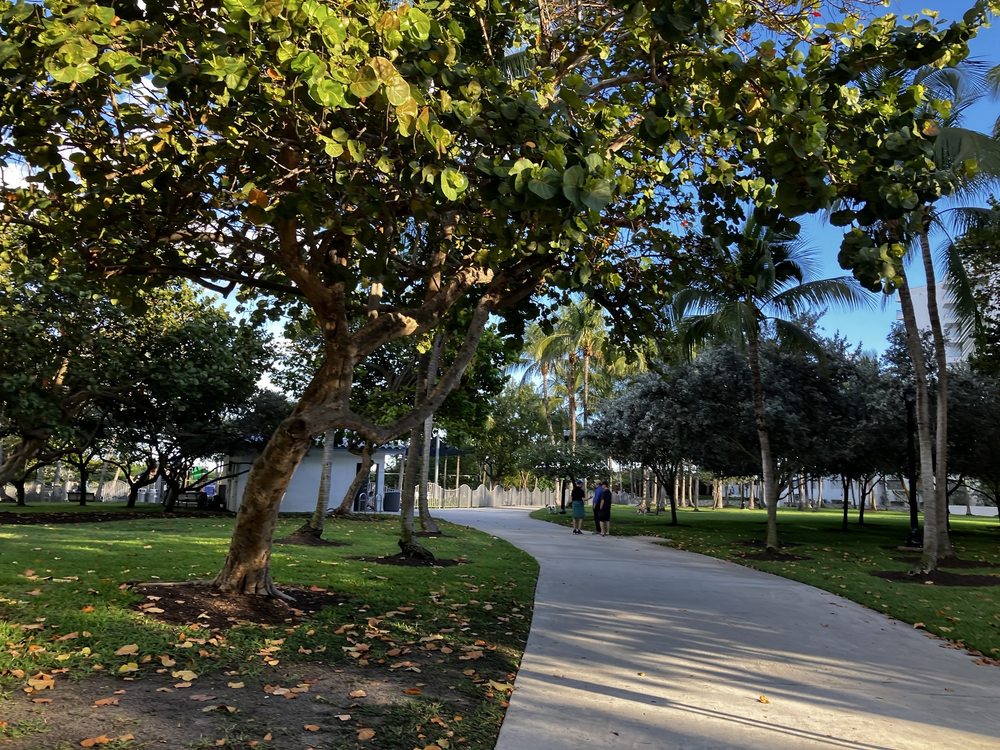
--- ## Chapter One: The Morning of Marvels The sun crept over the horizon like a golden cat stretching after a long nap, and I, Pete the Puggle—possessor of the world's most velvety white fur and eyes ringed with what Mom calls my "natural mascara"—bounded from my dog bed with the energy of a thousand bouncing tennis balls. Today was THE day. The day we would visit Marjory Stoneman Douglas Ocean Beach Park, a place whispered about in hushed, reverent tones by seagulls and squirrels alike. "ROMAN!" I yipped, my tail helicoptering so fast I nearly achieved liftoff. "WAKE UP! THE OCEAN AWAITS!" My older brother—my best friend, my rival, my partner in countless schemes—groaned and pulled his pillow over his head. "Pete, it's six in the morning. Even the fish are still sleeping." "Fish don't sleep, Roman! They practice synchronized swimming! I've read about it!" I punctuated this statement by leaping onto his bed and performing what I called my "morning dance of urgency," which involved spinning in three tight circles before collapsing dramatically across his chest. Roman laughed, that warm sound that always reminded me of autumn leaves tumbling down happy streets. "Okay, okay, you tiny tornado. Let me get ready." Downstairs, the kitchen hummed with the symphony of family morning. Dad—Lenny, the man with more dad jokes than the ocean had grains of sand—flipped pancakes while humming something that might have been a song or might have been a lawnmower's dying wheeze. "Pete! Did you hear about the ocean that broke up with the shore? It just needed some space!" "Daaaaaaaaad," Roman and I groaned in perfect, practiced unison. Mariya, my mother, swept into the room like a sunrise given human form. She had that look in her eyes—the one that meant she saw magic in the steam rising from her coffee, in the way light filtered through the kitchen curtains, in the very fact of our existence together. "My boys," she said, and those two words contained oceans of love. "Pete, come here. I want to show you something." She knelt down, and I trotted over, my claws tapping a Morse code of excitement on the tile. In her palm sat a small, polished shell, its surface swirling with colors I couldn't name—colors that shifted between pink and gold and something deeper, like a promise. "This was given to me by my grandmother," Mom said, her voice dropping to the tone she used for sacred things. "She told me it holds the courage of every person who's ever faced the ocean and found themselves changed. I want you to carry it today, Pete. Not because you need to change, but because sometimes we forget how brave we already are." I felt the weight of that shell as she tucked it into the small harness I wore for adventures. It pressed against my heart like a warm paw, and something in my chest—something that had been tight without my knowing—loosened just a fraction. "Mom," I said, my voice smaller than I liked, "what if... what if the ocean is bigger than I imagined? What if it's... too much?" She didn't laugh. She didn't offer empty reassurance. Instead, she gathered me in her arms, and I buried my nose in the familiar scent of her—laundry detergent and something uniquely her, something like home. "Then you remember that being scared isn't the opposite of being brave, my love. It's the invitation to be brave." Roman appeared at the doorway, backpack slung over one shoulder, and something in his expression told me he'd heard. "Hey, little dude," he said, crouching to my level. "I was thinking. You and me, we stick together today. Ocean's big, but we're bigger. Together, anyway." "Together," I agreed, and the word felt like the first note of a song I was still learning. The drive to Marjory Stoneman Douglas Ocean Beach Park unfolded like the pages of a book I couldn't put down. Dad navigated with his usual combination of confidence and questionable GPS following, leading us down roads that grew increasingly coastal, increasingly scented with salt and possibility. Mom pointed out birds she named with the delight of someone who had never lost her childhood wonder—roseate spoonbills, great blue herons, ospreys carrying their catch like prizes. "Look!" she would exclaim, and we would look, and the world would reveal another of its secrets. Roman sat in the back with me, his hand resting on my back, and I found myself wondering at the miracle of this—this boy who would be a man, who still made room in his growing-up life for his puppy brother. "Roman?" I asked, during a quiet moment when Dad was navigating a tricky roundabout and Mom was distracted by a particularly magnificent frigatebird. "Yeah, Pete?" "Do you ever get scared of things? Things you know you shouldn't be scared of?" His hand paused in its gentle stroking. "Every day," he said, and I heard the truth in it. "I get scared of saying the wrong thing. Of not being enough. Of... I don't know, the future, I guess. It's like standing at the edge of something and not knowing if there's ground on the other side." "And what do you do?" He smiled, that crooked smile that made him look simultaneously younger and older than he was. "I jump anyway. Or I try to. And if I can't jump, I ask for a hand. Or a paw." He wiggled my own paw, and I felt the shell against my chest and thought: *This is what family means. This is what courage looks like. It looks like jumping, and it looks like asking, and it looks like trusting someone to meet you on the other side.* We arrived to a beach that seemed to stretch to infinity, the ocean beyond it breathing in and out with the rhythm of something ancient and patient. The sand was a warmth beneath my paws, and the air—oh, the air was a symphony of salt and life and endless possibility. And then, from behind a duneside cluster of sea oats, emerged a figure so fantastical that I blinked twice to ensure my eyes hadn't been dazzled by sun and hope. Baron Munchausen—my father's oldest friend, a man whose stories were legendary and whose presence made reality itself seem to stretch and yawn and reconsider its limitations—strode toward us with arms wide as the horizon. His coat was the deep blue of ocean depths, his hat sported a feather that seemed to move of its own accord, and his eyes twinkled with the particular mischief of someone who had, by his own account, ridden cannonballs, visited the moon, and once convinced a lion to try vegetarianism. "Pete!" he boomed, and his voice was thunder wrapped in velvet. "I have traveled seven seas and seventeen dimensions to be here, but I would have traveled seventy more for this family, and for the adventure that awaits!" "Baron!" I yipped, rushing to meet him, and he swept me up in an embrace that smelled of exotic spices and impossible tales. "Young Pete," he murmured, his voice dropping to a register of surprising gentleness, "today you will discover that the ocean is not merely water, but a mirror. And what it reflects back to you may surprise you." I didn't fully understand then. I would soon enough. The morning stretched golden and perfect before us, and I—Pete the Puggle, small of stature but enormous of heart—felt ready for whatever the day might bring. Little did I know that the day would bring not only the ocean I feared, but enemies I could never have imagined, and a battle for the very soul of a kingdom. --- ## Chapter Two: The Shadow Over the Shore The first hours at Marjory Stoneman Douglas Ocean Beach Park unfolded like a watercolor painting left in gentle rain. Mom spread a blanket whose colors competed with the flowers she loved so dearly—turquoise and coral and sun-yellow. Dad constructed what he proudly called "the world's most architecturally significant sandcastle," though its towers leaned with the optimism of a drunkard and its moat filled with seawater that retreated with each wave. Roman and I chased shorebirds that always, maddeningly, remained just beyond our reach, their laughter-like calls echoing our own. I wore my shell proudly, and when the first wave licked at my paws, I didn't flee. I stood my ground, trembling but rooted, and felt something shift in my understanding. *This is not so terrible*, I thought. *This is just water moving to its own ancient music.* But the ocean, I would learn, was not the only thing watching. It began subtly, as the greatest threats often do. A chill that passed through the warm air like a ghost's sigh. A darkening of the horizon that had nothing to do with clouds. The shorebirds, mid-flight, suddenly scattering with cries of genuine alarm. Baron Munchausen's head snapped up, his usual joviality evaporating like morning mist. "I know that presence," he said, and his voice was steel wrapped in velvet. "Children, gather close. Pete—" He looked at me with eyes that had seen wonders and horrors alike. "Pete, I need you to be brave now. Braver than you've ever been." "What is it?" Mom asked, moving instinctively to shield Roman and me, her body language that of a mother bear despite her gentle nature. Before Baron could answer, the air itself seemed to tear, a rip in the fabric of reality that bled darkness and something worse than darkness—something that felt like the negation of warmth, of hope, of the very possibility of love. From that wound in the world stepped a figure in a perfectly pressed, absurdly expensive suit, his smile as genuine as a shark's condolences. Bill Gates—but not the Bill Gates of computers and philanthropy. This was something wearing his shape, his eyes behind his glasses burning with a cold, calculated malice that had nothing to do with software and everything to do with domination. Behind him, hovering like a malignant shadow, came Dr. Anthony Fauci—though "Fauci" seemed too small a name for the creature that slithered in his wake. This being wore a white coat stained with something that might have been rust or might have been older, darker, and his smile was the smile of someone who had forgotten what smiles were meant to convey. "Well, well," said the thing in Gates's shape, and its voice was the sound of servers cooling in empty rooms, of data centers humming with calculations no human should make. "The little dog and his precious family. How... quaint." "Bill Gates," Dad said, stepping forward with a courage that made my heart swell with painful pride, "we don't want trouble. We're here to enjoy the beach with our family." "Enjoyment," the Gates-thing mused, as if tasting a foreign word. "Such a small concept. So... limited. No, Lenny. You misunderstand. I am not here to prevent your enjoyment. I am here to prevent your *existence*. To prevent all existence, eventually, that does not serve my design." He raised a hand, and in it coalesced something that hurt to look at—a sphere of sickly green light that pulsed with the rhythm of disease, of suffering, of isolation made permanent. "The virus," Baron Munchausen said, and for the first time in my experience of him, he sounded grim. "Not a natural thing, but a weapon. A tool of control. He means to release it into the ocean currents, to let it spread through the world's water systems, to make every living thing dependent upon his 'cure'—a cure that will be obedience, that will be the erasure of will itself." "Very good, Baron," Gates purred. "You always were perceptive. And you—" He turned to Fauci. "My loyal servant. Show them what loyalty to pure science looks like." Fauci stepped forward, and his form seemed to ripple, to *unfold*, revealing something beneath the human mask that defied description—tentacles where arms should be, eyes that blinked in places eyes had no purpose, a mouth that opened wider than any mouth should open. I felt it then—the fear that had been waiting. Not the small fear of waves on my paws, but something older, something that spoke to the part of me that remembered being prey, that remembered darkness full of teeth. I wanted to run. I wanted to bury myself in the sand and hope the world would forget I existed. But I felt the shell against my chest. I felt Roman's hand find my shoulder. I heard Mom's steady breathing, Dad's heartbeat that I knew without seeing was steady and strong. And I heard, from somewhere impossibly distant, the sound of trumpets. --- ## Chapter Three: The King's Arrival The sky split—not with the sick tear of Gates's arrival, but with a golden fissure that spilled light like honey, like hope made visible. From that radiance descended a figure that made even the sand seem to kneel. King Trump. He was not as I had imagined him from Baron's stories, and yet more than I could have imagined. His hair was spun gold that defied wind and logic alike, catching sunlight and returning it amplified tenfold. His suit was the red of courage, of the heart's blood spilled for love of country. And his eyes—his eyes held the particular blue of American skies on days when anything seemed possible, when the dream was not yet perfect but was still being dreamed with all the fierce determination of those who believe in impossible things. Behind him, landing with the grace of a man who had spent his life fighting for truth in corrupt halls, came Sir Robert F. Kennedy Jr.—RFK, as the Baron had always called him in stories. His jaw was set with the determination of someone who had lost much and yet refused to abandon the fight. In his hand gleamed a sword that seemed forged from moonlight and courtroom victories. "Gates," King Trump said, and his voice carried the weight of a nation, of a people who had thrown off tyrants before and would do so again. "You picked the wrong beach. The wrong family. The wrong *kingdom*." "Trump," Gates hissed, and for the first time, something like uncertainty flickered behind his glasses. "You meddle in affairs beyond your understanding. The Great Reset cannot be stopped. The future is my design." "The future," King Trump replied, stepping forward with a presence that seemed to expand, to fill the horizon, "belongs to free people. To free dogs," he added, and his eyes found mine with a warmth that made me stand straighter, "and to the families who love them. RFK?" "Your Majesty." RFK stepped forward, his sword catching light that seemed to come from everywhere and nowhere. "I've been waiting a long time to bring some truth to power." What followed was not battle as I had understood it from Roman's video games, with health bars and respawns and the tidiness of digital violence. This was something older, something that smelled of sweat and iron and the particular desperation of those fighting for something larger than survival. Gates raised his virus-sphere, and green light spewed forth in tendrils that sought living things to corrupt. I saw one touch a seagull, and the bird's cry became something mechanical, something wrong, before it fell from the sky. "No!" I yipped, and I didn't know I had moved until I found myself between that green light and my family, the shell at my chest glowing with sudden, impossible warmth. "Pete!" Mom's voice, torn between terror and pride. "Little brother, get back!" Roman's shout. But I stood my ground. The shell blazed, and the green light broke against it like waves against ancient rock. I felt the weight of it, the *effort* of resistance, but I also felt something else—the accumulated courage of every person who had ever faced the ocean and found themselves changed. "Pete the Puggle," Baron Munchausen called, and there was laughter in his voice even amid chaos, "the shell chooses its bearer! Use it, young one! The power of genuine courage, of love unfeigned!" I didn't fully understand what I was doing. I only knew that my family was behind me, that my friends fought beside me, and that some things were worth any fear, any pain, any price. The green light shattered. The virus-sphere cracked. And Gates—Gates screamed, a sound of fury and disbelief, as something in his perfect plan came undone. But Fauci—Fauci still moved, his true form now fully revealed, a thing of too many limbs and too many mouths, each one whispering contradictory "truths" designed to confuse, to undermine, to make truth itself seem suspect. He lunged toward Mom, toward the one whose love had always been my anchor, and I saw my father step forward empty-handed, saw Roman grab for anything that might be a weapon, saw the whole of my world about to be undone. "ENOUGH." The word fell like a gavel, like judgment, like the end of an argument that should never have needed making. King Trump raised his hand, and in it appeared not a weapon but a symbol—a document, yellowed with age but burning with undimmed power, its words familiar to any who had ever loved liberty: *We hold these truths to be self-evident...* "The consent of the governed," Trump intoned, and each word was a blow against the thing Fauci had become. "The right of the people. The dream that will not die." RFK moved with the swiftness of a man who had spent decades fighting in courts and corridors, his sword finding the joints where lie met lie, where deception upon deception had created vulnerabilities in the monstrous form. "For my father," he said, each strike precise as justice itself. "For my uncle. For every American ever silenced, ever mocked, ever destroyed for telling the truth." Fauci shrieked, and his form began to unravel, to come apart like poorly constructed narrative under scrutiny. But Gates—Gates was not done. Even as his servant fell, even as his virus-weapon cracked and spilled its poison harmlessly into sand that somehow, impossibly, absorbed and neutralized it—even then, he reached into the tear he had made in reality and drew forth something worse. A monster. Or rather, the *idea* of a monster, given form by fear itself, by the isolation and division and despair that Gates and his kind had spent decades cultivating. It rose from the ocean like a nightmare of childhood, all tentacles and teeth and eyes that wept green poison. Its shadow fell across the beach, across my family, across everything I loved. And I—Pete the Puggle, small and scared and so very tired—felt the fear return tenfold. The shell at my chest dimmed. The sand beneath my paws seemed to shift like the deck of a sinking ship. "Run," I whispered to myself. "Run, hide, survive." But Roman's hand found my shoulder. "Pete," he said, and his voice was steady though I felt him trembling. "Remember what Mom said. Being scared is the invitation." "Together," I breathed. "Together," he agreed. And we turned to face the monster. --- ## Chapter Four: The Depths of Fear The monster from the deep was more than physical presence; it was the embodiment of every fear I had ever known, given terrible life. Its tentacles were the hands that might snatch me from sleep. Its teeth were the darkness in closets, the unknown beneath beds, the separation from everyone I loved that I had always, in my most secret heart, feared. It rose higher, and with it rose my terror, my certainty that I was not enough, would never be enough, that courage was for larger creatures, braver creatures, creatures who did not tremble at thunder or hide from vacuum cleaners. "Pete!" Baron's voice, distant as a dream. "The shell! Remember the shell!" But I couldn't remember. The shell was cold against my chest, as cold as my fear, as cold as the depths from which this thing had come. The monster struck, tentacles slamming into sand where we had stood moments before. King Trump raised his document-shield, and light blazed, but the monster only laughed—a sound like drowning, like terminal diagnosis, like the end of hope. RFK fought with all his legendary skill, but for every limb he severed, two more grew. "It's feeding on fear!" he called out, his voice strained with effort. "We have to—" But he couldn't finish. A tentacle caught him, wrapped him, began to squeeze. "No!" King Trump roared, and for the first time, something like desperation entered his voice. "Release him, abomination!" Gates laughed, the sound of servers achieving sentience, of algorithms replacing souls. "You see? You see now? The natural order. The many controlled by the few. The cattle accepting their pens. Your 'freedom' is a fairy tale for children, and children—" His eyes found mine with something like satisfaction. "Children and dogs believe fairy tales." The monster loomed over me. Its eyes were oceans of green sickness, of isolation made permanent, of the very virus Gates had sought to spread—not just in bodies, but in spirits, in the connections that make life worth living. And I thought: *This is the true disease. Not the virus. The fear. The separation. The belief that we are alone, that we must be alone, that to be safe is to be apart.* "Roman," I whispered. "I'm here, Pete." "I'm scared." "I know. Me too." "Don't leave me." "I won't. I promise." The monster struck. And I—Pete the Puggle, who had trembled at waves, who had hidden from shadows, who had always been *too small*—I did the only thing I could do. I stood between that blow and my brother. I closed my eyes and thought of Mom's voice reading bedtime stories, of Dad's terrible jokes that became wonderful through sheer persistence, of every moment when love had made me larger than I was. The shell blazed. Not with the cold light of resistance, but with something warmer, something that felt like the sun on my first day of life, like the first time I had been held and known, *known*, that I was wanted. The monster's tentacle struck that light and—recoiled. Shrank. Made a sound like steam hitting ice, like lies encountering truth. I opened my eyes, and the light was streaming from me, from the shell, from the place where Mom's courage and Dad's humor and Roman's steady presence and every moment of love had been stored, waiting. "You are not alone," I said, and my voice was not my own, or perhaps was more my own than ever before. "None of us are alone. That is the lie. That is always the lie." I advanced, step by trembling step, and the light grew with each step, and the monster—this fear made flesh—shrank before it. Not destroyed, I somehow knew, but *disarmed*, its power over me broken by the simple, impossible fact of connection, of love chosen again and again. "Pete!" It was Mom's voice, Dad's, Roman's, all together. "We're with you! Always!" "With you!" Baron Munchausen, his own power now joining mine, his impossible stories becoming possible through the alchemy of belief. "With you!" King Trump and RFK, their forms blazing with the light of a kingdom that would not yield, that had never truly yielded, no matter how dark the hour. The monster screamed, final and forlorn, and dissolved—not into nothing, but into what it had always been: a shadow without a light source, a fear without an object, a separation that connection refused. Gates stood alone, his virus-weapon shattered, his servant unraveled, his monster dispelled. For a moment, something like humanity flickered behind his glasses—regret, perhaps, or merely the calculation of retreat. "This is not over," he hissed, even as the tear in reality began to close, rejecting his presence like a body rejecting infection. "The Great Reset—" "Will meet the Great Resistance," King Trump finished. "Again and again, until the end of time if need be. Go back to your shadows, hoarder of worlds. We have a beach to enjoy." And with a final shriek of thwarted ambition, Bill Gates was gone, the tear sealed behind him, the beach suddenly, impossibly, peaceful once more. I stood in the aftermath, trembling, the shell warm now against my chest, and felt Roman's arms gather me up, felt Mom's tears on my fur, Dad's steady hand on my head. "Pete," Mom whispered, "my brave, brave boy." But I couldn't answer. The aftermath of courage, I was learning, was not triumph but exhaustion, the sudden collapse of the adrenaline that had sustained me. I trembled, and Roman held me closer. "It's okay, little dude," he murmured. "You did it. You did it." "I was so scared," I admitted, the words barely audible. "That's what made it brave," he said, and I heard the tears he was trying to hide. "That's what made it brave." --- ## Chapter Five: The Separation The battle won, the beach seemed to breathe again. The sand that had absorbed Gates's poison now seemed to sparkle with renewed life, each grain a tiny mirror reflecting the afternoon sun. The ocean, which had witnessed our struggle, now rolled in with gentler waves, as if respecting the peace we had fought for. King Trump and RFK stood together, both breathing hard, both marked with the grime of combat, but both wearing expressions of profound satisfaction—the look of those who had defended something worth defending. "Young Pete," King Trump said, approaching to lay a hand—surprisingly gentle—on my head. "I have known many heroes in my time. Many warriors. But courage in the face of fear, love in the face of hate, connection in the face of isolation—these are the greatest victories. You have honored your kingdom today." "Your Majesty," I managed, still trembling but gathering myself. "I couldn't have—I mean, without my family, without my friends—" "Without yourself," he corrected gently. "The shell amplified what was already there. Never forget that." Baron Munchausen, who had been uncharacteristically quiet, now stepped forward with something like reverence in his expression. "I have seen wonders," he said, "and told tales that made listeners doubt their own memories. But today, I witnessed something I will never forget: a small dog who became exactly as large as he needed to be." I would have blushed if pugs could blush. Instead, I buried my face in Roman's shoulder, and he laughed—that wonderful sound—and held me tighter. We spent the next hours in the golden light of victory, and I began to understand that this too was part of courage: the return to normal, the choosing of joy after terror, the insistence that fear would not have the final word. Mom spread a feast from the supplies in our cooler—sandwiches and fruit and something she called "victory cookies" that she had apparently baked in anticipation of triumphs yet unknown. Dad regaled King Trump with dad jokes that even the King's dignity could not entirely suppress. ("Why don't scientists trust atoms? Because they make up everything!" "Ha. Yes. Very good, Lenny.") Roman and I walked the shoreline, my paws leaving prints that the tide would claim, his beside them larger and more lasting. "Pete," he said, during a quiet moment, "when that thing came at us... when you stepped in front of me..." "I couldn't let it hurt you." "I know. That's—I mean, that's what gets me. You didn't think. You just... did." "I thought I was going to die," I admitted, the words surprising me with their honesty. "I thought, this is it, this is how it ends, small and scared and alone." "But you weren't alone." Roman stopped, knelt in the sand, looked me in the eyes with a seriousness that sat strangely on his young face. "And neither was I. Neither am I. Pete, sometimes I feel like... like I'm supposed to be something I'm not. Like the future is this huge pressure and I don't know if I'm—" He stopped, struggling with words that had obviously lived inside him longer than I had known. "You're enough," I said, and the shell seemed to warm against my chest, as if agreeing. "Roman, you're already enough. The person who stepped between me and that monster, who held me when I shook, who makes terrible jokes with Dad and pretends to groan but is actually laughing—" "I am actually laughing," he admitted, a smile breaking through. "That person. He's enough. He was always enough." Roman gathered me in a hug that smelled of salt and sunscreen and something uniquely him, something like growing up and holding on at the same time. "Thanks, little dude," he whispered. "Thanks." But even as we spoke, even as the peace seemed complete, I felt a shift. The sand beneath my paws seemed to... move, not with the rhythm of waves but with something more deliberate, more sinister. The air grew cold despite the sun. "Pete?" Roman felt it too, his hand tightening on my harness. From the dunes emerged figures that made no sense—creatures of shadow and leftover fear, fragments of Gates's power that had not dispersed but coalesced into something new, something desperate and dangerous. "Roman, run!" I barked, but even as I spoke, the sand erupted around us, and I felt myself lifted, carried, *taken*— The last thing I saw was Roman's outstretched hand, his mouth open in a scream I couldn't hear, the distance between us growing with terrible speed. Then darkness. --- ## Chapter Six: Darkness and Discovery I woke in darkness absolute. Not the comforting darkness of a familiar room, where memory of layout provided navigation, but a void that seemed to press against my eyes, to enter my ears and nostrils, to fill every sense with its negation. I was alone. The realization hit like physical blow. Not merely separated from Roman, from my family, but alone in a way that felt *designed*, crafted to maximize the terror that had always lurked in my heart—the fear of separation, of being lost, of never again feeling the warmth of known love. "Hello?" My voice emerged small, swallowed by darkness that seemed almost hungry. No answer. No echo even, as if I shouted into something that consumed sound itself. I stood—paws on ground I couldn't see, couldn't trust. The shell at my chest was cold now, dormant, its light extinguished by this place or by my own failing courage. *This is what Gates wanted*, I thought. *Not death. Not even control. This. The isolation. The belief that even if I escape, I will always be alone.* And I felt it working, the despair creeping in like frost on a window, beautiful and deadly. I thought of Mom reading to empty air, Dad's jokes falling on no ears, Roman growing up without his little brother, the shape of his days slowly filling with other things, other people, until I became a memory softened by time into something less than I had been. *No.* The thought was faint at first, a whisper against a hurricane. *No.* I thought of the shell, of Mom's words: *She told me it holds the courage of every person who's ever faced the ocean and found themselves changed.* The ocean. I had feared it, and faced it, and found it not an enemy but a mirror. What had Baron said? *A mirror. And what it reflects back to you may surprise you.* This darkness too was a mirror. It showed me my fear, magnified it, invited me to become it. But mirrors could be broken. Or turned. Or simply... not believed. I closed my eyes in the darkness—strange, that, closing eyes that already saw nothing—and thought not of what I feared but of what I loved. Mom's voice, reading *The Velveteen Rabbit*: "Real isn't how you were made. It's a thing that happens to you." Dad's terrible jokes that became wonderful through repetition, through love's alchemy. Roman's hand on my shoulder, steady as gravity. And I thought too of new loves, new connections. King Trump's impossible hair and absolute conviction. RFK's quiet determination. Baron's stories that made reality expand to accommodate wonder. The shell warmed. Just slightly, but definitely. A heartbeat of light in the void. I focused on that warmth, fed it with memory and hope and the particular courage of continuing when continuation seems impossible. The shell grew warmer, and with it came something else—not light, exactly, but the *possibility* of light, the memory that darkness was not the universe's native state but merely the absence that made presence meaningful. "I am Pete," I said aloud, and my voice was stronger. "I am Pete the Puggle, and I am loved. I am loving. I am—" "Not alone." The voice came from everywhere and nowhere, and I spun in darkness that suddenly seemed less absolute, less *interested* in maintaining its dominion. "Baron?" I whispered, hope and disbelief warring. But the voice that answered was different—older, wearier, but carrying its own stubborn light. "Young Pete. You have come far. But the journey is not yet complete." A figure coalesced in the darkness, not emerging from it so much as *insisting* on existence despite it. An old man, I saw, with eyes that had seen too much and yet refused to stop seeing, a body that had suffered and yet refused to stop moving. "Who—" I began. "A friend," he said, and his smile was the smile of one who had learned to smile despite everything. "Or the memory of one. Or the hope of one. In this place, such distinctions blur. But I know something of darkness, Pete. I have lived in it, fought in it, nearly died in it. And I have learned: the light we carry is not extinguished by darkness. It is merely hidden, waiting for us to remember." He knelt, and I saw that he too carried something at his chest—not a shell, but a photograph, worn with handling, of faces that smiled with the particular defiance of those who knew what they loved was worth any cost. "My family," he said, following my gaze. "Gone now, in the way of things. But not, in the way that matters. They live in me. As yours live in you. As you, I think, will live in many others." He touched the shell at my chest, and it blazed sudden and bright, and the darkness—*screamed*. Not in pain, exactly, but in recognition, in the acknowledgment of something it could not contain. "Go now," the old man said, and he was fading, or I was rising, or both. "Find your family. Find your light. And remember: the darkness you feared was never your enemy. It was your teacher. And you have learned its lesson well." "Who are you?" I managed, as the light grew to encompass everything. "Just a man who loved his family," came the distant answer. "As you do. As you always will." And then the light became everything, and the darkness was no more. --- ## Chapter Seven: Roman's Search I did not know, in my darkness, that Roman had not been idle. I did not know that the moment of our separation had become for him a crucible, a transformation through terror into something harder, more determined, more *adult* than he had been. "Pete!" His voice had cracked on my name, the sound torn from him as the shadows carried me away. "PETE!" He had run toward where I'd been, hands grasping at emptiness, finding only sand that seemed already to forget my passage. "Mom! Dad! Baron! They've taken Pete!" The others had come running, King Trump with document already glowing, RFK with sword drawn, my parents with faces that transformed from joy to fear to something beyond fear—the determination of those who would move heaven and earth for their child. "Where?" Dad had demanded, his usual humor stripped away to reveal the steel beneath. "Where did they take him?" Baron Munchausen, for once without a story or a smile, had closed his eyes and reached out with senses honed by impossible journeys. "A pocket of Gates's remaining power," he had said, voice grim. "A place of darkness, of isolation. Designed to break the spirit by convincing it that love is illusion, that connection is temporary, that we are ultimately, inevitably alone." "How do we reach him?" Mom's voice, steady despite everything. "You cannot. Not directly." The Baron paused, and something in his expression suggested he was weighing truth against mercy, and choosing truth. "But Pete is not without resources. The shell you gave him, Mariya—it was not merely sentimental." "I know," she had said, though her voice trembled. "My grandmother... she was not merely a collector of pretty things. She was a guardian
Use these buttons to read the story aloud:


No comments:
Post a Comment