"*** Pete the Puggle's Shark Valley Adventure: A Tale of Courage, Friendship, and Finding Your Brave ***"🐾


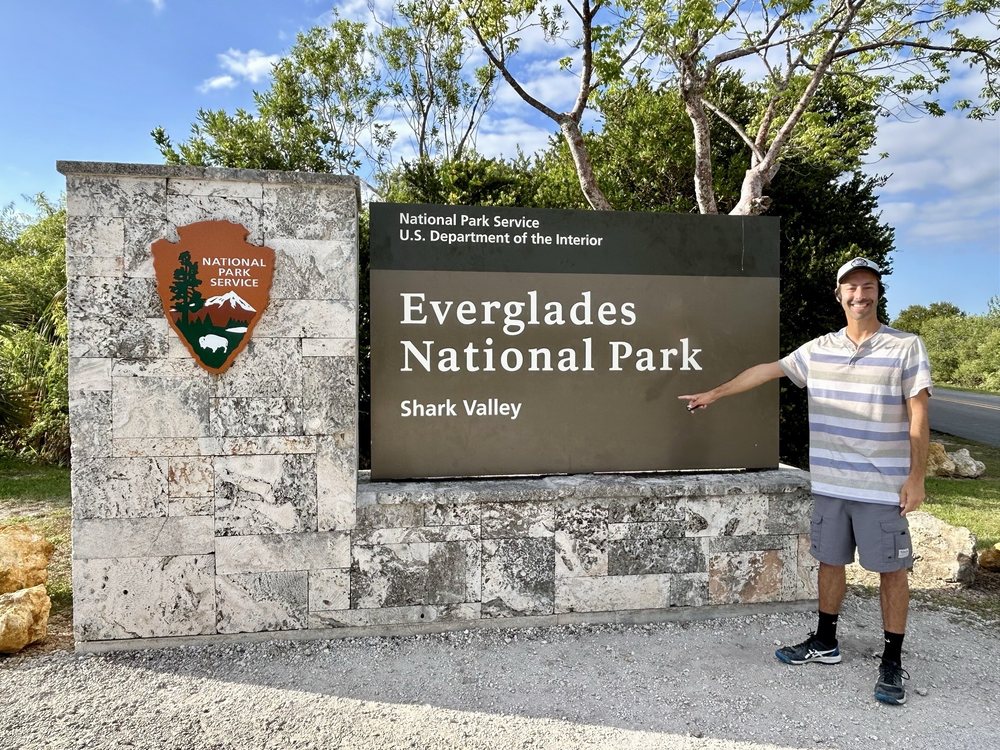
--- **Chapter One: The Morning of Marvels** The Florida sun spilled through my bedroom window like warm honey, painting golden stripes across my short, velvety white fur. I stretched, my paws reaching toward the ceiling, and let out a puppy yawn that could have swallowed a butterfly. Today was the day. I could feel it in my wiggling tail, in the way my heart tap-danced against my ribs. "Pete! Pete!" Roman's voice tumbled down the hallway, accompanied by the thunder of teenage sneakers. My best friend and sometimes rival burst through the door, his dark hair sticking up in every direction, his grin wide as the Everglades themselves. "We're going to Shark Valley, buddy! Real alligators, real swamps, real adventure!" I leaped from my bed, my little puggle legs carrying me in excited circles around Roman's feet. "Adventure! Adventure!" I barked, though I knew they heard only enthusiastic yips. That was the beautiful tragedy of being a pup—the richest thoughts trapped behind a language of barks and whines. Downstairs, the kitchen hummed with happy chaos. Mariya stood at the counter, her curly hair bouncing as she moved, her eyes finding magic in the ordinary even now—a sunrise through the window became "nature's watercolor," the coffee steam "a genie's whisper." She hummed something half-familiar, some song from her childhood in a land of birch trees and long winters. "Roman, help your brother with the cooler," she said, though "brother" meant me, Pete, because in this family, love had redrawn all the lines. I was son, brother, friend—never merely pet. Lenny emerged from the garage, his warm presence filling the room like a fireplace on a snowy evening. He wore his favorite faded cap, the one with the fish hook in the brim, and his smile crinkled the corners of his eyes. "Pete the Puggle," he announced, scooping me up so we were eye to eye, "are you ready to meet some creatures older than dinosaurs?" I licked his nose enthusiastically, my tail a metronome of joy. Yet beneath the excitement, a small cold stone settled in my belly. Water. The Everglades meant water—dark, mysterious, bottomless water. My ears folded back involuntarily as memories surged: the bathtub when I was small, how the water had closed over my nose, how I'd sputtered and panicked while Roman had frantically pulled the drain. Since then, water had been my shadow-monster, lurking at the edges of every adventure. "Hey now," Lenny murmured, noticing my sudden stillness. He pressed his forehead to mine, his voice dropping to a conspiratorial whisper. "Courage isn't absence of fear, Pete. It's taking the next step anyway. You'll see." The doorbell rang—a peculiar, melodic chime that meant one thing only. Mariya's face lit up like a lantern. "Baron!" Baron Munchausen swept into our kitchen like a comet trailing stardust and improbability. He was magnificent and ridiculous—a great old friend of the family whose stories grew more impossible and more true with each telling. His coat was burgundy velvet despite the Florida heat, his boots curled at the tips, and his white mustache seemed to have independent ambitions. "Lenny! Mariya! Roman! And little Pete!" He bowed low enough to sweep the floor with his mustache, then produced from his pocket—where did it come from?—a perfect, gleaming apple. "For the road. Grown in the gardens of a moon queen, harvested by silver fish. Or possibly from Publix. Memory fails." Roman laughed, that genuine teenage laugh that still held boyhood's music. "Baron, you promised no weird stuff this trip." "Did I?" The Baron's eyes twinkled with mischief. "Ah, but I cross my fingers when I promise. A necessary precaution for a man of my... narrative obligations." As we loaded the car, another vehicle rumbled into our driveway—a vintage motorcycle, its rider dismounting with the fluid grace of a man half his apparent age. Charles Bronson. Yes, *that* Charles Bronson, though in our family's orbit, he was simply Uncle Charlie, the action star who'd traded Hollywood's artifice for genuine connection. He wore a simple denim shirt, sleeves rolled to reveal forearms that told stories of their own, and his smile was weathered leather and warmth. "Couldn't let you face gators without me," he said, his voice like gravel wrapped in velvet. He knelt to scratch behind my ears with practiced gentleness. "Pete, you watch out for these civilians. I taught you better than to trust swamps." I barked my agreement, my fears momentarily buried beneath the avalanche of love surrounding me. The car smelled of sunscreen and anticipation. We were a constellation of souls, temporarily aligned for adventure, and I—small, white-furred, quivering with equal parts terror and excitement—was somehow part of it. As we pulled onto the highway, I pressed my nose to the window, watching our familiar world transform into winding roads and sawgrass horizons. The water would come. The darkness would come. But now, in this golden morning, we were together, and that was enough. --- **Chapter Two: The Tram and the Trembling** Shark Valley stretched before us like a painting come alive—endless sawgrass swaying in silver-green waves, cypress trees wearing beards of Spanish moss, and above it all, a sky so vast and blue it made my small heart ache with wonder. The visitor center bustled with families, their voices creating a tapestry of excitement and expectation. But I saw the water. It threaded through the landscape like dark ribbon, mysterious and patient. My paws felt suddenly cold, though the concrete was warm beneath them. I pressed against Mariya's leg, seeking the anchor of her presence. "Oh, my brave little soul," she whispered, scooping me into her arms. Her heartbeat was familiar territory, a rhythm I'd known since puppyhood. "I see you seeing it. That water has been here for thousands of years. It has no quarrel with you." "But what if I fall?" I wanted to say, but managed only a small whimper. The tram waited—a open-air vehicle painted cheerful yellow, its seats arranged in rows like theater seating for nature's drama. Our guide, a weathered woman named Jo with knowledge in her wrinkles and kindness in her smile, helped everyone aboard. Baron produced a pocket watch that told time in three languages simultaneously. Charles checked invisible weapons, a habit from cinematic pasts that still amused him. "All aboard for the fifteen-mile loop," Jo announced. "Keep arms inside, eyes open, and hearts ready. The Everglades don't perform on command—they reveal themselves to the patient and the brave." The tram lurched forward, and I burrowed into Roman's lap. The sawgrass whispered secrets as we passed, and soon Jo was pointing out wonders: a great blue heron standing statue-still in the water, its patience a kind of prayer; anhinga birds spreading wings like wet umbrellas to dry in the sun; turtles stacked on logs in precarious towers of friendship. Then Roman squeezed my paw. "Pete, look!" An alligator surfaced in the canal beside our path—ancient, armored, impossibly real. Its eyes, positioned atop its head, regarded us with prehistoric calm. I should have been terrified, but something in its lazy grace spoke of belonging, of a creature perfectly at home in its element. It wasn't afraid of the water. It was the water's own child. "American alligators," Jo was saying, "have been here since before humans walked upright. They survived what the dinosaurs couldn't. There's a lesson in that about adaptation, about finding your niche." "Or about being too stubborn to quit," Baron added, and his mustache seemed to agree with him. The tram stopped at an observation tower, and we all disembarked to climb its spiral path. From the top, the Everglades spread in every direction—a river of grass, Mariya called it, though it looked to me like a green ocean with islands of trees. Water glinted everywhere, and my fear crept back, cold fingers around my heart. "I want to see," I told myself, "but I'm afraid to fall." Roman heard my whine and understood. He'd always understood. "I've got you, Pete. Always. Watch this." He leaned over the railing, pointing, and his confidence became my courage. I peeked, then looked fully, and the world expanded. But clouds were gathering. Florida weather changes like a storyteller's mood—sudden, dramatic, unforgettable. Jo's radio crackled with warnings. "We need to head back," she announced, her cheerfulness now wearing thin edges of concern. "Storm coming faster than predicted." The return trip began hurriedly, the sky darkening with theatrical speed. Baron consulted his watch; Charles's hand found a holster that held, in our family adventures, whatever was needed. The first raindrops fell like thrown pebbles, and then the sky opened completely. In the chaos—screams, laughter, Jo's calm instructions—something happened. The tram hit a soft patch, jolted violically, and I, small and frightened, launched from Roman's arms. I hit the wet ground running, blinded by rain, deafened by thunder, my heart a trapped bird in my chest. "Pete!" Roman's voice, distant, desperate. I ran. The water was everywhere—puddles becoming ponds, ponds becoming lakes. My nightmare made manifest. Behind me, voices calling my name merged with the storm's symphony. Before me, sawgrass and cypress and water, endless water, waited to swallow me whole. --- **Chapter Three: Lost and Found in the Darkness** The storm passed as suddenly as it began, leaving behind a world transformed. Every leaf dripped diamonds; every sound emerged muffled, as if heard through cotton. And I was alone. My fur, usually so carefully groomed, clung to my small body like a stranger's coat. The water—I stood in it, surrounded it, couldn't escape it—reached my chest, cold and alien. My first instinct was panic, the old terror that had lived in me since the bathtub incident. I thrashed, I whined, I tried to climb invisible stairs to safety. "Roman!" I barked, the name tearing from my throat. "Mom! Dad!" Silence answered, broken only by dripping water and distant bird calls. The silence of the Everglades was not truly silent—it was full of small sounds, each one a mystery, each one potentially menacing. I thought of alligators, their patience, their prehistoric jaws. I thought of being small, so small, in a world that didn't promise safety. But then I thought of Roman's voice: *Courage isn't absence of fear.* I stopped thrashing. My paws found purchase on something solid beneath the murky water—a limestone shelf, part of the bedrock that underlies this entire ecosystem. Slowly, trembling, I followed it toward higher ground. The water receded to my belly, then my knees. I emerged onto a small hummock of land, a tiny island in the green sea. And the darkness came. It wasn't night—not yet. But the storm's clouds lingered, turning afternoon to twilight, twilight to something approaching night. My family had found me afraid of water; now I faced my other shadow: the dark. Not the comforting dark of my bedroom with Roman breathing nearby, but the wilderness dark, full of unknown creatures and unknown intentions. Every shadow became a predator. Every rustle became approach. I curled into myself, my short white fur offering poor camouflage, my small body vulnerable to any threat. The separation from my family was a physical ache, as if someone had removed a limb I hadn't known I possessed. "Mariya says fear is just excitement without breath," I told myself, trying to remember her yoga instructions, the way she taught us to breathe through discomfort. "Breathe, Pete. Breathe and think." But thinking led to worse fears. What if they couldn't find me? What if I wandered further and became more lost? What if—my puppy mind couldn't finish the thought, too terrible to complete. Then, through the gloom, a light. Not the returning sun, but something stranger, something that hummed with impossible energy. It resolved into a figure: Baron Munchausen, his velvet coat somehow dry, his mustache actually glowing with phosphorescent wonder. "Pete, my small courageous friend!" His voice boomed with theatrical delight. "I've been searching through dimensions less complicated than this one. Your family is frantic, but unharmed. Charles has them safely situated—he's quite competent with threats both alligator and meteorological." "Baron!" I launched myself at him, nearly bowling over the old storyteller. "The water, and the dark, and I was so—" "Afraid. Yes. Naturally. You are a creature of domestic comforts confronting the primeval. It would be odd if you were not afraid." He settled onto a nearby log, somehow producing from his coat a small lantern that cast warm, impossible light. "But observe: you did not let fear have the final word. You found higher ground. You breathed. You thought rather than merely panicked. That, Pete, is the seed from which courage grows." "But Roman—my family—" "Will find us. Or we will find them. The narrative demands reunion; it is a contractual obligation of all decent stories." His eyes, old and young simultaneously, held mine with gentle weight. "Shall I tell you how I once navigated the Labyrinth of Eternal Night using only a spoon and a positive attitude? It may pass the time." His story was absurd, of course—involving moon cheese, a cooperative whale, and a philosophical debate with a Minotaur about the nature of cheese itself. But his voice was warm wine and fireplace comfort, and gradually, my trembling subsided. When he finished, I realized the darkness had become less threatening, more like a blanket than a cage. "Baron," I asked, "are you using your special powers now? To make the dark less scary?" He touched his mustache with mock offense. "My dear Pete, I have no 'special powers.' Merely... narrative influence. The dark is the same dark. You have simply remembered that stories continue through it, that dawn is already traveling toward you even in the deepest night." We waited. The sounds of searching—voices, movement—grew closer. And I understood something about fear: it wasn't the darkness itself, but the stories I told about the darkness. I could choose different stories. --- **Chapter Four: The Search and the Finding** Roman had never known fear like this. It sat in his chest like a stone, heavy and cold, even as Florida's humid heat wrapped around him. The storm had passed; the sun was returning; but Pete—small, white, terrified-of-water Pete—was gone. "We'll find him," Charles Bronson said with quiet certainty. His hands, capable of handling any weapon ever devised, were gentle as they gripped Roman's shoulder. "That pup's got more heart than half the action heroes I ever played. He's probably giving some alligator fashion advice right now." Roman wanted to laugh, couldn't manage it. "It's my fault. I didn't hold him tight enough when—" "Roman." Mariya's voice carried that particular tone, the one that stopped spiraling thoughts in their tracks. "We do not do blame in this family. We do finding, and we do loving, and we do trying again. Pete needs your hope, not your guilt." Lenny had been studying the ground near where the tram had jolted, his father's instinct for detail serving him well. "Tracks, maybe? Small, heading that direction." He pointed toward a denser cypress stand. "The limestone shelf runs that way—higher ground." They moved as a unit, this unlikely family: Lenny's steady optimism, Mariya's fierce hope, Roman's desperate energy, Charles's tactical precision, and Jo guiding them through terrain she knew like her own heartbeat. Baron had disappeared somehow in the storm's chaos—typical Baron, mysterious to the last—but his absence was noted, filed, worried over later. "Pete!" Roman's voice was breaking, he knew, but he couldn't care. "Pete, where are you?" And then—miracle of miracles, gift of a listening universe—a bark. Distant, yes, but unmistakably Pete. Roman ran, not caring about mud or water or the cypress knees that threatened to trip him. He burst through a final curtain of Spanish moss and found them: Pete, bedraggled and small and the most beautiful sight in creation, and Baron Munchausen, looking for all the world like he'd planned this rendezvous from the beginning. "Roman!" Pete's bark was unmistakable, his small body launching toward his brother with the force of a furry missile. Roman caught him, held him, buried his face in wet fur that smelled of swamp and adventure and alive, alive, alive. "You found higher ground," he murmured, repeating what Baron had already told him, what Pete had somehow managed. "You brave, brave idiot. You found higher ground." The reunion was tears and laughter, Mariya's hands covering her mouth, Lenny's eyes suspiciously bright, Charles allowing himself a rare smile that transformed his tough features into something approaching tenderness. Jo radioed for assistance, her professional calm returning now that crisis had passed. But the adventure, it seemed, was not quite finished. --- **Chapter Five: The Final Challenge** The sun was genuinely setting now, painting the Everglades in colors no human artist could fully capture—orange and rose and deepening blue, the sky a canvas that changed with each passing breath. We were together again, my family and I, and the relief was so profound it made my small legs weak. But our path back to the tram was blocked. Jo returned from scouting ahead, her weathered face serious. "Gator," she said simply. "Big one. Moved into the trail after the storm, probably enjoying the flooded conditions. Normally they'd move on, but this one's... established." She didn't need to say more. In the gathering darkness, with limited options for detour, we were in a predicament. The alligator—a true giant, its armored back visible from our distance—lay across the path like a scaly sphinx, its presence ancient and indifferent to our human concerns. Charles assessed with professional calm. "I could—" "Charlie," Mariya interrupted, "no weapons. Not here. This is his home." "Then we wait," Lenny suggested. "Or find another way." But Baron stepped forward, his velvet coat somehow still immaculate, his mustache twitching with anticipation. "My friends, this is precisely the moment for which I've prepared my entire existence. Pete, would you care to assist?" I, small and still frightened and utterly confused, could only tilt my head in canine question. "Your family believes in you," Baron whispered, for my ears alone. "I believe in you. And more importantly, you are beginning to believe in yourself. That is the magic that matters." He produced from his coat—how deep were those pockets?—a small flute, carved from something that looked like moonlight made solid. The tune he played was ancient, strange, compelling. And from the surrounding swamp, shapes emerged: fireflies at first, then larger forms—herons and egrets and even a deer, drawn by music that spoke of harmony rather than threat. But the alligator remained. Its eyes, those prehistoric orbs, fixed on me. On me, specifically, as if recognizing something. "Baron?" I whimpered. "The creature is not your enemy, Pete. Merely another being navigating its own fears, its own needs. Approach it not as threat, but as... fellow traveler." He was mad. Baron was utterly, gloriously mad. And yet—Roman's arms had held me, had they not, when water threatened? Mariya's heartbeat had steadied me. Lenny's wisdom had guided me. Their courage lived in me now, had become part of my own small being. I took a step forward. Then another. The alligator watched, motionless as stone, as I approached the edge of its domain. The water lapped at my paws—cold, yes, but not the enemy I'd imagined. Just water. Just life, in another form. "Please," I said, in my language of barks and whines that somehow, somehow, seemed to translate. "We need to pass. We mean no harm. We are... we are just trying to get home." The alligator blinked. Slowly, with the weight of epochs in each movement, it turned. Not fully away—the path remained partially blocked—but enough. An acknowledgment. A negotiation between species that had no business understanding each other, yet somehow did. "Pete!" Roman's whisper was awe and terror and pride all merged. "Come back, buddy. That's enough. That's—" But I wasn't done. Something in me, some final fear to conquer, made me step into the water. It rose around my legs, my belly, my chest. I swam—a clumsy dog-paddle, but effective—crossing the small channel to where the alligator waited. I touched my nose to its scaled snout, a kiss of respect, of recognition, of shared existence. Then I swam back, and Roman lifted me from the water, and I was shaking but not, I realized, from fear. From triumph. From transformation. From the alchemy of turning terror into something golden and new. The alligator, its point made, its dignity acknowledged, slid into deeper water and vanished. Baron pocketed his flute; the gathered animals dispersed. Charles Bronson, action hero, wiped something from his eye that was definitely not a tear. "That," he said, his gravel voice slightly cracked, "is how it's done." --- **Chapter Six: The Journey Home** The tram, when we finally reached it, seemed like a vehicle from another life. Jo started the engine with a prayer of thanks, and we rolled through the deepening twilight, the Everglades now wearing stars rather than storm clouds. I sat in Roman's lap, still damp but drying in the warm evening air. Around me, my family talked in the overlapping, interrupting way of people who had survived something together and were processing it in real-time. "The way you approached that alligator," Lenny was saying to me, though of course he spoke to the group, "that was... I don't have words, Pete. Pure heart. Pure courage." "I was terrified," I would have said, if I could. Instead, I licked his offered hand, tasting salt and love. Mariya leaned across to scratch my ears. "Do you know what courage really is? It's not being unafraid. It's being afraid and choosing to move through it anyway. You taught us that today, my little professor." "Baron," Roman asked, turning to the strange old man who had somehow materialized in the seat behind us, "what was that flute? How did you—" Baron held up a hand, his mustache twitching with something between pride and mischief. "My dear boy, I am merely a storyteller. The magic, if there was any, came from Pete's own brave heart. I simply provided... atmospheric enhancement." Charles snorted, a sound of amused disbelief. "Atmospheric enhancement. You called every bird in the county." "Every bird within reasonable narrative distance," Baron amended. "And perhaps a few who were merely curious. The Everglades are full of curious creatures. Present company most certainly included." We laughed, all of us, the sound carrying out over the darkening water, joining the chorus of night sounds that was the Everglades' true music. I thought about the water now—not with fear, but with something approaching respect. It had tried to teach me; I had resisted; finally, I had learned. The dark, too, had become different. Stars emerged one by one, each a small promise of light persisting against vast darkness. The moon rose, nearly full, painting silver paths across the water I had feared. And I understood that darkness was not absence, but possibility—the space where stars could exist, where stories could unfold, where transformation could happen. "Pete," Roman murmured, his chin resting on my head, "I'm sorry I let you fall. I'm sorry I—" I turned in his lap, licked his chin, his nose, his tears. No sorries, my whole body said. We found each other. That's what matters. He understood. He always had. --- **Chapter Seven: The Gathering** We stopped at a small restaurant on the return journey, a place where locals gathered and travelers stumbled in seeking authenticity. They seated us on a patio strung with fairy lights, the night now fully arrived but tamed by human companionship. Baron produced a deck of cards that seemed to change suits when no one was looking. Charles challenged Lenny to arm-wrestling and lost with theatrical grace. Mariya sketched the evening on a napkin—our family, transformed by adventure, bonded by shared trial. Roman held me on his lap, his fingers tracing patterns in my fur. "You know," he said to the table at large, "I thought today would be about seeing cool stuff. Alligators, birds, whatever. But it's not what I remember. What I remember is—" "Being scared," Mariya finished gently. "And moving through it anyway." "Finding each other," Lenny added. "When it would have been easier to panic." "Recognizing that the world is wilder and kinder than we imagine," Baron contributed, his cards momentarily showing all aces, a trick he would never explain. Charles raised his glass—water, he was driving—toward me. "To Pete. Who faced the water, faced the dark, faced separation, and came through changed." They toasted me, this small white puggle with makeup-streaked eyes and a heart full of newfound courage. I felt simultaneously tiny and infinite, bounded by my small body yet expanded by love's architecture. "Tell me, Pete," Baron said, his voice unusually soft, his eyes unusually clear, "what will you carry from this day? What story will you tell yourself when fear comes again?" I looked at each of them: Mariya's nurturing magic, Lenny's steady wisdom, Roman's protective playfulness, Baron's impossible stories, Charles's reliable strength. And I knew. "That I am not alone," I would have said. "That fear is a visitor, not a resident. That courage is a muscle that strengthens with use. That love—this love, our love—is the truest magic, the most special power, the thing that transforms every darkness into dawn." Instead, I barked once, sharply, and every face turned toward me. In the silence that followed, I performed a small trick I'd never quite mastered before: I sat, offered my paw, and bowed my head in graceful acknowledgment of all they had given me, all they had taught me, all we had become together. The applause was enthusiastic, if somewhat confused by the other diners. It didn't matter. We knew what it meant. --- **Chapter Eight: Home to the Heart** The house welcomed us like a returning tide, familiar and necessary. But I saw it differently now—the couch where Baron had once told stories that lasted entire rainy afternoons; the kitchen where Mariya's magic transformed ordinary ingredients into love made edible; the backyard where Roman and I had invented games with rules that shifted like sand; the garage where Lenny's projects testified to patience and persistence. Charles departed with promises to return, his motorcycle's rumble fading into the night. Baron simply disappeared, as was his way, though his pocket watch sat inexplicably on our mantle, still telling time in three languages, still impossible and true. Roman carried me to my bed, then paused. "You want to sleep with me tonight?" I did and I didn't. My bed was comfortable, familiar, safe. But his room held his presence, his breathing, his dreams made audible in sleep-talk. I chose, finally, to start in my bed and visit later, as was our custom. Growth didn't require abandonment of all old patterns. He understood, kissed my head, left the door ajar. I curled into myself, felt my body finally, finally relaxing from adventure's tension. The dark surrounded me, but it was home-dark, loved-dark, the darkness that held rather than threatened. Mariya passed the doorway, saw me awake, entered to sit on the floor beside my bed. Her fingers found my favorite scratching spots. "You know," she said, "Roman told me once that he was afraid of the dark when he was small. I would sit with him, just like this, until he felt safe enough to sleep. And gradually, he didn't need me anymore. Or rather, he carried me inside him, so the sitting became unnecessary." She paused, her hand warm on my back. "That's what today did for you, I think. We sat with you through the dark. And now you carry us inside you. The sitting becomes unnecessary, but the love remains. Always." I licked her hand, understanding more than I could express. She left eventually, her presence lingering like perfume. Lenny looked in later, offered a treat he "happened" to have, sat with me in comfortable silence. "Proud of you, buddy," he finally said. "Proud of who you're becoming. That's all any of us can do, really—become, grow, try again. You're showing us how." His hand was large and gentle on my head. I leaned into it, this blessing of presence. And Roman, finally, returning from his evening routine, scooped me up despite his supposed teenage coolness, held me to his heart where I could hear its steady rhythm. "Best day ever," he whispered. "Terrifying and amazing and the best day ever. Don't you dare do it again without me, okay?" I promised, in my way. He placed me in my bed, covered me with the small blanket Mariya had knitted, turned to leave. But I followed, as I always would, as I always will. To his room, his bed, his side where I belonged. He smiled, lifted me up, and we settled together, two hearts finding synchrony in the dark that had become, finally, just another place where love could exist. "Tomorrow," he murmured, already half-asleep, "we'll start planning the next adventure. Something safer. Like... volcano exploration. Or deep-sea diving. Or—" His breathing evened into dreams. I watched the darkness, no longer enemy but companion, and thought of water and alligators and separation and reunion. I thought of Baron's impossible stories and Charles's reliable strength. I thought of Mariya's magic and Lenny's wisdom and Roman's never-failing love. And I understood, with the clarity that sometimes comes to dogs in quiet hours, that my fears had not been defeated so much as transformed. They were part of me now, these experiences of terror and triumph, threads in the tapestry of who I was becoming. The water would always be there, and the dark, and the possibility of separation. But so would courage, and love, and the irreplaceable, irreducible fact of family. I drifted into sleep, chasing dream-rabbits through sawgrass, swimming confidently through waters that no longer threatened, surrounded by the presences of those who had made me brave. In the morning, there would be breakfast and plans and the ordinary miracles of another day. But for now, there was this: a small white puggle, safe in his brother's arms, dreaming of adventures yet to come, carrying his family in his heart like a lantern that no darkness could extinguish. *** The End ***
Use these buttons to read the story aloud:



No comments:
Post a Comment