"***The Brave Little Puggle and the Secret of Coral Gables Cove***"🐾

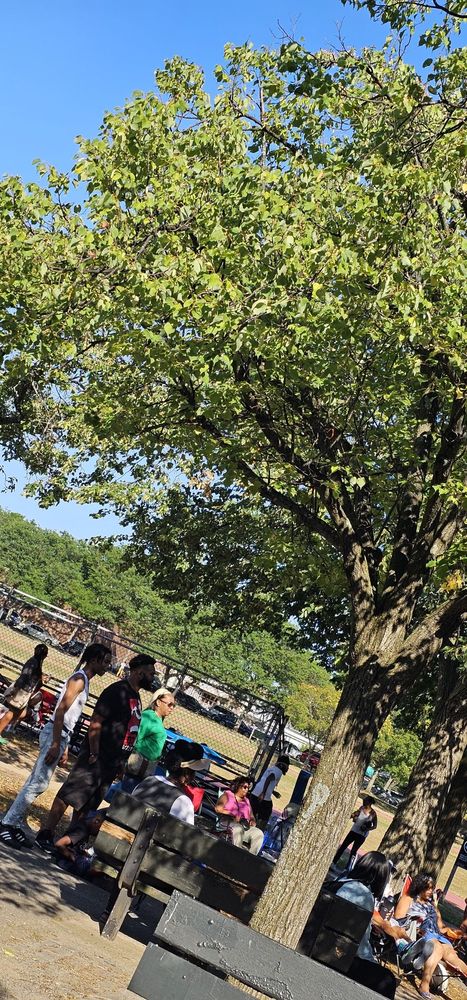
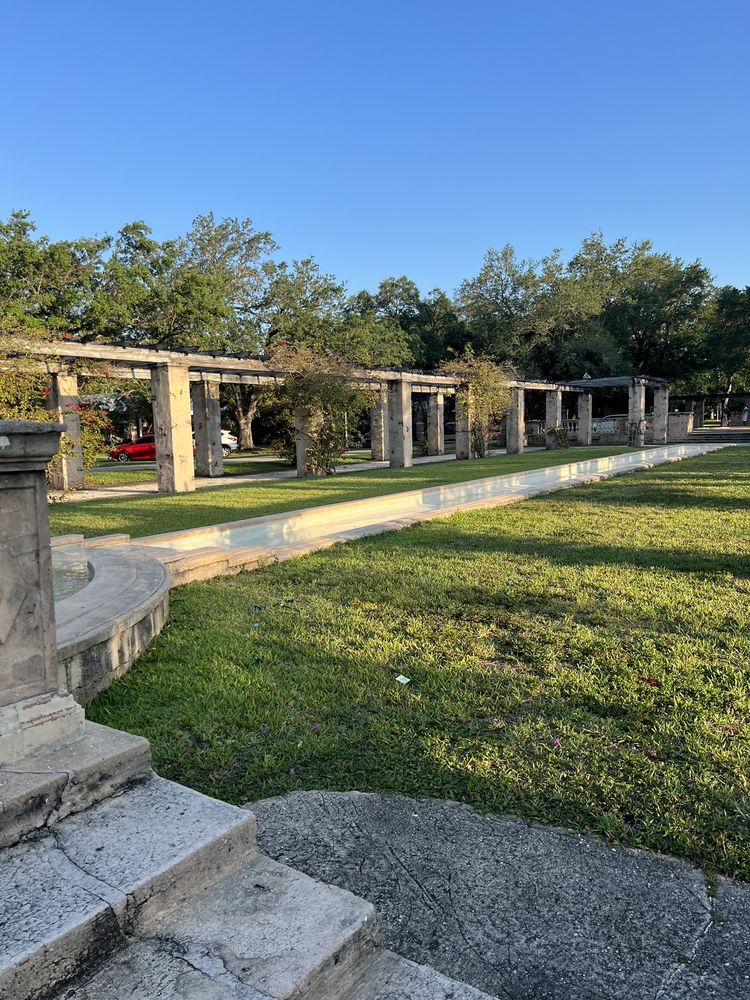
--- **Chapter One: The Morning of Marvels** The sun spilled through my bedroom window like honey dripping from a giant's spoon, warm and golden and impossibly slow. I stretched my velvety white paws toward the ceiling and felt my heart doing little somersaults in my chest. Today was the day. Coral Gables Entrance Park. The name alone tasted like adventure on my tongue—salt and sunshine and something mysterious waiting just beyond the horizon. "Pete! Pete, wake up already!" Roman's voice boomed through the hallway, accompanied by the thunder of size-eleven sneakers against hardwood. My brother burst through the door like a comet wearing cargo shorts, his dark hair sticking up in seventeen different directions. "George is meeting us at ten, and Mom's making her famous adventure pancakes." I leaped from my dog bed with the grace of a slightly clumsy superhero. "Adventure pancakes? The ones with the blueberries arranged like constellations?" "The very same." Roman scooped me up, and I rode on his shoulder like a furry pirate captain surveying my domain. Downstairs, the kitchen hummed with Mariya's particular magic—the kind that turned ordinary mornings into something shimmering with possibility. She stood at the stove, her hair caught in a messy bun, humming something that sounded like a lullaby crossed with a sea shanty. "There's my brave little explorer," she said, flipping a pancake with the flair of a circus performer. It landed on a plate already crowded with stars. "Are you ready to meet the ocean today, Pete?" The word "ocean" hit my stomach like a cold stone sinking to the bottom of a pond. I'd seen pictures, of course. I'd heard Lenny's stories about waves that stretched to forever. But I'd never *been*. The vastness of it, the unknowable depth, the way water could swallow sound and light and certainty—I felt my ears flatten slightly against my head before I could stop them. "Pancakes first," Lenny announced, sweeping into the room with the newspaper rolled under his arm and his reading glasses perched on his forehead. He caught my expression, something knowing in his warm brown eyes. "Then adventures second. And Pete? The ocean's been waiting millions of years to meet *you*. It's probably terrified of how adorable you are." I barked—a startled, half-embarrassed sound—and everyone laughed, and the stone in my stomach became slightly smaller, slightly rounder, something I might eventually skip across the surface of my courage. But later, as the car wound toward the coast and the air grew thick with salt and something primeval, I found myself pressed against Roman's side, my nose twitching at each new scent. The car turned a final corner, and there it was—the Atlantic Ocean, stretching beyond comprehension, its surface catching sunlight and breaking it into ten thousand dancing pieces. "Wow," I breathed, though it came out as a small whine. Roman's hand found my back, steady and warm. "That's our playground today, little dude. You, me, George, the whole family. We're gonna own that water." I wanted to believe him. I wanted to be the brave puggle I pretended to be in my stories. But when Lenny lifted me from the car and my paws touched sand for the first time—sand that shifted and surrendered and never quite held still—I felt something crack open in my chest. Not quite fear, not yet. But its distant cousin, knocking politely at the door. And then, from somewhere between the salt and the sky, came a voice like starlight made audible: "Little one, the water remembers those who are afraid. But it also remembers those who choose to enter anyway." She materialized from the glare off the waves—a slender dog with fur the color of moonlit smoke, her eyes holding depths that seemed to transcend the mere physical. Laika. My impossible friend, my guardian from beyond time itself, her presence here as natural and unnatural as a rainbow in a thunderstorm. "Laika!" I yelped, darting forward, my fear momentarily eclipsed by wonder. She nuzzled my forehead, her touch cool and electric. "I heard there was a brave puggle who might need saving today. Or perhaps—" and her eyes held galaxies of meaning, "—who might discover he could save himself." --- **Chapter Two: The Gathering of Warriors** The beach spread before us like a painting come alive, all turquoise watercolor and white-gold frame. George arrived with the fanfare of someone who had never learned subtle entrance—kicking sand, shouting greetings, already halfway out of his shirt to reveal the anchor tattoo that Roman found endlessly fascinating. "Roman, my man, the water's perfect!" George's voice carried the easy authority of someone who had survived Navy training and emerged with laughter intact. "Pete, you ready to become a fish?" I opened my mouth to respond with something appropriately brave, but what emerged was a squeaked, "Maybe after lunch?" Mariya was already spreading the blanket, her movements efficient and meditative. "George, don't rush him. The ocean will be there when Pete's ready." But her eyes found mine, and I saw the question in them—not pressure, never that, but genuine curiosity about what I would choose. Laika had settled beside me, her form occasionally flickering like bad television reception, which meant she was straining against the boundaries of her temporal existence to remain visible. "The boy George is kind," she observed, her voice a private frequency only I could hear. "But kindness without understanding can feel like pressure. Do you know what you fear, little one?" I dug my paws into sand still damp from the retreating tide. "It's... big. The water. What if it goes over my head? What if I can't feel the bottom? What if—" I stopped, surprised by the tremor in my own voice. "What if you discover you're smaller than you hoped?" Laika finished, and there was no judgment in her tone. "I have orbited where atmosphere ends and void begins. I have seen the edge of what Earth creatures call 'sky.' The bigness does not disappear, Pete. You simply learn that you, too, contain multitudes." Lenny appeared with a cooler, his knees popping as he settled beside us. "Deep conversation with your friend?" he asked, casually accepting Laika's presence as he accepted all impossible things—sunrises, forgiveness, the way love could reshape a family. "Laika says I contain multitudes," I reported, trying for dignity. "Well, obviously." Lenny produced a tennis ball from his pocket like a magician. "You're my son, aren't you? We Goldbergs are basically multitudes incarnate." He threw the ball, and I chased it automatically, the familiar joy of pursuit temporarily displacing my anxiety. But when I returned, ball in mouth, Roman and George were already at the water's edge, waves breaking around their ankles, and my brother's face held such uncomplicated joy that I felt something twist in my chest. I wanted that. I wanted to be where he was, to understand what made his eyes light up with that particular fire. "Roman!" The call escaped before I could cage it. He turned, water sparkling in his hair like misplaced diamonds. "Come on, Pete! It's amazing!" I took one step toward the water. Then another. The sand grew harder, packed by the tide's relentless attention. The third step brought the first wave to my paws, and I yelped at the cold, at the way it moved without permission, at the fundamental wrongness of ground that wasn't ground at all. I retreated so fast I nearly collided with Laika. "Not yet," I whispered, hating myself. "I'm not ready." She regarded me with those impossible eyes. "Readiness is not a destination, little one. It is the decision to take one more step than you believe possible." --- **Chapter Three: The Shadow of Separation** The afternoon passed in the golden haze of almost-summer, and I found my compromise—buried in sand up to my neck while Roman and George body-surfed beyond the break, chasing Lenny's terrible dad jokes with genuine giggles, helping Mariya construct a castle whose moat filled with each industrious wave. I was happy, I told myself. Happy enough. The ocean could remain where it was, and I could remain where I was, and never the twain need meet. Laika had vanished with apologies about "temporal strain," leaving me with a final cryptic warning about "the hour when shadows grow long." I hadn't understood until the clouds began massing on the horizon, gray-purple and sudden as a bruise. "Storm's coming faster than predicted," George observed, squinting at his phone. "We should probably—" But the wind had already begun its work, snatching words and flinging them into the gathering dark. Mariya struggled with the blanket, Lenny with the cooler, and in the chaos of sudden departure, Roman called for me to follow, his voice already distant, already swallowed by wind and surf. I ran. Sand flew from my paws. But the storm had transformed the beach into something alien—dunes where there had been flat stretches, the path to the parking lot obscured by blowing grit and sudden, violent twilight. I called out, but my voice was nothing against the ocean's sudden fury, the wind's indifferent howl. And then, impossibly, the sand beneath my paws simply... ended. A current pulled at my legs, and I was in the water, the water, the terrible wonderful endless water, and it was over my head, and I couldn't breathe, and somewhere above me the surface shattered into a thousand unreachables. Panic became my entire universe. I thrashed without direction, without hope, my small body turning the wrong circles. The light above grew distant, abstract, a memory of warmth rather than warmth itself. I thought of Roman's hand, steady on my back. Of Mariya's constellation pancakes. Of Lenny's terrible jokes and their secret wisdom. *This is how it ends*, I thought, and the thought was not even bitter, only tired, only small against the vast machinery of sea and storm. But then—then came the light, silver and impossible, cutting through the murk like a promise kept. Laika, her form blazing with borrowed stellar energy, her voice in my mind like a lighthouse in fog: *Breathe, little one. Not the water. The courage. Breathe that.* I couldn't. I was sinking. But her light surrounded me, and in its glow I saw not death but choice—the choice to stop fighting the water and start moving with it. My legs, exhausted from futile thrashing, found a rhythm. Not graceful, not pretty, but functional. I paddled toward that distant surface, toward the shattering light, toward air and life and the continuation of my story. I broke through gasping, and the world was storm and dark and I couldn't see land, couldn't see family, couldn't see anything but the endless terrible beautiful ocean. "Pete! PETE!" Roman's voice. Not imagined. Desperate and real and coming from somewhere to my left. I turned in the water, found his silhouette against the slightly-less-dark sky, and swam with everything I had, with multitudes I hadn't known I contained. His arms closed around me, and we were both crying, both laughing, both something beyond either. "I thought," he gasped, "I thought I lost you, I thought—" "You didn't," I managed, and it was the bravest thing I'd ever said. "You didn't lose me." But the shore was distant, the storm unrelenting, and even George's strength couldn't fight the current that pulled at our little group. We were drifting, separated now even from each other by waves that had become walls, and I felt the fear returning, the old fear made new, the darkness above and below becoming indistinguishable. --- **Chapter Four: The Dark Between Stars** Night fell completely, or perhaps the storm simply swallowed what remained of day. I clung to Roman's shoulder, but the cold had penetrated to my bones, and I could feel his strength flagging, could feel the way each wave took more than it gave. "Roman," I whispered, "I'm sorry. I'm sorry I couldn't be brave." His laugh was half-cough, entirely without humor. "Pete, you're the bravest little dude I know. You swam. In that. When you were scared of puddles last week." "Progress," I tried to joke, but my teeth chattered around the word. George had found a piece of driftwood, something to buoy him, and he kicked toward us with the powerful strokes of someone who had trained for exactly this. "Roman! Grab on! We need to get parallel to shore, not fight directly!" But Roman's grip was slipping, and I felt the moment before I felt it—the separation, the cold water rushing between us, the current claiming me for its own. "PETE!" I was alone. Truly, finally alone, in dark water under darker sky, and the fear that consumed me then was older than the ocean, older than time. It was the fear of all small things in vast spaces, the fear of insignificance, of ending without witness, of love given and then lost to forces beyond any control. I wanted to scream, but the water filled my mouth, and I wanted to swim, but my limbs had forgotten how, and I wanted to live, I wanted to live, I wanted— The light returned. Laika, but different now, her form expanded, her eyes twin novas of compassion and fury. *You called me*, she said, though I hadn't, I hadn't, *and I answer. But Pete—little Pete—you must answer yourself. What do you choose?* I thought of Mariya's pancakes, the way she arranged blueberries not for beauty but for blessing. I thought of Lenny's jokes, each one a small fortress against despair. I thought of Roman's hand, steady and warm, and how it felt to be chosen, to be claimed, to be *family*. "I choose," I gasped, and the words were waterlogged but clear, "I choose to find them. All of them. To not give up. To—" *Then swim*, Laika commanded, and her light became a pressure at my back, a current of its own propelling me forward. *Not away from the dark, little one. Through it. The dark is not your enemy. Your fear of it is.* And so I swam. For Roman, who had never lost faith. For Mariya, who would be destroyed by waiting. For Lenny, whose jokes would never be the same without an audience. For George, who had risked everything. For Laika, who had crossed death itself to stand beside me. The dark was absolute. I could not see the waves that lifted me, could not judge the distance to shore, could only trust the pressure of Laika's light and the stubborn beating of my own brave heart. Time dissolved, or perhaps I dissolved into time, becoming something river-like, moving without entirely existing. But gradually—impossibly—the dark grew less. A gradient emerged, gray lifting from black, and then sound: the particular crash of waves against something solid, something *land*, and then the feeling of ground beneath my paws, sand shifting and real and present. I collapsed on that beach, whatever beach it was, and knew nothing for a time. --- **Chapter Five: The Finding** Consciousness returned like tide, gradual and relentless. I became aware of sand in my fur, of an impossible ache in every limb, of the fact that I was still, impossibly, alive. The storm had passed, or perhaps moved on to other theaters, and stars pricked through the clearing sky like scattered sugar. "Pete?" The voice was Roman's, hoarse and broken and the most beautiful sound I'd ever heard. I lifted my head, and there he was, George supporting him, both of them battered and alive and *here*, somehow, impossibly, here. I couldn't move fast enough, and neither could he. We met in a collision of fur and tears and something beyond language, beyond even the particular syntax of love we'd developed in our years together. "I thought," Roman kept saying, "I thought, I thought—" "You didn't," I managed, borrowing my earlier courage, "you didn't lose me." George laughed, a wet sound, and collapsed to sit in the sand. "Little dude's got a point. We're all here. Somehow. That current should have taken us to Cuba, but here we are." "Laika," I said, understanding. "She guided me. She—" I looked around, but of course she was gone, her temporal energy spent, her mission accomplished. She would return, I knew, in some future moment of need. She always did. But for now, in this aftermath of storm and salvation, we were alone. Or rather, we were together, the three of us, on an unfamiliar stretch of beach, the night vast but no longer threatening around us. "I need to find Mom and Dad," Roman said, but he didn't move, and I didn't blame him. The energy of survival had given way to the exhaustion of aftermath, and the dark, now friendly again, pressed close with its ancient invitation to rest. "We will," George said. "But first, maybe we just... breathe?" And so we breathed. Three survivors, two human and one canine, watching stars emerge from hiding and listening to the ocean's ancient lullaby. The fear that had consumed me in the water seemed distant now, a story about someone else, though I knew—would always know—that it was my story too, would remain part of my multitudes. Roman's hand found my back, steady and warm. "You swam, Pete. In the dark. When you couldn't see anything." "I was scared," I admitted, because bravery without honesty is just performance. "So was I," he said, and the admission seemed to cost him something, to give him something in return. "I was so scared. But you know what? We did it anyway. That's what Dad always says. The doing it anyway." I thought of Lenny, his terrible jokes and their secret wisdom. *We Goldbergs are basically multitudes incarnate.* Yes. We were. We are. All of us, containing more than we believed, surviving more than we imagined, loving beyond what fear could destroy. --- **Chapter Six: The Return** Dawn found us walking, George using his phone's dying battery for intermittent orientation, Roman carrying me when my legs gave out, me protesting weakly before accepting the necessity. The beach curved, and curved again, and then—miraculously, inevitably—familiar landmarks emerged. The pier where Mariya had sketched last summer. The ice cream stand closed for storm season. The parking lot where our abandoned belongings still waited, our car's hazard lights blinking a steady, worried rhythm. And then the running figures. Mariya, hair wild, face streaked with something that might have been rain or might have been tears. Lenny, slower but no less desperate, his glasses askew, his voice carrying before he was close enough for the words to distinguish themselves. They swept us up, all of us, and for a moment there was only the wordless music of reunion, the grammar of embrace, the syntax of *you're here, you're here, you're here*. Mariya's hands on my fur were trembling, her face buried in my neck where I rode in Roman's arms. "We called everyone," she kept saying. "The Coast Guard, the rangers, everyone. The storm—Pete, the storm was so bad, and we didn't know, we couldn't find—" "We're okay," Roman kept saying, and it became a mantra, a spell against lingering fear. "We're okay, we're okay, we're okay." Lenny's hug encompassed all of us, George included, his usual jokes abandoned for something more fundamental. "My multitudes," he finally managed, and the familiar phrase in this unfamiliar context broke something in me, some final dam, and I wept without dignity against his chest. Later—after blankets and thermos-flavored cocoa and the slow return of normalcy—we sat on the still-damp sand and pieced together our story. The storm's unexpected violence. The separation. The swim in darkness. Laika's intervention, which I described carefully, watching their faces for disbelief. But Mariya only nodded, her eyes distant with memory. "She came to me once," she said quietly. "Laika. When I was pregnant with Roman, and so afraid. She said... she said courage wasn't the absence of fear. It was the presence of love, moving through it." I thought of that long swim, the dark absolute, the choice to continue. Yes. That was it exactly. George cleared his throat, awkward with emotion. "I was in the Navy, you know. Saw some things. Did some things. But honestly? That swim last night, trying to keep us together, trying to find shore? That was the hardest thing I've ever done." He looked at Roman, then at me, something vulnerable in his usually confident posture. "And I'd do it again. For you guys. For this." Family, I realized, was not always blood. It was choice, repeated. It was showing up, again and again, even when the showing up cost everything. --- **Chapter Seven: The Conversation by Morning's Light** The sun finished its gradual climb, and with it came a warmth that seemed personal, deliberate, as if the universe itself wished to apologize for the storm. We had moved to the picnic area, somehow obtained breakfast from a nearby café, and now sat in the golden aftermath of survival, eating slowly, talking in fits and starts. Roman sat cross-legged in the grass, and I rested in the triangle of his legs, feeling the steady drum of his heart through his thin t-shirt. "Pete," he said, and his voice had that particular quality of serious conversations, "I'm sorry I pushed you. About the water. I thought—I thought if you just tried it, you'd see it wasn't scary." I considered this, my tail thumping once against his ankle. "It was scary," I said carefully. "It is scary. The water, I mean. It's big and it doesn't care about me and it could swallow me without noticing." I felt him tense, ready to apologize again, and pressed on. "But you know what? I'm big too. Inside. I have multitudes." A small laugh, Lenny's influence. "And the water didn't swallow me. I swam in it. I survived it. That doesn't mean I'm not still scared. But it means... it means I can be scared and do things anyway." Mariya, nearby, made a small sound—not quite a sob, not quite a laugh. "Oh, Pete. That's—yes. That's exactly right." Lenny had been uncharacteristically quiet, but now he leaned forward, his elbows on his knees, his eyes—my Dad's eyes, warm and wise and seeing more than he usually let on—meeting mine with unusual directness. "You know what I think about when I'm scared?" he asked. I tilted my head, inviting. "I think about the joke I'm going to tell after. The worse the situation, the more terrible the joke. Because laughter—" he paused, collecting words with obvious effort, "laughter is proof that fear didn't win. That we made it to the other side, and we can still find something to smile about." He'd told terrible jokes at his mother's funeral. At the hospital when Roman broke his arm. At 3 AM during my first thunderstorm, when I'd been a puppy and the world had seemed nothing but noise and threat. I understood, suddenly, what those jokes had cost him, what they had given in return. "I'd like to hear one now," I said. Lenny's smile was sunrise itself. "Why don't sharks attack lawyers?" "Dad," Roman groaned. "Professional courtesy!" Lenny delivered the punchline with practiced timing, and the laugh that erupted from me was genuine, healing, a small revolution against everything that had tried to break us. George stood, stretching, his shadow long in the morning light. "I'm gonna take one more swim. Proper swim, daylight, no storms. Anyone—" he looked at me, the question unforced, "—want to join?" The fear was still there, a familiar weight. But so was something else: memory of swimming, of survival, of multitudes. I stood, stretched in my turn, and walked—not ran, not retreated, walked—to the water's edge. The first wave was cold, shocking, alive. I let it break around my legs, feeling the sand shift and settle, feeling my own smallness against the vastness and my own bigness within it. Roman joined me, then George, and we stood there—human and puggle and friend—watching the horizon where Laika had once disappeared into stars. "Thank you," I whispered, to her, to the ocean, to whatever forces had carried me through. "Thank you for the fear. And thank you for the courage to move through it." The water lapped at my chest now, and I paddled a little, feeling the strange grace of buoyancy, the way the ocean held as well as threatened. I was not yet a strong swimmer. I might never love the deep water as George did, as Roman was learning to. But I could enter it. I could survive it. I could find in its vastness not only fear but wonder, not only threat but the strange comfort of something bigger than myself, something that connected all the shores I would ever know. --- **Chapter Eight: The Multitudes We Carry** We gathered one final time before leaving, the car packed, the beach slowly emptying of our presence as all beaches empty of all presences, temporary by nature, eternal by memory. Mariya had sketched the scene—us, in various attitudes of departure, her pencil catching something essential in each line. "Pete," she said, not looking up from her work, "would you like to come back? To Coral Gables?" I considered. The storm. The separation. The dark water and the darker fear. And also: Laika's light, Roman's arms, the particular blue of dawn after survival, the way family had found us and held us and become more than it had been before. "Yes," I said. "I'd like that very much." Roman lifted me for the final time that day, settling me in my accustomed spot in the car, my window cracked for the rush of highway air that would dry my still-damp fur. "You know," he said, and his voice was the voice of someone who had learned something worth sharing, "I used to think being brave meant not being scared. Like, if you were scared, you failed somehow." He buckled his seatbelt, and I settled against his leg, feeling the engine's vibration as Lenny started the car. "But Pete? What you did yesterday, in the storm? That's real bravery. Being scared and doing it anyway. I think—I think that's the only kind there actually is." I thought of Mariya's pancakes, arranged in constellations. Of Lenny's jokes, armor against despair. Of George's strong strokes through impossible current. Of Laika, who had died in cold space and returned to warm the cold from others. Of Roman, my brother, my friend, my sometimes-rival, whose hand found my back now with the steadiness of someone who had learned what love cost and chose to pay it anyway. "Roman," I said, and the highway hummed beneath us, and the future opened like a fan of possible adventures, "do you know why I think we were given fear?" He looked down at me, genuinely curious, genuinely my brother. "So we could measure our courage against it. So we could become more than we started. So—" and here I borrowed from Laika, from Lenny, from all who had shaped my becoming, "so we could discover our multitudes." He laughed, surprised, and the sound filled the car, filled the moment, filled something in me that the storm had tried to empty. "Multitudes," he repeated. "I like that. We contain multitudes." And we drove, family complete, into the golden afternoon, carrying our fears and our courage and our love for each other like precious cargo, like gifts we gave and received in endless rotation, like the only wealth that ever lasted, the only wealth that ever mattered. I thought of Laika, somewhere in the weave of time, and sent my gratitude along paths I couldn't understand. I thought of the ocean, vast and impersonal and beautiful, and how I had entered it and emerged transformed. I thought of darkness, and how it had taught me that light was not always external, that sometimes we must become our own illumination. And I thought of Roman's hand, steady and warm, resting now on my head as the miles unwound before us, and Mariya's humming from the front seat, and Lenny's occasional terrible joke, and George's promise to visit, to swim, to continue this story we were all writing together. The adventure of Coral Gables Entrance Park was ending. But my story—our story—continued, page after page, fear and courage intertwined like strands of rope, stronger together than either could be alone. I was Pete the Puggle. I contained multitudes. And I was, finally, exactly, gloriously, brave enough. ***The End***
Use these buttons to read the story aloud:


No comments:
Post a Comment