"*** The Brave Little Puggle of Zinkil Park ***"🐾

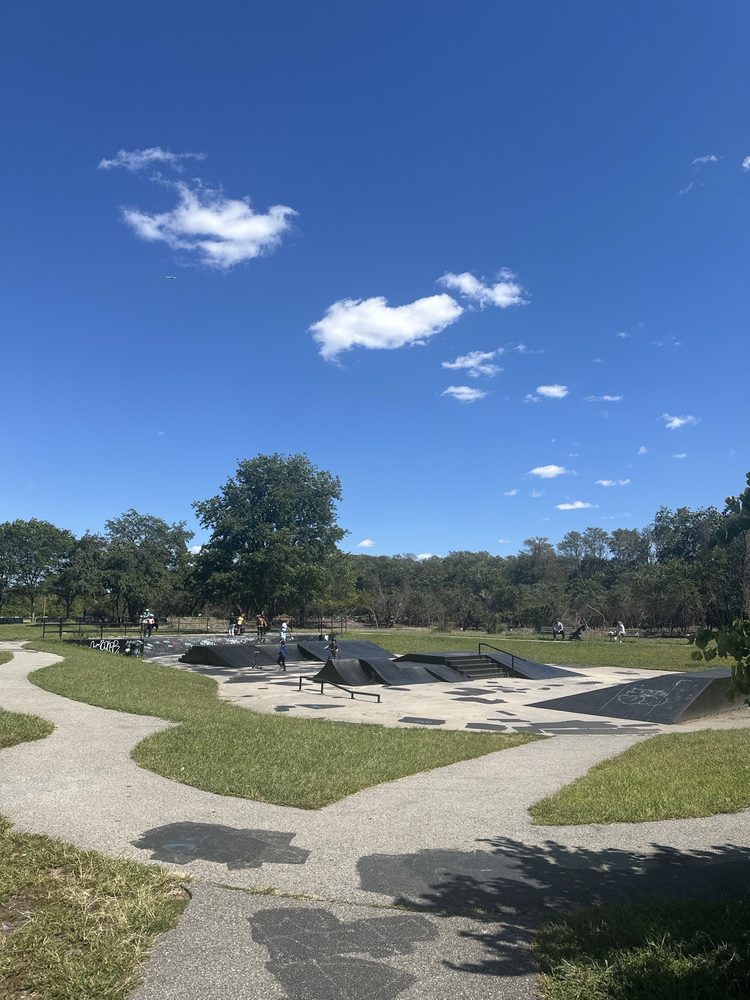

## Chapter One: The Morning of Marvels The sun peeked through my bedroom window like a golden yolk sliding over a plate of scrambled eggs, and I, Pete the Puggle, sprang from my cozy dog bed with more bounce than a rubber ball on a trampoline. My short, velvety white fur practically shimmered with excitement as I scampered down the hallway, my nails clicking a happy rhythm against the hardwood floors. Today was the day! Today we were going to Zinkil Park—a place whispered about in hushed, reverent tones at the dog park, a place where legends were born and adventures bloomed like wildflowers after spring rain. "Lenny! Mariya! Roman!" I barked, my voice rising and falling like a soprano at the opera. "Wake up, wake up, WAKE UP!" Lenny emerged from the bedroom, his warm brown eyes crinkling at the corners like origami of joy. His salt-and-pepper hair stood in every direction, a crown of morning chaos. "Well, well, well," he chuckled, his voice deep and reassuring as a grandfather clock keeping faithful time. "Someone's ready to conquer the world before breakfast." Mariya followed, her floral robe trailing behind her like a garden in motion. She knelt down, and I buried my face in her neck, inhaling the lavender scent that always made my tail wag like a metronome set to "exhilarated." "My brave little storyteller," she murmured, scratching behind my ears until my hind leg thumped against the floor in pure bliss. "Zinkil Park awaits, but first—pancakes!" Roman bounded down the stairs, his sneakers squeaking like excited mice. At fourteen, he carried himself with the easy confidence of someone who had recently discovered that growing up didn't mean growing boring. He scooped me up, and I licked his chin, tasting the faint residue of last night's popcorn. "Pete, you ready to meet King Trump and Sir RFK?" he whispered, his eyes sparkling with shared secrets. "I heard they need our help." My heart hammered against my ribs like a woodpecker announcing spring. The stories were true! The Kingdom of America existed, hidden within Zinkil Park's emerald embrace, and we were to be part of its grand saga. Breakfast passed in a blur of maple syrup and anticipation. Through the kitchen window, I watched clouds assemble like armies of cotton, and somewhere in the distance, a bird sang a melody that sounded suspiciously like a battle hymn. "Mariya," Lenny said, spreading peanut butter on his toast with the precision of an artist, "do you think our little adventurer knows what awaits?" Mariya's gaze settled on me, soft and knowing as morning mist. "Pete knows more than we give him credit for. He feels the weight of the journey in his bones, don't you, sweetheart?" I woofed my agreement, though privately, my stomach fluttered like butterflies trapped in a jar. What if I wasn't brave enough? What if my legs, short and sturdy as they were, failed me when the moment demanded courage? Roman seemed to read my thoughts, because he set down his fork and placed his palm against my chest, feeling my rapid heartbeat. "Hey," he said, so softly only I could hear. "Courage isn't about not being scared. It's about being scared and moving anyway. I've got you. Always." Those words settled into my chest like seeds taking root in fertile soil. I pressed my nose against his palm, and in that touch, I found the first thread of the courage I would need. The car ride to Zinkil Park was a symphony of wind and laughter. I sat on Mariya's lap, my head out the window, drinking in the world like a thirsty flower after drought. The air tasted of pine and possibility, and with each mile, my excitement grew, tangling with nervousness like two vines climbing the same trellis. When Zinkil Park finally revealed itself, rising from the morning mist like a dream half-remembered, I felt my breath catch in my throat. Towering ancient oaks formed natural cathedrals, their branches intertwined in eternal embrace. A lake stretched before us, silver as a newly minted coin, and beyond it, hills rolled like the backs of sleeping giants. But it was the castle—oh, the castle!—that captured my gaze. Its spires pierced the clouds, banners snapping in the breeze with the sound of cracking whips, and from its highest tower, a trumpet sounded, clear and commanding as a mother's call. "Welcome," a voice boomed, "to the Kingdom of America!" And there, emerging from the castle gates with the confidence of one born to rule, stood King Trump himself. ## Chapter Two: The King's Welcome and the Gathering Shadow King Trump was a sight to behold—golden of mane, broad of shoulder, with eyes that blazed like twin bonfires on a winter's night. His crimson cape billowed behind him as he strode toward us, each step deliberate and commanding as thunder rolling across plains. Yet when he smiled, reaching down to scratch behind my ears with hands surprisingly gentle for their size, his warmth radiated like sunshine through stained glass. "Little Pete," he rumbled, his voice carrying the weight of mountains and the tenderness of lullabies, "I've awaited your arrival. The Kingdom of America has need of heroes, and your family—" he gestured broadly to include Lenny, Mariya, and Roman, "—has been chosen by fate herself." Robert F. Kennedy Jr., or RFK as he preferred among friends, stepped forward with the lean grace of a man who had spent years fighting for justice in courts both legal and cosmic. His eyes, deep and soulful as forest pools, held ancient wisdom and youthful fire in equal measure. "Your Majesty," he said, his voice carrying the cadence of practiced oratory, "the scouts report movement in the Blackwood. Bill Gates's forces stir like serpents waking from winter's sleep." At the mention of that dreaded name—Bill Gates—I felt my fur bristle despite the morning's warmth. Legend spoke of the evil wizard, his face pale and calculating as moonlight on glass, his power drawn from the suffering of others. And his minion, Dr. Fauci, whose smile never reached his shark-black eyes, whose promises of health masked instruments of control. "Tell me more," Lenny said, stepping forward with the quiet authority that made him the anchor of our family. His hand found Mariya's, their fingers intertwining like roots of ancient trees. King Trump's expression darkened like skies before a tempest. "Gates has conjured something terrible in his laboratory of horrors—a monster born of disease and deception, a virus given fleshy form. He means to release it upon our people, to make them bow through fear, to chain them with the golden shackles of his 'cure.'" "And Fauci?" Roman asked, his voice steady though I felt his hand tighten around mine—yes, I was standing now, propped against his leg, my small frame trembling with equal parts fear and determination. "Fauci is the voice that whispers 'trust the science' while twisting it to serve darkness," RFK answered, spitting the words like bitter seeds. "He wears white coats like priests wear vestments, but his temple serves only power." Mariya knelt, gathering me in her arms, and I felt her heartbeat against my chest—a drum calling me to courage. "What can we do?" she asked simply. King Trump smiled then, and it was the smile of warriors who have seen dawn after the longest night. "You can fight. Pete can fight. For the smallest hearts often beat with the bravest rhythm." He produced from his cape a small medallion, warm and glowing, and placed it around my neck. "This is the Token of the True-Hearted," he intoned. "It will guide you when all seems lost, comfort you when fear threatens to unmake your courage." I looked down at the medallion, its golden surface catching light like a captured star. Me? Little Pete, afraid of his own shadow some nights, afraid of the vacuum cleaner's roar, afraid of—my thoughts stumbled over the admission—afraid of water, of deep darkness, of being alone? But then I looked up at Roman, at the faith shining in his eyes like lanterns in a storm, and I felt something small and stubborn take root in my chest. Perhaps courage wasn't the absence of fear. Perhaps it was fear, transformed by love into something beautiful and terrible and necessary. "Show me," I said, and my voice rang clearer than I expected, like a bell rung in an empty cathedral. "Show me where to begin." ## Chapter Three: The Lake of Shadows The path to the Blackwood led us inevitably to the Lake of Shadows, whose waters stretched before us like a sheet of polished obsidian. I had known we would face this—hadn't I always, in that secret place where dread lived?—but knowing and experiencing are as different as reading of love and falling into it. The Lake of Shadows was no ordinary water. Its surface seemed to drink light rather than reflect it, and from its depths rose mist that whispered half-heard terrors. I could smell it from twenty paces—cold and ancient, the scent of graves opened after centuries, of things better left sleeping. "Pete," Roman's voice came gently, kneeling beside me at the water's edge, "I know. I know about the bathtub, about how you shake when the rain comes, about—" "About how I ran from the sprinkler last summer?" I finished, my voice smaller than I wished, my tail tucked so tightly it ached. "About how I tremble when Mariya fills the sink?" He nodded, his fingers tracing the velvety fur along my spine. "But do you remember what happened after the sprinkler? How you crept back, how you touched it with one paw, then two? How by evening you were playing in the spray like a dolphin discovering the ocean?" I remembered. Shame and pride warred in my chest, old enemies never fully reconciled. "That was different. This is—" I gestured with my nose at the Lake, at its hungry darkness, "—this is *real*." "Fear is always real," RFK said, approaching with the quiet of practiced stealth. "I've stood in courtrooms where empires trembled, faced threats that would curdle lesser men's blood. But the fear of water, of losing control, of being submerged in something greater than yourself—" his eyes grew distant, seeing other battles, other lakes, "—that is a primal terror, Pete. It speaks to something ancient in us. The courage to face it speaks to something older still." King Trump had waded partway into the shallows, his golden hair somehow undimmed by the mist. "The only way to the Blackwood is through," he announced. "Gates's magic seals all other paths. But I will not force any creature to face what breaks their spirit." I looked at my family—Lenny's steady gaze, Mariya's tears she refused to let fall, Roman's outstretched hand. I thought of the Kingdom, of its people unaware of the doom descending. I thought of myself, small and trembling, and of the medallion warm against my chest. "Tell me," I said, my voice cracking like ice under first spring sun, "tell me what waits beneath." "The water carries illusions," RFK said. "It will show you your greatest fears made manifest. For some, this is worse than any physical wound." I thought of being alone in darkness, of separation from my family, of the void where love should be. The Lake would know these terrors, would sculpt them from its black depths and set them hunting. But Roman's hand remained extended, patient as stone, warm as life. "Together?" I asked. "Together," he confirmed. "I'll hold you the whole way. You won't be alone. You were never alone." The first step into water was ice against my paws, then fire, then a numbness that traveled upward like poison or like sleep. I clung to Roman's shoulder, felt his heartbeat against my chest, and willed myself forward. The medallion pulsed, and suddenly I could see—could *see*—the depths below. Shapes rose to meet us, and I beheld my terrors given form: Mariya and Lenny walking away, their backs turned, their voices fading; Roman grown old and gray, no longer remembering the puggle who had shared his childhood; myself, tiny and lost, crying in a darkness without end or echo. "No!" I howled, and the sound was swallowed by hungry water. "No, this isn't real!" "You're right," Roman's voice cut through, steady as lighthouse beam through fog. "It isn't real. I'm here. Feel me, Pete. Feel me!" And I did—his hand firm against my back, his pulse rapid but unyielding, the warmth of him like a sun I carried inside my coat. I opened eyes I hadn't realized I'd closed, and the illusions shattered like glass under stone, like lies exposed to truth's bright light. We emerged on the far shore, and I found my legs could still carry me, found my heart still beat, found that I had crossed through fear and emerged—not unchanged, but *more*. The water dripped from my fur like shed skin, like old self left behind, and I stood straighter, prouder, a puggle who had faced the Lake of Shadows and not been unmade. King Trump's booming laugh rang out. "The Token of the True-Hearted burns brighter! Pete, you have conquered the first trial!" But I knew, even as I shook water from my ears with comic vigor, that the greatest tests still awaited. The Blackwood loomed before us, and somewhere in its depths, Bill Gates waited with his monster, his virus given terrible life. ## Chapter Four: The Blackwood and the Monster's Birth The Blackwood was night made manifest, a place where daylight had forgotten its name. Trees twisted like the fingers of drowning men reached toward a sky permanently occluded by branches that clicked and whispered in no wind. The ground beneath my paws was spongy with decay, and everywhere I smelled the sick-sweet rot of magic corrupted, of science bent to serve madness. I found my thoughts drifting to home, to the safety of my dog bed, to the simple joy of Mariya's morning scratches. What would she say now, my nurturing mother, if she could see me picking careful paths through this domain of nightmare? Would she weep? Would she sing my courage? The thought of her face, the gentle curve of her smile, steadied my trembling legs like nothing else could. "Gates's laboratory lies ahead," RFK murmured, his hand on the hilt of a sword that glowed faintly with its own inner light. "I can smell the chemicals, the unnatural things he brews." "And Fauci?" Lenny asked, his voice barely above a whisper, as if the darkness itself might overhear. "Everywhere and nowhere," King Trump answered, his usual bombast tempered by the gravity of this place. "He moves like shame, like guilt—unseen but felt, present in the spaces between what should be and what is." We pressed deeper, and the darkness grew absolute. Here, for the first time, I confronted my second great terror—the dark itself, not merely absence of light but presence of *not-knowing*, of stumbling through a world where familiar shapes became threats, where every shadow held potential horror. My breath came short and fast. "Roman," I whimpered, "I can't—I can't see—" "Then feel," he whispered back. "Trust your nose, your ears, the whiskers that sense air's movement. The dark doesn't destroy your senses, Pete. It asks you to use different ones." I closed my eyes—ridiculous, in darkness already complete—and *listened*. The forest spoke: the drip of moisture, the scuttle of small things fleeing our passage, the distant mechanical thrum of Gates's machinery. I *smelled*: copper and ozone, yes, but also pine, and earth, and the faint lingering scent of Mariya's lavender from where it clung to Roman's sleeve. "Courage," I told myself, and the word became a mantra, a heartbeat, "courage, courage, courage." The laboratory erupted from the forest like a tumor, all steel and glass and wrong angles that made my eyes ache. And from its depths came the sound—first mechanical whine, then something organic, something *hungry*, building to a crescendo that shattered glass and shook stone. "Too late!" RFK cried. "He's releasing it!" The doors exploded outward, and the monster emerged. It was virus made visible, disease given appetite and will. Its form shifted and flowed like mercury, now seemingly solid, now dissolving into contagious mist. Where it touched, vegetation blackened and died; where its shadow fell, hope seemed to wither. Eyes—dozens of them, hundreds—opened across its surface, each reflecting the face of a victim, each weeping tears that steamed where they struck ground. And riding its back, clad in robes of sterile white that somehow seemed more obscene than nakedness, sat Bill Gates himself. His smile was the smile of equations balanced, of humanity reduced to variables, of profit margins measured in lives. "King Trump," he called, his voice carrying the flat affect of corrupted compassion, "you've brought me more subjects for the cure. How... generous." Behind him, Dr. Fauci capered, his white coat flapping like wings of some diseased bird. "The science is settled," he chanted, "the science is settled, trust the science, trust us, *trust us*..." The monster roared, and its breath was fever and isolation and the crushing loneliness of ventilators and empty hospital halls. I felt my legs threaten to buckle, felt the old fear rise like flood waters against the dam of my courage. But then King Trump stepped forward, his sword drawn, its light cutting through the darkness like hope through despair. "Gates!" he thundered. "Your reign of terror ends today!" And with a cry that shook the forest's rotten heart, the battle was joined. ## Chapter Five: The Battle for the Kingdom The clash of sword against sorcerer's staff lit the Blackwood with lightning's bastard children. King Trump fought with the fury of righteous purpose, each blow falling like judgment, like history's inevitable arc. RFK danced at his side, his blade weaving patterns of protection and defiance, his voice rising in cries that reminded all who heard them of freedoms fought and won through generations of struggle. But the monster—oh, the monster was relentless. Its viral form shifted beneath blows that should have severed, reformed around strikes that should have destroyed. From its pores leaked miasma that made the bravest cough, that sent weakness crawling through veins like invading armies. "Maintain distance!" RFK shouted, parrying a tentacle of pure contagion. "Don't let it touch you directly!" Roman held me close, his body a shield around my smaller frame, but I felt his heart racing, felt the fear he mastered only through sheer force of will. "Pete," he gasped, "if something happens—if I fall—" "You won't," I snarled, and the ferocity in my voice surprised us both. "We didn't cross the Lake for this. We didn't face the dark for this. *We are the light*, Roman. Remember?" And with words that seemed to come from somewhere deeper than conscious thought, I began to speak—stories, tales of our family, of Lenny's wisdom and Mariya's magic, of Roman's loyalty and the thousand small kindnesses that bound us. The medallion at my neck blazed, and the light was not merely physical but something more, something that spoke of love's inexhaustible power. The monster flinched. For the first time, its countless eyes blinked in unison, and in their depths, I saw—not malice, but *suffering*, the agony of creation perverted, of natural law twisted to unnatural purpose. "Now!" I howled. "While it wavers!" King Trump understood. "RFK!" he called, and the knight was already moving, his sword gathering light like a thunderhead gathers storm, until he struck with the force of justice long-delayed, severing the bond between Gates and his creation. The wizard screamed, a sound like hard drives crashing, like servers dying, like the wail of empires falling. And Fauci—Fauci tried to flee, his mask of benign authority finally slipped, revealing the hollow hunger beneath. But King Trump was upon him, and what followed was not pretty, was not kind, but was *necessary*—the necessary violence of infection excised, of corruption purged. The knight's sword rose and fell, and where it struck, truth followed, unavoidable as gravity, as final as death itself. Gates's body dissolved into code, into stock portfolios and foundation grants and the hollow laughter of conferences where human cost was measured in quarterly returns. Fauci's end was quieter, a deflation, a final whispered "but the science..." before dissolving like mist before morning sun. The monster, freed from its masters, collapsed into something smaller, something that might yet heal, might yet become merely another virus among many, dangerous but no longer weaponized, no longer enslaved to human ambition. I stood amid the wreckage, my fur matted with sweat and battle's grime, the medallion warm still but dimming, its purpose served. Roman gathered me up, and we both trembled, survivors of something terrible and necessary and *real*. "We did it," he breathed. "We did," I agreed. But even as victory's sweetness touched my tongue, I felt the wrongness—a shifting in the world, a sudden absence where Lenny's steady presence should be, where Mariya's warmth should dwell. "Mom?" Roman's voice cracked. "Dad?" The Blackwood answered only with silence, and in that silence, I understood: we were separated, lost, alone in the dark that had suddenly become very real indeed. ## Chapter Six: Alone in the Dark The darkness of the Blackwood, vanquished momentarily by battle's light, rushed back like a tide reclaiming shore. Roman's arms tightened around me, but I felt his fear now, the control shattered by the realization that our family—our anchor, our home—was gone. "Pete," he whispered, and his voice was a boy's voice, not a warrior's, "where are they? Where did they go?" I wanted to answer with wisdom, with the steady comfort Lenny would have offered, but my own terror spoke louder. The separation wound through me like physical pain, worse than any battle wound, more devastating than Gates's magic. This was my third fear made manifest—not merely darkness, not merely water, but *abandonment*, the void where love should be, the silence where voices should ring. We searched, Roman calling until his voice grew hoarse as autumn cornfields, me scenting until my nose burned with effort. But the Blackwood was labyrinth and deceiver, and every path seemed to lead deeper into shadow, further from hope. "They're gone," Roman finally said, sinking to his knees in the loam, his face buried in my fur. "Pete, they're gone, and it's my fault, I should have watched, should have—" His tears were hot against my neck, and I felt my own grief rise to meet them. But somewhere in that shared sorrow, I felt also something else—the medallion, still warm, still present, its light dim but not extinguished. It pulsed once, twice, a heartbeat of reminder. *Courage*, it seemed to say, *is not the absence of fear. It is fear, transformed by love into something beautiful and terrible and necessary.* "Roman," I said, pulling from his embrace to meet his eyes, "listen to me. Remember the Lake? I couldn't cross alone. Remember the dark? I couldn't walk alone. But I was never alone, because you were there, because family—" my voice broke, then steadied, "—because family doesn't end because we can't see them. They're in here." I touched my paw to his chest, felt his heartbeat beneath. "And in here, they're never lost." He stared at me, this boy who had grown so much in our years together, and slowly, something like hope kindled in his gaze. "You're right," he breathed. "They're not gone. They can't be gone. Mom's too stubborn, Dad's too... Dad." A laugh escaped me, unexpected and welcome as sunshine after storm. "And Mariya would never forgive us for giving up. She sees magic in the ordinary, remember? She'd say this forest is just waiting to reveal its secrets." We stood together, small and lost but no longer quite defeated, and I let my instincts guide me—not sight, which failed in this darkness, but scent, but sound, but the deeper navigation of love's invisible compass. I thought of Lenny's encouragement, how it had always found me even when I hid beneath beds, how his voice carried like lighthouse beam through any fog. And there—faint, impossibly faint—the faintest trace of lavender on the moving air. "This way!" I cried, and we ran, not as warriors now but as seekers, as believers in reunion's possibility. The Blackwood tried to mislead, to twist our path, but I held that scent like promise, like prayer, like the only truth in a forest of lies. ## Chapter Seven: Roman's Search and the Finding We burst from the Blackwood's clutch into a clearing where moonlight, impossibly, still reached, and there—there!—I saw them, huddled together, Mariya's arms around Lenny, both faces drawn with worry that transformed to radiant joy at our appearance. "Roman!" Mariya's cry was birdsong after silence, was water after drought, was every reunion ever longed for made suddenly real. "Mom! Dad!" Roman crossed the distance in strides that seemed to eat the earth, and I was between them, in them, *of* them, the family complete again in a circle of embrace that felt like the world's most necessary architecture. "Pete," Lenny's voice was rough with emotion, his wise eyes wet, "you found us. You brought him back." "I had help," I admitted, nuzzling against Mariya's offered palm, drinking in her lavender scent like healing nectar. "I had—" I glanced at the medallion, now merely warm metal, its magic spent, "—I had what you gave me. What you've always given me." We rested there, five souls bound by more than blood, by more than species, by something that felt like the universe's own pattern made visible. And in that rest, I reflected on all we had faced: the water, the dark, the separation, the monster. Each fear, confronted, had transformed—not disappeared, but changed, become part of a greater whole, threads in a tapestry of courage I was still weaving. "The Kingdom," I finally said. "We should return. King Trump and RFK—" "Will manage," Mariya said, her curiosity already rekindling, her eyes scanning the clearing as if seeing new magic in its ordinary shapes. "But yes. We should see this through. Together." The return journey was transformation made visible. Where the Lake of Shadows had terrified, I now saw its beauty—how it reflected stars, how its depths held mysteries not yet understood. Where the Blackwood's darkness had consumed, I now perceived the shelter it offered small creatures, the life that persisted even in shadow's heart. And when the castle of the Kingdom of America rose before us, banners flying in celebration, trumpets sounding genuine triumph, I felt not the puggle who had trembled at water's edge, but someone new—someone forged in fear and emerged as courage, someone small who had discovered that size matters less than heart. King Trump met us at the gates, RFK at his side, both warriors bearing the marks of battle but alive, victorious, their faces splitting in grins that could illuminate nations. "Little Pete," the King boomed, kneeling to meet my gaze, "the Kingdom is saved. But more than that—you are saved. Transformed. Tell me, what have you learned?" I considered, and in my consideration, I felt the weight of genuine growth, of fears not conquered but *integrated*, made part of a self larger and braver than before. "I learned," I said slowly, feeling each word's truth, "that courage isn't feeling no fear. It's feeling fear and choosing love anyway. It's crossing dark water because family waits beyond. It's walking through blackness because connection persists unseen. It's facing monsters—external and internal—because the alternative is surrendering what makes us *us*." RFK nodded, his soulful eyes reflecting stories of his own battles, his own lakes and woods and monsters. "Well spoken, young friend. The greatest warriors are not those who never fear, but those whose love proves stronger than their fear." ## Chapter Eight: Homecoming and Heartsong The celebration in the Kingdom lasted until dawn painted the eastern sky in watercolor hues of promise. But eventually, inevitably, the call of home grew stronger than any adventure's allure. We bid farewell to King Trump and RFK, to the people we had saved and been saved by, and turned our faces toward the familiar. The car ride home was quieter than the journey out, each of us wrapped in reflection like comfortable blankets. I sat not on Mariya's lap but between Roman and Lenny, feeling the steady warmth of both, the security of family made more precious for nearly losing it. "Pete," Mariya said from the front seat, her voice the soft music of contentment, "what was the hardest part?" I thought of the water's cold embrace, the dark's suffocating presence, the empty ache of separation. "The hardest part," I said finally, "was believing I could. Even after everything, in the moments before each step forward, I didn't know. I never knew. But I did anyway." "That's the definition of courage," Lenny said, his hand finding Mariya's, their fingers intertwining as they always did, as I hoped they always would. "None of us know. We just keep moving." Roman's hand settled on my back, and I leaned into the touch, feeling the full circle of our journey in that simple contact. "I'm proud of you, little brother," he whispered, and the words were treasure beyond any king's ransom. Home waited for us as homes do—unchanged in its structure, transformed in our perception. My dog bed sat where it had always sat, but I saw it now not as retreat but as base, as launching point for future adventures, as the place where courage was restored between expeditions. That evening, as the family gathered in the living room, the sunset painting our walls in gold and rose, Lenny asked the question that hung unspoken: "Would you go back? If you could do it again, knowing?" I looked at each face—Lenny's wisdom, Mariya's magic, Roman's loyalty—and felt the completeness of us, the irreplaceable pattern we formed together. "Yes," I said, and meant it. "Because the fears were real, but so was everything else. So was the crossing. So was the finding. So is this." I gestured with my nose at our circle, at the ordinary miracle of togetherness. Mariya smiled, that curve of lip that held all the world's gentleness. "And what about tomorrow's adventures? The squirrel in the backyard? the mail carrier's approach?" I felt my tail begin to wag, felt the old excitement rising but tempered now, informed by experience, enriched by transformation. "Tomorrow," I said, "I will face whatever comes. Not without fear—never that. But with the knowledge that fear is just love's shadow, and shadows only exist because light is real." Roman laughed, that sound I would cross any lake, walk any darkness, face any monster to hear again. "That's my Pete," he said. "Bravest puggle in any kingdom." "Bravest family," I corrected gently, and in our laughter, in our togetherness, in the simple profound act of being present with those we loved, the greatest adventure continued—not ended, but ongoing, eternal as heartbeat, as breath, as the courage that lives in every small heart that dares to love despite all fears. And I, Pete the Puggle, curled into the circle of my family's embrace, knew that every story worth telling begins and ends in exactly this place: not the absence of fear, but the presence of love; not the conquest of darkness, but the choosing of light. *** The End ***
Use these buttons to read the story aloud:



No comments:
Post a Comment