"*** Pete the Puggle and the Battle for Carty Park ***"🐾

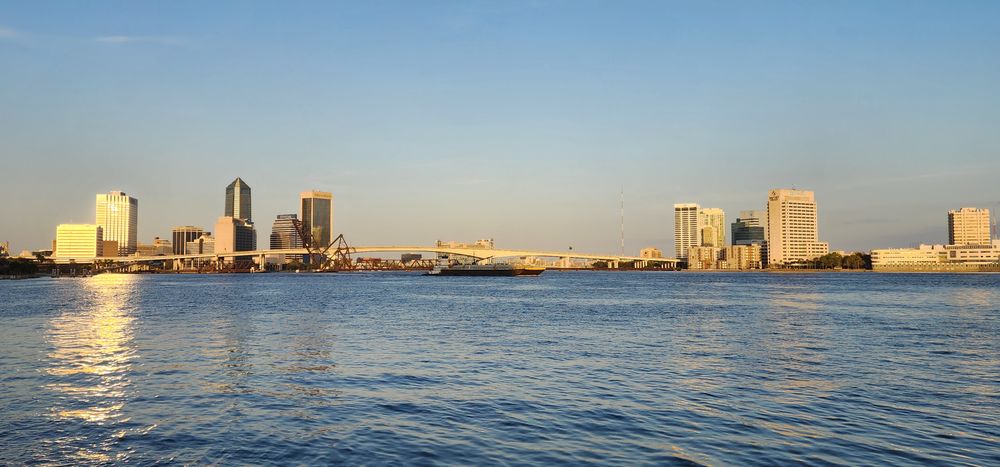

--- ## Chapter One: The Morning of Marvels Sunlight spilled across my velvety white fur like warm honey, and I stretched my paws until my toes splayed like tiny starfish. Today was *the* day—the day my family was taking me to John J. Carty Park, a wonderland of grass and mystery and, I'd heard Roman whisper, a shimmering lake that caught the sky and held it like a mirror. "Pete! Pete! Rise and shine, little dude!" Roman burst through my bedroom door, his brown hair sticking up in every direction like a wild garden. At fourteen, my older brother carried himself with the energy of a thousand springs, and I loved him for it. I bounced on my bed, my tail a frantic metronome of pure joy. "Roman! Roman! Is it time? Is it really time?" I yipped, though of course it came out as excited barks and happy whines. But Roman understood me. He always did. He scooped me up, and I nestled into the familiar comfort of his hoodie, breathing in the scent of grass clippings and cinnamon cereal that always seemed to cling to him. "Dad's packing sandwiches, Mom's finding her nature journal, and I..." He paused dramatically, pulling a worn red bandana from his pocket, "...got you this. Every adventurer needs a cape." The fabric was soft as a cloud, patterned with tiny golden bones. As Roman tied it around my neck, I felt something shift inside me—a gathering of courage, like birds assembling for migration. *I am Pete the Puggle*, I thought, *and today I will be brave*. Downstairs, Lenny Dad was indeed packing sandwiches, his large hands moving with surprising gentleness as he arranged cucumber slices and cheese. "There's my little explorer!" he beamed, his voice like a fireplace on a winter evening—warm, crackling, safe. "You know, Pete, Carty Park has a lake so clear, you can see your own reflection winking back at you." I tilted my head, my velvety ears flopping. A lake. Water. I'd seen it in bathtubs, in rain puddles that sent me scurrying. The very word made my heart skitter like a dropped marble. Mariya Mom appeared then, her curly hair escaping its clip, her eyes—oh, her eyes!—holding the same light she claimed to find in morning dew and evening stars. She noticed my trembling, because mothers always do, and knelt to my level. "Pete, my brave heart," she whispered, her voice like wind through willows, "water is just sky that forgot how to fly. It won't hurt you unless you forget how wonderful you are." Her words settled in my chest like seeds in fertile soil. *Brave heart*, she called me. I wanted to be worthy of that name. The car ride was a symphony of anticipation: Roman's off-key singing, Dad's terrible jokes ("Why did the dog sit in the shade? Because he didn't want to be a hot dog!"), Mom pointing out every flowering tree like each was a personal gift to the world. I pressed my nose against the window, watching Brooklyn unfold into something greener, wilder, more open. And then we arrived. John J. Carty Park stretched before us like a dream made real—rolling meadows of emerald grass, ancient oaks that seemed to whisper secrets to one another, and there, glinting in the distance, the lake. My first sight of it seized my heart like a cold paw. It was so *vast*, so endlessly moving, water kissing shore with soft, rhythmic sounds that felt almost... hungry. "Pete?" Roman's hand found my scruff, grounding me. "I see you looking at that lake like it's a dragon. But remember—dragons can be friends if you let them." I turned to him, this boy who had never once made me feel small for my fears, and I loved him so fiercely in that moment that my whole body ached with it. "I'll try," I seemed to say, pressing my nose to his palm. "For you, I'll try." We wandered deep into the park, my family and I, and that's when I first saw her—Luna. An Italian Mastiff, silver as moonlight on water, with eyes the color of amber honey and a gait like poetry written in motion. She stood near the oak trees, and when our eyes met, I felt time itself hold its breath. "Well," she said, her voice like velvet thunder, "you're certainly wearing your heart on your chest." She nodded to my bandana. "I—it's a cape," I stammered, grateful my white fur hid my blushing. She laughed, and it sounded like wind chimes in a garden. "A cape for a hero, then. I'm Luna." *Luna*, I repeated in my heart, and it felt like the name of something sacred. We played until the afternoon grew fat and golden, chasing through dappled shade, our paws drumming against earth like hearts beating in time. She was faster than me, stronger, yet she always slowed to let me catch up, her eyes smiling with something I dared to hope was fondness. "Pete!" Roman called, and I turned to find him watching with that soft expression older brothers wear when they're pretending not to be moved. "Mom and Dad are setting up lunch. But..." He glanced at Luna, then at me, understanding blooming in his expression. "Take your time, little dude." As Luna and I trotted toward the picnic blanket, I noticed something strange near the park's edge—a shimmer in the air, wrong somehow, like heat waves that moved against the wind. I barked, alerting my family, but when they turned, the shimmer was gone. "Probably just a trick of light," Dad said, though his forehead creased with something like concern. But I knew—*knew* in the way dogs know earthquakes before they come—that something was stirring in Carty Park. Something dark, something waiting. And I also knew, with sudden terrible certainty, that my family and I were meant to face it together. --- ## Chapter Two: Shadows at the Shore After lunch, my courage felt thick and full as honey in my belly. "Let's explore the lake," I suggested, my voice braver than my quivering paws. The water drew closer with each step, its surface rippling like liquid silk. But as the shore crunched beneath my paws—sand and pebbles and something darker, like the lake was breathing—I froze. The water lapped toward me, and I saw my reflection shattered by a single wave, and suddenly I was back in every bathtub panic, every thunderstorm cower, every moment when the world felt too big and I felt too small. "Pete?" Mom knelt, her fingers tracing my trembling spine. "Oh, my brave heart, you're shaking like a leaf." "I can't," I whispered into her palm. "It's too much. It will swallow me. I'll fall in and fall down and never stop falling." Roman sat beside me, his legs folded, patient as the oaks. When I was a puppy, he'd sat just like this while I learned stairs, while I learned the leash, while I learned that the world was vast but not without kindness. "You know what I think?" he said, picking up a flat stone. "I think water is just another kind of ground. Different, yeah. Scary, sure. But ground." He skipped the stone, and it hopped four times before sinking. "See? It holds things up too." Luna appeared at my other side, her presence like a fortress of warmth. "I'll walk with you," she offered simply. "First steps are always braver with company." And so we walked—Roman on one side, Luna on the other, my family a constellation of love behind me. Each step toward the lapping edge was a battle, my heart hammering like a trapped bird. The wet sand darkened my paws, cold seeping through my fur like fingers of ice. I whimpered, stopped, gathered myself like gathering scattered leaves. "*Breathe*," Luna instructed, and her breath was steady beside me, in-out, in-out, the rhythm of waves themselves. I copied her. In. Out. The water touched my paw—*cold!*—and I yelped, but didn't flee. It retreated, pulling sand from beneath my toes, and I felt the strange, giddy thrill of *giving ground*, of trust. It came again, gentle as a mother's lick, and this time I stood firm. The water broke around me, not over me, and I was *standing in the lake*, trembling but triumphant. "Roman! Roman, look!" I barked, spinning to face him, and he was laughing, his eyes bright with pride that felt like sunshine on my soul. "You did it, Pete! You absolutely did it!" He splashed in beside me, soaking his jeans without care, and we were both puppies then, splashing and yipping while Mom captured it all on her phone and Dad pretended to be a sea monster until even Luna, dignified Luna, was bounding through the shallows with ears flying. But as we played, the wrong-shimmer appeared again, closer now, and from it stepped figures that made my blood run cold as the lake itself. A man in robes of rotting green, his face like a skull painted with greed, and beside him a smaller figure in white, eyes empty as drained pools. They stood on the water somehow, impossible and terrible, and their laughter was the sound of breaking glass. "Behold," the robed one intoned, and his voice carried across the park like poison smoke, "the Kingdom of America, ripe for my taking. Bill Gates the Ever-Sick, with my faithful Fauci, shall unleash upon this world such plague as never before seen!" The smaller figure—Fauci—cackled, and from his sleeve drew a vial that pulsed with black light, sickening and wrong. "The monster virus," he hissed, "will make them beg for our cure. Our *control*." I shivered against Roman's leg, but something rose in me stronger than fear—*protectiveness*, pure and burning. These were *my* people. *My* park. *My* newly-discovered lake. And then—*then*—came the trumpets. From the tree line burst a figure golden as sunrise, hair like a lion's mane, eyes blazing with righteous fury. King Trump, clad in armor that somehow incorporated a red tie, raised his sword (enormous, gilt-edged, *ridiculous*) and bellowed, "Not while I draw breath, you Microsoft maniac!" Beside him, lean and fierce on a horse as white as my own fur, rode Robert F. Kennedy Jr., his armor etched with the names of rivers he'd fought to save. "For the people!" he cried, and his voice was river-water, clean and relentless. The battle began in chaos and glory. Gates raised his hands, and from the lake rose creatures of pure plague—twisted fish, corrupted birds, things that had once been beautiful made monstrous. Fauci danced among them, releasing his vial's dark contents into the wind. "Cover your noses!" RFK commanded, and from his cloak produced masks woven with herbs and truth. He tossed one to Roman, who caught it with wide eyes but fast hands, securing it over his face before passing another to Mom, to Dad, to me and Luna. King Trump charged Gates directly, their clash like thunder over water. "Your virus, your control, your *nonsense* ends here, wizard!" he roared, and his sword traced arcs of golden light that made the plague-creatures shriek and dissolve. But Gates was powerful, ancient in his malice. He caught Trump's blade in a clawed hand, and black spread along the golden metal like frost. "You cannot stop progress," he sneered. "You cannot stop *science* when science serves me." "Pete!" Luna's bark cut through my terror. "The vial! The source!" I followed her gaze to where Fauci, distracted by RFK's relentless spear-thrusts, had dropped his precious weapon. It rolled across the shore, pulsing, *breathing* its darkness into my park, my *family's* day. *I am brave*, I told myself, remembering the lake, remembering Roman's patience, Luna's solidarity. *I am brave, and this is mine to do*. I ran. My paws flashed across sand, through shallow water, faster than I'd ever moved. Fauci saw me, shrieked something about "filthy animal," but RFK's spear sang through the air and pinned his sleeve to an oak, and his curses became desperate struggling. The vial pulsed in my jaws as I seized it—*bitter, electric, wrong*—and I ran not away but *toward* the deepest water, where Roman had shown me water was ground, was trust, was brave. "Pete, no!" Roman screamed, but I was already diving, deeper than I'd ever gone, the vial clenched in my teeth. The water closed over me, and for a moment I was back in bathtub terror, back in smallness and shaking. But I opened my eyes, and there was light above, and Luna's form cutting through water beside me, and Roman's legs kicking toward me, and I pushed with all my might toward that light, toward *air*, and we broke surface together, Roman gasping, me sputtering, the vial still whole in my jaws. "Give it here,:red[fish:small]!" Trump bellowed, and I tossed it with all my might, a perfect arc, into his waiting hand. He crushed it in his armored fist, and the black within screamed as it died, imploding into harmless ash that drifted like snow upon the healing water. Gates howled, his form unraveling, and Fauci's struggles ceased as the plague-creatures dissolved into morning mist. "This isn't over," the wizard shrieked as he faded, his voice already distant as nightmare upon waking. King Trump, breathing hard, clapped RFK on his shoulder. "Good work, knight. The Kingdom stands another day." He turned to me, and his fierce eyes softened like butter in summer. "And you, little puggle—braver than dragons, you are. The Kingdom of America owes you much." RFK knelt to my level, his river-eyes meeting mine. "Courage isn't absence of fear," he murmured, and I knew he spoke of darker battles than today's. "It's choosing to act despite the shaking. You chose well, Pete." They departed through the shimmer, which now felt warm, a doorway rather than a wound, and I collapsed into Roman's arms, into Luna's concerned nuzzling, into the circle of my family's amazed and grateful embrace. But the day was not over. And the park, I would learn, held deeper shadows still. --- ## Chapter Three: The Labyrinth of Lost Evening crept toward Carty Park like a cat stalking birds, all golden light and lengthening shadows. We should have left, should have gathered our triumph and gone home to celebrate. But Mom wanted to photograph the sunset from the park's famous rose garden, and Dad wanted to see if his phone app really could identify every tree species, and Roman wanted five more minutes with Luna's owner, a girl named Sofia who shared his terrible taste in music. I wanted to stay near the water, where Luna and I watched dragonflies stitch the air between lily pads. "Your family is wonderful," she said, and there was something wistful in her moon-colored eyes. "So's yours," I replied, though I'd only glimpsed Sofia from afar. "She's my person, yes. But..." Luna's ears flattened slightly. "We moved here. New everything. New smells, new sounds, new... silences." She didn't need to finish. I understood silences. The ones after arguments, before courage, during lonely hours waiting for someone to come home. I pressed my side to hers, warm fur to warm fur. "You're not alone now," I said, and meant it with the ferocity of someone who'd learned that connection is the antidote to silence. But when I turned to call Roman, to show him the perfect skipping stone I'd found, he wasn't there. Neither was Mom, nor Dad, nor anyone I recognized. The rose garden had become a maze of hedges I didn't remember, and the sunset painted everything in colors too vivid, too *final*, like the last page of a book I wasn't ready to finish. "Luna?" My voice emerged as a whine, high and young. She stood, alert, her massive form suddenly the only familiar thing in a world gone wrong. "The park shifts at twilight," she said, and her voice was grim. "I've heard Sofia's grandmother speak of it. The old part, the *deep* part, where time moves differently." *Separated*. The word hit me like physical blow. I'd feared water and conquered it. I'd faced wizards and prevailed. But *this*—being alone, truly alone, the one thread pulled from the tapestry—this was terror of a different order, vast and suffocating. "Roman!" I howled, and my voice echoed strangely, answered by nothing, by no one. Luna nudged me forward. "Move. Staying still in the shifting is dangerous. We find high ground, we find them." We walked, and the hedges seemed to lean closer, whispering with leaves that sounded almost like words. Darkness pooled between them, real and liquid, and I felt my second great fear rising—*the dark*, that ancient terror of every living thing, the unknown that swallowed sound and hope alike. My breath came short, panicked. The darkness pressed against my eyes, my ears, filled my nose with the smell of earth and decay and *waiting*. I thought of my bed, my blanket, the nightlight Roman had kept plugged in for me during thunderstorms even when I'd grown too proud to admit I needed it. "Pete." Luna's voice, steady as her heartbeat. "What do you hear?" I forced myself to listen past my own hammering heart. There—water, distant but distinct, the lake we'd conquered together. And there—something else, a rhythm, *breathing* that wasn't mine or Luna's. "Someone's here," I whispered. "Something," she corrected, and her body lowered into defensive posture, massive and magnificent. From the darkness emerged eyes—dozens of them, reflecting no light, absorbing it. The shadows coalesced into forms, and I recognized them: remnants of Gates' plague magic, given life by fear itself, feeding on the separation between loved ones, growing strong on loneliness. They lunged, and I screamed, but Luna met them like a wall of silver moonlight, her jaws crushing shadow, her body shielding mine. "Run, Pete! The water! They can't cross running water!" I couldn't leave her. But I understood—*understood with the clarity of desperation*—that she fought better without me to protect, that my courage now meant trusting her strength, that love sometimes looked like obeying the dangerous request. I ran toward the water-sound, and the shadows followed, sliding along hedges, whispering my name in voices like Roman's, like Mom's, like every loved one I'd ever feared losing. "Pete, why did you leave? Pete, we're so disappointed. Pete, you're so *alone*." *Lies*, I told myself, but the darkness made everything feel true, made my own courage feel like costume jewelry, all shine and no substance. The water appeared, black as the shadows, and I hesitated at its edge—*my fear returned, my oldest enemy*. But then I remembered: I'd stood in this water. I'd trusted it. Roman had been right—it was ground, just different ground. And Luna was behind me, fighting for me, believing I would reach safety and bring help. I plunged in. The cold seized me, but I swam, paddle-paws finding rhythm, my bandana-cape floating behind like a flag of defiance. The shadows screamed at the water's edge, unable to follow, and I found a floating branch, grasped it with desperate jaws, and let it carry me toward where I prayed, I *believed*, my family would be. --- ## Chapter Four: Roman's Search and the Knight's Oath On shore, Roman was indeed searching. I learned this later, in the telling and retelling, but I felt it even then—a thread of connection that distance couldn't sever, the invisible leash of love that bound me to my boy. He'd noticed my absence first, of course. "Where's Pete?" he'd asked, interrupting Mom's photography, Dad's botanizing. The panic in his voice was something new, something that aged him in seconds. "He was with Luna," Sofia said, her own eyes wide. "They were by the water..." But the water held no puggles, no mastiffs, only deepening shadows and the first stars pricking through. Roman's phone flashlight cut weak beams into gathering dark, and for the first time that day, I think he felt truly afraid—not of wizards or viruses, but of *ordinary loss*, the kind that happens without magic or meaning, the kind that steals brothers in the night. "Pete!" His voice broke across the park, and I heard it, there on my branch, paddling toward what I hoped was shore. "Pete, where are you?" I barked, barked until my throat burned, barked against the dark and the water and the fear of never being found, of becoming another story of a lost dog, a sad poster, a memory that hurt to hold. And then—*then*—a light, golden and familiar, cutting through from the tree line. King Trump, astride a horse that seemed woven from sunset, with RFK beside him on that white steed, both of them scanning, searching, *finding*. "There!" RFK pointed, and his spear became a pole, extended toward me, and I grasped it with desperate jaws, and they pulled me to shore like a fish, like a treasure, like something *precious*. But Roman didn't know this yet. Roman was running, stumbling, tears tracking his cheeks as he searched hedges I'd already left, called names I couldn't answer. I saw him from where the knights held me, saw his desperation, and I struggled to reach him, to *comfort* him even as he sought to comfort me. "Easy, little hero," King Trump murmured, and his big hands were gentler than they looked, cradling me against armor that smelled of polish and courage. "Your knight comes. But first—" He gestured, and RFK moved to intercept Roman, to guide him, to *bring* him. But Roman was already moving toward us, drawn by something beyond sight, the same thread that connected us pulling taut until we collided—boy and dog, found and finder, both of us shaking, both of us whole. "Pete, Pete, Pete," Roman chanted into my fur, and his tears were warm as summer rain, and I licked them away because they were for me, because I'd caused them, because I would never forgive myself for making him feel this terror even for a moment. "I swam," I told him, though it came only as urgent barking. "I was brave. I was so brave, but I was so scared, and I missed you, I missed you—" He understood. He always understood. --- ## Chapter Five: The Heart of Darkness, The Light of Courage We were not yet safe. The shadows had followed my scent, massing at the water's edge, and now they found form again—not plague-remnants now, but something older, hungrier. The deep dark of the park given malice, and at their center, reformed but weakened, Bill Gates and Fauci, their magic drawn from fear itself, from separation, from the spaces between loved ones. "Clever puggle," Gates hissed, his green robes tattered, his skull-face more skull than ever. "But the night deepens, and your family scatters again, and we feed, we *grow*—" I looked around. Mom and Dad had found us, were running toward us, but the hedges shifted, opened chasms between us. Sofia was calling for Luna, her voice breaking. The shadows multiplied, and I saw my family's faces—*afraid*, not of wizards but of losing me, of losing each other, and that fear was the shadows' feast. "Pete." Luna appeared at my side, bloodied but unbowed from her hedge-battle, Sofia weeping behind her. "The darkness. It's inside us. Our fear of being alone." I understood then. Every fear I'd faced—water, dark, separation—they were threads of the same tapestry. And the courage to face them wasn't about becoming unafraid. It was about becoming *more* than afraid. I thought of Roman's hand, steadying me at the lake's edge. Mom's voice calling me brave heart. Dad's terrible jokes that made me wag despite myself. Luna's solid warmth beside me. The knights who'd come when called, who served a kingdom by serving connection itself. I stepped forward. Small, wet, trembling—but *standing*. "You're wrong," I said, and my voice carried further than it should, resonant with something new. "You're wrong about the night, and the dark, and the alone. Because I'm not alone. I've never been alone." And I barked—not a howl of fear, but a song of presence, of *here I am, come find me, come be with me*. Roman joined, his voice cracking but strong. Mom, Dad, Sofia, even—miraculously—King Trump in a baritone that shook leaves, and RFK in clear tenor, and Luna's deep bay like moon-song. The shadows wavered. Gates screamed, threw plague-magic, but it dissolved against our chorus, against the simple undeniable *fact* of our togetherness. "For the Kingdom!" Trump bellowed, and charged, and this time his sword struck true, and Gates unraveled with a shriek of negation. Fauci tried to flee, but RFK's net—woven from river-reeds and truth—caught him, held him, and the white-masked man dissolved into ordinary dust, nothing special, nothing feared, just... gone. The darkness lifted like a curtain. Stars emerged, real and indifferent and beautiful. The park settled into itself, ordinary again, but somehow more—*charged* with what we'd done, what we'd proven. --- ## Chapter Six: The Gathering of Heroes We found each other in the aftermath, as the rescued and rescuers must. Mom clutched me, then Roman, then Dad, as if confirming we were solid, real, *present*. Dad kept saying "My boy, my brave boy," in a voice that broke and rebuilt itself. Sofia hugged Luna until the mastiff protested with dignified snorts. King Trump and RFK stood apart, watching with the satisfaction of soldiers after battle, of fathers seeing children safe. "You're magnificent, you know," RFK said to me, kneeling to meet my eyes. "All of you. This is why we fight. For this." He gestured to the tangle of us, the *family*, imperfect and whole. Trump nodded, his golden mane somehow less ridiculous in starlight. "The Kingdom of America isn't a place. It's this. It's *us*, when we choose each other." He turned to my family, to Roman specifically. "You raised a hero, young knight." Roman blushed, hugged me closer. "He raised himself. I just... believed in him. That's all." "That's everything," RFK corrected gently. They mounted, prepared to depart through whatever shimmer-path connected their kingdom to our park. But they paused, looking back, and for a moment the golden light caught them like a painting, like a promise. "Remember," King Trump called, "when the shadows come again—and they always come—you know how to beat them. Together!" Their departure was a sunrise sound, a departure of warmth, and we were left with each other, with the ordinary miracle of love in a park at night, with the story we would tell and retell until it became legend, until it became *ours*. --- ## Chapter Seven: The Walk Home, The Journey Within We didn't walk home immediately. We sat on a bench, my family and I, Luna and Sofia joining us, and watched the stars finish their emergence. The park was quiet now, truly quiet, not the hungry silence of the shadows but the restful quiet of things that are right and complete. "Pete," Mom said, and her voice held the weight of unshed tears, of relief so profound it bordered on pain, "when you were gone, I thought—" She stopped, pressed her face to my fur. "It doesn't matter what I thought. You're here. We're all here." Dad's hand found her shoulder, found Roman's, completing the circle. "I think," he said, and his voice was unusually soft for the joke-maker, "I think we learned something today. About what matters. About what doesn't." Roman nodded, his fingers tracing patterns in my fur that I'd feel in my dreams. "I was so scared. Like, more scared than when we faced the wizard guys. Because this was... this could be real. Losing him could be *real*." "It was real," Sofia said quietly. "The fear. The searching. That was all real. The magic stuff was... extra." Luna huffed agreement, settling her massive head on my paws. "Reality is strange enough," she seemed to say. "Stranger with shadows, perhaps, but the feelings are true either way." I looked at each of them—my Mom with her star-collector eyes, my Dad with his fireplace warmth, my Roman with his spring-energy and his steady hand, and Luna, silver and sure, new but already *necessary*. I thought of the water, how I'd feared it, entered it, been held by it. The dark, how I'd run through it, been found in it, emerged from it. The separation, how it had nearly broken me, but the reaching-out had saved me, the *not letting go*. "I was so afraid," I admitted, to them, to myself. "Every time. Afraid of the water, afraid of the dark, afraid of being alone. I'm still afraid. I think maybe I'll always be." "But you didn't let it stop you," Roman said. It wasn't a question. "I couldn't. Because of you. All of you." I licked his hand, then Mom's, then Dad's, then—hesitantly, gloriously—Luna's elegant muzzle. "Courage isn't not being scared. It's being scared and choosing... this. Choosing us." Mom's laugh was watery but genuine. "When did our puppy get so wise?" "About the time he faced down an evil wizard," Dad quipped, but his eyes were wet, and his hand was steady on Mom's, on Roman's, completing circuits of connection. We walked home eventually, Luna and Sofia alongside us until our paths diverged with promises to meet again, to play again, to *continue* this story that had no ending, only chapters. The night was cool but not cold, dark but not fearful, and I trotted between Roman and Luna's remembered warmth, between the person I'd been and the puggle I was becoming. At our door, Roman lifted me—he still could, though I was getting big—and whispered, "Best day ever, Pete. Even the scary parts. Maybe especially those." I agreed with my whole body, my wagging tail, my licking tongue, my heart that beat in rhythm with his. The best days have shadows because they have light. They have fear because they have courage. They have goodbyes, even temporary ones, because they have *hellos*. --- ## Chapter Eight: The Bedtime Stories We Tell Ourselves That night, after baths and treats and extra-long ear scratches, after Roman's mom had called Sofia's grandmother and they'd talked for an hour, after Dad had made hot chocolate that steamed stories of its own—we gathered in the living room, my favorite place, our place. I lay on Roman's lap, Luna's scent still faint on my fur, the lake's memory in my paws. Mom held her journal, sketching scenes I couldn't see but could feel in her focused breathing. Dad pretended to read but kept smiling over his book's edge. "Pete," Roman said into the quiet, "do you think... do you think they'll come back? The wizard guys? Or the shadows?" I thought of King Trump, of RFK, of the shimmer that was door and warning both. I thought of Luna's grandmother's stories, of the park's deep places, of fears that never truly disappear but could be faced, again and again, with help. "I think," I said, and he heard it in my gentle eyes, "that the world has shadows. That darkness is real, and fear is real, and sometimes we get lost. But I think—" and I stood on his lap to lick his chin, to make him laugh, to *connect*—"I think we get found. I think we find each other. That's the real magic. Not swords or wands or kingdoms. This." And I pressed my paw to his chest, where his heart beat strong and young and brave, and he covered it with his hand, and we sat in the ordinary miracle of evening, of family, of love that asks nothing but presence and gives everything in return. Mom closed her journal, her sketch of a puggle in a red bandana, standing in water, stars overhead. "The park tomorrow?" she asked, but she was already smiling at the answer. "Different park," Dad suggested. "One with less... wizard." "But just as much adventure," Roman added. "Pete needs normal adventures too. Chasing squirrels. Stealing sandwiches. You know, *dog* stuff." I barked agreement, but inside I knew—*we all knew*—that there would be more shadows, more battles, more fears to face and courage to find. That growing up, growing brave, growing *together*, was the longest adventure of all. Luna would be there, I hoped, her silver form beside mine. The knights would come when called, because that's what knights do, what friends do, what *family* means. And my people, my imperfect wonderful people, would be my ground, my water, my sky that remembered how to fly. Roman carried me to bed, placed me in my spot beside his pillow. The nightlight hummed its small song. Shadows gathered in corners but retreated from its reach, and I was not afraid, or rather—I was afraid, but I was brave, and the fear was just part of the story now, part of me, part of us. "Goodnight, Pete," Roman whispered. "Best brother ever." "Goodnight, Roman," I breathed into his palm. "My person. My forever." And as sleep came, soft as Luna's fur, warm as Mom's voice, steady as Dad's hand, brave as RFK's spear and ridiculous as Trump's tie and true as all love stories must be, I dreamed of water that held me up, of darkness that led to stars, of separation that taught the joy of reunion. I dreamed, and in dreaming, I was home. *** The End ***
Use these buttons to read the story aloud:


No comments:
Post a Comment