"***Pete the Puggle's Grand Adventure at Owl's Head Park: A Tale of Courage, Friendship, and Finding Your Brave Heart***"🐾


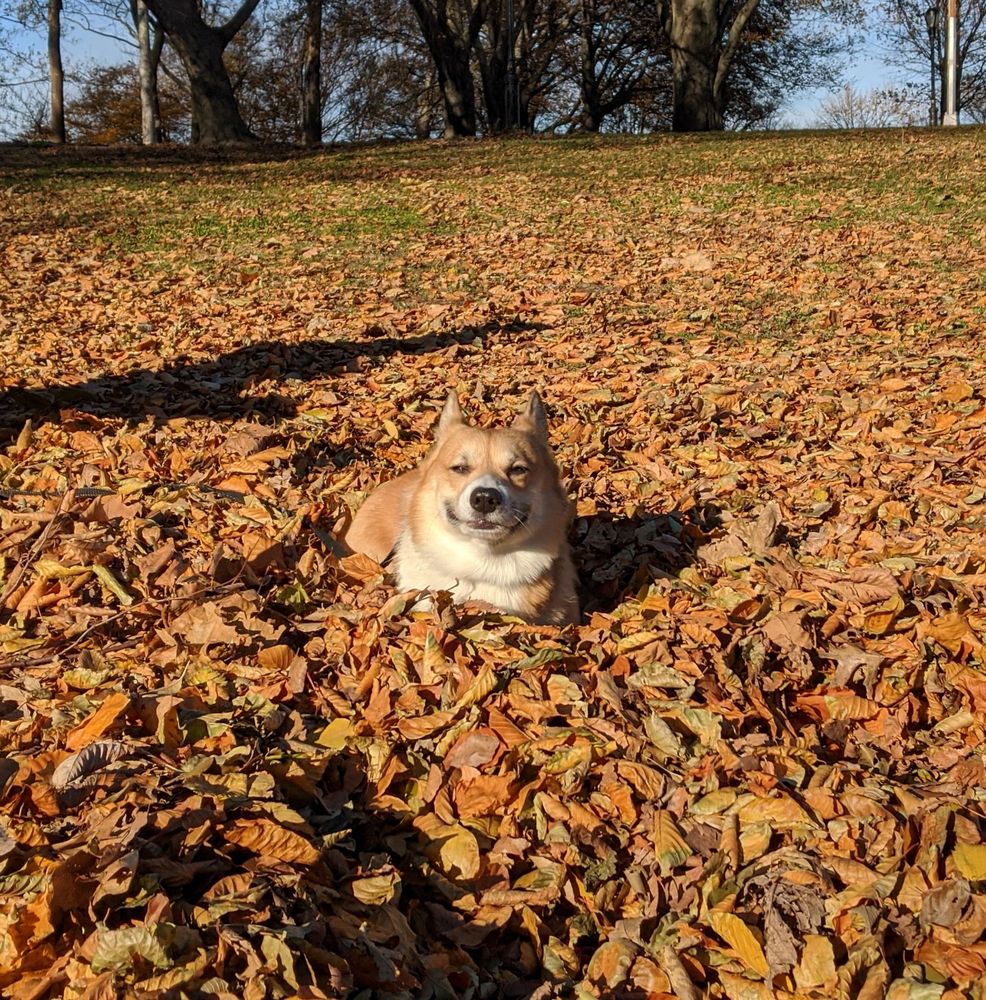
--- **Chapter One: The Morning of Marvelous Possibilities** The sun spilled through my bedroom window like warm honey, coating my short, velvety white fur in golden light. I stretched my paws toward the ceiling, each toe spreading wide, and let out a puppy yawn that could have swallowed a butterfly. Today was the day. I could feel it in my whiskers, in the way my tail already wagged like a metronome set to "joyfully frantic." "Pete! Pete!" Roman's voice cascaded down the hallway, accompanied by the thunder of his footsteps. "We're going to Owl's Head Park! Mom packed the blue backpack with everything!" I tumbled off my plush dog bed—a cloud of cream-colored cushion that smelled faintly of lavender and home—and scampered toward the door. My makeup-streaked eyes, those playful lines of dark fur that made me look perpetually ready for a costume party, widened with excitement. Owl's Head Park! I'd heard whispers of this magical place: trees that whispered secrets, grass that tickled bellies, and water—so much water—glittering like scattered coins. In the kitchen, Mariya stood by the counter, her hands flour-dusted from morning pancakes. She wore her favorite sunflower dress, the yellow fabric making her look like a walking piece of sunshine. "My brave little explorer," she cooed, bending to scratch behind my ears. Her fingers found the exact right spot, and my hind leg thumped against the tile like a drumbeat. Lenny emerged from the bedroom, his laugh lines deep as riverbeds, already wearing his "Adventure Dad" baseball cap. "Pete, did you know that Owl's Head Park was once an real owl convention center?" He waggled his eyebrows. "True story. They had tiny name tags and everything." "Dad," Roman groaned, though his eyes sparkled. "That doesn't even make sense." "Doesn't need to, son. Comedy is art, and I am but a humble—" "Pun machine," Mariya finished, pressing a kiss to his cheek. The car ride felt like traveling through a portal to another world. I sat in Roman's lap, my nose pressed to the window, drinking in the changing scenery. Brooklyn gave way to green, to sky, to the promise of adventure. Roman's fingers traced gentle patterns on my back, and I felt safe—so wonderfully safe—in the cocoon of our family. "Pete," Roman whispered, leaning close so only I could hear. "I heard there's a huge lake at this park. Like, ocean huge. You gonna swim with me?" My heart did a funny flip, like a pancake that wasn't ready. Water. The word tasted strange in my imagination. I'd seen water in my bowl, in rain puddles, but *lake* water? Endless, deep, could-swallow-a-puppy-whole water? My tail stopped wagging for just a moment, a pause in my happiness. Roman felt it. His hand stilled on my back. "Hey," he said softly. "No pressure, little dude. We'll figure it out together, okay?" I licked his chin, grateful for the out, yet strangely disappointed in myself. What kind of adventurer was afraid of water? As we parked, I caught my reflection in the side mirror—my white fur pristine, my dark eye markings bold and dramatic, like a superhero's mask. I looked brave. I wanted to *be* brave. The park opened before us like a storybook, each page more wondrous than the last. Ancient oaks stretched toward heaven, their leaves murmuring in a language older than time. A winding path beckoned us forward, and somewhere—distant but undeniable—I heard the sound of water lapping against shore. My paws trembled slightly. But Roman's hand found my scruff, and Mariya's laugh rang like bells, and Lenny was already marching ahead with an invisible sword, declaring himself "King of the Picnic Tables." I took my first step into Owl's Head Park, little knowing that this day would test everything I thought I knew about fear, about courage, about what it truly means to find your brave heart. --- **Chapter Two: Meeting Timmy and the Shadow of the Lake** The meadow swept before us like a green ocean, dappled with clover and the occasional brave dandelion. Children laughed in the distance, their voices bright as kite strings. I trotted beside Roman, my nose mapping this new territory: squirrel (recent), barbecue (heavenly), something musky and wild (rabbit, perhaps, or the ghost of one). It was there, near the old stone bridge, that I first saw Timmy. He was a long-haired Chihuahua, his coat a flowing cape of chestnut and gold, his ears—enormous for his frame—tipped forward like radar dishes. He stood on a rock, posed as if for a portrait, surveying his kingdom with the gravity of a general. "Behold!" he announced, spotting me. "Another soul enters the realm of Owl's Head! I am Timmy, Guardian of the Eastern Grassy Knoll, Protector of Lost Tennis Balls, and—" he paused for effect, his tiny chest puffing, "—the bravest dog in all five boroughs." I blinked. Roman chuckled. "Hey, little guy. I'm Roman. This is Pete." Timmy leaped from his rock with surprising grace, landing before me. Up close, I saw the wisdom in his dark eyes, the slight gray at his muzzle. He wasn't young, this Timmy, but he carried himself with the energy of ten puppies. "Pete," he said, circling me. "You have the look of a thinker. A worrier, perhaps. I can tell by the furrow of your brow—well, the furrow that would be there if you weren't mostly white and fluffy." "I don't furrow," I said, though my tail curled uncertainly. "Everyone furrows," Timmy countered. "The question is: what do you do with the furrow? Turn it to a purpose, I say. Now—" he gestured with his snout toward a break in the trees. "The lake calls. Are you prepared?" Roman followed Timmy's direction, and I followed Roman, and suddenly there it was. The lake. It stretched before us like a living thing, breathing in slow ripples, drinking the sky's blue and returning it deeper, darker, hungrier. The far shore seemed impossibly distant, a line drawn by a wavering hand. Ducks bobbed like toy boats, unconcerned by the depths beneath them. And the smell—water and algae and something ancient, something that whispered of places feet cannot touch and light cannot reach. My paws rooted to the earth. My breath came shallow and quick. The lake was not merely water; it was *absence*, it was *unknown*, it was the place where solid ground ended and imagination ran wild with terrible possibilities. What lived in there? What pulled at the ankles of the unwary? My small body, my white fur, my makeup-streaked eyes—what were they against such endless depth? "Pete?" Roman's voice reached me from somewhere far away. "You okay, buddy?" I couldn't answer. I was frozen, a statue of myself, my brave heart caged behind ribs that suddenly felt too small. Timmy appeared at my side, surprisingly close. "Ah," he said, and there was no mockery in it. "The water fear. I know it well." "You do?" I managed. "Childhood," he said simply. "A bucket overturned, a nose submerged, the panic of not knowing which way was up. For months, I wouldn't cross a puddle. My humans called me dramatic." He snorted. "As if fear is not the most honest emotion we possess." "But you're brave now," I said. It wasn't a question. "I am *practiced*," Timmy corrected. "Bravery is not the absence of fear, young Pete. It is the decision that something matters more. For me, it was retrieving a stick for my human, who cried when she thought I'd drowned. I realized: the fear of her sadness was greater than my fear of the water. So I swam." Roman knelt before me, his hands warm and steady on my shoulders. "Pete, look at me." I dragged my eyes from the lake's hypnotic surface. "We don't have to go near the water," he said. "We can explore the woods, play fetch on the grass, whatever you want. But I want you to know: I believe in you. Whatever you decide." His faith was a rope thrown to a drowning man, and I clung to it. But Timmy's words echoed: *something matters more*. What mattered to me? This question would follow me into the hours ahead, into the gathering shadows, into the darkest moment of my young life. --- **Chapter Three: Games in the Sun and Shadows Lengthening** We retreated from the lake's hypnotic pull, and I was grateful. Timmy led us on a tour of his domain—the best digging spots, the tree where squirrels staged their dramatic chases, the hidden patch of clover where he'd once found an entire hot dog (abandoned, he assured us, not stolen; the distinction mattered to his honor). Roman and I played tug-of-war with a rope toy Mariya produced from her bottomless blue backpack. The feel of the fibers in my teeth, the give and pull, the way Roman's laughter bounced like sunlight off water—these things anchored me. I was not just a puggle with fears; I was Pete, champion tugger, beloved companion, irreplaceable. Lenny spread a blanket under an oak whose branches formed a natural cathedral. "Pete's Popemobile," he declared, patting the cushioned basket he'd carried. "For when his royal fluffiness tires of walking." "I don't need a popemobile," I protested, though the shade did look inviting. "Everyone needs a popemobile," Lenny insisted. "It's in the Geneva Convention. Look it up." Mariya unpacked sandwiches that smelled of turkey and cranberry, of home and comfort. She fed me small bites from her fingers, her nails painted the same sunflower yellow as her dress. "My sweet boy," she murmured, and I heard in her voice the echo of every lullaby, every midnight comfort, every promise that the world was good and I was safe within it. After lunch, Timmy proposed a game. "The Great Owl's Head Challenge!" he announced. "We shall traverse the wooded path, navigate the Stone Circle of Tempting Smells, and emerge at the Sunset Viewpoint before the light fails. The winner receives..." he paused dramatically, "the title of Honorary Deputy Guardian of the Eastern Grassy Knoll!" "That's the prize?" Roman laughed. "Titles are eternal," Timmy said with wounded dignity. "Unlike your human 'treats,' which are merely digestive." We set off, a merry band: Lenny with his bad jokes and his phone perpetually ready for photos, Mariya with her keen eye for beauty in a wildflower or a cloud formation, Roman with his protective hand never far from my back, Timmy leading with the confidence of a monarch, and me—me, still tasting the lake's shadow, but determined to be present, to be brave in small ways if not in large ones. The woods were different from the meadow. Here, light filtered through leaves in shifting patterns, casting the path in perpetual twilight even at noon. Sounds were closer, more intimate: the crack of a twig underpaw, the sudden flight of a bird, the rustle that could be squirrel or could be—something else. My ears swiveled constantly, mapping this acoustic territory. "Pete's on high alert," Lenny observed. "What's the word, little detective? Any suspicious squirrels?" "All squirrels are suspicious," I replied, grateful for the normalcy of the exchange. "It's their defining characteristic." "Profound," Mariya said, snapping a photo of a fern unfurling like a green question mark. The Stone Circle of Tempting Smells lived up to its name. Someone—many someones, by the layered complexity—had marked this spot thoroughly. I spent an informative few minutes reading the gossip of the park's canine population: who was new, who was dominant, who had recently eaten something regrettable. Timmy added his own contribution with the gravity of a historian adding to the archive. "And now," he said, turning toward a narrower path, "the shortcut to Sunset Viewpoint. Follow closely—these woods confuse the uninitiated." We followed. The path narrowed, then narrowed further, until we were pushing through undergrowth, around boulders, past a stream that babbled with what sounded suspiciously like laughter. The light changed, grew more golden, more horizontal. And then—abruptly, impossibly—we were alone. I turned, and the path behind us had vanished, swallowed by a wall of identical green. No Lenny. No Mariya. No Roman. My heart became a bird trapped in my chest, beating against bone. "Roman?" I called. "Mom? Dad?" Only silence answered, then the mocking echo of my own voice. Timmy's ears flattened. "I... I don't understand. This shortcut never fails. I have walked it a hundred times." "Where are they?" My voice rose, cracked, became a puppy's whine despite my efforts. "Where did they go?" The woods, so recently friendly, pressed close. Every shadow lengthened, darkened, took on intention. The stream's laughter became menacing. And above it all, creeping in like a thief, came the knowledge that the sun was sinking, that light was failing, that soon it would be— Dark. Not merely shadowed. Dark. The dark of no moon, of no stars, of no Roman-hand-on-my-back, no Mariya-voice-in-the-night, no Lenny-joke-to-dispel-the-fear. I had not known, until this moment, how large my fear of the dark truly was. It was not the darkness itself but the *possibility* within it: the possibility of being lost forever, of calling out and hearing nothing, of becoming a story told in hushed tones, "There once was a puggle who wandered into Owl's Head and never..." "Pete." Timmy's voice, firm despite his own trembling. "Pete, listen to me. We will find them. But I need you to breathe. Can you do that?" I couldn't. I couldn't breathe, couldn't think, couldn't move. The dark was coming, and I was small, so small, a white scrap of fur in an indifferent wilderness. Then, from somewhere—not far, impossibly far—a voice: "Pete! PETE!" Roman. Roman calling my name. The sound broke my paralysis. "Roman!" I howled, pouring every hope into that syllable. "ROMAN!" "Pete, stay where you are! I'm coming! Mom, Dad, this way!" The sound of crashing through undergrowth, of human determination. And then—miraculously, impossibly—Roman burst through the wall of green, his face flushed, his eyes wild, his arms scooping me up before I could process his presence. "I've got you," he whispered into my fur, and I felt his heart hammering as fast as my own. "I've got you, I've got you, I will always find you." In his arms, the dark retreated. The woods became merely woods. I was found. But the day was not over. The sun continued its descent, and with it came the test I could not escape. --- **Chapter Four: The Lake at Twilight—Facing the Water** They had found us through the simple expedient of following my frantic calls, of Roman's refusal to believe I could be lost for more than moments. Mariya wept with relief, Lenny made a joke about "Pete's solo adventure" that fell flat with his own relief, and we were held, passed from lap to lap, given water and comfort and assurances that never again would anyone follow Timmy's shortcuts. "But the Sunset Viewpoint," Timmy protested weakly, though even he seemed shaken by the separation. "We'll watch from here," Mariya decided, finding a clearing where the western sky blazed in farewell. I nestled in Roman's lap, watching the colors shift—orange to pink to a deepening blue that crept upward like water rising. My fear of the dark, momentarily banished by reunion, began whispering again. Soon, full dark. Soon, the time of owls and other things that hunted by sound and smell. "Pete." Roman's voice, gentle but insistent. "Look at the lake." I hadn't realized we'd walked so close. There it lay, the lake, transformed by sunset into something else entirely—not the hungry monster of morning, but a sheet of beaten copper, reflecting the sky's farewell performance. The far shore was visible now, close enough to touch, no longer an abyss but a destination. "Timmy told me," Roman continued, "that there's an island. Middle of the lake. Small, but real. He said... he said you wanted to be brave." "I want to be," I whispered. "I don't know how." Roman stood, lifting me carefully. He walked to the water's edge, where small waves lapped with the sound of a thousand small goodnights. The lake smelled different now—cooler, calmer, almost inviting. "Do you know what Dad told me once?" he said. "That bravery isn't about wanting to do something scary. It's about wanting something more than you're scared of it. When I started middle school, I was terrified. But I wanted to learn things, to meet people, more than I wanted to stay safe in my room." He set me down at the water's edge. The wet sand was cool, surprisingly firm under my paws. The water lapped at my toes, and I flinched, but didn't run. "I want to be the kind of dog who doesn't hold you back," I found myself saying. "Who can go anywhere, do anything. Who doesn't panic in the dark or freeze at the water's edge." "Then be that dog," Roman said simply. "One paw at a time." I looked at the lake. I thought of Timmy, practicing his courage. I thought of Mariya's faith, Lenny's relentless optimism, Roman's hand always ready. And I thought: what if the water isn't hungry? What if it's just... water? Just another thing to experience, to move through, to emerge from changed? I took a step forward. The water embraced my paw, cool and strange and—not terrible. I took another step. The ground sloped gently, and I was swimming before I realized it, my legs finding the rhythm, my white fur buoyant around me. Roman swam beside me, his strokes strong and steady. "You're doing it! Pete, you're swimming!" Panic rose—where was the ground, where was the safety, how deep was deep—but I pushed it down. *Something matters more*, I told myself. *Being this dog matters more.* The island was closer than it appeared, a mound of grass and a single stunted tree. I scrambled onto its shore, shaking water from my fur like a thousand tiny diamonds, and I laughed—a true puggle laugh, all snort and joy. "I did it," I told Roman, and the sky, and the water that was no longer my enemy. "I did it!" The sun finished its descent as we swam back, and true dark followed, but I found I could bear it. Roman's hand found my scruff in the gathering gloom, and I knew: the dark was just the absence of light, not the absence of love. I had swum the lake. I had faced the dark. I had been lost and found again. But the night held one more test, one I could not have anticipated. --- **Chapter Five: Lost in the Night—The Darkest Hour** We gathered our things in the failing light, Mariya's flashlight cutting brave beams through the darkness. "Back to the car," she announced, her voice carrying the certainty that mothers manufacture from pure will. "Adventure complete. Pizza for dinner." "Pizza!" Lenny cheered. "The Pete of Italian cuisine!" We set off, Timmy riding in Mariya's bag after his shortcut's failure, me in Roman's arms, warm and damp and proud. The path was visible in flashlight and moonlight, a silver ribbon through black velvet. I felt, in my exhausted bones, that I had passed all the tests this day could offer. I was wrong. It happened at the stone bridge. Timmy, restless in his confinement, leaped from the bag to "scout ahead," and I—foolishly, pridefully—followed. The bridge was beautiful in moonlight, ancient stone arching over a stream that sang secrets to the night. I caught Timmy's scent, his "all clear" bark, and charged forward. The bridge had a gap. A small one, barely visible, where stone had crumbled and not been repaired. I saw it too late, my paws reaching for solidity that wasn't there, and then I was falling—not far, but far enough, into cold water that closed over my head with shocking suddenness. I surfaced, gasping, to find myself in a channel of the stream, separated from the bridge by a stone wall and overhanging vegetation. Above, I heard Roman's voice, terrified: "Pete! Pete, where are you?" "Here!" I barked, but the water carried me, and my voice was small against the stream's murmur. "PETE!" Then silence. Terrible, complete silence. They were searching, I knew, but they were searching in the wrong place, and the current was gentle but insistent, carrying me away from the bridge, away from the path, into a part of the park I had never seen. I found purchase on a fallen log, dragged myself onto a muddy bank, and stood shaking in the full dark. The dark. Not the friendly dark of Roman's room, where I slept knowing he was near. This was the ancient dark, the dark of forests before humans tamed them, the dark that held things with teeth and silent wings. My white fur, usually so distinctive, felt like a beacon screaming *prey, prey, prey* to anything hunting. "Roman," I whispered, though no one could hear. "Mom. Dad." Silence answered, and in that silence, my fears multiplied like shadows breeding. What if they gave up? What if they couldn't find me? What if I wandered in this dark forever, a ghost puggle haunting Owl's Head, until I became truly lost, truly alone, truly— "Pete." The voice was not Roman's. It emerged from the darkness like a thought, accompanied by the rustle of small paws through leaves. "Timmy?" He appeared, his long hair plastered with mud, his chest heaving from exertion. "I saw you fall. I followed. Took a shortcut." A ghost of his former pride. "A real one, this time." "They don't know where I am," I said, and my voice broke. "It's so dark, Timmy. I can't—I can't—" He pressed his small body against mine, warm and real and present. "Then we will be dark together," he said. "And we will wait, or we will search, but we will not be afraid alone. That is the rule: no one faces the dark alone." His courage steadied me. We set off together, Timmy leading with his superior night vision, me following the sound of his breathing. The park was transformed in darkness, each tree a sentinel, each shadow a potential threat. But Timmy moved with purpose, and I clung to that purpose, that *someone knows the way*. We found a clearing, and through a gap in the trees, stars. More stars than I had ever seen, the city lights far enough to reveal the sky's true wealth. I lay on my back, Timmy beside me, and watched them wheel slowly overhead. "They'll find us," Timmy said, and for the first time, I heard uncertainty in his brave voice. "Won't they?" "They found me before," I said, and the words were a prayer. "Roman promised. He promised he would always find me." And then—a sound. Distant, then closer. My name, called with a voice raw from shouting. "Pete! PEEETE!" I stood, every muscle trembling. I filled my lungs and howled—not a bark, not a yelp, but the true song of a puggle who had something to say: *I am here. I am here. I am here.* The crashing in the undergrowth, the flashlight beams like swords cutting dark, and then—Roman, Mariya, Lenny, their faces streaked with tears and relief and something that looked like holy joy. Roman's arms around me, lifting me, holding me so tight I could barely breathe, and I didn't want to breathe, I wanted to stay in this moment forever, *found, found, found*. "I've got you," he whispered, and it was the same promise, renewed, eternal. "I've got you, I've got you, I've got you." --- **Chapter Six: The Fire of Reunion—Stories by Starlight** They had built a small fire by the time I truly understood where we were: a designated area near the park's entrance, where other late-stayers huddled in their own circles of warmth. Someone had given us a blanket, and I was wrapped in it, Roman's lap my throne, the fire's dance my entertainment. Mariya fed me warm broth from a cup. Her hands still shook slightly, but her voice was strong. "No more shortcuts," she said, looking at Timmy with fierce affection. "No more adventures that don't include the whole family. Agreed?" "Agreed, madam," Timmy said, with something of his former flourish. But he, too, stayed close to the fire, to us, to the circle of light that kept the dark at bay. Lenny poked the fire with a stick, sending sparks spiraling toward the stars. "So," he said, and his voice was carefully casual, the way it got when emotion threatened to overwhelm, "Pete the swimmer, Pete the explorer, Pete the..." he swallowed, "Pete the found. Quite a day." "Quite a day," I agreed. My voice was hoarse from howling, from crying, from the sheer volume of experience packed into these hours. Roman's fingers traced patterns on my back, and I felt his heartbeat through his chest, steady now, though I knew how fast it had raced. "When I couldn't find you," he said, and his voice was for me alone, though the others listened, "when I heard you fall and saw you were gone, I..." He shook his head. "I understood something. About fear. About how much you can love something that it makes you brave." He looked at me, his brown eyes reflecting fire. "I wasn't brave, Pete. I was terrified. But the fear of losing you was worse than any fear of the dark, or the water, or anything. So I ran, and I called, and I didn't stop until I found you." "That's bravery," I said. "Timmy says—" "I know what Timmy says," Roman smiled. "And he's right. But he's also wrong, a little. Because it's not just about wanting something more than you're scared. It's about who you become when you face the fear. You swam the lake, Pete. You survived the dark. You're different now." I thought about this, feeling the fire's warmth seep into my bones. I was different. The puppy who had trembled at the water's edge, who had frozen in the shadowed woods, who had panicked at the first hint of separation—he was not gone, exactly. But he was not alone anymore. He had company: the Pete who had swum, who had howled his location, who had walked with Timmy through the starlit dark. "Pete," Mariya said, and her voice carried the weight of maternal insight, "do you know what I saw today? I saw a puppy become a dog. Not because you weren't afraid—you were, we all were—but because you kept choosing. Choosing to try. Choosing to hope. Choosing to call out for help when you needed it. That's the bravest thing of all." Timmy, warmed by the fire and our proximity, raised his head. "In my younger days," he said, "I thought bravery was solitary. A lone hero against the world. But today..." His ears drooped slightly, emotion overwhelming his practiced pose. "Today I learned that bravery is shared. Pete swam because Roman believed he could. Pete called, and we answered. Pete was lost, and we found him. The courage was never his alone. It was ours, together." The fire crackled, populating the dark with small explosions of light. I thought of all the fears I had faced: the water, the dark, the separation, the unknown. Each one had seemed insurmountable, a wall without doors. And each one had fallen—not to my strength alone, but to the strength of connection, of love, of the bonds that held us even when we couldn't see them. Lenny began to tell a story, his natural gift, and we settled in to listen. It was not a story of a puggle, but of a knight who feared dragons, who faced them anyway because a village needed him. The knight was afraid at every step, Lenny emphasized, his voice building and falling like the fire's dance. Afraid, but not alone. Never alone. And that made all the difference. I slept finally, there by the fire, surrounded by my family, Timmy's warmth against my side. My last waking thought was of the stars I had seen from the dark clearing, how beautiful they were, how visible only because the dark was so complete. Perhaps, I thought drowsily, fear was like that dark: not the opposite of beauty, but its backdrop, the necessary condition that allowed courage to shine. --- **Chapter Seven: Dawn of the Brave Heart** Morning came golden and forgiving, the park transformed once more by light. Mist rose from the lake like spirits departing, and birdsong replaced the night's silence with overwhelming, joyful noise. I woke in Roman's arms, carried toward the parking lot, the car, the journey home. But first: one last visit. The lake at dawn was not the lake of my fear. It was a sheet of hammered rose-gold, mist-kissed and gentle, the far shore clear and close and achievable. Roman set me down at the edge, and I walked in to my ankles, to my chest, and swam a few strokes—not from need, but from choice. From the pleasure of movement, of capability, of fear transformed into familiarity. Timmy watched from the shore, his chest puffed with what I now recognized as pride—pride in me, in us, in what we had survived together. "You will return," he said, not a question. "I will return," I agreed. "And you will be here?" "Guardians do not abandon their posts," he said, but his tail wagged, and his eyes were warm. "Though I may expand my territory to include the Western Water's Edge. For a friend." Mariya knelt to embrace him, her sunflower dress now rumpled and grass-stained and more beautiful for its adventures. "Thank you, brave Timmy," she whispered. "For finding our boy. For being with him in the dark." "Darkness shared is darkness halved," Timmy quoted, and I saw that he, too, had been transformed. No longer merely the bravest dog in five boroughs, but something better: a friend. Lenny produced his phone, scrolling through photos: me at the meadow, me at the stone bridge, me—damp and startled—mid-swim, me in Roman's arms by the firelight. "The chronicle of a legend," he declared. "Pete's Day of Days. Coming to a bookshelf near you." "Dad," Roman groaned, but he was smiling, and his hand found my scruff, and all was right in my small, perfect world. In the car, I rode in Roman's lap, but I also walked in my mind through every step of yesterday's journey. The fear at the water's edge, the panic in the woods, the terror of the dark, the despair of separation—each one a teacher, each one a gift wrapped in difficulty. I understood now what Timmy had tried to tell me: that courage was not a destination but a practice, not a state but a process. I thought of the stars I had seen from the dark clearing, how they had seemed to speak of vastness and permanence, of patterns that persisted beyond any single night. Our fears were like that too, I realized. They would return, in different forms, at different times. But so would our capacities to face them, to share them, to transform them through connection into something manageable, even beautiful. Roman's hand stroked my back, and I leaned into his touch, this anchor in the vast ocean of experience. "What are you thinking about, little dude?" he asked. "Everything," I said, and it was true. "And nothing. And how glad I am that you're here." He laughed, surprised, and hugged me closer. "I'm always here," he said. "That never changes. No matter what you face, no matter how dark it gets. I'm always here." I believed him. I believe him still. --- **Chapter Eight: The Story We Tell—Reflections by the Hearth** Home was never so welcome as it was that evening. Our living room, with its worn couch and its window that caught afternoon light just so, seemed to glow with the warmth of return. I had been bathed—gently, by Mariya, who hummed old songs as she worked the shampoo through my fur—and wrapped in the softest towel, and now I lay on my cloud-cushion, surrounded by my family, the fire (this one in a grate, controlled and comforting) casting familiar shadows. Timmy had been invited—formally, by written note delivered by Lenny, because "that's how civilized people do things, Pete"—but his humans had prior commitments. He sent his regards through a series of barks translated by me: "Until next adventure, Deputy." "Deputy," I murmured, still pleased by the title. We were gathered, the five of us, in the configuration that felt most natural: Lenny with his feet up, Mariya with her knitting (though her needles were still, her hands reaching instead to pet me at intervals), Roman sprawled on the floor beside my cushion, his homework forgotten, his attention fully present. "So," Lenny said, and his voice carried the particular cadence of storytelling, "the tale of Pete at Owl's Head Park. What have we learned?" "That Dad's jokes don't improve with repetition," Roman offered. "That shortcuts are suspect," Mariya added, with a glance at me that held no real reproach. "That water is not the enemy," I said, and they listened, truly listened, as I continued. "That the dark is just the absence of light, not the absence of love. That being lost is temporary, but being found is—" I searched for the word, "—eternal. That fear is real, and valid, and not the opposite of courage but its prerequisite." They were quiet, my family, in the way of people witnessing something genuine. "Pete," Roman said finally, "that's... that's really beautiful, dude." I ducked my head, pleased and embarrassed. "I had good teachers." Mariya lifted me to her lap, and I settled there, feeling her heartbeat, her breath, the rise and fall of her chest. "The lesson I saw," she said, and her voice was for all of us, "was about asking for help. Pete howled, and we came. He didn't suffer in silence. He didn't let pride—" she glanced at Timmy's absent presence, "—or anything else stop him from reaching out. That's a lesson for all of us, I think." Lenny nodded, his usual humor tempered by sincerity. "I've been thinking about that knight I told the story about. How he was afraid, but he acted anyway. That's been me, sometimes—afraid to admit the fear, afraid to seem less than the joker, the easygoing guy. But yesterday, when Pete was missing..." He paused, composed himself. "I was terrified. And saying so, to Roman, to Mariya, to myself—that helped. That helped me keep searching when I wanted to give up." Roman sat up, cross-legged, his young face serious in the firelight. "For me," he said, and his voice cracked slightly, "it was about trust. Trusting that love is stronger than fear. When Pete was gone, I kept telling myself: he knows we love him. He knows we'll come. And that trust, that belief, it didn't make the fear go away. But it made it... manageable. It gave me something to do with
Use these buttons to read the story aloud:


No comments:
Post a Comment