"***Pete the Puggle's Harbor Island Adventure: A Tale of Courage, Friendship, and Home***"🐾

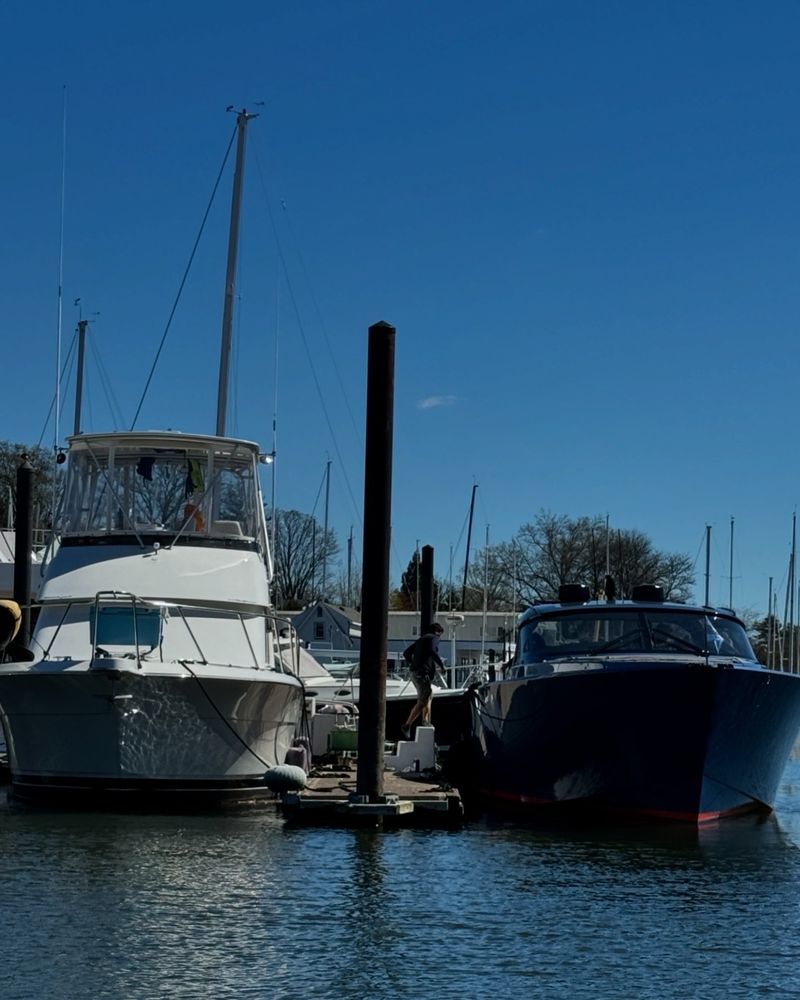
--- ## Chapter One: The Morning of Marvelous Possibilities The sun crept through my bedroom window like a golden cat, stretching its warm fingers across my velvety white fur until I stirred from the most magnificent dream about chasing squirrels through clouds made of peanut butter. I yawned, my pink tongue curling, and shook my head until my ears made that delightful flapping sound I rather enjoyed. "Pete! Pete, wake up, sleepyhead!" Roman's voice tumbled down the hallway like a cascade of excited puppies. I bounded from my dog bed, my nails clicking against the hardwood floors in a rhythm of pure anticipation. Today was the day! I could feel it in my whiskers, in the way my tail had already begun its metronome swing of joy. Harbor Island Park—the very name tasted like adventure and hot dogs, like discoveries waiting to be unearthed from sandy treasure chests. Mariya stood at the kitchen counter, her hands flour-dusted from the morning's pancakes, her eyes carrying that particular sparkle she got when the world felt full of magic. "Someone's excited," she laughed, kneeling to scratch behind my ears exactly where I liked it most. "Pete, my little explorer, are you ready for the biggest adventure of your little life?" I responded by performing what Roman called my "spinning dance of destiny"—three rapid circles, a bow, and then looking directly into her soul with my most soulful puggle eyes. Lenny emerged in his trademark "Adventure Dad" hat, the one with the fish on it that I loved to tug during particularly playful moments. "The car is packed, the cooler is stocked, and the jokes are—well, they're ready, whether you like them or not." He winked at me. "Why did the dog sit in the shade at Harbor Island Park?" "Lenny," Mariya warned, but she was smiling. "Because he didn't want to be a hot dog!" Roman groaned magnificently, scooping me into his arms. "Ignore Dad, Pete. Today we're going to find pirate treasure. Maybe. Probably not. But maybe!" He whispered conspiratorially, "I heard there's a place where the water turns every color of the rainbow when the sun hits it just right." The water. The word sent a tiny shiver down my spine, so subtle I barely acknowledged it. Water was for drinking, for splashing in shallow puddles. Not for... for being *in*. I pushed the thought away like a bothersome flea and licked Roman's chin instead. In the car, wind became my companion, whipping my ears back as I perched on Roman's lap, my nose cataloging a thousand new scents. Fresh-cut grass. Distant fish. The particular salt-sweet promise of harbor water. Each smell was a story waiting to be told, and I, Pete the Puggle, would be its narrator. "We're almost there, buddy," Roman murmured, his hand steady on my back. I felt the car turn, felt the world shift from familiar streets to somewhere new, somewhere that hummed with possibility. Mariya hummed something melodic in the front seat. Lenny was attempting to explain harbor tides using pancake metaphors. And I—oh, I was alive with wonder, my heart a drumbeat of pure, unfiltered joy. The first glimpse of Harbor Island Park unfolded before us like a painting come to life: water so blue it rivaled the summer sky, boats bobbing like gentle toys, children laughing in waves of sound that made my tail thump against Roman's leg. This, I thought, this is where stories are born. --- ## Chapter Two: First Contact and First Fears Harbor Island Park announced itself through my senses like a symphony composed just for me. The sand, warm and yielding beneath my paws, held secrets in every grain—leftover hot dog mustard from yesterday's picnic, the faint perfume of a thousand sunscreened adventures, the buried memory of a lost flip-flop that I immediately began excavating with archaeological precision. "Pete, no digging!" Mariya laughed, but her voice held no real reproach. I emerged sand-dusted and triumphant, my snout powdered golden, and that's when I saw him. He stood like a small thunderstorm on four legs, white and tan markings arranged across his body like he'd been painted by an artist with bold, confident strokes. His ears—perked, alert, radiating absolute certainty of his own magnificence. His eyes, meeting mine, held the unmistakable challenge of a creature who had never once doubted his place in the universe. He barked. Not a playful bark, not an invitation, but a declaration. *This harbor is mine. These boats are mine. That seagull? Also mine.* "Kirusha!" A voice called, but the Jack Russell Terrier advanced, his body language screaming territorial authority, his bark a staccato percussion that made my ears flatten before I could control the reaction. I found myself behind Roman's legs, which was embarrassing because I was almost certain I hadn't consciously decided to put them there. My heart had become a hummingbird trapped in my chest, my earlier brav evaporating like morning fog under determined sunshine. "Hey, little guy," Roman crouched, his hands gentle on either side of my face. "It's okay. He's just loud. Like a tiny motorcycle that thinks it's a monster truck." Kirusha barked again, closer now, and I felt the vibration of it in my paws, in my bones, in that place deep inside where courage and cowardice wage their eternal war. I wanted to bark back, to assert my own puggle dignity, but my voice had retreated to some distant country I couldn't access. The family who owned Kirusha approached—apologetic, embarrassed, their own dog's behavior clearly familiar territory. Mariya's voice carried that particular grace she possessed, turning awkwardness into connection. Lenny was already joking about "terrier temperament" and "small dog syndrome," which made everyone laugh except Kirusha, who did not appear to appreciate being the subject of humor. "Roman," Lenny called, "why don't you take Pete down to the water's edge? Let him get his paws wet. Literally and figuratively!" I froze. The water's edge. Where the sand turned dark and slick, where the harbor lapped and retreated in rhythms I didn't understand. Roman felt my tension immediately—he always did, that wonderful boy with his perceptive heart. "Not the deep water, Dad. Just the edge." "Just the edge," Lenny agreed, though his eyes held something thoughtful as they rested on me, something that suggested he saw more than I wished revealed. As we walked toward the water, I became aware of a small, determined presence following us. Kirusha, having apparently decided that whatever we were doing required his supervision, trotted at a distance, his barks subsiding to occasional mutters of territorial commentary. The water touched my paw before I was ready, cold and shocking, and I leaped backward with a yelp I couldn't suppress. It wasn't even deep—it barely reached my ankle—but it represented something vast and unknown, something that could pull me into depths I couldn't imagine. Roman sat in the wet sand, uncaring of his shorts, and pulled me onto his lap. "Look," he whispered, pointing. "See how the light catches it? See how alive it is?" I looked. And in looking, I found something unexpected—not the monster I'd feared, but something dancing, breathing, beautiful in its wildness. Kirusha approached closer, his bark softer now, almost curious. And for a moment, just a moment, I wondered if maybe—just maybe—fear and wonder could occupy the same space, could perhaps even transform one into the other. --- ## Chapter Three: The Great Exploration and Growing Bonds The morning unfolded like one of Lenny's favorite maps—full of marked destinations and surprising detours. We explored the marina, where boats rocked in gentle conversation with the dock, their masts creating a forest of possibilities against the sky. I learned to walk confidently on wooden planks that shifted slightly beneath my paws, Roman's voice a constant reassurance: "I've got you, Pete. Every step." Kirusha, it turned out, was unavoidable. His family and mine had settled into an easy proximity, sharing bench space and snacks, their conversations flowing like the tide itself—coming together, moving apart, always returning. The terrier maintained his aggressive posturing, a bark here, a territorial claim there, but I'd begun to notice something beneath the performance. His eyes, when he thought I wasn't looking, held questions rather than answers. Loneliness dressed in bravado. "You're not so scary," I told him once, when Roman had wandered to the ice cream stand and we found ourselves momentarily alone. Kirusha barked, sharp and immediate, but his tail—that traitorous appendage—gave a single involuntary wag before he could control it. He seemed as surprised by this betrayal as I was. "I am the guardian of this harbor!" he proclaimed, though his voice lacked the absolute conviction of our first meeting. "I protect. I defend. I—" "You bark very loudly," I observed, which was perhaps not the most diplomatic response, but certainly an honest one. He stared at me, something flickering in his dark eyes. Then, incredibly, he laughed—a dog laugh, all panting and tongue, but genuine in a way that transformed his entire face. "You are very strange," he decided. "Strange and white and wiggly." "I am Pete the Puggle," I announced with dignity, "and I am on an adventure." "Adventure." The word seemed to resonate in him, striking some chord I couldn't yet understand. "Adventure is... good." He said it almost reluctantly, as if admitting a weakness. "I have had adventures. Many adventures. I have chased seagulls across this entire park." "Did you catch any?" His pause was eloquent. "Seagulls," he said finally, "are cheaters. They fly. It is unfair." I found myself laughing, that particular full-body dog laugh that starts in the belly and travels everywhere. And Kirusha, after a moment's hesitation, joined me. In that shared laughter, something shifted between us—not friendship, not yet, but the possibility of it, a door cracked open to let in harbor-scented light. The afternoon brought new challenges. We explored farther from our base camp than intended, following a trail of intriguing scents that led us past the main beach, past the crowded playground, into a quieter section where wild grasses grew taller than my head and the harbor's edge became rocky, less welcoming. Kirusha led—there was no question of that, his terrier confidence navigating terrain that made my paws uncertain. "Pete!" Roman's voice, distant now, carrying a note I didn't recognize until later, when I would understand it as worry's first whisper. I turned, but the path we'd followed had disappeared into waving grass, and the familiar landmarks had been replaced by unfamiliar sounds: water lapping more insistently against stone, birds calling in patterns I didn't know, the wind carrying scents without meaning. Kirusha felt my tension, his own body responding in kind. "We are not lost," he stated, though his voice lacked complete conviction. "I know this park. I have been here many times." "Then where is the big tree with the red bench?" I asked, trying to control the tremor that wanted to enter my voice. He didn't answer. For the first time since I'd met him, Kirusha seemed uncertain, his confident posture eroding like sand before determined waves. The sun, Brocken through clouds, casting long shadows that hadn't existed in our earlier, brighter exploration. The world was transforming, and not in ways I found comforting. "Roman?" I called, and then again, louder, letting the panic I felt color my voice. "Roman! Mom! Dad!" Only the harbor answered, its voice ancient and indifferent, water against stone, water against sand, water that could be anywhere, everywhere, that could hold anything in its deceptive blue. --- ## Chapter Four: Shadows and Separations The sun continued its descent, painting the world in colors I'd never trusted—orange like warning, red like danger, purple like the bruises that form after unexpected pain. Kirusha and I had moved, though toward what neither of us could say with certainty. Every direction looked the same: grass and rock and the endless, watching water. I tried to remember Roman's voice, his hand on my back, the way he said my name like it meant something precious. But memory felt slippery, unreliable, the way dreams do upon waking. Was this morning truly real? Had I ever truly been safe, loved, held? "Stop it," Kirusha growled, though his bark lacked conviction. "You are making it worse. The breathing. The whining. It helps nothing." I hadn't realized I was whining, small sounds escaping despite my best intentions, my body betraying my fear in a language more honest than I wished. "I'm sorry," I whispered, the words barely audible even to my own ears. "I'm sorry, I'm sorry, I'm—" "Stop apologizing!" He snapped, then softer, almost guilty, "Stop. Please. We will find them. We will." But the darkness was coming. I could feel it approaching like a physical weight, the sky deepening through stages of blue toward something that swallowed light rather than giving it. And with darkness came new fears—not just the separation, not just the unfamiliar, but something older, deeper, a primal recognition that night held teeth the day kept hidden. My fear of the dark had always been private, shameful even. Other dogs, I'd assumed, didn't suffer such childish terrors. The way shadows moved, became something else, something watching. The sounds that were different, more intimate, more threatening, when vision failed. I'd never spoken of it, not even to Roman, especially not to Roman, who loved the night with its stars and its quiet mysteries. Kirusha pressed against me, his small body warm and unexpectedly solid. "I am not afraid," he announced, but his voice had changed, become something I could almost recognize as kin to my own trembling. "I am Kirusha, guardian of—" He stopped. Swallowed. "I am here. That is what matters. I am here, and you are here, and that is... that is something." It was more than something. It was everything, in gathered in that moment of shared vulnerability, two dogs who had begun as adversaries finding, in their mutual fear, a bridge of understanding. I leaned into him, and he allowed it, his own body gradually relaxing into the contact. "We will find them," he said again, and this time it sounded almost like belief. Then—lights. Distant, moving, voices calling names that might have been ours, distorted by wind and hope and the particular acoustics of harbor evenings. We both froze, afraid to commit to hope, afraid of its disappointment. "Pete! Kirusha! Where are you, buddy?" Roman. His voice cracked on the last word, breaking something in me, some dam I'd constructed without knowing. I barked, with everything I had, barked until my throat achedifice and still I barked, Kirusha joining me, our voices twining like the harbor vines we'd passed earlier, stronger together than either could be alone. The lights grew closer, became flashlights, became figures running through grass that parted like curtains, became Roman's face, wet with something that wasn't harbor water, and Mariya's hands reaching, and Lenny's voice somehow both laughing and crying, saying something about never again, about GPS collars and leashes and so much love. I don't remember being lifted, being held, being surrounded by familiar scents and beloved voices. I only know that when I came back to myself, I was in Roman's arms, his face buried in my fur, and the darkness, while still present, had retreated to its proper place—background rather than foreground, setting rather than story. Kirusha was being held too, by his own family, but his eyes found mine across the distance, and in them I saw the same transformation I felt in my own heart. Fear shared and survived became something else. Fear became the foundation of courage, the soil from which it grew. --- ## Chapter Five: The Night's Lesson and New Understandings They had built a fire on the beach, something I understood now was partly celebration and partly the need to do something normal, something that asserted control over a world that had briefly spun beyond their grip. The flames danced in patterns I found hypnotic, their warmth reaching me where I sat in Roman's lap, wrapped in a towel that smelled of home and safety. "I was so scared," Roman admitted to the fire, to the night, to me. His voice was quiet, meant for our small circle rather than the world. "When we couldn't find you. When it got dark." He laughed, but it wasn't the happy sound I knew. "I'm supposed to be the one who protects segundo, and I—" "Pete found us," Mariya interrupted gently, her hand finding Roman's in the firelight. "He used his voice. He was brave." Brave. The word settled over me like the blanket they'd wrapped around my still-damp fur. Was I brave? I'd felt only fear, the familiar crushing weight of it, the way it wanted to make me small, invisible, safe in my hiding. And yet—I'd barked. I'd called for help. I'd allowed Kirusha close when every instinct screamed to keep distance, to protect the vulnerable parts of myself. Kirusha, across the fire, caught my eye. He was nestled against his person's chest, looking smaller somehow without the constant armor of his aggressive display. When he saw me looking, he didn't bark—didn't need to. His tail gave that same small wag I'd seen earlier, and I responded in kind, a silent conversation passing between us that required no translation. "Why did you run so far?" Lenny asked, not accusatory, genuinely curious in the way he had that made everyone feel safe to explain, to explore, to understand. "Scents," I would have explained if I could. "Adventure. The belief that the next discovery would beINES something magnificent, and then the belief became momentum became too far to easily return." But I couldn't explain, not in words they would understand, so I simply pressed closer to Roman and felt his heartbeat steady against my side. The fire cracked, sending sparks climbing toward stars that had emerged shyly, one by one, as if checking that it was safe to appear. The harbor, now dark, reflected those stars in its calmed surface, creating the illusion that we sat surrounded by light above and below, held in a bowl of gentle luminescence. "I think," Mariya said slowly, her voice carrying that quality she got when she was about to say something important, something that would become family lore, "that the scariest adventures teach us the most about what we can handle. About what we're capable of." "And about who shows up for us," Lenny added, his eyes finding Kirusha's family, the unspoken gratitude for their help in the search, the shared experience that had created bonds where none had existed. Roman's hand found my ear, scratching exactly right. "You were brave, Pete. You were brave, and you were smart, and you were—" His voice caught, recovered. "You were missed. Every single second." I understood something then, in the fire-warmed darkness that had become comforting rather than threatening. My fear of separation, of being alone, of the dark itself—these weren't weaknesses to be eliminated but parts of a whole that included also my capacity for love, for connection, for the courage to call out even when every instinct said to hide. The fear and the courage, the separation and the reunion, the dark and the fire-lit night—these were not opposites but companions, each giving meaning to the other. Kirusha, as if reading my thoughts, settled more deeply against his person and closed his eyes. But before he did, he opened them once more, meeting mine across the fire's glow, and in that gaze I found the affirmation of everything I'd been learning. We were different, he and I, in ways that would probably always make us bark and posture and claim territory that didn't need claiming. But we were also, now, something else. Something like friends. --- ## Chapter Six: Morning's Redemption and Water's Welcome Dawn came like a promise kept, the sun rising from the harbor as if emerging from its own depths, trailing light like the most magnificent fishing line. I woke in Roman's arms, still on the beach, covered by a blanket that smelled of campfire and family and safety regained. "Pete." Roman's voice, husky with sleep but alert with intention. "Pete, wake up. I have something to show you." He carried me—still carried me, as if I were still the puppy I'd once been rather than the adventurer I'd become—toward the water's edge. The morning tide was gentle, almost apologetic in its calmness, as if the harbor itself regretted any part it had played in yesterday's fears. "No," I tried to communicate, my body stiffening despite my best intentions. "Not the water. Not yet. Not ready." But Roman knew me, knew my language of tension and release, and he didn't force, didn't demand. He simply sat at the water's edge, where the sand was dark and firm, and held me where the occasional wave could reach my paws if it tried, if I let it. "Look," he whispered, and his voice held the same wonder he'd used for rainbow water, for impossible pirate treasure. "Look how the light comes through. Look how alive it is." And I looked. The water, in morning light, was not the threatening unknown of yesterday but something else entirely—transparent in places, revealing sand ripples and small shells and the occasional flash of fish-scale silver. It moved with purpose but not malice, rhythm without aggression. Kirusha appeared, as he seemed to, without warning, his paws wet already from his own morning exploration. He didn't bark, didn't claim territory, simply stood at the water's edge and looked at me with something I might, generously, interpret as encouragement. "Water," he said, in that direct way he had, "is not the enemy. I have learned this. It is... different. Not land. But not enemy." "I was afraid," I admitted, my voice small even to my own ears. "Yesterday. The dark. The being alone. The—" I couldn't finish, but Kirusha nodded, his small head bobbing in a gesture I found unexpectedly moving. "I also," he said. "I also was afraid. I barked. I claimed. But inside." He paused, the words clearly difficult. "Inside, I was afraid. Of you. Of not being the biggest, the bravest, the—" He stopped, shook himself, sprayed water droplets that caught morning light like temporary jewels. "But we are here. We are both here. And the water is here. And the morning." Roman's hand supported me, gently, as I extended one paw toward the incoming wave. The water was cool, shockingly so, but not the freezing terror of yesterday. It moved around my paw, accepted it, retreated and returned in a rhythm I could almost understand. I took a step, then another, Roman moving with me, his presence constant, his support unwavering. The sand sloped gradually, and I found myself in water that reached my chest, my weight supported by something I couldn't see but could increasingly trust. Kirusha swam small circles around us, his terrier confidence apparently extending to aquatic domains, and I watched him, learned from him, felt my own body begin to understand movements I'd never attempted. "You're swimming!" Roman's joy was unmistakable, his voice carrying to where Mariya and Lenny had appeared at the water's edge, their faces reflecting the same surprised delight. "Pete, you're swimming!" Was I? I moved my legs, felt the water resist and yield in patterns different from air, from solid ground, but not hostile. Not threatening. Just different. And in that difference, in that surrender to something larger than myself, I found a freedom I hadn't known existed. The harbor surrounded me, held me, and I was not afraid. The water that had seemed a wall became a doorway, the fear that had paralyzed became the very energy that propelled me forward. I swam toward Roman, toward Kirusha, toward everything waiting to be discovered, and behind me, I knew without looking, a trail of ripples marked where I'd been. --- ## Chapter Seven: The Heart's Harbor The rest of the day passed in a blur of restored confidence and expanding adventures. We explored the full length of Harbor Island Park, Kirusha and I, sometimes running ahead, sometimes returning to our respective families, our boundaries of independence and connection constantly negotiated. We discovered a hidden cove where small fish schooled in patterns that hypnotized; we found a garden of wildflowers where bees hummed their ancient songs; we chased shadows and sometimes, gloriously, caught them. Through all of it, Kirusha and I developed a language of our own. A bark that meant "look at this." A tail position that asked "are you following?" A particular pace of walking that said "this way is interesting." We still disagreed—about the proper way to greet seagulls, about whose stick was whose, about the appropriate volume for expressing excitement—but the disagreements held a new quality, playful rather than hostile, the roughhousing of friends rather than the combat of enemies. "Pete," Kirusha said, during a quiet moment while our families picnicked and we rested in dappled shade, "you are still strange. White and wiggly and strange." I waited, knowing there was more. "But," he continued, his voice the canine equivalent of grudging, "you are... acceptable. As company. For adventures." I laughed, that full-body expression of joy, and after a moment he joined me, and our laughter attracted attention, smiles from the humans who didn't need to understand our language to appreciate its happiness. The afternoon light began to shift toward evening, and I found myself anticipating darkness differently than I had before. Not with the old automatic dread, but with a kind of curious attention. What would this night hold? What had changed in me that made its approach feel less like threat and more like simply another aspect of the world's beautiful variety? Roman found me as the sun began its descent, painting the harbor in colors that made me think of Mariya's descriptions of magic. He sat beside me, our bodies sharing warmth as the air cooled, and we watched the light change together. "You did amazing today, Pete. With the water. With everything." I pressed against him, my gratitude wordless but I hoped not meaningless. "I was thinking," he continued, his voice carrying that particular quality of thoughts being formed as they were spoken, "about being scared. How it's not the opposite of brave. How maybe you can't be one without sometimes being the other." I thought of fire-lit fears and morning redemptions, of Kirusha's bark and his vulnerability, of my own journey from trembling to triumph and back again, always moving, always becoming. "And I was thinking," Roman's voice had become softer, more intimate, "that no matter what scared you, or what might scare you still, I'll be there. We'll be there. Family doesn't disappear just because you can't see us, can't hear us. We're... we're like the harbor, I guess. Always around, even when you're not thinking about it. Always holding you up, even when you don't realize." The metaphor struck me with the force of truth. The harbor, with its changing tides and moods, its capacity to be threatening or welcoming depending on so many factors—that was family. Was love. Was the constant beneath the variables, the foundation that remained even when everything else shifted. Kirusha approached, his family's departure imminent, and for a moment the old territorial instinct flickered. But it was habit now, easily recognized and released, replaced by something gentler, more genuine. "Tomorrow," he said, his voice carrying an uncharacteristic softness, "I will guard the harbor. As always. But I will also..." He paused, the words clearly unfamiliar. "I will remember. This. You." "And I," I responded, "will remember too. The barking. The fear. The swimming. All of it." His tail wagged, once, twice, and then he turned, following his family toward the parking lot, toward home, toward the continuation of a life that would now include this interludeững, this connection, this unexpected friendship. --- ## Chapter Eight: Home in the Heart The final evening at Harbor Island Park gathered us in a circle of contentment that felt almost sacred. Mariya had produced a final picnic, Lenny had told his most spectacularly terrible jokes, and Roman had held me through the sunset's full transformation, from gold through every shade of possibility to the first brave stars. "Pete," Mariya's voice carried the particular tenderness she reserved for moments of significance, "you've grown so much this trip. We've all watched you." "I was so afraid," I would have told her if I could, "of everything. The water. The dark. Being alone. And I still am, sometimes, in moments. But I've learned that fear moves through, that courage isn't the absence but the continuation, that love—" I would have faltered here, overwhelmed by the vastness of what I meant to convey. "That love is the harbor that holds us all." Instead, I simply rested in her reaching hand, her fingers finding exactly the right spot behind my ear, and let my eyes half-close in what humans called "bliss." Lenny cleared his throat, that particular sound that preceded something he considered important. "I've been thinking about what we learned here. About fear and courage and—" he glanced at Roman, something passing between them that spoke of conversations had and understandings reached, "about letting people in. Even when it's scary. Especially then." "And I've been thinking," Mariya added, her eyes finding each of us in turn, "about how the best adventures aren't the ones that go perfectly. They're the ones that surprise us, that challenge us, that show us who we are when things get difficult." Roman's arms tightened around me, just slightly, just enough. "I learned that I can't always protect everyone I love. That sometimes the best thing I can do is trust them, support them, believe in them. And that when we get separated, literally or figuratively, the most important thing is to keep calling out. To keep hoping. To keep looking." I thought of my own voice, barking into darkness, and how it had been answered. Thought of Kirusha's small form beside me in fear, and how that shared vulnerability had become the foundation for something unexpected and precious. Thought of water that had seemed enemy becoming water that supported, held, freed. The night deepened around us, and I found myself watching darkness differently. Not as absence of light but as presence of something else—stars, certainly, and the gentle harbor sounds, but also something less tangible. Possibility. The unknown as adventure rather than threat. The recognition that every ending held within it seeds of beginning, that every fear faced and survived became the foundation for courage's continued growth. "Pete," Roman whispered, as the others gathered blankets and coolers, preparing for the final walk to the car, the return to home, to routine, to the continuation of a life enriched by this experience. "We're always going to be here. No matter what scares you. No matter what challenges come. We're your family, and that means we're your harbor too." I understood, finally and completely, the truth he'd been circling. Family wasn't the elimination of difficulty, the prevention of separation, the guarantee of safety. It was the knowledge that even in separation, connection endured. Even in fear, love remained. Even in darkness, the stars—and the hearts that loved us—continued their faithful shining. Kirusha appeared at the edge of our circle, as if summoned by my thoughts, his family's car visible behind him, engine running, lights warm against the night. He didn't bark, didn't need to claim or challenge. He simply sat, and looked at me, and in his gaze I found the reflection of everything I'd learned. "Goodbye," his eyes said. "For now. Until the next adventure. Until the next time fear and courage dance together, and we remember that we do not dance alone." "Goodbye," my own gaze responded. "For now. Until then." And as we walked toward the car, toward home, toward the continuation of a story that would include this chapter and build upon it, I felt the harbor's presence—not as separate place but as internal state, a centering, a home that traveled with me wherever I went. Lenny carried the last bag, Mariya hummed her melody, Roman held me close, and I, Pete the Puggle, closed my eyes in perfect trust, in perfect love, in the perfect knowledge that I was held, that I was home, that I was, at last and always, exactly where I belonged. ***The End***
Use these buttons to read the story aloud:


No comments:
Post a Comment