"*** Pete the Puggle's Soundside Symphony: A Tale of Tides, Twilight, and Triumph ***"🐾


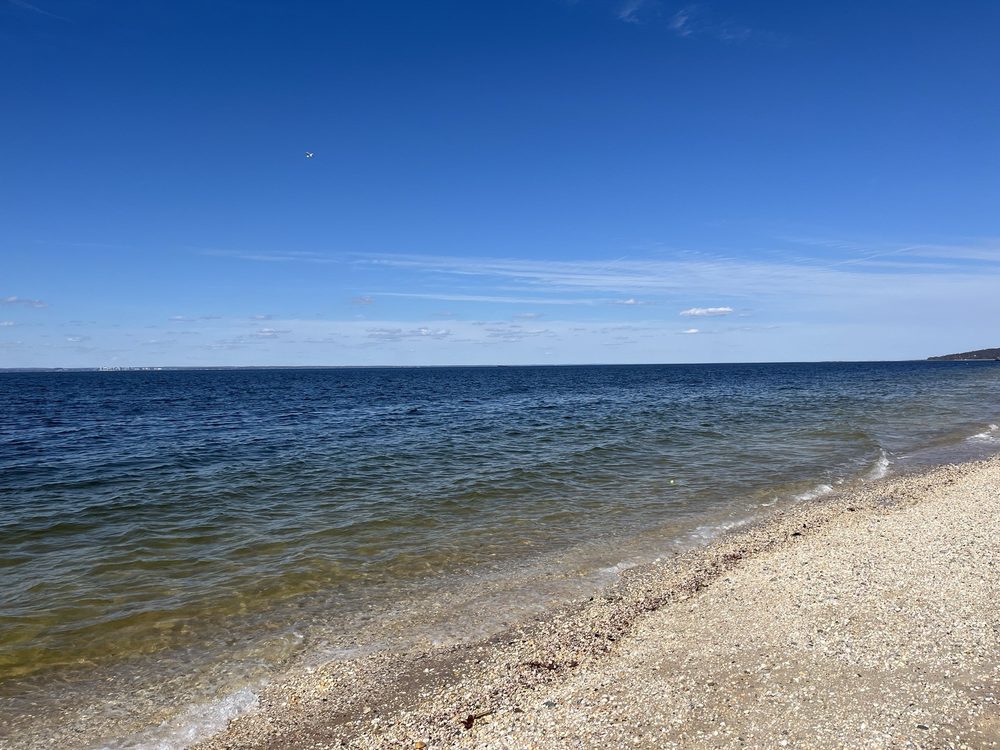
--- ## Chapter One: The Dawn of Adventure The morning sun spilled golden honey through my bedroom window, warming my short velvety white fur like a gentle summer promise. I stretched my paws toward the ceiling, my tail thumping against the quilted blanket in a rhythm of pure puppy anticipation. Today was the day—the day our family would journey to Soundside Beach Park, a place whispered about in hushed, reverent tones around our dinner table for weeks. "Pete! Pete!" Roman's voice cascaded down the hallway like a waterfall of excitement. "We're loading the car! George is here!" George. The name fluttered in my chest like a caged bird of nervous wonder. Roman's friend from the Navy, a man who moved through water as naturally as I moved through sunlight-dappled living rooms. I had only met him twice before, but his laugh was deep and rolling like distant thunder, and his hands were always warm and smelling faintly of salt. I tumbled down the stairs, my nails clicking a staccato beat against the wooden steps, and burst into the kitchen where the morning chaos bloomed in beautiful disorder. Mariya stood by the counter, her nurturing presence like a lighthouse in the swirl of activity, packing sandwiches with the focused tenderness of someone who understood that love could be folded into wax paper and tucked between slices of bread. "Slow down, my little adventurer," she laughed, her eyes finding magic even in this ordinary moment of domestic preparation. "The beach isn't going anywhere." "That's what you think," Lenny called from the garage, his warm wisdom carrying even through walls. "The tide waits for no puggle, my friends. The tide waits for no one." I skittered across the tile and found Roman by the door, his backpack already slung across one shoulder, his face alive with the particular brightness that meant we were about to make memories that would live in family legend. Behind him stood George, tall and broad-shouldered, his Navy tattoo peeking from beneath a faded t-shirt sleeve, his smile as wide as the horizon we were about to chase. "There's the little man," George boomed, crouching to my level with the grace of someone who understood that true strength bends down to meet the world at eye level. "You ready to see some ocean, Pete?" The word "ocean" struck me then—not as a concept, but as a vast, breathing reality I had never truly contemplated. Water, yes, I knew water. The bathtub's gentle embrace. The rain's soft percussion. But *ocean*—that was a different language entirely, a vocabulary of depth and distance and dreams too large to hold. I felt my ears flatten slightly, a tremor of something unfamiliar passing through my small frame. Roman noticed instantly, his playful protectiveness awakening like a sleeping guardian. He scooped me up, pressing his forehead against mine in our private ritual of brotherhood. "Hey," he whispered, for my ears alone. "I'm right there with you. Whatever happens today, we're in it together. That's the deal. That's always the deal." His words were a rope bridge flung across the canyon of my uncertainty, and I nuzzled into his neck, breathing in the familiar comfort of his scent—soap and possibility and the particular warmth of someone who had never once made me feel small for being small. The car ride was a symphony of anticipation. Lenny's silly jokes floated like confetti through the air: "Why don't oysters share their pearls? Because they're shellfish!" Mariya's laughter rang like wind chimes. Roman and George traded stories of George's Navy days, tales of midnight watches and swimming in waters so deep they seemed to hold the sky's own reflection. I watched the world transform through the window, green giving way to gold, land surrendering to something older and vaster. The air itself began to change, growing weighty with salt and mystery, and somewhere in the distance, I heard it—the ocean's eternal breathing, in and out, in and out, a rhythm older than memory. "Almost there," Mariya announced, and her voice held the wonder of someone who never stopped seeing magic in arrival. As we turned the final corner and Soundside Beach Park revealed itself in all its morning glory, I felt my heart both soar and shrink. The beach stretched before us like a ribbon of infinite possibility, but beyond it, the water rose and fell with a power that made my smallness feel suddenly, overwhelmingly real. It was beautiful. It was terrifying. It was everything. --- ## Chapter Two: The Kingdom of Sand and Sky The moment my paws touched sand, the world shifted. This was not the familiar terrain of carpet and grass, but something alive and shifting, flowing beneath me like a creature half-asleep. I stumbled, recovered, and then—wonder of wonders—began to run. The sand sprayed behind me in a comet's tail of golden dust. The wind caught my ears and turned them into sails. I was flying, I was floating, I was pure velocity given puggle form. Roman's whoop of encouragement chased me like a friendly ghost. "Pete! You're a natural!" I circled back to where our family had staked their claim on the beach, my tongue lolling in canine ecome, my heart drumming a triumphant tattoo against my ribs. The fear from the car—that trembling awareness of the ocean's immensity—had retreated, if not vanished, replaced by the immediate joy of movement and sun and belonging. Lenny was already wrestling with the umbrella, his warm wisdom momentarily defeated by the contraption's stubborn architecture. "They should require engineering degrees for these things," he muttered, and George laughed that rolling thunder laugh and stepped in to help, his Navy-honed hands making quick work of the challenge. Mariya spread the blanket with the ceremonial care of someone creating a home in temporary spaces. She produced snacks from bags like a magician pulling wonder from empty sleeves, and the familiar ritual of family nourishment began even as the alien landscape surrounded us. "Roman tells me you're quite the swimmer, George," Mariya said, passing him a sandwich with maternal generosity. George accepted it with the gratitude of someone who had learned to appreciate simple gifts through hardship. "The Navy made sure of that," he replied, and something flickered across his features—a shadow of memory, perhaps, of dark waters crossed in service of something larger than self. "But swimming's always been my peace, you know? The water holds you different than land. It doesn't care where you come from, what you've done. It just holds you." I watched Roman listening to his friend, saw the respect and affection in his gaze, and felt a strange expansion in my small chest. This was friendship, I understood then, in a new way—not merely play and proximity, but witnessing, being present for another's journey through darkness toward light. "Speaking of swimming," Roman said, standing and stretching with the loose-limbed energy of youth. "Who's ready to get wet?" The words hit me like a physical force. I felt my body tense, my tail tuck slightly, my ears press back against my skull before I could control the response. Wet. The ocean. That vast, breathing entity I had been successfully not-thinking-about since our arrival. Roman noticed. He always noticed. But this time, instead of immediately scooping me up in reassurance, he extended his hand—literally, palm out, an invitation rather than a rescue. "Come see," he said softly. "Just to the edge. Just to say hello." I looked at that hand, at the familiar lines of his fingers, the small scar from our shared adventures past. I thought of George's words: *the water holds you.* And I thought, with the piercing clarity that sometimes visits us in moments of decision, that fear was itself a kind of water—something that could drown you, yes, but also something you could learn to move through. I placed my paw in his hand. The walk to the water's edge was the longest journey of my short life. The sand grew firm and cold beneath my feet as the tide's reach shortened the distance between us and the great unknown. The ocean's breathing grew louder, no longer a distant rhythm but a immediate presence, inhaling and exhaling with a power that made my small bones quiver. And then we were there, Roman and I, at the frontier between worlds. The water rushed forward, a lace of foam and promise, and retreated, leaving the sand gleaming and transformed. Again it came, and again retreated, and I understood something then about courage—not the absence of fear, but the willingness to stand at the edge of fear and not flee. "Touch it," Roman whispered, kneeling beside me. "Just once. On your terms." The next wave approached. I extended one trembling paw, my internal monologue a chaos of *too big too deep too much too unknown*—and touched the water. Cold. Salt. Alive. I yanked my paw back, shaking it with theatrical indignation, and Roman laughed with the pure joy of shared experience. "That's my boy," he said. "That's my brave boy." It was only the edge. It was only a touch. But in that moment, with the ocean's breath upon my face and my brother's hand upon my back, I felt something shift in the architecture of my fear. Not conquered, no. But challenged. Befriended, even, in the way that fire can befriend ice by existing in the same world. We returned to the blanket to rest, to bask, to prepare for whatever the afternoon would bring. But I carried that touch with me, a small cold memory on my paw, a promise that the water and I might yet find a way to know each other. --- ## Chapter Three: The Lesson of the Waves The afternoon unfolded like a flower of hours, each petal a different shade of joy. I chased seagulls with the futile enthusiasm of my kind, their mocking cries echoing my own wild heart. I dug holes of archaeological ambition, unearthing only sand but imagining treasures. I curled in Mariya's lap and felt her nurturing presence flow through me like warm honey, her fingers tracing patterns in my fur that spoke of love without needing translation. George and Roman had ventured deeper into the water, their laughter carrying across the waves like messages in bottles. They moved through the ocean's body with different relationships to it—Roman playful, splashing, alive with the energy of youth; George powerful, economical, a creature truly at home in his element. "Watch this!" George called, and then he was swimming, really swimming, cutting through the water with arms that had pulled through miles of open sea. He disappeared beneath a wave and emerged twenty feet away, his grin visible even from shore, and something in me stirred—not fear this time, but wonder. The water held him, just as he had said. The water held him beautifully. "I'd like to learn to do that," Roman admitted when they returned to shallower water, his voice carrying the particular vulnerability of admitting desire. "Really swim, I mean. Not just play." George's expression softened into something paternal, something that spoke of transformation through practice. "Then I'll teach you," he said. "Swimming's like courage, my friend. You don't wait until you're ready. You start where you are, and the water teaches you the rest." I found myself at the water's edge again, drawn by some magnetic pull I couldn't fully understand. The fear was still there, a cold knot in my belly, but alongside it now was curiosity, the twin engine of growth. I watched the sand dissolve beneath each retreating wave, watched the small shells and stones revealed and then hidden again, and I understood that the ocean was not merely destructive but creative, constantly remaking the world in its patient, eternal way. "Pete's getting brave," Lenny observed from his position as umbrella guardian, his warm wisdom noticing what others might miss. "Look at him, Mariya. He's negotiating with the ocean." Mariya's laugh was wind and bells. "He's always been a negotiator," she said. "From the first day we brought him home. That look in his eyes—'let's find a way to make this work.'" Her words settled into me like seeds finding fertile ground. A negotiator. Someone who finds the way through, the path between, the bridge across. The fear didn't have to disappear for me to move forward. It merely had to be engaged, addressed, acknowledged as part of the conversation. I ventured further in than before. The water lapped at my belly now, cold and insistent, and my legs moved instinctively in a motion not quite walking, not quite swimming—a pre-language of aquatic possibility. The sensation was strange, not comfortable exactly, but not the terror I had anticipated. It was simply different, another way of being in the world, and difference was not inherently enemy. Roman appeared beside me like a guardian spirit, his body creating ripples that passed through me like gentle hands. "You're doing it," he said, wonder and pride equally mixed. "Pete, you're really doing it." I wasn't, not really. Not swimming, not even truly floating. But I was present. I was trying. I was in the water by my own choice, and that choice felt like the first chapter of a story whose ending I couldn't yet see but was determined to author. The sun began its slow descent toward the horizon, painting the sky in watercolor hues of coral and gold. The world softened at the edges, and I felt the first intimations of evening's approach—that particular sadness-joy of beautiful things ending, of light surrendering to dark. "We should think about packing up soon," Mariya called from shore, her nurturing nature already anticipating the logistics of departure. "One more swim," Roman pleaded, and his voice carried the particular magic of an only partially grown person still capable of genuine wonder. "George was going to show me that breathing technique." "Ten minutes," Lenny allowed, his warm wisdom knowing when to bend before the wind of youthful desire. "Then we pack up and head for dinner. Pete's getting cold." I wasn't, actually. The water had become a kind of skin, a second presence I was learning to wear. But I let myself be carried to shore, wrapped in a towel that smelled of home and safety, and watched as Roman and George ventured deeper for their final lesson of the day. The ocean swallowed them in gentle jaws, and I felt a flutter of the old fear—not for myself this time, but for them, for the vulnerability of all beings who venture into vastness. But then they surfaced, Roman's triumphant shout carrying across the water, and I understood that love meant letting others take their own risks, make their own peace with their own oceans. --- ## Chapter Four: The Gathering Dark The transition from day to evening at the beach was not a gradual fading but a sudden shift, as if some cosmic switch had been thrown while we weren't looking. One moment the world was gold and warmth and visible joy; the next, shadows lengthened like fingers reaching from some ancient depth, and the temperature dropped with a suddenness that made me shiver beneath my towel. "Whoa," Roman said, emerging from the water with George, their teeth chattering in comic unison. "Got dark fast." "Front must be moving in," George observed, his Navy experience reading signs invisible to land-dwellers. "We should definitely pack up now. That sky doesn't look friendly." He gestured toward the horizon, and I followed his gaze to where clouds had massed with startling speed, a purple-black army assembling where gentle sunset had been moments before. The ocean itself had changed, its breathing now urgent and irregular, waves crashing with a violence that seemed personal, directed. The fear returned then, but transformed—no longer the specific terror of water, but something older and more primal. Fear of the dark itself. Fear of separation. Fear of being small in a world that suddenly seemed very large and very uncaring. I pressed against Mariya's legs as she hurriedly gathered our belongings, my body a trembling comma in the sentence of her movement. "It's okay, little one," she murmured, but I could hear the strain in her voice, the way worry threaded through her nurturing nature like a dark vein in marble. Lenny's silly jokes had ceased, replaced by efficient action, his warm wisdom manifesting now in practical problem-solving. "Roman, grab the cooler. George, can you help with the chairs? Mariya, I've got the blanket if you can manage Pete—" A wind rose from nowhere, fierce and cold and full of sand that stung like a thousand small rebukes. I yelped, not from physical pain but from the sudden overwhelming wrongness of everything—the dark, the cold, the wind, the sense that the world had turned hostile in an instant. And then, in the chaos of packing and shouting and wind-whipped confusion, I was running. I don't consciously choose it. My body, flooded with panic, simply moved, seeking shelter, seeking safety, seeking something I couldn't name. The sand flew beneath my paws, the dark world blurred around me, and I ran until my lungs burned and my legs ached and I could run no more. I stopped. I listened. I smelled. Nothing familiar. No Roman, no Mariya, no Lenny, no George. The wind carried only strangers' scents, the ocean's salt-mockery, the indifferent perfume of night-blooming beach flowers. I was alone. The realization hit with physical force, a blow more devastating than any I had ever received. The dark was complete now, a blanket of nothing pressed against my face. The moon, which had risen pale and watchful earlier, was swallowed by the storm's appetite. I could see nothing, hear nothing clearly, feel only the sand's cold abandonment beneath my trembling body. "Pete!" The voice came from somewhere, distant and wind-torn. Roman's voice, I thought, but it could have been imagination's cruel trick. "Pete!" I tried to answer, but my voice emerged as a small whimper, lost in the wind's roar. I thought of all the times I had been afraid—the vacuum cleaner, the thunder, the veterinarian's cold table—and how always, always, there had been a hand, a voice, a presence to bridge the gap between terror and safety. Now there was nothing. Now there was only the dark, and the dark was very large, and I was very small. But somewhere, beneath the panic's screaming, another voice spoke. George's voice, from earlier: *The water holds you.* And Roman's: *Whatever happens, we're in it together.* And Lenny's endless silly jokes, and Mariya's lullaby-hands in my fur. They were still out there. They were still searching. The dark was not permanent; it was merely a condition, like the water itself, something to move through rather than drown in. I forced my breathing to slow. I strained my ears beyond the wind's white noise. And there—faint, intermittent, but real—the sound of voices calling my name. Multiple voices, forming a net of human love cast across the dark expanse. I moved toward them. Not running now—that had been the fear's mistake—but walking, one paw after another, through sand that shifted and challenged but could not ultimately prevent. The dark was still absolute, but I was no longer paralyzed by it. I was in it, moving through it, becoming something other than its victim. "Pete! Over here! Keep coming!" Roman's voice, closer now, threaded with a relief so profound it sounded like pain. I increased my pace, from walk to trot, my heart hammering not with panic now but with hope, with the first inklings of reunion's joy. And then—miracle of miracles, wonder of love—hands upon me. Roman's hands, shaking with cold and worry and the particular trembling of someone who has imagined loss and found instead return. "Pete. Pete. Oh, Pete." He wrapped me in his shirt, pressed me against his still-wet chest, and I felt his tears fall upon my fur like warm rain. Around us, I heard the others approaching—Lenny's shouted relief, Mariya's half-laughing, half-crying welcome, George's deep voice offering thanks to whatever powers sailors acknowledge. "I found him," Roman announced, and his voice carried the particular pride of someone who has faced fear and been answered with success. "He's okay. We're okay." But even as we were reunited, even as the immediate terror receded, I knew something had shifted in me. The dark was still dark. Separation was still possible. But I had moved through both and emerged, not unchanged, but undestroyed. The fear had not disappeared, but I had learned something about my own capacity to persist within it, to keep moving when movement seemed impossible. The storm began to break around us, as if acknowledging our reunion with grudging respect. The wind softened. The first stars pricked through the cloud-tatter. And somewhere in the distance, the ocean continued its eternal breathing—in and out, in and out, holding all of us in its patient, ancient way. --- ## Chapter Five: The Cave of Echoes We did not immediately return to the car. The storm's violence had transformed the beach into unfamiliar terrain, and George, with his Navy caution, suggested we seek temporary shelter rather than risk the exposed walk in uncertain conditions. "There's a cove," he said, his voice carrying the authority of someone who had navigated worse. "North side of the park. Natural protection. We can wait it out." The journey there was a collective effort, each family member supporting another. Lenny led with the flashlight he miraculously produced from some pocket, his warm wisdom manifesting in practical preparedness. Mariya carried me, her nurturing presence a warm fortress against the lingering cold. Roman and George flanked us, their youthful strength a promise of protection. The cove, when we reached it, revealed itself as a small cave, a modest indentation in the rocky outcropping that bordered this section of beach. It smelled of salt and ancient stone, of secrets kept by patient earth, and something in its embrace felt almost deliberately sheltering, as if the land itself had prepared this space for travelers in need. Lenny's flashlight beam revealed the cave's interior—smooth walls worn by countless tides, a floor of sand and small pebbles, a ceiling low enough to feel intimate rather than oppressive. We arranged ourselves in the darkness, huddled together for warmth and comfort, and something in the forced proximity created a space for conversation that ordinary circumstances would've allowed to pass unspoken. "I was so scared," Roman said into the dark, his voice small and young in a way I rarely heard. "When we couldn't find him. I thought—" He didn't finish, but the silence spoke volumes. Mariya's hand found his in the darkness, her nurturing nature needing no light to navigate to her children's need. "We all were," she said. "But you found him. You didn't give up. That's what matters." "I kept thinking about when I was little," Roman continued, and his voice carried the particular vulnerability of someone sharing memory's tender fruit. "How Pete would sleep in my room when I was afraid. How he'd just be there, you know? Not doing anything. Just being there. And I thought—if I couldn't find him, if he was out there alone, afraid—" His voice broke, and I felt George shift beside him, a presence of solidarity. "I've been afraid like that," George said, and his voice carried the weight of waters deeper than any we had encountered. "In the Navy. There were nights, on the water, when the dark was so complete it felt like a physical pressure. And the only thing that got me through was knowing my shipmates were there. Even when I couldn't see them. Knowing I wasn't alone." The cave seemed to amplify his words, sending them echoing into geological time, and I felt the truth of them settle into my bones. Fear was universal, then. Even the strong felt it. Even the brave. The difference was not the absence of fear but the presence of connection, the knowledge that one's struggle was witnessed, held, shared. "I used to be terrified of the ocean," Lenny admitted, his warm wisdom revealing its own genesis. "When I was a boy. My father took me fishing once, and a storm came up. Nothing like this—just a summer squall. But I thought we would drown. I thought that was how it ended." "What changed?" Mariya asked, her curiosity genuine, her nurturing extending to include her husband's inner landscape. Lenny laughed, but gently, without the performative energy of his silly jokes. "Nothing, really. I was still afraid the next time, and the time after. But I kept going. And eventually, I realized the fear was just... part of it. Part of loving something that could also hurt you. The ocean, I mean. Life. Family." He reached out in the dark, and I felt his hand find Mariya's, a connection forged in shadow and strengthened by its sharing. I thought of my own fears, there in the cave's embrace. The water, which I had touched and survived. The dark, which I had moved through and emerged from. The separation, which had been temporary, survivable, ultimately a passage rather than an ending. Each fear, confronted, had revealed itself as something other than enemy—teacher, perhaps, or demanding friend, or the very condition of growth itself. Roman's hand found me in the darkness, his fingers tracing the familiar paths of my fur, and I pressed against him with all the love my small body could convey. "I was scared too," I wanted to tell him, if only my voice could carry such complex freight. "But you came. You always come. That is the miracle I live inside." The storm outside continued its orchestral performance, but here in our cave, something had settled, a peace of shared vulnerability, of fears named and thereby diminished. We were not comfortable—the sand was cold, the darkness absolute, the future uncertain. But we were together. And in that togetherness, courage found its most natural soil. --- ## Chapter Six: The Return of Light The storm's departure was as sudden as its arrival, as if some celestial stage manager had decided the dramatic tension had achieved sufficient pitch. The clouds parted like curtains drawn by invisible hands, and the moon emerged—full, or nearly so, casting silver pathways across the newly calm water. I emerged from the cave first, drawn by a restlessness that was becoming familiar, the same impulse that had carried me to the water's edge, that had moved my paws through the darkness. The beach stretched before me transformed, smoothed by storm and tide into something almost primordially clean, and the ocean itself had changed its mood entirely, now gentle as a sleeping giant, breathing soft against the shore. "Pete's exploring," I heard Mariya say behind me, her nurturing voice carrying the mixture of concern and trust that characterized her love. "Should we—" "Let him," Lenny replied, his warm wisdom recognizing something in my movement that needed space. "He's got something to work out. We can see him from here." They couldn't, entirely, not as I moved beyond the immediate cave vicinity. But I felt rather than saw their continued presence, the anchor of their love holding fast even as I explored the farthest reaches of my courage. The water lapped at my paws, cold but no longer foreign, and I walked further in than I ever had, the sandy bottom shelving gradually beneath me. My legs moved in that half-swimming motion I had discovered earlier, and this time I didn't retreat, didn't run, didn't seek the safety of shore. I simply was, in the water, with the water, a small being negotiating with an ancient power on terms of mutual respect. And then, suddenly, my paws found no bottom. The shelf dropped away, and I was in deeper water than I had known existed this close to shore. Panic flared, bright and familiar, but alongside it now was something else—the memory of George's powerful strokes, of Roman's patient teaching, of my own small steps of progress. I did not know how to swim, not properly, but I knew how to try. I knew how to not surrender. My legs paddled beneath me, clumsy and inefficient but sufficient to keep my head above the surface. The water held me, just as George had promised, not as enemy but as medium, as possibility, as the very element in which transformation could occur. I was not comfortable. I was not, by any objective measure, succeeding. But I was not drowning. I was, in my small way, swimming. "Pete!" The voice came from shore, Roman's voice, threaded with alarm and wonder in equal measure. I heard splashing, the sound of someone entering the water with purpose, and then George was beside me, his Navy-strong arms creating a space of safety around my struggling form. "I've got you, little man," he said, and his voice carried no mockery, only the gentle authority of someone who had held others through difficulty before. "Let me help you back. You've done enough. More than enough." He supported me with one hand, swimming with the other, and I felt the strange luxury of surrender—not to fear, but to help, to the recognition that courage sometimes meant accepting the very assistance one had been learning to do without. We reached shallower water, then the shore, and Roman was there, his face a map of emotions I was only beginning to understand. "You were swimming," he said, wonder overriding worry. "Pete, you were really swimming." "With a little help at the end," George amended, but his correction was gentle, generous. "The important thing is he tried. He got further than he thought he could." I stood on the sand, dripping and shivering and utterly alive, and felt the layers of my transformation. The water, once absolute terror, had become challenge, then teacher, then perhaps even friend. The dark, once suffocating absence, had revealed itself as temporary condition, survivable passage. The separation, once unthinkable catastrophe, had taught me my own capacity for persistence, for movement through difficulty toward reunion. Mariya wrapped me in a fresh towel, Lenny's silly jokes returned in full force—"What do you call a puggle who swims? A sub-woofer!"—and the familiar rhythms of family life reasserted themselves. But nothing was quite the same, and I knew, and they knew, that we had crossed some threshold together, entered a territory where our bonds were proven, our courage tested and found sufficient. The moon climbed higher, the beach silvered into dreamscape, and somewhere in the transformed night, I understood that the adventure was not over, that there would always be new waters to navigate, new darknesses to move through, new separations to survive. But I understood too that I was no longer the same being who had trembled at the water's edge that morning. I had become, however slightly, more than I had been. --- ## Chapter Seven: The Fire of Stories We did not return home. The storm's passage had left a clarity in the air, a sense of occasion that demanded something more than simple departure. Instead, George led us to a designated fire pit area, still permitted for use, and with practiced efficiency born of Navy training or simply of camping's familiar rituals, he built us a fire. The flames caught slowly, then with growing confidence, and soon we sat in a circle of warmth and orange light, the beach stretching empty around us, the ocean breathing soft beyond. It was late, impossibly so by ordinary measure, but no one suggested sleep, as if we all understood that something needed completing before this day could be allowed its end. Lenny produced marshmallows from some bottomless bag, Mariya produced chocolate, and soon we were engaged in the ancient sacrament of s'mores, the sweetness a necessary counterpoint to the day's intensity. The fire crackled and spat, sending sparks like small stars into the vast above, and the conversation flowed with the ease of people who have shared something significant. "George," Roman said, his voice carrying the particular weight of questions long held, "why did-aws the Navy? I mean, really?" The firelight flickered across George's face, revealing and concealing, and for a moment he seemed very far away, adrift on waters of memory. "I loved it," he said finally. "And I hated it. The ocean, I mean. The Navy. It asked everything of me, and I gave everything, and sometimes I wasn't sure what was left." He paused, poked the fire with a stick, watched sparks spiral upward like prayers or dreams. "But I learned something out there, in the deep water, the dark water. I learned that we're all, every one of us, just trying to stay afloat. And that the ones who make it aren't necessarily the strongest swimmers, or the bravest, or the best. They're just the ones who don't give up. Who keep moving, keep trying, even when the shore seems impossible." His eyes found me across the fire, and I felt the connection, the recognition of shared journey. "Pete taught me something today too," he continued. "I watched him face that water. Face that dark. And I saw that courage isn't about being unafraid. It's about being afraid and doing the thing anyway." Mariya's hand found mine, her fingers warm with fire-warmth and love. "That's what family is for," she said, her nurturing nature extending to include all of us in its generous circle. "To be there for each other when the courage runs low. To remind each other that the shore exists, even when we can't see it." "I was thinking," Lenny said, his warm wisdom manifesting in the form of proposed ritual, "that we should make this a tradition. Soundside Beach, once a year, no matter what. Storm or shine, fear or courage, we come back and remember." "And Pete can swim a little further each time," Roman added, his playful protectiveness already imagining future growth. "Until he's doing laps with George." "Until he's teaching me," George corrected, and his laugh rumbled like distant, friendly thunder. I lay in the sand, warmed by fire and love and the particular exhaustion of significant experience, and felt my eyes growing heavy. The dark surrounded us still, but it was a friendly dark now, companionable, the darkness of safe spaces and known presences. I had faced it and survived. I had faced worse and survived. The memory of that survival was itself a kind of shield, a protection against future fears not yet encountered. Roman lifted me, cradled me, and I felt the familiar comfort of his heartbeat against my side. "Sleep, little swimmer," he whispered. "Tomorrow's another adventure." But I wasn't quite sleeping, not yet. I watched through half-closed eyes as the fire burned lower, as my family talked and laughed and fell silent in rhythms of intimate connection. I thought of all the beaches in all the worlds, of all the small beings facing their own waters, their own darknesses, their own separations. And I wished for them what I had found—love that searches, courage that persists, family that holds fast through every storm. The flames became embers, the embers became glow, and finally, with the ocean's eternal breathing as my lullaby, I surrendered to sleep. --- ## Chapter Eight: The Shore of Morning I woke to dawn's first light, pink and gold and impossibly tender, painting the world in colors of new beginning. For a moment, disoriented, I searched for familiar walls, familiar smells, and found only the vast openness of beach and sky and breathing ocean. Fear flickered, briefly, at the edges of consciousness—then memory returned, and with it, the whole narrative of the day just passed, the fears faced and overcome, the transformations large and small. I was not alone. Roman slept beside me, his arm curved protectively around my form, his breathing deep and even. Beyond him, the others lay in various arrangements of exhausted rest, George's long form stretched on the sand, Lenny and Mariya huddled together for warmth, all of us marked by adventure's residue, salt and sand and the particular peace of survival. The ocean at dawn was another being entirely from the storm-darkened menace of night, or even the playful challenge of afternoon. It was gentle now, almost reverent, its breathing slow and meditative, the waves breaking with soft regularity like a heartbeat, like breathing, like the pulse of life itself. I extracted myself carefully from Roman's arm, needing to move, to greet this new day on terms of conscious choice rather than accident. The sand was cool beneath my paws, damp with the night's retreat, and the air carried morning's particular freshness, all promise and no memory. I walked to the water's edge. Stood there. Waited. The wave came, as waves will, gentle as a greeting, and I let it touch me. No retreat, no trembling, merely presence, acknowledgment, the beginning anew of a relationship I was still learning. The water was cold, always cold, but cold was merely information, not necessarily enemy, and I stood in it up to my belly, my small form resisting the pull, my legs finding their half-swimming motion, and I was, in that moment, at peace with the vast uncertainty the ocean represented. "Pete." Roman's voice, behind me, awake and watching. I turned to see him sitting up, his hair wild with sleep and sand, his face open with an emotion I could only partially read—pride, yes, and love, and something else, something that looked like recognition, like seeing in me something he had hoped for and found. "You really are a swimmer now,"
Use these buttons to read the story aloud:


No comments:
Post a Comment