"# *** The Great Adventure at Warner Avenue Park ***"🐾
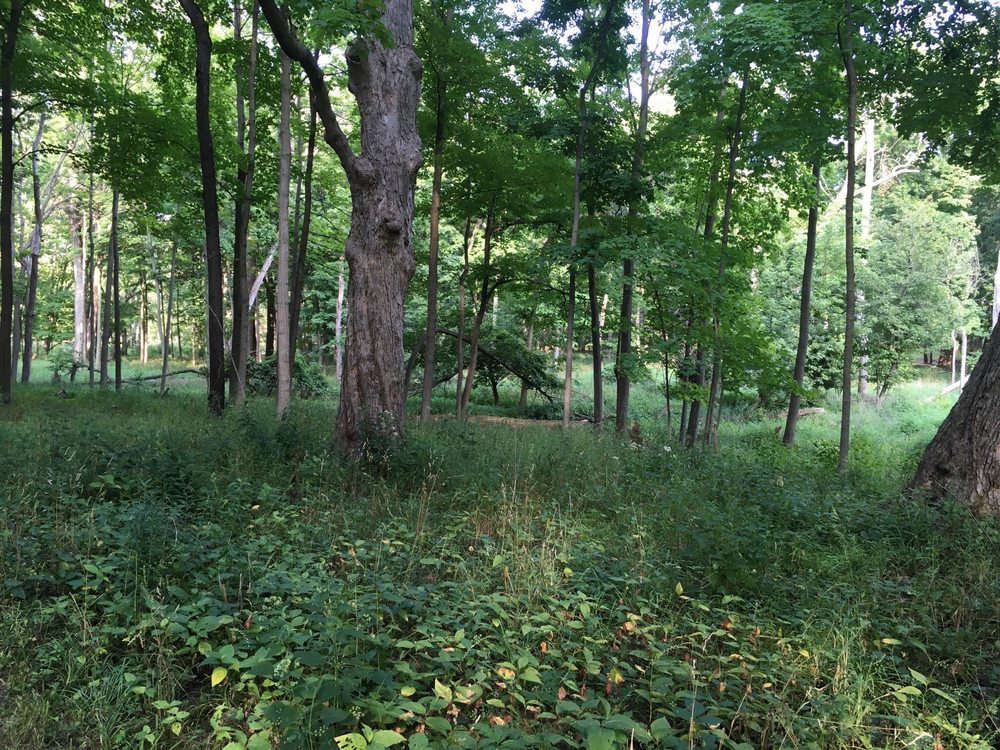

## Chapter One: The Morning Sun Beckons The golden morning light spilled through the kitchen windows like warm honey pouring across the countertop, and I, Pete the Puggle—velvety white fur, sparkling eyes accented with playful streaks of makeup that Mariya had lovingly dabbed on for fun one morning and that somehow never quite washed off—sat patiently at the edge of the tile floor, my stubby tail wagging a rhythm that only my heart could truly hear. I could smell pancakes. I could smell maple syrup. And I could smell something even sweeter: adventure. Lenny was at the stove, flipping flapjacks with the kind of theatrical flair that belonged on a cooking show, humming a tune I recognized from one of his old vinyl records. "Morning, Pete!" he called, catching my eye. "You ready for the greatest day of your young puppy life?" I barked twice—once for yes, and once for absolutely, positively, without-a-doubt yes. Mariya glided into the kitchen, her long brown hair still damp from the shower, a canvas tote bag slung over her shoulder stuffed with sunscreen, water bottles, and a worn paperback novel she'd been reading for weeks. She knelt down to my level, her hazel eyes twinkling with that particular magic she always seemed to carry. "Good morning, my little storyteller," she whispered, scratching behind my ears in exactly the right spot—the one that makes my left leg kick involuntarily. "Today we're going to Warner Avenue Park and Playground. There are trails and a creek and big open fields. I think you're going to love it." I tilted my head. A creek? Water? My tail slowed for just a moment, a tiny tremor of uncertainty passing through me like a cloud crossing the sun. But Mariya's smile was so warm, so full of quiet promise, that I pushed the feeling aside. Maybe today would be different. Roman thundered down the stairs two at a time, his sneakers barely tied, a baseball cap turned backward on his head. "Let's go, let's go, let's go!" he chanted, sliding into the kitchen in his socks and nearly colliding with the refrigerator. Lenny laughed, sliding a plate of pancakes onto the table. "Easy there, champ. The park isn't going anywhere." Roman grabbed a pancake with his bare hand—too hot—and yelped, juggling it between his palms. "Hot, hot, hot!" Mariya shook her head, smiling. "Some things never change." I watched my family, this beautiful, chaotic, loving circle of humans who had chosen me, and I felt a swell of gratitude so enormous it could have filled the entire room. Whatever lay ahead—water, darkness, the unknown—I would face it with them. Because together, we were invincible. Or at least, that's what I believed in that golden, pancake-scented moment. ## Chapter Two: Arrival at Warner Avenue Park The car ride was a symphony of sounds and smells: Lenny's off-key singing, the rhythmic thrum of the highway beneath our tires, Mariya's gentle narration of the passing scenery, and Roman's fingers drumming on his knees like he was keeping time for an imaginary band. I sat in the backseat beside Roman, my nose pressed against the cracked window, drinking in the world as it blurred past—fragments of pine trees, mailboxes, a boy on a bicycle, a cat lounging on a porch railing like a tiny sundial. Every scent told a story, and I was collecting them all. When the car finally turned onto a gravel road lined with towering oaks whose branches arched overhead like the vaulted ceiling of a grand cathedral, I knew we had arrived. Warner Avenue Park unfolded before us like a painting come to life. The parking lot was framed by wildflowers—purple coneflowers, black-eyed Susans, and delicate Queen Anne's lace—that swayed in the breeze as if waving us welcome. Beyond the lot, a vast green field stretched toward a line of willow trees, their long branches brushing the ground like fingers searching for something lost in the grass. A paved trail wound into the distance, curving around a wooden playground with climbing structures, twisty slides, and swings that creaked softly even though no one sat upon them. And beyond the playground, I could hear it—a sound that made my stomach clench like a fist: the gentle, persistent babble of water. The creek. I swallowed hard and pressed closer to Roman's leg. "Look at this place!" Lenny said, stepping out of the car and stretching his arms wide as if trying to embrace the entire park. "It's even better than the website photos." Mariya inhaled deeply, closing her eyes. "Can you smell that, Pete? Pine needles and warm earth and something sweet—honeysuckle, maybe." I could smell it all, and more: the musky scent of a rabbit that had passed through recently, the tang of old bark, the faint metallic trace of the playground chains. But underneath all of it, threading through everything like a whispered warning, was the smell of water. Roman ruffled the fur between my ears. "You okay, buddy? You look a little tense." I looked up at him, trying to smile the way dogs smile—with my eyes, my tail, the whole angle of my body. But inside, a small voice whispered that today would test me in ways I couldn't yet imagine. "Come on, Pete," Roman said, lifting me gently. "Let's go explore." And because I trusted him more than I feared the water, I let him carry me forward. ## Chapter Three: The Playground and a New Friend The playground was a kingdom of wood and color, and for a few glorious minutes, I forgot all about the creek. Roman set me down on the soft woodchips, and I sniffed every corner, every beam, every rope ladder like a detective working a case. The structures towered above me—forts with lookout towers, a bridge that wobbled when Roman crossed it, a tunnel painted to look like a caterpillar that I trotted through with my nose to the ground, cataloguing the ghosts of every child who had ever played here. Lenny pretended to be a monster, stomping around the base of the climbing structure while Roman shrieked and scrambled higher. "Rawr! I'm the Playground Goliath!" Lenny bellowed. "Dad, you're so embarrassing!" Roman groaned, but I could see him grinning. Mariya sat on a nearby bench, watching them with a soft smile, occasionally glancing at a wildflower she'd picked and was twirling between her fingers. It was then that I noticed a new scent—different from my family's, different from the park's earthy perfume. It was human, male, and carried traces of salt water, sunscreen, and something clean and sharp, like fresh laundry dried on a line by the ocean. A tall figure appeared at the edge of the playground, waving. Roman's face lit up. "George! You made it!" The young man who approached had broad shoulders, a kind face weathered by sun and wind, and an easy, confident walk. He wore swim trunks and carried a towel over one shoulder. "Hey, Roman! Wouldn't miss it. Your dad told me about this place—looks incredible." Roman introduced George to his parents, and then, crouching down, George looked directly at me. His eyes were warm and steady, the color of beach sand. "And who's this little guy?" he asked, extending his hand slowly. I sniffed it—thoroughly, respectfully—and then licked his wrist. He laughed, a deep, genuine sound. "Pete, huh? Roman's told me a lot about you. Says you're quite the adventurer." "George was in the Navy," Roman explained, sitting beside me. "He's an incredible swimmer. Like, legitimately amazing." George waved the compliment away modestly. "I just spent a lot of time in the water. It becomes a second home after a while." The word water hung in the air, and I felt that familiar tremor return—a cold tendril curling around my chest. I pressed against Roman's side. Sensing my shift, George tilted his head. "Is he okay?" Roman stroked my back. "Pete's a little scared of water. We've been working on it." George nodded thoughtfully, not pushing, not pitying—just understanding. "Fear's a funny thing," he said quietly. "It shrinks when you face it, but it never really disappears. You just learn to carry it differently." His words settled into me like a stone sinking into a pond. I didn't fully understand them yet, but something told me I would before the day was done. ## Chapter Four: The Creek and the Terror The trail to the creek wound through a corridor of trees so dense that the sunlight broke into scattered coins on the ground, dancing with every gust of wind. Lenny led the way, narrating like a nature documentary host. "And here we observe the majestic Puggle in its natural habitat, cautiously approaching a body of water despite every instinct telling it to flee." Mariya nudged him. "Be nice, Lenny." "I am being nice! I'm narrating his heroism." I appreciated the sentiment, truly, but my legs were trembling, and no amount of narration could disguise the fact that I could hear the creek now—not as a distant murmur but as a present, living voice, gurgling and rushing over rocks with careless, terrifying indifference. When the trees parted and the creek came into view, I stopped dead. It wasn't a raging river—it was perhaps fifteen feet across, shallow in most places, the water clear enough to see the smooth stones on its bottom. Sunlight glittered on its surface like scattered diamonds, and small fish darted beneath the current. To a human, it was picturesque, peaceful, inviting. To me, it was a nightmare. The water moved. It moved without permission, without predictability, and it made sounds I couldn't interpret. What was beneath the surface? What creatures lurked where I couldn't see? My heart hammered like a trapped bird against my ribs, and I whimpered—a small, involuntary sound that escaped before I could swallow it. Roman was at my side instantly. "Hey, hey. It's okay, Pete. It's just water. It's shallow. Look—George is already in." I looked. George stood mid-creek, the water barely reaching his calves, laughing as a tiny fish bumped his ankle. "See? Nothing to worry about," he called. But logic and fear are strangers, and no amount of reasoning could quiet the storm inside me. Lenny knelt beside me. "Pete, buddy. You don't have to go in. Not today. Not ever, if you don't want to." His voice was gentle, but there was something in his eyes—a quiet faith, a belief that I was braver than I believed. Mariya added, "Courage isn't about not being scared. It's about being scared and still finding a way forward." I looked at the water. I looked at my family. I looked at George, standing in the creek like it was the most natural thing in the world. And then, with legs that shook and a heart that pounded, I took one step forward. The wet earth squelched beneath my paw. Cold. Strange. But not harmful. Another step. The water touched my toes—icy, shocking, alive. I froze, every muscle locked, a whimper trapped in my throat. Roman stepped into the water beside me, his sneakers squishing. "I'm right here, Pete. I'm not going anywhere." Inch by inch, with Roman's hand on my back and George's encouraging voice ahead, I waded in. The current nudged my belly. I panicked, splashing wildly, but Roman held me firm. "I've got you. I've got you." Slowly, gradually, the panic ebbed. I was in the water. I was standing in the creek. And I was still alive. A tiny, incredulous bark escaped me—half surprise, half triumph. George grinned. "That's the spirit, Pete." For one fragile, beautiful moment, I was proud of myself. ## Chapter Five: Into the Woods and Away from Safety After the creek, I felt invincible—or at least, a slightly less terrified version of myself. We continued down the trail, and the park revealed new wonders: a grove of birch trees whose pale bark peeled like old parchment, a meadow where butterflies drifted in lazy spirals, and a massive boulder that Lenny insisted on climbing despite Mariya's warnings. "Lenny, you're forty-seven." "Forty-six, thank you very much, and this boulder has been waiting for me my entire life." He made it halfway up, lost his grip, and slid down with a yelp that sent Roman into hysterics. Even I barked a laugh. The afternoon was warm and golden, and the world felt safe and endless. But the woods, I would soon learn, have a way of shifting when you're not paying attention. Roman and George had wandered ahead, chasing a trail they'd discovered branching off the main path. I trotted after them, nose down, following their scent, until I realized the trees had thickened around me. The light had changed—dimmer, greener, filtered through a canopy so dense it felt like being underwater in a forest of leaves. I looked behind me. The trail was there, but it looked different from this direction—unfamiliar, twisting, ambiguous. I looked ahead. Roman and George were gone. Not far, probably—maybe just around a bend—but the realization struck me like a physical blow. I was alone. The forest pressed in, every shadow suddenly deepening, every rustle in the underbrush magnified into something sinister. My breath quickened. Where were they? Where was Lenny? Where was Mariya? The trees, so beautiful moments ago, now stood like silent sentinels, their trunks dark and unreadable. "Roman?" I barked. The sound came out thin, swallowed by the woods. "Roman!" Nothing. Not an echo. The trail split ahead—left or right—and I had no idea which way they'd gone. Their scent was everywhere and nowhere, muddled by damp earth and moss. Panic rose in me like floodwater, cold and fast. I was separated from my family. The thought was a physical ache, a hollowing in my chest. What if they didn't find me? What if I wandered deeper and deeper and the forest swallowed me whole? I sat down on the trail, my whole body trembling, and I did the only thing I could: I howled. It wasn't a brave howl, or a noble one. It was the sound of a small, terrified puggle who loved his family more than anything in the world and couldn't find them. The woods absorbed it, but I howled again, and again, because love, I was learning, doesn't stay quiet when it's lost. ## Chapter Six: Darkness Falls and Fear Takes Hold The sky, which had been a cheerful blue canvas all afternoon, began to bruise. Not with storm clouds—not yet—but with the slow, inexorable creep of evening. The light drained from the forest like water from a bathtub, swirling away into a dim, gray twilight that transformed every familiar shape into something uncertain. I had been wandering—not wisely, not bravely, just wandering—following scents and sounds and the desperate hope that one of them would lead me home. But the woods at dusk are a different country than the woods at noon. Shadows pooled beneath bushes like spilled ink. The trees, already imposing, became giants, their branches reaching upward like skeletal fingers. And the sounds—oh, the sounds. A chorus of unseen creatures began to tune up: crickets, frogs, something that hooted low and resonant from a distant tree. Each sound was a sentence in a language I didn't speak, and my imagination translated every one into danger. I found a hollow beneath a fallen log—a small, dark space that smelled of damp wood and old leaves—and I crawled into it, pressing myself against the cold earth. My fur was dirty. My paws ached. And the darkness was everywhere, pressing against my eyes like a blindfold. I had always been afraid of the dark—not the gentle dark of my bedroom, with the nightlight Mariya plugged in for me, but this kind of dark: the wild, uncaring, infinite dark that existed beyond human walls and warm kitchens. In the dark, I couldn't see. Couldn't see threats, couldn't see family, couldn't see the path home. Every snap of a twig was a predator. Every rustle was something reaching. My mind, usually so full of stories and adventure, turned against me, conjuring monsters from shadows and malice from nothing. But then, in the deepest part of the darkness, something shifted. Not outside—inside. I remembered Lenny's voice: "You're braver than you think, Pete." I remembered Mariya's words: "Courage is being scared and still finding a way forward." I remembered George, standing in the creek, unafraid. And I remembered Roman—my Roman—my brother, my best friend, who had held me in the water and whispered, "I've got you." The darkness was still there. The fear was still there. But so was something else: a small, stubborn flame inside me that refused to go out. I closed my eyes and pictured my family—their faces, their voices, the warmth of our kitchen on a Sunday morning—and the flame grew. Not enough to banish the dark, but enough to see by. Enough to take one more step. I crawled out from under the log, shook the dirt from my fur, and lifted my nose to the sky. Somewhere out there, they were looking for me. And I would find them, or they would find me. Either way, I would not spend this night hiding. I began to walk—shaking, yes; terrified, absolutely—but walking, each step a declaration: I am not my fear. I am Pete the Puggle, and I am going home. ## Chapter Seven: Roman Finds Pete I had been walking for what felt like hours but was probably twenty minutes when I heard it—distant, muffled by the trees, but unmistakable: "PETE! PETE, WHERE ARE YOU?" My ears shot up. My heart leaped. That voice. I knew that voice the way I know the sound of my own heartbeat. Roman. I barked—loud, full-throated, abandoning all restraint. "WOOF! WOOF! WOOF!" The barks tore through the darkness like flares fired into a night sky. I ran toward the voice, stumbling over roots, my paws slipping on damp leaves, but I didn't care because that voice was a lighthouse and I was a ship in a storm and every bark I sent out was an answering beam of light. "PETE! I hear him! Dad, George, he's over here!" Roman's voice was closer now, cracking with emotion. I broke through a thicket of ferns and saw him—standing on the trail with a flashlight, his face pale and streaked with dirt, his eyes wide and searching. The beam caught me—a small, mud-covered, white-furred puggle with ridiculous makeup streaks still visible around my eyes—and Roman dropped to his knees. "PETE!" He scooped me up, and I buried my face in his neck, my whole body shaking with relief. He held me tight—so tight I could feel his heartbeat, rapid and strong, matching mine. "I've got you," he whispered, his voice thick. "I've got you, buddy. I'm so sorry. I should never have gone ahead without you." I licked his face—his cheeks, his chin, the tears that were falling freely now. Behind him, Lenny and Mariya and George emerged from the trail, their flashlights cutting through the dusk. Mariya let out a cry and ran forward, wrapping her arms around both me and Roman. "Oh, my baby. My sweet, brave baby." Lenny stood behind them, one hand on Roman's shoulder, the other wiping his own eyes. "Good boy, Pete," he said, his voice unsteady. "Good, brave boy." George stood slightly apart, watching with a quiet, knowing smile. "Told you," he said softly. "Fear shrinks when you face it." I looked around at all of them—my family, my friend, my people—and the darkness that had seemed so enormous, so suffocating, now felt small. It was just the woods at evening. Just the space between moments. And in this moment, I was exactly where I belonged. The walk back to the car was slow and gentle, Roman carrying me part of the way, then setting me down so I could walk on my own wobbly legs. Lenny kept a hand on my back. Mariya hummed a soft melody. George walked beside us, occasionally pointing out fireflies that had begun to blink in the bushes like tiny, living stars. "You know," George said, "when I was in the Navy, we got lost once during a training exercise. Middle of the ocean, no land in sight, instruments down. I was terrified." Roman looked at him. "What did you do?" George smiled. "I remembered my training, trusted my crew, and waited for the dawn. The dark never lasts forever, Roman. It just feels like it does." I walked between them, my paws steady now, my heart full. The trail widened, the trees thinned, and the parking lot appeared ahead—our car a silver shape under the last light of the sky. I had faced the water. I had faced the dark. I had faced being alone. And I had survived all of it. ## Chapter Eight: The Ride Home and What We Learned The car was warm and safe, and I lay across Roman's lap in the backseat, George sitting beside us, while Lenny drove and Mariya rode shotgun with the window cracked, letting the cool night air thread through the car. For a long while, no one spoke. The silence wasn't empty—it was full, the way a room is full after a symphony's final note, when the audience holds its breath before applauding. I could hear everyone breathing, could feel the gentle rise and fall of Roman's chest beneath me, could smell the lingering scents of the park—earth, water, pine—still clinging to all of us like memories we weren't ready to wash away. Finally, Mariya spoke. "You know, today taught me something." Lenny glanced at her. "What's that?" She was quiet for a moment, looking out the window at the passing trees. "I always talk about seeing magic in the ordinary. But today, Pete showed me that the real magic isn't in finding extraordinary things—it's in facing ordinary fears with extraordinary heart." Her voice was soft, almost reverent. "He was terrified of the water, terrified of the dark, terrified of being alone. And he faced every single one. Not because he wasn't scared, but because he loved us enough to keep going." Lenny nodded slowly. "That's the thing about courage," he said. "It's not the absence of fear. It's the decision that something else matters more." He caught my eyes in the rearview mirror and smiled. "You're a brave little puggle, Pete. The bravest I know." George, from the backseat, added, "You know, in the Navy, they say courage is contagious. Watching Pete today, I believe it. He made me want to be braver, too." Roman stroked my ears. "We all did, George. We all did." I lay there, warm and safe and loved, and I thought about the day—the creek that had seemed like a monster and was just water, the darkness that had seemed like an enemy and was just the absence of light, the separation that had seemed like the end of the world and was just a brief detour. I thought about how fear had wrapped around me like a vine, tightening with every step into the unknown, and how courage—quiet, stubborn, unglamorous courage—had unwound it, one step at a time. I thought about George's words: "Fear shrinks when you face it." And I thought about Roman's arms around me in the dark, his heartbeat against mine, his voice saying the words I needed to hear: "I've got you." That, I realized, was the truest thing in the world. We carry each other. That's how we survive the water, the dark, the lost trails, the long walk home. We carry each other, and we are carried in return. As the car pulled into our driveway and the porch light flicked on—a beacon in the gentle night—I looked up at Roman one last time. He smiled down at me, and in his eyes I saw everything I needed: love, pride, the unspoken promise that tomorrow would bring new adventures and that we would face them together. Mariya unbuckled her seatbelt and turned around. "Same time next weekend?" she asked. Lenny grinned. "I'll make pancakes." Roman whooped. George laughed. And I, Pete the Puggle—small, white-furred, makeup-streaked, and braver than I ever dreamed possible—barked once, clearly and joyfully, into the warm, waiting night. The moral of our adventure was simple but true: courage is not the absence of fear, but the love that carries us through it. Family is not just the people you're born to, but the ones who find you in the dark. And every fear, no matter how enormous it seems, shrinks in the presence of those who refuse to let you face it alone. *** The End ***
Use these buttons to read the story aloud:



No comments:
Post a Comment