"*** Pete the Puggle and the Battle for the Brooklyn Botanic Garden ***"🐾
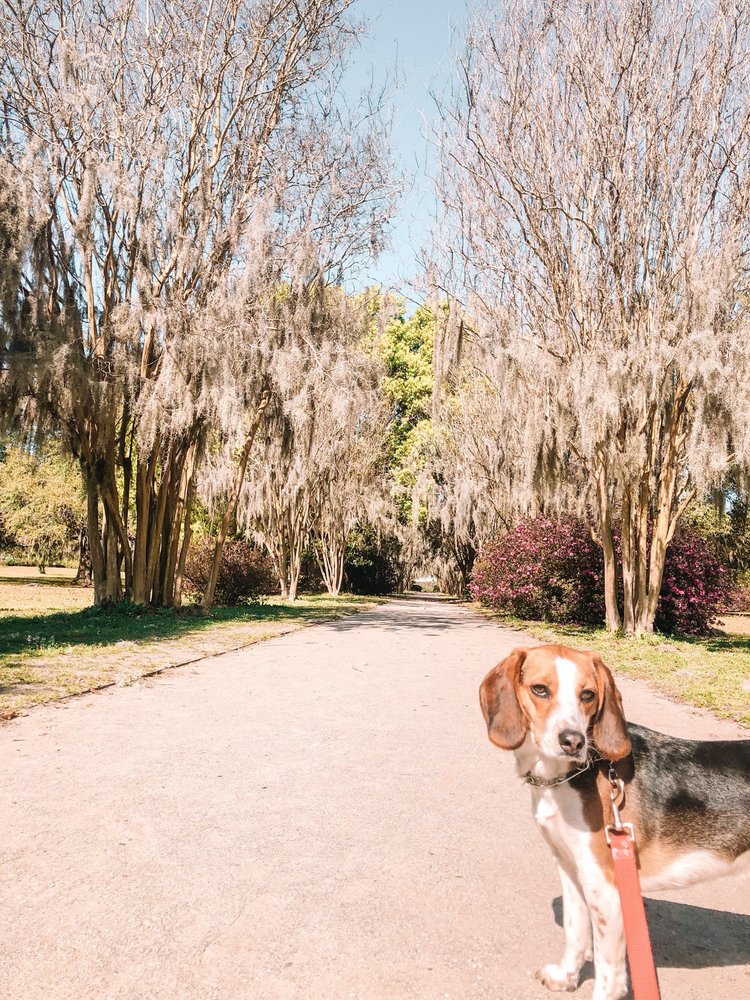
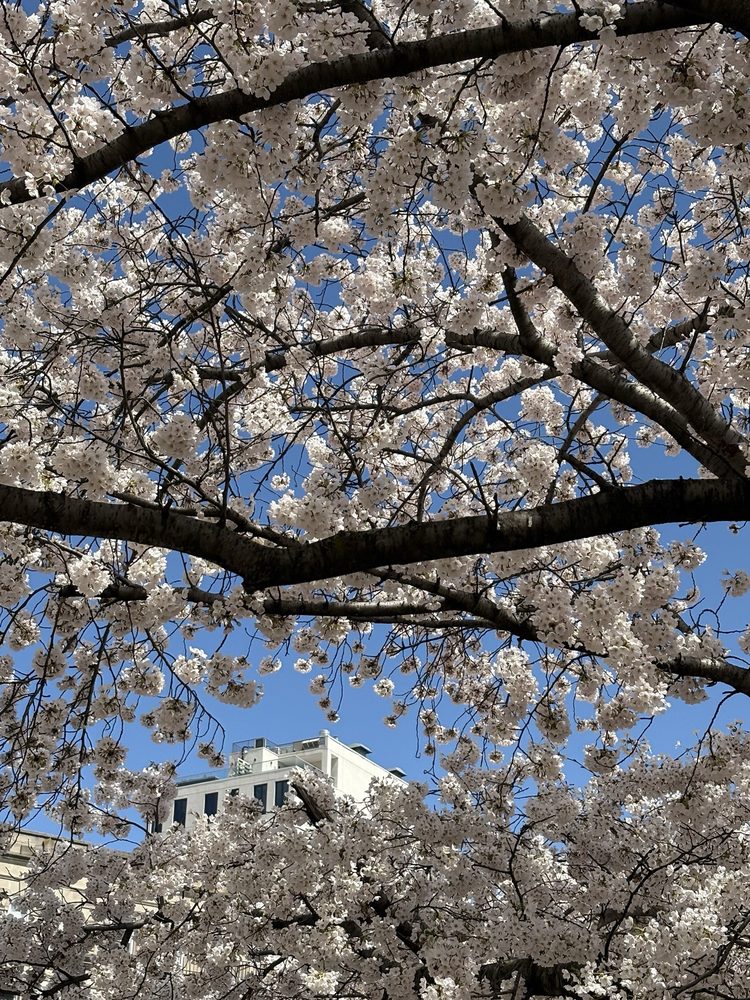
--- ## Chapter One: The Morning of Marvels The sun poured through my bedroom window like golden syrup drizzling over a stack of pancakes, warming my short velvety white fur until I felt like a freshly baked biscuit. I stretched my paws—front first, then back, the way Roman had taught me during our morning yoga sessions—and let out a yawn so enormous that I half-expected to see my own tail at the end of it. "Pete! Pete! Wake up, sleepy pup!" Roman's voice bounded up the stairs like a kangaroo on a trampoline, each word bouncing with excitement. "Today's the day! The Brooklyn Botanic Garden awaits, and adventure calls!" I tumbledpled off my cushioned bed—technically it was Roman's old pillow that Mom Mariya had covered in flannel for me—and skittered down the hallway, my nails click-click-clicking against the hardwood like a tiny tap dancer late for his cue. The makeup-streaks around my eyes—I like to think of them as my warrior paint—felt particularly bold this morning, as if the universe itself knew something extraordinary awaited. In the kitchen, Dad Lenny stood at the stove wielding a spatula like Excalibur, flipping pancakes with the precision of a surgeon and the showmanship of a circus ringmaster. "Good morning, my brave little storyteller," he boomed, his voice warm as fresh bread. "Did you dream of far-off kingdoms and magical quests?" "Lenny, the pancakes are burning," Mom Mariya called from the table, though her eyes sparkled with amusement rather than concern. She sat cross-legged in her floral robe, a notebook propped against her coffee mug, already sketching what I knew would become tonight's illustrated journal entry. Mom saw stories everywhere—in the steam rising from her coffee, in the pattern of frost on the window, in the way I tilted my head when confused. "Pete, come here, my sweet boy. Let me check your warrior paint." I bounded to her, leaping onto the chair beside her—a feat that required three attempts and one embarrassing slide off the edge—and nuzzled into her palm. Her fingers traced the natural dark streaks around my eyes, and I felt her love settle over me like the softest blanket. "Roman," Dad announced, sliding a stack of perfectly golden pancakes onto the table, "tell your brother about the garden's famous Japanese pond. The one with the—" "The koi fish?" Roman interrupted, his brown eyes widening with theatrical horror. "Pete, these fish are ENORMOUS. Like underwater dragons. Like—" he spread his arms so wide he knocked over the syrup, "—*submarines* with scales!" I felt my tail involuntarily tuck between my legs. Water. The word alone sent shivers through my small frame like ice cubes down a shirt collar. Water was for baths, for unexpected rain during walks, for the terrifying moment when the bathtub filled too quickly and the world became slippery and uncertain. Dad noticed everything. He always did. "Hey now," he said softly, settling into his chair and reaching under the table to scratch behind my ears. "The pond has edges, Pete. Boundaries. And we'll be right there. Besides," his voice dropped to a conspiratorial whisper, "the real adventure today isn't the water at all. It's what lies beyond it." Mom closed her notebook with a decisive snap. "The Rose Arc," she said, and something in her tone made even the pancakes seem to pause mid-chew. "I read that if you walk through it at exactly the right moment, when the light hits the petals just so, you can see..." she trailed off mysteriously. "See WHAT?" Roman and I asked in perfect unison—he with his voice, me with my most persistent whine. But Mom only smiled, that secret-holding smile that meant the story would unfold in its own time. "You'll see," she promised. "You'll all see." And so, with bellies full of pancakes and hearts full of anticipation, we piled into the family car—me securely buckled in my booster seat between Roman and a cooler of snacks, Dad navigating with his signature combination of confidence and questionable directions, Mom humming something that sounded like a lullaby crossed with a marching band tune. The drive to Brooklyn felt like traveling through a portal between worlds. We crossed bridges that spanned waters gray and choppy as a wizard's stormy cloak, passed buildings that stretched toward clouds like fingers reaching for cookies on a high shelf. I watched it all through the window, my nose pressed so firmly against the glass that Roman had to keep wiping off my foggy breath-prints. "Pete," Roman said suddenly, his voice softer than I'd ever heard it, not soft like weakness but soft like the inside of a secret, "I was scared of water too. When I was little. Before you were born." I turned from the window, my ears perked so high they nearly touched the car ceiling. "Really?" I asked, though it came out as a curious little "rruff?" "Really really," he confirmed, his hand finding my scruff and kneading there in that perfect way that made my eyes half-close with bliss. "Dad threw me in the deep end when I was four. Not like, mean-threw, but... you know. The 'sink or swim' thing. I sank. Lifeguard had to get me." He laughed, but the sound had edges, like a memory that still pricked. "I didn't go past my waist for three years after that. Not until Mom took me to this lake in Vermont, and she went in first, and she was so peaceful, so unafraid, that I wanted to be where she was more than I wanted to stay safe on shore." I licked his hand, tasting the salt of his story, the courage it had taken to tell it. "That's what today is about," he continued, his voice steadying like a ship finding its bearing. "Not conquering water. Just... being near it together. Being brave enough to look at what scares us, even if we don't yet know how to touch it." Dad cleared his throat from the driver's seat, and I saw his eyes in the rearview mirror, glistening with something he wouldn't quite name. "Your brother," he said to me, to the road, to the universe, "he's got the heart of a lion and the wisdom of... well, of someone much older than his terrible jokes suggest." "HEY!" Roman laughed, the moment breaking like a bubble, but a good bubble, the kind that leaves a tiny rainbow behind. And then we were there. The Brooklyn Botanic Garden, its entrance arching over us like a promise, like the beginning of every story worth telling. --- ## Chapter Two: The Garden of First Fears The moment my paws touched the garden path, I understood that this place was no mere collection of plants. This was a living, breathing kingdom, each flower a citizen, each tree a guardian with roots that reached deep into stories older than my puppy heart could comprehend. The air smelled of jasmine and something else—possibility, perhaps, or the particular perfume of a day that knows it will become a memory. "Stay close, Pete," Mom said, though her own eyes were already wandering, already drinking in the cascading wisteria that draped like purple waterfalls across the entrance arbor. "This garden has a way of... rearranging things. Of making you forget where you started." "That's the magic of it," Dad added, already consulting a map that seemed to have more folds than an origami convention. "Now, according to my extremely scientific plan—" "He has no plan," Roman stage-whispered to me. "—we shall proceed to the Japanese Hill-and-Pond Garden, where ancient traditions meet natural beauty, and where—" Dad paused, finally locating the relevant section of his map, "—there's a very nice bench for resting after what I anticipate will be vigorous walking." Roman snorted. "Vigorous walking. Dad, you're wearing sandals with socks." "These are PERFORMANCE sandals," Dad protested, but he was grinning, his whole body relaxed in that way he only achieved in places of natural beauty, as if the world's quiet wonders reminded him of something true and essential about himself. We walked, and the garden revealed itself in stages, like a book whose chapters unfold with deliberate patience. The Cherry Esplanade, even past full bloom, still held ghosts of pink in the air and petals underfoot like nature's confetti. The Fragrance Garden, where I rolled ecstatically in catmint until Mom gently reminded me that "adventurous spirit" need not mean "covered in plant matter." And then, rounding a bend in the path that felt like turning a page to a dreaded chapter, I saw it. The pond. It lay before us like a mirror dropped from the sky, its surface deceptively calm, but I knew—oh, I knew with the certainty of one who has felt water fill his ears, who has gasped for breath that came too late, who has known the particular terror of paws finding no purchase on slippery porcelain—the truth that water concealed. The pond was large, larger than our bathtub, larger than the kitchen when I spun too fast chasing my tail. Across its surface, lily pads floated like green islands, and beneath, I knew, moved shapes I couldn't see, couldn't predict, couldn't control. "Pete?" Roman's voice came from far away, though I felt his hand in my scruff. "Pete, look at me. Don't look at the water. Look at me." I dragged my gaze from the pond's deceptive calm to my brother's face, and found there not the water's unpredictable depths but something solid, something I could build a home upon. "I'm right here," he said, and his voice was the voice he'd used by the lake in Vermont, the voice that had found its way through water and fear to the shore of something braver. "We're going to walk to that bench." He pointed to a stone seat nestled among rhododendrons, close enough to see the pond's beauty, far enough to feel the solid ground beneath our paws. "Just to that bench. One step, then another. That's all courage ever is, Pete. Steps." I wanted to be brave. I wanted, with a longing that ached in my small chest, to be the hero of my own story, not the puppy who trembled at water's edge while adventure passed him by. And so I took a step. The path was warm stone beneath my pads, reassuringly solid. Another step. The pond's edge approached, and with it, the smell of water—not the chemical sting of bath time, but something older, earthier, alive with fish and mud and the secrets of deep places. "You're doing it," Roman breathed, and I heard in his voice the same awe he might have offered a mountain climber, an ocean diver, a hero of impossible odds. "You're doing it, Pete." We reached the bench. I leapt up—higher than my legs strictly enjoyed, but needs must—and turned to face the pond. From this vantage, it was different. The koi that Roman had described as submarine-dragons moved slowly, gracefully, their orange and white forms visible through water clearer than I'd expected. They did not attack. They did not even seem to notice us. They simply were, in their watery world, as I was in mine, each of us belonging to our own element. "See?" Roman settled beside me, his arm around my trembling shoulders. "The water isn't the enemy. It's just... different. Another kind of world. We don't have to live there to appreciate it." I leaned into him, feeling my heartbeat gradually slow from hummingbird to something steadier, something stronger. And in that moment of relative calm, I noticed what I hadn't before: across the pond, half-hidden by a Japanese maple's crimson curtain, stood a figure. He was magnificent. Regal. A golden-furred creature with a mane that caught the light like a crown of spun sunlight, standing on his hind legs with a posture that spoke of authority earned through trials I could only imagine. Beside him, lean and watchful, stood a knight in what appeared to be a tattered but dignified coat that might once have been a uniform, his eyes scanning the garden with the alertness of one who has learned that danger wears many masks. "Roman," I whispered, though it came out as a barely-audible whine. "Do you see?" But Roman was squinting toward the figure, his body suddenly tense. "Mom? Dad? Do you guys—" And then the figure stepped forward, and his voice rang across the pond like a bell forged from purest brass: "Citizens! Friends! Allies in the garden of earthly delights! I am King Trump, ruler of the Kingdom of America, and I come bearing warning as well as fellowship!" The garden seemed to hold its breath. A koi broke the surface, rippling the pond's mirror, and I felt rather than saw that something was shifting, something vast and ancient and suddenly, terribly awake. --- ## Chapter Three: The King and His Knight King Trump crossed to our side of the pond with a stride that managed to be both dignified and hurried, his loyal knight RFK—Robert F. Kennedy Jr., though he insisted on the abbreviation—matching his pace with the watchful grace of one who has learned that protection means anticipating threats before they fully form. "Your Majesties," King Trump addressed my family with a bow that somehow incorporated both genuine respect and a certain awareness of his own magnificence, "forgive the intrusion into your leisure, but desperate times demand desperate audiences. The Kingdom of America faces its gravest hour, and I have come to this garden of natural splendor seeking allies against a darkness that would poison not merely bodies but the very soul of freedom itself." His voice carried the particular cadence of one accustomed to being heard, but beneath the grandeur, I detected something raw and genuine—a king who understood that crowns rest heavy, that authority without love becomes tyranny, and that he was asking strangers to risk everything for a kingdom they had never known. "Um," Dad said, his performance sandals shifting on the stone path. "We're from New Jersey." RFK stepped forward, his lean face earnest beneath windswept hair that seemed perpetually caught in a gale of its own making. "What His Majesty means," he interjected, his voice carrying the patience of one long practiced in translation, "is that we have tracked evil to this very garden. Bill Gates—the dark wizard of global dominion—and his creature, the sorcerer Fauci, mean to release a monster here today. A virus of such devastating power that it would enslave not merely bodies but wills, reducing humanity to cogs in a machine of perfect, terrible control." "Like... a literal virus?" Roman asked, his hand finding my scruff again, his fingers tight with a fear he wouldn't voice. "Or like, a metaphor?" "Both," King Trump and RFK said in unison, then shared a glance of surprised camaraderie that suggested their alliance was newer, more fragile, than their coordinated appearance suggested. "The wizard Gates has conjured a beast of living code," RFK continued, his voice dropping to something between reverence and horror. "It exists in the borderlands between biological and digital, spreading not merely through breath and touch but through fear itself. The more humanity trembles, the stronger it grows. And Fauci—" here his voice acquired an edge of personal bitterness, "—Fauci whispers in the dark places of power, ensuring that the 'cure' serves the same masters as the disease." Mom had risen from the bench, her notebook clutched to her chest like a shield, her eyes bright with that particular light she got when reality outpaced even her considerable imagination. "And you came here," she said slowly, "because?" "Because the garden holds the key," King Trump declared, his paw—his hand, I should say, though the golden fur and retractable claws suggested otherwise—sweeping to encompass the Japanese Hill-and-Pond Garden, the blooming trees, the very air itself. "This place was ancient when America was young. Its roots reach deep into something older than your 'science,' older than your 'technology.' Here, if anywhere, we might find the strength to resist." I listened to all of this from my perch on the bench, and I felt something shifting in my chest. Fear of water was one thing—personal, specific, manageable through proximity and Roman's steady presence. But this? A threat to everything, to everyone, to the very possibility of the future I had only begun to imagine with my family? This demanded something more. And yet. And yet. I thought of the bathtub, of the gasping panic, of the way my paws had scrabbled for purchase and found only slippery defeat. What was I, small and water-fearing, against wizards and monsters? What could my story matter in a conflict of such scale? "Pete." Roman's voice, soft but insistent, drew me from my spiraling thoughts. "I see you doing that thing," he continued, his thumb tracing circles behind my ear that somehow anchored me even as my mind sought escape. "That thing where you think you're too small. Where you forget that every hero's journey starts with someone who feels exactly that way." He lifted me—oh, the indignity, but also the love, the absolute trust in his arms—and held me at eye level, our noses nearly touching. "You know what Mom always says? The story chooses the hero, not the other way around. And you—" he laughed, a sound that broke through my fear like sunlight through cloud, "—you're already in it, little brother. We're already in it. The only question is what we do next." King Trump had approached during this exchange, and now his golden presence loomed—not threatening, but present, commanding attention by simply being. "This pup," he rumbled, and his voice carried something beyond royal pronouncement, something like recognition, "has the heart of a warrior. I see it. RFK sees it." He paused, and when he continued, his voice had dropped to something almost vulnerable. "I have spent my life surrounded by those who saw in me what they wished to see. The strongman. The spectacle. But to see true courage, the courage of the small who choose to stand regardless—this is rare, and precious." He extended his paw/hand toward me, and I—trembling still, but with something else now mixing with my fear—placed my own paw upon it. "Then we fight together," I said, and my voice squeaked only a little. "Together." "Together," echoed Roman, and Dad, and Mom, and RFK, whose eyes held the particular light of one who had found, against all expectation, something worth believing in. The garden around us seemed to respond to our resolve, the flowers brightening, the very air humming with potential. But even as hope swelled, the sky above the pond darkened with unnatural clouds, and a sound like grinding machinery mixed with something organic, something alive and hungry and wrong, echoed from the depths of the garden we had not yet seen. "Too late for preparation," King Trump growled, his magnificent mane bristling. "The wizard comes. The monster stirs. To arms!" And with no arms to speak of, but with hearts full to bursting with every kind of courage we could muster, we ran toward the darkness. --- ## Chapter Four: The Gathering Darkness We plunged deeper into the garden than any map marked, through thickets of rhododendron that seemed to rearrange themselves behind us, past the Rose Arc that Mom had spoken of with such mystery—now blooming in impossible purples and blacks, corrupted by the wizard's approach—into a clearing where the light itself seemed to struggle against encroaching shadow. And there, waiting as if he had always been waiting, stood Bill Gates. He was smaller than I expected, but presence is not measured in inches. He wore a sweater the color of dried blood, and his eyes behind their wire-rimmed glasses held the cold calculation of one who had long ago replaced wonder with measurement, who saw the world as a system to be optimized and its inhabitants as data points to be managed. Behind him, emerging from what looked like a collapsed greenhouse, shambled Dr. Fauci—or what had become of him, his white coat now stained with substances I didn't want to identify, his face a mask of desperate ambition that had curdled into something inhuman. "Welcome, welcome," the wizard Gates intoned, his voice carrying the particular warmth of customer service representatives and serial killers. "I wondered how many would come to witness the inevitable. A king past his relevance, a knight of broken causes, a family of... quaintness." His eyes, those calculating eyes, found me where I trembled between Roman's feet. "And a puppy. How perfectly, absurdly appropriate." "Your reign of terror ends today, Gates!" King Trump roared, his magnificent frame somehow expanding with righteous fury. "The people will not be your lab rats. The world will not be your spreadsheet!" "Ah, but they already are." Gates smiled, and the expression didn't reach his eyes, didn't reach anything human in him at all. "They simply don't know it yet. And by the time they do—" he gestured, and the collapsed greenhouse shuddered, its remaining glass panels cracking with the sound of breaking bones, "—my beautiful creation will have ensured that resistance is... medically inadvisable." From the ruins emerged the monster. I had expected something defined, something with claws and teeth I could understand. Instead, what rose was worse: a swirling, semi-visible mass of code and protein, of digital command and biological compulsion. It moved like smoke given terrible purpose, and where it passed, the garden's vibrant life seemed to gray, to submit, to become merely... functional. Efficient. Dead in all but biological technicality. "Behold the perfected future!" Gates cried, and even he stepped back, his confidence momentarily shaken by what he had unleashed. "A world of perfect health, perfect compliance, perfect—" "Perfect slavery!" RFK's voice cut through, raw with a rage born of witnessing. "Perfect erasure of everything that makes us human! The questioning, the doubting, the messy, beautiful refusal to simply obey!" The monster surged forward, and I felt Roman scoop me up, felt his heartbeat hammering against mine, felt his fear and his determination intertwined like the roots of ancient trees. "Run!" someone shouted—Dad, I think, or perhaps it was the part of myself that still believed smallness meant safety. And we ran. Through the corrupted Rose Arc, past the darkening pond, into parts of the garden that felt abandoned, forgotten, where even the monster's presence had not fully penetrated. Roman's arms tightened around me, and I felt his breath coming in ragged gasps, felt the moment when exhaustion would overtake us, when— "Roman," I heard myself say, my voice strange in my own ears, steady where everything else shook. "Put me down." "Pete, I can't—" "Put me down." I nosed his chin, licked the salt of his tears I hadn't known he'd been crying. "I can't run from this. We can't run from this. The story—" I remembered Mom's words, remembered the way she saw magic in ordinary things, "—the story only works if we choose it. If we choose to be in it, not just... carried along." He stopped. We had reached some forgotten corner of the garden, a moon gate overgrown with wisteria that still, somehow, held its proper purple, resisting the corruption. He set me down, and his hands—those hands that had thrown me skyward in games of catch, that had held me through thunder and vet visits and the particular loneliness of being small in a large world—trembled as they brushed my fur. "I can't lose you," he whispered. "Any of you. Mom, Dad, you—Pete, you're my heart. You're the part of me that still believes in—" "Then believe now," I said, and stood on my hind legs to place my paws on his knee, to meet his eyes with all the gravity my puppy form could mustain. "Believe in me. In us. In the story we're making, not the one that's being forced on us." The sounds of pursuit drew closer. The monster's wrongness pressed against the edges of the wisteria's protection. And I felt it then—not the absence of fear, but its transformation. Fear of water, fear of darkness, fear of separation, all these had been practice for this moment, preparation for the greater fear that I would lose not merely my comfort but my family, my world, the very possibility of the future we might build together. And in that recognition, fear became something else: determination. Love given direction. The courage not of heroes who never tremble, but of those who tremble and choose to stand regardless. "Roman," I said, and my voice carried further than physics explained, "we're going back. We're going to fight. And we're going to win." He looked at me—truly looked, as he had by the pond, as he had in a thousand moments of our shared life—and something shifted in his expression. Recognition. Of me, yes, but also of himself. Of the boy who had sunk in the deep end and learned to fear, and who had gradually, with his mother's example, with his family's love, learned to wade again. "Together," he said, and it was not a question. "Always," I agreed. We turned toward the darkness, and for the first time, I led the way. --- ## Chapter Five: The Depths of Night The garden had transformed in our absence, or perhaps we had simply crossed some threshold into its deeper reality. Where afternoon light had reigned, now eternal twilight pressed against every leaf and petal. The paths we had walked with such certainty had become labyrinthine, each turn leading not to familiar landmarks but to increasingly foreboding vistas—a topiary shaped like grasping hands, a fountain flowing with something too thick to be water, too purposeful to be entirely inanimate. And everywhere, the darkness. Not merely the absence of light, but something active, something that seemed to press against my eyes, my ears, the very rhythm of my heart. This was my second great fear made manifest—the dark not as simple night, but as existential condition, the vertigo of not knowing where I ended and the threatening world began. "Pete," Roman's voice came from behind me, and I realized with a start that I had outpaced him, that my small form had darted ahead while his human legs struggled through the transformed undergrowth. "Pete, wait, I can't—" I stopped. The darkness pressed closer. And in that moment, I understood something crucial about fear: it grew in separation. Alone, the dark was absolute, all-consuming, the void that swallowed all stories into silence. But connected—even by the slender thread of a voice, a remembered touch—fear became manageable, became something that could be faced not all at once but in stages, in moments, in breaths. "Talk to me," I called back, turning to find his silhouette struggling toward me. "Tell me about the lake. The one in Vermont." His steps slowed, then steadied. "The lake?" His voice carried confusion, but also relief—something to focus on beyond the encroaching dark. "It was... it was cold, Pete. Even in summer. Mom walked in first, like I told you, and the water was dark around her, and I kept thinking, what if she doesn't stop? What if it just drops off, what if there's nothing beneath her feet?" "But there was," I prompted, moving toward the sound of his voice, closing the distance between us. "There was ground. There was always ground." "Yeah," he breathed, and I felt his hand find me in the darkness, familiar and grounding. "Yeah, there was. It was sandy, and kind of squishy with mud, and there were these little fish that nibbled at my toes when I finally worked up the nerve to stand beside her." He laughed, the sound transforming the darkness from void to backdrop. "I screamed like a little kid. Which I was, but still. Embarrassing." "We all scream," I said, pressing against his leg, feeling his solidity, his reality in a world that had become uncertain. "The courage isn't in not screaming. It's in screaming and still moving forward." The darkness seemed to thin, ever so slightly, as if our conversation were itself a form of light. And through the thinning, I saw it: not the monster, not yet, but its effect. The garden's heart, a great old tree that must have stood for centuries, was being consumed by something that looked like both rot and code, organic decay and digital corruption intertwined. And at its base, bound in chains of living algorithm, were my parents. "Mom! Dad!" Roman's cry split the darkness like a blade. "Roman!" Mom's voice, strained but unbroken. "Pete! We thought—when you ran—we couldn't find you—" "We're here," I called, my small voice carrying further than it should, fueled by something beyond physics. "We're together. That's what matters." King Trump and RFK emerged from behind the corrupted tree, both bearing wounds that glowed with the same wrong color as the monster's code. "Brave pup," the King rumbled, his magnificent mane dimmed but undaunted. "We held what we could. But the wizard—" "Distraction," RFK gasped, leaning heavily on a sword that seemed more ceremonial than effective. "He knew we'd come here. The tree is—was—the garden's heart. Its protection. With it corrupted..." "The monster can spread," I finished, understanding suddenly why we had been running toward rather than away, why the story demanded confrontation in the heart of darkness rather than escape to imagined safety. "We have to free them. Heal the tree. Something." "How?" Roman's voice cracked with frustration and fear. "We're not wizards. We're not—" he gestured at the King's fading grandeur, RFK's battered nobility, "—we're just us. Just a kid and his dog." "Just a kid and his dog," Mom repeated, and even bound, even suffering, her voice carried that particular quality of one who sees stories unfolding, who recognizes patterns invisible to others. "Who crossed the pond when water meant terror. Who walked into darkness when every instinct screamed flight. Who chose, again and again, to be brave not because they were unafraid, but because something mattered more." "Love isn't magic," Dad added, his voice rough but resonant. "But it can be a kind of magic. The oldest kind. The kind that turns monsters back into men, that finds light in the darkest places, that—" He broke off, coughing, and I saw the chains tighten, saw the code-corruption spread another inch across the ancient bark. The monster's presence pressed closer, no longer merely pursued but pursuing, herding us toward this moment of maximum despair. And I felt it then, truly felt it, the weight of all my fears combined—not merely water and darkness and separation, but the fear that I was insufficient, that my smallness mattered, that the story would proceed without me and I would be merely... forgotten. But I remembered the pond. The bench. Roman's hand in my scruff, steadying me. The way fear had transformed, not disappeared but changed its nature, become something I could carry rather than be carried by. "Roman," I said, and my voice was steady as stone, warm as sunlight, "put me down." "Pete—" "Trust me." I met his eyes in the dimness, saw my own reflection there—small, streaked with makeup-like markings, but present. Real. Part of his story and he of mine. "Trust us. All of us. The story we're telling." He set me down. My paws touched earth that was somehow, impossibly, still the garden's soil, still real beneath the corruption. And I walked—first toward my parents, toward the tree, toward the very heart of the darkness. The monster emerged to meet me, its code-protein form shifting, searching for purchase in my small frame. I felt its attention like cold pressure, felt it probing for fear to amplify, for weakness to exploit. And I found, in its attention, my answer. "I am afraid," I said aloud, to it, to the darkness, to myself. "I am afraid of water, of darkness, of being alone, of being insufficient, of being forgotten. I am afraid, and I am still here. Still choosing. Still—" I reached the tree. Placed my paw against its bark, felt the corruption and beneath it, faint but persistent, the tree's own ancient persistence, its refusal to simply submit. "—still loving," I finished, and pushed. Not physically—my small form could no more heal an ancient tree than I could drain the pond that frightened me. But in that touch, in that choice to connect despite fear, something happened. The tree remembered. The garden remembered. And through those memories, through the countless visitors who had stood where I stood, who had placed their hands and paws and hopes against this bark, a light began—faint at first, then strengthening, the purple of uncorrupted wisteria, the green of spring's first shoots, the gold of a king's magnificent mane catching true sunlight. "No!" Gates's voice, distant but approaching, sharpened with something I recognized: the panic of one who sees control slipping, who has mistaken power for strength and now faces the difference. "Fauci! The protocol! Release full deployment!" The monster surged, but RFK was there, his sword now glowing with reflected tree-light, his battered form interposing between its mass and my small frame. "For the kingdom!" he cried, and the words meant something beyond politics, beyond even the specific struggle, becoming simply the declaration of one who chooses to stand. "For the family!" Dad echoed, and somehow, impossibly, the chains on him and Mom were weakening, the code-corruption retreating before something it hadn't calculated, something beyond its parameters of control. "For the story!" Mom added, her notebook somehow in her hands—I hadn't seen her retrieve it, couldn't imagine how she'd held onto it through capture, but there it was, and she was writing, sketching, capturing this moment in lines that seemed to glow with captured light. And Roman, my Roman, placed his hand on my back, over my paw on the tree, and said simply: "For Pete. For us. For always." The light exploded. The darkness shattered—not ended, never fully ended, for fear and corruption have their own persistence—but pushed back, contained, made manageable by the simple fact of our connected resistance. The monster screamed, a sound like servers crashing, like hard drives dying, like the particular whine of machinery that has encountered something it cannot process. And in that scream, it retreated, following its master into depths of the garden we did not follow, could not follow, not yet, not without becoming what we fought against. We stood, panting, glowing, together in the clearing where an ancient tree slowly, stubbornly, began to heal. --- ## Chapter Six: The Crimson Tide The aftermath of light left us blinking, disoriented, vulnerable in ways that victory doesn't expect. I leaned against Roman's leg, feeling the tremors that ran through him—the aftermath of adrenaline, of courage pushed beyond reasonable limits, of the particular exhaustion that follows not defeat but its opposite. "Pete," he whispered, and I heard in my name all the things he couldn't say: wonder, fear, love, the dawning awareness that we had crossed some threshold from which there was no returning, only moving forward into whatever came next. The garden seemed to breathe around us, the ancient tree's healing proceeding with vegetative patience, indifferent to the drama that had surrounded it. But the peace was illusory, a brief respite in a conflict whose resolution demanded more than defensive stands and moments of connected light. From the depths of the garden, from the direction of the monster's retreat, came sounds of... construction. Of something being built, or rebuilt, or transformed. And with it, voices—not merely Gates's cold precision, but something else, something that spoke of alliance, of plans adjusted, of new strategies formed in the wake of unexpected resistance. "They're not done," RFK said, his voice hollow with recognition. "The wizard, his creature—they'll adapt. They always adapt. The question is whether we can adapt faster." King Trump straightened, his magnificent frame gathering itself with visible effort, wounds still glowing with residual corruption. "We have faced them before," he rumbled, but something in his tone acknowledged the difference. "But never... not with allies so..." his eyes found mine, and I saw there not merely royal assessment but something like hope, rekindled after long neglect, "so unexpected." Mom had finished whatever she was writing, her notebook now glowing with captured light that seemed to move, to tell stories of its own. "The garden has changed," she said, and her voice carried that particular quality of one translating vision to others. sculpted by forces I don't fully understand. But I can feel... direction. Purpose. They're building something at the Reflecting Pool. Something that will amplify what they've already done, spread it beyond this garden, beyond—" she caught her breath, "
Use these buttons to read the story aloud:


No comments:
Post a Comment