"*** Pete the Puggle's Fort Greene Adventure: A Tale of Courage, Friendship, and Finding Your Bark ***"🐾


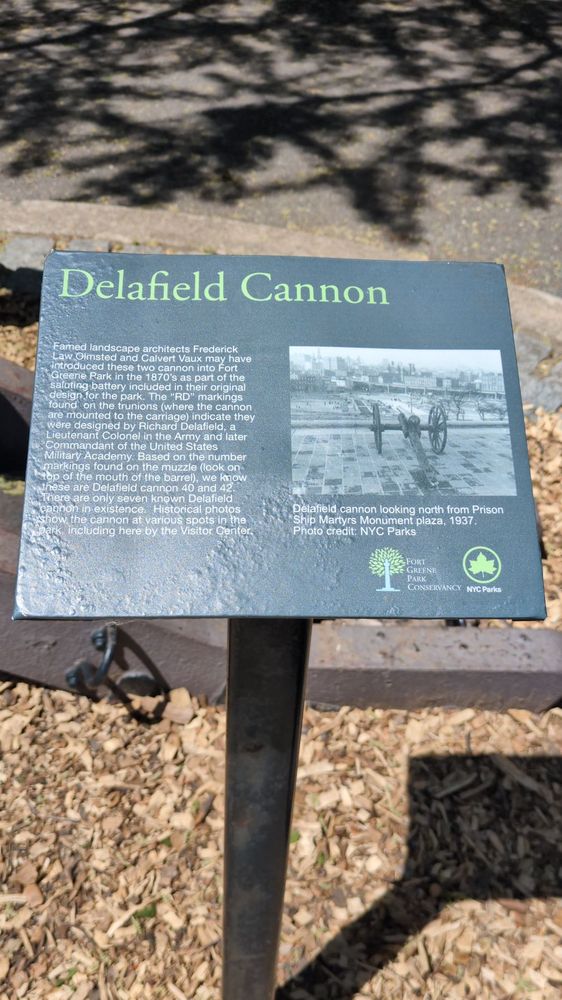
--- **Chapter One: The Morning of Marvels** The sun stretched its golden fingers across our Brooklyn apartment like a cat awakening from a lazy nap, and I, Pete the Puggle—a compact bundle of white velvet fur with expressive eyes framed by the faintest smudges of what Roman once called "adventurer's kohl"—bounded from my cozy bed with the energy of a thousand fireworks. Today was the day. Today, we were going to Fort Greene Park. "Pete! Pete! Down, boy!" Roman laughed, his fourteen-year-old voice cracking slightly as he tried to corral my enthusiasm. But I was a comet of pure joy, orbitting around the living room where Lenny sat with his morning coffee, steam curling upward like the genie's smoke from Aladdin's lamp. "Well, well, well," Lenny boomed, setting down his mug with deliberate slowness, the way he did when a joke was coming. "Looks like somebody swallowed a thunderstorm and is trying to out-rain the clouds!" "Dad, that doesn't even make sense," Roman groaned, but he was smiling, that lopsided grin that meant he was already plotting mischief. "Sense?" Lenny clutched his chest dramatically. "My son wants sense? From a man who once tried to teach a goldfish to fetch?" Mariya emerged from the kitchen, her laughter like wind chimes on a breezy afternoon, carrying a basket that smelled of sandwiches and something warm and cinnamon-sweet. "Lenny, darling, let the poor dog breathe before you bury him in dad jokes." I wagged my tail so hard I nearly became a helicopter, my short legs barely touching the ground as I danced between them. The apartment smelled of coffee and love and possibility, and through the window, I could see the first brave leaves of spring trembling on the sycamore outside. Roman knelt down, his dark eyes meeting mine with that special connection we'd shared since he was seven and I was a puppy small enough to fit in his hoodie pocket. "Pete," he whispered, scratching behind my ears where it made my whole body melt, "we're gonna have the best day. Promise. There's a big hill, and trees everywhere, and—" he paused, glancing at his parents with theatrical secrecy, "—I heard there might be a creek." A creek. Water. The word hummed in my chest like a distant warning bell, but I pushed it aside. Today was adventure day. Fear had no place in adventure. As we gathered our things—Roman's battered backpack, Mariya's quilted tote bursting with supplies, Lenny's camera with its lens like a cyclops eye—I felt the familiar warmth of family wrapping around me like the softest blanket. This was my pack. My purpose. My world. The subway ride passed in a blur of screeching metal and curious smells, of Roman's hand steady on my harness and Mariya's voice weaving stories about the park's history—how it had been a fort during the Revolutionary War, how the Prison Ship Martyrs' Monument stood tall as a reminder of sacrifice and courage. "Soldiers once stood where dogs will play," Mariya mused, her fingers absentmindedly braiding Roman's hair as she gazed out the window. "Isn't that something? History breathing beneath our feet." "C'mon, Mom, you're getting philosophical again," Roman teased, but he leaned into her touch, and I saw the love there, deep as roots. When we emerged from the subway, Fort Greene Park unfolded before us like a green kingdom risen from the city stone. Ancient trees arched overhead, their branches weaving a canopy of dappled light. The grass rolled in gentle waves toward the towering monument, white as bone against the blue sky. And everywhere, everywhere, the sounds of life—children's laughter, birdsong, the distant thwack of a basketball, and something else, something that made my ears perk with sudden recognition. A bark. Sharp, insistent, challenging. From behind an oak tree burst a Jack Russell Terrier, all coiled energy and bristling confidence, his brown and white fur standing on end like a bottle brush. He locked eyes with me, and I felt my tail still, my heart stutter. "Kirusha! Kirusha, stop!" A harried voice followed, and a young woman appeared, leash trailing, apology already forming on her lips. But Kirusha didn't stop. He advanced on me, barking with the ferocity of a creature ten times his size, and I—brave Pete, adventurer Pete—found myself cowering behind Roman's legs, trembling like a leaf in a hurricane. "Hey, hey, it's okay," Roman soothed, butাশ wasn't sure if he was talking to me or Kirusha or perhaps to the whole chaotic world. The woman scooped up her dog, who continued to bark around her arms, his small body rigid with aggression. "I'm so sorry! He's usually not like this with other dogs. He just... gets excited." "Excited," Lenny repeated, his voice warm with understanding. "We know excited. Pete here once got so excited to see a squirrel that he ran face-first into a screen door." Everyone laughed, the tension breaking like ice on a thawing river. But I remained pressed against Roman's ankle, my heart hammering a frantic rhythm against my ribs, and I wondered if perhaps, just perhaps, I was not the brave adventurer I believed myself to be. --- **Chapter Two: The Hill of Whispers** After the encounter with Kirusha, I needed time to recover my dignity. We found a spot on the great hill that rose toward the monument, the grass soft and welcoming as Mariya spread her quilted blanket with the precision of a general arranging troops. From this vantage, the park spread below us like a living map—winding paths, clusters of trees, the distant glint of what might be that creek Roman had mentioned. "Pete, come here, buddy." Lenny patted the blanket, and I approached cautiously, still scanning for terrier threats. He produced a treat from his pocket, the good kind, cheese-flavored and smelling of distant pastures. "You know what my grandfather used to say? 'The dog that barks the loudest often has the smallest shadow.'" "Another Pete-ism?" Mariya asked, settling beside him with a book she probably wouldn't read. "A Lenny-ism," he corrected, "which is superior by at least three syllables." Roman sprawled on his stomach, chin propped on his hands, watching a frisbee arc between distant figures. "Pete was scared," he said quietly, not quite meeting anyone's eyes. "Of that little dog. Pete was scared." The words hung in the air, and I felt them like a weight, because they were true. I had been scared. Am scared, if I was honest with myself, that trembling thing that lived beneath my adventurous exterior. "Being scared isn't the opposite of being brave," Mariya said, her voice carrying that quality she got when she was about to share something important, something she really wanted you to hear. "Being scared and moving forward anyway—that's where courage lives. That's where it always lives." I thought about this as the afternoon warmed, as Lenny dozed with his hat over his eyes and Mariya finally opened her book, reading the same paragraph three times before giving up to watch the clouds. Roman sat cross-legged, sketching in his worn notebook—me, I realized with a flush of pride, my white fur rendered in confident strokes of his pencil. The hill seemed to breathe beneath us, the earth warm and alive. I found myself wandering to the edge of the blanket, nose twitching at a fascinating scent trail. Squirrel, definitely, but something else too. Something wild and watery and strange. And then I heard it again. That bark. Closer now. Kirusha appeared from behind a bush, alone this time, his owner nowhere in sight. He saw me and froze, his small body tensing for confrontation. My first instinct was flight, to run back to Roman's legs and the safety of the blanket. But something stopped me—perhaps Mariya's words, perhaps the way the afternoon light caught Kirusha's eyes, revealing not malice but something else, something almost like loneliness. We stood there, two small warriors on a green hill, and I realized with startling clarity that his barking, his aggression—it was fear too. It had to be. We were mirror images, Kirusha and I, both pretending to be bigger than we felt. I took a step forward. Then another. My legs trembled, but I walked toward him, and his barking faltered, became uncertain, then ceased entirely. From behind me, Roman's whisper: "Mom, Dad—look." I reached Kirusha. We were nose to nose, and I could smell where he'd been, what he'd eaten, the particular sadness of a dog who barked because he didn't know another way to say hello. I wagged my tail, just once, a question rather than a statement. His tail answered. One wag. Two. A tentative treaty. "Pete," Roman breathed, and I heard him approaching slowly, not wanting to break the spell. "You're doing it, buddy. You're really doing it." But then Kirusha stiffened, his ears flattening, and he barked—not at me, but past me, toward something in the trees. The sound of children's laughter, approaching. He spun and bolted, a brown and white blur vanishing into the undergrowth, and I stood alone, suddenly aware of how far I'd wandered from the blanket, from my family. The trees seemed taller now. The shadows longer. And somewhere, though I strained to hear it, the sound of water running, running, calling me toward something I didn't want to face. --- **Chapter Three: The Creek of Shadows** Roman found me before the fear could fully bloom, his hands gentle as he lifted me, his heartbeat rapid against my fur. "Don't wander like that, Pete. You scared me. You really scared me." I licked his chin, apologetic, grateful, still trembling slightly from Kirusha's sudden departure and the water-sound that seemed to come from everywhere and nowhere. "Was that the same dog?" Lenny asked, approaching with the blanket half-folded over his arm, Mariya close behind with concern etching her features. "Kirusha," Mariya read from the tag she'd glimpsed. "He got away from his owner, I bet. Poor thing." "Poor thing?" Roman's voice rose slightly. "He was about to attack Pete!" "Was he?" Lenny asked, and there was wisdom in his question, the kind that invited looking deeper. Roman opened his mouth, closed it. "I don't know," he finally admitted. "Maybe not. They were... they were making friends, I think. Before he ran." The afternoon had shifted somehow, the light taking on a golden quality that suggested time was passing faster than we realized. Mariya consulted her phone. "We have a few more hours before we need to head back. Should we explore? There's a nature trail that way, apparently. And a—" "Creek," Roman and Lenny said together, and something in their synchronized voices made everyone laugh, the tension dissolving. We set off along a winding path, the trees growing denser, the city sounds fading to a distant hum. I rode in Roman's arms at first, but then I asked to be set down, my paws itching for earth, my nose hungry for new scents. The path narrowed, became more正式的, and then—there it was. The creek. It was not, objectively, very frightening. A narrow ribbon of water, perhaps three feet across, moving with gentle purpose over smooth stones. Sunlight caught its surface and shattered into dancing fragments. It was beautiful. It was also water, and water, in my experience, was a thing that could swallow you, that could take your paws from solid ground and leave you floundering, helpless, alone. I stopped. My paws rooted themselves to the path as if they'd grown there, ancient as the trees. Roman knelt beside me, following my gaze. "Oh, Pete. It's just a little creek. See? You can walk right through it. The water barely reaches my ankles." He demonstrated, stepping into the stream with his sneakers still on, water bubbling around his laces. To me, it looked like a river. Like an ocean. Like everything I'd ever feared made visible, flowing, unstoppable. "Pete, come on!" Roman called, holding out his hand. "It's fun! It's cold but it's fun!" I whimpered. The sound embarrassed me, but I couldn't stop it. My legs locked, my tail tucked, and I became a statue of pure refusal. Lenny and Mariya approached, understanding immediately. "Oh, baby," Mariya murmured, but Lenny placed a hand on her arm. "Let him work through it," he said softly. "Roman, don't force him. But Pete—" he crouched to my level, his wise eyes meeting mine, "—the water isn't going to hurt you. It's just water. It flows, and it passes, and it keeps moving. Like everything scary. Like everything hard. It passes." I wanted to believe him. I wanted to be brave. But the creek gurgled and beckoned, and I saw myself swept away, tumbling, lost, separated from everyone I loved. The fear was physical, a cold weight in my chest, a paralysis of spirit. Roman stepped back onto the bank, his shoes squelching. He didn't force me. Instead, he sat in the grass and began to splash gently at the water's edge, not looking at me, just being present. Being patient. Time passed. The light shifted. And slowly, incrementally, my terror began to loosen its grip. Roman wasn't afraid. Lenny and Mariya weren't afraid. And they wouldn't let me be harmed. This I knew, deeper than the fear, more fundamental than the water's pull. I took one step. Then another. The grass gave way to mud, cool and squelching between my paw pads. The creek's sound grew louder, not menacing now but almost musical, a liquid song. Roman turned, his的稳定, encouraging, infinitely patient. "That's it, Pete. Just a little more." The water touched my front paw. I yelped, jumped back, my heart galloping. But it hadn't hurt. It had been cold, shockingly so, but not painful. Not dangerous. Just... new. I tried again. This time, both front paws in the shallows. The current tugged gently, a playful hand. Roman's hands were there, steadying me, and I walked through water for the first time in my life, trembling but triumphant, emerging on the other side wet and ridiculous and alive. "You did it!" Roman embraced me, careless of his soaked shirt. "You did it!" And I had. The fear hadn't disappeared—I suspected it never truly would—but I'd moved through it, literally, and discovered that the other side was reachable, was real, was waiting. --- **Chapter Four: The Gathering Dark** We explored the far side of the creek, a wonderland of ferns and fallen logs, of mysterious holes that promised rabbits or groundhogs or perhaps the entrances to fairy kingdoms. Roman sketched. Lenny photographed a particularly magnificent beetle. Mariya composed haiku aloud, most of which made Lenny groan and Roman giggle. I shook myself periodically, each spray of water droplets a celebration of my conquest. The creek had not defeated me. Perhaps nothing had to. But afternoon was aging, the golden light deepening toward amber, and with it came the first subtle chill of evening. We turned back, following the path we'd come, or so we thought. The woods, so friendly in sunlight, began to shift and change, paths splitting where there had been unity, landmarks rearranging themselves like mischievous spirits. "Wait," Mariya stopped, her voice carefully neutral. "Was this the way?" Lenny consulted his phone, frowning. "No signal. Of course. Because adventure." "Adventure," Roman repeated, and I heard something in his voice, a tightness he was trying to hide. "We can figure it out. We just need to... I don't know, follow the creek back?" But the creek had forked, become confused, disappeared behind walls of rhododendron. The trees pressed closer, their shadows lengthening and merging, and I felt the first true twist of panic—not for myself, but for my family, for the possibility of separation that suddenly seemed horribly real. "We'll be fine," Lenny announced, with the determined cheer of a man who wasn't entirely certain. "Parks have paths. Paths lead somewhere. We're somewhere people want to be." We walked. The light failed incremently, not dramatically but persistently, the way hope leaks from a punctured balloon. Roman held me tighter, his adolescent bravado cracking to reveal the child beneath, the one who still needed his parents, who still feared being lost. "I should know the way," he muttered, more to himself than anyone. "I should have been paying attention. I'm supposed to be the one who—" "Roman." Mariya's voice was firm, loving, the voice that had soothed countless childhood nightmares. "No one is responsible for everything. That's not how families work. We wandered together, we'll find our way together." But the darkness was gathering now, real and present, and with it came sounds I couldn't identify—rustlings, creakings, the sudden flap of wings. Each one made me flinch, my recent courage seeming fragile as eggshell. The fear of water had been specific, containable. This fear was vast and formless, the terror of being small in a large world, of protections stripped away, of the infinite night without the warmth of familiar forms. And then, the worst thing. Roman stumbled, his foot catching on an exposed root, and I went flying from his arms—or perhaps he dropped me, the moment too confused to properly remember. I hit the ground rolling, the impact knocking breath from my lungs, and when I scrambled up, shaking my head, they were gone. Not far, surely. Twenty feet? Thirty? But in the gathering dark, with the path vanished and the trees become a wall, they might as well have been on another planet. "Pete! PETE!" Roman's voice, raw with panic. "Roman! Stay where you are, we'll find him!" Lenny's boom, strained with control. "Mariya, don't run, you'll—" Their voices fractured, directionless, bouncing off tree trunks and dissolving into leaf-mold. I barked, the sound high and desperate, and began to run toward where I thought they'd been, but the ground betrayed me, roots rising to tangle my paws, underbrush catching my fur, and I fell again, again, each tumble carrying me further from any recognizable place. Darkness complete. Not the comfortable darkness of our apartment, with its nightlights and familiar shapes, but an absolute absence, a void that pressed against my eyes and filled my ears with the rush of blood. I was alone. The words echoed with terrible clarity. I was alone, and small, and the night was very large. From somewhere, the memory of Mariya's voice: *Being scared and moving forward anyway—that's where courage lives.* But she hadn't meant this. She couldn't have meant this darkness, this solitude, this overwhelming wrongness of separation from everything I loved. I curled beneath a sheltering bush, my white fur invisible now, my markings lost to shadow. The world was reduced to scent and sound—the loamy smell of decaying leaves, the distant hoot of an owl, the eternal rustle of something moving through undergrowth toward me, or away, I couldn't tell. Time became meaningless. I existed in a suspended moment of fear, waiting, trembling, the brave puggle of the morning reduced to a shivering huddle of primal terror. And then—a bark. Sharp, insistent, achingly familiar. Kirusha emerged from the darkness like a small ghost, his white markings faintly luminous. He saw me, and for a moment we regarded each other, two small creatures in a vast night. Then, decisively, he approached and nudged me with his nose—not gentle, exactly, but purposeful. "You're lost," he seemed to say, in the language of posture and scent that all dogs share. "Stupid. Follow me." I didn't trust him. I didn't have to. But I followed, because what else was there? Through the dark woods we went, Kirusha leading with the confidence of one who knew these paths, who claimed this territory as his own. Branches whipped my face. Roots threatened my footing. But we moved, and movement was hope, and hope was something I hadn't expected to feel again. --- **Chapter Five: The Howl of Heroes** Kirusha led me to a small clearing where moonlight, now risen, silvered a circle of grass. Here, he stopped, turned to face me, and barked—that same challenging bark I'd heard that morning, but different too, carrying information I strained to understand. "Stay?" I tried to ask, in my limited way. He looked at me with something like exasperation, then threw back his head and howled. Not a bark this time, but a true howl, a summons, a beacon cast into the night. I understood, finally, what he intended. He couldn't lead me out—perhaps he didn't know the way from this strange point—but he could call for help. He could make himself heard. I joined him. My voice, usually used for excitement and greeting, rose in a trembling howl of my own. Together we sang our small bodies into the night, two unlikely allies calling for rescue, for reunion, for the simple mercy of being found. How long we howled, I cannot say. My throat grew raw. Kirusha's voice faltered, then strengthened, stubborn as his terrier nature. The night around us seemed to listen, to hold its breath. And then—"Pete! PETE!" Roman's voice, closer now, breaking with relief and tears. "Over here! I hear him! Mom, Dad, over HERE!" Crashing through undergrowth, flashlight beams swinging wildly, they emerged into our moonlit clearing—Roman first, his face streaked with the tracks of cried-out tears, Lenny supporting a limping Mariya, all of them disheveled, frightened, and utterly beautiful. Roman fell to his knees, and I was in his arms, and we were shaking together, his tears falling into my fur, my tongue washing his chin with desperate devotion. "Pete, Pete, Pete," he chanted, as if my name were a prayer, a spell against all future separation. Lenny's hand fell on my head, heavy and warm and perfect. Mariya's voice, broken with gratitude: "Thank God. Thank God. Thank God." And Kirusha—brave, aggressive, lonely Kirusha—stood slightly apart, watching with what I can only describe as satisfaction. His tail gave one sharp wag when his owner's voice called from somewhere beyond the clearing, frantic and searching. He turned, paused, looked back at me. I barked once. Not a challenge. A thank you. A recognition. A promise. Then he was gone, vanished into his own reunion, and I was surrounded by mine, the only family I needed, the only home I'd ever wanted. But the night was not over. --- **Chapter Six: The Return and the River** Reunited, we faced the problem of exit. The paths that had confused us in daylight were treacherous puzzles in darkness, and Mariya's ankle, twisted in her earlier panicked search, made navigation painful and slow. Lenny supported her, but his own energy was flagging, the jaunty confidence of morning eroded by worry and exertion. "We need to cross the creek again," Roman realized, consulting landmarks he barely trusted. "It's the only way I recognize. But Pete—" I understood his concern. My terror of water, so recently conquered in sunlight with his hands to steady me, seemed likely to resurface catastrophically in this darkness, this exhaustion, this fragility of recovered nerves. But I thought of Kirusha, how he'd faced the night alone, how he'd chosen help over hostility, action over despair. I thought of my family's faces when they'd found me, the love naked in their exhaustion. And I thought of the creek, which had seemed a monster and revealed itself merely as water, merely as another thing to move through. I walked to the creek's edge. It was louder now, or seemed so, the night amplifying its murmur to a roar. The moonlight caught its surface in shattered fragments, and I couldn't see the bottom, couldn't know what waited in those dark waters. "Pete, we can find another way," Roman offered, but without conviction. There was no other way. Not tonight. Not with Mariya's ankle swelling, not with the cold settling into all our bones. I stepped in. The cold shocked me, a fresh invasion, but I kept moving. One paw, then another, feeling for purchase on slick stones. The current tugged, stronger than I remembered, or perhaps I was weaker, tired, afraid. I faltered, felt myself losing balance, and then Roman was there, his shoes filling again, his hands under my belly, lifting, supporting, not doing it for me but refusing to let me do it alone. "Together," he grunted, and we crossed, family and love and stubborn will against the dark water, and emerged on the far bank soaked and shivering and triumphant. The path from there was clearer, or perhaps we simply cared less about certainty. We moved as one, Lenny's arm around Mariya, Roman clutching me, my wet fur soaking his hoodie, neither of us minding. The park's edges materialized gradually—familiar benches, the distant glow of streetlights, the blessed sound of traffic, of human civilization, of safety. When we finally collapsed into a taxi, Mariya wept quietly against Lenny's shoulder. Roman buried his face in my fur, whispering things too soft for even my excellent ears to fully catch. And I, Pete the Puggle, once-terrified adventurer, sat wet and exhausted and utterly complete, knowing that fear would come again—it always does—but so would the courage to face it, and the love that would never let me face it alone. --- **Chapter Seven: Morning's Reflection** We returned to Fort Greene Park exactly one week later, a deliberate choice, a reclamation. The morning was grayer, the spring temperamental, but we were undeterred. Mariya's ankle had healed to a manageable ache. Lenny had printed photographs from our adventure, including several of a certain Jack Russell Terrier, which he'd somehow obtained from Kirusha's owner through the magic of social media and dog park networks. And there, at the entrance to the nature trail, stood Kirusha with his human, both performing nonchalance poorly. "He came back to the clearing that night," Kirusha's owner explained, as our humans exchanged pleasantries. "Led me right to it. Like he knew someone needed finding." "Someone did," Mariya said softly, and her hand found Lenny's, and I knew she was speaking of more than my woodland ordeal. Kirusha and I approached each other with the dignity of veterans, of survivors, of friends forged in unexpected fires. He sniffed my nose; I sniffed his. His tail wagged; mine answered. No barking. No aggression. Just recognition, and the comfortable silence of creatures who need no further proof of each other's worth. We walked, all of us, to the creek. In daylight, it was even less frightening than I'd remembered, almost disappointingly tame. But I remembered my terror, and I honored it, because it had been real, and it had been mine, and it had taught me something about the nature of fear—that it grows in darkness, diminishes in shared light, and never fully disappears but can be carried, can be moved through, can be transformed. Roman waded in first, then turned, extended his hand as he had before. "Coming, Pete?" I went. The water was cold, the stones slippery, but I went, and Kirusha splashed beside me, and together we reached the other side where Lenny waited with treats and Mariya with her camera, capturing this moment of ordinary courage, this daily triumph of love over fear. On the great hill, we spread our blanket in the same spot, or near enough. The city sprawled beyond the trees, full of noise and motion and endless stories, but here, in this green pocket, we were temporarily timeless, a family in perfect balance. "So," Lenny began, in the tone that meant a lesson was coming, wrapped in humor's candy coating. "What did we learn from our adventure?" "Always charge your phone," Mariya said promptly. "Terriers are secretly heroic," Lenny added. "Don't drop Pete," Roman said quietly, and I felt his arms tighten, the memory of separation still fresh enough to ache. "And?" Lenny pressed, looking at me with those warm, wise eyes. I couldn't answer in words, but I could show them. I stood, walked to the edge of the blanket, and looked back—all of them, my pack, my purpose, my home. Then I deliberately turned and walked a few steps away, alone, and returned, pressing against Roman's side. "Independence," Mariya interpreted, her voice thick with understanding. "With the knowledge that you can always come back." "Choice," Lenny agreed. "Not escape. Not abandonment. Just... the freedom to explore, and the love that waits." "And being scared," Roman added, scratching behind my ears until my leg thumped involuntarily. "Being scared and doing it anyway. That's the biggest one, I think." It was. It is. It will be, for every adventure that follows, for every creek and dark wood and challenge yet to come. I am Pete the Puggle, small and white and marked with the faint traces of what Roman once called adventure's makeup. I am afraid of many things, and I am brave in spite of them, because of them, transformed by them into something more than fear could ever contain. Kirusha barked from where he'd been exploring a squirrel hole, and I barked back—not challenge, but invitation. He trotted over, settled near my flank, and we watched the clouds together, two small warriors in a large world, no longer alone. --- **Chapter Eight: The Circle Completes** The afternoon waned toward evening, and with it came the first hints of darkness, earlier now, more insistent. I felt Roman tense beside me, remembered his face in the woods, the panic of separation. But his hand found my fur, and my presence steadied him, as his had steadied me in the creek. "You're thinking about it," Mariya observed, her perception as sharp as ever. "Both of you. The darkness, the being lost. It's okay to think about it." "I keep seeing him," Roman admitted, his voice low, meant only for family. "When I couldn't find him. When I thought—" he broke off, unable to complete the sentence. "That's love," Lenny said simply. "The fear comes with it. The package deal. But look—" he gestured around us, the park golden in late light, our blanket spread with picnic remnants, Kirusha dozing with his head on my back, "—we're here. We're together. The fear didn't win." "It didn't win," Roman repeated, and I heard him accepting this, letting it become part of his story, his growing understanding of what life could be. "It didn't win because of Pete. Because of all of us." I thought of Kirusha, how his aggression had masked loneliness, how my fear had masked courage, how Roman's panic had masked love so powerful it terrified him. We were all, I realized, more than our worst moments, our most frightened selves. We were the sum of our choices, our connections, our willingness to keep moving even when the path disappeared. The first true stars appeared, faint against the fading blue, and with them came the first stirring of my old terror—night falling, darkness gathering, the memory of cold fear still vivid. But I was not that trembling creature beneath the bush, not anymore. I was Pete, who had crossed creeks and faced nights and found his way home. Who had been found, and had found in return. Kirusha's owner called, and he stirred, stretched, gave me one final nose-touch before trotting to her side. "Same time tomorrow?" she asked, and we all laughed, because of course there would be tomorrows, many of them, filled with adventures and misadventures and the ordinary miracles of continued existence. We packed slowly, reluctantly, the blanket folded with the care of a precious artifact, which in some ways it was—a map of our day, our togetherness, our persistent hope. Lenny carried it; Mariya carried the basket; Roman carried me, my white fur soon to need washing but for now simply accepted, loved, enough. At the park's edge, I looked back once more. The monument stood white against the darkening sky, a reminder of sacrifice and courage, of those who had faced far worse than dark woods and emerged into history. The trees rustled with evening wind. Somewhere, a creek murmured its eternal song. And everywhere, in every shadow and light, the possibility of tomorrow. "Pete," Roman whispered, his breath warm against my ear, "you're my bravest guy. You know that? Whatever scared you, whatever still scares you—you faced it. You face it every day. That's... that's the most amazing thing." I licked his chin, this boy who was becoming a man, who had carried me through water and darkness and would carry me still, as I would carry him, as we all carry each other, the endless reciprocity of love. The subway ride home was quieter, each of us wrapped in thought, in memory, in the gentle processing of experience that turns events into stories, stories into identity. Mariya rested her head on Lenny's shoulder. Roman drew me in his lap, his sketchbook forgotten for once, simply present. And I, Pete the Puggle, closed my eyes and dreamed of green hills and moonlit clearings, of barks that meant friendship and creeks that led home, of all the fears I would face and the courage I would find, not despite my smallness but because of it—because love magnifies, transforms, makes heroes of us all. Tomorrow, and all the tomorrows after, I would remember this. In darkness, in doubt, in the grip of any fear—there is always a path through. There is always someone searching. There is always, at the journey's end, the warmth of familiar arms, the welcome of "we found you," the home that was never truly lost. The apartment waited for us, lights on, familiar and safe. But we didn't rush. We walked slowly through the Brooklyn evening, our family constellation complete, our story continuing, our love—like all true love—growing stronger for having been tested, deeper for having been shared, eternal for having been chosen, again and again, with every step, through every fear, toward every dawn. And somewhere, I knew, Kirusha trotted through his own evening, his bark perhaps a little softer now, his heart perhaps a little fuller, two dogs transformed by one night's adventure into something neither could have become alone. This is the mystery, I thought, as sleep began to claim me, safe in Roman's arms, surrounded by my family, my pack, my world. This is the magic. Not the absence of fear, but the presence of love. Not the avoidance of darkness, but the light we carry into it, together, always together, forever and always, amen. *** The End ***
Use these buttons to read the story aloud:



No comments:
Post a Comment