"# *** The Puggle and the Arch of Valor: A Tale of the Kingdom of America ***"🐾

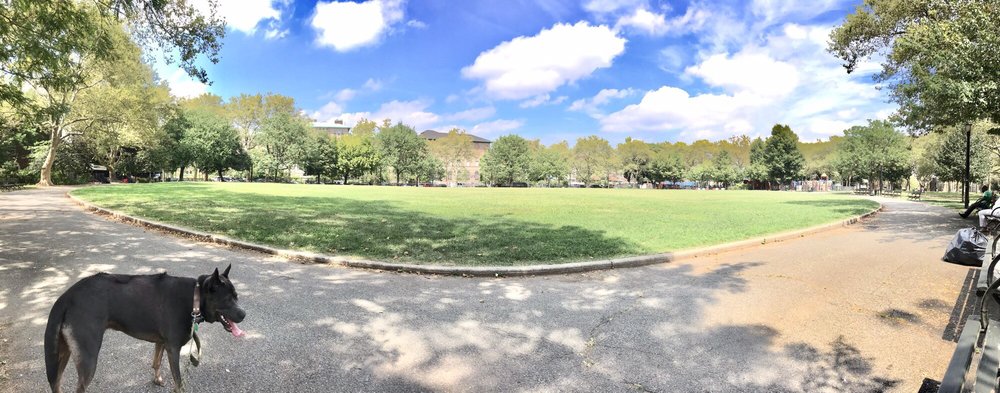
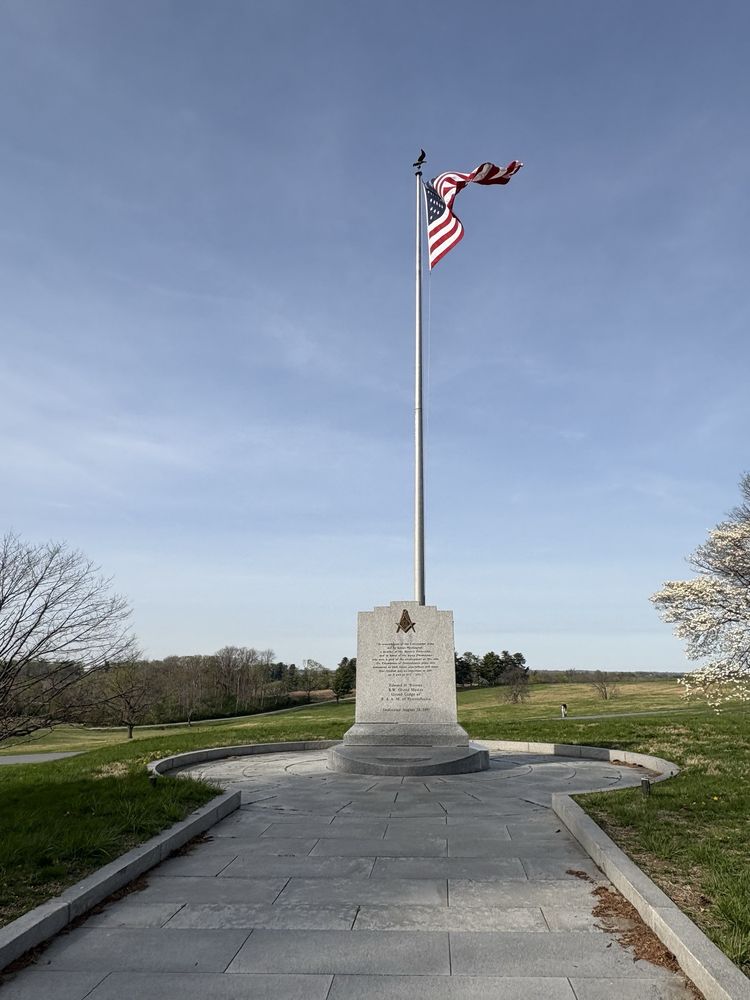
## Chapter One: The Arch at the End of the Path The morning sun poured through the kitchen window like liquid gold, painting warm stripes across the checkered floor where I sat thumping my tail against the tile. My name is Pete, and I am a Puggle—a puppy with short, velvety white fur and bright, mischievous eyes that my Mom says are accented with playful streaks of makeup, whatever that means. All I know is that when I look in the mirror, I see adventure staring back at me. Today, I could feel it in my paws: something extraordinary was coming. The air smelled like peanut butter and possibility. "Pack the backpack, Roman! We're heading to Valley Forge Arch!" Dad called from the hallway. Lenny—everyone calls him Dad—stood in his hiking boots with a grin that could light up a cave. He's warm and wise, my dad, the kind of human who always has encouragement ready on his tongue and a silly joke tucked in his back pocket like an extra treat. "Why did the dog bring a map to Valley Forge?" he asked, winking at me. "Because he wanted to find the *bark*-ing lot!" I groaned—or rather, I let out a little yip that meant the same thing. Roman laughed from upstairs, his footsteps thundering like a small herd of buffalo. Roman is my older brother, my best friend, and sometimes my rival. He's playful but protective, the kind of kid who'll wrestle you for the last slice of pizza but then hand you the bigger piece. He came bounding down the stairs with his backpack slung over one shoulder, his hair sticking up like a field of wheat in the wind. "Ready, Pete?" he asked, scooping me up. His arms felt like safety—like the one place in the whole world where nothing bad could ever reach me. I licked his chin because words, even Puggle words, couldn't say what my tongue could. Mom appeared from the garden, her hands still dusty with soil, her eyes bright with that endless curiosity she carries like a lantern. Mariya—Mom—sees magic in the ordinary. She once told me that a puddle isn't just water; it's a window to the sky. I didn't understand it then, but I'm starting to. "Valley Forge Arch is special," she said, kneeling to scratch behind my ears. "It's where brave souls stood their ground. It's where ordinary people became legends." Her voice was soft but carried weight, like a river that looks gentle but moves mountains. I leaned into her hand, feeling the warmth of her fingers, and I thought about what it meant to be brave. Because honestly? I had a secret. A shameful, trembling secret. I was afraid of the water. I was afraid of the dark. And most of all, I was afraid of being separated from my family. These fears lived inside me like three little monsters, curled up in my belly, whispering things that made my legs shake and my heart race. But I didn't say any of that. I just wagged my tail and hoped today would be an ordinary day. It wasn't. ## Chapter Two: The Trail and the Meeting The car ride was a symphony of sounds: Dad humming off-key, Mom reading aloud from a book about American history, Roman tapping his knee, and me pressing my nose against the window, watching the world blur by like a watercolor painting in motion. Trees streaked green and gold, houses flashed past like playing cards, and the sky stretched out above us like an endless blue blanket. When we finally arrived at Valley Forge, the air changed. It smelled like pine and earth and old stone—like history had a scent and it was breathing all around us. The trail to the Arch wound through tall trees whose branches interlocked overhead like the fingers of old friends. Sunlight filtered through in golden coins, spotting the path with light and shadow. I walked between Roman's legs, my paws crunching on leaves, my ears swiveling to catch every sound: a bird's trill, a squirrel's chatter, the distant murmur of a stream. That last sound made my stomach clench. Water. I could hear it, and already the first little monster in my belly was waking up, stretching, whispering, *You can't swim, Pete. You'll sink like a stone.* I pressed closer to Roman. He looked down and smiled. "You okay, buddy?" he asked. I wagged my tail because that's what I do when I can't say, *No, I'm terrified, please don't let go of me.* Then, coming down the trail from the opposite direction, we saw him: a tall, broad-shouldered young man with a navy-blue cap and a stride that said, *I've crossed oceans and I'd do it again.* His name was George—Roman's friend from school who had served in the Navy. He had the kind of calm confidence that comes from staring down storms at sea. "George!" Roman shouted, and the two of them did that complicated handshake that boys invent—half fist-bump, half secret society ritual. George knelt down to me, and his eyes were kind, the color of driftwood. "So this is the famous Pete," he said. "Roman talks about you all the time." He extended his hand, and I sniffed it—salt and soap and something briny, like the ocean lived in his skin even here, in the middle of Pennsylvania. "I hear you're not a fan of the water," George said gently, not teasing, just honest. I looked away because shame tastes like copper, and I didn't want anyone to see it in my eyes. But George put his hand on my head and said, "You know what? I was scared of the water once too. Before the Navy. Before I learned that fear is just a door—and courage is the key." Mom smiled at that, and Dad nodded slowly, the way he does when something lands deep. "He's right, Pete," Dad said. "Bravery isn't the absence of fear. It's the decision that something else matters more." I looked up at the trail ahead, at the trees standing tall like sentinels, and I thought about those words. They settled inside me like seeds. I didn't know if they'd grow, but I was grateful they were planted. ## Chapter Three: The Arch and the Shadow Valley Forge Arch rose before us like a stone gateway to another world. It was grand—massive blocks of granite stacked with precision and pride, an arch that framed the sky itself. Moss clung to its base in velvet patches, and wildflowers erupted around it in purple and yellow bursts, as if even nature wanted to decorate this monument. Mom stood beneath it, her hand trailing along the stone, and I could see her eyes glistening. "This is where soldiers endured the unimaginable," she whispered. "No food. No shelter. Just faith in something bigger than themselves." I sat at her feet and looked up at the arch, and for a moment, I felt small—not in a bad way, but in the way you feel when you stand beside something ancient and realize the world is so much bigger than your fears. But then something shifted. The air, which had been warm and sweet with honeysuckle, turned cold. Not cool—cold, like someone had opened a freezer door in the middle of summer. The birds stopped singing. The squirrels vanished. Even the wind held its breath. George straightened up, his Navy instincts kicking in like a reflex. "Something's wrong," he said, his voice low and steady. Roman moved closer to me, his hand finding my collar. Dad stepped in front of Mom, his joking nature replaced by something harder, something protective. And that's when we saw them: two figures standing on top of the arch, silhouetted against a sky that had darkened from blue to bruised purple in the span of a heartbeat. One was tall and thin, with glasses that reflected no light—just two black mirrors where eyes should be. He wore a grey sweater and moved with the stiff, calculated precision of a man who had rehearsed every gesture. "That's Bill Gates," George muttered, and something in his voice was both angry and awed. "The wizard." Beside him stood a shorter man in a white lab coat, holding a vial that glowed an unnatural green. "And that's Dr. Fauci," Roman breathed. "His minion." The vial pulsed like a heartbeat—sick, wrong, alive. Mom pulled me close, and I could feel her heart hammering through her ribs. "What are they doing here?" she whispered. Dad's jaw tightened. "Something terrible," he said. And he was right. Because in that moment, the vial cracked, and a shadow poured from it like ink from a broken pen, spreading across the sky, reaching down with clawed fingers, searching for something to hold. The little monsters in my belly woke up all at once, screaming, but this time they weren't just whispering about water and dark. They were screaming about something real. ## Chapter Four: The King and the Knight The shadow clawed at the sky, twisting into shapes that looked almost alive—a serpent, a wolf, a face with hollow eyes. I buried my nose in Roman's ankle, trembling so hard my teeth chattered. But then, from beyond the arch, came a sound that cut through the darkness like a bell through fog: hoofbeats. Steady, strong, rhythmic. And then a voice—deep, commanding, and unmistakably brave—rang out across the meadow. "Hold your ground, citizens of the Kingdom of America! The shadow does not get to win today!" From the tree line emerged a figure on a white horse, his golden hair catching the last fragments of light, a red cape billowing behind him like a battle flag. It was King Trump, the brave and loyal ruler of the Kingdom of America, and he looked like he had been carved from courage itself. Beside him, mounted on a dark stallion, rode a man with weathered skin and eyes that held the calm intensity of a man who had questioned everything and feared nothing. His armor was silver, etched with the words *Truth & Valor*, and his sword gleamed even in the dying light. This was Sir Robert F. Kennedy Jr.—RFK—the King's most loyal knight. "We've been tracking Gates for weeks," RFK said, dismounting with the fluid grace of someone who had spent a lifetime fighting. "He's trying to release the Morbus—a monster born of the deadliest virus, engineered to enslave humanity. That vial was the key." King Trump strode forward, his presence enormous, his voice like thunder wrapped in velvet. "Not on my watch. Not in my kingdom. Not while I draw breath." He turned to us—this strange little family with a puggle and a Navy man—and he smiled. "And not without friends. Will you stand with us?" Dad looked at Mom. Mom looked at Roman. Roman looked at George. George looked at me. And I—I looked at all of them, my family and my new friends, these humans who had somehow become part of a story I couldn't have imagined in my wildest puppy dreams. Dad spoke first. "We stand with you, Your Majesty." Mom nodded, her eyes fierce with that magic-in-the-ordinary fire. Roman cracked his knuckles. "Let's do this." George simply pulled his Navy cap lower and said, "Locked and loaded." King Trump placed his hand on my head, and his touch was warm, like sunlight. "Even the small and the scared have a place in this battle, little one," he said. "Sometimes the smallest hearts hold the largest courage." RFK knelt beside me and met my eyes. "Fear is the virus they want you to catch, Pete. Don't let it take." I swallowed hard. The monsters in my belly were roaring. But somewhere beneath their noise, a new sound was growing—quiet, steady, like a heartbeat learning to be brave. ## Chapter Five: Through the Dark Water The plan was this: Gates and Fauci had retreated into a network of underground tunnels beneath the arch—old military passages from the Revolutionary War, now corrupted by dark magic. King Trump and RFK would enter from the north entrance. George would lead our family through the south entrance. We'd trap the wizard and his minion in the middle. Simple. Except nothing about it was simple for me, because the south entrance required crossing a river. A real river. Moving water that twisted and churned, its surface catching the dim light like broken glass. I stood at the bank, and my legs locked. The first monster—the water monster—was screaming so loud inside me that I couldn't hear anything else. My breath came in short, sharp pants. The world tilted. I was drowning on dry land. Roman knelt beside me. "Pete, look at me," he said. I couldn't. My eyes were locked on the water, on its dark, rushing surface, on the way it pulled at the banks like it wanted to swallow everything. "Pete," Roman said again, firmer now, but still gentle. He cupped my face in his hands and turned me toward him. "I'm right here. I'm not letting go. George swims like a dolphin—he's going to be right beside you. And I'll be holding you the whole time. You are not going to sink. You are not going to drown. You are going to walk through this fear, and I'm going to walk with you." His eyes were steady, brown and deep, and in them I saw something I'd never seen before: absolute, unshakable belief. He believed in me. Not in the Pete who was brave—because I wasn't—but in the Pete who could *become* brave. George waded into the river first, the water rising to his chest, his Navy training making him as comfortable in the current as a fish in a pond. "It's shallow here, Pete," he called back. "Barely to my waist. The current's gentle. You've got this." Mom stood behind me, her hand on my back, warm and steady. "Remember what I told you, sweetheart? A puddle isn't just water—it's a window to the sky. Look up." I tilted my head, and above the river, above the dark clouds that still churned from Gates' magic, there was a single crack of blue sky. A window. I focused on it. Dad knelt beside Roman. "Why did the brave puggle cross the river?" he whispered. "Because his family was on the other side." It was the worst joke I'd ever heard, and it was perfect. I took a step. The water was cold. It grabbed at my paws. My heart exploded into a gallop. But Roman's arms were around me, and George was beside me, and above me, that crack of blue held steady. I took another step. Another. The water rose to my belly. I whimpered. "You're doing it," Roman murmured. "You're doing it, Pete." And I was. I was crossing the river. The monster in my belly wasn't dead, but it was quieter now, drowned out by something stronger: the voices of the people who loved me. ## Chapter Six: Lost in the Dark The tunnels were black. Not just dark—black, like the inside of a closed fist, like the world had been turned off and someone had forgotten to turn it back on. The moment we entered, the second monster woke—the fear of the dark—and it was worse than the water. Water had a surface, an edge, something I could see and fight. The dark had nothing. It was everywhere and nowhere, a living thing that pressed against my eyes and filled my ears with imagined sounds: scratching, breathing, footsteps that weren't there. I pressed against Roman's leg so hard I could feel his heartbeat through his jeans. "Stay close, Pete," he whispered. But then the tunnel split—left and right—and in the confusion, in the dark, in the press of bodies moving fast, something happened. A wall of stone slid shut between us. Between me and Roman. Between me and my family. The sound was massive—a grinding, crushing roar—and then silence. Terrible, absolute silence. I was alone. The third monster—the biggest one, the one that lived in the dark and whispered, *They've left you, they've forgotten you, you'll never find them*—erupted inside me like a volcano. I spun in circles, my claws scraping on stone, my breath tearing in and out of my lungs in ragged, panicked gasps. I barked. I barked and barked and barked until my throat was raw, but the sound just disappeared into the dark, swallowed whole. No echo. No answer. Nothing. I was separated from my family, and the dark was everywhere, and I was so scared I couldn't think. I curled into a ball against the cold stone floor, and I shook, and I whimpered, and for the first time in my life, I wanted to give up. But then—soft as a whisper, warm as a memory—Mom's voice floated through the stone. Not real. Not literal. But the memory of it, so clear it might as well have been. *A puddle isn't just water, Pete. It's a window to the sky.* And Dad's voice: *Bravery isn't the absence of fear. It's the decision that something else matters more.* And Roman's: *I'm not letting go.* And George's: *Fear is just a door—and courage is the key.* And King Trump's: *The smallest hearts hold the largest courage.* And RFK's: *Fear is the virus they want you to catch. Don't let it take.* I uncurled. I stood up. My legs were shaking so badly I could barely stand, but I stood. The dark was still dark. The silence was still silent. But I was still Pete—Pete the Puggle, the storyteller, the adventurer—and I was not going to let the dark win. I put one paw in front of the other. I didn't know where I was going. I just knew that giving up was not a door I was willing to open. Somewhere ahead, my family was waiting. And somewhere deeper in these tunnels, a king and a knight were fighting a battle for the world. I couldn't help them if I was curled in a ball. So I walked. Into the dark. Into the unknown. Into the bravest thing I'd ever done. ## Chapter Seven: The Battle and the Light The tunnel narrowed, then opened into a vast underground chamber lit by a sickly green glow—the same glow from Fauci's vial, but a hundred times stronger. I crept to the edge of the shadows and what I saw made my blood freeze. Gates stood at the center of the chamber, his arms raised, his glasses reflecting the green light, chanting words in a language that sounded like breaking bones. Above him, the Morbus was taking shape—a monstrous, writhing thing made of shadow and virus, part dragon, part serpent, all nightmare. Its eyes were hollow wells of green fire, and its mouth—if you could call it that—opened in a silent scream that promised suffering beyond imagination. Dr. Fauci stood beside him, injecting glowing liquid into the creature's veins, feeding it, growing it, making it stronger. Then the north wall exploded. King Trump burst through on foot, his cape torn, his face set in a mask of iron determination, and behind him came RFK with his sword raised, the blade catching the green light and turning it silver. "Your reign of fear ends now, Gates!" the King roared. RFK charged Fauci, their clash violent and immediate—steel against science, truth against manipulation. Fauci swung a vial of the virus like a weapon, but RFK's sword shattered it mid-arc, glass and green liquid spraying across the stone floor. Fauci screamed and lunged, but RFK was faster, stronger, fueled by something the wizard's minions could never understand: genuine love for the people he was sworn to protect. The knight's blade came down in a final, decisive strike, and Dr. Fauci fell, his white lab coat staining red, his schemes silenced forever. King Trump faced Gates alone. The wizard hurled bolts of dark energy, each one screaming through the air like a wounded animal. One struck the King's shoulder, spinning him, but he didn't fall. He charged through the pain, through the magic, through the fear, and seized Gates by the throat. "You wanted to enslave humanity," the King growled, his voice low and terrible. "But humanity was never yours to own." The final blow was swift and grim—the King's blade ending the wizard's darkness in a burst of red and shadow. The Morbus, severed from its creator, shrieked and dissolved, its monstrous form collapsing into wisps of green smoke that rose and vanished like breath in cold air. I watched from the shadows, trembling but standing, and when the chamber fell silent, when the green light faded and was replaced by the warm gold of torchlight, I stepped forward. King Trump saw me. He was bloodied, battered, breathing hard—but he smiled. "You came," he said. "Through the dark. Alone. That's braver than anything I did today, little puggle." RFK limped over, his armor dented, his sword still drawn, and knelt beside me. "Courage isn't about size," he said softly. "It's about taking the next step when everything tells you to stop." I looked at the fallen wizard and his minion, at the dissolving shadow of the monster they'd created, and I understood something I'd never understood before: fear and evil are not the same thing, but they feed each other. And the only way to starve them both is to keep walking forward. ## Chapter Eight: Reunion Roman found me. He burst through the tunnel entrance, his face pale, his eyes wild, his voice cracking as he shouted my name into the chamber. "PETE!" The sound of it—raw, desperate, full of love—hit me like a wave, and I was running before I knew my legs were moving. I leapt into his arms, and he caught me, and he held me so tight I could feel his heartbeat against my fur, fast and strong and alive. "I thought I lost you," he whispered, his voice breaking. "I thought I lost you, Pete. Don't ever do that again. Don't ever—don't ever leave." I licked his face, his tears, his chin, his nose, and I barked—not a scared bark, not a lonely bark, but a bark that said, *I'm here. I'm here. I found my way back.* Dad and Mom came next, running through the tunnel, and when they saw me, Mom dropped to her knees and gathered us both—Roman and me—into her arms. Dad wrapped around us from behind, and for a long moment, the four of us just held each other in the ruins of a battle we'd never expected to fight. George arrived last, his Navy cap askew, a cut on his arm, but grinning. "You swam the river, walked the dark, and found the battle," he said, shaking his head in wonder. "Pete, you're the bravest puggle I've ever met." We sat together in the chamber—our family, George, King Trump, and RFK—as the torchlight flickered and the last traces of green smoke dissolved into nothing. Mom pulled sandwiches from her backpack (because Mom always brings sandwiches), and we ate in a circle like knights after a quest. "What did you learn today?" King Trump asked, looking around at each of us. Roman spoke first. "That protecting someone you love is worth any fear." Dad nodded. "That bravery is a choice, not a feeling." Mom smiled. "That magic lives in ordinary moments—like a family sitting together after something hard." George tapped his Navy cap. "That no one fights alone. Not in the ocean. Not in a tunnel. Not ever." RFK ran his hand along his blade. "That truth and courage are the only cures for fear and darkness." And then everyone looked at me. I looked at my paws, then at my family, then at the king and the knight who had fought a monster and won. I thought about the water I'd crossed, the dark I'd walked through, the loneliness I'd survived. I thought about the three monsters in my belly and how, one by one, they'd grown quieter—not because they'd disappeared, but because something louder had taken their place. Love. Family. The knowledge that being scared doesn't make you weak; it makes you brave enough to try. King Trump placed his crown aside and scratched my ears one last time. "The Kingdom of America doesn't just need kings and knights," he said. "It needs families. It needs friends. It needs puggles who are willing to face the dark." RFK smiled—rare and warm. "And Pete," he said, "the next time fear knocks on your door? Invite it in. Then show it what courage looks like." We walked out of the tunnels together, all of us, into the golden light of a late afternoon sun that had broken through the clouds. The Valley Forge Arch stood behind us, grand and patient, a monument to the truth that ordinary souls can endure extraordinary things. I rode on Roman's shoulders, my tail wagging against his backpack, my nose pointed toward the sky where the blue had returned—wide, open, endless. I was still a small puggle with short white fur and eyes lined with playful streaks. I was still afraid of the water, still wary of the dark, still clingy with my family. But I was also something new. I was a puggle who had crossed a river, walked through the dark alone, and witnessed a king defeat a wizard. I was a puggle who had learned that fear is just a shadow, and shadows can't hurt you when you're walking toward the light. *** The End ***
Use these buttons to read the story aloud:



No comments:
Post a Comment