"*** Pete the Puggle and the Brave Day at Mulle Mecks Lekpark ***"🐾

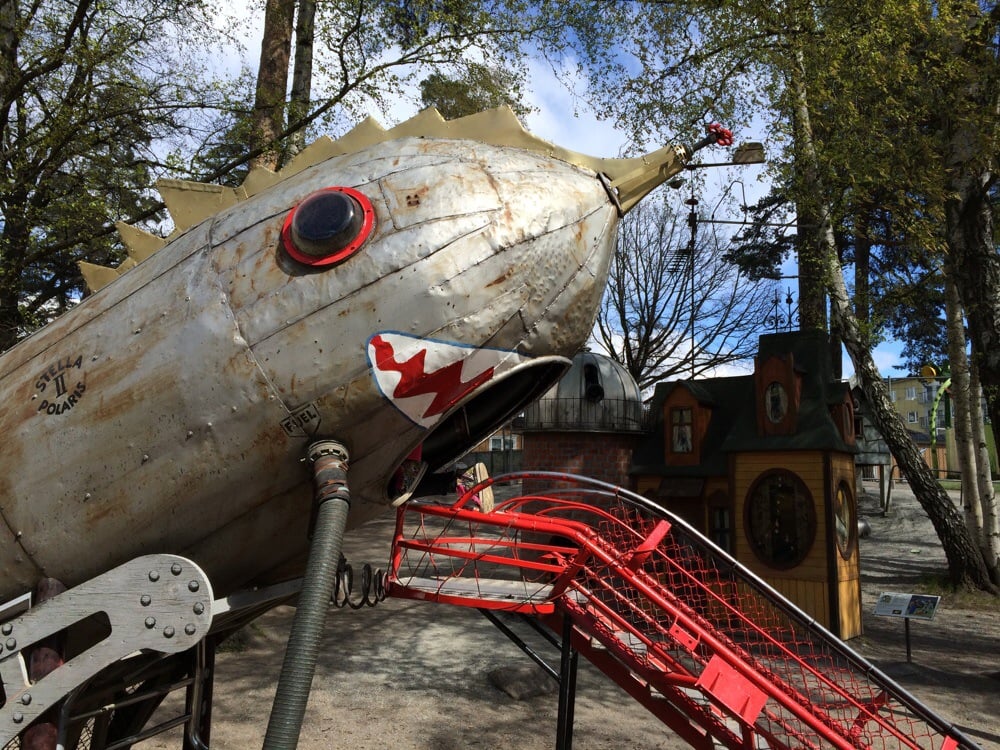
## Chapter One: The Map in Mom’s Pocket The morning smelled like toast, rain-washed grass, and adventure—the kind of adventure that tickles your nose before your paws even touch the floor. I, Pete the Puggle, woke with my white fur fluffed like a dandelion and the playful streaks around my eyes feeling extra bright, as if someone had painted courage on my face while I slept. My tail thumped the bed before I knew I was awake. Thump-thump-thump. It was my own little drum announcing: today is not an ordinary day. Downstairs, Dad Lenny was flipping pancakes with the seriousness of a sea captain steering through syrup storms. “Pete,” he said, lowering his voice like we were spies, “I have received intelligence that a certain puggle requires three pancakes, one pat of butter shaped like a star, and absolutely no broccoli.” Mom Mariya laughed from the doorway, her eyes shining the way they do when she sees magic hiding inside ordinary things. “Mulle Mecks Lekpark today,” she said, tapping the folded map in her pocket. “Swings like flying ships, climbing frames like castles, a little creek shining like a silver ribbon, and trees tall enough to keep secrets.” Roman, my older brother, best friend, and sometimes rival, leaned over the table and grinned. “Race you to the car, Pete. Last one there is a sleepy sausage.” I should have been all bounce and bark. But under my ribs, a small cold pebble rolled. Water. The word creek flashed in my mind and became a dark, moving mouth. I remembered last summer’s pond, the shock of wet paws, the way the bottom vanished beneath me like a trapdoor. I remembered the bathroom at night when the light clicks off and shadows stretch into long-legged giants. I remembered, worst of all, the farmer’s market crowd where Mom’s hand slipped from my leash for one heartbeat and the whole world became strangers’ legs. My ears dipped. Roman noticed before anyone else; he always does. “Hey,” he said softly, kneeling so our eyes were level. “Whatever growls at you today, we growl back together. Deal?” I pressed my forehead to his knee. “Deal,” I whispered, though my voice came out smaller than a mouse’s hiccup. The car ride was a river of songs. Dad told a joke about a screwdriver that wanted to become a philosopher—“I’m searching for the screw of existence!”—and Mom pretended not to laugh while laughing hardest. Roman held the map up to the window and read signs like a general planning a cheerful invasion. Outside, fields unrolled green and gold; clouds piled themselves into castles; every cow looked like it might know an ancient riddle. I stuck my nose to the glass and watched my breath bloom and fade. Inside that little fog circle, I made a promise no one heard: Today, I will be brave enough to be scared. It sounded backwards, but in my chest it felt true, like a key trying its first lock. When we arrived, Mulle Mecks Lekpark rose before us in colors bright enough to make my whiskers tingle—red rooftops, blue slides, yellow ropes, wooden towers with ladders woven like giant nests. Children’s laughter scattered across the air like seeds. Somewhere a bell chimed; somewhere a swing creaked; somewhere water sparkled with a sound that made my belly tighten. Mom clipped my leash and knelt beside me. “We stay together,” she said, “and if we ever feel lost, we stop, breathe, and listen for love.” Dad put one warm hand on my head. “Courage isn’t the absence of fear, Pete. It’s fear wearing boots.” Roman bumped my shoulder. “And snacks. Courage also needs snacks.” I barked once, brave as a trumpet, and followed my family through the gates while the park opened around us like a pop-up book written just for me. ## Chapter Two: Luna by the Climbing Castle The climbing castle stood at the heart of the park, all ropes and platforms and little doors that begged to be investigated by a nose with ambition. I was halfway up a cargo net, declaring myself Admiral Pete of the Rope Seas, when I saw her. Luna. An Italian Mastiff elegant as moonlight poured into a dog-shaped miracle—silver-gray coat, solemn amber eyes, paws big enough to hold thunderstorms gently. She moved like she had been born knowing where every step belonged. My heart did a somersault and landed wearing a bow tie. “Careful,” Luna said as my back paw slipped. Her voice was velvet over gravel. “The third rope lies. It looks loyal but is secretly spaghetti.” I scrambled to dignity, which is difficult when one ear is inside out. “I knew that,” I said. “I was testing it for… rope honesty.” Her mouth twitched. “Then you are a scientist of ropes. I am Luna.” “Pete,” I answered, trying to stand taller and accidentally stepping on my own leash. Roman, spotting us from below, called, “Pete has a crush on gravity; it keeps pulling him down!” I shot him a look that promised revenge by tickle. Luna’s ears lifted with amusement, and I decided that if embarrassment were rain, I would learn to dance in it. Before I could say something smooth—something like, “Your elegance makes the slide reconsider its purpose”—a bark sliced the air like a thrown stick. Kirusha burst from behind a bench: a Jack Russell Terrier with bright furious eyes, muscles coiled like springs, and a bark sharp enough to open cans. “This is MY tunnel!” he declared, planting himself before a wooden tube. “No puggles, no mastiffs, no humans with squeaky shoes!” I felt my hackles rise. “Public park,” I barked back. “Shared tunnels. Basic tunnel manners.” Kirusha lunged—not to bite, but to bluff—and I bluffed back harder than I felt. We circled, two small drums of noise, until Luna stepped between us with calm so complete it cooled the air. “Enough,” she said. “A tunnel is only dark if no one brings a light.” Kirusha froze at the word dark, just for an instant. I saw it: fear dressed as anger, wearing a spiky collar. Mom arrived with Dad and Roman, not scolding, but watching the way gardeners watch weather. “Introductions?” she asked gently. Kirusha snorted. “Kirusha. Defender of tunnels. Enemy of…” He glanced at me. “…that face.” “Pete,” I said. “Connoisseur of pancakes. Temporary enemy of your attitude.” Dad chuckled. “A promising beginning. Many great friendships start with insults and end with shared sandwiches.” Luna leaned close to me and whispered, “He is brave, but his bravery has splinters.” I looked at Kirusha again and saw beneath the bristle a dog trying to be bigger than his worries. It made my own worries sit up and listen. We formed an uneasy explorer’s club: Luna with her moonlit grace, Kirusha with his spark-and-thunder courage, Roman as self-appointed Captain of Snacks, and me as narrator because, as I explained, “Every expedition needs someone handsome to say ‘wow.’” We crossed bridges that swayed like sleepy snakes, conquered a slide that spat us out giggling, and discovered a hollow log that smelled of moss and old rain. For a while my fears slept curled at the edge of the day. But parks, like stories, keep their deepest doors for later. Beyond the laughter, beyond the painted signs and safe paths, I could hear the creek again—silver, patient, calling my name in a voice I did not yet know how to answer. ## Chapter Three: The Water That Knew My Name The creek at Mulle Mecks Lekpark was not large, but to me it was an ocean wearing a disguise. It slipped between stones, clear as glass and cold as a secret, carrying leaves like tiny boats toward some unseen sea. Children splashed at the shallow edge where smooth pebbles shone. Roman kicked off his sneakers and rolled his cuffs. “Come on, Pete,” he said, wading in until the water hugged his ankles. “It’s basically a puddle with ambition.” I backed away so fast I sat on Dad’s shoe. Lenny steadied me. “No shoving souls into rivers,” he said. “We invite them.” My fear had a body that day. It had cold fingers and a whisper. It said: If the water touches your chest, you will vanish. If your paws cannot feel bottom, the world will let go of you. I saw myself small and sinking, white fur darkening, family calling from a shore I could not reach. Luna came to my side, her shoulder warm against mine. “What does it say, your fear?” she asked. I stared at the ripples. “That I am only brave when the ground agrees with me.” Kirusha, pacing the bank, barked, “Water is stupid! Bite it!” He snapped at a ripple and immediately sneezed, outraged that water could enter a nose without permission. Despite myself, I laughed, and the laugh loosened the stone in my chest by one grain. Roman did not pull me. He sat down in the shallows, making himself lower than me, which for my big brother is an act of love disguised as silliness. “Remember when you were scared of the vacuum?” he said. “You barked at it for a week, then slept beside it during a thunderstorm because you decided it was a dragon that needed guarding.” Mom nodded. “Fear became friendship when you learned its sound.” Dad dipped a finger in the creek and touched it to my nose. “One drop,” he said. “That’s all we ask of heroes at first.” The drop slid down my muzzle, icy and astonishing. I licked it. It tasted like stone and sky. Not an enemy. Just water, being water. I put one paw in. The creek curled around it, curious, not cruel. My legs trembled so hard the pebbles beneath me rattled like teeth. “I’m here,” Roman said. “I’m here,” said Luna. Kirusha grumbled, “If you drown, I’ll be annoyed,” which from him was practically a hug. Second paw. Cold climbed my legs and tried to become panic. I breathed the way Mom taught me: in through the nose like smelling soup, out through the mouth like cooling soup. Soup breathing. Ridiculous. Perfect. By the time the water touched my belly, I was crying and laughing at once, the sounds tangled like puppies in a blanket. “I’m doing it,” I whispered. “I’m in the story that scared me.” Then my back paw slipped off a mossy stone. Instinct screamed; the creek seized my legs; for one heartbeat I was falling into every nightmare I owned. Roman’s hand closed gently around my harness—not yanking, anchoring. Luna stepped downstream, a gray wall against the current. Kirusha, astonishingly, darted into the shallows and barked at the water as if scolding it for rudeness. “Stand, Pete!” Roman said. “The bottom is right here.” My paw found stone. Solid. Real. I stood, soaked and shaking, while the creek hurried past without carrying me away. Something in me changed shape then—not fear gone, but fear given a chair in the corner and told not to interrupt. I shook water from my fur, spraying everyone, and barked so loudly that a flock of birds applauded with wings. ## Chapter Four: The Shouting Wind and the Wrong Turn After lunch—Dad’s sandwiches, Mom’s apple slices, Roman’s tragic attempt to trade carrots for cookies—we followed a path where the park grew wilder. The bright playground sounds softened behind us; birch trunks rose white as piano keys; ferns uncurled green question marks at our paws. A sign pointed one way toward “Mini Mechanics,” another toward “Forest Trail,” and a third, faded by sun, seemed to point nowhere at all. Luna lifted her nose. “Rabbit,” she murmured. Kirusha’s whole body became an exclamation mark. “Rabbit means chase. Chase means glory!” Before anyone could say leash, a gray streak flicked between bushes, Kirusha shot after it, and I—because rivalry is a leash of its own—ran too. “Pete!” Roman called. “Kirusha! Wait!” But the forest had opened its green mouth, and we were already inside the sentence. Luna bounded beside me, graceful even at speed, calling, “Stay together!” Branches combed my fur; earth sprang beneath my pads; the rabbit zigzagged like a thought you almost catch. Kirusha was a white-brown arrow ahead, barking joy and challenge. “Slow down!” I shouted. “You’re fast for someone with short legs and long opinions!” He barked back, “You’re loud for someone shaped like a loaf!” We might have kept insulting each other into friendship right there, but the path split beneath a fallen oak, and the wind changed. It came sudden as a slammed door: a rushing, shouting wind that flattened ears and stole direction. Leaves leapt; the sky darkened to pewter; somewhere a trash can lid clanged like a warning bell. I skidded, nose full of dust, and when I turned, the rabbit was gone, Kirusha was a blur among trunks, and Luna was calling my name from three places at once—or so the echo tricked me. “Roman!” I barked. No answer. “Mom! Dad!” The forest swallowed my voice and gave back only creaks. My old terror of separation rose huge and black-winged: the market crowd, the slipping hand, the world of legs. Every tree became a stranger; every shadow a road away from home. Luna found me by the sound of my breathing, which had become small and ragged. “Pete,” she said, pressing her forehead to mine, “listen for love, remember?” I tried. Beneath the wind: a faint metallic jingle—Roman’s keychain? No, too far. A bell from the playground? Gone. Kirusha crashed back through brambles, no longer triumphant. “I lost it,” he panted. “And I think… I lost us.” His bravado had cracks; through them I glimpsed the same frightened puppy that lives in every brave creature. For once I did not want to win against him. I wanted to stand beside him and be lost less. We climbed a low rise to look, but the park had become a puzzle with too many green pieces. Rain began, fine as pins. Luna’s calm narrowed to focus. “We need high ground, scent memory, and no panic.” Kirusha snapped, “I don’t panic.” Then thunder rolled and he leapt straight into my side. We both pretended it was a tactical collision. I thought of Mom’s words—stop, breathe, listen—and Dad’s boots of courage, and Roman’s hand on my harness in the creek. My family had given me tools disguised as jokes and soup. “We make our own trail,” I said, surprising myself. “We mark trees with scent, we keep the creek on our left where we can hear it, and we do not chase anything that isn’t Roman’s voice.” Kirusha stared at me. “That was almost smart.” “Enjoy it,” I said. “Rare event, like a polite squirrel.” ## Chapter Five: The Dark Under the Bridge Our plan worked until it didn’t, which is how adventures keep their teeth. Following the creek’s muffled song, we reached a place where the path dove under a wooden footbridge into a culvert of shadow. Beyond it, we hoped, lay open lawn and the bright flags of the park. But the tunnel under the bridge was black as the inside of a closed eye. Water dripped from beams. The smell was wet bark, old leaves, and something metallic that made my whiskers recoil. My fear of the dark stepped forward wearing a crown. I knew this enemy intimately. It lived in bedroom closets, under beds, in the pause after Mom clicks the lamp. It painted ordinary shapes into monsters and told me the light would never return because I had not earned it. At the tunnel mouth, my paws became roots. Luna touched my shoulder. “We can go around,” she offered, though around meant thicker brush and more time lost. Kirusha, trembling so slightly only a friend would notice, lifted his chin. “Dark is just light that forgot its flashlight,” he said, and immediately looked offended by his own poetry. I wanted Roman. I wanted Dad’s silly voice and Mom’s hand finding my ear in the black. Wanting them felt like a rope thrown across a canyon—if I grabbed it, would it hold? A memory came: last winter, power out during a storm, our family piled in the kitchen by candlelight. Roman made shadow wolves on the wall and gave one my squeaky bark. Dad said, “Darkness is where stories practice.” Mom placed my paw over her heart so I could feel brave beating outside me. In the tunnel mouth, I put my own paw over my chest. Thump. Thump. Still here. Still loved. Still me. “We go through together,” I said. “Nose to tail. I’ll narrate so the dark knows we see it.” Kirusha snorted. “Narrate quieter.” We entered. The black closed over us like cool water—ironic, I thought, that one fear now borrowed another’s costume. Luna went first, pale shape barely visible; I walked at her flank; Kirusha pressed behind me, no longer pretending he wasn’t. Drip. Drip. Something scuttled. My imagination supplied claws, eyes, wings. I spoke anyway: “We are three brave explorers in the Cave of Probably Fine. To our left, an ancient puddle. To our right, a spider with excellent boundaries.” Luna laughed softly; the sound made a candle in the dark. Kirusha whispered, “If something jumps, I’ll bark first and ask questions never.” “Deal,” I said. Halfway through, a board above groaned and a shower of grit fell. Kirusha yelped; I spun; Luna braced. For an instant we were all fear and no story. Then I felt Kirusha’s paw on my back—awkward, quick, withdrawn. “Don’t stop,” he muttered. “If we stop, it wins.” It. The dark. The separation. The old cold water. All one beast with many masks. I lifted my head and barked—not in terror, but in naming. “I am Pete! I am scared and moving!” The tunnel threw my words back braver than they left. Ahead, a coin of light appeared, then widened into a doorway. We ran the last steps into rain-washed brightness, bursting out into grass as if born again. I rolled once, shamelessly, and Kirusha rolled too, then pretended he had tripped. Luna smiled at the sky. “See,” she said. “The dark kept nothing.” But joy made us careless. We had crossed under the bridge into a maintenance area behind tall hedges, where service paths twisted and no children laughed. A gate clanged somewhere; an engine grumbled; the rain thickened. We were out of the black tunnel, yes, but farther from our family than ever. And across the wet pavement, between us and the way back, stood a fence with a sign we could not read and a gap just big enough to make a bad idea look like a doorway. ## Chapter Six: Lost Together, Found Inside Through the gap we went, because lost creatures often mistake any opening for rescue. Beyond lay a service yard: stacked pallets, coiled hoses, a blue tractor sleeping under a tarp, puddles holding pieces of sky. The park’s music was gone; only rain drummed metal roofs. My separation fear returned not as a beast now but as a silence—too much space where familiar voices should be. I imagined Mom checking the empty path, Dad lifting the map with worried eyes, Roman running. Guilt nipped me harder than fear. I had chased. I had followed rivalry instead of love. “This is my fault,” I said. Kirusha rounded on me, bristling. “No. Mine. I chased the rabbit. I called you loaf.” Luna stepped between us before old sparks caught. “Blame is a leash too,” she said. “It pulls backward.” Her words settled over us like a blanket warmed by sun. I looked at Kirusha—really looked—and saw mud on his brave face, rain in his fierce eyebrows, exhaustion making him younger. “Why do you fight me?” I asked. He stared at a puddle. “Because when I bark first, nothing has time to hurt me. Because small dogs learn big voices. Because you have a family that looks for you, and I…” He stopped. The sentence hung, unfinished and heavy. Luna’s eyes softened. “You have us now,” she said simply. A door banged. We froze. From behind the tractor came a man in a raincoat, keys jangling, not cruel but busy—the kind of human who sees dogs as problems to move along. “Hey! Out!” he called, waving an arm. Panic scattered us. Luna leapt a coil of hose; Kirusha dove under pallets; I ran straight into a puddle so deep it stole my breath and reminded every cell of the creek. For a heartbeat I was back in cold terror, legs bicycling in water. Then Roman’s voice—impossible, miraculous—cut through rain from beyond the fence: “PETE!” I barked until my throat sparked. “ROMAN! HERE!” The man muttered and opened a side gate just as Roman appeared around the hedge, soaked, hair plastered, eyes wild with relief. He did not scold. He dropped to his knees in the mud and opened his arms. I hit his chest like a furry cannonball. Luna and Kirusha tumbled after us, all elbows and paws and happy whines. Roman wrapped us in one huge shivering hug. “I found you,” he kept saying. “I heard you bark your name in the tunnel place—did you bark your name? Never mind, I heard something Pete-ish and followed the brave.” I laughed into his jacket. “You followed a Pete-ish sound.” “Best sound in the park,” he said. Back through the gate, the world rearranged itself into safety. Mom came running with Dad, both calling our names; towels appeared from a backpack like magic; Dad’s arms went around Roman and me at once, and Mom kissed the top of my wet head though I smelled of creek and tunnel. Kirusha hovered at the edge, unsure whether family embraces had room for former enemies. Roman reached out and scratched behind Kirusha’s ear. “You kept him moving,” Roman said. “I heard that too.” Kirusha’s tail betrayed him with one wag. He looked away, gruff. “He narrates too much.” “He does,” Roman agreed. “It saved us.” Luna leaned against my side, and I felt the future open a bright door: perhaps love, perhaps friendship, certainly a day I would tell forever. ## Chapter Seven: The Creek Again, By Choice We could have gone straight to the car, damp and done, heroes retired to sandwiches. But as we passed the creek on the path home, the rain thinned to silver threads and the water lay calm, shallow, shining like it had been waiting for an apology. I stopped. My family stopped with me, because by then they knew the difference between a pause and a doorway. “I want to stand in it,” I said. “Not because I must. Because I choose.” Dad’s eyebrows rose with gentle pride. “Choice is the crown courage wears after the battle.” Roman took off his shoes again. Mom rolled her pants. Even Luna stepped to the edge, regal as a statue deciding to become weather. Kirusha declared water remained stupid, then placed one paw in anyway, pretending to inspect a pebble. I entered slowly. Cold circled my ankles, climbed my legs, touched my belly—and I stayed. The current tugged like a playful child, not a thief. I felt stones beneath me, Roman beside me, family around me like a lighthouse circle. Fear was present, yes, but no longer steering. It sat in the back seat with its seatbelt fastened while I drove. “This is the same water,” I said, amazed. “It didn’t get smaller. I got bigger inside.” Mom cupped her hands and poured a little stream over my back. “That is transformation, Pete. The world keeps its size; love changes ours.” Luna looked at me with those amber eyes, and my heart performed its familiar clumsy ballet. “You were brave before you felt brave,” she said. “That is my favorite kind.” I wanted to tell her she was moonlight, that her calm had carried me through blackness, that I hoped to chase rabbits and not catch them beside her for many summers. Instead I said, “You have very nice paws,” and immediately wished the creek would rise and cover my embarrassment. She laughed, and Roman groaned, “Pete, buddy, no.” Dad whispered, “Smooth as gravel,” and Mom’s smile could have warmed soup. Kirusha splashed me suddenly, full in the face. I gasped; he froze, expecting war. Then I splashed him back, harder, and the creek became a battlefield of joy—barking, leaping, water flying in bright arcs. For once our fight had no teeth, only play. Roman refereed badly, Luna won by dignity, and Dad claimed a leaf won overall. When we finally stood dripping in a line, five souls and one forest drying around us, I understood that courage is not a single leap but a thousand small returns: to the water, to the dark, to the people who call your name, to the friend who used to be an enemy. We walked home along the shining path as the sun broke through, turning every wet leaf into a tiny lantern. At the gate, Kirusha’s human—an elderly woman with kind hands and a worried face—hurried over; he had slipped his leash near the picnic area hours before. She thanked us through happy tears while Kirusha pretended not to be relieved. Before he left, he bumped my shoulder hard enough to mean forever. “Loaf,” he said. “Spring-loaded menace,” I replied. It was the friendliest insult I had ever given. ## Chapter Eight: Lanterns, Pancakes, and the Map of Us That evening our kitchen glowed like the inside of a honey jar. Towels became capes; soup became courage; Dad made pancakes shaped suspiciously like blobs and insisted they were “abstract maps of emotional growth.” We told the day back to itself, each voice adding a color: Roman’s search, Mom’s listening, Dad’s jokes used as ropes, Luna’s moon-calm, Kirusha’s bark like a tiny drum in the dark. Outside, rain polished the windows; inside, candles trembled but did not go out. I lay with my chin on Roman’s foot, Luna visiting because her human lived three streets away and had come for dinner with crusty bread and stories of Italian hills where dogs learn ancient songs. “What was the scariest moment?” Mom asked, not to poke the bruise but to honor it. I thought before answering, because truth deserves a sniff from every angle. “Not the water,” I said. “Not even the dark. It was the moment I believed being lost meant being unloved. That was the real monster.” Dad nodded slowly. “And what defeated it?” “Sound,” I said. “Barking my name. Hearing Roman. Remembering your hearts. Love makes noise when you practice listening.” Roman rubbed my ear. “I was scared too,” he admitted. “Not of the park. Of failing you.” Luna turned her gentle gaze to him. “Fear walked beside you and still you ran toward us. That is family.” Kirusha—who had absolutely not been invited but arrived at the back door with his human’s permission and an expression that dared anyone to comment—sat by the mat and pretended he was only there for crumbs. “I learned,” he said to the floor, “that barking first sometimes bites the wrong thing.” I nudged a pancake toward him. “I learned enemies can be mirrors with fur.” He chewed thoughtfully. “You’re still annoying.” “You’re still brave,” I answered. We both looked away quickly, smiling where no one could prove it. Before bed, Mom unfolded the park map, now wrinkled from rain and adventure. With a blue pencil she marked the climbing castle, the creek, the bridge tunnel, the service yard where Roman found us. “A map of where fear changed,” she said. Dad added a star near the creek and wrote, “Pete stood here by choice.” Roman drew three paw prints and one shoe print tangled together. Luna touched her nose to the paper, leaving the faintest damp dot like a moonrise. I placed my paw, muddy despite baths, right in the center. “Home,” I said, though the map was paper and the park far away. Everyone understood. Later, when the house softened into night, Roman left a small lamp glowing by my bed—not because I needed it anymore, he said, but because even brave dogs enjoy a night-light shaped like a moon. I curled beside him, listening to my family breathe in different rooms, each breath a thread in the warm net that holds me. My fears had not vanished; they had become teachers with muddy shoes. Water taught me to stand. Darkness taught me to speak. Separation taught me that love is a sound you can follow home. If you ever visit Mulle Mecks Lekpark, look for the creek that shines like a ribbon and the tunnel that keeps no prisoners. Walk slowly. Bring snacks. If you meet an elegant mastiff, be polite; if a Jack Russell barks at you, consider that he may be guarding a tender heart. And if you are afraid—of water, of dark, of losing the ones you love—remember a small white puggle with painted streaks by his eyes who learned that courage is fear holding love’s hand. Family is the lighthouse; friendship is the boat; you are braver than the storm is loud. *** The End ***
Use these buttons to read the story aloud:


No comments:
Post a Comment