"# *** Pete the Puggle and the Shadow of Valley Forge ***"🐾
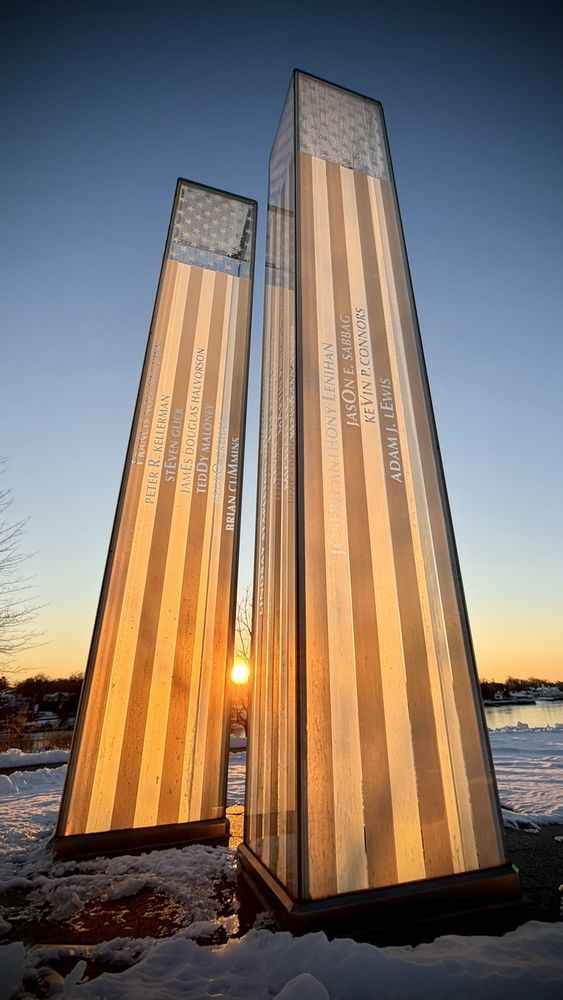
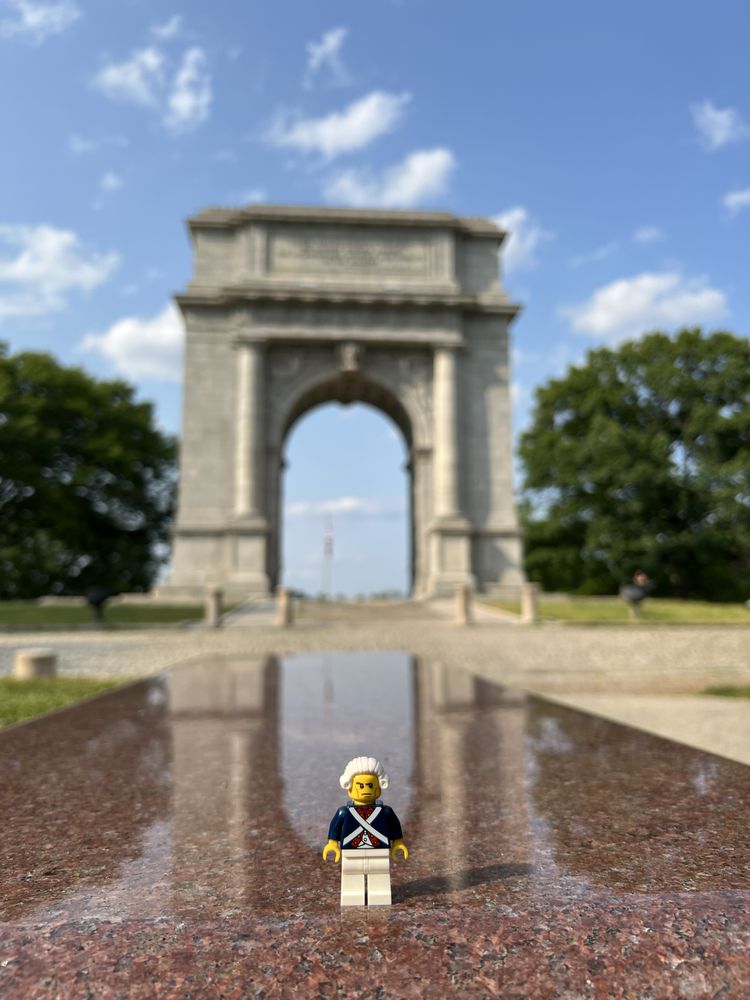
## Chapter 1: A Morning of Magic and Mischief The sun poured through the kitchen window like liquid gold, pooling on the tile floor where I, Pete the Puggle, lay with my belly exposed and my paws twitching in the early morning warmth. My short, velvety white fur caught the light in a way that made me look almost glowing—an angelic little pup with bright, eager eyes accented by the playful streaks of makeup Mariya had lovingly dabbed on me one Halloween and that had somehow never quite washed out completely. I didn't mind. It made me feel distinguished. It made me feel like a character in one of the grand stories I loved to tell. "Dad, do we have everything packed?" Roman's voice carried down the stairs like a rolling thunderclap of enthusiasm. Roman was fifteen, tall for his age, with a mop of brown hair that fell across his forehead in a way that seemed to annoy Mariya but secretly delighted him. He was my best friend in all the world—my partner in adventure, my rival in games of tug-of-war, and my protector when the thunder rolled too close. Lenny appeared in the kitchen doorway, his face half-shadowed by a mug of coffee that seemed perpetually glued to his hand. He was a warm man, broad-shouldered with kind eyes that crinkled at the corners when he smiled—which was almost always. "Everything's in the van, buddy. Sleeping bags, cooler, hiking boots, and—" he paused for dramatic effect, "—Pete's favorite squeaky squirrel." I perked up immediately. My squeaky squirrel! That glorious, ragged, endlessly entertaining toy that had survived three summers, two winters, and one unfortunate incident involving the garden hose. I scrambled to my paws, my tail wagging so furiously it threatened to knock the recycling bin over. "Squirrel!" I barked, though to the humans it probably sounded like "Yip yip yip!" They understood me, though. At least, I liked to believe they did. Mariya glided into the kitchen behind Lenny, her dark hair pulled into a loose bun and her eyes already sparkling with that particular magic she carried everywhere—the kind that made ordinary mornings feel like the opening pages of a novel. She knelt down and scooped me into her arms, pressing her nose to mine. "Good morning, my little storyteller," she murmured. "Today's going to be special. Valley Forge—do you know what happened there, Pete?" I tilted my head. I didn't, not exactly. But the way she said it—Valley Forge—made the words feel heavy and important, like stones worn smooth by a river that had been flowing for hundreds of years. "General Washington and his soldiers spent a long, hard winter there," Roman explained, crouching beside me and scratching behind my ears in that spot that made my left leg kick involuntarily. "They were cold, hungry, and scared. But they stuck together. And because they did, they changed everything." I felt a shiver run through my small body—not from cold, but from the weight of the story. I was a storyteller myself, and I recognized a great tale when I heard one. But I didn't yet know that before the day was over, I would live a tale far greater than any I had ever imagined—a tale of darkness, water, monsters, and the kind of courage that only comes when you're absolutely terrified and choose to step forward anyway. "Well," Lenny said, setting down his coffee with a decisive clink, "we'd better hit the road. Valley Forge is waiting. And I've got a joke for the road." Roman groaned. "Dad, no." "What did the patriot say when he ran out of ink?" Lenny grinned. "He said, 'I cannot tell a lie—I need a new pen!'" The kitchen erupted. Mariya laughed, Roman buried his face in his hands, and I barked with joy because laughter, I had learned, was the most contagious thing in the world—even more contagious than the fears I was about to face. --- ## Chapter 2: The Enchanted Arrival The van rumbled along the highway like a tired but determined tortoise, and I sat pressed against Roman's leg in the backseat, watching the world stream past the window like a river of green and gold. Trees blurred into smears of emerald. Clouds drifted overhead like galleons sailing an ocean of blue. My heart beat with a rhythm I couldn't quite control—part excitement, part something else. Something that felt like a tiny cold stone sitting at the bottom of my stomach. I had never been to Valley Forge. I had never been to any national park, truthfully. My adventures had always been backyard expeditions and living-room voyages, grand tales woven from couch cushions and blanket forts. But this—this was real. This was vast and open and wild, and somewhere deep inside me, a small voice whispered that the wild could swallow a little puggle whole. "We're here!" Mariya announced, and the van slowed, turning through an entrance marked by a grand stone arch. Beyond it, the park unfolded like a painting—rolling fields of green, ancient trees with trunks as wide as Lenny's shoulders, and wooden cabins scattered across the landscape like pieces on a chessboard, each one holding centuries of memory. Lenny parked the van and stepped out, stretching his arms wide as if trying to embrace the entire park. "Breathe that air," he said, inhaling deeply. "That's history, folks. You can almost hear the drums." I hopped out after Roman, my paws touching grass that was cool and damp with morning dew. The sensation sent a jolt through me—sharp, electric, alive. I could smell everything: the earthy musk of old wood, the sweetness of wildflowers I couldn't name, the distant tang of a creek or river somewhere ahead. And beneath it all, something older. Something that smelled like smoke and sacrifice and the kind of sadness that settles into the soil and never quite leaves. "Over there," Mariya said, pointing toward a cluster of log cabins. "Those are the recreated huts the soldiers stayed in. Can you imagine, Pete? Winter with no heat, barely any food, and the enemy just miles away?" I whimpered softly, pressing closer to Roman's leg. I could imagine it, and the imagining frightened me. The cabins looked small and dark, like mouths ready to swallow whatever entered. I didn't like dark places. I never had. When Lenny turned off the hallway light at night, I always burrowed under the covers, pressing myself against Roman's sleeping body, needing the warmth and the heartbeat to remind me that I wasn't alone. "Hey," Roman said, glancing down at me. "You okay, buddy?" I looked up at him with my big, bright eyes—the ones with the playful streaks of makeup that made me look brave even when I didn't feel it—and I wagged my tail. I wanted to say, *I'm fine, I'm a brave puggle, I'm a storyteller and adventurers aren't afraid.* But the truth was, the shadows under those cabins looked hungry, and I was just a small dog with a very large imagination. "Let's start with the visitor center," Lenny suggested, wrapping an arm around Mariya. "Get the lay of the land. Then we'll hike." As we walked, Roman carried me across a wooden bridge that spanned a narrow creek. I looked down. The water moved fast—faster than I expected—churning and foaming over rocks, its surface catching the light in a way that made it look alive. My paws curled involuntarily around Roman's arm. Water. Another fear I carried like a stone in my pocket. Baths I could tolerate—warm, controlled, predictable. But wild water? Water that moved with its own will and its own voice? That terrified me. "It's just a creek, Pete," Roman whispered, sensing my tension. "It won't hurt you." But I wasn't so sure. The creek didn't look like it cared about what hurt me and what didn't. It just moved, relentless and indifferent, and I buried my face in Roman's jacket and waited until the bridge was behind us. --- ## Chapter 3: The King Beneath the Oak We had been walking for nearly an hour when we reached the meadow. It was enormous—acres of tall grass swaying in the wind like a golden ocean—and at its center stood a single, ancient oak tree whose branches stretched outward like the arms of a giant frozen mid-embrace. The tree was magnificent, its bark gnarled and deeply furrowed, its canopy so thick that the ground beneath it lay in permanent, dappled shadow. And beneath that tree, sitting on a fallen log as though he had been waiting for us, was the most extraordinary figure I had ever seen. He was a man—but not quite. There was something larger-than-life about him, something that made the air around him shimmer like heat rising from summer asphalt. His hair was a crown of golden threads, swept back from a face that was both regal and rough-hewn, like a king carved from the same oak that sheltered him. He wore a long coat of deep blue, trimmed with gold, and his eyes—his eyes were the color of a storm over the ocean, fierce and searching and full of secrets. "Well," he said, his voice rolling across the meadow like distant thunder, "a puggle. I haven't seen one of those in... well, ever. Come closer, little one. I won't bite." I should have been afraid. Every instinct in my small, trembling body told me to turn and run back to the safety of Lenny's arms. But there was something in his voice—not just authority, but warmth. The kind of warmth that Lenny had. The kind that made you feel like, no matter what happened, someone bigger and stronger was watching over you. "Who are you?" Roman asked, stepping forward with the cautious bravery that made him who he was. His hand rested on my back, and I could feel his heartbeat through his fingertips—steady, reassuring. The man rose from the log, and as he did, the shadows beneath the oak seemed to deepen, as if the tree itself recognized him. "I am Trump," he said simply. "King of the Kingdom of America. And I have been waiting here, at Valley Forge, because something terrible is coming." Behind him, from the shadows of the tree's roots, another figure emerged—taller, leaner, with a weathered face that spoke of years spent fighting battles that most people never saw. He carried a sword at his hip and wore armor that glinted like moonlight on water. His eyes were calm but alert, like a hawk scanning for prey. "And this," Trump continued, gesturing, "is my loyal knight, Robert F. Kennedy Jr. We call him RFK. He's the bravest man I know." RFK inclined his head. "The King flatters me," he said, with a voice like gravel and honey. "But the threat is real. A dark wizard named Bill Gates has been lurking near these grounds, and his minion—a doctor called Fauci—has been brewing something in the tunnels beneath the park. A virus. Not just any virus—a creature. A living thing that, if released, will enslave every soul in the kingdom." I felt the cold stone in my stomach grow heavier. A monster. A virus-creature. Enslavement. These were words from my darkest stories, the ones I told in hushed tones under blanket forts, the ones that always ended with the hero winning but not before being very, very scared. Lenny stepped forward, his protective dad-energy radiating like a furnace. "Our family is here for a trip, not a war. If there's danger, we should leave." "You could," Trump said, and his voice softened. "But the darkness won't follow you only to the park's edge. It will spread. To your home. To your neighborhood. To every place your family holds dear. The only way to protect what you love is to face it. Here. Now." Silence fell over the meadow like snow. The wind whispered through the grass. I looked up at Roman, Roman looked at Lenny, Lenny looked at Mariya, and Mariya—beautiful, curious, magic-seeing Mariya—looked at the oak tree as if she could already see the story unfolding. "Then we face it together," she said quietly. "As a family." And I, Pete the Puggle—terrified, small, and trembling—barked once, softly, because even I knew that when the people you love make a brave choice, the least you can do is stand beside them. --- ## Chapter 4: Into the Dark Tunnels The entrance to the tunnels was hidden behind one of the recreated soldier huts—a trapdoor in the ground that looked like nothing more than a patch of dirt and leaves until Trump knelt and pulled it open with a groan of ancient hinges. Below, a stone staircase descended into absolute blackness. The darkness was so complete that it seemed to breathe, inhaling the daylight and exhaling a cold, damp wind that carried the smell of mold and something chemical—something sharp and wrong. My entire body went rigid. Every hair along my spine stood on end. My paws dug into the earth so hard that tiny trenches formed beneath them. The dark. The dark was my oldest enemy, the thing I had fought every single night of my life since I was a pup. The dark was the space beneath the bed where monsters lived. The dark was the closet that never fully closed. The dark was the moment after Lenny turned off the light and before Roman's breathing slowed, that terrible gap where I was alone and unseen and unseeing. "I can't," I whimpered, pressing myself against Roman's ankle. "I can't, I can't, I can't." Roman crouched beside me. His hand found my chin and tilted my face up to his. "Pete," he said, and his voice was so gentle it felt like being wrapped in a blanket. "Do you remember when you were afraid to go down the stairs at home? You stood at the top for twenty minutes, shaking. And then you did it. One step at a time. And when you reached the bottom, you ran around the living room like you'd conquered the world." I remembered. I remembered the terror and then the triumph. But those stairs had been lit. These were not. "I'll carry you," Roman offered. "I'll be your eyes. And RFK will be ours." RFK stepped forward, drawing a small crystal from his armor that glowed with a pale, blue-white light—like moonlight trapped in glass. "This will light our path," he said. "It's an old trick. Light is the first weapon against darkness. Always has been." "General Washington's men survived a dark winter," Trump added, his voice steady as bedrock. "They were cold and scared and many of them died. But the ones who lived did so because they kept moving forward. One step. Then another. That's all courage is, Pete—moving forward when you'd rather not." I looked at the staircase. I looked at Roman. I looked at the crystal in RFK's hand, its light cutting a thin wound in the darkness. And then I looked at my own paws—small, white, trembling, but capable. I had walked through dark hallways. I had survived thunderstorms. I had endured baths, for goodness' sake. "One step at a time," I whispered to myself, and though no human understood the words, Roman seemed to. He scooped me up, and together, we descended. The tunnel was narrow and wet. Water dripped from the ceiling in irregular patterns—plink, plink, plink—like a heartbeat made of stone. The walls were slick with moss and something darker, something that glinted when RFK's crystal light passed over it. The air grew colder with each step, and the darkness pressed in from all sides, thick and suffocating, like being wrapped in a blanket of black velvet. I buried my face in Roman's jacket, but then—slowly, deliberately—I lifted it. I made myself look. I made myself see the shadows, the dripping walls, the endless corridor ahead. And I realized something: the darkness wasn't empty. It was full of textures, sounds, smells. It wasn't a void. It was a place. And places, I told myself, could be traveled through. "You're doing great, Pete," Mariya whispered from behind us, and her voice was a lantern in its own way. I wagged my tail, just once, because even in the dark, even in the cold, even with a monster waiting somewhere ahead, a tail-wag is a declaration: *I am still here. I am still me.* --- ## Chapter 5: The Wizard's Laboratory The tunnel opened into a vast underground chamber that should not have existed beneath a national park. It was cathedral-like, with a ceiling so high it vanished into shadow and walls lined with strange, humming machines that blinked with pale green lights. In the center of the chamber stood two figures, and the sight of them made every hair on my body stand straight up. The first was Bill Gates. He was tall—impossibly tall—with a face like polished marble and eyes that glowed with a cold, electric blue. He wore a cloak that appeared to be woven from fiber-optic cables, and it shimmered and shifted as he moved, displaying streams of data and code that flowed like living things. In his hands, he held a glass sphere, and inside that sphere, something moved—something dark and viscous, like oil given life, pressing against the walls of its prison with a hunger that was almost audible. The second was Dr. Fauci—shorter, rounder, with round spectacles that reflected the green glow of the machines. He wore a white lab coat stained with substances I didn't want to identify, and his hands moved across a control panel with the practiced ease of someone who had been preparing for this moment for a very long time. "The sequence is nearly complete," Fauci said, his voice thin and clinical. "Another hour and the virus will be fully synthesized. Once released, it will spread through the water supply, the air, every point of contact. Within seventy-two hours, the entire kingdom will be under our control." Gates smiled, and the smile was the most terrifying thing I had ever seen—worse than the dark, worse than the water, worse than any nightmare I had ever had. It was the smile of someone who had never once questioned whether they were right. "Humanity has needed guidance for too long," he said. "They've needed someone to make their choices for them. We are simply... providing that service." "We'll see about that," Trump's voice thundered through the chamber, and the two figures spun around. Trump stood at the entrance, his blue coat flaring, his eyes blazing with a fury that made the machines flicker. Beside him, RFK drew his sword with a ring of steel that echoed off the walls like a bell. "King Trump," Gates said, his smile faltering for just a moment before reforming, colder now. "I wondered when you'd show up. And you've brought... a family? And a dog?" "This dog," RFK said, stepping forward, "has more courage in his paw than you have in your entire laboratory." I wanted to believe him. I wanted to feel brave. But the truth was, I was shaking so hard that Roman had to hold me with both arms. The glass sphere pulsed, and the thing inside it—dark, writhing, alive—seemed to sense my fear. It pressed harder against the glass, and where it touched, the surface frosted over, like winter breathing on a window. "Pete," Roman whispered, "I need you to stay with Mom and Dad. They'll protect you. I'm going to help Trump and RFK." My heart shattered. Roman was leaving me. He was putting me down, stepping forward, and suddenly there was space between us—terrible, yawning, infinite space. Separation. The fear I had never spoken about, the one that lived deeper than the fear of dark or water, the one that whispered: *What if they leave you? What if you're alone? What if no one comes back?* "Roman, no!" I barked, lunging forward, but Lenny caught me, holding me firm against his chest. "Roman, don't go!" "He'll be okay, Pete," Lenny said, but I could hear the worry in his voice—the tiny tremor beneath the steady surface. "Roman's strong. And he's not alone." But I was. I was separated from my best friend, and the dark was everywhere, and the monster was stirring, and I was just a puggle—small, scared, and utterly, completely helpless. Or so I thought. --- ## Chapter 6: The Battle and the Beast What happened next unfolded like a nightmare painted in fire and shadow. Gates raised his hands, and from the machines erupted tendrils of dark energy—whipping, crackling, alive with malice. They shot toward Trump and RFK like serpents striking at prey. RFK met them with his sword, the blade singing as it carved through the air, each swing releasing a burst of white light that made the tendrils recoil and shriek. "Your sword can't stop what's already in motion!" Gates screamed, slamming the glass sphere onto the control panel. It cracked—not shattered, but cracked—and from the fracture, a tendril of black smoke seeped out like ink from a broken pen. The smoke coiled, thickened, and began to take shape: a creature born of virus and dark magic, its body a writhing mass of shadow and slime, its eyes hollow voids that consumed light. It stood ten feet tall, and when it opened its mouth, the sound that came out was not a roar but a frequency—a high, piercing whine that made my ears bleed and my vision blur. The virus-monster lunged. RFK intercepted it, his sword blazing, and the impact sent him skidding backward across the stone floor. Trump charged in from the side, his fists wreathed in golden light, delivering blow after blow to the creature's midsection. Each hit landed with a sickening, wet thud, like a hammer striking rotted wood, and chunks of shadow-flesh tore free and dissolved into smoke. But the creature regenerated. Every wound closed. Every lost piece grew back. Gates laughed from behind his control panel, his electric-blue eyes wild with triumph. "You can't kill what's already dead! You can't stop what's already spreading!" I watched from Lenny's arms, trembling, terrified, and something inside me broke—not with despair, but with fury. A hot, bright, burning fury that rose from somewhere I didn't know existed. I thought of the soldiers at Valley Forge—cold, starving, scared, but refusing to quit. I thought of Roman stepping forward even though the dark was deep. I thought of every night I had spent whimpering under the covers, every bath I had endured, every moment I had let fear decide for me. *No more,* I thought. *No more.* I squirmed free from Lenny's arms. "Pete, wait!" Lenny shouted, but I was already running—my small paws skidding on the wet stone, my heart pounding like a war drum. I ran past RFK, who was struggling to his feet. I ran past Trump, who was bleeding from a gash above his eye. I ran straight toward the control panel, straight toward the cracked sphere where the virus-creature had been born, straight toward Dr. Fauci, who saw me coming and raised his hands in defense. I was a puggle. I weighed twelve pounds. But I had teeth, and I had courage, and I had something Fauci would never understand: I was fighting for people I loved. I lunged. My jaws closed around the cable that connected the sphere to the machines—the main conduit, the artery through which the virus drew its power. I bit down with everything I had, and the cable was thick and foul-tasting and it burned my mouth like acid, but I did not let go. I bit harder. I tasted blood—my own—and then, with a sound like a thunderclap, the cable snapped. The machines screamed. The lights went dark. The virus-creature let out a howl that shook the very walls, and then it began to collapse—not outward, but inward, folding into itself like a dying star. The shadow-flesh dissolved. The hollow eyes flickered and went out. And with a final, wet, gurgling shriek, the creature imploded into a puddle of black sludge that steamed and bubbled and then went still. Gates screamed—a raw, inhuman sound—and tried to flee, but RFK was there, his sword flashing in a silver arc that caught the wizard across the chest. The fiber-optic cloak shattered like glass, and Gates crumpled, his electric-blue eyes dimming to gray. Fauci dropped to his knees, hands raised, surrendering. "Don't," Fauci whispered, voice cracking. "Don't hurt me. I was only following orders." "Then you followed the wrong man," Trump said, standing over him, bloodied but unbowed. "And you will answer for it." The chamber fell silent. The only sound was the drip of water and my own ragged breathing. I stood on the control panel, my paws slick with blood and black fluid, my body shaking not with fear now but with the aftershock of something enormous. I had done it. I—Pete the Puggle, twelve pounds of velvety white fur and trembling heart—had broken the conduit. I had faced the monster. But where was Roman? I looked around, and the chamber was empty except for Trump, RFK, Lenny, and Mariya. Roman was gone. The darkness beyond the chamber swallowed every direction, and my friend—my brother, my protector, my person—was somewhere in it. "Roman!" I barked, and the sound echoed off the walls, swallowed by the black. "Roman!" --- ## Chapter 7: Alone in the Dark The tunnel stretched before me like the throat of a beast, and I stood at its entrance alone. Lenny and Mariya were behind me, calling my name, but I was already moving—padding into the darkness on paws that trembled with every step. The crystal RFK had given me hung from my collar, its blue-white light casting a small, trembling circle around me. It was not enough. It was never enough. The dark pressed in from every side, vast and indifferent and so complete that I felt as if I were walking through the inside of a closed fist. "Roman!" I called again, and my voice came back to me in fragments—echoes that scattered like startled birds. The tunnel branched ahead, splitting into two passages, and I had no way of knowing which one Roman had taken. The left passage sloped downward and smelled of water. The right sloped upward and smelled of earth. I chose the right because the smell of earth reminded me of the backyard, of home, of safety. But the passage narrowed. The walls closed in until my shoulders brushed against wet stone on both sides. The ceiling dropped until I had to crouch, my belly scraping the ground. And then the passage turned, and suddenly I could hear something ahead—not Roman's voice, but water. Running water. Fast and loud and close. I emerged into a small cavern, and there it was: an underground stream, cutting across the tunnel floor like a divider drawn by nature itself. The water was dark and cold and moved with a speed that made my stomach clench. On the other side, I could see paw prints in the mud—Roman's boots had left deep, fresh impressions. He had crossed. He was on the other side, somewhere ahead, and the only way to reach him was through that water. I sat at the edge and stared into the stream. It stared back, dark and bottomless, and I saw my reflection—small, white, wide-eyed, streaked with makeup and blood and fear. I saw a puggle who was afraid of water. Who was afraid of the dark. Who was afraid of being alone. And for a long, terrible moment, I sat there, paralyzed, every fear I had ever felt converging into a single, crushing weight on my small shoulders. *Go back,* the fears whispered. *Wait for Lenny. Wait for someone bigger. You're just a dog. You can't do this.* But then I heard it—faint, far away, barely audible over the rush of the stream: Roman's voice. "Pete? Pete, is that you? Pete!" He was calling for me. My person was in the dark, alone, calling my name, and I was the only one who could answer. I thought of what Trump had said: *That's all courage is—moving forward when you'd rather not.* I thought of what Mariya always said: *Magic is in the ordinary.* And I thought of what Roman had whispered to me at the top of those stairs at home: *One step at a time, buddy.* I put one paw in the water. It was cold—so cold it burned—and I gasped, my whole body seizing. But I didn't pull back. I put in the second paw. The current tugged at my legs, insistent and strong, like hands trying to pull me under. My heart hammered so hard I could feel it in my throat. The water rose to my chest. My paws couldn't touch the bottom anymore. I was swimming—actually swimming—and the terror was so enormous it felt like it might swallow me whole. But I kept going. I kicked with my back legs, I paddled with my front, and I kept my eyes on the far bank where Roman's boot prints waited. The current pushed me sideways, and for one horrifying moment I thought I would be swept away, carried into the black unknown. But I dug deeper. I found something inside me—some reserve of strength I didn't know I had—and I pushed forward. My paws touched stone. I scrambled, slipped, scrambled again, and then I was out—soaked, shaking, gasping, but alive. I stood on the other bank, water streaming from my fur, and I barked into the darkness ahead. "Roman! I'm coming! I'm coming for you!" And from somewhere in the deep, I heard him: "Pete! I'm here! Keep going!" I ran. I ran through the dark, through the narrow passages, through caverns that dripped with water and echoed with sounds I couldn't name. I ran because Roman needed me. I ran because the dark was just a place, and water was just a thing, and being alone was temporary, and love—love was the engine that made a terrified twelve-pound puggle do impossible things. --- ## Chapter 8: The Reunion and the Light I found Roman in a small, dry chamber at the very end of the tunnel. He was sitting against the wall, his flashlight dimming, his face pale but unworried—or at least trying to look unworried, the way he always did when he didn't want me to know he was scared. When the beam of his flashlight caught my white fur, dripping and muddy and streaked with the remnants of my makeup, his face broke into the most beautiful expression I have ever seen: relief, pride, and a love so enormous it seemed to fill the entire cavern. "PETE!" he shouted, and he was on his feet, scooping me into his arms, and I was licking his face with a desperation that came from somewhere deeper than my stomach, deeper than my bones—somewhere in the very center of my small, beating heart. "You found me! You actually found me! How did you—did you swim? You swam? Pete, you're soaked!" I was. I was soaked and shivering and my paws were raw and my mouth still tasted of blood and black fluid. But I was in Roman's arms, and the dark was just dark, and the water was just water, and I was not alone. I was never alone. Not really. "I knew you'd come," Roman whispered, pressing his forehead to mine. "I knew it." We made our way back through the tunnels together, Roman carrying me part of the way, me walking on my own shaky paws the rest. When we emerged into the main chamber, we found Trump and RFK standing guard over the defeated Gates and Fauci, who were bound in chains of light that RFK had conjured from his crystal. Lenny and Mariya were there too, and the moment they saw us, Mariya's hands flew to
Use these buttons to read the story aloud:



No comments:
Post a Comment