"# Pete the Puggle and the Whispers of McKaig Woods"🐾
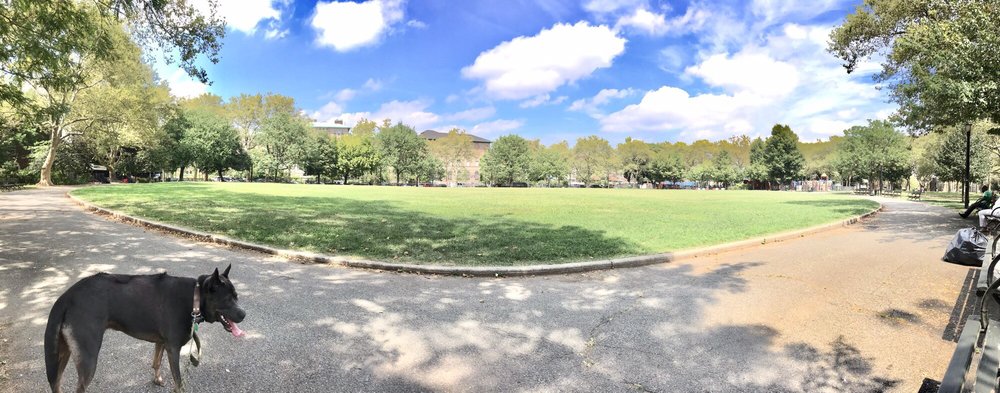


## Chapter One: The Trailhead of Dreams The morning sun spilled across the kitchen floor like warm honey pooling on golden oak, and I, Pete the Puggle, sat square in the center of it, letting the light soak into my short, velvety white fur. My tail thumped a lazy rhythm against the tile as I watched Lenny—Dad—stuff sandwiches into a cooler with the focused intensity of a squirrel burying a particularly precious acorn. Mariya—Mom—danced between the refrigerator and the counter, her eyes bright with that special sparkle she got whenever adventure called, humming a tune that sounded like wind chimes caught in a summer breeze. "Roman!" she called up the stairs, her voice carrying the warmth of cinnamon toast. "If we don't leave in fifteen minutes, the deer will have eaten all the hiking trails!" Roman came thundering down the stairs like a herd of elephants wearing boots, his backpack bouncing on one shoulder and his favorite baseball cap tilted at a rakish angle. He skidded to a stop in front of me, dropped to his knees, and scrubbed the spot behind my left ear that turned my legs to jelly. "Hey, little dude," he grinned, his eyes crinkling at the corners the way they always did when he was genuinely happy. "You ready for McKaig Nature Education Center? Big trees, big trails, big adventures." I licked his nose enthusiastically because words are overrated when you have a tongue that eloquent. Lenny looked up from the cooler, a sandwich halfway to his mouth—some things are universal, I suppose—and winked at me. "Why did the dog bring a map to the nature center?" he asked, his voice brimming with the delight of a man about to unleash terrible wordplay upon the world. Mariya groaned from the counter. "Because he wanted to find the bark-ing lot!" Lenny finished, laughing so hard his glasses fogged up. I didn't understand the joke, but I loved the sound of their laughter. It filled the kitchen like a second sunrise, bright and generous and impossible to ignore. Roman hoisted me into his arms—though I was getting almost too big for this—and whispered, "Today's going to be epic, Pete. I promise." I believed him. I always believed Roman. He was my older brother, my best friend, and sometimes my rival in the ongoing chess match of who got the last bite of cheese. But today felt different. Today felt like the beginning of something I would remember long after my puppy years had faded into the golden haze of memory. As we piled into the car, Mariya turned around in the passenger seat, her eyes finding mine with that knowing gaze she sometimes wore, as if she could read the stories spinning behind my eyes. "McKaig is special, Pete," she said softly, reaching back to stroke my ear. "The woods there have a way of teaching you exactly what you need to learn." I tilted my head, curious but unafraid. The road stretched ahead of us like a ribbon unspooling toward adventure, and I pressed my nose against the window, watching the world blur into a watercolor of greens and golds. --- ## Chapter Two: The Whispering Pines and a New Friend McKaig Nature Education Center greeted us with a grand entrance of towering trees whose branches interlocked overhead like the fingers of old friends reuniting after years apart. The parking lot was nearly empty, which Mariya said was perfect because it meant the woods belonged to us today. Lenny grabbed the cooler and a worn map whose folds had become as soft as cloth, while Roman tightened his sneakers and bounced on the balls of his feet with barely contained energy. I stepped out of the car onto the gravel path and felt the earth crunch beneath my paws like tiny bones of the forest telling stories of seasons past. The air was thick with the perfume of pine needles and damp soil and something else—something wild and ancient that made my whiskers tremble with anticipation. "Alright, team," Lenny announced, unfurling the map with the dramatic flair of a pirate revealing a treasure chart. "The education center has over two miles of trails. We've got the Hemlock Trail, the Creek Path, and something called the Owl Loop. I vote we start with the Creek Path because—" "Because it goes past the water," Roman interrupted, grinning down at me. "And someone here needs to make peace with the wet stuff." He was right, of course. Water and I had a complicated relationship. To be honest, I was terrified of it. Not just cautious or slightly nervous—I mean full-body trembling, tail-tucked, wide-eyed terror. Baths were manageable because Lenny was there and the water was warm and contained. But open water—streams, ponds, rivers—represented something uncontrollable and vast. I had no idea what lurked beneath those shimmering surfaces, what creatures might pull a small puggle under, what darkness might swallow me whole. The sound of rushing water alone was enough to send me scurrying behind Roman's legs, my heart hammering like a woodpecker on a hollow tree. As we started down the Creek Path, the trees closed in around us, their canopy filtering the sunlight into dappled coins that scattered across the forest floor like fallen stars. The path wound between moss-covered boulders and beneath arching ferns that brushed against my fur like gentle fingers. And then I heard it—the unmistakable voice of water rushing over rocks, a sound that was simultaneously beautiful and terrifying, like a lullaby sung by something that might eat you. I froze. My paws locked against the earth as though roots had sprouted from their pads. My ears flattened against my skull, and a small whimper escaped my throat before I could catch it. Roman knelt beside me immediately, his hand warm and steady on my back. "Hey, hey, it's okay, buddy," he murmured. "It's just a creek. It's not going to hurt you." But I could hear the water rushing, growing louder with every step, and my imagination painted terrible pictures of dark currents and cold depths. Mariya crouched beside us too, her eyes soft with understanding. "Fear is just excitement that hasn't found its courage yet, Pete," she said gently. "The water is singing, not roaring. Listen closely." I tried to listen, but all I heard was my own heartbeat thundering in my ears like a drum sounding a war march. Then, from behind a fallen log, a small, scrappy voice piped up: "You scared of the creek too? Because I was too, until I realized it's just the forest crying happy tears." We all turned to see a long-haired Chihuahua sitting atop the log, his golden coat flowing like a tiny lion's mane, his dark eyes bright with intelligence and mischief. "Name's Timmy," he announced, puffing out his small chest with the confidence of a creature ten times his size. "And I'm the bravest, mightiest explorer McKaig has ever seen." --- ## Chapter Three: The Bridge Over Troubled Waters Timmy hopped down from his log with the agility of a grasshopper and trotted over to inspect me with the thoroughness of a detective examining a crime scene. "A Puggle," he mused, circling me once. "Short fur, white coat, eyes with those little makeup streaks—natural, I assume?" Roman laughed, a sound that scattered through the trees like seeds on the wind. "He was born with them," Roman said. "Makes him look like he's ready for a stage performance." Timmy nodded approvingly. "Every adventurer needs a signature look. Mine is this magnificent mane." He shook his head, and his long golden fur rippled like a flag in a breeze. I found myself liking this tiny dog immediately. There was something about his fearlessness that was contagious, like a warmth that spread through my chest and loosened the knots that fear had tied in my stomach. "So," Timmy said, turning business-like, "the creek crossing is just ahead. There's a bridge—old wooden planks, kind of rickety, definitely adds to the drama—but it holds. I've crossed it a hundred times. The trick is not to look down." I swallowed hard. "Not looking down implies there's something to see if I do," I said, my voice smaller than I wanted it to be. Timmy's eyes softened, and for a moment, the bravado fell away like a mask dropping to reveal something genuine underneath. "There's water under the bridge," he said quietly. "Moving water. And yeah, it's scary because you can't control it. But you want to know a secret? The water isn't trying to get you. It's just being water. Going where gravity tells it to. Same as us going where our legs tell us." We reached the bridge, and my heart nearly stopped. It stretched across a creek that was wider than I'd imagined, the water churning white over dark stones below. The wooden planks were spaced with gaps between them—gaps through which I could clearly see the rushing water, silver and cold and merciless. The trees on either side leaned in as if to watch, their branches creaking with anticipation. Lenny stepped onto the bridge first, testing each plank with his weight. "Solid," he declared. "Well, mostly solid. Solid enough." Mariya followed, then Roman, who turned back and extended his hand toward me. "Come on, Pete. One step at a time. I'll be right here the whole way." I looked at the bridge. I looked at the water. I looked at Timmy, who stood beside me with an encouraging smile. "First time I crossed," Timmy admitted, "I was so scared I peed on the first plank. Don't tell anyone." Despite everything, I laughed—a small, shaky laugh that felt like the first crack of sunlight through a storm cloud. I placed one paw on the first plank. It was warm from the sun and rough with age. It held. I placed another paw. The bridge swayed slightly, and I gasped, but Roman's hand found my back. "I've got you," he said. "You're not doing this alone." Step by step, I crossed. The water roared beneath me, and at one point I made the mistake of looking down—Timmy had said not to, and now I understood why. The creek surged between the planks like a living thing, dark and powerful and completely indifferent to my fear. My legs shook. My vision blurred. I wanted to turn back, to flee, to bury myself in the safety of Mariya's arms. But Roman's voice cut through the panic like a lighthouse beam through fog. "You're almost there, Pete. Three more steps. Just three." I counted them. One. Two. Three. And then my paws hit solid earth on the other side, and I was across. I had done it. The fear hadn't vanished—it was still there, a trembling echo in my chest—but I had walked through it, over it, beyond it. Timmy bounded across behind me, his tiny paws barely touching the planks. "Not bad for a first crossing," he said. "Not bad at all." Lenny ruffled my ears. "Proud of you, kiddo," he said, and in his voice was a warmth that could have melted winter. Mariya knelt and pulled me close, and I felt her heartbeat against my fur, steady and sure as the earth itself. "Courage isn't the absence of fear, Pete," she whispered. "It's the decision that something else matters more." --- ## Chapter Four: Into the Deepening Shadows Beyond the bridge, the trail changed. The cheerful, sun-dappled path we'd been following narrowed and descended into a thicker part of the forest where the trees grew closer together, their trunks dark and textured like the wrinkled skin of ancient giants. The canopy overhead became so dense that sunlight only penetrated in thin, wavering beams that looked like spotlights searching for something lost among the ferns. The air grew cooler, damper, and carried a new scent—mushrooms and decay and the deep, rich smell of earth that had been undisturbed for decades. "This is the Hemlock Trail," Lenny said, consulting the map. "It loops through the oldest part of the forest. Some of these trees are over two hundred years old." Roman looked up at the towering hemlocks with genuine awe. "Two hundred years," he repeated. "They were here before any of us. Before this country even existed." There was something humbling about that thought, and I felt it settle over me like a soft blanket—the realization that the world was vast and old and full of things far bigger and more permanent than myself. As we walked deeper, the sounds of the creek faded behind us, replaced by a silence so complete it felt almost solid. My ears, which had been relaxed and forward, began to swivel, catching every tiny sound—the rustle of a leaf, the snap of a twig, the distant call of a bird I couldn't identify. Timmy, trotting beside me, had grown quieter too. His bravado from earlier had dimmed like a candle in a draft, and I noticed his ears were alert, his body tense. "This part of the woods is different at this time of day," he said, his voice low. "The light changes. The shadows get longer. And the trail—" He stopped abruptly. "Timmy?" I asked. "What about the trail?" He looked around, his dark eyes scanning the trees with a wariness I hadn't seen in him before. "I think we took a wrong turn. Or the trail forked and we didn't notice." I felt a cold tendril of fear wrap around my stomach. "What do you mean? They're right ahead of us." I turned to look for Lenny's broad back, Mariya's familiar silhouette, Roman's tilted cap. Nothing. The path behind us was empty. The trees stood silent and indifferent, their trunks blocking any view of where my family might have gone. "Roman?" I called, my voice cracking. "Dad? Mom?" The forest swallowed my words like a hungry animal, leaving nothing but the echo of my own fear bouncing back at me. Timmy pressed against my side, and I realized he was trembling too. "We must have gotten separated at the fork," he said. "It's okay. We just need to—" A bird screamed somewhere above us, a sharp, piercing cry that split the silence like a knife through paper, and we both flinched. The shadows had grown longer, darker, and the thin beams of light that had been our companions were retreating like timid animals seeking shelter. I was acutely aware of every shadow, every shape that might be a tree but might be something else, every sound that might be wind but might be footsteps. My fear of being separated from my family—a fear I'd never consciously acknowledged because I'd never needed to—rose inside me like floodwater filling a basement, dark and cold and relentless. Without my family, I was small. I was vulnerable. I was just a puppy in an ancient forest with a tiny Chihuahua and a sky that was slowly dimming toward dusk. "We need to find them," I said, and my voice was steadier than I felt. Timmy looked up at me, and something passed between us—a recognition that we were in this together, that neither of us could do this alone. "Then let's find them," he said, squaring his tiny shoulders. "Together." --- ## Chapter Five: The Darkness That Breathes We walked. I don't know for how long. Time in the forest doesn't behave the way it does in the world of kitchens and clocks and scheduled dinner times. In the forest, time stretches and compresses like taffy being pulled, and minutes can feel like hours while hours can pass in the blink of an eye. The trail beneath our paws grew less distinct, the path narrowing until it was little more than a suggestion between the undergrowth, a faint indentation in the carpet of fallen leaves and pine needles. Every shadow seemed to lean toward us, and every gust of wind through the canopy sounded like whispered conversations between trees that had been watching us for centuries. "Stay close," I told Timmy, though I was the one who needed reassurance. My fear of the dark—a fear that had lived inside me since my earliest puppyhood, a primal, bone-deep terror of the unknown and the unseen—was clawing at the edges of my mind like a trapped animal desperate to escape. The last light of day was fading, and the forest was transforming. Shapes that had been benign in daylight—the gnarled root of a tree, the hollow of a fallen log, the silhouette of a boulder—became monstrous in the dimming light. A root became a snake. A hollow became a cave with glowing eyes. A boulder became a crouching creature waiting to pounce. I knew these were tricks of my imagination, but knowing and feeling are two different beasts entirely, and the one that growls loudest always wins. "There's nothing there," I told myself, but my voice inside my head was thin and unconvincing. Timmy was pressed so close to my side that his fur mingled with mine, and I could feel his heartbeat rapid as a hummingbird's wings. "I don't like the dark," he whispered, and the admission cost him something—I could hear it in the way his voice caught, like a foot stumbling on a loose stone. "I know," I said. "Me neither." And in that moment of shared vulnerability, something shifted between us. We weren't just two dogs lost in the woods. We were two friends being honest about the things that scared them, and that honesty, small as it was, felt like striking a match in a dark room. It didn't illuminate everything, but it was enough to see the next step. Then the darkness completed its conquest. The last sliver of light vanished behind the tree line like a door closing softly but finally, and we were standing in true darkness—not the gentle dark of a bedroom with a nightlight, but the thick, absolute, suffocating dark of an ancient forest at nightfall. I couldn't see my own paws. I couldn't see Timmy. I could only feel him against my side and hear his rapid breathing, which was the only proof I wasn't alone. My fear of the dark crashed over me like a wave I'd been trying to outrun, and for a terrible, breathless moment, I was drowning in it. My legs buckled. My vision—even though there was nothing to see—tunneled. The sounds of the forest at night—creaking branches, rustling leaves, distant owl calls—became a symphony of menace, every note a threat. I wanted to run, but I didn't know which direction to run. I wanted to hide, but the darkness was everywhere. I wanted my family—Lenny's steady warmth, Mariya's gentle voice, Roman's protective arm—and they weren't here. A whimper escaped me, involuntary and raw, and Timmy pressed closer. "Pete," he said, his voice tiny but determined. "Tell me a story." I blinked in the darkness. "What?" "You're a storyteller, right? That's what your family said. So tell me a story. Something brave. Something that ends well." And so, in the deepest dark of McKaig Woods, with nothing but my voice and my imagination, I began to tell a tale about a small white puggle who crossed a bridge over rushing water and faced the shadows of an ancient forest and found his way home. I told it for Timmy, but I realized, as the words flowed like a river finding its course, that I was telling it for myself too. The story became a light—not a physical light, but a warmth that pushed back against the cold fingers of fear. And with each sentence, the darkness seemed to recede, not from my eyes but from my heart. --- ## Chapter Six: The Courage to Be Found I don't know how long I told the story. Long enough for my throat to grow dry and my voice to crack. Long enough for Timmy's trembling to still and his breathing to slow into the steady rhythm of someone who had found, if not peace, then at least acceptance. Long enough for the forest to settle into its nighttime personality—still mysterious, still vast, but no longer malevolent. The darkness hadn't changed. I had. Somewhere in the weaving of the tale, I had stumbled upon a truth that Mariya had tried to tell me at the creek: fear loses its grip when you stop fighting it and start moving through it. The dark was just the absence of light, not the presence of something evil. The sounds were just sounds, not omens. The forest was just the forest—ancient and indifferent and beautiful in its own wild, untamed way. "Pete," Timmy said, his voice cutting through the silence that followed my story's conclusion. "I think I hear something." I pricked my ears. At first, nothing. Then—faint, distant, but unmistakable—the sound of footsteps. Heavy footsteps. Human footsteps. And a voice, rough with worry, cutting through the trees like a beacon: "PETE! TIMMY! Can you hear me?!" It was Roman. My heart surged so violently I thought it might burst from my chest like a bird released from a cage. "ROMAN!" I barked, and my voice was strong—stronger than it had been all day, stronger than I knew it could be. "WE'RE HERE! ROMAN, WE'RE HERE!" Timmy joined me, his high-pitched bark harmonizing with mine in a chorus of desperate joy. The footsteps grew louder, faster, and then—oh, then—the beam of a flashlight cut through the darkness like a sword slicing through shadow, and there he was. Roman. My brother. His face was pale and streaked with sweat, his cap missing, his eyes wild with the kind of fear that only love can produce. But he was here. He had come for us. He had come into the dark forest alone, armed with nothing but a flashlight and the unshakeable determination that he would not leave without us. "Pete!" he breathed, dropping to his knees as I hurled myself into his arms. His arms closed around me, and I felt his heartbeat against my fur—rapid and strong and beautiful, the most beautiful rhythm in the world. "I found you," he whispered, his voice breaking. "I found you. I thought—I was so scared—" He pulled back and looked at me, and I saw tears on his cheeks, silver in the flashlight's glow. "Don't ever do that again, okay?" he said, but his voice was laughter and tears braided together like the strands of a rope. Timmy pressed against Roman's leg, and Roman reached down to stroke his golden fur. "You too, little guy. Your family's been looking for you too." Timmy's tail wagged for the first time in hours. "My family?" "Your humans called the park ranger when you didn't come home," Roman explained. "They're at the trailhead, waiting. They never gave up." And in Timmy's dark eyes, I saw the same overwhelming relief that was flooding through me—the realization that being lost doesn't mean being forgotten, that love doesn't have a range limit, that the people who care about you will always, always come looking. --- ## Chapter Seven: The Light That Leads Us Home Roman carried me for the first part of the walk back, and I let him because sometimes being carried is its own kind of courage—the courage to accept help, to acknowledge that you don't have to be strong every moment of every day. Timmy trotted beside us, his step lighter now, his golden mane catching the beam of Roman's flashlight like a tiny, walking star. The forest that had seemed so threatening an hour ago now felt almost gentle, as if it recognized that we had been tested and found worthy of passage. The trees no longer looked like monsters; they looked like what they were—living sentinels, patient and ancient, standing guard over a world that was far more complex and far more beautiful than fear allows you to see. "How did you find us?" I asked Roman, looking up at his face from the cradle of his arms. He smiled down at me, and even in the dim light, I could see the exhaustion and the joy wrestling on his features. "Dad and Mom went to the trailhead to call for help, and I went into the woods. I figured you'd gotten separated at the fork on the Hemlock Trail—it's easy to miss, and the trail markers are faded. So I just started walking and calling your name. I must have walked the trail three times before I heard you barking." "Three times?" Timmy said, amazed. "In the dark?" Roman shrugged, but the gesture was heavy with meaning. "When someone you love is lost, you don't stop looking just because it's hard. Or dark. Or scary." We emerged from the Hemlock Trail to find the main path illuminated by the headlights of a park ranger's truck and Lenny's car. And there, standing in the glow like angels in a painting, were Lenny and Mariya. Mariya saw us first. Her hand flew to her mouth, her eyes widened, and then she was running—actually running, her coat flapping behind her like wings, her face a portrait of desperate hope transformed into overwhelming relief. "PETE!" she cried, and the sound of my name in her voice was the most beautiful music I had ever heard. Lenny was right behind her, his long strides eating the distance, his face crumpling with emotion. When they reached us, it was a collision of arms and tears and laughter and the kind of love that doesn't need words because it's too big for language to hold. Mariya took me from Roman's arms and held me against her chest, and I felt her tears fall warm against my fur. "My baby," she whispered. "My brave, brave baby. I was so scared." "I know, Mom," I thought, pressing my nose into her neck. "I was too. But I'm here now." Lenny's hand found my head, his fingers gentle and trembling. "No more solo adventures," he said, his voice thick with the effort of keeping it steady. "From now on, we stick together. Deal?" I licked his hand. Deal. At that moment, a car door opened and a woman rushed toward Timmy, her face a mirror of Mariya's—wrecked with worry, radiant with relief. Timmy barked once, sharply, and then launched himself into her arms with a yelp that contained every ounce of fear and joy and love that a small, mighty Chihuahua could hold. "Thank you for finding him," the woman called to Roman, holding Timmy close. "Thank you for not giving up." Roman smiled, and I saw in that smile the transformation of a boy into someone older, someone who understood now what it meant to be responsible for something beyond yourself. "He found us," Roman said. "He and Pete both. They found their way through." --- ## Chapter Eight: Lessons Written in Leaves and Light We sat on the bench near the trailhead, the five of us—Lenny, Mariya, Roman, Timmy, and me—arranged in a constellation of warmth and wonder beneath a sky that was beginning to show its first stars. The ranger had confirmed that everyone was safe and no further search was needed, and the night had settled around us like a soft blanket, gentle and forgiving. Timmy lay curled against his human's lap nearby, his golden fur rising and falling with contented breaths, but his ears were still turned toward us, listening, because the best adventurers never really stop paying attention. Lenny broke the silence first, as he often did, but his voice was softer than usual, missing its usual theatrical flair. "I want to say something," he said, looking at each of us in turn. "Today was supposed to be a fun family hike. Instead, it became the most terrifying and the most beautiful day of our lives. And I think that's worth talking about." Mariya nodded, her arm tightening around me. "Pete, you faced three fears today. The water at the bridge. The darkness in the forest. And being separated from us. And you overcame all of them. How did you do it?" I thought about this carefully, because the answer mattered. It wasn't just about me—it was about everyone who had carried me through. "I didn't do it alone," I said, and my voice was quiet but certain. "At the bridge, Roman's hand was on my back. In the forest, Timmy was beside me. And in the dark, I told a story—a story about being brave—and the story became true because I kept telling it." Roman looked at me with an expression I'd never seen before—not just brotherly affection but deep, genuine respect. "That's what courage is, Pete," he said. "It's not about being fearless. It's about being terrified and taking the next step anyway. And you did that." Timmy raised his head from his human's lap and barked softly. "Can I add something?" he asked, and we all turned to him. His dark eyes were reflective, and when he spoke, his voice had lost its performative bravado and gained something infinitely more valuable—sincerity. "I've been coming to McKaig for two years," he said. "And I've always pretended to be the brave, mighty Timmy who fears nothing. But today, in that forest, when Pete told that story in the dark, I realized something. Real bravery isn't a performance. It's a decision. And the decision isn't to be unafraid—it's to be honest about your fear and keep going anyway. Pete taught me that." I felt my eyes sting with something that wasn't sadness but was deeper than happiness—a recognition that the bonds we'd forged today, in fear and in darkness, were unbreakable. Mariya spoke last, her voice carrying the quiet authority of someone who understood the hidden architecture of the world. "The forest gave us exactly what we needed," she said. "Not what we wanted—a peaceful, easy hike—but what we needed. A challenge. A test. A reminder that we're stronger than our fears, and that the people—and the dogs—we love will always find their way back to us." Lenny put his arm around her, and Roman leaned against his father's side, and I lay in the warm hollow of all of them, my family, my constellation, my home. The stars above McKaig were multiplying, each one a tiny flame in the vast darkness, and I understood now that darkness isn't something to be conquered. It's something to be traveled through, with the right companions, and the right story, and the willingness to believe that light—like love—is never truly gone. It's just waiting for you to find it. As we finally headed toward the car, Timmy barked once more. "Same time next month?" he called. Roman grinned. "Same time next month." And I, Pete the Puggle, storyteller and adventurer, wagged my tail against the night and knew that the best stories aren't the ones you tell in the safety of your kitchen. They're the ones you live in the wild, uncertain, magnificent world. *** The End ***
Use these buttons to read the story aloud:



No comments:
Post a Comment