"*** Pete the Puggle and the Moonlit Fountains of Albert’s Garden ***"🐾


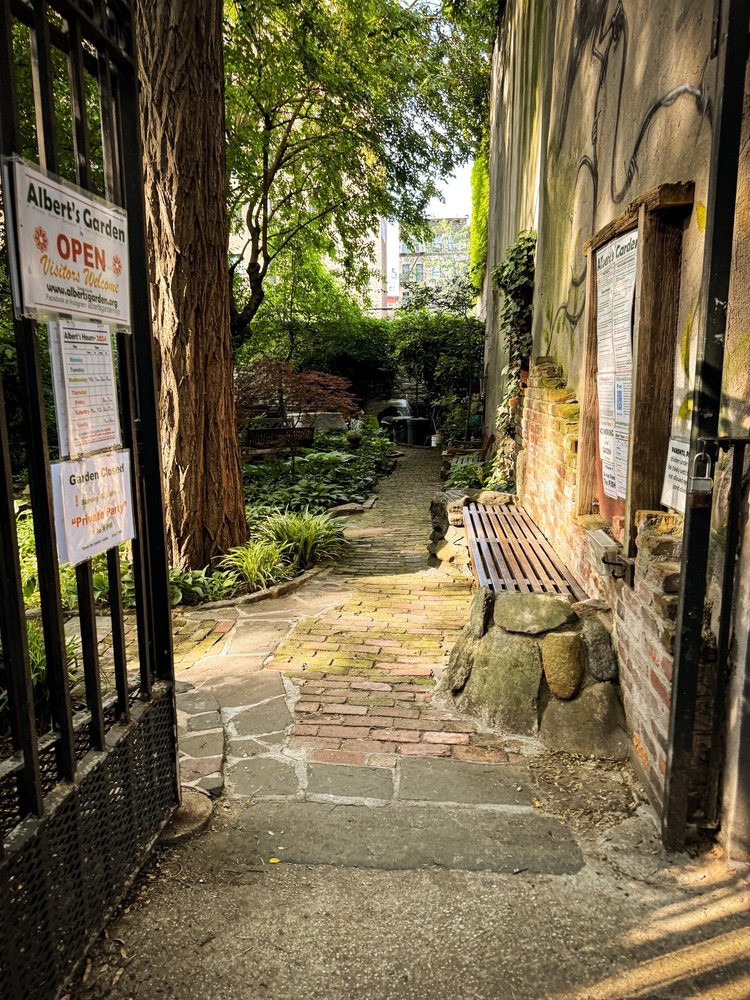
## Chapter One: The Gate That Hummed The morning Albert’s Garden opened its green iron gate, I—Pete the Puggle, white-furred, bright-eyed, and wearing my bravest streaks of playful makeup—felt the world tilt like a bowl of kibble. Beyond the bars, roses climbed in red spirals, fountains laughed silver into the air, and somewhere water went *glug-glug-glug* like a giant swallowing secrets. My ears folded flat. “Lenny,” I whispered to Dad, “the garden sounds hungry.” Lenny knelt, warm as toast, and scratched behind my ear. “That’s just joy wearing a splashy coat, buddy. Also, did you hear about the rose that joined a band? It had perfect *petal* control.” I groaned, but my tail betrayed me with one hopeful thump. Mariya leaned toward a bed of violets as if they were whispering gossip. “Look, Pete—magic in the ordinary. See how each drop holds a tiny sky?” Roman, my older brother and sometimes rival, bounced on his sneakers. “Race you to the willow tunnel!” he cried, then softened when he saw me staring at the pond. “Hey. We don’t have to go near the water. We can adventure *around* it.” His protectiveness wrapped around me like a leash made of courage. Still, my paws remembered every bath-time betrayal, every cold splash that had ever ambushed my nose. A flash of emerald swept down from a mulberry tree and landed with a theatrical bow. “Name’s Trump,” announced a parrot with a brass leg-band and feathers bright as parade flags. “I know every path, every scandalous squirrel, and which gardener hides cookies in his apron.” I blinked. “You’re named Trump?” He puffed. “After my great-grandfather, Sir Trumperton Beaksley, terror of toast crumbs.” Lenny laughed; Mariya clapped; Roman grinned despite himself. Trump pointed one wing toward the heart of the garden. “Grand tour? Mild peril? Moderate snacks?” My fear whispered *no*, but adventure, that sly puppy inside me, wagged yes. ## Chapter Two: The Pond with Teeth We followed a path paved with flat stones warm from the sun, each one humming beneath my pads like a sleepy bee. Dragonflies stitched blue thread through the air. Mariya named flowers as we passed: “Lamb’s ear—soft as forgiveness. Snapdragons—tiny dragons with manners.” Lenny carried the picnic basket and declared, “A family that snacks together conquers together.” Roman walked beside me, close enough that our shoulders brushed. “If the pond freaks you out,” he murmured, “look at me, not it.” Easy for him; Roman had never met a puddle he didn’t want to cannonball. Then we reached the pond, and my courage curled up like a frightened snail. The water was black-green, slick as spilled ink, with lily pads floating like trapdoors. A fountain in the center spat white arcs, and every splash sounded to me like jaws snapping shut. My breath came fast. “I can’t,” I said. “It’s waiting. It knows I’m small.” Trump landed on a stone turtle. “Small? Nonsense. I once saw a flea out-argue a horse.” Lenny set down the basket. “Pete, fear is a good guard dog with bad eyesight. It barks at friends.” Mariya cupped my face. “What does the water really look like?” I forced myself to see: minnows like commas, sunlight broken into coins, Roman’s reflection steady beside mine. Roman stepped into the shallows, shoes and all. “Cold!” he yelped, grinning. “Terrible decision. Join me in my poor judgment?” Everyone laughed, and the pond’s teeth became only sparkles. I crept forward until one paw touched the edge. Cold licked my toes; I yelped, leapt back, then—because Roman’s eyes said *I’ve got you*—put the paw in again. “I’m doing it,” I whispered, astonished. Trump squawked, “Historic! Headlines! Puggle defeats damp!” I didn’t swim that day, not yet, but I stood beside the monster and learned it had no appetite for me. ## Chapter Three: The Willow Tunnel and the Whispering Dark After lunch—crusts for Trump, carrots for me, jokes for Lenny—the garden turned golden and long-shadowed. Mariya suggested the willow tunnel, where branches curtained the path like green hair. Inside, light fell in coins through leaves, and the air smelled of mud, mint, and old rain. “It’s beautiful,” Mariya said, “like walking through a secret the earth is keeping.” Trump rode on Roman’s shoulder, narrating: “To your left, a shrub of great importance. To your right, another shrub, less important but trying.” I laughed until the tunnel narrowed and the light thinned to a blue dusk. My old fear of the dark came padding behind me on silent paws. It wasn’t the absence of light I feared; it was what darkness might be hiding—lost paths, hungry shadows, the moment I’d look up and find no family. The willow fingers brushed my back, and I froze. “Don’t leave me,” I blurted, though no one had moved. Roman turned immediately. “Never. Say the fear out loud; it shrinks when named.” Lenny added, “Dark is just light playing hide-and-seek.” Mariya lit a small lantern from the basket, and its glow gathered us into a circle of gold. We made a game: each of us named one brave thing. Lenny said, “I once fixed a sink while only crying twice.” Mariya said, “I ask questions even when answers scare me.” Roman said, “I let Pete win at tug sometimes—don’t tell him.” Trump bowed. “I forgive crackers for being square.” Then all eyes found me. “I touched the pond,” I said, voice trembling but true. “And I’m still here.” The tunnel exhaled; beyond it, sunset poured honey over the garden. We walked out together, and the dark, defeated for now, followed at a polite distance. ## Chapter Four: The Maze of Tall Laughs Near the garden’s heart stood a hedge maze taller than Lenny, its walls dense and glossy, humming with bees. A sign read: *Enter Curious, Exit Changed.* Trump fluttered up to scout and returned breathless. “Paths twist like spaghetti in a tornado. Also, I saw a butterfly with eyebrows. Suspicious.” Roman’s eyes lit. “Last one to the center feeds the ducks!” Before anyone could answer, a bell chimed somewhere, gardeners called closing-time warnings, and a crowd of visitors surged past like a river wearing hats. In the shuffle, I chased Trump’s green tail through an arch, Roman shouted “Wait!”—but the hedge swallowed his voice. When I skidded to a stop, Lenny’s laugh was gone, Mariya’s lantern-glow vanished, and only Trump sat panting on a marble rabbit. “Good news,” he said, “we’re not lost. Bad news: we are extremely misplaced.” My chest tightened; separation, the sharpest fear, sank its teeth in. “They’ll come,” I said, trying to believe it. “Roman always comes.” Trump softened. “Then we make noise, leave clues, and keep our heads. Panic is a bad map.” We tied my red bandana to a branch, dropped white pebbles like breadcrumbs, and called in turns: “Pete here!” “Trump, also here, tragically!” The maze answered with echoes that wore our voices like masks. Once a shadow swept over us—a hawk, thrilling and terrible—and we dove under lavender while its wings combed the air. My heart hammered, but beneath fear grew a stubborn little drum: *move, think, trust*. I remembered the pond, the tunnel, Roman’s shoulder. “We’re not helpless,” I told Trump. “We’re on our way back to them.” He nodded, and for once didn’t joke. ## Chapter Five: The Fountain Cavern The maze spat us into a sunken courtyard where an old fountain rose like a stone tree, dry at the top but leaking music from a grate below. Trump peered down. “Ah. The Moon Cistern. Legend says it connects to the pond. Also legend says pigeons invented taxes, so choose your legends wisely.” A cool breath rose from the grate, smelling of coins and midnight. My water fear returned wearing darkness as a cloak; below was black, wet, unknown. Then we heard Roman—faint, far, calling my name—and the sound came from beneath us. “We go down,” I said before I could stop myself. Trump stared. “You? Voluntarily into damp gloom?” “Roman would for me.” My legs shook so hard my tags chimed. The first steps were slick; each drip landed on my head like a tiny accusation. I imagined the water rising, the dark closing, my family calling from another world. “Talk to me,” I begged. Trump obliged: “Once, I stole a diamond button from a duchess. Felt brilliant. Then I learned buttons hold coats together and stole her warmth too. Gave it back. Growth is messy.” His story lit the stairs better than courage alone. At the bottom, a ribbon of black water crossed our path, narrow but deep-looking, reflecting our lantern as a shaky star. Across it, scratched on stone, was an arrow and a paw print—Roman’s mark. “He came this way,” I breathed. To reach him I had to leap the water. I backed up, ran, and for one suspended instant flew over my fear; my paws struck stone, skidded, held. Trump landed beside me, applauding with wings. “Pete the Puddle-Slayer!” I laughed, shaky and loud, and the cavern laughed back kindly. Ahead, a boy’s voice shouted, “I hear him!”—and hope put on Roman’s face. ## Chapter Six: Found in the Blue Hour Roman burst around the bend with a gardener’s flashlight, hair wild, eyes wet and fierce. “Pete!” He scooped me up so hard my breath popped out. “I followed your pebbles. You genius, ridiculous, brave dog.” I licked his chin and cried without deciding to. Trump cleared his throat. “I also contributed pebble-adjacent morale.” Roman hugged him too, feathers and all. Behind him stood Mariya and Lenny at the tunnel mouth, lantern lifted like a small sunrise. Mariya ran to us, whispering, “Magic in the ordinary—and miracles in muddy paw prints.” Lenny’s arms wrapped everyone into one warm knot. “I brought snacks,” he said thickly, “because emergencies require cheese.” We climbed out into the blue hour, when the garden turns silver and every leaf looks thoughtful. Fountains glowed with underwater lamps; the pond I feared shone like spilled stars. Roman set me down but kept a hand on my back. “I was scared too,” he admitted. “Not of water or dark—of not finding you.” That confession undid me kindly. “I kept hearing you say, look at me,” I told him. “So I looked for your marks.” Mariya smiled through tears. “We are tied by invisible leashes, all of us.” Lenny nodded. “Family: the only knot that gets stronger when pulled.” Trump perched on the fountain rim, unusually quiet. “I’ve lived here years,” he said, “guarding gossip, racing swallows, pretending I need no one. Today you noisy humans and one damp puggle made my garden feel bigger.” I nudged his foot. “Come home for dinner sometime. We have crumbs of distinction.” He blinked fast. “I accept, pending crumb inspection.” Roman grinned at me. “Ready for the bravest thing?” He pointed to the pond steps, where water lapped gentle as a lullaby. My old terror barked, but it was far away now, guarding nothing. ## Chapter Seven: Swimming with Stars I stood at the pond steps while night opened its velvet umbrella. Roman waded in first, slow, no jokes this time. “Only if you want,” he said. “Courage isn’t a dare.” Lenny sat on the bank, steady as a lighthouse. Mariya held the lantern high so the water wore a path of gold. Trump whispered, “For the record, parrots do not swim; we judge swimmers.” That made me laugh, and laughing loosened the fear’s fingers from my ribs. I thought of the maze, the cavern, the leap; each brave act had been a paw placed on the next stone. I stepped in. Cold circled my ankles, then my legs, then my belly, and panic flashed white—but Roman was there, hands under my chest, saying, “Kick, Pete, I’ve got you, kick.” I kicked. The water did not swallow me; it lifted me, surprised and shining. “I’m floating!” I barked, splashing Roman right in the face. He spluttered, triumphant. “Best disaster ever!” Mariya cried, “Look at my boy!” Lenny shouted, “That’s my pup—part dog, part boat!” Trump yelled, “Headlines! Dampness defeated by enthusiasm!” The pond held me like a secret finally told kindly. We didn’t stay long; bravery knows when to towel off. Wrapped in Lenny’s jacket, shivering and glowing, I watched moonlight ripple over the place that had once seemed all teeth. Inside me, something had changed shape: fear was still there, but no longer the driver; it rode in the back with snacks and opinions. Roman bumped my shoulder. “You saved yourself,” he said. “We just held the flashlight.” I wanted to argue, but I knew the truth was braided—my courage, their love, Trump’s ridiculous songs, all one rope. ## Chapter Eight: Home Is a Garden We Carry At the gate, Albert’s Garden began to close, lamps blooming one by one like golden dandelions. We found a bench beneath a rose arch and shared the last cheese, the last strawberries, and the last crumbs ceremonially inspected by Trump. “Approved,” he declared, “though your cheddar lacks drama.” Lenny put an arm around Mariya; Roman leaned against me; the night smelled of wet leaves, rose pepper, and us. Mariya said, “What did today teach us?” Her voice invited answers rather than demanding them, the way open doors invite wind. I spoke first because my heart was too full for waiting. “Water can hold you. Dark can be walked through. Being lost is awful, but love leaves pebbles.” Roman nodded. “I learned being protective means trusting Pete to be brave, not just keeping him safe.” Lenny wiped his eyes and blamed pollen. “I learned jokes are lanterns too.” Mariya kissed my head. “And I learned ordinary days become adventures when we listen to each other’s fears.” Trump lifted one wing. “I learned friendship is better than crumbs. Do not quote me.” Before we left, I looked back at the pond, the maze, the willow tunnel—three former monsters now wearing moonlight like medals. The garden had not changed; I had. Courage, I discovered, is not the absence of trembling but walking while trembling toward the voices you love. Family is the shore and the boat; friends are the oars that splash you in the face. We went home tired, muddy, and brighter than we arrived, carrying Albert’s Garden in us like a seed that would flower whenever fear said *stay*. And when someone whispered, “Tomorrow?” I wagged once, twice, and answered, “Together.” *** The End ***
Use these buttons to read the story aloud:



No comments:
Post a Comment