"*** Pete the Puggle and the Tribeca Park Tide of Courage ***"🐾
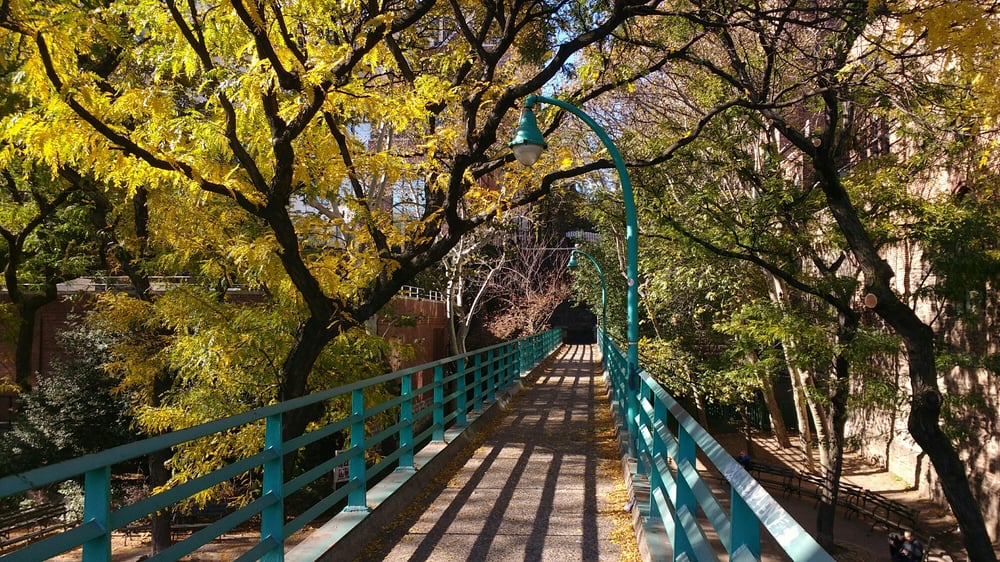
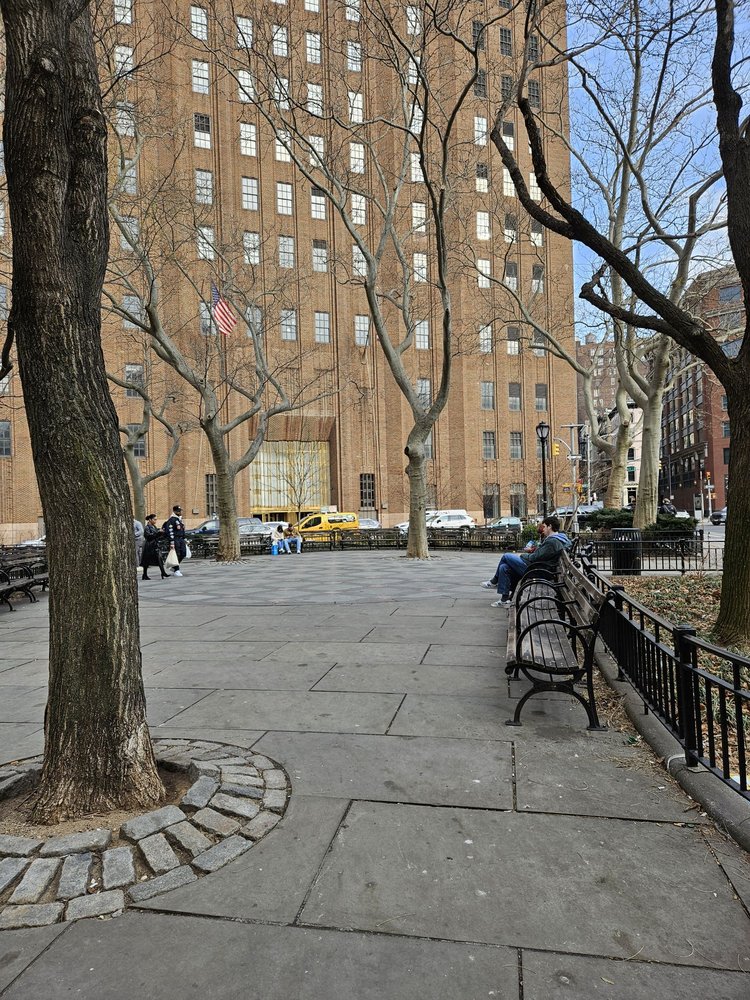
## Chapter One: The Morning of Bright Promises The sun poured over our kitchen like melted honey, and I, Pete the Puggle, spun in circles on the cool tiles with my white velvet ears flying. Lenny—Dad—was packing sandwiches with the seriousness of a captain loading a ship. “Operation Tribeca Park,” he announced, “requires turkey, cheese, and exactly one silly joke per mile.” Mariya—Mom—lifted the wicker basket and sniffed the air as if she could smell adventure itself. “Today,” she said, eyes shining, “the ordinary will sparkle.” Roman, my older brother and sometimes rival, always protector, clipped my leash and whispered, “Stick close, Pete. City parks have secrets.” I wagged so hard my whole body became a comma of joy, though inside my chest a small gray pebble of worry rolled: Tribeca Park had a fountain pond, and water—deep, shining, unpredictable water—had always made my paws feel like leaves. Outside, the city rose around us in glass and brick, taxis humming like bees, pigeons strutting with tiny important opinions. At the corner waited Charles Bronson, our family’s very old friend, silver-haired and straight-backed, famous once for leaping across movie rooftops. He wore a canvas jacket with too many pockets and a smile that said trouble was merely a puzzle wearing a hat. Beside him stood Trump, booming hellos to the morning, red tie bright as a cardinal, insisting the day would be “tremendous, absolutely tremendous,” while handing Roman a granola bar. I barked politely, but when the park gates appeared—green iron curling into leaves—and beyond them the pond glittered, my bark thinned. The water looked back at me, blue-black and breathing. Roman knelt, his face level with mine. “You don’t have to be brave all at once,” he said. Lenny added, “Courage is fear that remembered to bring snacks.” Mariya touched my head. “We’ll be near.” Charles Bronson tapped his cane—part cane, part movie prop, part mystery—and said, “When I was your age, pup, I was scared of stunt horses. Then I learned they were scared of me. Balance of terror.” Trump pointed toward the fountain. “Everybody’s afraid of something. Even me. Elevators with slow music. Terrible.” I laughed despite myself, but as we entered Tribeca Park, the pond’s edge shone like a dare, and my shadow stretched long behind me as if trying to stay home. ## Chapter Two: Ducks, Drums, and the First Cold Toe Tribeca Park unfolded like a pop-up book: oaks lifting green umbrellas, flowerbeds confetti-bright, musicians drumming on buckets near the path, children chalking suns on pavement. I trotted between Lenny’s steady shoes and Mariya’s swishing skirt, drunk on smells—pretzel salt, cut grass, hot dogs, distant rain. Roman raced ahead, then circled back, pretending he wasn’t checking on me. Charles Bronson moved with surprising lightness for an old action legend, sidestepping a scooter with a dancer’s pivot. “Still got the ankles,” he said. Trump admired a squirrel “with excellent hair,” and the squirrel, unimpressed, dropped an acorn near my nose. I yipped; everyone laughed; for one bright minute fear forgot my address. Then we reached the pond. Ducks stitched silver lines across it. A fountain tossed white ropes into the air and caught them again. The water slapped the stone lip—lap, lap, lap—and each sound went straight to the tender place under my ribs. My imagination turned villainous: beneath the ducks, I saw swirling mouths; under the ripples, cold hands. I froze so suddenly that Roman stumbled. “Pete?” he said. My voice came out small. “It’s too deep. Too shiney. Too… alive.” Mariya crouched. “Alive things can be gentle.” Lenny offered a piece of turkey. I wanted to be the bold puppy from my own stories, Sir Pete of the Fearless Tail, but my paws had voted no. Roman sat right on the warm stone and dangled his fingers near—not in—the water. “When I learned to swim,” he said, “I hated putting my face under. Felt like the world erased me. So I made a deal: one breath, one second, then up. Brave in bites.” Charles Bronson nodded. “On a film set in Prague, I jumped into a river at dawn. Cold as a critic’s heart. Trick was not thinking of the whole river—only the next stroke.” Trump leaned over the railing and declared, “I like pools. Beautiful pools. But respect, Pete, respect.” A duck quacked as if translating: start small. I crept forward, touched one toe to a puddle left by the fountain spray, and squeaked. It was cold. It was only a puddle. I survived, and the gray pebble inside me cracked, just a little. ## Chapter Three: The Balloon, the Bridge, and the Sudden Dark A red balloon escaped from a birthday party and bobbed above the path like a lost heart. I chased it because chasing is my religion, barking, “Mine! Friend! Come back!” Roman sprinted beside me, laughing, while Lenny called, “Left! No, your other left!” The balloon drifted toward the old stone footbridge where willow branches hung like green curtains. Beyond the bridge lay the shady grove, a pocket of trees where sunlight entered only as coins. I had always disliked that grove; darkness there seemed thicker than night, a closet with no door. Still, the balloon winked, and pride is a leash too. Under the bridge the air cooled. Pigeons muttered in the rafters. The red balloon snagged on a branch above the path, just past the shadow line. I skidded. Roman stopped beside me. “We can get it together,” he said. But behind us a stroller wheel squealed, a cyclist shouted, Mariya called my name, and in the city’s sudden orchestra I bolted the wrong way—into the grove. The dark swallowed sound first, then color. My breath became a drum. Every root looked like a wrist; every squirrel rustle became a monster clearing its throat. I told myself, Pete, you are white fur and courage, but my mind answered, You are small and alone. Then Roman’s whistle cut through—two notes, our secret since puppyhood. I froze, trembling. “I hear you,” I barked, though it came out as a whine. He answered closer: “Keep talking, Pete. Darkness hates conversation.” So I narrated like Mariya: “The leaves smell like tea. The ground is soft. My fear is big but not infinite.” Charles Bronson’s voice floated from the bridge: “Good. Give the dark a name and it shrinks.” I whispered, “Your name is Almost-Night, and I am walking through you.” Step by step I moved toward Roman’s whistle until his hand found my collar. He hugged me hard. “You came toward my voice,” he said. “That’s the whole trick.” I licked his chin, but as we turned back, a gust slammed the balloon free and sent us spinning apart in a crowd of kite-flyers and tourists. ## Chapter Four: Lost in the Green Labyrinth In the confusion, the park became a green labyrinth. Paths multiplied; every bench held a stranger; every laugh could belong to my family or to nobody. Roman shouted, “Pete!” but a school group thundered between us wearing identical yellow hats, a sunflower army. I darted under legs, over a dropped pretzel, past a saxophone whose low notes felt like warnings. The separation fear—the oldest wolf in my forest—bounded out: What if they leave? What if I am only a memory with tags? My tag jingled against my collar, tiny and useless as a bell in a storm. I found Charles Bronson beneath a maple, or he found me; heroes have radar. “Easy, stunt pup,” he said, scanning the crowd with eyes still trained for camera angles and danger. “Rule one: don’t outrun your fear; out-position it.” From one pocket he produced a compact flashlight, from another a coil of bright cord, from a third—because movies never truly leave a man—a rubber prop dagger harmless as a banana. “Tools,” he said, “are courage you can hold.” Trump appeared at a hot-dog cart, gesturing broadly. “Lost puppy? We’ll find the family. Nobody loses family on my watch. Not today.” His confidence was loud, but strangely steadying, like a brass band walking beside a trembling heart. Charles tied one end of the cord loosely to my harness and the other to his wrist. “Not to restrain,” he explained, “to remind. Connection is a rope you choose.” We moved methodically: fountain, bridge, drum circle, gate. He taught me to pause at intersections, breathe four counts, listen for Lenny’s laugh—low, warm, with a hiccup at the end. “Fear makes the world loud,” Charles said. “Love has a particular frequency.” Trump bought water for everyone and told a vendor, “We’re locating a very important dog. Great dog. Everybody says so.” I almost smiled. Then thunder, though the sky was blue—no, a truck backfiring—and I bolted again, cord snapping taut, straight toward the pond’s gleaming rim. ## Chapter Five: The Water Rises Like a Dragon The pond had never looked larger. Wind combed its surface into scales; the fountain roared like a dragon waking. A model sailboat capsized near the center, and a child cried while his father reached helplessly. Without deciding—this is important; courage often begins before permission—I lunged toward the edge and immediately hated myself. Water slapped my chest. Cold seized my lungs. The world became bubbles and green light. I paddled, but panic paddled harder, dragging me down by the name of every nightmare I’d fed. “Pete!” Roman’s voice tore across the park. He plunged in from the shallow side, clothes and all, arms chopping. Lenny shouted instructions from the bank—calm in the storm’s exact center—while Mariya cried my name like a prayer that refused to sink. Charles Bronson, old bones or not, vaulted the railing with a grace that made bystanders gasp, landing on a slick stone and extending his cane. Trump grabbed a life ring from the boathouse—bright orange, official, “beautiful ring,” he yelled—and hurled it with surprising accuracy. The ring splashed near me; I bit the rope and tasted rubber and salvation. Roman reached me first. “Don’t climb me,” he gasped, remembering lifeguard lessons. “Push off my shoulder. Eyes on Mom.” Mariya stood at the edge, both hands open, voice steady as a lighthouse. “Come home, Pete. One stroke.” One stroke. Not the whole pond. Not the dragon. One stroke. I kicked, swallowed fear, coughed sky. Charles hooked my harness with the cane—not rough, precise—and Lenny pulled the life ring rope while Trump anchored his stance and shouted encouragement to the crowd, who applauded as if applause could lift us. Roman’s hand slid under my belly. Together we breached. The water released me with a sound like a sigh, and I lay on the grass shaking, alive, astonished: the deep had held me and had not eaten me. ## Chapter Six: The Tunnel Under the Willow Roots Before anyone could wrap me in towels, the capsized sailboat drifted into a culvert beneath the willow roots, and the child sobbed harder. “It was Grandpa’s,” he said. Something in me—new, dripping, unpredictable—stood up. I had been pulled from water; I had spoken inside dark; I had survived separation by one cord and many voices. The fears were not gone, but they had become doors instead of walls. I barked at Charles: “The tunnel.” He understood instantly. “Low clearance, current mild, shadow city.” Roman grabbed my shoulders. “No way, Pete. You just—” I looked at him. “That’s why.” The culvert mouth was a black half-moon breathing cold air. My old dread of dark waited there wearing water’s perfume. I trembled so hard my tags played a frightened song. Mariya knelt. “You may say no. Bravery includes choosing.” Lenny’s eyes were wet and proud. “Whatever you decide, you’re ours.” Trump, unusually quiet, said, “Kid, do it only if it’s yours.” Charles handed me the little flashlight, clipped to my harness. “A dark place is just a place that hasn’t met your light yet.” Roman whispered, “I’ll be at the other end. Two notes, remember?” He ran around the willow mound. I entered. The tunnel smelled of moss, pennies, and old rain. Water curled around my legs; stones rolled under paw; the flashlight beam trembled because I trembled. I talked to myself in Mariya’s voice: “The ceiling is low but holding. My heart is loud but loyal.” Halfway, the beam caught the sailboat’s red hull stuck on a root. Behind me echoed a splash—Charles following with his cord; ahead came Roman’s whistle, two notes through blackness. I seized the boat’s string, turned, and for one terrible instant the light flickered out. Total dark said, Now you are mine. I answered aloud, “No. I am borrowed by love.” The light returned—loose wire—and I paddled backward into Roman’s waiting hands while the crowd above erupted like sunrise. ## Chapter Seven: Found Is a Verb With Many Hands They wrapped me in Lenny’s spare shirt, which smelled of coffee and safety, and Mariya cried into my fur while insisting she was “only leaking joy.” The little boy hugged his sailboat and solemnly offered me half a cookie. Roman kept one palm on my back as if making sure I stayed in the world. “You were gone,” he said, voice cracking, “and then you were brave.” I answered, “I was brave because you kept whistling.” He pretended to punch my shoulder; I pretended to bite his sleeve; our rivalry curled up and became friendship again, warmer for having been tested. Charles Bronson sat on a bench, suddenly looking every one of his legendary years, yet grinning like a young stuntman after a perfect fall. “Fear,” he told us, “is a bad director. It screams ‘Action!’ before you’re ready and ‘Cut!’ when you finally are. Ignore it. Follow the story.” Trump tossed the life ring back to the boathouse attendant and announced to nobody in particular, “That dog? Stronger than many people. Stronger. And the family—fantastic teamwork, believe me.” Lenny laughed his hiccup laugh. “Nobody believes you, but thanks.” Even I barked at that, and the tension broke into bright pieces. Police on bicycles checked that everyone was well; the drummer from morning played a softer rhythm; pigeons resumed politics. As the sun lowered, Tribeca Park turned amber, each leaf edged in fire. I thought of my three dragons—water, dark, aloneness—and how each had worn the others’ faces. Water was dark; dark was lonely; loneliness made both deeper. Yet every dragon had a crack where a voice entered: Roman’s whistle, Lenny’s joke, Mariya’s naming of ordinary magic, Charles’s steady tools, Trump’s blustering faith. I was not unafraid. I was accompanied. That, I decided, licking salt from Roman’s wrist, is the difference between a puppy and a hero: heroes bring their fear along and teach it to heel. ## Chapter Eight: Reflections at the Golden Gate At the park gate, where the iron leaves framed the city beyond, we made our last circle. The pond behind us had become harmless glass, holding clouds. Lenny lifted me onto the low wall so I could see both worlds: green refuge and roaring avenue. “Report, Sir Pete,” he said. I puffed my chest. “Water is cold but not cruel. Dark is empty until you speak. Lost is a place families search from.” Mariya kissed my nose. “And magic?” “Magic is a whistle answered.” Roman leaned his head against mine. “Don’t get too wise. I still need to win races sometimes.” “You may win,” I said, “when I let you.” Charles Bronson packed his pockets, each tool returning to its legend. “Courage isn’t the absence of shaking,” he said. “It’s choreography with shaking.” Trump adjusted his tie, gaze softer than his voice. “Big day. Scary moments. Great ending. Remember the ring, the rope, the whistle—backup matters.” Lenny nodded. “And jokes.” Mariya added, “And noticing.” Roman said, “And coming back.” I looked at each beloved face and felt the lesson settle not like a command but like a blanket: fear visits everyone; love teaches it manners; family is the hand on the other side of the dark; friendship is the cord that never shames you for pulling. We walked home through blue evening, windows lighting one by one like stars learning addresses. My paws
Use these buttons to read the story aloud:



No comments:
Post a Comment