"*** The Puggle Who Learned the River’s Song ***"🐾
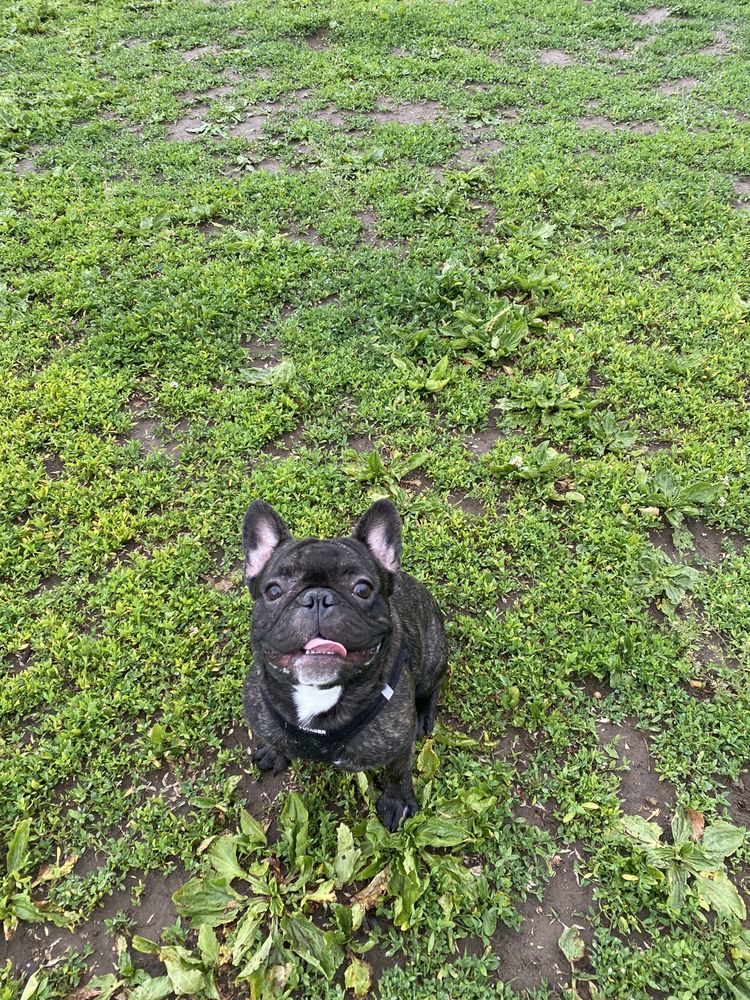
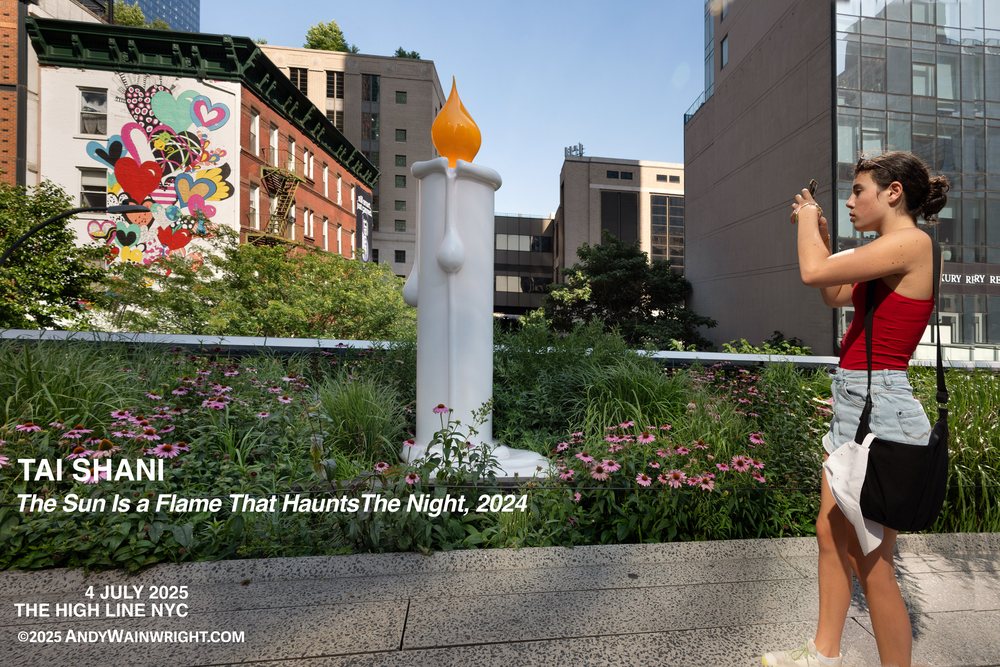
## Chapter One: The Address in Lenny’s Pocket The morning began with a ticket stub, a jellybean, and a mystery. I, Pete the Puggle, woke with my nose buried in Roman’s sneaker and my tail thumping like a tiny drum announcing breakfast. My white velvety fur stuck up in three heroic tufts, and the playful streaks around my eyes—Mariya called them my “adventure paint”—made me look as if I had already survived a thunderstorm and won. Lenny stood in the kitchen holding a brown envelope as if it were a treasure map. “Family,” he announced, “today we go to 23 High Line.” “Is that a street, a ship, or a secret code?” Roman asked, flipping a pancake and nearly catching it on his elbow. Mariya leaned over the envelope, eyes bright. “It smells like rain and old iron. Like a place where stories go to stretch their legs.” I barked once, then twice, because envelopes are suspicious unless they contain treats. Lenny laughed his warm Dad-laugh, the kind that sounds like a blanket being shaken out in sunlight. “Pete, my brave sausage with eyebrows, today we visit an elevated path where gardens float above the city and trains once dreamed beneath the flowers.” “Trains can dream?” I asked, though of course only my family understands my barks as words. To strangers I sound like “ruff,” but to Lenny, Mariya, and Roman I sound like poetry with paws. Roman crouched and scratched behind my ear. “Everything dreams if you listen, Pete. Even scaredy-pups.” “I am not scared,” I said, which was almost true if you didn’t count water, darkness, closets, vacuum cleaners, or the terrifying possibility of being left behind. The doorbell rang with a boom that was much too grand for a doorbell. In swept Baron Munchausen, tall as a lamppost, mustache curled like two commas mid-sentence, wearing a coat that seemed sewn from midnight and applause. “Did someone say High Line?” he thundered. “I once rode a cannonball over a park very much like it, except the flowers sang opera and the benches were made of moonlight!” Lenny grinned. “Baron, old friend, you promised not to make Tuesdays strange.” “I promised to try,” said the Baron, bowing so low his hat nearly brushed my nose. “Trying is the salad of honesty—crisp, well-meaning, and often covered in dressing.” Mariya laughed and handed him a thermos. “Then try not to turn the city into a whale before lunch.” Outside, the city sparkled after rain. Puddles held pieces of sky like broken mirrors, and every reflection showed a taller, braver Pete than the one trembling at the edge. I stared into one puddle and saw water looking back. My paws forgot how to be paws. Roman noticed immediately; he always notices. “Hey,” he whispered, “we don’t cross oceans today. We just walk above streets.” “Above is worse,” I said. “Falling has more time to think about itself.” He lifted me gently into the crook of his arm. “Then I’ll carry your courage until yours wakes up.” I wanted to tell him courage was snoring, but the Baron flung open the door and cried, “Onward! To Number Twenty-Three, where the rails remember!” And because families are teams disguised as ordinary people, we followed. ## Chapter Two: Stairs Above the City The entrance to 23 High Line rose from the sidewalk like a metal vine that had decided to become architecture. Stairs climbed beside glass and brick; ivy shook hands with steel; little bees commuted between lavender tufts with more confidence than I felt in my entire body. Below us taxis honked in yellow impatience, but up here the air tasted greener, as if the city had opened a window in its chest. “Stay close,” Mariya said, clipping my leash with the seriousness of a queen knighting a dragon. “Crowds are rivers too.” I pressed against Roman’s leg. “If crowds are rivers, I demand a boat.” Lenny pointed along the path. “Look, Pete. Old train tracks under the plants. The city kept its scars and planted flowers in them.” The Baron leaned on his cane, suddenly softer. “Scars are proof the story continued,” he said. “Even steel can be forgiven by clover.” Roman nudged me forward. “One paw at a time.” I placed one paw down. Then another. The path hummed beneath my pads, a low iron purr from rails that had forgotten schedules but not movement. People flowed around us—tourists with cameras, joggers with headphones, a child blowing bubbles that rose like tiny planets. One bubble landed on my nose and popped, and I sneezed so hard I offended a pigeon. Then we reached the first overlook, where water glittered beyond the buildings: the river, broad and silver, moving with the patience of a giant breathing. My stomach became a marble. My ears folded themselves into apologies. I backed away and bumped into a bench. “Water,” I whispered. “Too much water.” Mariya knelt beside me. “It isn’t asking you to swim, love. It’s only being beautiful loudly.” “Loud beauty is still loud,” I said. Baron Munchausen stroked his mustache. “When I was your age—which is impossible, but continue—I feared soup. Vast, steaming oceans of soup. Then I befriended a spoon.” Roman snorted. “That helps exactly no one.” “It helped the spoon,” said the Baron. A gust swept along the High Line, carrying pretzel salt, diesel, wet leaves, and the faraway breath of the Hudson. The leash slipped from Mariya’s hand as she turned toward a street musician’s violin. I saw the clasp open like a tiny silver mouth. I saw the crowd surge. I saw Roman reach for me half a heartbeat too late. Panic is a door that opens inward. I ran. Behind me Lenny shouted, “Pete!” Mariya called my name in the voice she uses for lost mittens and lost people. Roman’s sneakers slapped the planks. But fear had borrowed my legs and paid extra for speed. I darted through legs, under a stroller, past a mural of whales, and into a narrow service stair where the light grew thin and the city noise fell away like a coat dropped at midnight. The stair swallowed me. Darkness, my oldest enemy, curled around my whiskers and purred. ## Chapter Three: The Dark Under the Flowers Down in the service passage, the High Line’s music became a distant heartbeat. Pipes sweated cold drops. The walls were brick the color of old bruises, and somewhere a chain ticked against metal like a clock counting my mistakes. I pressed into a corner and made myself small enough to fit inside a single regret. “Family?” I barked, but the dark ate the word and asked for seconds. I had feared water because it moved without holding still. I had feared separation because love without sight felt like a rope fraying. But darkness was different: darkness was imagination with the lights off, and mine produced monsters wholesale. A scrap of paper became a bat. A dripping pipe became a tongue. My own shadow stood up taller than me and refused to obey. Then I heard paws—delicate, sandpapery—and a voice like velvet dragged over gravel. “You’re blocking the draft,” said a cat. From behind a paint bucket emerged a gray cat with one white ear and eyes like green subway lights. “Name’s Sable. I rule three benches, two rats, and a philosophical sparrow.” “I’m Pete,” I said. “I am temporarily not brave.” “Temporary is my favorite kind of not-brave,” Sable replied. “Permanent is boring.” Above us came muffled calls: “Pete! Pete!” Roman’s voice cracked on the second syllable, and the crack went straight into my chest. I started toward it, but the passage forked into three black mouths. Left smelled of oil. Right smelled of rain. The middle smelled like nothing, which is the most suspicious smell of all. Sable flicked her tail. “Lost dogs choose middle. Brave dogs listen.” “I am a lost dog with excellent hearing.” “Then listen better.” I closed my eyes. Darkness rushed in wearing costumes: the river in black armor, a room with no Roman, Mariya’s hands empty, Lenny’s jokes gone silent. My heart galloped. Then, beneath fear, I heard water—not the river, but a drip. Drip. Pause. Drip. Pause. A rhythm, steady as Lenny’s hand on my head. I matched my breathing to it. In like smelling Mariya’s tea. Out like Roman saying, “Easy, buddy.” The dark did not vanish, but it stopped growing. “Dark is only light waiting for us to arrive,” I said, surprising myself. Sable blinked. “That’s either wisdom or gas.” A metallic clang echoed from the right fork. Then a whisper slithered through the passage: “Peeeeete…” It was not my family. It stretched my name like taffy and dipped it in cold. Sable’s fur rose. “Rats call that the Drain King. Big voice, small courage, terrible dental plan.” “I thought the Baron handled enemies.” “Barons are dramatic. Drains are damp. Choose your doom.” Before I could answer, something vast shifted below the grate. Water gurgled, hungry and near. My fear of dark and my fear of water shook hands and formed a committee. I wanted to vanish. Instead I stepped forward, because somewhere above me Roman was calling, and love is louder than plumbing. ## Chapter Four: The Drain King and the Cannonball Coat The right tunnel opened into a round chamber where stormwater whispered through channels. A grate above leaked daylight in silver bars, each one a reminder that the world had continued without me. In the center, on a throne of shopping carts and lost umbrellas, sat the Drain King: not a monster exactly, but a huge raccoon with a crown made from a bicycle reflector and the confidence of a creature who had never been told no. “A puppy,” he said, delighted. “I collect things that tremble.” “I tremble professionally,” I said, “but I charge by the hour.” Sable sighed. “He gets worse when he’s scared.” The Drain King slapped the water with his tail. “Bow, or I’ll make the dark wet.” That sentence found every fear I owned and pressed them like elevator buttons. My knees knocked. The chamber seemed to tilt toward the black channel. I imagined slipping, swallowed, carried under streets while my family searched overhead with empty arms. Separation, darkness, water—three giants playing catch with my heart. Then the ceiling exploded with music. Not literally at first; first came a laugh rolling down the grate like thunder wearing tap shoes. “HA! A throne below a garden! How very you, your Dampness!” Baron Munchausen dropped through the opening with impossible grace, coat flaring like a sail, holding his cane as if it were the mast of a ship caught in a chandelier. Behind him slid Lenny, Mariya, and—best of all—Roman, who hit the floor running. “Pete!” Roman skidded beside me, hands on my face. “You’re okay. Say you’re okay. Bark in complete sentences.” “I was brave adjacent,” I said. The Baron pointed his cane at the Drain King. “Release the puggle, or I shall tell the story of how you lost a race to a puddle.” The raccoon hissed. “Stories don’t scare me.” “Then facts will,” said Mariya, stepping forward with that curious gentleness that makes even villains explain themselves. “You’re not cruel. You’re cold. This chamber is lonely, and loneliness makes crowns out of trash.” Lenny nodded. “A kingdom is just a room where everybody’s invited. You’ve built a waiting room.” The Drain King’s reflector crown slipped. “I have excellent umbrellas.” “And no one to hold them for,” Roman said quietly. Water surged then—a real surge, brown and fast, bursting from a side pipe. It struck my legs and the world became noise. I yelped; Roman grabbed my harness; the current pulled like a hundred invisible fingers. For one terrible second I was back at the overlook, back in the puddle, back inside every wave that had ever said you are small. Roman planted his feet. “Look at me, Pete. Not the water. Me.” His eyes were brown and steady, two dry islands. “Water is strong,” he said, “but it is not in charge of your name.” Baron Munchausen flung his coat over the channel. It spread wider than coats should, stiff as a bridge, midnight fabric drinking the flood. “My faithful friends,” he cried, “now!” From his pockets leaped a silver whistle, a brass button, and a tiny folding ladder—ridiculous objects that somehow became exactly what we needed. Lenny jammed the ladder between pipes; Mariya blew the whistle in three bright notes; the button rolled to the Drain King and stopped at his paw like an offered moon. The raccoon stared at it. “For me?” “Every kingdom needs a moon,” said the Baron. I took one step onto the coat-bridge. Water roared beneath, but Roman’s hand was a sentence I could read: stay. Another step. Fear screamed; courage answered in a smaller voice that kept talking anyway. I crossed. ## Chapter Five: Roman Finds the Light On the far side, Roman wrapped me in his sweatshirt, which smelled of grass, pencil shavings, and the specific warmth of older brothers. I shook so hard my tags played tambourine. “You came,” I said into his sleeve. “Always,” he answered. “Even when you run the wrong way. Especially then.” Mariya checked my paws while Lenny held the ladder steady for the Drain King, who climbed up pretending he had meant to all along. The Baron bowed to Sable. “Madame of the Benches, your draft is restored.” Sable groomed one paw. “Your coat is showing off.” “It was born in a hurricane,” said the Baron. “Modesty would be dishonest.” We climbed toward daylight through a maintenance hatch Roman had found by following the sound of my barking—though he later claimed he mostly followed the smell of wet dog and poor decisions. As we emerged onto the High Line, afternoon sun poured over us like syrup over pancakes. The gardens blazed: coneflowers in purple crowns, grasses whispering secrets to the rails, bees writing invisible signatures on the air. The city below had not ended. It had waited. I expected scolding. Instead Lenny sat on a bench, patted the seat, and said, “Tell us the part where you were brave.” “I wasn’t,” I said. “I was terrified in several directions.” Mariya smiled. “Bravery isn’t the absence of fear. It’s fear with a leash on.” Roman leaned back, arms behind his head. “You listened in the dark. You crossed water. You even insulted a raccoon monarch. Growth.” The Drain King, now renamed Reginald by unanimous vote and one reluctant hiss, sat at a polite distance with the brass button balanced on his head. “I may visit above,” he said, “if the umbrellas are friendly.” Baron Munchausen produced from nowhere a picnic: four sandwiches, a bowl for me, and a tiny cup of tea for Sable. “When I crossed the desert on a comet,” he began, “I learned sandwiches taste better after rescue.” “Did that happen?” Roman asked. “It is happening now,” said the Baron, handing him half a sandwich. I looked at the river beyond the buildings. It still moved. It still shone. But now I noticed rails beneath flowers, roots holding soil, hands holding leashes, friends holding coats over floods. The world was dangerous and stitched together at the same time. “Pete,” Mariya said softly, “what did the dark teach you?” I thought until thinking became feeling. “That I carry little lights. Roman’s voice. Dad’s jokes. Mom’s questions. Even the Baron’s nonsense. When it’s black outside, I can look for those.” Lenny pretended to wipe a tear and blamed pollen. Roman called him a sap; Lenny said saps make excellent syrup; Mariya said syrup was a bridge for pancakes; and the Baron declared breakfast a form of transportation. ## Chapter Six: The Water That Was Not an Enemy Near the northern spur, the path narrowed beside a shallow fountain where children sailed paper boats. Water chuckled over stone, no taller than my ankles and twice as confident. My old fear lifted its head. Not the river now—just this bright ribbon licking the edge of the path—but fear does not measure size; it measures memory. Roman felt me stiffen. “We can go around.” “We could,” I said. “We also could teach my paws a new opinion.” He grinned. “There’s my rival.” Mariya set down a paper boat shaped like a lopsided star. “For courage,” she said. Lenny added a second boat, crooked as his jokes. “For snacks.” The Baron placed a third that unfolded into a tiny paper whale. “For dramatic exits.” I stepped to the fountain’s rim. The water touched one paw and I gasped; cold ran up my leg like a spark. Every instinct shouted flee. Instead I remembered the drip in the dark, Roman’s eyes, Mariya’s whistle, Lenny’s steady hands, a coat becoming a bridge. I breathed in: lavender, hot pavement, pretzel salt, boy. I breathed out: I am here. “Water,” I told it, “you may be loud, but you may not be boss.” I put in a second paw. Then a third. The fountain tickled my belly fur. A child cheered; Reginald pretended not to watch; Sable watched openly. Roman waded in beside me, sneakers and all, because brothers sometimes
Use these buttons to read the story aloud:



No comments:
Post a Comment