"*** Story Title: Pete the Puggle and the Brass-Bright Heart of Jackson Square ***"🐾
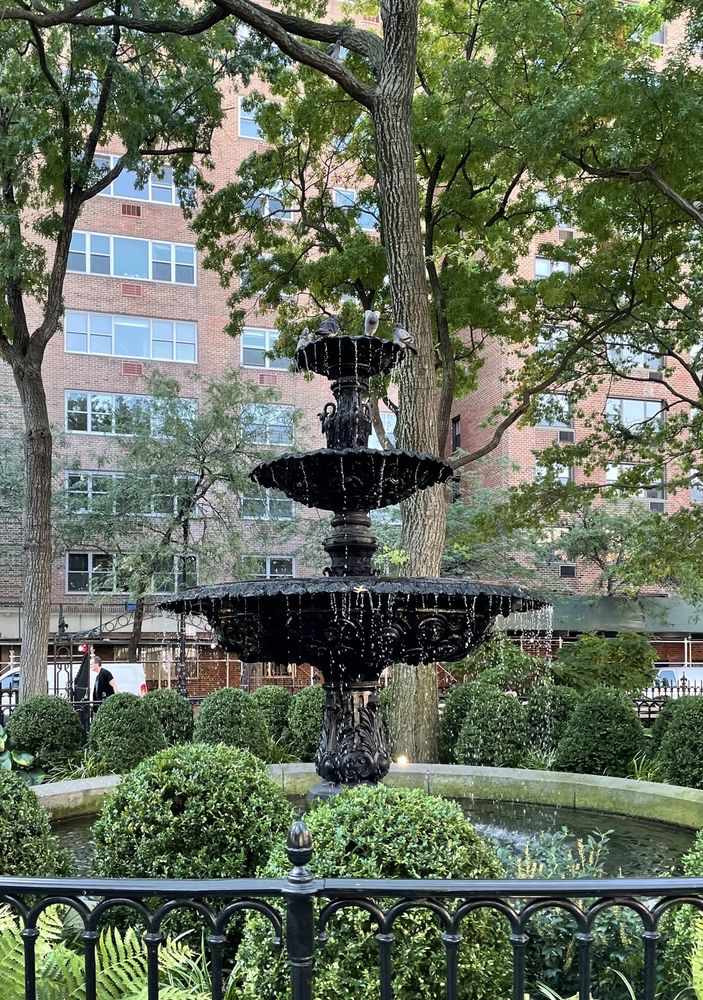
## Chapter One: The Square That Sang The morning we rolled into New Orleans, the air smelled like powdered sugar, river mist, and trumpets warming their silver throats. I, Pete the Puggle, sat in the back seat with my nose pressed to the window, my white velvety fur puffed from excitement, the playful streaks around my eyes making me look—as Roman said—“like a tiny rock star who forgot his guitar.” Jackson Square spread before us like a painting someone had left out in the sun: iron fences black as licorice, artists pinning color to easels, pigeons arguing over crumbs, and St. Louis Cathedral rising white and patient above it all. “Look alive, adventurer,” Lenny said, parking and turning with that warm Dad-smile that made even traffic cones feel forgiven. “New Orleans doesn’t walk into your heart. It dances.” He wiggled his eyebrows. “Which is why I brought spare knees.” Mariya laughed and cupped my face. “Magic hides in ordinary bricks here, Pete. Smell the rain on the stone? That’s yesterday becoming music.” Roman leaned over, protective and teasing. “Stay close, buddy. Crowds are rivers with elbows.” I wagged hard, but when we stepped near the fountain, my paws turned to four little anchors. Water glittered, leaped, laughed—and roared in my ears like a hundred bathtub monsters. My chest tightened. I remembered a wave from last summer knocking my legs sideways, the cold slap, the helpless tumble. “I can’t,” I whispered, though only Roman heard the tremble. He knelt, offering his palm. “Then we don’t conquer it yet. We visit it. One sniff at a time.” A stranger in a crisp white shirt turned from the fountain’s edge, eyes bright as struck flint. “A wise plan,” said Bruce Lee, our old friend, smiling as if courage were a tea he served daily. “Fear is not an enemy, Pete. It is a messenger wearing heavy boots.” Before I could answer, a laugh boomed from beneath a magnolia—round, grand, impossible. Baron Munchausen swept off his hat. “Did someone mention boots? I once outran a thunderstorm in mine!” The square seemed to lean closer, listening. ## Chapter Two: Bruce, the Baron, and the Bell Bruce moved through the crowd like a calm note through loud music, never pushing, always arriving exactly where kindness was needed. He showed me how to breathe: in through the nose—smell beignets, horses, brass polish, wet leaves—out through the mouth—let the fear float off like steam. “Water is honest,” he said, dipping a finger into the fountain and flicking a silver drop into sunlight. “It only asks you to learn its language.” I whimpered anyway when spray kissed my ear. Roman crouched beside me. “I get scared too,” he admitted. “When I can’t find you in a store, my stomach feels like marbles in a dryer.” Mariya touched the fountain’s rim. “See how the stone holds the water without strangling it? Boundaries can be gentle.” Lenny nodded. “Courage is a leash you hold from the inside.” He paused. “Also, if anyone asks, I definitely did not name the pigeons Kevin.” One pigeon—obviously Kevin—glared. Baron Munchausen flung open his coat, revealing pockets full of corks, maps, moon buttons, and a small telescope. “When I sailed the Syrup Sea,” he declared, “my crew feared the whirlpool until we sang to it. It blushed and became a merry-go-round.” The cathedral bell rang, deep and round, shaking pigeons into confetti. Artists shouted greetings; a tap dancer spun on cardboard; a horse in a carriage blinked like an old philosopher. I felt the square’s heartbeat under my pads and, beneath it, my own small drum: thump-hide, thump-hide, thump-try. Bruce offered his hand, not pulling, just present. “Choose one step,” he said. I chose the dry edge of the fountain. Then the damp edge. Then—oh brave terrible thing—I let one paw touch the ripple. Cold zipped up my leg. I yelped, then laughed because I was still me, still whole, still held by eyes that loved me. “Again,” Roman whispered. I touched again. The water did not swallow me. It sparkled, indifferent and friendly, a mirror practicing sky. ## Chapter Three: A Map Made of Music By noon Jackson Square had become a carnival of ordinary miracles. A painter with purple glasses offered to sketch me “as if I were the mayor of courage.” Mariya bought roasted pecans and shared them like tiny edible moons. Lenny asked a saxophonist whether jazz was just math that had fallen in love; the saxophonist replied, “Only on Tuesdays,” which made Dad nod solemnly as if receiving state secrets. Roman kept one hand near my harness, not tight, just a lighthouse of fingers. Then the crowd thickened near Decatur Street, bodies weaving like currents. A brass band exploded into song; a dancer’s heel cracked the pavement; somewhere a child dropped a red balloon and cried as it climbed toward the cathedral towers. I turned to tell Roman that balloons were brave because they left everyone, but Roman was not beside me. Lenny’s voice was suddenly far away. Mariya’s hat bobbed, vanished, reappeared wrong. The world became legs—hundreds of legs—and every face was kind and none were mine. “Roman?” I barked. “Mariya? Lenny?” My shout came out small, a bone buried under drums. Panic opened black umbrellas inside me. Separation fear is not loud at first; it is the terrible silence where familiar footsteps should be. I darted under an easel, knocked over a jar of brushes, apologized to a portrait of a general, and bolted toward the smell of river because water meant open space—and then remembered I feared water too. Great, I thought wildly. I have collected the whole set. Bruce appeared at my side as if fear had rung a bell only he could hear. “Lost is a place,” he said, “not a sentence.” Baron popped from behind a mule-drawn carriage, panting. “I’ve been separated from everyone I love—twice by whales, once by bureaucracy. We shall proceed heroically and slightly confused.” I wanted to believe them. My tail, traitor, tucked. “What if they leave?” I whispered. Bruce’s eyes softened. “Love does not misplace its heart.” ## Chapter Four: The Alley of Long Shadows We searched past artists packing away sunsets, past a magician pulling cards from children’s ears, past the cathedral doors breathing cool incense. The afternoon leaned; shadows stretched like taffy. Baron insisted a certain lamppost was “an old comrade from the Moon Wars” and saluted it. Bruce asked questions in that quiet way that made people remember details: a white puggle, streaked eyes, family laughing near the fence. A tarot reader pointed toward a narrow alley. “Your little dog ran where the dark keeps its spare keys,” she said. The alley swallowed sound. Bricks sweated green; balconies dripped ferns; a line of laundry hung above us like flags of a country no one visited. My fear of the dark waited there, patient as a cat. It whispered that shapes were monsters, that every doorway ate puppies, that night had already hidden beneath the day. I froze. Bruce stood behind me, not pushing. “What do you see?” he asked. “Teeth,” I said. “Everywhere.” He struck a match—only a match—and held it low. The teeth became bottles, crates, a bicycle grinning with rust. Baron grew serious, which on him looked stranger than boasting. “Once,” he said, “I entered a cave so dark it had opinions. I brought no torch. I brought friends.” From his coat spilled tiny lights—fireflies? stars? buttons?—and they hovered, making a path. “Darkness is only a room before introductions,” Mariya would have said, and thinking of her steadied me. I missed her humming. I missed Lenny’s jokes, even the bad ones—especially the bad ones. I missed Roman’s hand like a promise. A scrape sounded behind the bins. Out slid a shape broad and low, eyes yellow, breath smelling of swamp and old coins: the Gloom Gator, not quite real and not quite dream, born from every fear I had fed that day. It grinned with sewer-teeth. “Little lost thing,” it purred. “Water taker. Dark keeper. Family forgetter.” My knees shook. Bruce stepped forward, calm as a closing door. Baron drew a silver corkscrew like a sword. I heard Roman far off shouting my name. ## Chapter Five: Teeth, Truth, and a Very Small Roar The Gloom Gator grew larger by feeding on my thoughts; I could feel it nibbling the edges of every scary memory. Its tail knocked crates into drums. Bruce moved first—not angry, not cruel—a blur of precise mercy, redirecting a snapping jaw so it bit air, then air again, then its own shadow. “You are made of borrowed fear,” he told it. “Return what is not yours.” Baron flung his corkscrew; it spun into a tiny silver cyclone, unscrewing the gloom from the alley walls with a sound like bottles laughing. Still the creature lunged at me, and all my fears fused into one black wave: water closing over my head, dark swallowing the match, Roman’s face gone forever. I wanted to vanish, to become a crumb under a shoe. Instead I remembered the fountain: one paw, cold zip, still me. I remembered the match: teeth were bottles. I remembered Bruce saying lost is a place. I planted my feet. My roar came out the size of a squeaky toy, but it was mine. “I am Pete,” I cried, “and my people are looking for me!” The alley rang. Windows rattled; laundry snapped; Baron’s floating lights surged. Bruce turned my squeak into strategy. “Again,” he said, sweeping the Gloom Gator’s feet aside. “Name what is true.” I shouted, “Water can sparkle! Dark can hold stars! Being lost ends when love keeps calling!” Each truth bit the monster harder than teeth. It shrank from gator to lizard to smudge, hissing, “You’ll still be afraid.” “Yes,” I said, trembling, “but I’ll be afraid and moving.” Roman burst around the corner then, breath ragged, eyes wet and fierce. He skidded, opened his arms, and I launched into him so hard we both hit the bricks. “I’ve got you,” he kept saying into my fur. “I’ve got you, I’ve got you.” Behind him came Lenny and Mariya, running with the whole bright square tumbling after—artists, Kevin the pigeon, the purple-glasses painter, even the horse philosopher clopping slowly as if applause had hooves. ## Chapter Six: Found Is a Family Word Mariya dropped to her knees and gathered both Roman and me into one arms-full of heartbeat. Lenny wrapped around us all, laughing and crying in that Dad way that pretends it’s only allergies. “I told the crowd,” he said, voice cracking, “that if anyone saw a small white hero with makeup streaks, they should follow the sound of courage squeaking.” Roman buried his face in my neck. “I ran so fast my shoes filed a complaint.” I sobbed once—just once—then licked his chin because salt needed answering. “I was scared you’d become a story I only told at night,” I admitted. Roman held tighter. “Never. You’re stuck with me like fur on a couch.” Bruce bowed to my family. “He found his voice before I found the alley.” Baron wiped a tear with a handkerchief large enough to sail a bathtub. “I have ridden comets and out-danced hurricanes, but nothing—nothing—compares to being found by your own people.” We walked back toward the fountain because Mariya said endings deserve circles. The sun lowered, gilding the cathedral, turning artist canvases into windows of fire. My paws still trembled, yet I approached the water and, before fear could assemble its committee, stepped into the shallow edge. Cold rushed up; breath rushed in; love rushed faster. Lenny cheered so loudly Kevin fled. “That’s my pup! Hydrated by bravery!” Roman splashed beside me, sneakers and all. “See? It bites, then it shines.” Mariya dipped her fingers and crossed a cool drop on my forehead. “Ordinary water,” she said, “extraordinary Pete.” Bruce smiled as if he had known all along. Baron claimed the fountain was secretly a baby ocean and demanded it salute. For the first time, I barked at the spray not to scare it away but to say hello. The square answered in brass, bells, hooves, paint, sugar, and the warm wreckage of my family laughing. ## Chapter Seven: The Night That Learned Our Names Evening laid blue velvet over Jackson Square, and lamps bloomed one by one like golden dandelions. We stayed for beignets because fear burns calories, Lenny explained, and powdered sugar is “medical confetti.” My old fear of darkness peeked from doorways, testing whether I had meant those brave words. It found me different—not unafraid, exactly, but accompanied. Shadows no longer looked like mouths; they looked like places where light was thinking. We sat near the fence while musicians coaxed stars from brass. Roman leaned shoulder-to-shoulder with me. “When you were gone,” he said quietly, “I kept imagining the worst. Then I heard you squeak-roar and knew you were fighting. That made me brave enough to run faster.” I told him about teeth becoming bottles, about Bruce’s match, about Baron’s coat of impossible constellations. “I thought love had misplaced me,” I said. Mariya shook her head. “Love has pockets you don’t know about until you fall into one.” Lenny grew thoughtful, which made his face look like a joke resting. “Today I learned courage can be damp, loud, and covered in powdered sugar.” He raised a napkin like a toast. “May all our monsters shrink when named.” Bruce watched the river beyond the roofs, its black ribbon catching lamp-gold. “The strongest hand,” he said, “is the one that opens after making a fist.” Baron nodded, unusually gentle. “And the tallest tales are the ones that carry us home.” A hush settled as the cathedral clock counted the hour. I listened to each bell travel through iron, brick, water, bone. I was a small dog with streaked eyes and a heart newly educated by terror. I had touched water, walked into dark, been lost, been found. None of it had erased me; all of it had enlarged the room where I lived. Around me, my family breathed in the same music, separate and woven, like notes that only become a song by holding one another. ## Chapter Eight: Home Is a Brave Address Before we left, I returned alone—well, almost alone; Roman shadowed me at a respectful distance—to the fountain’s rim. The water wore night now, black silk stitched with reflections. I leaned until my nose touched the surface and my reflection broke into circles: Pete shattered, Pete returning, Pete many and one. “Thank you,” I told it, though I wasn’t sure whether I meant the water, the dark, the fear, or the hands that had refused to stop searching. Maybe gratitude is just courage after it takes off its armor. Roman sat beside me and dangled his fingers in the ripples. “You know what changed?” he asked. “I used to think protecting you meant standing in front. Today I had to stand behind and trust your bark.” I nudged him. “And I used to think being brave meant not shaking. Turns out shaking is just bravery warming up.” He laughed, and the sound joined the square’s long exhale—tires, shutters, hooves, applause, a last trumpet note sliding home. We gathered near the fence for one family portrait beneath the lamps: Lenny solemn until Mariya tickled him; Mariya glowing as if she had bottled dusk; Roman trying to look cool while holding my paw; Bruce at the edge, peaceful as a sheathed blade; Baron already claiming the moon had followed us for autographs. The camera flashed, and for one white instant every fear I owned was lit plainly, small enough to fit in a pocket. On the drive away, Jackson Square folded itself behind us like a map we would never finish reading. I curled between Roman and Mariya, Lenny humming off-key, Bruce promising tea, Baron asleep mid-sentence: “—and then the alligator said—” I closed my eyes and heard water without flinching, dark without hiding, silence without abandonment. We had been lost and found; we had been afraid and honest; we had turned teeth into bottles and shadows into lamps. Love is not never being afraid—it is calling, listening, and coming back. Courage begins with one wet paw. Family is the brave address
Use these buttons to read the story aloud:



No comments:
Post a Comment