"*** Pete the Puggle and the Lanterns of Bay Ridge Promenade ***"🐾

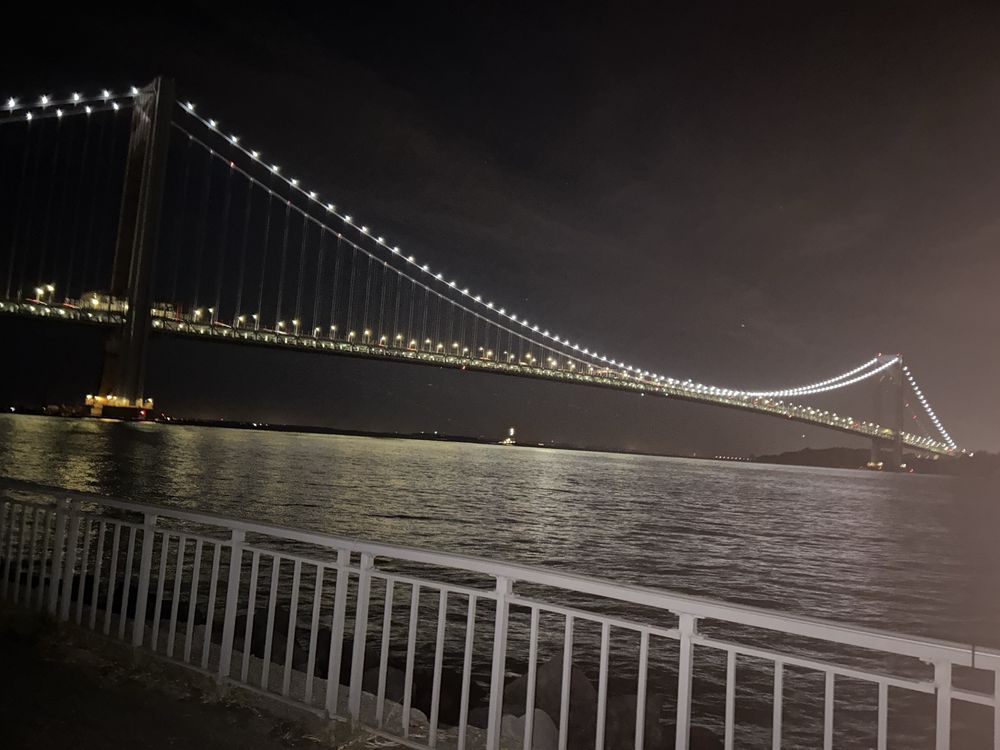
## Chapter One: The Wind That Smelled Like Salt and Courage The morning our family drove to Bay Ridge Promenade, I sat in the back seat with my paws pressed to the window and my heart doing somersaults under my short white fur. I am Pete the Puggle, bright-eyed and usually brave about almost everything—crunchy leaves, thunder, the vacuum cleaner’s dragon roar—but the sight of the gray-blue water stretching beyond the Belt Parkway made my ears fold like little paper boats. Lenny, my warm and wise dad, caught my eye in the mirror and said, “Pete, courage isn’t the absence of wobbles. It’s taking your wobbles for a walk.” Mariya turned from the front seat, smiling as if sunlight had taught her how. “The promenade is full of ordinary magic today,” she said. “Watch for it.” Roman, my older brother and best rival, leaned over and bumped my shoulder. “Stick with me, Pug. If the water tries anything funny, I’ll bark louder.” When we parked near Shore Road, the wind came galloping off the Narrows like a herd of invisible horses, carrying gull cries, bicycle bells, and the buttery perfume of pretzels from a cart near the entrance. The Verrazzano-Narrows Bridge arched in the distance, silver and enormous, like a giant’s sewing needle stitching Brooklyn to Staten Island. I hopped out, nails clicking on pavement, and immediately froze at the edge where the promenade overlooked the water. Waves slapped the rocks below—slap, hiss, slap, hiss—and each sound felt like a cold nose pressed to my ribs. Roman noticed and softened. “Hey,” he said, kneeling so we were eye to eye. “Remember when you thought the garden hose was a snake? We named it Gerald and now you water the tomatoes with him.” I laughed despite myself, a short huff through my velvety muzzle. Then came a familiar voice, bright as a kicked-open door: “Pete! Lenny! Mariya! Roman! My favorite adventure unit!” It was Bruce Lee, our old family friend, actor, and whirlwind of phenomenal martial arts ability, wearing a simple black jacket and a grin that could knock fear flat without raising a fist. He swept into a playful bow so low his hair nearly brushed the boardwalk. “Bruce!” I yipped, forgetting the water for one brave second. “Are you here to vanquish foes?” He winked. “Only if the foes are bad moods, soggy fries, or self-doubt. Those I can defeat with bare hands and better jokes.” Lenny clapped his shoulder. Mariya asked about his latest film. Roman challenged him to a thumb war. And I, Pete, felt the day open like a treasure map—though I still kept one cautious paw behind the line where the sea breeze turned wet. ## Chapter Two: Pretzels, Promises, and the Edge of the Blue We strolled the promenade beneath a sky scrubbed clean by wind, passing joggers with headphones, grandparents feeding pigeons against posted rules, and kids whose scooters made sparks of sound on the concrete. Mariya bought pretzels and tore mine into moon-shaped pieces. “Taste this,” she said, holding a bit near my nose. “Salt, warmth, Brooklyn.” I crunched and wagged, but my eyes kept drifting to the railing, beyond which the water moved like a living muscle. Lenny followed my gaze. “What does it say to you, Pete?” he asked gently. I swallowed. “It says, ‘I am bigger than your bravery and I know where your paws are.’” Lenny nodded as if the ocean had said something very reasonable. “Then we answer politely: ‘Good afternoon, Bigger-Than-Me. We’re learning.’” Bruce Lee walked beside me with hands loose at his sides, calm as a cat in sunlight. “When I was young,” he said, “people thought I feared nothing because I moved fast. Truth? Fast feet can hide a scared heart. I learned to make fear sit in the front row while I performed anyway.” Roman snorted. “Pete’s fear sits in the front row with popcorn and a foghorn.” I nipped his ankle, playful, and he dodged, laughing. “See?” Roman said. “Still got fight.” Bruce crouched and tapped my chest with two fingers, feather-light. “Your heartbeat is a drum, not an alarm. Drum means march. Alarm means run. Choose the drum.” Near the overlook by the 69th Street pier, the promenade widened and the railing gleamed with afternoon light. Below, black rocks wore white lace from the surf. A ferry grumbled far away; a kite shaped like a red octopus staggered above a family’s picnic blanket. Mariya pointed to cormorants drying their wings on a buoy. “Look,” she whispered, “they stand in the wind and become commas in a sentence only the bay can read.” I wanted to be poetic like her, but the water kept clearing its throat. Roman took my leash—not tight, just present. “No hero speeches,” he said. “Just one step. Then snack.” So I took one step toward the railing, then another, while Bruce Lee shadowboxed a seagull’s shadow and Lenny told a joke so bad—“Why did the wave blush? Because the shore saw its bottom!”—that my fear hiccupped and shrank by one whole inch. ## Chapter Three: The Kite, the Crowd, and the Great Vanishing Disaster arrived disguised as fun. A gust snatched the red octopus kite and sent it diving toward the railing; children shrieked with delight; a cyclist bell rang; someone dropped a soda that fizzed like tiny fireworks. In the swirl, Roman let go of my leash for half a heartbeat to catch a toddler’s runaway balloon, and Bruce Lee turned toward a woman whose stroller wheel had jammed. I followed the kite because it looked like a frightened sky-puppy needing rescue. “Pete!” Mariya called, but her voice was folded under the wind. I darted between legs, through a canyon of sneakers and scents—hot dogs, sunscreen, coffee, pigeon feathers—until the promenade curved and the crowd swallowed my family behind me. When I stopped, the red kite was tangled on a bench, and my people were gone. The promenade, so friendly minutes before, became a maze of elbows and echoing laughter. Every man’s jacket was almost Lenny’s; every woman’s curls almost Mariya’s; every tall boy almost Roman, but not quite, not quite, not quite. My separation fear rose black and fast, an elevator dropping in my stomach. I remembered being tiny at the shelter before Lenny chose me, the clang of cages, the smell of bleach, the long nights when no footsteps paused at my door. “Family is my leash,” I thought, “and I have chewed through it by accident.” I barked once, sharp. A pigeon stared. A baby pointed. No Roman came. Then a shadow slid beside me, sleek and reassuring. “Breathe, little dragon,” said Bruce Lee, appearing as if he had stepped out of a pocket of air. I almost sobbed with relief, but his face was taut. “I was helping the stroller, you chased the kite, the crowd shifted—classic chaos. We find them by doing what fear hates: moving slowly.” He lifted me onto the bench so I could see above knees and shopping bags. “Describe home,” he said. I closed my eyes. “Lenny smells like cedar and pencil shavings. Mariya’s scarf is yellow. Roman whistles through the gap in his front teeth when he’s worried.” Bruce nodded. “Good. We listen for a worried whistle.” Far off, gulls heckled the bridge. Somewhere, faint as a secret, came three notes—Roman’s whistle, cracked with panic. My ears shot up. “This way,” I barked, and Bruce Lee smiled like sunrise breaking boards. “Lead, Pete.” ## Chapter Four: Under the Stairs Where Dark Keeps Its Teeth We followed the whistle toward the playground near the water’s bend, but the path was blocked by a maintenance cart and a maze of orange cones. A worker waved us around a stairwell that dipped beneath the promenade to a lower walkway. “Shortcut,” Bruce said, reading the sign. I looked down. The stairwell was a throat of concrete, dim and cool, with a light flickering at the bottom like a tired star. My second fear—the dark—waited there with its mouth open. It wasn’t ordinary dark; it was the kind that remembers closets, basement corners, the moment after bedtime when toys become-shaped like wolves. My paws locked. Bruce didn’t pull. He sat on the top step and said, “I once filmed a scene in a cave. The director wanted real fear. I gave him real breathing instead.” “In through the nose,” he murmured, demonstrating, “like smelling soup. Out through the mouth, like cooling it.” I tried. Soup, cool. Soup, cool. The stairwell remained dark, but it stopped growing. “Pete,” Bruce said, “darkness is not a monster. It is a room where your courage hasn’t turned on the lamp yet.” I asked, voice small, “What if the lamp is broken?” He tapped my nose. “Then we become the lamp.” From below came Roman’s whistle again, closer but warped by concrete. I imagined him in some shadowed place too, calling me, believing I could come. That belief felt warmer than any sweater. Step by step, we descended. The air smelled of rust, salt, and old rain. Graffiti bloomed on the walls—blue whales, names in bubbles, a heart pierced by an arrow that looked more like a french fry. Halfway down, the flickering light died with a tick, and blackness poured over us. I whimpered; Bruce’s hand found my back, steady as a tabletop. “Say the true thing,” he whispered. I gulped. “I am Pete. I am scared. I am going anyway.” The words made a tiny spark inside me, not bright enough to see by, but bright enough to move. At the bottom, a sliver of daylight showed under a service door. I pushed it with my head and tumbled into the lower walkway—where Roman’s whistle came clear and desperate from beyond a locked gate marked AUTHORIZED PERSONNEL. ## Chapter Five: The Gate, the Water, and Bruce Lee’s Open Hands Beyond the gate, the lower service path ran along the riprap, closer to the water than I ever wanted to be. Waves struck the rocks and leapt up white, licking the concrete. Roman was on the other side of the gate, soaked to the knees, face pale. “Pete!” he shouted. “I climbed down looking for you and the gate slammed behind me. I can’t reach the latch from here.” The water hissed as if pleased by our problem. My three fears held a meeting in my chest: separation screamed, darkness muttered, and water banged the table. Roman saw my trembling and, even trapped, tried to grin. “Don’t you dare be brave without me,” he said. “That’s cheating.” Bruce Lee examined the gate: chain-link, padlock rusted, hinges old but strong. “No kicking,” he said, more to himself than us. “Kicking makes noise; thinking makes doors.” He pressed two fingers to the latch, closed his eyes, and breathed so slowly I could count the waves between heartbeats. Then his hand moved—not fast, not flashy, just exact. He lifted the rusted tongue, twisted the hinge pin upward with a coin from Mariya’s souvenir penny, and eased the gate open without so much as a squeak. Roman stumbled through and grabbed me so hard my ribs squeaked. “I found you,” he kept saying, though technically Bruce had opened the gate and I had walked through the dark. “We found each other,” I corrected, and Roman nodded, eyes wetter than the spray. Before relief could settle, a rogue wave slapped the rocks and exploded over the path, soaking us and dragging a plastic crate toward the edge where a gull chick had fallen, peeping in terror. Without thinking—literally without the old committee of fears voting—I ran. The water reached for my paws; I felt its cold fingers and heard its booming voice say, “You are small.” “Yes,” I thought, “but I am here.” I planted my feet the way Lenny taught me on icy sidewalks, lowered my center like Bruce’s stance, and nudged the chick back from the rim with my nose. Roman hauled the crate behind us as a shield; Bruce formed a calm wall between us and the next surge, palms open, not striking, simply redirecting the foam aside with a turn of his wrists as if inviting the ocean to dance elsewhere. The wave slid back, disappointed. I stood dripping on the stones, alive and astonished. ## Chapter Six: The Drum Beats Back Climbing to the upper promenade should have been easy, but the stairwell light was still dead and my body remembered every shadow by name. This time Roman went first, not pulling, just making his footsteps audible. “Left paw,” he called softly. “Right paw. Snack soon.” Bruce walked behind me, a mountain that had learned manners. Halfway up, panic returned wearing a clever mask: What if Lenny and Mariya left? What if they’re at the car? What if love has a closing time? I stopped on the step where black was thickest and felt tears burn behind my eyes, hot and ridiculous for a dog who had just argued with the Atlantic. Roman came back down two steps and sat beside me in the dark. “When I lost sight of you,” he said, “I ran so fast my shoelace snapped. I kept thinking, ‘Pete thinks I let go.’ I didn’t mean to, but meaning doesn’t untangle knots—showing up does.” His voice cracked, and I realized my brave brother had been afraid too, not of water or dark, but of failing me. Bruce, below us, said quietly, “Fear is honest when it says danger exists. It lies when it says you are alone.” I pressed my forehead to Roman’s knee. His hand trembled in my fur. We were two creatures pretending to be statues until our breathing matched. Then Mariya’s voice floated from above, thin and golden through the stairwell: “Pete? Roman? Bruce?” It was followed by Lenny, hoarse from calling: “If you can hear us, bark once for yes, twice for ice cream!” I barked once, then twice because hope made me greedy. Light bloomed at the top of the stairs—Mariya’s phone flashlight, yellow scarf glowing around her neck like a captured sun. Lenny stood beside her, one shoe untied, face folded with worry. Seeing them did not erase the dark; it gave the dark a door. I climbed the last steps into their arms, into Mariya’s rain-and-lavender smell, into Lenny’s cedar warmth, into Roman’s shoulder against mine, into Bruce Lee’s quiet nod that said, The drum was yours all along. ## Chapter Seven: Lanterns on the Promenade By early evening, Bay Ridge Promenade had changed costumes. The hard blue afternoon softened into peach and violet; lamps along the walkway blinked on one by one, each a small moon practicing to be brave. The Verrazzano’s lights sparkled across the Narrows, and the water—my old enemy—lay below breathing in long, dark swells. We sat on a bench near the overlook, wrapped in a spare blanket Mariya kept in the tote “for emergencies and impromptu picnics,” which apparently were the same thing. Lenny distributed hot chocolate in paper cups and one shallow bowl for me. “To the found,” he said, raising his cup. “And to the seekers,” Mariya added. Roman clinked my bowl with his cup. “To Pete, who glared at the ocean and won.” I wanted to say something magnificent, but my tongue felt shy after so much barking. Bruce Lee saved me by pointing toward the bridge. “See how the cables hold the road? Not by being stiff. By being many.” Mariya smiled. “Family is suspension,” she said. “When one cable shivers, the others hum.” Lenny nodded. “Also, never chase an octopus kite unless you’re prepared for plot.” We laughed, and the sound loosened the last knot behind my ribs. I told them about the stairwell, the dark like a mouth, the gate, the chick, the wave that called me small. I admitted the worst part wasn’t water or blackness—it was the old shelter memory that footsteps might never come back. Saying it aloud made the memory sit down and stop kicking. Roman stared at the foam below. “I keep thinking I should’ve held the leash tighter,” he said. “But if I’d held tighter every second, you’d never learn your own balance.” Bruce turned a pretzel into two moons and gave me both. “Control is a fist,” he said. “Trust is an open hand. Today we used open hands—mostly.” He grinned. “One gate required mild persuasion.” Mariya tucked the blanket around my shoulders. “Magic wasn’t in the pretzels or the lamps,” she said. “It was in how scared everyone was and how kindly we walked anyway.” The wind carried music from a nearby speaker, someone’s salsa song skipping over the railing. I watched the water and felt—not friendship exactly, not yet—but a truce. It could be vast; I could be small; we could both be in the story. ## Chapter Eight: The Reunion at the Edge of Brave As stars pricked
Use these buttons to read the story aloud:


No comments:
Post a Comment