"*** The Splashing Shadows of Seth Low Playground ***"🐾
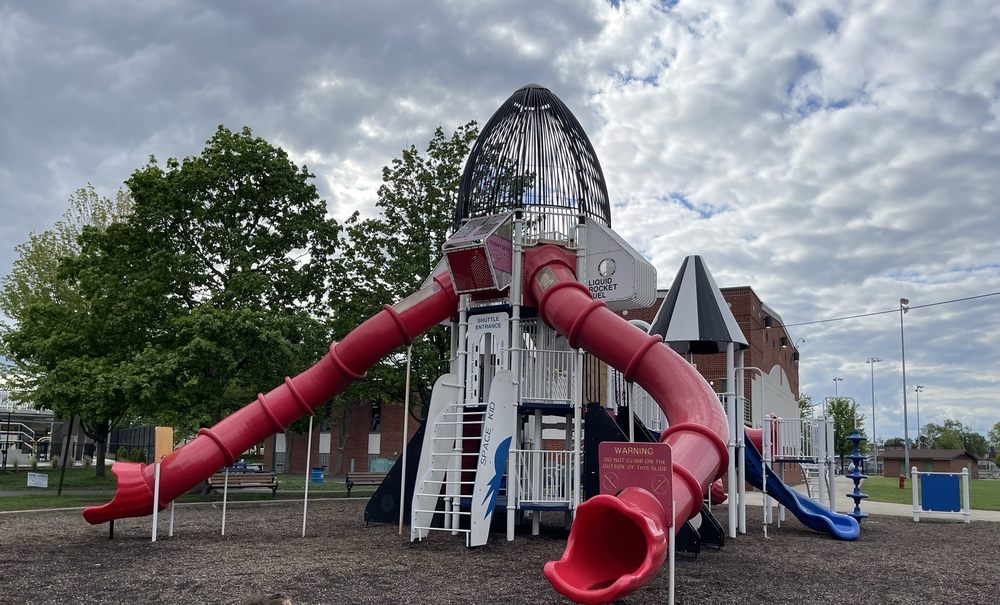
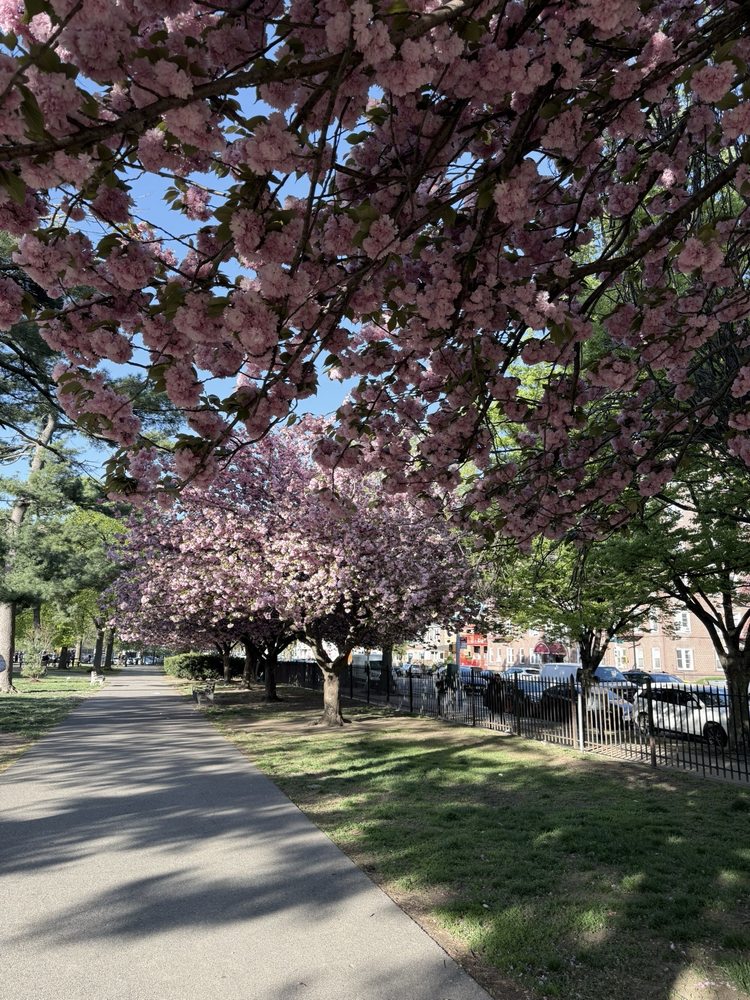
## Chapter One: The Leash of Morning The morning smelled like toasted bagels, wet leaves, and possibility. I, Pete the Puggle, stood by the door with my tail thumping like a tiny drum while my white velvety fur still held the warm shape of the blanket. My eyes, streaked with playful makeup that Mariya said made me look “like a rock star who believes in breakfast,” watched Lenny tie his shoes with the seriousness of a captain preparing a ship. “Seth Low Playground today,” Lenny announced, grinning. “Swings high enough to tickle pigeons, sprinklers brave enough to test heroes, and benches old enough to remember every scraped knee in Brooklyn.” Mariya tucked a water bottle into the adventure bag. “Even ordinary sidewalks have doors in them, Pete. You just have to sniff for the hinge.” Roman leaned against the wall, trying to look too cool to be excited, but his sneakers betrayed him by bouncing. “Bet I can beat you to the gate, furball.” “You bet against a nose?” I said, though I mostly barked the brave parts and thought the clever ones in big shiny letters. “My nose has solved crimes before breakfast.” Outside, Brooklyn hummed—buses sighing, bicycles whispering, someone’s radio arguing with a pigeon. At the corner waited Charles Bronson, our family’s very old friend, silver-mustached and straight-backed, wearing sunglasses though the sun was still stretching awake. He carried a black umbrella that had never once been opened for rain. “Charles!” Roman shouted. Charles lifted the umbrella like a knight saluting with a dragon’s rib. “I heard there may be puddles,” he said in his gravel-and-honey voice. “I brought equipment.” I adored Charles, but his calm made me feel both safer and more aware of danger, the way a lighthouse makes the rocks look real. When Lenny clipped my leash, my courage felt snug; when we reached the bright gates of Seth Low Playground and I saw the sprinkler diamonds flashing beyond, my belly turned into a cold fish. Water. Glittering, laughing, unpredictable water. Roman noticed. “Hey,” he said softly, crouching so our eyes were level. “We don’t have to be brave all at once.” That sentence followed me through the gate like a small warm lantern. ## Chapter Two: Diamonds That Bite Seth Low Playground opened before us like a painted toy box—green benches, blue swings, red climbing bars warmed by sun, and the sprinkler area where water leapt up in silver ropes and fell back clapping. Children darted through the spray with the fearless joy of dolphins wearing sneakers. I wanted to be them. I also wanted to become a mailbox and never move again. Mariya knelt beside me. “What does the water say?” she asked, curious as if interviewing rain. “It says, ‘Come play,’ and also, ‘I will erase you,’” I whispered into her sleeve. Lenny chuckled, not unkindly. “Pete, water can’t erase a dog with eyebrows that expressive.” Charles Bronson surveyed the sprinklers as if they were a stunt sequence. “Timing,” he said. “Every fountain has a rhythm. Find the rests between notes.” Roman took my leash gently. “Watch Maya and Theo,” he said, pointing to two kids hopping at the edge. “They’re not fighting the water. They’re dancing near it.” A spray arched toward us and I yelped, scrambling behind Charles’s boots. My heart became a popcorn machine. Inside my head, the old fear put on its tall black hat: *You are small. Water is everywhere. It gets in noses. It steals breath.* My legs forgot they had ever run joyfully across rugs. Roman didn’t pull. He sat on the warm pavement, making himself low and unhurried. “Remember the bathtub incident?” he said. “I prefer not to discuss my documentary,” I muttered. He laughed. “You slipped because the floor was slick, not because you were weak.” He dipped two fingers into a puddle and touched my paw. “This is just sky that fell down and got friendly.” Charles extended his umbrella—still closed—and laid the handle near my chest like a bridge rail. “One paw,” he said. “Then complain. Complaining is allowed. Retreating forever is not.” I placed one paw into the edge of a puddle. Cold licked my toes. I did not die. I placed another. The water held my reflection, wobbling but mine. ## Chapter Three: The Map Under the Bench By midday the playground had become a country of sounds: chains creaking on swings, basketballs drumming, a toddler negotiating with a pigeon, and Lenny telling a joke to the ice-cream cart man that made even the pigeon reconsider its life choices. I had advanced to heroic ankle-deep puddle standing when Roman discovered a folded paper beneath the bench, soft with age and smelling of crayons. “Treasure map!” he cried. Mariya’s eyes lit like windows at dusk. “Or someone’s grocery list with ambition.” The map showed Seth Low Playground drawn in brave uneven lines: the swings were mountains, the slide a silver river, the sprinkler zone marked with a blue monster labeled ONLY LOUD, and beyond the handball courts a shaded tunnel of trees with the words DARK BUT NOT MEAN. At the bottom, in pencil: FOR WHOEVER NEEDS PRACTICE BEING BRAVE. I gulped. “That is suspiciously specific.” Charles turned the map over. “No X,” he said. “Good. Real treasure rarely marks itself.” Lenny read the blue monster note and nodded solemnly. “Accurate. Sprinklers are only loud, not wicked.” A gust snatched the paper. Roman grabbed for it; I lunged too, leash slipping from Lenny’s relaxed hand as a scooter zipped past and a basketball rolled like a runaway moon. The map lifted, spun, and sailed toward the trees beyond the courts. Without thinking—because thinking was busy being scared—I chased it. Roman shouted my name. Charles moved faster than a grandfather-shaped shadow should, boots striking the ground in quick, precise beats. The map caught on a branch near the little grove where the path dipped into shade. I seized it triumphantly, then looked up. The playground noises had thinned, as if someone had lowered the volume of the world. Trees leaned together overhead, making a green-black room. The bright gate seemed suddenly far away, a postage stamp of light. Roman crashed through behind me, breathless. “Gotcha,” he said, relief and scolding braided together. Then we both realized the path behind us had forked, and neither fork looked interested in admitting which way we had come. ## Chapter Four: The Green-Black Room The grove was not truly dark, but to me it wore darkness like a cape. Sunlight came down in coins too small to spend. Every root resembled a wrist; every squirrel sounded like a whisper learning my name. My separation fear, older than baths and louder than sprinklers, rose up wearing all my worst thoughts as jewelry: *lost means alone; alone means forever; forever is a long time for a small dog.* Roman pressed his shoulder to mine. “We’re together,” he said. “That’s the opposite of lost.” “Technically,” I said, “we are together in an unknown location, which is lost with company.” “Poetic. Unhelpful.” He tried to smile, but I felt his hand tremble when he touched my ears. That steadied me strangely—if brave Roman could shake, then shaking was not failure. A twig snapped. Charles Bronson stepped from behind a maple as if the tree had politely produced him. “You two move like unlicensed thunder,” he said. “Charles!” Roman nearly hugged him, then pretended he had only been checking Charles’s sleeve for quality. Charles scanned the grove, umbrella angled not as a weapon but as a pointer, a cane, a calm line in a confused paragraph. “I marked our turns with chalk,” he said, showing three white arrows on the path. “Old habit from film sets. Never trust a corridor that looks innocent.” I wanted to feel rescued, but the wind pushed the branches and the arrows seemed to smear. Panic fizzed up my legs. “What if the family leaves? What if the gate closes? What if dark is a mouth?” Charles crouched, his knees cracking like bubble wrap. “Pete, when I was young and playing heroes, I learned fear is a bad director. It shouts ‘Run!’ before it reads the script.” He clicked open a small flashlight from his pocket and handed it to Roman. “Light is not the absence of dark. It is an argument with it.” Roman shone the beam on the chalk marks. “There,” he said. “Left, right, left. Bread crumbs for people who bring chalk.” I kept my nose near Roman’s shoe and one eye on Charles’s umbrella tip. The grove remained shadowy, but shadows became shapes, and shapes became trees, and trees became only trees that had forgotten to applaud our exit. ## Chapter Five: The Fence of Clangs We emerged near the handball courts just as the sky decided to rehearse weather. Clouds slid over the sun; the sprinkler laughter behind us sounded farther than it should. A maintenance gate banged somewhere, metal kissing metal, and I jumped so hard my ears swapped places. Then came the real trouble: a loose section of temporary fencing, silver and rattling, had blown across the narrow path between the courts and the grove, forming a clanging cage around a drain basin where rainwater frothed. Roman stopped. “That wasn’t here.” “Movie sets call this a complication,” Charles said, eyes narrowing happily. The fence shifted in the wind and slapped the ground. I backed into Roman’s legs. Water churned in the basin below the grate, brown and busy, carrying leaves like tiny boats in a hurry. My two fears held hands—water and separation—and invited the dark to make it a crowd. Lenny’s voice floated from somewhere beyond the courts: “Pete! Roman!” Mariya called too, nearer, then farther as the wind stole direction. I barked until my throat felt scraped. The fence rattled louder, swallowing my voice. Charles assessed the gap. “We wait for the gust to pause. Roman, you lift the bottom rail only when I tap. Pete, you cross to me, not to the noise. Noise lies. People don’t.” “What if I fall?” I asked. “Then I will be offended,” Charles said, “because I planned otherwise.” Roman squeezed my scruff. “Look at me, not the water. Count my breaths.” “In,” I said. “Out,” Roman answered. The wind hesitated. Charles tapped twice. Roman lifted the rattling rail with a grunt; Charles slid through with the impossible neatness of a cat in a tuxedo and braced the far side with the umbrella shaft. “Now, Pete. Small steps. Big opinion.” I ran. Water splashed my belly—cold, shocking, rude—but Roman’s counting held me like a harness. Halfway across, the fence slammed behind us and I yelped, slipping toward the grate. Charles caught my collar with two fingers, not roughly, just exactly enough. “Got you,” he said, and the world resumed having edges. ## Chapter Six: Roman Finds the Lantern On the safe side, my legs shook so violently I could hear my tags applaud. Roman wrapped both arms around me, no longer worried about looking cool. “You crossed,” he kept saying. “You crossed, Pete.” “I complained the entire time,” I said. “Complaining while crossing is still crossing,” Charles replied, retrieving his umbrella and checking it for dents as if it had feelings. We followed the chalk arrows back toward the bright mouth of the playground, but the storm rehearsal became a performance. Rain sprinkled, then committed. Families hurried toward shelters; the swings emptied; the blue monster of the sprinklers lost its audience and became only plumbing again. In the confusion, a stroller rolled between us and the main path. By the time we rounded it, Lenny and Mariya were nowhere in sight. My chest caved inward. “They’re gone.” Roman’s face tightened, but he planted his feet. “No. They’re looking. Different thing.” Charles pointed to the tallest structure—the slide tower, now slick and shining. “High ground. Not for climbing—for seeing.” Roman lifted me so my front paws rested on the dry underside of a bench while he stood guard like a brother-shaped lighthouse. From there I saw umbrellas blooming, rain drawing silver lines, and then—Lenny’s red cap near the gate, Mariya’s yellow scarf flashing as she turned the wrong way, then righted herself when Lenny touched her elbow. “There!” I barked. Roman whistled, sharp and bright, the secret signal we used for hide-and-seek and once during an unfortunate cousin’s recorder recital. Lenny’s head snapped up. Mariya saw us and ran—not panicked, not scolding, just moving through rain like love with shoes on. I leapt down before remembering jumping was also a fear-adjacent activity. Roman caught me. We laughed, wet and foolish, while Charles stood aside smiling the smile of a man who had once punched pretend danger for a living and now preferred opening gates. ## Chapter Seven: The Blue Monster Apologizes Under the park shelter, rain stitched the edges of the world while we toweled off with Mariya’s spare picnic blanket, which smelled faintly of strawberries and sunscreen. Lenny hugged Roman first, then me, then pretended he had not been about to cry by blaming the rain for falling near his eyes. “I turned around and you were a comma in a sentence I couldn’t read,” Lenny said. Mariya cupped my face. “Were you very scared?” “I was a museum of scared,” I admitted. “Water wing, dark wing, lost-and-forever wing.” Roman bumped my shoulder. “And still you crossed the fence bridge.” Charles Bronson sat with his umbrella across his knees. “Courage is not silence,” he said. “It is noise that keeps walking.” After the rain softened to a drizzle, the sprinklers sputtered back on for one last act, gentler now in the pearl-gray light. Roman looked at me sideways. “One more dance near the monster? Not through. Near.” Every old fear objected in committee. Water will climb your nose. Dark will return. Family might vanish if you blink. But I remembered the puddle holding my wobbly reflection; I remembered Roman counting; Charles saying light argues; Mariya asking what the water said; Lenny turning fear into a joke without making me small. We walked to the edge. A spray misted my makeup streaks and Mariya laughed, “Now you’re a watercolor.” I stepped in to my ankles. Then knees. Then, because Roman was beside me and Charles stood like a fence that chose to be kind, I let a fountain jet tap my back. It was cold. It was loud. It was not mean. “I am not erased,” I announced to Brooklyn. Lenny raised an imaginary trophy. “Pete the Puddle, conqueror of ankles!” “Puggle,” Roman corrected, grinning. “Today,” Charles said, “both.” ## Chapter Eight: Home Carries Us Back Evening came down tenderly, rinsing the playground in gold. We packed slowly because no one wanted to be the first to say the day was over. At the gate, I looked back: the swings resting like parentheses, the slide shining, the grove no longer a green-black room but a cluster of trees keeping secrets politely. Seth Low Playground had not changed into a different place; I had changed inside it, which made the whole park belong to me in a new way. Roman carried me for the last block, though I insisted I could walk. “You can,” he said. “I just missed you.” Mariya held Lenny’s hand and asked, “What was the magic today?” Lenny considered. “A map with no X. A dog with eyebrows. A family that keeps turning around.” Charles Bronson walked slightly ahead, umbrella hooked over his arm. “The best stunt,” he said, “is coming home with everyone accounted for.” At our stoop, the city softened into lamps and windows. I thought of how fear had felt enormous that morning, a tide with teeth; now it was more like a shadow at my heel—real, but no longer in charge. I had not become unafraid. I had become accompanied. That was the trick no villain in any Charles Bronson movie ever understood: heroes in films may stand alone on posters, but in life we cross fences because someone counts our breaths. Inside, Mariya made cocoa; Lenny told the joke again and it improved by being unnecessary; Roman hung the damp treasure map above my bed. Charles saluted us at the door and disappeared into the blue evening with the dignity of a closing credits theme. Before sleep, Roman whispered, “What did you learn?” “That water is only loud,” I said. “Dark is an argument light can win. Being found is a kind of breathing. And family is the place courage goes when it needs snacks.” He laughed into my fur. Moral of the day: bravery grows in small wet steps; love is the loudest map; and no one has to outrun fear alone. *** The End ***
Use these buttons to read the story aloud:


No comments:
Post a Comment