"*** Pete the Puggle and the Lanterns of Father Demo Square ***"🐾
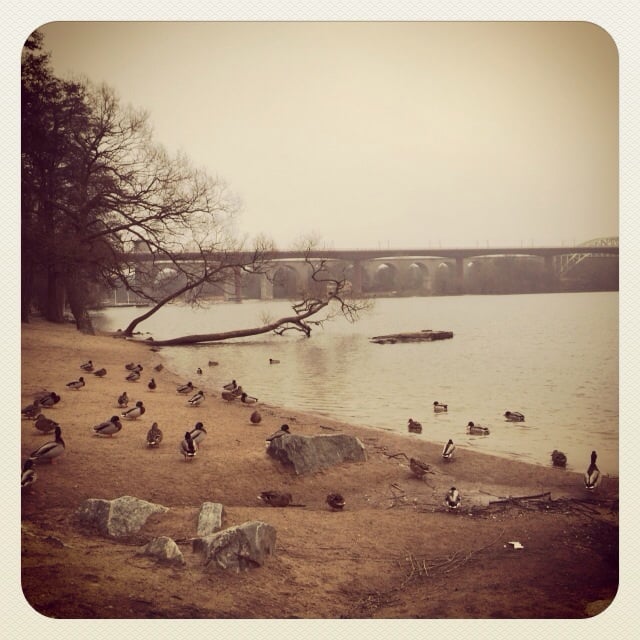
## Chapter One: The Square That Smelled Like Rain and Pretzels The morning Father Demo Square woke under a pewter sky, I—Pete the Puggle, white-furred, bright-eyed, and wearing my playful streaks of makeup like tiny war paint—pressed my nose to the car window and whuffed at the pigeons. “Look at them,” I said. “Tiny gray generals planning a bread war.” Roman laughed and scratched behind my ear. “If they attack, I’m blaming you, Sergeant Sniff.” “Don’t encourage him,” Lenny said, though Dad’s eyes were smiling. “A puggle with a plan is a powerful thing.” Mariya leaned between the seats, curious as always. “Do you hear the fountain? It sounds like the city is telling secrets.” The square unfolded around us: cobblestones shining from last night’s rain, maple leaves stuck like copper coins to the ground, flower boxes trembling in the breeze, and the old fountain chuckling in the center. A cart roasted pretzels; somewhere a violin argued sweetly with a bicycle bell. I loved it immediately—and then I saw the reflecting pool beyond the fountain, black as spilled ink, and my courage curled up small. “Water,” I whispered. Roman heard. His hand settled on my back. “Hey. We don’t have to go near it.” But before I could answer, a booming voice rolled across the square like friendly thunder. “Lenny! Mariya! You brought the little warrior!” Down the steps came Charles Bronson, our family’s very old friend: silver-haired, square-jawed, moving with the loose grace of a cat half his age. Around his neck hung a harmless explorer’s whistle; at his belt were theatrical gadgets from his action-movie days—flash-bang chalk, a folding grappling ribbon, smoke pellets that made purple clouds and smelled faintly of lavender. “Charles!” Lenny hugged him. “Still faster than bad news.” Charles bowed to me. “Pete, rumor says you fear three things: water, dark, and being lost. Excellent. Every hero needs a worthy dragon.” I swallowed. “Mine have teeth.” “Then we shall teach them manners,” he said, and the fountain laughed on. ## Chapter Two: The Map Beneath the Bench Mariya found the map first, tucked beneath a green bench where ivy had stitched the slats together. It was drawn on a napkin soft as a moth wing: Father Demo Square in blue pencil, arrows curling toward the fountain, then under it, where a tiny note read, *When the lanterns blush, follow the hush.* “Magic in the ordinary,” Mom breathed, delighted. “Or a prank,” Roman said, but he was already grinning. Lenny tapped the napkin. “Father Demo Square was built over old service tunnels. Delivery routes, storage rooms, maybe a wartime shelter. Nothing haunted.” He paused. “Probably.” Charles’s eyebrows rose like drawbridges. “Probably is my favorite door.” I tried to be brave, but the words *under the fountain* slid cold paws down my spine. Dark meant no edges. Dark meant the world forgot where I ended and fear began. And separation—oh, that was the oldest monster, the one that whispered, *What if their footsteps stop answering yours?* Roman crouched until his eyes were level with mine. “Pete, look at me. If we explore, we use the buddy rule. You feel scared, you say ‘acorn.’ We stop. No teasing. Deal?” “Deal,” I said, though my voice came out smaller than a mouse’s hiccup. A gust combed the square; napkins flew; pigeons scattered indignantly. The fountain’s basin overflowed into the reflecting pool, and sheet water crept toward our shoes. I leaped back, claws skittering. Charles didn’t laugh. He simply stepped between me and the water, calm as an old lighthouse. “Fear is information wearing a scary coat,” he said. “Ask what it’s protecting.” “My bones,” I said. “Good bones,” Charles replied. “Let’s keep them.” Then the napkin map fluttered from Mariya’s hand, swooped over the pool, and vanished down a grate near the fountain with a metallic swallow. Roman groaned. Charles smiled. My stomach dropped into my paws. “Well,” said Lenny, silly and steady, “lunch can wait.” ## Chapter Three: The Grate, the Purple Smoke, and the First Dark The grate was locked with a rusted padlock shaped like a turtle. Charles examined it, produced not a weapon but a tiny lockpick kit from his movie-prop pouch, and winked. “Old tricks, harmless hands.” Click—the turtle opened its mouth. Below, a ladder sank into brick shadow. The smell rose: wet stone, old coins, moss, and something sweet like forgotten candles. My ears flattened. “It’s very… downstairs.” Roman went first. “I’ll call every step. One. Two. Still me. Three.” Lenny followed with a flashlight; Mariya carried the napkin’s memory in her eyes; Charles came last, a silver shadow. I stood at the rim until Roman called, “Buddy rule, Pete. I’m right here.” I climbed. Each rung was a cold little decision. At the bottom, dark pressed against my fur like a thousand thumbs. I froze. “Acorn,” I squeaked. Everyone stopped. No sighs, no hurry. Mariya’s light made a warm pond around my paws. “Tell the dark your name,” she said softly. “I’m Pete,” I whispered. “I belong to Lenny and Mariya and Roman. I like chicken treats. I am afraid.” The dark did not vanish, but it listened; somehow listening made a path. Charles tossed a lavender smoke pellet—not at danger, just into the black ahead. Purple bloomed, revealing painted arrows on brick. “See?” he said. “Sometimes mystery is only color waiting for courage.” We followed tunnels where pipes hummed like sleepy bees. My imagination grew fangs: every drip was a tooth, every echo a stranger. Then Roman’s hand found my harness. “Count with me,” he said. “One family, two family, three family, four.” We reached a door marked LANTERN ROOM. Beyond it, water whispered—deep, moving, unavoidable. My three dragons stood in one room: dark behind us, water ahead, and separation waiting for any mistake. ## Chapter Four: The River Under the Square The Lantern Room was beautiful and terrible. Old glass lamps hung from chains, unlit, dusted gold. Beneath a stone arch ran a narrow underground canal, black water sliding fast toward the fountain’s bones. A maintenance boat, no bigger than a bathtub, bobbed against a rope. “No,” I said before anyone asked. “Absolutely not. I am a land pancake.” Lenny nodded. “Then we find another way.” But there wasn’t one. The far tunnel had collapsed; the map’s arrows pointed across the canal to a gate glowing faintly blue. Charles tested the rope. “It holds. Two crossings. I’ll ferry.” A rumble rolled through the bricks. Somewhere above, a truck passed; dust sifted; the rope snapped with a sound like a cruel laugh. The boat drifted into the current—straight toward a low grate where water foamed white. Roman lunged, caught the bow, and was yanked half over the edge. I screamed and bit the rope, tasting hemp and fear. Charles moved like lightning in a gray suit: one hand to Roman’s collar, one boot braced, body angled with that impossible agility. “Together!” he barked. We hauled Roman back. For one heartbeat we were all tangled, breathing hard. Then the current tore the boat loose and carried it away, leaving us separated from the gate by twenty feet of hungry water. My legs shook so hard my tags chimed. “I can’t.” Roman, pale but steady, knelt. “You don’t have to love it. You only have to ride with me. I’ll be your island.” Mariya cupped my face. “Courage is fear that has said its prayers.” Lenny added, “And if all else fails, we’ll invent a bridge and name it Pete.” Charles strung his grappling ribbon across the canal to an iron ring, making a slackline. “No weapons needed,” he said. “Only balance, breath, and trust.” I looked at the water. It looked back with a million moving eyes. Then I climbed onto Roman’s back. ## Chapter Five: Over the Black Water Roman stepped onto the ribbon line first, arms out, me clinging to him like a burr with opinions. “Talk to me,” he said. “The water is saying hurry,” I whispered. “It wants to steal my name.” “Then we give it a boring name,” Roman replied. “Howard. The canal is Howard. Howard cannot have you.” A laugh burst out of me, shaky but real. Charles anchored the line behind us; Lenny and Mariya waited, hands linked, their faces lanterns of belief. Inch by inch we crossed. Below, Howard-the-water slapped stone, cold spray kissing my belly. My old terror roared: *Let go, freeze, vanish.* I pictured myself sinking, the family shrinking to stars. “Pete,” Roman said, “feel my steps. Left. Right. Boring Howard. Left. Right.” Halfway across, the ribbon sagged. A lantern above cracked and fell; glass splashed; the current surged. I slipped, claws scraping, and for an instant I hung over the black mouth. Separation flashed—Roman above, me below, family on the wrong side of forever. Something in me stood up. Not large. Not loud. A small brave dog-shaped ember. I kicked, found the line, and pushed. Roman caught my harness; Charles hauled; Lenny shouted, “Come home, Pete!” and Mariya whispered, “Magic, magic, magic,” like a spell made of mother. We collapsed on the far ledge, soaked and alive. I touched the water with one paw—deliberately. “Hello, Howard,” I said. “You are wet, and I am still Pete.” Roman hugged me so hard I squeaked. Charles bowed, actually solemn. “That,” he said, “was a stunt worthy of my best picture.” Ahead, the blue gate opened by itself. ## Chapter Six: The Lantern Keeper and the Scary Quiet Beyond the gate lay a round chamber where hundreds of lanterns slept on shelves. In the center sat an old brass automaton—a lantern keeper with a wind-up heart and eyes like cloudy marbles. A plaque read: *Feed the lamps with stories, and the square remembers.* “Mechanical,” Lenny said, relieved. “Story-powered,” Mariya corrected, enchanted. Then the door slammed. Darkness swallowed the room whole. Not tunnel dark—this was midnight with the lid on. I heard Charles shift, Roman reach, Lenny curse softly, Mariya breathe in. And then—horror—their sounds spread apart as hidden panels rotated, separating us into pockets of echo. “Roman?” I cried. No answer. “Mom? Dad?” The dark returned only my own voice, thinner each time. This was the fear beneath fears: not water, not night, but the empty place where footsteps should answer. I ran until stone kissed my nose. I barked until my throat hurt. The automaton ticked, useless. My thoughts became wolves: *They left. They can’t find you. Brave was a costume.* Then I remembered Roman’s counting. “One family,” I said to the black. My voice shook. “Two family.” I imagined Lenny’s silly joke, Mariya’s wonder, Roman’s hand, Charles’s calm. “Three family. Four.” I added Charles, because friendship had adopted him. “Five, if grumpy movie stars count.” A faint laugh floated through stone—Charles! I followed it, nose low, tail low, heart high. I found a seam of light under a panel and dug until my nails ached. Roman’s fingers met mine from the other side. “Acorn?” he called. “No,” I said, crying and laughing. “Oak tree!” Together we forced the panel. Lenny and Mariya burst through next; Charles emerged last, dusted like a powdered doughnut. He held the automaton’s wind-up key. “It wanted a story,” he said. “So Pete gave it one.” The lanterns began to glow. ## Chapter Seven: When the Lanterns Blush Light rose amber, rose, then blue, washing our faces like sunrise remembering us. The automaton lifted its brass head and spoke in a voice of winding gears: *The hush is followed. The lost are found. Carry one lantern upward before the square forgets its name.* “Cryptic,” Lenny said. “I respect it.” Mariya chose a small lantern with a dented side. “Imperfect,” she said. “Like us.” We climbed a spiral stair that opened beneath the fountain through a hidden hatch. Above, evening had fallen; Father Demo Square glittered after rain, and people gathered because the fountain had begun to shine from below, colors swimming under the water like rescued rainbows. The reflecting pool—my old enemy—held the light gently. Of course trouble had one more scene. A loose scaffold by the fountain, nudged by wind, tipped toward a cluster of children. Charles moved before thought: sprint, leap, a twist in the air that made teenagers gasp; he hooked the falling pole with his grappling ribbon and swung it aside, landing in a roll. No bullets, no blades—only timing, courage, and a lavender smoke puff that made everyone cough and laugh. “Show-off,” Roman said. “Retired,” Charles replied, bowing. I faced the pool. My paws still trembled, but trembling is not the same as surrender. I stepped to the edge, then in—one paw, two—cold shocking, light swirling around my legs. Roman waded beside me without being asked. “Howard’s cousin,” he whispered. “Gertrude,” I said, and everyone laughed as I stood in shining water, afraid and brave at once. The square applauded the glowing fountain, not knowing four humans, one puggle, and an old action star had relit its heart. I shook water from my fur and felt new. ## Chapter Eight: Found, Fed, and Forever Roman found us properly at the pretzel cart, though “found” is funny because by then we were all together, steam rising from cocoa cups, our lantern set on the bench like a tame star. He still grabbed me and said, “Don’t you ever follow a napkin without me again.” “You followed first,” I said. “I’m older. I get to be contradictory.” Lenny wrapped me in his scarf. “Today had enough plot for three movies and a dental appointment.” Mariya touched the lantern. “We went looking for a secret and found each other more clearly.” Charles sat with us, suddenly older in the lamplight, kinder too. “I have played heroes who never doubted,” he said. “Lies, all of it. Real courage is Pete saying ‘acorn’ and still climbing down. Real strength is a family that stops when one voice is small.” I thought of the dark listening when I named myself; of Howard the water failing to steal me; of the empty tunnel learning my footsteps by heart. “I used to think brave meant not scared,” I said. “Now I think brave is being scared with your people and continuing anyway.” Roman bumped my shoulder. “Also, you stood in water. Voluntarily. I’m telling everyone.” “Tell them I was majestic.” “You looked like a surprised dumpling.” We laughed until the fountain joined in. Around us Father Demo Square breathed: leaves, stone, music, bread, rain-clean air. I understood then that adventures are not escapes from love; they are love wearing boots. Fear may guard the door, but family holds the map, and friendship brings the light. Lessons, briefly: courage grows when spoken to kindly; water, dark, and loneliness shrink when named; and no hero is truly lost who keeps calling—and listening—for home. *** The End ***
Use these buttons to read the story aloud:


No comments:
Post a Comment