"*** Pete the Puggle and the Brave Little Waves of Tribeca Park ***"🐾
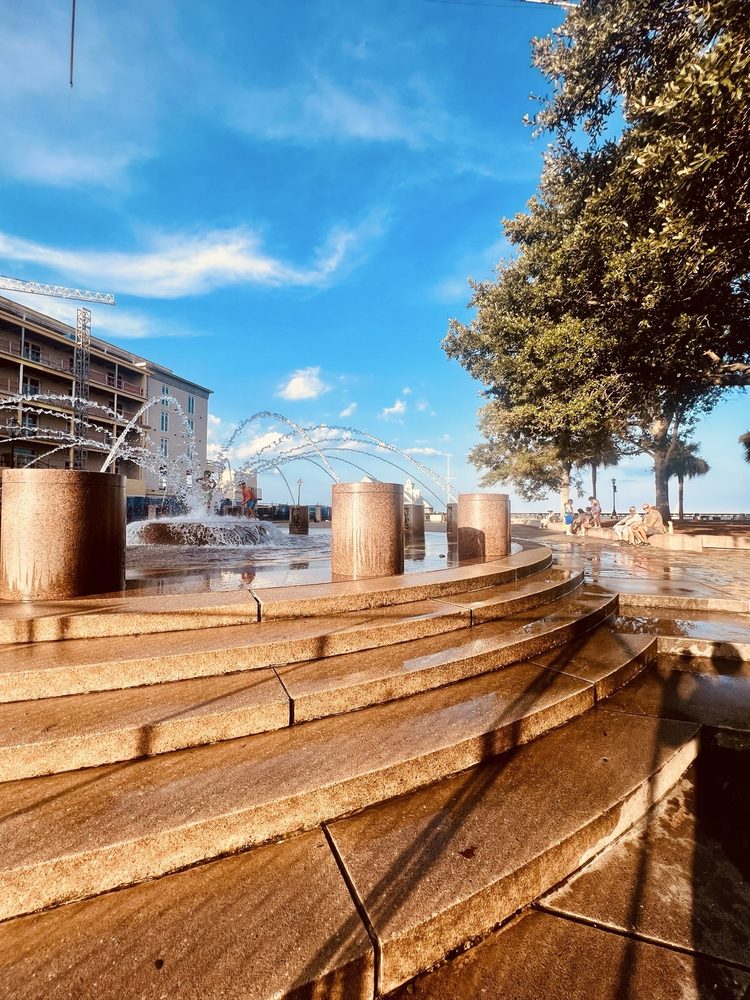
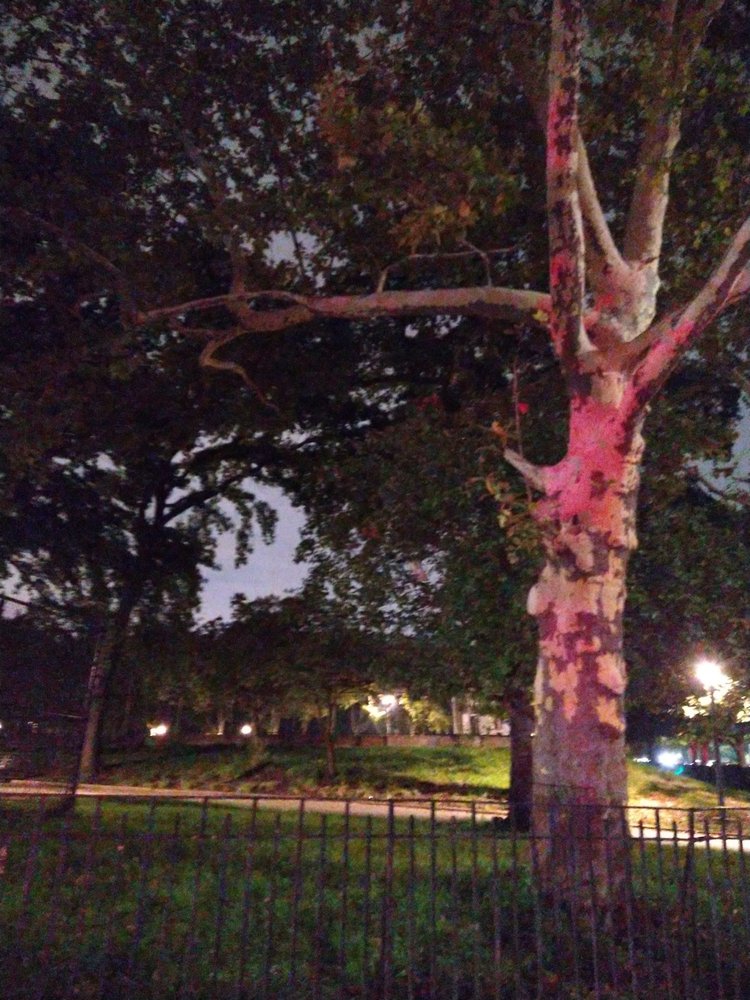
## Chapter One: The Saturday That Sparkled Saturday morning arrived in our apartment like a golden retriever of light—bounding through the blinds, wagging across the floor, and landing right on my nose. I, Pete the Puggle, opened one eye, then the other, and felt my tail thump before my paws even remembered how to stand. My white velvety fur was rumpled into silly peaks, and the playful streaks around my eyes—Mariya called them my “adventure makeup”—made me look as if I had already been laughing all night. From the kitchen came Lenny’s warm rumble: “Pete, if your tail wags any faster, we’ll have to file it as a household appliance.” I skidded into the kitchen, nails tapping like tiny drumsticks. Mariya was packing a canvas bag with apples, water bottles, and a blue blanket that smelled faintly of lavender and sunshine. Roman leaned against the counter, trying to look cool, though his grin kept escaping. “Tribeca Park today,” he said, tossing me a piece of banana. “There’s grass, the Hudson, boats, pigeons with attitudes—everything a puggle needs.” My ears flew up. Then he added, “And the little splash fountain near the lawn.” My ears folded down like two flags at half-mast. Water had always been my secret dragon. Not bath water, exactly—I could survive a bath with dignity and snacks—but wide, shining, moving water made my belly feel full of bees. I imagined the Hudson glittering beyond the park, huge and whispery, and my paws turned to pudding. Lenny crouched beside me and scratched the place behind my ear that makes worries loosen. “Courage isn’t the absence of wobble,” he said gently. “It’s wobbling forward anyway.” Mariya kissed my head. “And we’ll be right beside you.” Roman bumped my shoulder with his knee. “Besides, I’ve got you, fuzz-face.” I wanted to believe them the way plants believe in spring. ## Chapter Two: Tom, Jerry, and the City of Noses Tribeca Park opened before us like a storybook someone had dusted with green. Maples lifted their leaves over winding paths; bicycles whispered past; the river beyond the esplanade flashed silver-blue, as if the sky had spilled and learned to move. I pressed close to Roman’s leg, drinking in smells: pretzel salt, cut grass, hot pretzel again, pigeon feathers, sunscreen, and the brave mineral breath of water. “Smell that?” Mariya said, closing her eyes. “The ordinary is wearing perfume today.” Lenny pointed toward the fountain where children danced in and out of sparkling arcs. My throat made a tiny sound I hoped no one heard. Near a bench shaped like a wave, two unlikely figures argued over a crumb bigger than a coin. A gray cat sat with elegant outrage, whiskers trembling, while a small brown mouse stood on the crumb like a captain on a ship. “I saw it first,” said the cat, though his eyes were kind. “You saw it second,” squeaked the mouse, “but I reached it first, which in mouse law makes me mayor.” I forgot the water for one bright second and trotted over. “Excuse me,” I said, “but in puggle law, snacks must be shared by anyone with a dramatic tail.” The cat blinked. “I’m Tom,” he said, wary but curious. The mouse bowed. “Jerry. Brave by reputation, humble by breakfast.” Roman laughed so hard he nearly dropped the leash. “Pete, you found diplomats.” Lenny offered part of an apple; Mariya marveled at how city creatures carried whole neighborhoods in their whiskers. Tom admitted he lived near the boathouse and knew every gull by gossip. Jerry claimed he had once crossed a busy path “with nothing but courage and excellent ankles.” When the fountain sighed behind us, I felt its mist kiss my back and stiffened. Roman noticed instantly. “We don’t have to go near,” he murmured. But Tom tilted his head. “Near is where stories begin.” Jerry hopped onto my paw. “And where fears get measured. Most are smaller up close.” I wasn’t sure I believed that, but I wanted to. ## Chapter Three: The Fountain’s Silver Teeth The fountain was not large, truly, but to me it looked like a circle of silver teeth opening and closing in the sun. Children ran through laughing; water leapt, collapsed, and leapt again, brave as hearts. I hid behind Roman’s sneakers and peeked around them. “It hisses,” I whispered. “It grabs ankles.” Roman knelt so our eyes were level. “It also cools hot paws,” he said. “And it can’t chase you. It only rises and falls. Like breathing.” Lenny added, “Like jokes—setup, splash, repeat.” Mariya dipped her fingers into the edge and flicked a single drop onto my nose. “See? Even magic begins small.” Tom strolled to the fountain’s rim with the offended grace of a cat who insists he meant to be nervous. Jerry darted ahead, vanished through a curtain of spray, and reappeared shaking like a tiny drum. “Cold!” he squeaked. “Rude! Magnificent!” That made me giggle before fear could lock the door. Roman held out his hand. “One paw,” he said. “Only if you want. I’ll count with you.” My heart hammered—thump-thump, run-run—but his palm was steady as a porch step. I lifted my right front paw and set it where water touched stone and retreated. Cold kissed me. I yelped, then blinked. The world had not ended. “Again?” Roman asked, not pushing, only offering. I wanted to say no and yes in the same bark. I thought of Lenny’s wisdom, Mariya’s drop of magic, Jerry’s tiny mayor-courage, Tom pretending not to shiver. I put both front paws at the edge and let a small wave wash over them. It stole my breath and returned it brighter. “I felt it!” I cried. “I felt the dragon and it was only weather!” The family cheered; Tom gave a slow approving blink; Jerry shouted, “Pete for mayor of damp paws!” For the first time all day, the fountain sounded less like teeth and more like applause. ## Chapter Four: Lost in a City of Knees After the fountain, confidence sparkled in me like new tags. I trotted a few steps ahead, nose busy, tail writing happy punctuation in the air. A red squirrel shot across the path with an acorn the size of its dreams, and before I knew it I was chasing, laughing, calling, “Your acorn is under arrest!” Tom sprang after me shouting, “That’s not how squirrels work!” Jerry rode my collar yelling directions. Behind us Roman called, “Pete, wait!” But a crowd from the greenmarket poured between us—strollers, tote bags, bicycles, a trumpet player testing bright notes—and suddenly the world became a forest of moving knees. I spun left, then right. Lenny’s blue shirt vanished. Mariya’s lavender scarf became a stranger’s umbrella. Roman’s voice stretched thin and disappeared under a bus’s sigh. My new courage drained out through my paw pads. “Dad?” I barked, though Lenny was never Dad to anyone but me; “Mariya! Roman!” The park, so friendly minutes before, turned enormous, all edges and echoes. Tom pressed against my side. “Don’t run blind,” he said, though his own ears were flat. Jerry climbed to my shoulder. “High ground,” he squeaked. “We need high ground.” We scrambled onto a low stone wall near the esplanade. Below us the Hudson flashed, beautiful and terrible. Separation fear is different from water fear; water roars outside, but being lost roars inside. It said, You are too small. It said, They won’t find you. It said, The city has eaten your family. My breath came in broken biscuits. Then Jerry patted my cheek with a paw no bigger than a raindrop. “Listen with more than ears,” he said. Tom added, “Families leave trails in the heart.” I closed my eyes and remembered Roman counting, Mariya humming, Lenny’s joke-voice. Somewhere under the trumpet and traffic, very faint, I heard Roman whistle our secret tune: three notes up, one note down. I lifted my head. “That way,” I whispered, shaking but sure. ## Chapter Five: The Underpass of Shadows The whistle led us toward a stone underpass beneath a viaduct, where afternoon light thinned into blue gloom. Pigeons muttered above like old relatives. The entrance yawned, round and black, and my second dragon waited there: the dark. Not bedtime dark, with Mariya’s hallway glow and Lenny’s footsteps; this was a pocket of missing world. I froze so hard my whiskers hurt. “Nope,” I said. “Absolutely not. I am a daytime puggle. I run on snacks and visibility.” Tom’s tail puffed. “I dislike admitting this,” he murmured, “but I also prefer shadows I can see.” Jerry stood at the tunnel lip, tiny against all that black. “Dark is just light playing hide-and-seek,” he said, though his voice trembled. “And we are very good seekers.” I wanted to be brave, but bravery felt far away, like a bone buried in another yard. Then Roman’s whistle came again, thinner, beyond the underpass. If I went around, we might lose the sound. If I went through, I would have to walk inside my fear. I remembered the fountain: one paw, one breath, one count. “Roman counts me,” I said softly. “I can count myself.” We entered together. The dark wrapped us like wet velvet. My paws made lonely echoes. I counted aloud: “One—Lenny’s laugh. Two—Mariya’s scarf. Three—Roman’s hand. Four—Tom’s whiskers. Five—Jerry’s squeak.” With each number, the tunnel grew less endless. A drip fell; I jumped, then named it “only a drip.” A shape shifted; Tom sniffed and said, “abandoned coffee cup, tragic but harmless.” Halfway through, a thin stripe of daylight appeared ahead, no wider than a ribbon, then wider, then wide enough to hold my whole trembling body. We burst out blinking. I had crossed the inside of a shadow and found myself still me. ## Chapter Six: The Little Dock That Shook Beyond the underpass, the esplanade curved toward a small wooden dock where kayaks bobbed and the river slapped the piles—slap, breathe, slap. Roman’s whistle was clearer now, coming from somewhere past the dock near the lawn, but between us and it stretched a narrow gangway floating on black-green water. It moved. Of course it moved; docks are land that forgot to be still. My fountain victory wobbled. This was not mist or a playful arc. This was the Hudson, deep enough to keep secrets. Tom crouched. “Cats and docks have an ancient disagreement,” he said. Jerry rubbed his paws. “Mice invented bridges out of spaghetti, so this is luxury.” I stared at the gap and felt every old fear gather: water below, dark behind, family somewhere ahead but not yet seen. My legs made four separate decisions, all of them “stay.” Then I heard Roman’s voice—not whistle now, but words carried by wind: “Pete! If you can hear me, be brave in pieces!” Be brave in pieces. The sentence landed inside me like a key. I placed one paw on the gangway. It rose; I rose. It fell; my stomach filed a complaint. “Look at me,” Jerry called from the far post, having scampered across like a comma with courage. “Not the water. Me.” Tom came behind, close enough that his warmth steadied my flank. “One piece,” I breathed. Step. “Another piece.” Step. The river flashed below, and for one terrible instant I imagined falling, vanishing, becoming a bubble no one would find. Then Roman appeared at the far end of the dock, hair wild, face open with relief. “Pete!” he shouted. I didn’t run—I learned that later; running on docks is for movies—but I moved, piece by piece, until my paws touched solid boards and Roman’s arms were around my neck. ## Chapter Seven: Found Before the Rain Roman hugged me so tightly I squeaked, then held me out to inspect every inch as if I were a treasure map. “You’re okay,” he kept saying, half laughing, half crying. “You went through the underpass? You crossed the dock?” I nodded against his shoulder, too full for barks. Tom sat nearby grooming one paw as if he had not just conquered an ancient disagreement. Jerry stood on Roman’s shoe announcing, “He counted five heart-things and crossed water in pieces. I witnessed history.” Roman grinned. “I knew you’d hear the whistle.” The sky, meanwhile, had been quietly changing its mind. Clouds gathered over New Jersey like gray pillows piling up; wind combed the river into little white ridges. A first drop struck my nose—shockingly cold, then familiar. I flinched, then laughed. “It’s only fountain weather falling from above!” Tom gave me a look of deep respect. “That sentence,” he said, “is either wisdom or lunch.” Mariya’s voice floated from the path—“Roman! Pete!”—and Lenny’s whistle joined hers. We hurried toward them as rain stitched silver lines through the leaves. Under a maple near the lawn, we regrouped just before the shower became serious. Mariya wrapped me in the lavender-blue blanket; Lenny produced emergency treats with the solemnity of a magician. Roman kept one hand on my back as if making sure I stayed in the world. I told them everything in tumbling barks and looks: the squirrel, the knees, the tunnel, the dock, the counting. They listened as if my fear were a country they wanted to map so no one would get lost there again. Rain tapped the leaves above us but did not soak us; it sounded like the park applauding softly. ## Chapter Eight: What the River Kept, What We Carried Home When the rain loosened into mist, we walked back along the esplanade as a family plus two honorary adventurers. The Hudson had turned pearly, the fountain slept, and the city wore that washed-clean look that makes even bricks seem thoughtful. At the bench shaped like a wave, Lenny said, “Today had enough plot for three novels and one very damp squirrel.” Mariya smiled. “I saw magic in the ordinary,” she said, “but I also saw ordinary courage, which might be rarer.” Roman nudged me. “You got scared and still became a compass.” I looked at Tom and Jerry, who were sharing the last apple piece with suspicious tenderness. “Will you stay?” I asked. Tom shook his head. “The boathouse needs gossip.” Jerry saluted. “And the crumb economy needs mayors.” But before they slipped into the evening, Tom touched his nose to mine—cat to puggle, brief as a spark—and Jerry whispered, “When fear says ‘impossible,’ answer ‘in pieces.’” Then they were gone into the lavender dusk, leaving pawprints too small to see and too large to forget. On the walk home, I rode partway in Roman’s arms because even heroes have tired paws. I thought about how fear had not vanished; it had changed shape. Water was still wide, dark still deep, crowds still full of knees, but now each dragon had a door, and behind each door was someone counting with me. “The lesson,” Lenny said at last, as if reading my mind, “is that being brave doesn’t mean being unafraid.” Mariya added, “It means love gives fear a smaller chair.” Roman squeezed me. “And family always whistles back.” I closed my eyes, damp, safe, and wonderfully found, while the city hummed like a huge heart around us. *** The End ***
Use these buttons to read the story aloud:



No comments:
Post a Comment