"*** Pete the Puggle and the Moonlit Creek of Ellisworth W. Allen Park ***"🐾
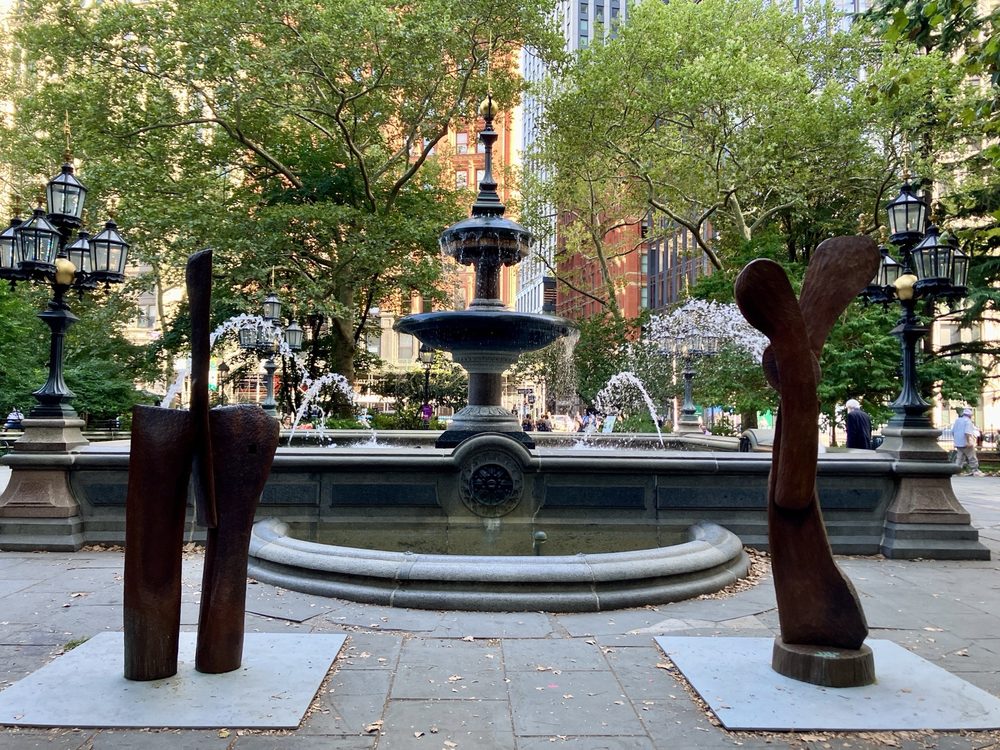

## Chapter One: The Van of Brave Beginnings The morning sun spilled over our driveway like melted honey, and I, Pete the Puggle, stood with my white velvety fur fluffed by excitement and my makeup-streaked eyes wide as saucers. Dad Lenny loaded the blue van with sandwiches, a checkered blanket, and a flashlight shaped like a bone. “Ellisworth W. Allen Park awaits!” he announced, tapping his temple. “Remember, adventure is just a walk wearing a fancy hat.” Mom Mariya laughed and lifted my chin gently. “Oh, Pete, even the dandelions are leaning toward the road today, as if they want to come too.” Roman, my older brother and sometimes rival, tossed a red ball into the air and caught it behind his back. “Bet I can find the best trail before you do, fuzzface,” he teased, but his hand rested protectively on my head. All the way there, I pressed my nose to the window and watched the world unspool—green fields, mailboxes like tiny soldiers, clouds shaped like sleeping whales. Yet beneath my happy panting, a cold pebble of worry rolled in my belly. I had heard the park had a creek, wide and shining, with water that muttered secrets to stones. Water had always seemed to me like a giant breathing animal, beautiful from far away and terrifying up close. “You’re quiet,” Mariya said, turning in her seat. “What is your brave little heart saying?” I stared at my paws. “It says… maybe creeks are for ducks and brave fish. Not puggles.” Lenny met my eyes in the mirror. “A brave heart isn’t one that never shakes,” he said. “It’s one that shakes and still listens for love.” Roman didn’t joke then; he only whispered, “I’ve got you,” and those three words curled around me like a warm leash. When we arrived, Ellisworth W. Allen Park opened before us like a picture book left in the rain—emerald lawns, oaks with arms raised in welcome, and beyond the picnic tables, a silver thread of water flashing through reeds. The air smelled of cut grass, sunscreen, and pretzels from a cart near the gate. Somewhere a blue jay scolded the sky. I hopped down, claws ticking on gravel, and immediately heard two voices arguing behind a trash can. “I’m telling you, Tom, the picnic basket goes left!” squeaked a tiny mouse with a heroic chest. A gray-and-white cat sighed dramatically. “Jerry, my courageous crumb, baskets go where sandwiches are, and sandwiches are everywhere.” I froze. A cat! A mouse! Talking! Roman crouched beside me, eyes shining. “Pete,” he whispered, “I think today just grew whiskers.” ## Chapter Two: Tom, Jerry, and the Creek That Glittered Like Teeth Tom stepped out first, tall for a cat, with whiskers like exclamation points and a bow tie slightly crooked, as if dignity had lost a wrestling match. Jerry perched on his shoulder, no bigger than a cookie, wearing an expression of fearless command. “Greetings, canine citizen,” Tom said, bowing so low his ears brushed the grass. “I am Tom, connoisseur of naps and accidental heroics. This is Jerry, brave mouse, strategist, and part-time thunderbolt.” Jerry saluted. “We’re exploring the creek trail. Want to come, or are your paws made of pudding?” Roman laughed so hard he snorted, and I pretended to be offended, though my tail betrayed me by wagging. “My paws are made of premium puggle,” I said. Then the creek sang from beyond the cattails, and my voice shrank. “But premium puggles prefer dry land.” Mariya unpacked lunch beneath an oak whose leaves made green lace against the sky. She handed Jerry a crumb of cheese nearly as big as his head. “Magic hides in small portions,” she told him, and Jerry bowed as if she had knighted him. Lenny offered Tom half a tuna sandwich. “For courage,” Dad said solemnly. Tom blinked. “Sir, tuna is my religion.” We all ate while Roman mapped trails with a stick in the dirt: playground, meadow, bridge, creek bend, old willow. “The bridge is where the brave go,” he said, looking straight at me. I stared at the water beyond the reeds. It flashed white in the sun, bright and toothy, and every ripple seemed to whisper my name in a voice too slippery to trust. After lunch, Roman challenged everyone to a “Great Ellisworth Expedition,” complete with an imaginary flag made from Mariya’s scarf. “Rules,” he announced, marching like a general. “No one wanders alone. No one laughs at fears. And anyone who finds a frog must name it immediately.” Jerry raised a paw. “I name the first frog Sir Hopsalot, defender of dampness!” Tom yawned. “I name the second frog Lunch—kidding, kidding.” I tried to laugh, but the creek kept pulling my eyes. Its surface held the sky hostage, blue trembling in moving glass. Mariya knelt beside me and tucked the scarf-flag under my collar. “You don’t have to cross today,” she said softly. “But if your fear speaks, ask it what it is protecting.” I gulped. Fear, I realized, was not only a monster; sometimes it was a worried guard dog barking at shadows. ## Chapter Three: The Ball, the Reeds, and the Terrible Splashing Roman threw the red ball toward the meadow, and I chased it because running is the one language my paws speak fluently. The ball bounced once, twice, then took a traitorous hop down the bank and landed beside the creek with a soft plop near the roots of a leaning willow. I skidded so hard my ears flew forward. Water licked the shore in little brown tongues. Dragonflies stitched the air with blue thread. The ball rocked gently, inches from the moving shine. “Easy,” Roman called from behind. “I’ll get it.” But pride buzzed in me like a bee in a jar. If Tom and Jerry were watching—and they were—I could not be the puppy who feared a creek’s edge. “I can do it,” I said, though my legs had become noodles wearing fur. I crept down, one paw, then another. Mud kissed my pads, cold and squishy. The creek breathed against my chest, and suddenly every story of rivers swallowing careless pups roared in my head. My reflection broke into pieces on the current: one eye here, a nose there, courage scattered like crumbs. “Pete,” Jerry squeaked from a reed, “small steps are still steps!” Tom added, surprisingly gentle, “Cats hate water too, kid. We just pretend we invented hating it.” I reached for the ball. A frog exploded from the grass—Sir Hopsalot himself—and splashed beside me. I yelped, slipped, and both front paws plunged into the icy rush. For one terrible second the creek grabbed me. It was not water; it was a thousand cold hands ringing alarm bells. I screamed, Roman dove, and Lenny’s voice thundered, “Pete! Here!” Roman caught my collar before the current could even think of being cruel. He hauled me up, soaked and shaking, while Mariya wrapped me in the checkered blanket and Lenny pressed his forehead to mine. “You’re safe. You’re safe. You’re safe,” he said until the words became a heartbeat. I cried into Roman’s shoulder, hating that I had needed rescuing, hating the water, hating the trembling puppy in the mirror of the creek. Roman squeezed me tighter. “Hey,” he whispered. “You reached for the ball. That was brave. Falling in was just the creek being rude.” I sniffled. Somewhere inside, a tiny door opened—not all the way, but enough to let light in. ## Chapter Four: The Willow Tunnel and the Dark With Eyes By afternoon, clouds gathered like gray sheep over the park, and the light turned the color of old pennies. We should have stayed near the picnic grove, but adventure has paws of its own. Chasing a butterfly that looked exactly like a flying piece of sunset, I followed Tom and Jerry through a tunnel formed by two willows whose branches braided overhead. “Shortcut to the meadow!” Jerry declared. “Questionable shortcut!” Tom muttered, but he came anyway. Inside, the air cooled, and shadows pooled beneath the leaves like spilled ink. The sounds of my family faded behind a curtain of green. I turned to call Roman, but a gust slammed the willow curtain shut with a whispery hush. Darkness has a smell, I learned—wet bark, cold stone, and the metallic breath of fear. My eyes stretched wide, searching for familiar shapes, but every root became a crouching animal and every knot in the wood became an unblinking eye. “Pete?” Tom called, suddenly less elegant. “Say something cheerful before I remember I’m afraid of the dark too.” Jerry’s tiny voice trembled but stood tall. “Dark is just light playing hide-and-seek. We are excellent seekers.” I wanted to believe him, but my chest tightened. Being separated from Lenny, Mariya, and Roman felt like losing gravity; I floated in panic, paws useless, heart banging like a drum in a cupboard. “I can’t see my family,” I whimpered. “What if the park forgets where we put them?” Then I remembered Mariya’s words: ask fear what it protects. I sat hard on the moss and breathed in through my nose, out through my mouth. “Fear,” I whispered to the dark, “are you guarding me from getting lost, or from finding the way back?” The willows creaked, almost kindly. Jerry climbed onto my head and became a tiny lantern of certainty. “Listen,” he said. Far away: Roman shouting my name, hoarse and fierce. Closer: water chuckling over stones. Tom pointed his ears. “Creek bends left; voices bend right. If we follow the sound edge, we’ll find the trail.” For the first time, the dark was not an enemy but a room I had not learned to walk through yet. I stood, shook moss from my fur, and said, “Then let’s be brave quietly.” ## Chapter Five: Lost Together, Found Inside We moved through the willow tunnel like three notes in a nervous song—Tom low and watchful, Jerry bright and quick, me in the middle with my heart learning rhythm. The path narrowed until roots gripped our ankles. A crow burst upward, black as a torn piece of night, and I nearly leaped out of my own skin. Tom hissed at it, then apologized to his own dignity. “Merely expressing concern,” he said, smoothing fur. Jerry marched ahead holding a pine needle like a sword. “Fear may come,” he proclaimed, “but it must wipe its feet.” I laughed despite myself, and the sound loosened something hard in my chest. Maybe courage was not a roaring lion; maybe it was a mouse with a pine needle refusing to surrender. At the tunnel’s end, we found not the meadow but a marshy pocket where the creek had spilled into a silver maze. Boards from an old footpath lay scattered like broken piano keys. Beyond them, water spread dark and shining, reflecting clouds that hurried nowhere. My old terror rose, huge and wet. To reach Roman’s voice, we had to cross a narrow plank over the deepest part. Tom went first, each paw placed with the concentration of a cat defusing a bomb. Jerry rode in Tom’s collar, whispering, “Left whisker, right whisker, steady.” Then it was my turn. The plank looked no wider than a thought. Below, the water waited, patient as a secret. I closed my eyes and saw Roman’s face when he had pulled me from the creek: not disappointed, not laughing—afraid for me and fiercely glad I was near. I heard Lenny say bravery shakes and listens. I felt Mariya’s scarf under my collar, soft as a hand. “I am not crossing the water,” I told myself. “I am crossing toward my people.” Step. The plank dipped. Step. The creek slapped the wood. Step. My legs screamed to run back; my heart answered forward. Halfway across, rain began, fine as silver needles, blurring the world. I froze. Jerry squeaked, “Pete, look at me, not the monster!” I looked. A mouse stood on a cat in the rain, unafraid enough for all three of us. I took the last steps and collapsed on solid mud, laughing and crying while the storm applauded in the leaves. ## Chapter Six: The Storm, the Hollow Log, and Roman’s Lantern Voice Rain hardened into ropes, drumming the park until every path vanished. We sheltered inside a hollow log that smelled of mushrooms and old summers. Water silvered the entrance like a curtain of beads. Tom curled around me for warmth, pretending it was strategy rather than kindness. “For tactical heat,” he insisted. Jerry nestled in the crook of my ear, his tiny heartbeat rapid as rain. Outside, thunder rolled across Ellisworth W. Allen Park like a giant moving furniture in the sky. I pressed close to my friends and admitted the truth I had been carrying like a stone: “I thought being brave meant never needing anyone.” Tom licked a raindrop from his paw. “Absurd. Even lions have pride. Even cats have staff.” Jerry nodded solemnly. “Even mice borrow courage from friends and return it with interest.” Then came the sound that cut through storm and fear: “PEEEETE!” Roman’s voice, cracked from calling, floated between trees. A flashlight beam swept wildly, gold in the gray rain. I barked until my throat hurt. Tom yowled with operatic despair; Jerry waved the pine needle like a flag. The beam found our log and steadied. Roman appeared at the entrance, soaked hair plastered to his forehead, eyes red, smile breaking like sunrise through storm clouds. “You absolute sandwich,” he cried, scooping me up, mud and all. “Don’t you ever chase a butterfly into Narnia again!” He hugged Tom too, which shocked the cat into silence, and lifted Jerry gently in his palm. “You kept him talking,” Roman said to them. “Thank you.” Jerry bowed. “He kept himself going. We merely provided snacks for morale.” Roman radioed Lenny on the park phone clipped to his backpack—because Dad believed in gadgets and “responsible adventure”—and soon Lenny and Mariya crashed through the wet green with umbrellas turning inside out like startled flowers. Mariya gathered me into her arms and cried into my fur, then laughed because I licked her tears. Lenny wrapped us all under a poncho big enough for a small tent. “Found,” he said simply, and the word landed warmer than any blanket. As the storm softened, Roman looked at the plank, the marsh, the willow tunnel, then at me. “You crossed?” he asked. I nodded, still trembling. His grin became sunrise multiplied by fireworks. “That’s my brother,” he said, and rival vanished; only best friend remained. ## Chapter Seven: The Creek Again, But Different When the rain rinsed itself into mist, the family led us back toward the picnic grove, but I stopped at the creek bank. The water was no longer white teeth; it was a moving mirror carrying leaves like little boats. My paws remembered cold hands. My heart remembered the plank. Roman stood beside me without grabbing my collar, which mattered more than I can say. “No test,” he said. “No audience. Just tell me what you want.” I watched a leaf spin in an eddy, helpless and somehow dancing. “I want not to be ruled by the splash,” I whispered. Mariya sat in the grass as if we had all the time in the world. “Then begin by naming the water,” she said. “Things shrink when we call them truly.” So I named it: “Creek. Not monster. Not trap. Water going somewhere.” Lenny added, “Like us.” Tom, ever dramatic, dipped one paw and shrieked, then pretended he had meant to. Jerry slid down a reed and floated on a leaf raft, shouting, “The navy is small but mighty!” Everyone laughed, and the fear lost its throne. Roman waded in first, jeans rolled to knees, holding out his hand—not pulling, just offering. I placed one paw at the edge. Cold touched me; I breathed. Another paw; the current pushed; I pushed back with balance Roman had taught me by simply standing near. “Feel your feet,” he said. “Feel me here. Feel the creek being only creek.” Step by trembling step, water rose around my legs, and though my body remembered panic, my spirit remembered love louder. I did not swim across oceans that day. I stood ankle-deep, then knee-deep, in the Ellisworth creek while my family made a circle around me—not a cage, a constellation. Tom applauded with his tail; Jerry named every ripple after a tiny general. When I finally stepped back onto mud, I was wet, cold, and shining like a creature newly hatched. “I was afraid,” I told them, “and I went anyway. That counts, right?”
Use these buttons to read the story aloud:


No comments:
Post a Comment