"*** Pete the Puggle and the Red Stairs of Starlight ***"🐾
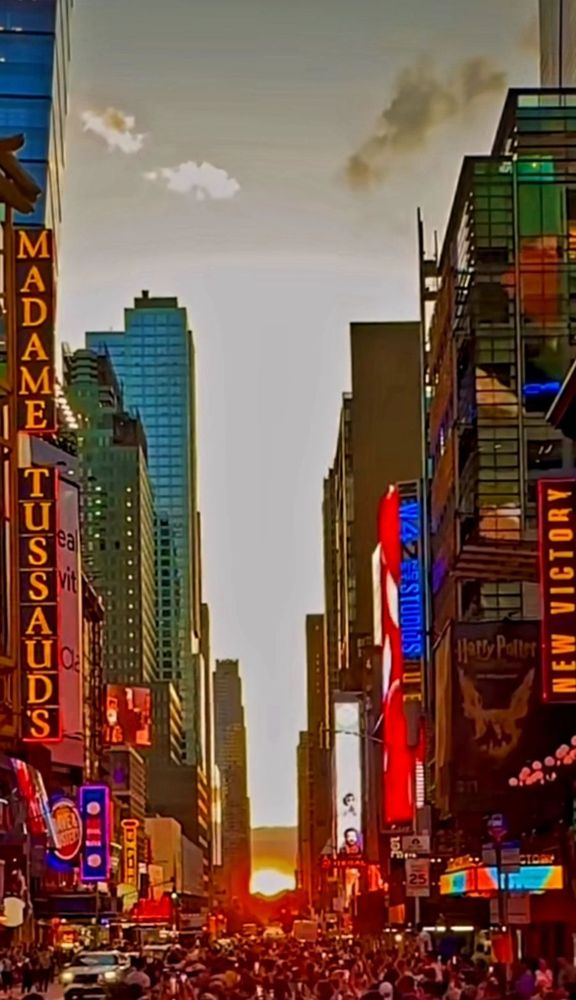
## Chapter 1: The City That Barked Back The first time I saw Times Square, I thought the sky had fallen and learned to shine. Billboards bloomed like mechanical flowers, taxis honked in yellow swarms, and the air smelled of pretzels, rain, roasted nuts, and a thousand perfumes wrestling above the pavement. I, Pete the Puggle, stood on my little paws with my white velvety fur fluffed by the November wind, my streaked eyes wide as saucers, and my heart beating like a drum in a parade. “Easy, adventurer,” said Lenny, my warm wise dad, resting his hand on my head. “New York is loud, but it’s just a big song that hasn’t learned manners yet.” He winked. “Kind of like Roman before breakfast.” “I heard that,” Roman laughed, scooping me up before my paws could skitter on the slick sidewalk. “Don’t worry, Pete. If the city barks, we bark back.” Mariya leaned close, her eyes bright with that curious Mom-magic that could find miracles in manhole covers. “Look at the lights reflecting in the puddles,” she whispered. “The whole street is a river of stars.” I tried to be brave. Truly I did. But the crowd surged like an ocean with elbows, and somewhere below the grates I heard water rushing—dark, hidden, hungry water. My ears folded. “Do cities… swallow small dogs?” I asked. Roman hugged me tighter. “Not while I’m around.” Then his gaze lifted to the famous Red Stairs, glowing ruby-bright above the square like a staircase for giants. “There,” he said. “That’s where our adventure begins.” A chill sparkled down my spine. On the top step, for one blink only, stood a slender dog with silver fur and eyes like old constellations. She wore no collar, only a shimmer around her neck, as if the night itself had leashed her to eternity. My breath caught. “Laika?” I whispered, though I had never met her—only dreamed her name from stories of the brave little dog who flew beyond the blue. She tilted her head. Then the crowd closed, and she was gone. ## Chapter 2: The Girl Who Fell Through Time We climbed toward the Red Stairs, pressed close as a family should be: Lenny joking to keep courage loose, Mariya naming colors—“neon raspberry, electric sapphire, brave-dog gold”—and Roman carrying me when my legs turned to noodles. The stairs gleamed beneath us, each step red as a heartbeat. Tourists snapped photos; pigeons strutted like tiny landlords; a saxophone moaned from a corner, sweet and rusty. Then the air folded. Not loudly—no trumpet, no thunder—just a soft turning, like a page in a book being flipped by invisible fingers. The silver dog appeared beside me, close enough that I smelled frost and starlight on her fur. “You called, little one,” Laika said, her voice old as orbit and gentle as a blanket. “I heard a heart knocking between 1957 and now.” I yelped and hid behind Roman’s shoe. “You’re real?” “As real as courage,” she answered. “And as hungry as curiosity. Your family walks near a thin seam tonight. Water under the city is restless. Darkness is practicing its roar. And you, Pete, are afraid of three things.” Roman crouched, protective and curious all at once. “Talking space dog. Okay. Cool. Totally normal. Are you friendly?” Laika’s eyes gleamed. “I protect pups who are learning to be brave.” Mariya knelt, wonder shining brighter than fear. “You crossed time to be here?” “I cross where love leaves a door open,” Laika said. Then she looked at me. “But doors swing both ways.” Before I could ask what she meant, the ground gave a metallic sigh. A maintenance grate near the stairs shuddered; black water below slapped stone. I froze. The sound crawled into my ears and made a nest there. Lenny reached for me, but the crowd pushed, the grate popped, and a gust of wet breath rose from below. “Pete!” Roman shouted. The world tilted red, silver, black—and I fell toward the sound I feared most. ## Chapter 3: Into the Wet Dark I did not fall far, but fear makes inches into miles. Laika became a streak beside me, Roman lunged and caught my harness, and for one heroic second we dangled over a service tunnel where water rushed like a beast in chains. Then the edge crumbled. Roman and I tumbled onto a lower ledge; Laika landed light as moon dust. Above us, Mariya screamed my name, Lenny shouted, “Hold on!”—and the crowd swallowed their faces. The tunnel smelled of rust, rain, old coins, and the green darkness of places that never see noon. Water surged around my paws, cold as a bite. My whole body became a trembling “no.” “I can’t,” I whimpered. “Water gets in your nose. It takes your breath. It hides the bottom.” Roman planted his feet in the flow and lifted me onto a dry pipe. “Then we don’t let it decide,” he said, voice shaking but steadying itself for me. “Look at me, Pete. Not the water. Me.” Laika touched her nose to mine. A tiny constellation bloomed behind my eyes. “Fear is a map,” she said, “but courage is the traveler.” Above, muffled by stone, Lenny called, “Roman! Pete! Keep talking! We’re finding a way down!” Hearing Dad’s voice hurt and helped at once, like a bandage pulled tight. I wanted to run to him so badly that being separated felt like a hole in my chest. The dark pressed close. The water hissed. Somewhere metal groaned. Roman squeezed my shoulder. “Remember the bathtub incident? You screamed at bubbles.” “They were suspicious bubbles,” I sniffed, and despite everything, we laughed. It was small, but laughter opened a window. Laika pointed with her muzzle. “There is a service door toward the stairs. But first, Pete must cross the channel.” The channel was only three feet wide. To me it was an ocean wearing a tunnel’s skin. ## Chapter 4: Three Feet of Ocean The water did not roar; it whispered, which was worse. It said, You are small. It said, The dark is deeper than your family’s voices. It said, If you let go, you will vanish like a bubble down a drain. My legs locked. My tail tucked so hard it nearly disappeared. Roman stepped into the flow first, gasping. “Cold! Wow. Okay. Brain freeze in my toes.” He reached both hands toward me. “I’ll be your bridge. I won’t let go.” “What if you slip?” I cried. “Then Laika vaporizes the water,” he said. Laika blinked. “I vaporize dangerous enemies, not geography. Usually.” “Very comforting,” Roman muttered. Lenny’s voice boomed from somewhere above through a vent: “Pete! Courage isn’t not being scared. It’s being scared and holding somebody’s hand anyway!” Mariya called, softer, nearer, as if she had found a crack to pour love through: “Feel for the magic in the ordinary, baby. One breath. One paw. One brave little splash.” I closed my eyes. Inside me, fear was a black dog barking at a fence. But behind it stood another dog—me, maybe older, maybe possible—with head high. I thought of Roman’s hands, Lenny’s jokes, Mariya’s star-puddles, Laika crossing decades because someone needed her. I put one paw in the water. Cold slapped me; I squeaked. Then another paw. The current tugged like a rude child. Roman’s fingers locked around my harness. “Got you,” he said. “Don’t poeticize now,” I yelped, paddling wildly. “Wouldn’t dream of it—left, right, left—good boy!” Halfway across, my belly touched the water and terror flashed white. I almost twisted back. Laika leaned over the surface and breathed silver mist; the churning calmed for three precious seconds. “Now,” she said. I jumped. Roman caught me. We crashed onto the far ledge, soaked, shaking, alive. I looked back at three feet of ocean and barked so loudly the tunnel rang. ## Chapter 5: The Door That Needed Dark Beyond the channel waited a round service door painted the color of old pennies. Its wheel handle was crusted shut, and behind it we heard stairs—maybe the Red Stairs, maybe trouble wearing red shoes. The tunnel lights flickered, then died completely. Darkness poured over us like ink into milk. My second fear came trotting out, teeth shining. Dark was not empty to me; it was full of everything I could not see. It hid water. It hid separation. It hid the space where family faces should be. Roman pulled out his phone. Dead. “Of course,” he sighed. “Heroic battery chooses drama.” Laika’s fur began to glow faintly, a silver-blue halo. “I was launched into a darker dark than this,” she said. “No window. No mother. No promise. Machines sang numbers at me. I learned that light can live inside a body if love puts it there.” I pressed against Roman’s leg. “What if the light goes out?” “Then we listen,” he said. “We count breaths. We make a chain.” He found my paw; Laika rested her tail across my back; from the grate above came Lenny tapping in rhythm: tap-tap, tap, tap-tap. Our family code from blanket forts and thunderstorm nights: I’m here. I’m here. Mariya’s voice drifted down, trembling but bright: “Pete, darkness is just daylight waiting for courage to open its eyes.” That sounded like Mom. It also sounded impossible. Still, I lifted my nose. Wet stone smelled like pennies; air from the door smelled like cinnamon pretzels—home disguised as a snack. I padded forward one step. The dark leaned in. I leaned back. Then I thought: if Laika could orbit loneliness, I could walk across a hallway. “Wheel,” Laika said. Roman strained at the handle. “Stuck.” “Fear rusts things,” Laika replied. “Sing to it.” So we sang—terribly. Lenny joined from above with a joke-song about pretzels, Mariya harmonized through the grate, Roman beat time on the pipe, and I howled in a brave wobbly key. The wheel shrieked, turned, and the door opened into red light. ## Chapter 6: The Menace Under the Marquee The red light was not safety. It spilled from an emergency sign over a lower corridor where old theater cables hung like black vines and water had gathered into a shallow lake. In the middle floated a maintenance drone, dead-eyed and sparking, dragged loose from some parade setup. It snapped alive with a buzz, mistook our reflections for targets, and zipped toward us with crackling arms. “Dangerous enemy?” Roman asked. “Finally,” Laika said, almost cheerful. The drone lunged. Laika became a comet. Silver fire folded around her; the air tasted like lightning and snow. She barked once—not loud, but absolute—and the drone’s sparks collapsed into harmless glitter that rained into the water. Yet the splash it made sent a wave rolling straight at me. I saw it coming: black rim, white teeth, my old nightmare wearing the city’s face. Every fear returned in a chorus—water, dark, separation—and sang that I was still the pup who panicked at puddles. For a heartbeat I believed them. Then Roman stepped in front of me. Not away. In front. The wave hit his knees; he staggered but held. “Your turn to hold somebody,” he grunted, reaching back. Something inside me changed shape. Courage did not arrive like a superhero; it came like a small key turning in a rusty lock. I splashed forward—into water, into dark, toward Roman—and bit his sleeve gently the way puppies hold the world. “I’ve got you too,” I muffled. Laika landed beside us, breathing star-smoke. “Now up,” she said. “Before the seam closes.” We climbed a ladder slick as fish skin. Each rung was a argument: fear said down, love said up. I chose up with wet paws, trembling legs, and a heart that had learned to bark at oceans. ## Chapter 7: Red Stairs, Open Sky We burst through a service hatch beside the Red Stairs into noise so bright it felt like color. Lenny was there first, dropping to his knees; Mariya wrapped us in her coat and tears; Roman was hugged so hard he squeaked, which I will remember forever. The crowd cheered without knowing why, because joy is contagious and New York loves a soggy reunion. “You found us,” I cried into Mariya’s shoulder. “You found yourselves,” she said, kissing my head. “We just followed the sound of brave.” Lenny held my face in his big hands. “You were scared?” “Terribly,” I admitted. “Good,” he said softly. “Means it mattered.” Roman tried to look casual and failed, wiping his eyes. “You jumped across, Pete. You came back for me on the ladder. That was—” He swallowed. “That was legendary.” Laika stood apart on the top red step, silver against neon, tourists photographing through her as if she were a trick of light. Only we saw her clearly. “The seam is closing,” she said. Panic flickered. “Will you leave?” I asked. “I am always leaving,” she answered gently, “and always near when small hearts practice big courage. You feared water because it can take breath. You feared dark because it hides faces. You feared separation because love is your leash and your wings. Tonight you carried all three across three feet of ocean.” Mariya smiled through tears. “Will we see you again?” Laika looked up at the electric sky, where no real stars could compete, yet somehow one shone anyway. “When the ordinary turns magical,” she said, “listen for frost on the window.” Then she stepped sideways into 1957, or into light, or perhaps into the space between a blink and a memory. ## Chapter 8: What the City Gave Us We sat on the Red Stairs long after the danger became a story already changing in the telling. Pretzels appeared—Lenny insisted salt was “medical”—and Mariya wrapped me in a scarf that smelled like home. The square roared around us, but inside our little circle there was a quieter country. Roman nudged me. “Scale of one to ten, how heroic was my scream when the drone sparked?” “Twelve,” I said. “Very manly. Like a startled flute.” Lenny laughed so hard he dropped mustard on his shoe. “Family rule: anyone who faces a haunted tunnel gets to mock the brother.” Mariya gazed at the lights reflected in a puddle near our feet. I had avoided puddles all evening; now I leaned close and saw our faces floating there—Lenny’s warm crinkles, Mariya’s bright wonder, Roman’s brave grin, my streaked eyes less frightened than before. The puddle trembled in the wind, but it did not swallow us. It held us. “I used to think courage meant never shaking,” I said. “But I shook the whole time.” “Then you did it right,” Lenny said. Roman stared at the dark grate across the square. “I was scared too. When you fell, Pete, I felt… separated from myself. Like the part of me that protects you had fallen down there.” He bumped my shoulder. “Then you saved me back.” Laika’s absence shimmered beside us like a note after music ends. I understood, in the deep place where dogs keep truths: fear had not vanished. It had become a doorway. Water could be crossed. Dark could be sung to. Separation could be survived because love leaves trails—tap-tap, tap, tap-tap—through stone and time. Mariya whispered, “What did the city give us?” “A story,” said Lenny. “A scar that sparkles,” said Roman. “A rescue,” I said, “where everybody rescued everybody.” We rose as one family, damp and luminous, and descended the Red Stairs into the glowing crowd. Behind my ribs, courage curled up like a puppy finally asleep. The morals were simple and bright: fear is not failure; love is a light you carry; and family is the hand that finds you in the dark. *** The End ***
Use these buttons to read the story aloud:



No comments:
Post a Comment